
How to Improve Toyota Camry Tire Life: Proven Tips to Get More Miles

Your Toyota Camry’s tires last longer when four basics stay under control: correct cold tire pressure, regular rotation, even alignment, and routine tread/sidewall inspections. The biggest mistake is guessing the PSI or waiting until the tire pressure light comes on. Use the tire-and-loading label on your Camry’s driver-side doorjamb, check the tires cold, rotate on schedule, and fix uneven wear early.
Quick Answer
To improve Toyota Camry tire life, check cold tire pressure monthly using the PSI on the driver-side doorjamb label, rotate tires on Toyota’s maintenance schedule, inspect tread and sidewalls often, correct alignment problems quickly, and drive smoothly. Replace tires when tread is too low, damaged, aged, or wearing unevenly.
Key Takeaways
- Use the PSI on your Camry’s tire-and-loading label, not the maximum PSI printed on the tire sidewall.
- Check pressure at least monthly when tires are cold, including before long trips.
- Rotate tires according to Toyota’s maintenance schedule; if no interval is listed, 5,000–8,000 miles is the common tire-industry range.
- Measure tread depth with a gauge and inspect for cracks, bulges, punctures, exposed cords, and uneven wear.
- Get alignment checked if the car pulls, the steering wheel is off-center, or tread wears faster on one edge.
At a Glance
| Time Required | 5–10 minutes for pressure and visual checks; 30–60 minutes for professional rotation/alignment service. |
| Difficulty | Easy for pressure and tread checks; moderate/professional for rotation and alignment. |
| Tools Needed | Tire pressure gauge, air compressor, tread depth gauge, flashlight, and your Camry owner’s manual or tire-and-loading label. |
| Cost | Usually free to low-cost for DIY checks; rotation and alignment costs vary by shop, tire plan, and dealer service package. |
Why Tire Maintenance Is Key for Your Camry
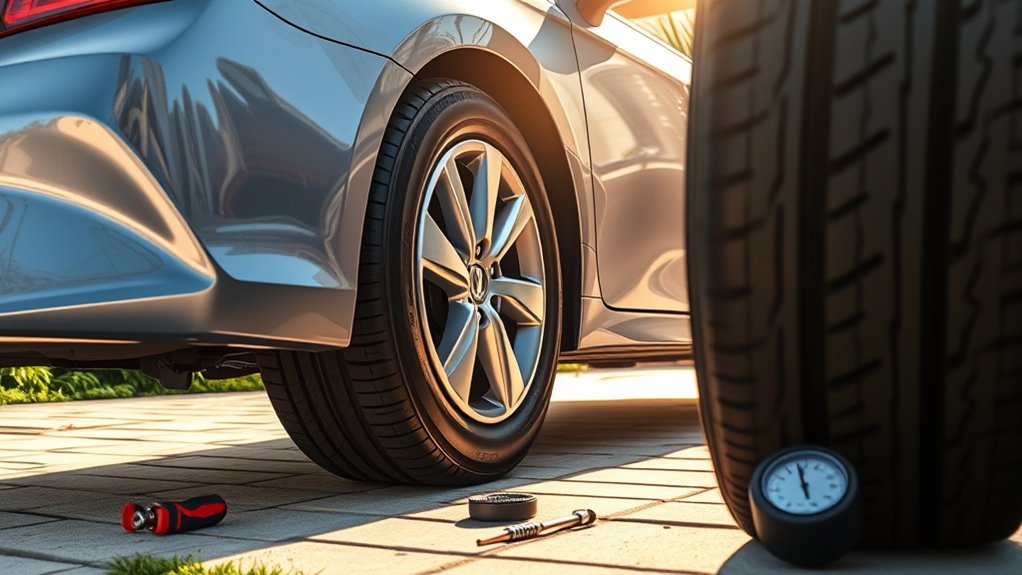
Tires affect how your Camry accelerates, brakes, steers, rides, and handles wet roads. Poor pressure, skipped rotations, worn tread, or bad alignment can shorten tire life and make the car less predictable in emergency maneuvers.
The good news is that tire care is simple when you build it into a routine. Check tire pressure once a month, inspect tread and sidewalls at the same time, rotate on schedule, and respond quickly when you see uneven wear. Toyota’s owner information says the correct cold tire inflation pressure and tire size are shown on the tire-and-loading information label, so that label should be your first source for PSI.
For many Camry owners, these checks take less time than filling the gas tank. Done consistently, they help your tires wear evenly and let you catch small problems before they become expensive replacements.
[Products Worth Considering]

The JACO FlowPro Tire Inflator measures, inflates, and airs down tires up to 100 PSI with battery-free operation and ±2% accuracy after calibration. It features a glowing pressure dial for night visibility, a heavy-duty steel build with a hybrid hose, and a precision push-to-inflate thumb trigger. The patented Lightning Air Chuck locks on for a secure seal, and the kit includes quick-connect hardware for easy inline use with your air compressor.

EVOULTES heavy duty tire inflator with an integrated gauge delivers accurate pressure readings from 10–120 PSI, helping you inflate, deflate, and check tires in one tool. The 16.5-inch extended dual-head air chuck with swivel base reaches hard-to-access dual wheel valves on trucks and RVs. A brass trigger core and side-mounted air release valve make operation smooth, with standard 1/4" NPT threading and quick-connect compatibility for easy setup.

Upgrade your air tools with this 18-piece air compressor accessory kit featuring a 25ft recoil poly hose, 1/4" NPT quick connect fittings, and a 100 PSI tire inflator gauge. The set also includes a heavy-duty blow gun with safety and tapered nozzles, plus couplers, inflation needles, plugs, and other essentials for everyday mechanic and workshop tasks. Corrosion-resistant steel and brass components help keep connections reliable for inflating, blowing out, and general pneumatic use.
How to Check Toyota Camry Tire Pressure Correctly
Do not rely on a universal PSI range for every Toyota Camry. The correct pressure depends on model year, trim, tire size, and load rating. Your best reference is the tire-and-loading information label on the driver-side doorjamb. You can also confirm the specification in your owner’s manual.
Follow these steps for the most accurate reading:
- Park the Camry for several hours, or check the tires before driving more than a short distance. Tire pressure should be checked when the tires are cold.
- Find the recommended front and rear PSI on the driver-side doorjamb label.
- Remove the valve cap and press a reliable tire pressure gauge firmly onto the valve stem.
- Add or release air until each tire matches the placard pressure.
- Reinstall the valve cap to help keep dirt and moisture out of the valve stem.
- Repeat the check monthly and before road trips.
Note: The number molded into the tire sidewall is usually the tire’s maximum inflation pressure, not the recommended pressure for your Camry. Use the doorjamb placard or owner’s manual for normal driving.
A tire pressure monitoring system is helpful, but it is not a replacement for manual checks. The warning light may not come on until pressure is already significantly low, and it will not tell you about tread wear, cuts, bulges, or alignment-related wear.
The Benefits of Regular Tire Rotation
Regular tire rotation helps all four tires wear at a similar rate. That matters because front and rear tires do different jobs. On many Camrys, the front tires handle most steering and braking forces. On newer Camry models with available all-wheel drive, tire wear can still vary by axle and driving conditions.
Follow Toyota’s maintenance schedule for your model year first. If your manual or maintenance guide does not give a specific rotation interval, the U.S. Tire Manufacturers Association recommends rotating tires every 5,000 to 8,000 miles. Toyota also advises owners to follow manufacturer recommendations for tire rotation and notes that rotation can help preserve tire performance and warranty coverage.
The best rotation pattern depends on your Camry’s drivetrain and tire type:
- Front-wheel-drive Camry: many non-directional tire sets use a forward-cross pattern.
- All-wheel-drive Camry: many non-directional tire sets use an X-pattern or rearward-cross pattern, depending on the manual and tire type.
- Directional tires: these usually stay on the same side of the vehicle and move front-to-rear only.
- Uneven tire sizes: if front and rear tire sizes differ, follow the tire manufacturer’s and Toyota’s instructions.
Pro Tip: Pair tire rotation with an oil change or six-month maintenance visit. It is easier to remember, and the technician can inspect tread depth, sidewall condition, and wear patterns at the same time.
Signs You Need to Replace Worn Tires

Replace or professionally inspect your Camry’s tires when you see low tread, exposed cords, sidewall cracking, bulges, repeated pressure loss, vibration, or irregular wear. Toyota’s owner information says to replace tires if the treadwear indicators are showing.
A tread depth gauge is the most accurate DIY tool. The penny test can help in a pinch: place a penny upside down into a tread groove. If all of Lincoln’s head is visible, the tread is at or near the replace-now range.
Tread Depth Inspection
Measure tread depth in several grooves across each tire, not just one spot. Tires can look fine in the center while the inner or outer edge is nearly worn out. Use this simple guide:
| Tread Depth | What It Means | Recommended Action |
|---|---|---|
| 6/32 inch or more | Generally usable for normal dry and wet driving. | Keep checking monthly and rotate on schedule. |
| 4/32–5/32 inch | Wet-road traction may be reduced compared with new tires. | Plan replacement soon, especially if you drive in heavy rain. |
| 3/32 inch | Low tread with limited water evacuation. | Shop for replacements now. |
| 2/32 inch or less | At or below the common U.S. legal minimum for tire tread. | Replace immediately. |
Sidewall Damage Assessment
The sidewall carries load and flexes constantly, so visible sidewall damage should be taken seriously. Look for cracks, cuts, bubbles, blisters, exposed cords, or a tire that keeps losing air. Also pay attention to vibration, thumping, or a sudden change in ride quality.
Warning: Do not keep driving on a tire with a sidewall bulge, exposed cords, severe cracking, or rapid air loss. Install the spare if equipped and safe to use, or call roadside assistance.
How Alignment Impacts Tire Life
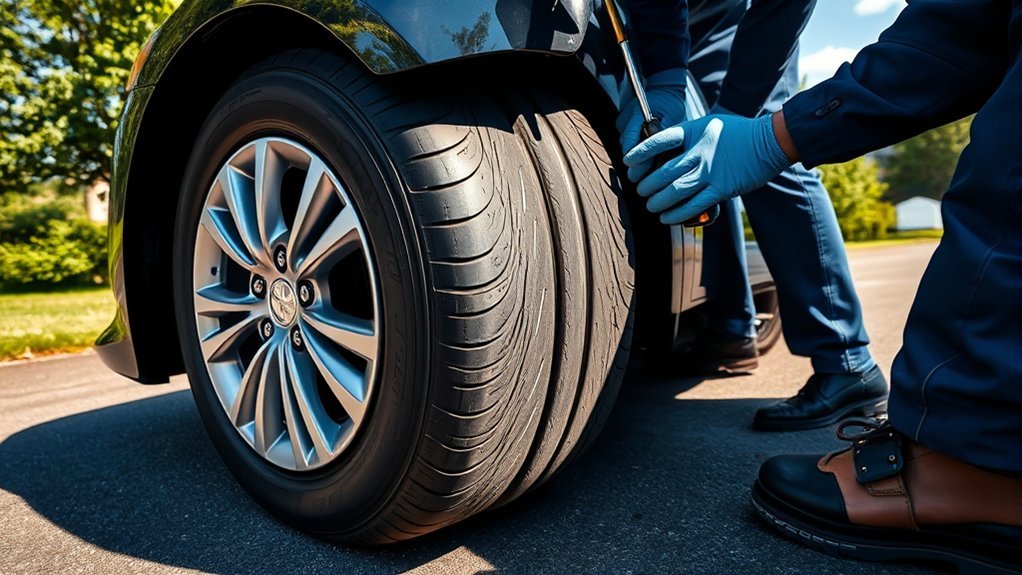
Proper alignment helps the tires contact the road evenly. When camber, toe, or caster angles are out of specification, one part of the tread can scrub harder than the rest. That can create edge wear, feathering, steering pull, vibration, and shorter tire life.
Importance of Proper Alignment
Alignment is not just about keeping the steering wheel straight. It affects handling, tire wear, and rolling resistance. If the car hits a pothole, curb, or road debris, the alignment can shift even if nothing looks broken. Worn suspension parts can create similar symptoms.
Have the alignment checked when you install new tires, after a hard impact, or whenever you see uneven wear. It is also smart to ask for an alignment inspection if your Camry pulls to one side or the steering wheel sits crooked on a straight road.
Signs of Misalignment
- The Camry pulls left or right on a flat road.
- The steering wheel is off-center while driving straight.
- One tire edge wears faster than the other.
- The tread feels feathered when you run your hand lightly across it.
- The car vibrates even after tire pressure is corrected.
- New tires start wearing unevenly within a few thousand miles.
Benefits of Regular Checks
Regular tire and alignment checks help you catch wear early, before the damage ruins a full set of tires. Use the table below to connect common wear patterns with likely causes.
| Wear Pattern | Possible Cause | What To Do |
|---|---|---|
| Center tread wears faster | Overinflation or incorrect pressure. | Set cold PSI to the doorjamb label. |
| Both shoulders wear faster | Underinflation, overloading, or hard cornering. | Correct pressure and avoid overloading. |
| One edge wears faster | Camber or toe alignment issue. | Schedule alignment and suspension inspection. |
| Cupping or scalloping | Possible worn shocks, struts, imbalance, or suspension issue. | Have the tires, balance, and suspension checked. |
How to Measure and Maintain Tread Depth
To measure tread depth properly, check each tire in at least three places: inner groove, center groove, and outer groove. This catches alignment and pressure problems that a single measurement can miss.
Use a tread depth gauge for the most accurate reading. If you do not have one, use the penny test as a quick screen. Insert a penny upside down into the groove. If part of Lincoln’s head is covered, there is more than 2/32 inch of tread in that spot. If all of Lincoln’s head is visible, replace the tire.
Also check the tire’s built-in treadwear indicators. These are raised bars molded into the tread grooves. When the tread is level with those bars, the tire is worn out and should be replaced.
Legal tread depth is only the floor. For rain-heavy driving, start shopping before your Camry’s tires reach the minimum.
[Products Worth Considering]

This portable cordless tire inflator delivers up to 160 PSI with fast 17 L/min airflow to help you quickly top up tires and get back on the road. It features dual power mode, running on a 21V rechargeable battery or a 12V DC adapter for convenient roadside use. An automatic shut-off with digital pressure gauge helps prevent overinflation, and a built-in LED light improves visibility in low-light conditions.

This multi-function tire valve stem removal tool set makes it fast to remove, install, bleed, and clean valve cores for easier tire maintenance. It includes valve core removers, a 4-way spool tool, replacement valve caps, and spare cores to handle replacements and repairs with confidence. Universal compatibility suits cars, trucks, motorcycles, bicycles, and more for roadside convenience.
Driving Habits That Extend Tire Life
Your driving style can either protect the tread or grind it down early. Fast starts, hard braking, sharp cornering, high-speed pothole hits, and repeated curb contact all add stress to the rubber, belts, sidewalls, and suspension.
Use these habits to help your Camry tires last longer:
- Accelerate smoothly instead of launching from stops.
- Brake early and gradually when traffic allows.
- Slow down before potholes, rough railroad crossings, and broken pavement.
- Avoid clipping curbs when parking or turning.
- Do not overload the vehicle beyond the tire-and-loading label limits.
- Keep speed reasonable on hot days, especially during long highway trips.
- Clean out heavy cargo you do not need.
Short trips, stop-and-go driving, heat, and rough roads can all make tires work harder. That does not mean you have to baby the car, but smooth inputs and regular checks go a long way.
When to Seek Professional Help for Tire Care
Some tire problems should not wait for the next oil change. Schedule service or a professional inspection if you notice:
- Uneven tread wear across one tire or across the set.
- A tire pressure warning light that returns after inflation.
- Vibration, thumping, humming, or pulling.
- A nail, screw, cut, or puncture near the sidewall.
- Bulges, bubbles, exposed cords, or deep cracking.
- Steering wheel shake at highway speeds.
- Tires wearing out much sooner than expected.
A shop can check balance, alignment, suspension parts, tire age, puncture repairability, and whether the tires are wearing safely. If the Camry has recently hit a pothole or curb, ask for an alignment check even if the tires still look normal.
Cost-Effective Strategies for Tire Replacement and Care
The cheapest tire strategy is not always buying the lowest-priced tire. It is choosing the right tire, maintaining it well, and avoiding avoidable early replacement.
| Strategy | Benefit |
|---|---|
| Maintain the placard PSI | Helps prevent shoulder wear, center wear, heat buildup, and poor fuel economy. |
| Rotate on schedule | Promotes even tread wear and may help preserve tire warranty coverage. |
| Check alignment early | Prevents one-edge wear from ruining otherwise healthy tires. |
| Buy the correct size and load rating | Keeps handling, load capacity, and speed rating appropriate for the Camry. |
| Replace in pairs or sets when needed | Maintains balanced traction; when replacing only two tires, ask the shop about placing the newer pair on the rear. |
Before buying replacements, confirm the tire size, speed rating, load rating, and service description on the sidewall and doorjamb label. If you drive mostly in rain, heat, snow, or rough roads, choose a tire that matches those conditions instead of picking by price alone.
Frequently Asked Questions
How do I make my Toyota Camry tires last longer?
Check cold tire pressure monthly, keep the PSI at the number on the driver-side doorjamb label, rotate the tires on Toyota’s maintenance schedule, keep the wheels aligned, inspect tread and sidewalls, and drive smoothly. These habits help prevent uneven wear and early tire replacement.
What PSI should Toyota Camry tires be?
Use the recommended cold PSI printed on your Camry’s tire-and-loading information label, usually on the driver-side doorjamb. Do not use the maximum PSI molded into the tire sidewall as your normal setting. The correct pressure can vary by model year, trim, and tire size.
How often should I rotate Toyota Camry tires?
Follow the maintenance schedule for your model year. Many Toyota maintenance schedules use mileage and time intervals, and the tire industry commonly recommends rotation every 5,000 to 8,000 miles when no vehicle-specific interval is listed. Your tire type and drivetrain can affect the correct pattern.
Can I rely on the tire pressure warning light?
No. The tire pressure monitoring system is a safety backup, not a monthly maintenance tool. It may not warn you about mild underinflation, tread wear, sidewall damage, tire age, punctures, or alignment problems. Check pressure manually with a gauge.
When should I replace my Camry tires?
Replace tires when tread reaches 2/32 inch, when treadwear indicators are showing, or sooner if traction is poor in rain. Also replace tires with sidewall bulges, exposed cords, severe cracking, unrepaired punctures, repeated pressure loss, or age-related deterioration.
Conclusion
Improving Toyota Camry tire life comes down to small checks done consistently. Use the doorjamb label for the correct cold PSI, rotate the tires on schedule, inspect tread and sidewalls monthly, and fix alignment or vibration problems early. Treat the tires as a safety system, not just a wear item, and they will reward you with better ride quality, steadier handling, and more miles before replacement.
Sources
- Toyota Owners — Tire inflation pressure — supports using the tire-and-loading label and cold tire pressure procedure.
- Toyota Owners — Tires — supports checking treadwear indicators, uneven wear, and tire replacement guidance.
- Toyota Support — Maintenance timing — supports following mileage or time-based Toyota maintenance intervals.
- U.S. Tire Manufacturers Association — Tire Care Essentials — supports pressure, tread, rotation, and alignment maintenance practices.
- NHTSA — Tire Safety Month — supports monthly cold tire pressure and tread checks.
- Bridgestone Americas — Tire replacement guidance — supports the 2/32 inch tread-depth replacement threshold.

Related Articles

Toyota Camry All-Season Tires Explained: What They Can and Can’t Do
In exploring Toyota Camry all-season tires, discover their benefits and limitations—are they really the right choice for your driving needs?
Read More
Toyota Camry Tire Traction in Ice and Snow: A Practical Winter Driving Guide
Learn essential tips for maximizing tire traction on ice and snow in your Toyota Camry, ensuring your winter driving is safe and confident. Discover more now!
Read More
Do Toyota Camry Tires Need Snow Chains? When They Help and When They Don’t
How do snow chains enhance your Toyota Camry's winter driving safety, and when should you avoid using them? Discover the essential details inside!
Read More