
How to Read Sidewall Markings on a Toyota Camry Tire (Full Guide)
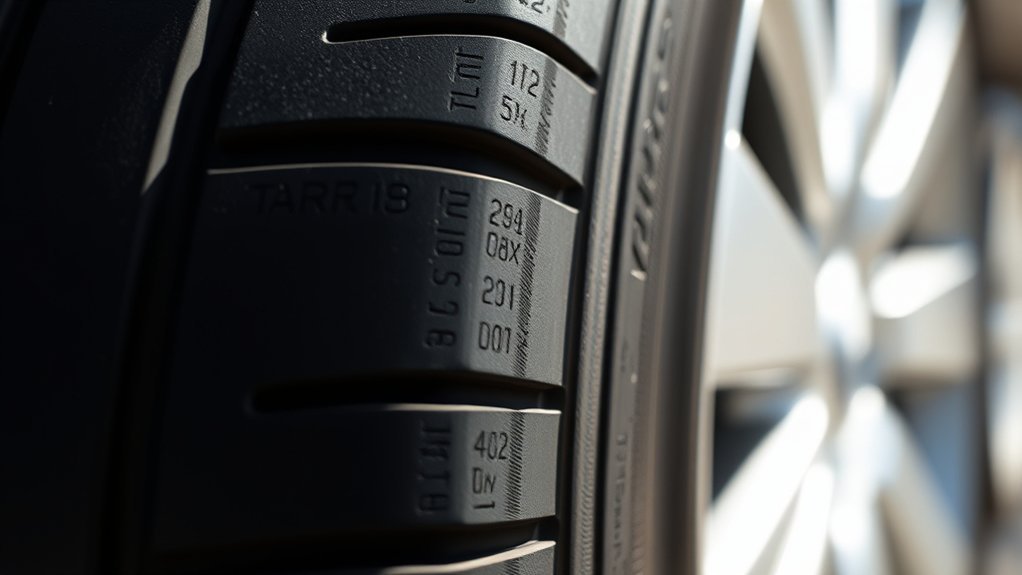
Reading the markings on a Toyota Camry tire is easier once you know the order of the code. The sidewall tells you the tire type, width, sidewall height, construction, wheel size, load rating, speed rating, DOT manufacturing date, treadwear information, and winter-use symbols. Use the tire sidewall as a guide, but always confirm replacement size and tire pressure against your Camry’s tire information placard or owner’s manual.
Quick Answer
To read Toyota Camry tire sidewall markings, start with the size code, such as P215/55R17 94V. “P” is passenger tire, 215 is width in millimeters, 55 is aspect ratio, R is radial construction, 17 is wheel diameter, 94 is load index, and V is speed rating.
Key Takeaways
- Use the tire sidewall to decode size, load capacity, speed rating, DOT date, treadwear, and winter-use symbols.
- Match replacement tires to the tire size, load index, and speed rating listed on your Toyota Camry’s tire placard or owner’s manual.
- Do not use the maximum PSI printed on the tire sidewall as your recommended tire pressure.
- Replace tires when treadwear indicators show, when damage appears, or when age and inspection results make them unsafe.
At a Glance
| Time Required | 5–10 minutes |
| Difficulty | Easy |
| Tools Needed | Flashlight, tire pressure gauge, tread depth gauge or penny |
| Cost | Free if you already have a gauge; usually under $15 for a basic gauge |
Start With the Camry Tire Size Code
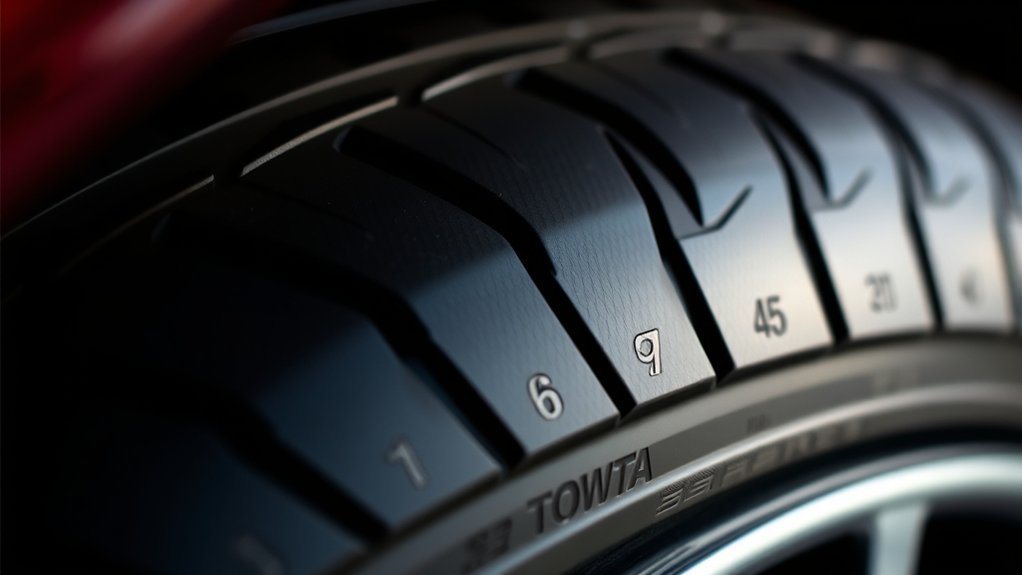
The most important sidewall marking is the tire size and service description. A Camry tire code may look like P215/55R17 94V, although the exact size depends on model year, trim, wheel size, and factory equipment.
Here is how to read the code from left to right:
- P means passenger-car tire. If there is no letter before the size, the tire may use Euro-metric sizing.
- 215 is the tire width in millimeters, measured from sidewall to sidewall.
- 55 is the aspect ratio. It means the sidewall height is 55% of the tire width.
- R means radial construction, which is standard on modern passenger-car tires.
- 17 is the wheel diameter in inches. This number must match your wheel size exactly.
- 94V is the service description: 94 is the load index and V is the speed rating.
Note: The tire currently mounted on your Camry may not be the original factory size. Before buying replacements, confirm the correct size on the tire and loading information label, usually on the driver’s side door post, or in your owner’s manual. Toyota also directs owners to the vehicle specifications or tire information placard for recommended tire pressure.
[Products Worth Considering]

EVOULTES heavy duty tire inflator with an integrated gauge delivers accurate pressure readings from 10–120 PSI, helping you inflate, deflate, and check tires in one tool. The 16.5-inch extended dual-head air chuck with swivel base reaches hard-to-access dual wheel valves on trucks and RVs. A brass trigger core and side-mounted air release valve make operation smooth, with standard 1/4" NPT threading and quick-connect compatibility for easy setup.

The AstroAI 2 pack air chucks provide a heavy-duty, closed-flow locking design that helps keep air flowing during inflation while securely attaching to the valve stem. Built with 250 PSI rated brass components and compatible with Schrader valves, they feature 1/4" female NPT threads for a wide fit with common inflators. The straight tip and locking clip make filling tires and monitoring pressure more convenient.

The JACO FlowPro Tire Inflator measures, inflates, and airs down tires up to 100 PSI with battery-free operation and ±2% accuracy after calibration. It features a glowing pressure dial for night visibility, a heavy-duty steel build with a hybrid hose, and a precision push-to-inflate thumb trigger. The patented Lightning Air Chuck locks on for a secure seal, and the kit includes quick-connect hardware for easy inline use with your air compressor.
Do Not Confuse Sidewall Max PSI With Recommended Pressure
Your tire may show markings such as MAX PRESS or MAX LOAD. These are the tire’s maximum limits, not the recommended pressure for everyday driving. The correct Toyota Camry tire pressure is the cold tire pressure listed on the vehicle placard or in the owner’s manual.
Warning: Do not inflate your Camry tires to the maximum PSI printed on the tire unless that number also matches Toyota’s recommended cold tire pressure. Overinflation can reduce ride comfort, increase center tread wear, and make the tire more vulnerable to impact damage.
Tire Specifications: Load Index and Speed Ratings for Safety
The load index tells you how much weight one tire can carry when properly inflated. The speed rating tells you the maximum speed capability under specified load and inflation conditions. When replacing Toyota Camry tires, choose tires that meet or exceed the load index and speed rating specified by Toyota.
| Load Index | Maximum Load Per Tire | Common Speed Rating Example |
|---|---|---|
| 91 | 615 kg / 1,356 lb | H = 130 mph |
| 94 | 670 kg / 1,477 lb | V = 149 mph |
| 95 | 690 kg / 1,521 lb | V = 149 mph |
| 100 | 800 kg / 1,764 lb | W = 168 mph |
A tire with a lower load index than Toyota specifies may not safely support the vehicle, passengers, and cargo. A lower speed rating can also change heat resistance, handling feel, and high-speed durability. If you are unsure, ask a qualified tire professional to match your tire placard, wheel size, driving conditions, and load needs.
Pro Tip: If you are choosing between two tires in the correct size, load index, and speed rating, compare their traction, temperature, treadwear, wet-braking performance, warranty, and noise ratings instead of choosing by price alone.
[Products Worth Considering]
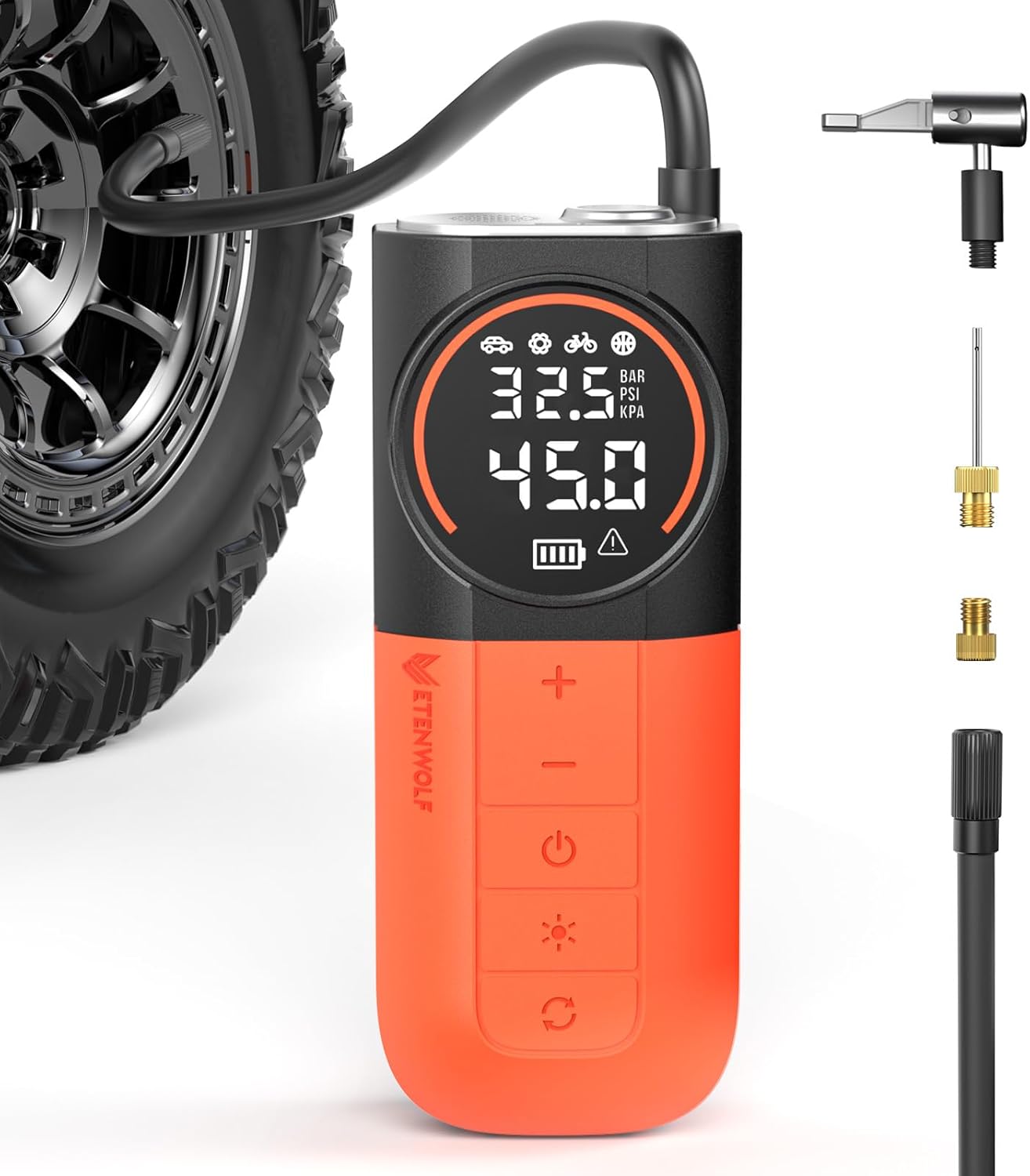
The ETENWOLF S1 cordless tire inflator delivers ultra-fast inflation with up to 160 PSI and a 20 L/min airflow for quicker tire top-offs. Its 5200mAh battery and cooling system support inflating many tires and sports balls on a single charge, while the digital pressure gauge and multi-unit display help you reach the right pressure accurately. With preset modes, pressure memory, an auto-stop feature, and an LED flashlight, it’s built for easy roadside and everyday use.

This portable cordless tire inflator delivers up to 160 PSI with fast 17 L/min airflow to help you quickly top up tires and get back on the road. It features dual power mode, running on a 21V rechargeable battery or a 12V DC adapter for convenient roadside use. An automatic shut-off with digital pressure gauge helps prevent overinflation, and a built-in LED light improves visibility in low-light conditions.
How to Spot Treadwear Indicators and Maintenance Needs
Treadwear indicators, also called wear bars, are small raised bars inside the tread grooves. When the tread wears down level with these bars, the tire has reached about 2/32 inch (1.6 mm) of tread depth and should be replaced.
Do not rely only on the wear bars. Replace or inspect the tire sooner if you notice:
- Uneven tread wear from alignment, suspension, or inflation problems
- Bulges, bubbles, cracks, cuts, or exposed cords
- Repeated pressure loss
- Vibration that does not go away after balancing
- Tread depth that is too low for heavy rain, snow, or winter driving
Rotate your tires according to Toyota’s maintenance schedule and check pressure when the tires are cold. Regular rotation helps the front and rear tires wear more evenly, especially on a front-wheel-drive sedan like many Camry models.
Understanding the DOT Code: Tire Age and Manufacturing Information
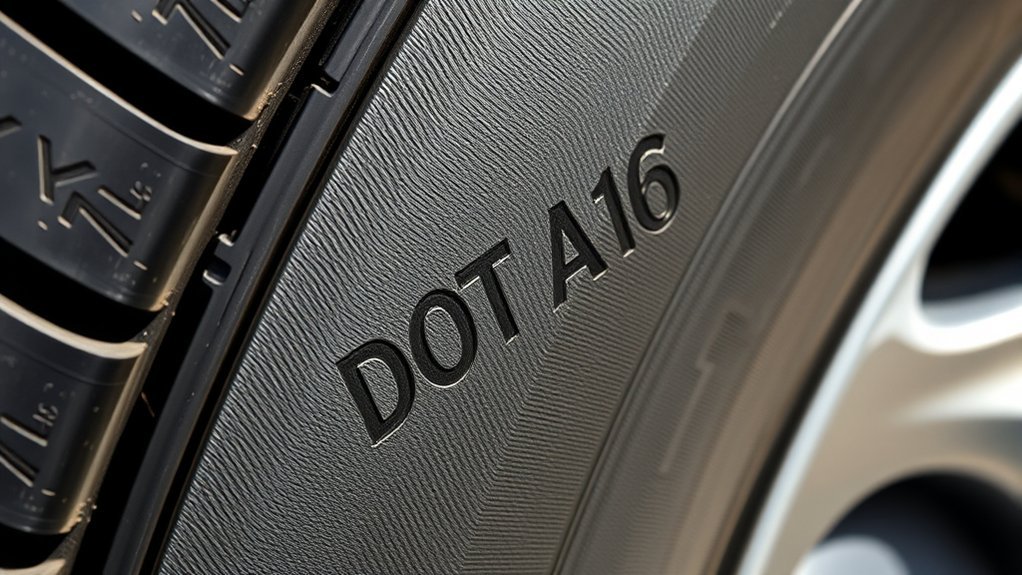
The DOT code, also called the Tire Identification Number, shows that the tire meets U.S. Department of Transportation marking requirements and identifies manufacturing information. The most useful part for everyday owners is the last four digits of the DOT code.
For example, a date code ending in 4714 means the tire was made in the 47th week of 2014. The first two digits are the week, and the last two digits are the year.
Age matters because rubber compounds change over time, even if the tread still looks usable. A safe rule is to inspect tires more carefully as they age, have them professionally inspected at least annually after about five years of use, and follow the tire or vehicle manufacturer’s maximum service-life recommendation. Many tire manufacturers advise replacing tires by ten years from the manufacture date, including spare tires.
Warning: Do not buy a used Camry tire based only on tread depth. Check the DOT date, inspect for sidewall cracking or repairs, confirm the correct size and ratings, and avoid any tire with unknown history or visible damage.
What Special Symbols Mean for Your Driving Conditions
Special tire symbols help you understand how the tire is designed to perform in different conditions.
- M+S, M/S, or M&S: Mud and snow marking. This does not automatically mean the tire is a true winter tire.
- 3PMSF: The three-peak mountain snowflake symbol. This indicates the tire has met a standardized snow-traction requirement for severe snow service.
- UTQG: Uniform Tire Quality Grading. This includes treadwear, traction, and temperature grades. These ratings help compare tires, but treadwear grades are most useful when comparing tires from the same manufacturer.
- XL or Reinforced: Extra-load construction. Use this only when it matches or exceeds your Camry’s required load specification.
- OE markings: Some tires carry original-equipment markings for specific automakers. These codes vary by brand. A star symbol is commonly associated with BMW-approved tires, not Toyota Camry-specific tires, so do not use a star mark as a Camry fitment rule.
Note: For a Toyota Camry, the safest replacement rule is simple: match the tire placard and owner’s manual first, then choose the tire type that fits your climate, driving style, and road conditions.
What the TPMS Light Can and Cannot Tell You
Your Toyota Camry’s tire pressure monitoring system can warn you when tire pressure is low. Depending on the model year and trim, the display may show individual tire pressures or only a general low-pressure warning. Either way, confirm the pressure with a tire gauge.
If the TPMS light comes on:
- Park safely and inspect all four tires for obvious damage.
- Check cold tire pressure with a gauge as soon as practical.
- Inflate the tire to the pressure listed on the Camry tire placard.
- If one tire keeps losing air, have it inspected for a puncture, valve-stem leak, wheel damage, or bead leak.
A TPMS warning does not replace visual checks. It may not warn you about treadwear, old tires, sidewall cracks, uneven wear, or a tire with the wrong size or speed rating.
Quick Checklist for Reading Your Camry Tire Sidewall
- Find the size code, such as P215/55R17.
- Confirm the tire type, such as P for passenger or T for temporary spare.
- Read width and aspect ratio to understand tire dimensions.
- Match the wheel diameter to the rim size.
- Check load index and speed rating against Toyota’s placard or manual.
- Find the DOT date code and check tire age.
- Inspect treadwear indicators and measure tread depth.
- Look for M+S or 3PMSF if winter traction matters.
- Ignore sidewall max PSI for daily inflation and use the Camry placard pressure instead.
Keeping tires inflated to the proper pressure can improve gas mileage by 0.6% on average and up to 3% in some cases, according to FuelEconomy.gov.
Frequently Asked Questions
How do I tell which tire is low on a Toyota Camry?
Use a tire pressure gauge to check all four tires when they are cold. Some Camry models display individual tire pressures, while others show a general TPMS warning. If the warning light is on, do not guess—measure each tire and inflate to the pressure listed on the driver’s door placard.
How do I read a Toyota Camry tire size like P215/55R17 94V?
Read it from left to right: P means passenger tire, 215 is tire width in millimeters, 55 is the aspect ratio, R means radial construction, 17 is the wheel diameter in inches, 94 is the load index, and V is the speed rating.
Can I use the tire size printed on my current Camry tire?
Use it as a clue, but verify it against the tire and loading information label or owner’s manual. A previous owner or shop may have installed a different size, load index, or speed rating.
Is M+S the same as a winter tire?
No. M+S means the tire is designed for mud and snow conditions based on the manufacturer’s criteria, but it does not require the same standardized snow-traction testing as the three-peak mountain snowflake symbol. For severe winter conditions, look for 3PMSF-rated tires.
Where is the correct Toyota Camry tire pressure listed?
The recommended cold tire pressure is listed on the tire information placard, usually on the driver’s side door post, and in the owner’s manual or vehicle specifications. Do not use the maximum pressure printed on the tire sidewall as the recommended pressure.
What does the DOT date code mean on a tire?
The last four digits of the DOT code show the week and year the tire was made. For example, 4714 means the tire was manufactured in the 47th week of 2014. If the full code is not visible, check the other sidewall.
Conclusion
Understanding your Toyota Camry’s tire sidewall markings helps you buy the correct replacement tires, maintain the right pressure, avoid overloaded tires, and spot aging or wear before it becomes dangerous. The main code tells you the size, construction, load index, and speed rating, while the DOT code reveals tire age. For safety, always verify the sidewall information against the Camry tire placard or owner’s manual. Proper inflation also saves money: federal fuel-economy guidance says it can improve gas mileage by 0.6% on average and up to 3% in some cases.
Sources
- Toyota Support: What tire pressure is recommended for my vehicle? — supports checking the owner’s manual/specifications or tire information placard for recommended pressure.
- Michelin: Tire Markings Explained — supports tire size decoding, DOT date code, sidewall pressure markings, treadwear indicators, M+S, 3PMSF, and OE markings.
- Michelin: When to Replace Tires — supports inspection after five years and ten-year maximum service-life guidance.
- NHTSA TireWise — supports tire safety ratings, UTQG information, and using the owner’s manual or tire loading label for correct tire size.
- NHTSA Interpretation: Treadwear Indicators — supports the 2/32 inch treadwear indicator requirement.
- FuelEconomy.gov: Gas Mileage Tips — supports the fuel-economy impact of keeping tires properly inflated.

Related Articles

Toyota Camry All-Season Tires Explained: What They Can and Can’t Do
In exploring Toyota Camry all-season tires, discover their benefits and limitations—are they really the right choice for your driving needs?
Read More
Toyota Camry Tire Traction in Ice and Snow: A Practical Winter Driving Guide
Learn essential tips for maximizing tire traction on ice and snow in your Toyota Camry, ensuring your winter driving is safe and confident. Discover more now!
Read More
Do Toyota Camry Tires Need Snow Chains? When They Help and When They Don’t
How do snow chains enhance your Toyota Camry's winter driving safety, and when should you avoid using them? Discover the essential details inside!
Read More