
Toyota Camry Tire Puncture Repair Guide: When It’s Fixable and When It’s Not
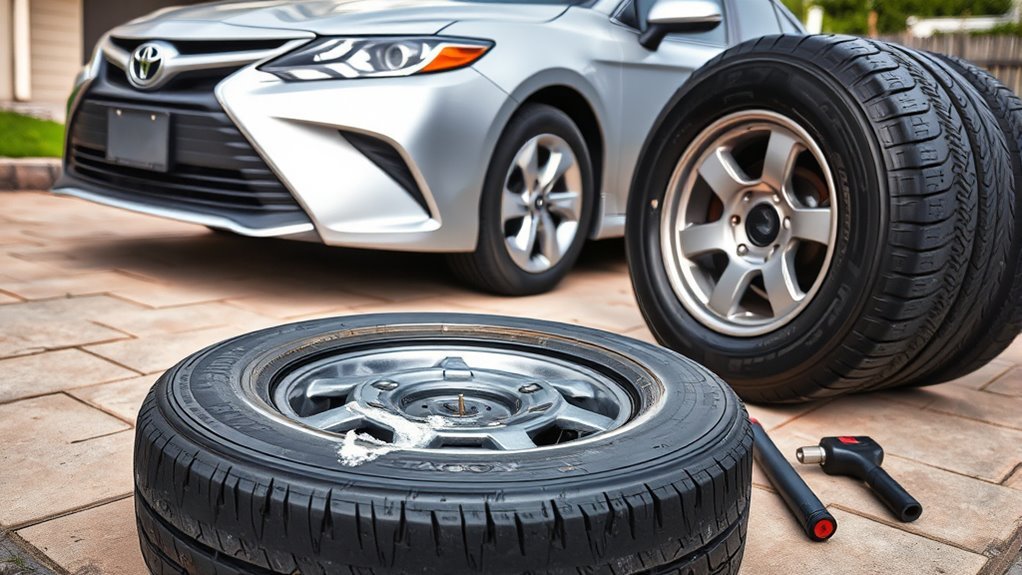
A Toyota Camry tire puncture is often repairable, but only when the damage is small, located in the proper tread repair area, and the tire has not been weakened by sidewall damage, overlapping repairs, or driving while flat. The safest move is to inspect the tire carefully, then let a trained tire technician demount it and confirm whether repair is allowed.
Quick Answer
You can usually repair a Toyota Camry tire puncture when the injury is in the tread repair area, is no larger than 1/4 inch or 6 mm, and the tire has not been driven flat. A proper repair uses both a rubber stem or plug and an internal patch. Sidewall, shoulder, oversized, overlapping, or flat-run damage means replacement.
Key Takeaways
- Repairable punctures must be in the tread repair area and no larger than 1/4 inch or 6 mm.
- A plug alone or a patch alone is not the best long-term repair; industry guidance calls for a stem/plug plus an inner patch.
- Sidewall and shoulder damage should not be repaired because those areas flex heavily and cannot be restored safely.
- Replace the tire if it was driven flat, has visible cords, has a bubble, has tread at 2/32 inch, or has overlapping repairs.
- Use sealants and emergency inflators only to reach a repair facility, not as a permanent fix.
At a Glance
| Time Required | 5 minutes for a visual check; usually 20–45 minutes for a professional demount, inspection, and repair. |
| Difficulty | Easy to inspect; professional repair required for a safe permanent fix. |
| Tools Needed | Tire-pressure gauge, tread-depth gauge or penny, soapy water for slow leaks, and a trained tire technician for the actual repair. |
| Cost | Varies by shop and tire condition; replacement costs more but is the right choice when the tire is outside repair limits. |
What Tire Damage Can Be Repaired?
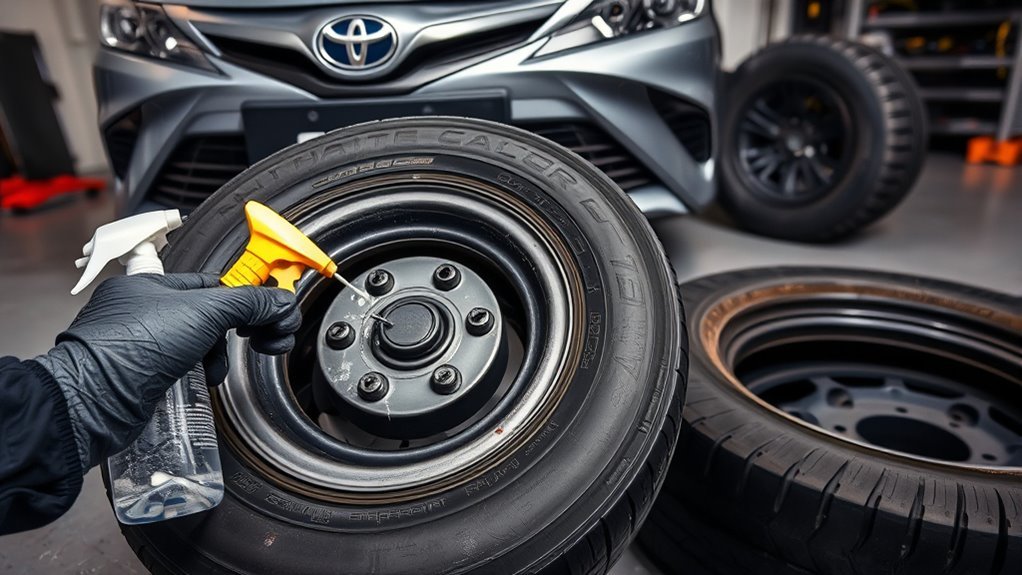
Repair depends on three things: location, size, and tire condition. The U.S. Tire Manufacturers Association says repair should be considered only when the damage is limited to the tread area and the puncture injury is no larger than 1/4 inch or 6 mm. The tire must also be removed from the wheel so the inside liner and casing can be inspected.
For a Toyota Camry, that means a nail or screw in the center tread may qualify. A cut in the sidewall, a shoulder puncture near the tread edge, a bubble, exposed cords, or damage caused by driving on a flat tire does not qualify. These rules are not Camry-specific; they apply to passenger tires like the ones commonly fitted to a Camry.
| Damage Location | Usually Repairable? | Best Action |
|---|---|---|
| Center tread repair area | Yes, if 1/4 inch or smaller | Have a technician install a proper stem/plug and patch repair. |
| Shoulder or belt-edge area | No | Replace the tire. |
| Sidewall | No | Replace the tire immediately. |
| Overlapping old repair | No | Replace the tire. |
Warning: Do not rely on an outside-in string plug as a permanent repair. The Tire Industry Association says on-the-wheel repairs should be treated as temporary because the tire is not inspected internally.
Can a Toyota Camry Tire Puncture Be Fixed?
Yes, a Toyota Camry tire puncture can often be fixed if the injury is in the repairable tread area, is no larger than 1/4 inch, and has not caused hidden internal damage. The correct repair is not just “plug it and go.” A technician should demount the tire, inspect the inside, fill the puncture channel with a rubber stem or plug, and seal the inner liner with a patch.
If your Camry’s tire-pressure warning comes on, treat it as a warning to stop guessing. Toyota advises drivers to check all tires and refill, repair, or replace any tire that is below the proper pressure. Use the tire pressure listed on the driver-side doorjamb placard or in the owner’s manual, not the maximum pressure molded into the tire sidewall.
Note: Many shops also limit a tire to two repairs and require wide spacing between them. That is a shop or manufacturer repair policy, not permission to repair damage outside the tread repair area.
When a Toyota Camry Tire Needs Replacement
Replace the tire when repair would be unsafe or when the tire is already worn out. A repairable-looking nail can still hide casing damage, especially if you drove while the tire was flat or severely underinflated.
- The puncture is larger than 1/4 inch or 6 mm.
- The puncture is in the sidewall, shoulder, or belt-edge area.
- The tire has a bubble, bulge, visible cords, cracking, or tread separation.
- The tire was driven flat or with very low pressure.
- The new repair would overlap an old repair.
- The tread is at the wear bars or 2/32 inch remaining depth.
- The tire is a run-flat or specialty tire that the tire manufacturer says should not be repaired after pressure loss.
When only one tire is replaced, choose the same size, load rating, speed rating, and tire category recommended for your Camry. If the tires have very different tread depths, ask the tire shop whether replacing two or four tires is safer for handling and stability.
[Products Worth Considering]

This tire repair kit provides fast emergency puncture repair without removing the tire from the rim, helping you get back on the road quickly. Its screw plug system is designed for punctures in both tread and sidewall and includes a complete patch plug tool set with essential accessories. A portable storage bag makes it easy to carry for cars, trucks, SUVs, motorcycles, and heavy-duty applications.

This tire repair patch tool kit helps you quickly seal small punctures using upgraded mushroom plugs and a built-in roller system that presses for even penetration. The tungsten buffing wheel and HSS twist drill bits prepare the damaged surface for stronger adhesion, while the crown-angle friendly plugs are designed to keep water and debris out. Ideal for puncture repairs on many vehicle types, from cars and trucks to bikes and scooters.

This compact capsule-style tire repair kit helps you quickly fix punctures and plug flats with minimal effort. The rugged stainless steel shell protects the contents for reliable roadside use, while the simple plug assembly makes repairs fast and tool-free. Suitable for motorcycles, cars, ATVs, UTVs, and even mountain bikes.
Why Sidewall Tire Damage Is Never Safe
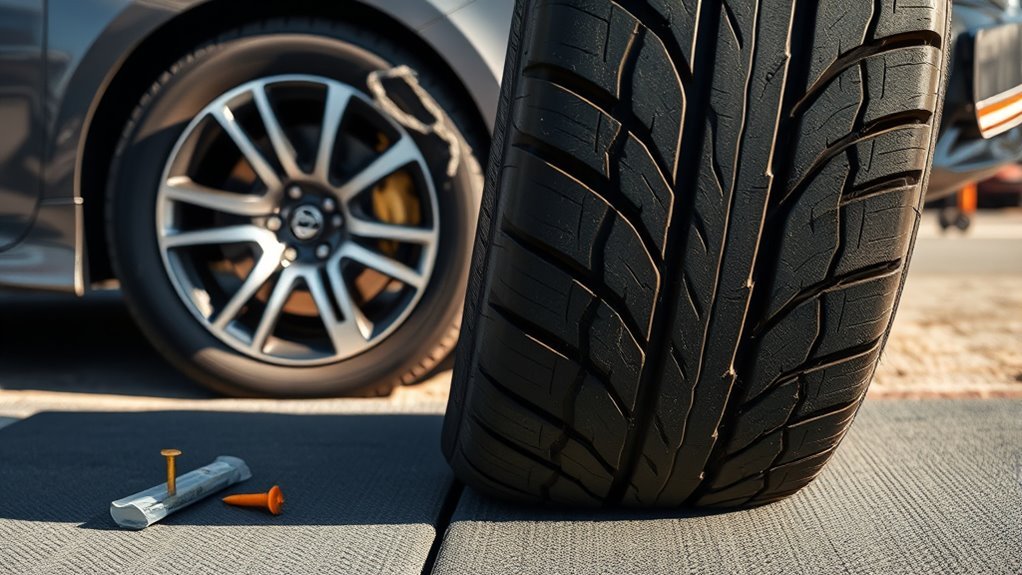
Sidewall damage is different from a simple tread puncture. The sidewall flexes every time the tire rolls, carries load, and does not have the same repairable belt structure as the tread crown. That is why punctures, cuts, bubbles, and impact bruises in this area are replacement issues.
Sidewall Flex Weakness
A sidewall repair has to survive constant bending, heat, and load. Even if it seems to hold air at first, the damaged casing can continue to weaken. That can lead to rapid air loss or sudden tire failure.
- The sidewall bends during every wheel rotation.
- A cut or puncture can spread as the tire flexes.
- A bubble usually means the internal cords have been damaged by impact.
- Repair materials cannot restore the sidewall’s original strength.
Irreparable Damage Risks
The biggest risk is not the visible hole; it is the hidden structural damage around it. If a technician finds sidewall injury, shoulder injury, casing separation, exposed cords, or a damaged inner liner, the tire should be scrapped instead of repaired.
| Condition | Safe Decision |
|---|---|
| Sidewall cut or puncture | Replace the tire |
| Sidewall bubble or bulge | Replace the tire |
| Shoulder or belt-edge puncture | Replace the tire |
Replace, Don’t Repair
If the damage is on the sidewall or shoulder, do not patch it, plug it, or seal it for normal driving. Install the spare or use the Camry’s emergency mobility kit only long enough to reach a safe service location, then replace the damaged tire.
Tire Plug vs. Patch: What’s the Difference?
A tire plug fills the puncture channel from the outside or through the injury path. A patch seals the tire’s inner liner from inside the tire. Used alone, either one leaves a weakness: a plug alone may not permanently seal the inner liner, and a patch alone may not fill the puncture channel where moisture can enter.
That is why current industry guidance favors a combined repair. USTMA describes a repair that fills the puncture with a rubber stem or plug and seals the inner liner with a patch. The common one-piece version is a combination repair unit with a stem and patch.
| Repair Type | What It Does | Best Use |
|---|---|---|
| Plug only | Fills the outside puncture channel | Temporary emergency repair only |
| Patch only | Seals the inner liner | Incomplete by itself for a puncture channel |
| Stem/plug plus patch | Fills the injury and seals the liner | Proper long-term repair for eligible tread punctures |
[Products Worth Considering]

Wykodra tire plugs provide quick vulcanizing repairs for tubeless tires, helping you seal punctures and get back on the road. The industrial-strength rubber creates a long-lasting, leak-resistant bond and is designed for emergency fixes without removing the tire. Choose between two standard plug sizes with color-matched options for small to larger damage across many vehicles and off-road uses.
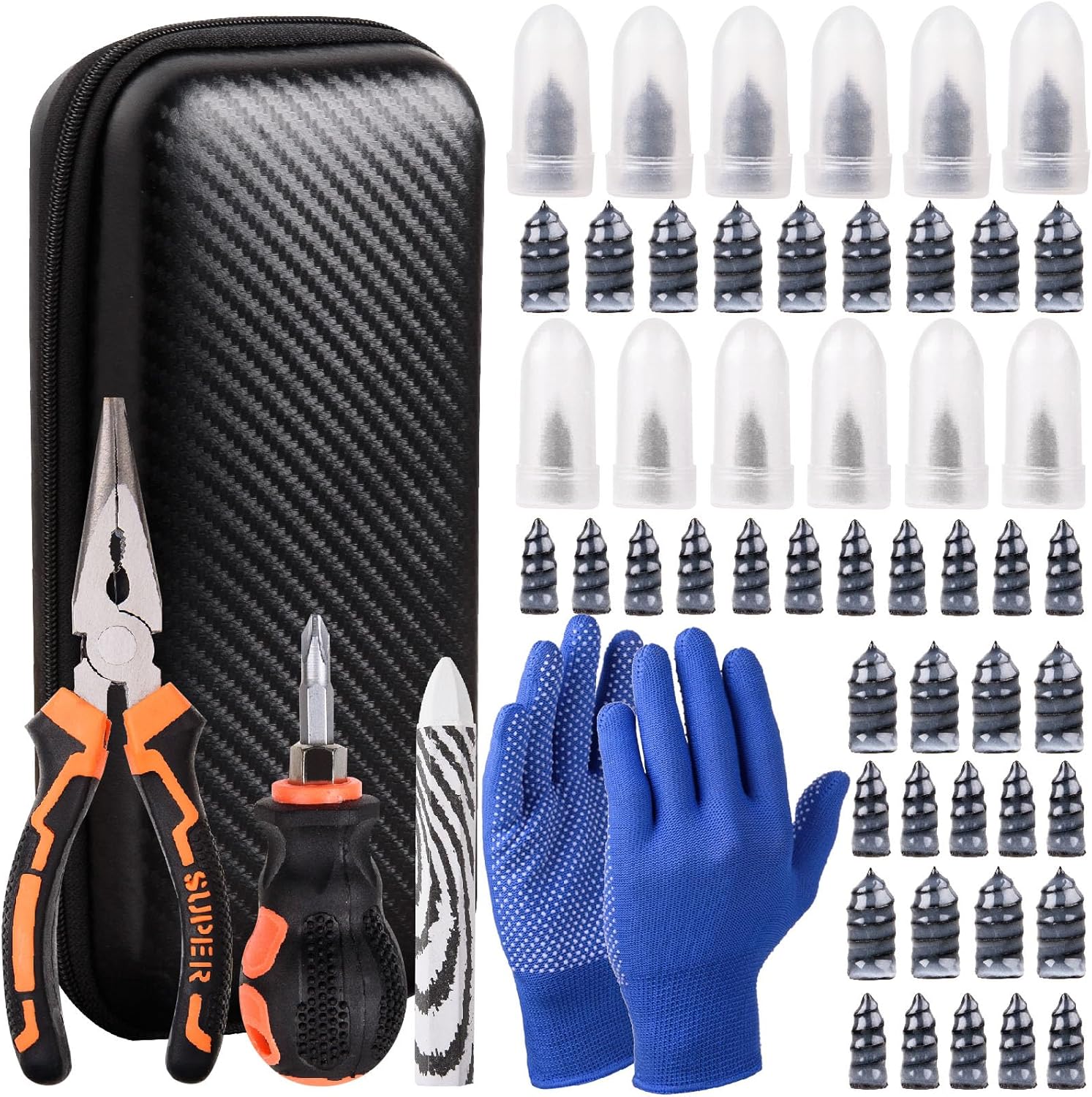
This tire sidewall puncture repair kit fixes flats fast without removing the tire, helping you get back on the road in minutes. It includes self-tapping repair nails, essential tools, gloves, and a portable storage bag for convenient roadside use. Designed for tubeless tires, it helps create a tight, leak-resistant seal for cars, motorcycles, trucks, SUVs, and ATVs.
Why a Plug-Patch Combo Works Best
A plug-patch combo works best because it addresses both failure points: air loss through the liner and moisture entry through the puncture path. The stem fills the hole through the tread, while the patch seals the liner inside the tire.
- The tire is removed from the wheel for a full internal inspection.
- The injury channel is cleaned and prepared.
- The rubber stem fills the puncture path.
- The patch seals the inner liner.
- The tire is reinflated, leak-tested, and checked before it goes back on the car.
A repair that does not include internal inspection is not a complete tire repair; it is only a temporary way to slow air loss.
How Technicians Fix Camry Tire Punctures

A proper repair is more than sealing the hole. The technician has to prove the tire is still structurally safe before putting it back on your Camry.
- Locate the injury. The technician confirms whether the puncture is in the tread repair area and measures the damage.
- Demount the tire. The tire is removed from the wheel so the inner liner can be inspected.
- Check for hidden damage. The technician looks for sidewall scuffing, liner damage, cords, separation, old improper repairs, and flat-run damage.
- Prepare the injury. The puncture channel and inner liner are cleaned and buffed according to the repair-material instructions.
- Install the repair unit. A stem/plug fills the injury channel and the patch seals the liner.
- Test the repair. The tire is remounted, inflated to the vehicle-specified pressure, and checked for leaks before balancing and installation.
Pro Tip: Ask the shop whether it follows USTMA/TIA-style repair procedures. A safe repair should include demounting the tire and inspecting the inside, not just plugging the tread from the outside.
Can You Repair a Tire With a Nail?
You can often repair a Toyota Camry tire with a nail in it if the nail is in the tread repair area and the puncture is no larger than 1/4 inch. The nail’s location matters more than the fact that it is a nail.
Nail Location Matters
A nail in the center tread may be repairable. A nail in the shoulder, outer edge, or sidewall is not. If the tire is still holding some air and you are in a safe location, leave the nail in place until a technician inspects it because pulling it out can make the tire lose air faster.
- Tread-only nail punctures may qualify for repair.
- Sidewall nail punctures require tire replacement.
- Shoulder and belt-edge nail punctures require tire replacement.
- Oversized or torn nail holes require tire replacement.
Safe Repair Methods
The safe method is the same as any eligible puncture: demount, inspect, prepare, fill the injury, patch the inner liner, reinflate, and leak-test. If the technician finds internal scuffing, cords, a bubble, or damage from low-pressure driving, replacement is safer than repair.
What to Do If the TPMS Light Comes On After a Puncture
If your Camry’s tire-pressure light turns on, slow down and find a safe place to check the tires. A puncture can create a slow leak, but it can also cause quick pressure loss that makes the tire unsafe to drive.
- Pull over safely and visually inspect all four tires.
- Check pressure with a gauge when the tires are cool, if possible.
- Use the driver-side doorjamb placard or owner’s manual for the correct pressure.
- If one tire is very low, do not keep driving on it; install the spare, use the approved emergency kit, or call roadside assistance.
- After repair or replacement, confirm the tire is inflated correctly and follow the Camry owner’s manual for TPMS reset or recalibration steps if your model requires them.
Why Sealants and Inflators Are Temporary
Sealants and emergency inflators can help you regain mobility, but they are not permanent repairs. They do not inspect the inside of the tire, restore damaged casing material, or prove that the sidewall survived low-pressure driving.
- Sealants may not fix larger punctures, sidewall damage, or internal injury.
- Some sealants can make later professional repair difficult or impossible.
- Emergency inflators may slow a leak without stopping the cause.
- A tire that was driven flat may already have internal damage even after it holds air again.
Use these products only to reach a repair facility, then have the tire inspected, repaired properly, or replaced.
How to Know It’s Time for a New Tire
Replace the tire when it fails either test: the damage is outside repair limits, or the tire itself is no longer serviceable. Tread depth matters because a tire worn to 2/32 inch has reached the common U.S. legal minimum and should not be repaired for continued service.
| Condition | Action | Why |
|---|---|---|
| Puncture larger than 1/4 inch | Replace | Too large for a standard safe repair |
| Sidewall cut, puncture, or bubble | Replace | Structural damage cannot be restored reliably |
| Wear bars visible or 2/32 inch tread depth | Replace | Tread is at the service limit |
| Driven flat | Inspect closely; often replace | Internal sidewall and liner damage may be hidden |
Frequently Asked Questions
Why does my tire keep going flat but there is no visible damage?
A slow leak can come from a tiny tread puncture, leaking valve stem, corroded wheel bead seat, cracked wheel, or temperature-related pressure change. Spray soapy water on the tread, valve stem, and bead area; bubbles point to the leak. If you cannot find it, have a tire shop inspect the tire and wheel.
Can I drive my Camry with a nail in the tire?
Only drive as far as needed to reach a safe place or repair shop if the tire is still holding pressure. If the tire is low, flat, shaking, or losing air quickly, stop driving and use the spare, emergency kit, or roadside assistance.
Is a tire plug safe for highway driving?
A plug-only repair should be treated as temporary. For normal highway driving, the tire should be demounted and repaired with a stem/plug plus patch if the puncture meets repair limits.
Can a Camry sidewall puncture be patched?
No. Sidewall punctures, cuts, and bubbles are not safe repair candidates. Replace the tire because the sidewall flexes constantly and a repair cannot restore the tire’s original structure.
Should I replace one tire or all four on a Toyota Camry?
It depends on tire wear, tire size, and what is already installed. If the other tires are nearly new and the replacement matches, one tire may be acceptable. If the tires are worn unevenly or mismatched, replacing two or four may protect handling and braking.
Conclusion
A Toyota Camry tire puncture can usually be fixed when it is a small tread-area injury and the tire is still structurally sound. The safest permanent repair is a demounted internal inspection followed by a stem/plug and patch repair. Replace the tire if the puncture is too large, too close to the shoulder, in the sidewall, overlapping another repair, worn to the bars, or damaged from being driven flat. When in doubt, choose inspection over guesswork and replacement over an unsafe shortcut.
Sources
- U.S. Tire Manufacturers Association — Tire Repair Basics — backs the 1/4-inch repair limit, tread-area-only repair guidance, demounting requirement, and stem/plug plus patch method.
- Tire Industry Association — Tire Repair — supports internal inspection, no plug-only or patch-only permanent repairs, no sidewall/shoulder repairs, and sealant limitations.
- NHTSA TireWise — Tire Safety — supports tire-pressure, tire-size, treadwear, and general tire-maintenance safety guidance.
- Toyota Support — Tire Pressure Monitoring System — supports checking, refilling, repairing, or replacing tires when TPMS warns of low pressure.
- Bridgestone — Tire Replacement Guidance — supports tread-depth replacement guidance, wear bars, sidewall inspection, and professional tire checks.
- Firestone Complete Auto Care — When Can a Tire Be Repaired? — supports common shop guidance for repair spacing, two-repair limits, and short-term sealant cautions.

Related Articles

Toyota Camry All-Season Tires Explained: What They Can and Can’t Do
In exploring Toyota Camry all-season tires, discover their benefits and limitations—are they really the right choice for your driving needs?
Read More
Toyota Camry Tire Traction in Ice and Snow: A Practical Winter Driving Guide
Learn essential tips for maximizing tire traction on ice and snow in your Toyota Camry, ensuring your winter driving is safe and confident. Discover more now!
Read More
Do Toyota Camry Tires Need Snow Chains? When They Help and When They Don’t
How do snow chains enhance your Toyota Camry's winter driving safety, and when should you avoid using them? Discover the essential details inside!
Read More