
How to Read Toyota Camry Tire Size: A Simple Step-by-Step Guide
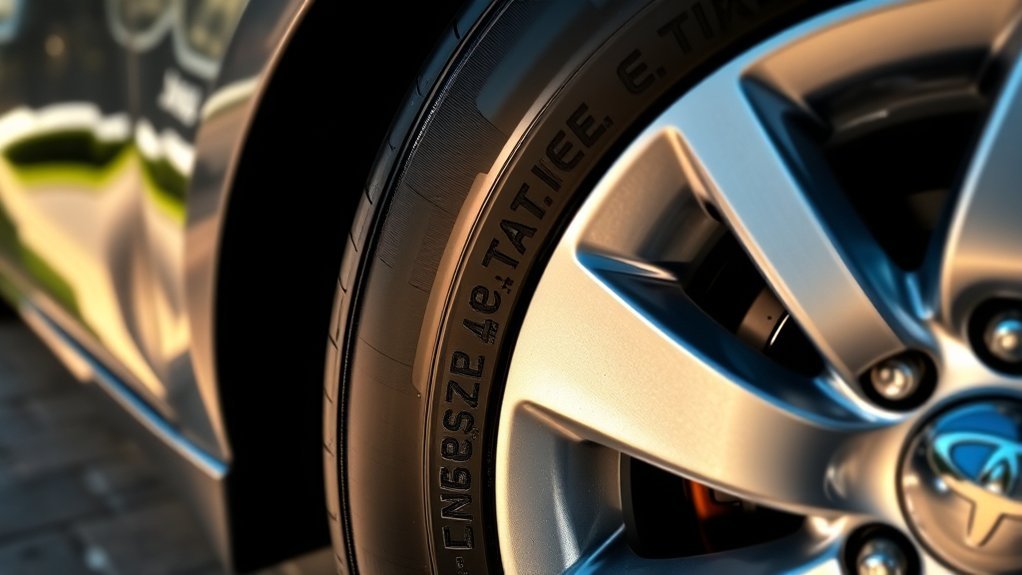
Reading your Toyota Camry tire size is easier once you know where to look and what each number means. The safest starting point is not the tire that happens to be on the car today; it is the Tire and Loading Information label on the driver-side door area, backed up by your Toyota owner’s manual or a Toyota dealer using your VIN.
Quick Answer
To read your Toyota Camry tire size, check the driver-side door placard first, then decode the sidewall code such as P215/60R16 94H. “215” is tire width, “60” is aspect ratio, “R” means radial, “16” is rim diameter, “94” is load index, and “H” is speed rating.
Key Takeaways
- Use the driver-side Tire and Loading Information label as your primary source for the correct Camry tire size and cold tire pressure.
- The sidewall code tells you width, aspect ratio, construction, rim diameter, load index, and speed rating.
- Do not rely only on a current tire’s sidewall if you bought the car used, changed wheels, or are unsure whether the current tires are original equipment.
- Match or exceed the factory load index and speed rating unless Toyota or a qualified tire professional confirms another fitment.
At a Glance
| Time Required | 5 minutes |
| Difficulty | Easy |
| Tools Needed | Your Camry, a flashlight, and the owner’s manual or Toyota Owners website if you want to verify by VIN |
| Cost | Free |
Why Knowing Your Tire Size Matters
Knowing your Toyota Camry tire size matters because tire size affects fitment, handling, braking feel, ride comfort, load capacity, and how accurately vehicle systems read wheel speed. A tire that is too tall, too short, too wide, or rated too low can create rubbing, uneven wear, poor steering response, or reduced safety margins.
The correct size also helps keep your Camry close to the performance Toyota designed for that year, trim, and wheel package. Toyota’s current Camry lineup, for example, uses different wheel sizes by trim, including 16-inch, 18-inch, and 19-inch wheels, so there is no single “one-size-fits-all” Camry tire answer.
Before buying replacements, always confirm three things: the size, the load index, and the speed rating. These are part of the tire’s service description and tell you whether the tire can safely carry the vehicle load and meet the required performance rating.
Where to Find Your Toyota Camry Tire Size Information
There are three practical places to find your Camry tire size, but they are not equally reliable. Use them in this order.
1. Check the Driver-Side Door Placard First
Open the driver’s door and look at the driver-side B-pillar, door edge, or nearby door-jamb area. The Tire and Loading Information label lists the manufacturer-recommended tire size and cold tire pressure for that vehicle. U.S. vehicle placard rules require this information to be placed in a visible driver-side location, which is why this label should be your first stop.
This label is especially important if your Camry has optional wheels, a sport trim, a hybrid trim, or a previous owner who may have installed a different tire size.
2. Confirm in the Owner’s Manual
Your owner’s manual is the next best resource. Toyota provides owner’s manuals and warranty information through the Toyota Owners manuals page. If you are unsure about trim, wheel package, or replacement options, confirm by VIN with a Toyota dealer or qualified tire retailer.
3. Read the Current Tire Sidewall
The current tire sidewall is useful for decoding what is installed now. Look for a code such as P215/60R16 94H, 205/65R16 95H, 235/45R18 94V, or 235/40R19 92V. The exact code on your car may vary by model year, trim, market, and wheel package.
Warning: Do not assume the current sidewall size is correct if you bought the Camry used or the wheels were changed. The door placard and owner’s manual should overrule the tire that happens to be mounted today.
Decoding Tire Size
Most Camry tire sizes follow a pattern like P215/60R16 94H. Here is what each part means.
| Part of Code | Meaning | Example |
|---|---|---|
| P | Passenger-car tire. Some modern metric sizes may omit the “P.” | P215/60R16 |
| 215 | Nominal section width in millimeters. | 215 mm wide |
| 60 | Aspect ratio. The sidewall height is 60% of the tire width. | Taller sidewall than a 45-series tire |
| R | Radial construction, the normal construction type for modern Camry tires. | R = radial |
| 16 | Wheel rim diameter in inches. | Fits a 16-inch wheel |
| 94 | Load index, a code for how much weight one properly inflated tire can support. | Must meet or exceed Toyota’s requirement |
| H | Speed rating. H is rated up to 130 mph under specified conditions, but this is not permission to exceed posted speed limits. | H, V, W, or another symbol |
Pro Tip: When shopping, compare the full service description, not just the size. A 235/45R18 tire with a lower load index or speed rating than required may not be an appropriate replacement.
[Products Worth Considering]

EVOULTES heavy duty tire inflator with an integrated gauge delivers accurate pressure readings from 10–120 PSI, helping you inflate, deflate, and check tires in one tool. The 16.5-inch extended dual-head air chuck with swivel base reaches hard-to-access dual wheel valves on trucks and RVs. A brass trigger core and side-mounted air release valve make operation smooth, with standard 1/4" NPT threading and quick-connect compatibility for easy setup.

This portable cordless tire inflator delivers up to 160 PSI with fast 17 L/min airflow to help you quickly top up tires and get back on the road. It features dual power mode, running on a 21V rechargeable battery or a 12V DC adapter for convenient roadside use. An automatic shut-off with digital pressure gauge helps prevent overinflation, and a built-in LED light improves visibility in low-light conditions.

The JACO FlowPro Tire Inflator measures, inflates, and airs down tires up to 100 PSI with battery-free operation and ±2% accuracy after calibration. It features a glowing pressure dial for night visibility, a heavy-duty steel build with a hybrid hose, and a precision push-to-inflate thumb trigger. The patented Lightning Air Chuck locks on for a secure seal, and the kit includes quick-connect hardware for easy inline use with your air compressor.
Why Tire Width Matters for Performance
Tire width is the first three-digit number in the size code. In P215/60R16, the tire is about 215 millimeters wide. In 235/45R18, it is about 235 millimeters wide.
A wider tire can increase the contact patch and may improve dry-road grip, depending on the tire model and vehicle setup. But wider does not automatically mean better. Too much width can cause rubbing, heavier steering, more road noise, reduced ride comfort, or higher rolling resistance.
[Products Worth Considering]

This compact capsule-style tire repair kit helps you quickly fix punctures and plug flats with minimal effort. The rugged stainless steel shell protects the contents for reliable roadside use, while the simple plug assembly makes repairs fast and tool-free. Suitable for motorcycles, cars, ATVs, UTVs, and even mountain bikes.

Wykodra tire plugs provide quick vulcanizing repairs for tubeless tires, helping you seal punctures and get back on the road. The industrial-strength rubber creates a long-lasting, leak-resistant bond and is designed for emergency fixes without removing the tire. Choose between two standard plug sizes with color-matched options for small to larger damage across many vehicles and off-road uses.

Designed for use on performance-oriented vehicles in warmer weather conditions
Tire Width and Handling
On a Camry, handling depends on the full tire-and-wheel package: width, sidewall height, tread design, tire compound, wheel offset, alignment, and inflation pressure. A sport trim with 19-inch wheels may feel sharper than a base trim with taller-sidewall tires, but the trade-off can be more impact harshness over rough pavement.
Impact on Fuel Efficiency
Changing tire width can affect fuel efficiency because tire construction and rolling resistance matter. Instead of focusing only on width, choose a tire that matches the factory size and service description, keep it inflated to the recommended cold pressure, and compare tire ratings when available.
How Aspect Ratio Affects Ride Quality

The aspect ratio is the second number in the tire size. In P215/60R16, “60” means the sidewall height is 60% of the tire width. In 235/40R19, “40” means the sidewall is shorter relative to the width.
A higher aspect ratio usually gives more sidewall cushioning, which can help ride comfort and pothole absorption. A lower aspect ratio can sharpen steering response but may ride more firmly and leave less sidewall to protect the wheel from impacts.
This is why you should not change aspect ratio casually. Even if the tire fits the wheel, the overall diameter can affect speedometer accuracy, ABS behavior, traction control, ride height, and fender clearance.
What’s the Deal With Tire Construction: Radial vs. Bias?
The letter after the aspect ratio describes tire construction. For a Toyota Camry, you will almost always see R, which means radial construction. Radial tires use body plies arranged in a way that supports modern ride comfort, tread life, and highway stability.
| Feature | Radial Tires | Bias Tires |
|---|---|---|
| Sidewall code | R | D, B, or older-style markings |
| Typical Camry use | Normal replacement choice | Not typical for a modern Camry |
| Best fit | Passenger cars, daily driving, highway use | Specialty, vintage, trailer, or off-road applications |
For everyday Camry driving, choose a radial tire in the factory-recommended size unless Toyota or a qualified tire professional confirms a different approved setup.
[Products Worth Considering]


Determining the Correct Rim Diameter
The rim diameter is the number after the construction letter. In P215/60R16, the “16” means the tire fits a 16-inch wheel. In 235/45R18, the “18” means it fits an 18-inch wheel. A 16-inch tire cannot be mounted on an 18-inch wheel, and an 18-inch tire cannot be mounted on a 16-inch wheel.
Late-model Camrys may have different wheel diameters depending on trim. Toyota’s 2026 Camry page lists trims with 16-inch, 18-inch, and 19-inch alloy wheels, which is why the door placard is more reliable than a generic online chart.
Note: Rim diameter is only one fitment factor. Wheel width, offset, brake clearance, tire diameter, and load rating also matter before changing wheel sizes.
What Is Load Index and Why It Matters?
The load index is the number after the tire size. In 235/45R18 94V, the load index is 94. It is not the weight itself; it is a code that corresponds to how much weight one tire can support when properly inflated.
For safety, replacement tires should meet or exceed the load index shown on the door placard or specified by Toyota. A tire with too low a load index may be overloaded during normal driving, especially with passengers, cargo, heat, and highway speeds.
If you see XL or Extra Load, that means the tire is built to carry more load at a higher inflation pressure than a standard-load tire of the same size. Do not use XL as a shortcut to ignore Toyota’s specifications; it still needs to match the correct size and service description.
Understanding Speed Rating and Its Impact on Safety
The speed rating is the letter after the load index. In 94V, the speed rating is V. Common passenger-car speed ratings include T, H, V, W, and Y. For example, H corresponds to 130 mph and V corresponds to 149 mph under specified test conditions.
Speed Rating Explained
A speed rating is not just about top speed. It also reflects how the tire is designed to handle heat and load at speed. When buying replacements, choose a tire that meets or exceeds the rating Toyota specifies for your Camry.
Safety Implications of Ratings
Do not downgrade the speed rating just because you never drive near the tire’s rated speed. A lower-rated tire may have different heat tolerance, handling characteristics, or construction. Also, never treat a speed rating as permission to exceed legal speed limits or drive faster than conditions allow.
Recommended Pressure vs. Sidewall Maximum Pressure
Your Camry’s recommended tire pressure comes from the vehicle placard and owner’s manual, not from the “MAX PRESS” number molded into the tire sidewall. The sidewall maximum is the tire’s maximum allowed pressure under specified conditions; it is not the normal cold inflation pressure Toyota chose for your vehicle.
Warning: Always set tire pressure when the tires are cold, using the pressure on the Camry’s placard. Overinflating to the sidewall maximum can reduce comfort and traction, while underinflation can increase heat buildup and wear.
How to Read the DOT Date Code
Along with the size, the tire sidewall includes a DOT Tire Identification Number. The date code is usually the last four digits of the DOT code on tires made in 2000 or later. For example, 2324 means the tire was manufactured in the 23rd week of 2024.
The date code does not replace a tread-depth or damage inspection. A tire can be unsafe because of age, cracking, impact damage, punctures, uneven wear, or low tread, even if the size is correct.
Common Mistakes When Reading Tire Sizes
Most wrong-size purchases happen because drivers read only part of the tire code. Avoid these common mistakes before ordering Camry tires.
| Mistake | Why It Matters | Better Move |
|---|---|---|
| Reading only the sidewall | The current tire may not be the factory-correct size. | Check the door placard first. |
| Ignoring load index | A tire can be the right size but too low-rated for the vehicle. | Match or exceed the factory load index. |
| Ignoring speed rating | A lower rating may change heat resistance and handling. | Match or exceed Toyota’s required rating. |
| Mixing sizes on the same axle | Can create handling, braking, and stability problems. | Use matching tires on the same axle unless Toyota specifies otherwise. |
| Choosing a larger tire for looks | Can cause rubbing, speedometer error, or system-calibration issues. | Confirm any plus-size setup with a professional. |
| Using sidewall max pressure | That is not the vehicle’s recommended cold pressure. | Use the pressure on the Camry placard. |
A tire size is not complete until you confirm the service description: the load index and speed rating are part of choosing the right replacement tire.
Frequently Asked Questions
How do I check the tire size on a Toyota Camry?
Open the driver’s door and read the Tire and Loading Information label on the door jamb or B-pillar. Then compare it with the tire sidewall code and your owner’s manual. Use the placard as the main source because it is tied to your Camry’s original equipment.
What does P215/60R16 mean on a Camry tire?
P means passenger-car tire, 215 is the width in millimeters, 60 is the aspect ratio, R means radial construction, and 16 is the wheel diameter in inches. If the code continues with something like 94H, 94 is the load index and H is the speed rating.
Can I use a different tire size on my Toyota Camry?
Sometimes, but do not guess. A different size can affect clearance, speedometer accuracy, ABS, traction control, ride comfort, and load capacity. Confirm any alternate size with Toyota, your owner’s manual, or a qualified tire professional.
Is the pressure on the tire sidewall the right pressure for my Camry?
No. The sidewall shows the tire’s maximum pressure, not Toyota’s recommended cold tire pressure for your Camry. Use the pressure printed on the driver-side placard or listed in the owner’s manual.
What if my Camry’s door placard and current tire sidewall do not match?
Treat the mismatch as a warning sign. The car may have replacement wheels, the wrong tires, or a previous owner’s alternate setup. Verify by VIN with Toyota or a qualified tire shop before buying another set.
Conclusion
Reading your Toyota Camry tire size comes down to a simple order: check the driver-side placard, confirm with the owner’s manual, then decode the sidewall. Once you understand width, aspect ratio, rim diameter, load index, and speed rating, you can shop with confidence and avoid the most common wrong-size tire mistakes.
The key is to read the full code, not just the first few numbers. A tire that fits the wheel still needs the right load rating, speed rating, pressure guidance, and overall fitment for your specific Camry.
Sources
- Toyota Owners — Manuals and Warranties — supports checking the Toyota owner’s manual and VIN-specific owner resources.
- Toyota Camry Official Page — supports trim and wheel-size variation across current Camry models.
- 49 CFR §571.110 — supports vehicle tire placard requirements and tire load information rules.
- Tire Industry Association — Reading a Tire Sidewall — supports load index, speed symbol, and DOT/TIN sidewall explanation.
- Continental Tire — How to Read Your Tire Sidewall — supports aspect ratio, construction, rim diameter, load index, and speed-rating definitions.
- NHTSA TireWise — supports tire safety ratings and consumer tire-safety awareness.

Related Articles

Toyota Camry All-Season Tires Explained: What They Can and Can’t Do
In exploring Toyota Camry all-season tires, discover their benefits and limitations—are they really the right choice for your driving needs?
Read More
Toyota Camry Tire Traction in Ice and Snow: A Practical Winter Driving Guide
Learn essential tips for maximizing tire traction on ice and snow in your Toyota Camry, ensuring your winter driving is safe and confident. Discover more now!
Read More
Do Toyota Camry Tires Need Snow Chains? When They Help and When They Don’t
How do snow chains enhance your Toyota Camry's winter driving safety, and when should you avoid using them? Discover the essential details inside!
Read More