
Hyundai Sonata Bent Rim Causing Tire Vibration: Diagnosis & Fix
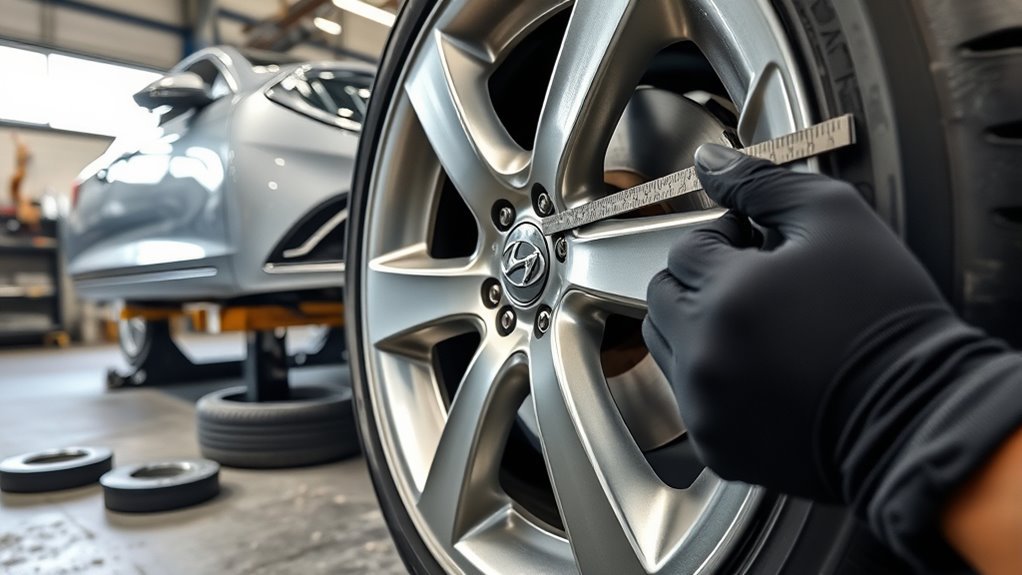
If your Hyundai Sonata shakes most at highway speeds, especially around 50–70 MPH, a bent rim is one possible cause—but it is not the only one. Tire imbalance, tire runout, uneven tire wear, low pressure, a damaged tire, brake issues, or worn suspension parts can feel similar. The safest approach is to diagnose the tire and wheel assembly first, then move outward to alignment, brakes, hubs, and suspension.
Quick Answer
Yes, a bent rim can make a Hyundai Sonata vibrate, especially at highway speeds. It can create wheel runout, throw off balance, cause a tire bead leak, or wear the tire unevenly. Still, rule out tire pressure, tire balance, damaged tires, and alignment before blaming the rim.
Key Takeaways
- A vibration that appears at certain speeds often points to tire balance, wheel runout, or tire uniformity problems.
- A bent rim is more likely if the vibration began after a pothole or curb hit, one tire slowly loses air, or the inner rim lip is visibly wavy.
- Use the cold PSI listed on the Hyundai tire label, not the maximum pressure molded into the tire sidewall.
- If the steering wheel shakes, start with the front wheels; if the seat or floor shakes more, inspect the rear wheels too.
- Severe shaking, air loss, bulges, cracks, or exposed cords means you should stop driving and have the car inspected.
At a Glance
| Time Required | 20–45 minutes for basic driveway checks; 45–90 minutes for a tire shop inspection. |
| Difficulty | Beginner for pressure and visual checks; professional help recommended for runout measurement, tire mounting, and wheel straightening. |
| Tools Needed | Tire pressure gauge, flashlight, tread-depth gauge or penny, chalk or tape, wheel chocks, jack, jack stands, and optionally a dial indicator. |
| Cost | Basic checks are usually free if you already have a gauge. Shop diagnosis, balancing, wheel repair, tire replacement, or suspension work varies by location and damage level. |
Does Your Hyundai Sonata Have a Vibration Problem?

A Hyundai Sonata vibration problem often shows up as a shake in the steering wheel, seat, floor, or body of the car. If the shake appears only at certain speeds, the first suspects are usually the tire and wheel assemblies. A bent rim can be part of that, but so can an out-of-balance tire, a tire that is not round under load, uneven tread wear, or a damaged tire.
The pattern matters. A front-wheel problem is often felt more through the steering wheel. A rear-wheel problem is often felt more through the seat or floor. This is not a perfect rule, but it helps you decide where to start looking.
A bent rim becomes more likely if the vibration started right after hitting a pothole, curb, or road debris. It is also more likely if the same tire keeps losing air, the rim lip looks wavy, or the tire shop says the wheel needs a lot of weight to balance.
Warning: Do not keep driving at highway speed if the vibration is severe, getting worse, or paired with a tire-pressure warning, thumping noise, burning smell, sidewall bulge, exposed cord, or steering pull. Slow down safely and have the tire and wheel inspected.
Common Causes Before Blaming a Bent Rim
Many Sonata owners jump straight to “bent rim,” but several tire and wheel faults can create the same shake. A good diagnosis rules out the simple items first.
| Possible cause | Common clue | Best next step |
|---|---|---|
| Low or uneven tire pressure | Soft ride, poor handling, TPMS warning, uneven shoulder wear | Set all tires to the correct cold PSI from the Hyundai tire label. |
| Out-of-balance tire/wheel | Speed-dependent vibration that improves or worsens as speed changes | Have the tire and wheel balanced. |
| Tire or wheel runout | Visible hop, wobble, rhythmic shake, or repeated tread high spot | Ask for a runout check or road-force balance. |
| Bent rim | Started after impact, slow bead leak, wavy inner lip, scuffed rim edge | Inspect inner and outer rim lips; repair or replace if unsafe. |
| Alignment or suspension wear | Pulling, crooked steering wheel, feathered tire edges, clunking | Have alignment and suspension parts checked. |
Tire Rack notes that speed-dependent vibration is often balance-related and that if rebalancing does not fix the problem, the installer should check tire and wheel runout. You can read their balancing guidance here: Tire Rack mounting and balancing procedure.
How to Spot Tire Vibration Symptoms
Start by noticing exactly when and where the vibration happens. Your notes can save time at the tire shop.
- Steering wheel shake: often points toward a front tire, front wheel, or front suspension issue.
- Seat or floor vibration: often points toward a rear tire or rear wheel issue.
- Vibration only at one speed range: often suggests balance, runout, or tire uniformity.
- Pulling to one side: may point to alignment, tire force, pressure mismatch, or suspension wear.
- Humming or thumping: may come from uneven tread wear, a damaged tire, wheel bearing, or a tire that is no longer round.
- Slow air loss: may indicate a puncture, valve leak, cracked wheel, corrosion, or a bead leak caused by rim damage.
Look at the tread too. Feathering, cupping, one-sided wear, or both-shoulder wear can tell you the tire has been running with an alignment, balance, inflation, or suspension problem. If the tread is worn unevenly, replacing the tire without fixing the cause can make the new tire wear out early.
Understanding the Impact of a Bent Rim
A bent rim changes how the tire and wheel assembly rolls. Even a small bend can create a wobble, a high spot, or a bead-sealing problem. At low speed, you may not feel much. At highway speed, that small defect can repeat many times per second and turn into a shake through the steering wheel, floor, or seat.
A bent rim can also create uneven contact between the tire and road. Over time, that may contribute to irregular tread wear. If the bend is near the bead seat, the tire may slowly leak air even when there is no nail or puncture.
Note: A wheel can be bent on the inner lip where you cannot easily see it from outside the car. If the vibration began after an impact, ask the shop to inspect both the inner and outer rim lips.
How to Diagnose Wheel Vibration at Home
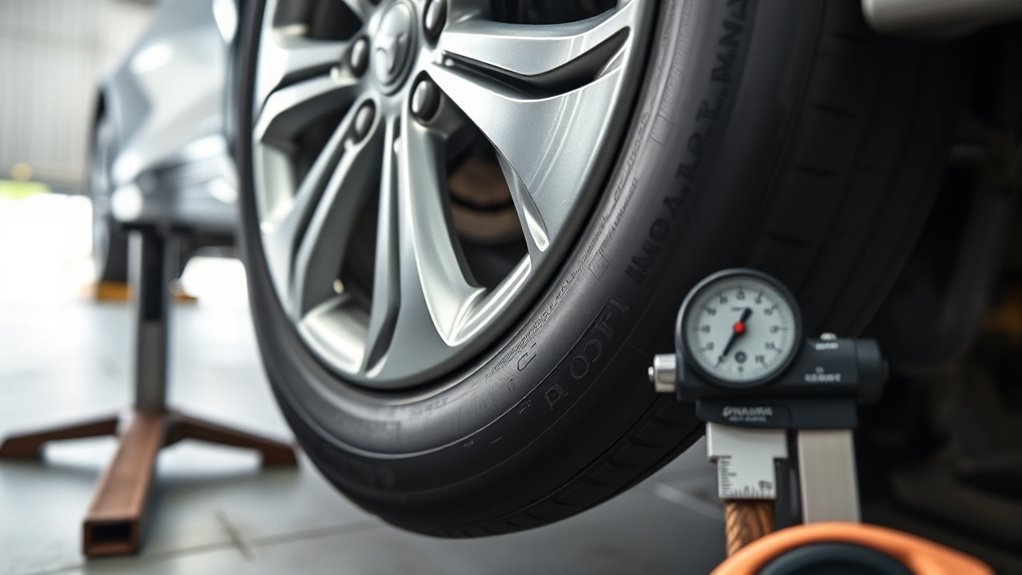
You can do basic checks at home, but do not try to demount, remount, or repair a tire yourself without proper equipment and training. Tire and rim assemblies can be dangerous when handled incorrectly.
Warning: If you lift the car, park on a level surface, set the parking brake, chock the wheels, use the correct lift points, and support the vehicle with jack stands. Never crawl under or place body parts under a car supported only by a jack.
Step 1: Check Cold Tire Pressure
Check pressure when the tires are cold, ideally before driving or after the car has been parked for at least three hours. Use the recommended PSI on the Hyundai tire label, not the maximum pressure printed on the tire sidewall. Hyundai states that the tire label on the driver’s side center pillar gives the recommended tire pressures for the vehicle: Hyundai tire specification and pressure label.
NHTSA also explains that the correct tire pressure is the vehicle manufacturer’s listed cold pressure and recommends checking all tires, including the spare: NHTSA TireWise tire safety guide.
Step 2: Inspect the Tires
Look closely at all four tires. Check for:
- Bulges, bubbles, cuts, cracks, or exposed cords
- Objects in the tread
- Uneven wear on one edge
- Cupped or scalloped tread blocks
- One tire that looks lower than the others
- Fresh sidewall scuffing after a pothole or curb strike
If you see a bulge, exposed cord, or deep sidewall damage, do not keep driving on that tire.
Step 3: Inspect the Rims
Use a flashlight and look at both the outer and inner rim lips. The inner lip is easy to miss, but it is often the area that bends after a pothole impact. Look for:
- Flat spots on the rim lip
- Fresh scratches or impact marks
- Cracks
- A wavy edge where the tire bead sits
- Corrosion around the bead seat
- Missing wheel weights
If one wheel has obvious damage, mark that wheel location with tape or chalk before visiting the shop. That makes it easier to compare the vibration complaint with the suspected wheel.
Step 4: Do a Basic Spin Check
If you can lift the wheel safely, spin it by hand and watch the rim lip and tread. You are looking for side-to-side wobble or up-and-down hop. A small visual wobble does not automatically prove the rim is unsafe, but any obvious movement should be checked with professional equipment.
A dial indicator gives a better runout reading than the naked eye. If you use one, compare the result with the wheel or vehicle manufacturer’s specification. If you do not have the spec or the tools, a tire shop can measure it quickly.
Step 5: Test After Balancing or Rotation
If pressure and visual checks look normal, the next step is usually balancing. A tire shop can rebalance the assembly and check whether the wheel needs excessive weight. If the vibration remains, ask for a road-force balance or runout measurement.
A road-force balancer measures the tire and wheel under load and can help find problems that a normal balance may miss. Tire Rack explains how road-force equipment measures tire and wheel uniformity here: Tire Rack road-force balancing explanation.
Pro Tip: Before the shop visit, write down the speed where the vibration starts, where it peaks, whether it changes while braking, and whether it is felt more in the steering wheel or seat. These details help separate tire/wheel vibration from brake, hub, or suspension problems.
How Wheel Alignment Affects Vibration
Wheel alignment does not usually create the same type of rhythmic highway shake as an out-of-balance or out-of-round tire and wheel assembly. However, poor alignment can wear tires unevenly, and uneven tires can later vibrate. Alignment can also make the car pull, drift, or feel unstable.
Effects on Tire Wear
Alignment problems can create feathered edges, one-sided shoulder wear, and faster tread loss. If the tire has already worn into an uneven pattern, the vibration may remain even after the alignment is corrected. In that case, the tire itself may need replacement.
USTMA recommends correcting misalignment, imbalance, or other mechanical problems when tires show uneven wear. It also notes that, when no vehicle-specific interval is provided, tire rotation is commonly done every 5,000–8,000 miles or at signs of uneven wear: USTMA Tire Care & Safety Guide.
Symptoms of Misalignment
| Symptom | What it may mean | What to do |
|---|---|---|
| Steering wheel is off-center | Alignment may be out of spec | Schedule an alignment check. |
| Car pulls or drifts | Alignment, tire pressure, tire force, or suspension issue | Check pressure first, then inspect tires and alignment. |
| Feathered tire edges | Toe alignment or worn components | Have alignment and front-end parts checked. |
| Cupped tread | Possible balance, shock/strut, wheel bearing, or suspension issue | Ask for tire, wheel, and suspension inspection. |
Importance of Regular Checks
Regular checks prevent small tire and wheel problems from becoming expensive. At least monthly, check cold tire pressure and inspect the tread and sidewalls. Before long trips, repeat the check. NHTSA also advises drivers to slow down for potholes and avoid curbs when parking because impacts can damage tires and wheels: NHTSA tire safety checklist.
Costs of Ignoring Vibration Issues
Ignoring a vibration can turn a small tire or wheel issue into a larger repair. A bent rim may continue wearing the tire unevenly. A leaking bead may leave the tire underinflated. A shaking tire and wheel assembly can also stress suspension parts over time.
The final cost depends on what is damaged. A simple balance is very different from replacing a tire, straightening a wheel, replacing a cracked wheel, repairing a hub, or replacing worn suspension parts. The cheapest path is usually early diagnosis before the tire is ruined.
A highway-speed vibration is not just an annoyance. It is a warning that the tire, wheel, brake, hub, or suspension system needs attention.
How to Prevent Rim Damage and Vibration Issues
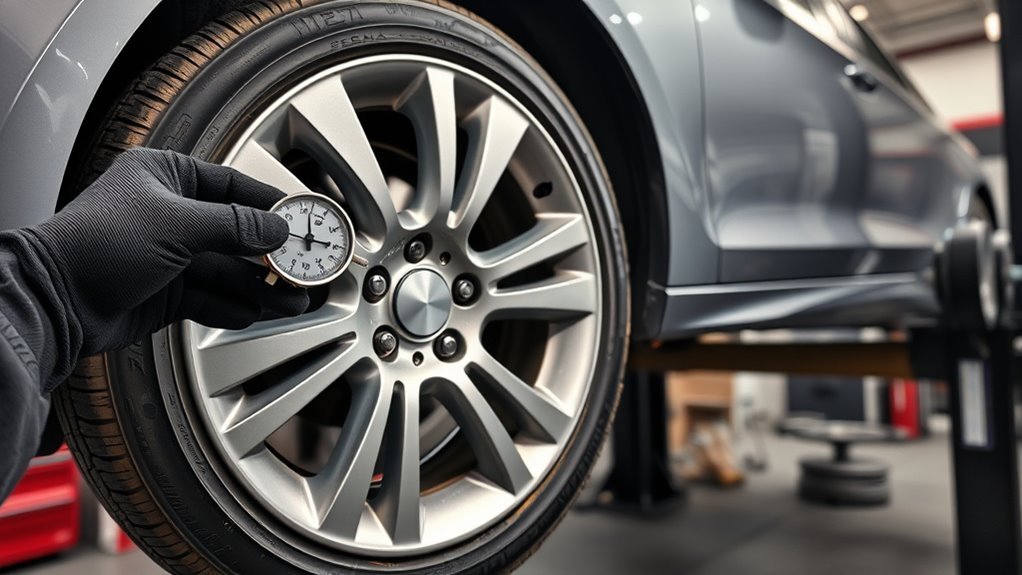
You cannot avoid every pothole, but you can reduce the chance of bent rims and tire vibration with simple habits.
- Maintain cold tire pressure: Underinflated tires flex more and give the rim less protection from impacts.
- Slow down for potholes: If you cannot avoid one safely, reduce speed before impact and keep a firm grip on the wheel.
- Avoid curb strikes: Even a parking-speed curb hit can bend a rim lip or damage a tire sidewall.
- Rotate and inspect tires: Follow the Sonata owner’s manual. If no specific tire interval applies, use tire-industry guidance and inspect sooner if wear appears uneven.
- Balance after tire work: Any tire replacement, wheel repair, or unusual vibration should be followed by proper balancing.
- Inspect after a hard impact: Check the tire, rim, pressure, and steering feel before continuing a long highway drive.
Case Study: Fixing a Vibration Issue in a Hyundai Sonata
Here is a practical diagnostic path for a Sonata that shakes between 50 and 70 MPH after a pothole hit:
| Step | Finding | Likely action |
|---|---|---|
| 1. Check pressure | One tire is low again after being filled | Leak test the valve, tread, and bead seat. |
| 2. Inspect rim | Inner lip has a flat spot | Measure runout and decide repair vs. replacement. |
| 3. Balance wheel | Assembly needs unusual weight or still shakes | Perform road-force balance and check tire uniformity. |
| 4. Inspect suspension | Pulling, clunking, or uneven wear remains | Check alignment, control arms, tie rods, ball joints, hub, and wheel bearing. |
If the rim is slightly bent and not cracked, a qualified wheel-repair shop may be able to straighten it. If the wheel is cracked, badly bent, repeatedly leaking, or previously repaired in an unsafe area, replacement is usually the safer choice.
When to Seek Professional Help for Vibration Issues
Get professional help if the vibration persists after pressure correction and basic inspection. You should also go straight to a shop if you notice any of these signs:
- Severe vibration at highway speed: The tire and wheel may be unsafe.
- Air loss from the same tire: The tire, valve, rim, or bead seat may be leaking.
- Visible tire bulge or rim crack: Do not keep driving on it.
- Vibration while braking: Brake rotors, hubs, or suspension may be involved.
- Clunking or looseness: Suspension or steering parts need inspection.
- Rebalancing did not fix it: Ask for runout measurement and road-force balancing.
A tire shop or mechanic should be able to inspect the inner rim lip, balance the tire and wheel, perform a road-force test if available, measure runout, check for bead leaks, and inspect the suspension and hub if needed.
Frequently Asked Questions
Can a slightly bent rim cause vibration?
Yes. A slightly bent rim can create runout or imbalance that becomes noticeable at highway speed. It may also cause slow air loss if the bead area is damaged. However, a tire imbalance, tire defect, or suspension issue can feel similar, so diagnosis matters.
Why is my Hyundai Sonata vibrating between 50 and 70 MPH?
A vibration in that range is commonly related to tire balance, tire or wheel runout, uneven tread wear, or a bent rim. If the vibration began after an impact or one tire keeps losing air, inspect the rim carefully. If balancing does not solve it, ask for runout and road-force checks.
Can EPS problems cause a Hyundai Sonata to vibrate?
Electric power steering problems can affect steering assist, steering feel, or warning lights, but a speed-specific highway vibration is usually checked first through the tires, wheels, brakes, hubs, and suspension. Do not replace EPS parts until the tire and wheel diagnosis is complete.
Can wheel alignment fix a vibration?
Sometimes, but not always. Alignment mainly fixes pull, crooked steering, and tire wear angles. A rhythmic vibration at a certain speed is more often caused by tire balance, tire uniformity, runout, or a damaged wheel. If the tires are already worn unevenly, alignment alone may not remove the shake.
Should I repair or replace a bent Sonata rim?
It depends on the bend, wheel material, crack risk, and location of the damage. A qualified wheel-repair specialist may straighten a minor bend, but a cracked wheel, severe bend, repeated bead leak, or unsafe prior repair should be replaced.
Conclusion
A bent rim can cause Hyundai Sonata vibration, especially if the shake appears at highway speed after a pothole or curb impact. Still, the smart diagnosis starts with tire pressure, tire condition, balance, and runout before moving to alignment, hubs, brakes, and suspension. If you see rim damage, tire bulges, air loss, or severe shaking, do not wait. A quick inspection can protect the tire, the wheel, and your safety.
Sources
- NHTSA TireWise — cold tire pressure, placard guidance, TPMS, and tire safety basics.
- Hyundai Tire Specification and Pressure Label — driver-side center pillar tire label location and recommended pressure guidance.
- NHTSA Tire Safety Checklist — monthly pressure checks, tire inspection, pothole caution, and curb-impact prevention.
- Tire Rack Mounting and Balancing Procedure — speed-dependent vibration, tire/wheel balance, runout, and mounting safety.
- Tire Rack Road-Force Balancing — tire/wheel uniformity and vibration diagnosis under load.
- USTMA Tire Care & Safety Guide — rotation, tire inspection, uneven wear, and inflation-maintenance guidance.

Related Articles

Danger of Using Summer Tires in Winter on a Hyundai Sonata
Potentially perilous, using summer tires in winter on your Hyundai Sonata can compromise safety—discover the hidden dangers that await you on icy roads.
Read More
Can You Mix Nitrogen and Air in Hyundai Sonata Tires? Answered
Discover the implications of mixing nitrogen and air in your Hyundai Sonata tires—are the benefits worth the risks? Explore the answer inside!
Read More
How to Tell If Hyundai Sonata Tires Are Too Old to Use Safely
Understand how to assess the age of your Hyundai Sonata tires and discover crucial signs of deterioration that could compromise your safety on the road.
Read More