
Inner Tube Materials Explained: Butyl, Latex & TPU
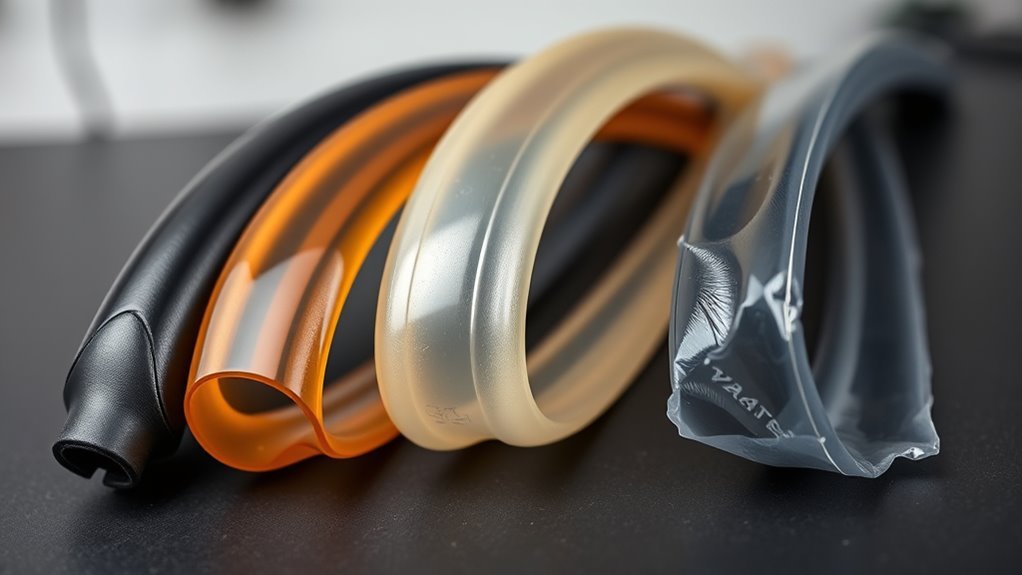
You want a fast, durable, or low-maintenance tube, so pick by material first: butyl is the dependable everyday choice, latex is the fastest-feeling race option, and TPU is the lightest, most compact performance spare. The best inner tube is not the same for every rider; it depends on your tire size, valve length, brake type, repair kit, and how often you are willing to check pressure.
Quick Answer
Choose butyl if you want cheap, tough, easy-to-patch tubes for commuting and daily riding. Choose latex if you care most about low rolling resistance and ride feel and do not mind inflating before rides. Choose TPU if you want a very light, compact tube with good performance, but remember it usually needs a TPU-specific patch kit.
Key Takeaways
- Butyl is best for low cost, easy repairs, and reliable air retention.
- Latex gives the best ride feel and usually the lowest rolling resistance, but it loses air faster.
- TPU is the lightest and most packable option, but patching and CO2 use depend on the brand.
- Always match the tube to your tire width, wheel diameter, valve type, valve length, and brake setup before buying.
What Butyl, Latex And TPU Inner Tubes Are And Why Material Matters
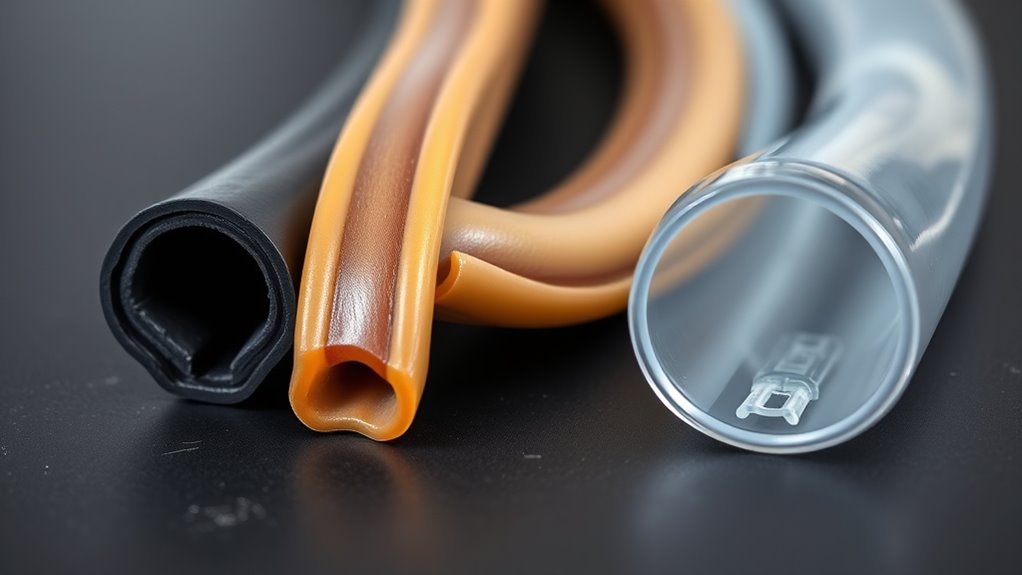
Materials determine how an inner tube performs under real-world conditions, so choosing between butyl, latex, and TPU comes down to trade-offs in weight, air retention, ride feel, puncture resistance, repairability, cost, and maintenance.
Butyl is the baseline for most riders. It is a synthetic rubber that is elastic and airtight, which is why it is used in many standard bicycle tubes. Schwalbe describes butyl as a very elastic, airtight synthetic rubber used in most bicycle tubes. In practice, that means butyl is affordable, widely available, easy to patch with standard kits, and forgiving for commuting, touring, and casual riding.
Latex is a natural rubber material used mostly by performance road riders. It is more supple than butyl, which helps the tire deform more smoothly on the road. That is why latex tubes are valued for comfort and speed. Vittoria markets its latex tubes as a lightweight racing option focused on low rolling resistance and road feel. The trade-off is that latex loses air faster, is more delicate during installation, and usually needs pressure checked before every serious ride.
TPU, short for thermoplastic polyurethane, is a newer plastic-based tube material. TPU tubes are usually much lighter and smaller when packed than standard butyl tubes. Performance-focused models can feel fast, while reinforced gravel versions add thickness for durability. Pirelli’s Cinturato SmarTUBE, for example, is positioned for gravel, adventure, and endurance use with low weight, compact size, and extra puncture protection compared with standard butyl tubes.
Note: Tube material matters, but it is not the only factor. Tire casing, tire pressure, road surface, rider weight, rim width, and tube thickness can change how fast, comfortable, or puncture-resistant a setup feels.
[Products Worth Considering]

Wykodra tire plugs provide quick vulcanizing repairs for tubeless tires, helping you seal punctures and get back on the road. The industrial-strength rubber creates a long-lasting, leak-resistant bond and is designed for emergency fixes without removing the tire. Choose between two standard plug sizes with color-matched options for small to larger damage across many vehicles and off-road uses.

This compact capsule-style tire repair kit helps you quickly fix punctures and plug flats with minimal effort. The rugged stainless steel shell protects the contents for reliable roadside use, while the simple plug assembly makes repairs fast and tool-free. Suitable for motorcycles, cars, ATVs, UTVs, and even mountain bikes.

This tire repair patch tool kit helps you quickly seal small punctures using upgraded mushroom plugs and a built-in roller system that presses for even penetration. The tungsten buffing wheel and HSS twist drill bits prepare the damaged surface for stronger adhesion, while the crown-angle friendly plugs are designed to keep water and debris out. Ideal for puncture repairs on many vehicle types, from cars and trucks to bikes and scooters.
Butyl Vs Latex Vs TPU Comparison Table
| Feature | Butyl | Latex | TPU |
|---|---|---|---|
| Best for | Commuting, training, touring, low-maintenance riding | Road racing, fast group rides, comfort-focused performance | Lightweight spares, racing, gravel, performance setups |
| Weight | Usually heaviest | Lighter than standard butyl | Usually lightest and smallest packed |
| Rolling resistance | Highest of the three in many tests | Often lowest | Often close to latex, depending on model |
| Air retention | Very good | Weakest; check before rides | Usually better than latex; varies by brand |
| Repair | Easy with standard patches | Patchable but more delicate | Needs TPU-compatible patches |
| Main drawback | Heavier and slower-feeling | Frequent inflation and careful installation | Higher cost and brand-specific repair rules |
How They Ride: Weight, Rolling Resistance And Ride Feel Compared
Once you pick a tube material, the biggest on-bike differences are weight, rolling resistance, and ride feel.
Butyl feels practical, not flashy. A standard butyl tube is heavier and less supple than latex or many TPU options, so it can feel slightly duller under a fast road tire. That does not make it bad. For everyday riding, the difference may matter less than reliability, easy repairs, and cost.
Latex feels lively and fast. Latex tubes are known for a smoother, more responsive ride because the material flexes easily inside the tire. Independent rolling-resistance testing has repeatedly found latex among the fastest tube choices. In one AeroCoach inner tube test, latex tubes saved more than 7 watts for a pair of wheels compared with a standard butyl tube under that test setup.
TPU can be fast and extremely light. TPU tubes vary more by brand and model than butyl or latex. Some ultralight road TPU tubes are built mainly for speed and packability, while reinforced TPU gravel tubes are thicker and more durable. Bicycle Rolling Resistance has tested many TPU tubes against butyl and latex, showing that the best TPU models can be highly competitive, but results depend on the exact tube.
For pure speed, latex and top TPU tubes usually beat standard butyl. For everyday convenience, butyl still wins because it is cheap, easy to patch, and holds pressure well.
Inner Tube Air Retention, Puncture Resistance And Real-World Durability
Air retention, puncture resistance, and real-world durability decide how much maintenance you will actually do after the excitement of buying new tubes wears off.
Air Loss Over Time
Butyl holds air best for most riders. A good butyl tube can usually sit for several rides before it needs a major top-up, especially at moderate pressures. That makes it the easiest choice for commuters, casual riders, and anyone who dislikes checking pressure constantly.
Latex loses air faster. This is the normal trade-off for its supple ride. If you use latex, expect to check and top up pressure before important rides. That is especially true for high-pressure road setups, where a small pressure drop is more noticeable.
TPU usually sits between butyl and latex. Many TPU tubes retain air better than latex and are convenient as compact spares, but air retention varies by construction, valve design, and brand. Treat TPU as a performance product: read the manufacturer’s instructions instead of assuming every TPU tube behaves the same.
Puncture Resistance Ranking
A simple ranking like “TPU > butyl > latex” is too broad because tube thickness matters. A reinforced TPU gravel tube can be tougher than a thin race tube, but an ultralight TPU model may not be more durable than a standard butyl tube in every situation.
Use this practical rule instead:
- Best low-fuss durability: standard butyl.
- Best speed-focused comfort: latex, if you accept more care and more pressure checks.
- Best compact performance spare: TPU, especially for riders who want to save space in a saddle bag or jersey pocket.
- Best rough-surface setup: reinforced TPU or butyl, depending on budget and repair preference.
Real-World Longevity
Real-world longevity depends on heat, installation, tire condition, rim tape, storage, punctures, UV exposure, and whether the tube is pinched during mounting. Butyl is usually the most forgiving. Latex can last well when installed carefully, but it is easier to damage with tire levers or rough rim tape. TPU can last well too, but valve durability and patch quality vary by model.
Warning: Never install a tube in a tire or rim size outside the manufacturer’s stated range. Overstretching or folding a tube can cause sudden failure, poor air retention, or a blowout.
Compatibility: Valves, Brakes And Size Checks Before You Buy
Before comparing grams or rolling watts, make sure the tube actually fits your bike.
Check Wheel Diameter And Tire Width
Match the tube to your tire’s printed size. For road bikes, that might be 700 x 25–32c. For gravel, it might be 700 x 35–45c or 650b. For mountain bikes, it may be 27.5 or 29 inch with a wider range. A tube can usually cover a small range of tire widths, but do not force a narrow tube into a much wider tire.
Choose The Right Valve Type And Length
Most road and gravel bikes use Presta valves. Some city, hybrid, and mountain bikes use Schrader valves. Deep-section rims need longer valve stems or valve extenders. A valve that is too short makes inflation frustrating; a valve that is poorly supported can bend or crack, especially on some ultralight TPU tubes.
Check Rim Brake And CO2 Guidance
TPU tubes can be more sensitive to heat and brand-specific restrictions than butyl tubes. Some brands allow CO2; others recommend caution. Tubolito’s FAQ says its tubes can be inflated with CO2 but should be reinflated sooner because CO2 escapes more quickly than air. Always follow your tube manufacturer’s instructions for CO2 cartridges, rim brakes, and maximum pressure.
Pro Tip: If you carry TPU as an emergency spare, keep the matching TPU patch kit with it. Standard butyl patches often do not bond correctly to TPU.
Maintenance And Repairs: Tools, Patching And Inflation Tips Per Material
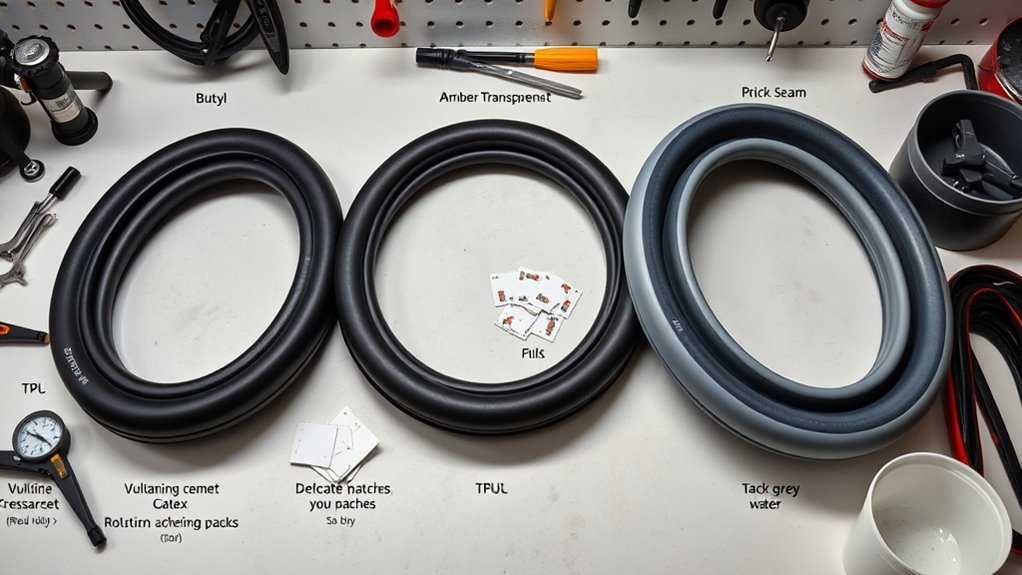
When you are preparing for rides or fixing flats, focus on the right tools and routines for each tube material. The wrong patch kit or a rushed installation can ruin an otherwise good tube.
[Products Worth Considering]

This tire repair kit provides fast emergency puncture repair without removing the tire from the rim, helping you get back on the road quickly. Its screw plug system is designed for punctures in both tread and sidewall and includes a complete patch plug tool set with essential accessories. A portable storage bag makes it easy to carry for cars, trucks, SUVs, motorcycles, and heavy-duty applications.
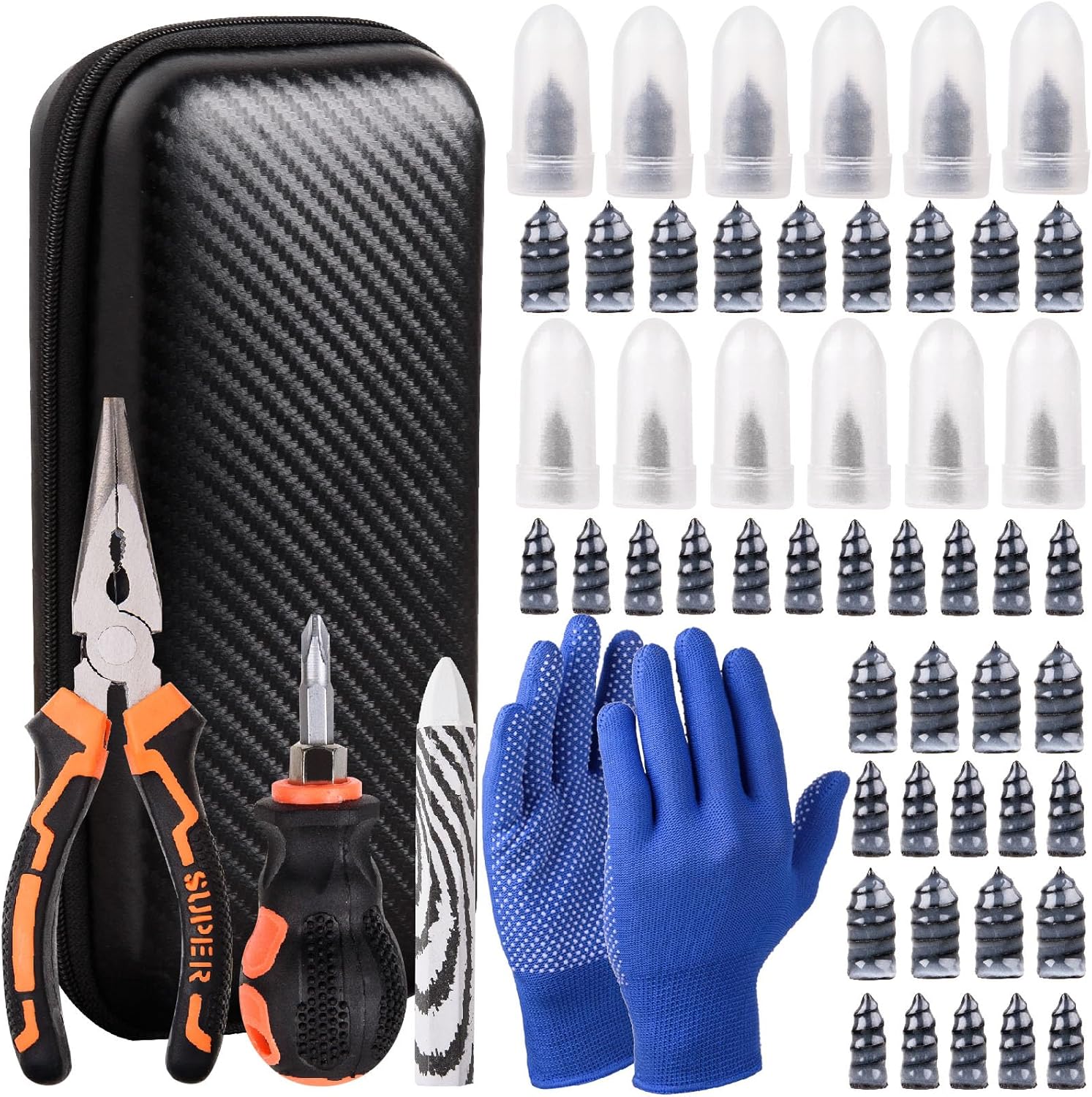
This tire sidewall puncture repair kit fixes flats fast without removing the tire, helping you get back on the road in minutes. It includes self-tapping repair nails, essential tools, gloves, and a portable storage bag for convenient roadside use. Designed for tubeless tires, it helps create a tight, leak-resistant seal for cars, motorcycles, trucks, SUVs, and ATVs.
Butyl Maintenance And Repair
Butyl is the easiest tube material to live with. Check tire pressure regularly, carry tire levers, a pump or CO2 inflator, and a standard rubber patch kit. Butyl patches are widely available, inexpensive, and reliable when the tube is cleaned, lightly abraded, and patched correctly.
Latex Maintenance And Repair
Latex rewards careful riders. Check pressure before most rides, install it gently, and avoid sharp tire levers when possible. A small pinch during installation can cause a slow leak or blowout later. Latex can be patched, but the thin, stretchy material requires more care than butyl.
TPU Maintenance And Repair
TPU tubes need TPU-compatible patches. Schwalbe’s Aerothan patches are specifically designed for Schwalbe TPU tubes, and Tubolito sells a dedicated Tubo-Patch Kit for its TPU tubes. Cleanliness matters: dirt, moisture, and rushed curing time can make TPU patches fail.
Installation Mistakes That Cause Flats
Many tube failures come from installation, not the material itself. Avoid these common mistakes:
- Pinching the tube under the tire bead: Add just enough air for the tube to hold shape, then seat the tire carefully.
- Using damaged rim tape: Exposed spoke holes or sharp rim edges can puncture any tube.
- Leaving debris in the tire: Run your fingers carefully inside the tire after a flat to find glass, thorns, or wire.
- Using the wrong valve length: Too little exposed valve makes inflation difficult and can stress the stem.
- Overusing tire levers: Levers can pinch latex and TPU tubes more easily than butyl.
Note: If you keep getting flats in the same wheel, inspect the tire casing, rim tape, valve hole, and spoke bed before blaming the tube material.
Cost, Packability And Which Tube To Pick For Road, Gravel And Commuting
Balance cost, packability, and performance to pick the right tube for your riding. Butyl is usually the cheapest and simplest. Latex costs more and needs more attention, but it is a strong choice for fast road riding. TPU is usually the most compact and weight-efficient, but it often costs more and needs brand-specific repair supplies.
Cost Versus Performance
If your priority is cost per mile, choose butyl. It is widely stocked, easy to replace, and easy to patch. If you are chasing speed, latex and high-quality TPU can be worth the upgrade. If you want the smallest emergency spare, TPU is hard to beat because it packs down far smaller than a standard butyl tube.
Packability And Use
TPU is the clear winner for packability. A TPU tube can free space in a small saddle bag or jersey pocket, which is useful for road racing, gravel events, bikepacking, and minimalist setups. Latex also packs smaller than many standard butyl tubes, but because it loses air faster and is more delicate, it is usually chosen for the installed tube rather than the emergency spare.
Which Inner Tube To Buy By Goal And Budget
Use your riding goal to make the final choice:
- Daily commuting: Choose butyl. It is durable, cheap, easy to patch, and low maintenance.
- Road racing: Choose latex or a fast TPU tube. Latex gives excellent ride feel; TPU saves more weight and space.
- Gravel riding: Choose reinforced TPU or butyl. Pick TPU for weight and packability; pick butyl for repair simplicity.
- Touring and utility bikes: Choose butyl. Availability and repairability matter more than saving grams.
- Emergency spare: Choose TPU if compact storage matters, but carry the correct patch kit.
- Budget training bike: Choose butyl and spend the savings on good tires, fresh rim tape, and a reliable pump.
Frequently Asked Questions
Which is better: TPU, latex, or butyl inner tube?
There is no single best choice. Butyl is best for low cost, air retention, and easy repairs. Latex is best for ride feel and low rolling resistance. TPU is best for low weight, compact storage, and performance-focused spares.
Is TPU the same as latex?
No. TPU is a thermoplastic polyurethane material, while latex is natural rubber. TPU tubes are usually lighter and more compact, while latex tubes are more supple and known for excellent road feel. They also need different patching methods.
What is the difference between a TPU tube and a rubber bike tube?
A TPU tube is made from thermoplastic polyurethane, while most standard rubber bike tubes are butyl rubber. TPU is usually lighter and packs smaller. Butyl rubber is usually cheaper, easier to patch, and more widely available.
Do TPU inner tubes need a special patch kit?
Yes, in most cases. TPU tubes usually need TPU-compatible patches from the tube manufacturer or a compatible repair kit. Standard butyl rubber patches may not bond properly to TPU.
Can I use CO2 with TPU inner tubes?
It depends on the tube brand. Some manufacturers allow CO2, while others give limits or warnings. CO2 can also escape faster than air, so reinflate with a normal pump after the ride when possible.
Are latex tubes worth it for everyday riding?
Latex tubes can be worth it if you value speed and comfort, especially on a road bike. For everyday commuting or utility riding, butyl is usually better because it is cheaper, tougher, and holds air longer.
Are TPU tubes good as emergency spares?
Yes. TPU tubes are excellent emergency spares because they are light and compact. Just make sure the tube fits your tire size and valve length, and carry a TPU-compatible patch kit if you plan to repair it.
Conclusion
Butyl, latex, and TPU inner tubes all work, but they solve different problems. Choose butyl when reliability, price, and easy repairs matter most. Choose latex when you want the fastest, most supple road feel and do not mind frequent inflation. Choose TPU when low weight, compact storage, and modern performance matter enough to justify the higher price and special repair kit. Match the tube to your tire size, valve, riding style, and maintenance habits, and you will get the best result with fewer flats and fewer compromises.
Sources
- Schwalbe Technology FAQ: Bicycle Tubes — butyl tube material, elasticity, and air retention context.
- Vittoria Competition Latex Inner Tube — latex tube use case, racing focus, and ride-feel claims.
- Bicycle Rolling Resistance TPU Inner Tubes Test — comparative rolling-resistance testing of TPU, butyl, and latex tubes.
- AeroCoach Inner Tube Rolling Resistance Test — independent test data comparing latex and butyl tubes.
- Tubolito FAQ — TPU patch compatibility and CO2 guidance.
- Pirelli Cinturato SmarTUBE — TPU use case for gravel, endurance, low weight, compact size, and puncture protection.

Related Articles
What Does THE P Stand For on a Tire? Full Meaning Explained
I’ll explain what the “P” on a tire really means and why it could change how you choose your next set.
Read More
How to Use a Tubeless Tire Repair Kit: Complete Field Guide
Learn how to fix tubeless tire punctures fast with the right kit, because one small mistake can leave you stranded on the trail.
Read More
How to Tell a Tire’s Diameter: Easy Guide to Reading Tire Size
Want to decode tire sidewall numbers and find the right diameter, but wonder what those hidden digits really mean?
Read More