
Hyundai Sonata Low Tire Pressure Warning in Cold Weather: Normal?
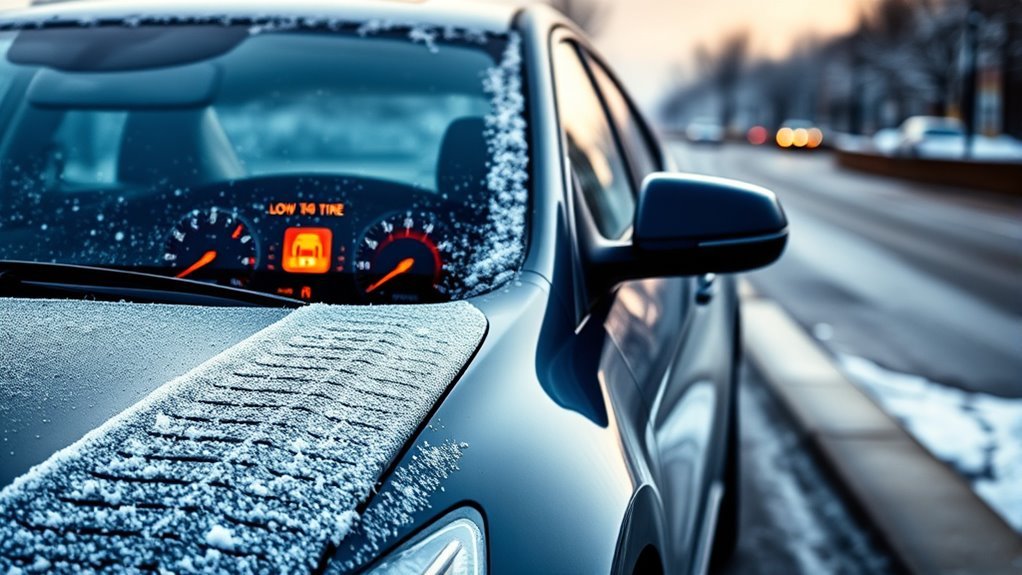
Yes, it is normal for your Hyundai Sonata’s low tire pressure warning to come on during cold weather. Tire pressure drops as the air inside the tire contracts, and a cold night can be enough to trigger the TPMS light if one or more tires were already close to the lower limit. The right fix is simple: check all tires when they are cold, inflate them to the PSI listed on your Sonata’s driver-door placard or owner’s manual, and recheck the warning.
Quick Answer
Cold weather can make a Hyundai Sonata’s tire pressure warning appear because tires typically lose about 1 PSI for every 10–12°F temperature drop. Check the tires cold, inflate them to the door-placard PSI, and inspect for leaks if the TPMS light returns or flashes.
Key Takeaways
- Use the PSI on your Hyundai Sonata’s driver-door tire placard, not the maximum PSI printed on the tire sidewall.
- Check pressure when the tires are cold: parked for at least 3 hours or driven less than 1 mile.
- Hyundai says it is permissible to add up to 3 PSI above the standard pressure if colder temperatures are expected soon.
- A steady TPMS light usually means low pressure; a flashing light or a light that will not clear may mean a TPMS fault or sensor issue.
At a Glance
| Time Required | 5–10 minutes for a pressure check; longer if you need to inflate all tires |
| Difficulty | Easy |
| Tools Needed | Tire pressure gauge, air compressor, valve-stem caps, and your door-jamb PSI label |
| Cost | Usually free to a few dollars for air; about $10–$25 for a basic gauge |
How to Check Your TPMS Light and Tire Pressure Effectively
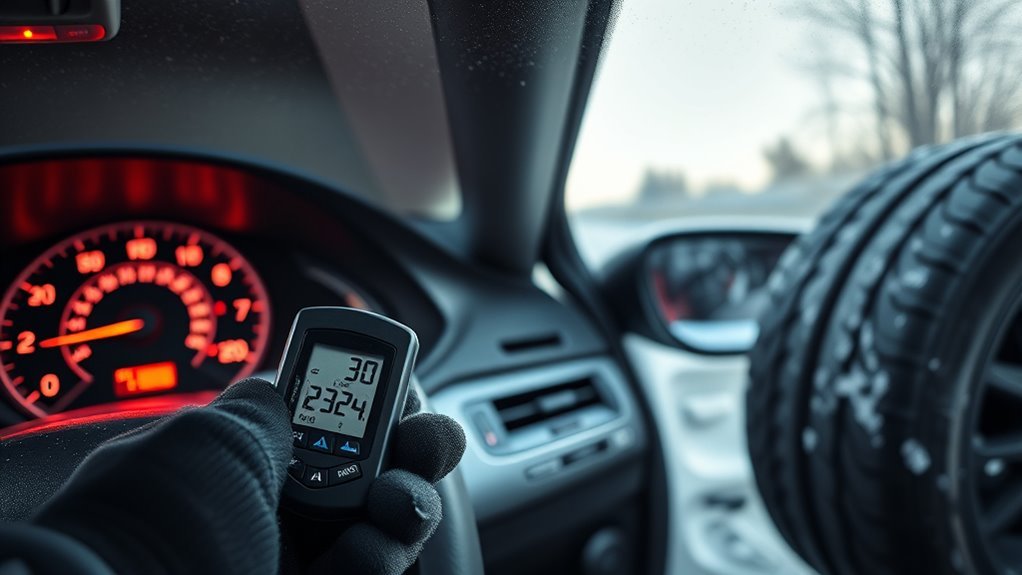
Start with the simple checks before assuming the TPMS sensor is bad. A low tire pressure warning usually means one or more tires need air, especially after a cold night.
- Park safely and let the tires cool. For the most accurate reading, check pressure when the car has been parked for at least 3 hours or has been driven less than 1 mile.
- Find the correct PSI. Look at the Tire and Loading Information label on the driver’s door edge or door jamb. Do not use the maximum PSI printed on the tire sidewall.
- Check all four tires. If your Sonata has a compact spare, check that too. Some newer trims may use a Tire Mobility Kit instead of a spare.
- Add air slowly. Inflate each low tire to the placard pressure. Recheck with your gauge after each short burst of air.
- Reinstall valve caps. Missing caps can let dirt and moisture into the valve stem area.
- Start the car and watch the warning. Depending on model year and TPMS design, the light may turn off after the tires are corrected and the vehicle is driven. If your Sonata has a TPMS reset or tire-pressure set menu, follow the owner’s manual for your exact model.
Warning: Do not keep driving on a tire that looks flat, has sidewall damage, is losing air quickly, or makes the car pull strongly to one side. Pull over safely and use roadside assistance or a qualified tire shop.
[Products Worth Considering]

EVOULTES heavy duty tire inflator with an integrated gauge delivers accurate pressure readings from 10–120 PSI, helping you inflate, deflate, and check tires in one tool. The 16.5-inch extended dual-head air chuck with swivel base reaches hard-to-access dual wheel valves on trucks and RVs. A brass trigger core and side-mounted air release valve make operation smooth, with standard 1/4" NPT threading and quick-connect compatibility for easy setup.

The AstroAI 2 pack air chucks provide a heavy-duty, closed-flow locking design that helps keep air flowing during inflation while securely attaching to the valve stem. Built with 250 PSI rated brass components and compatible with Schrader valves, they feature 1/4" female NPT threads for a wide fit with common inflators. The straight tip and locking clip make filling tires and monitoring pressure more convenient.
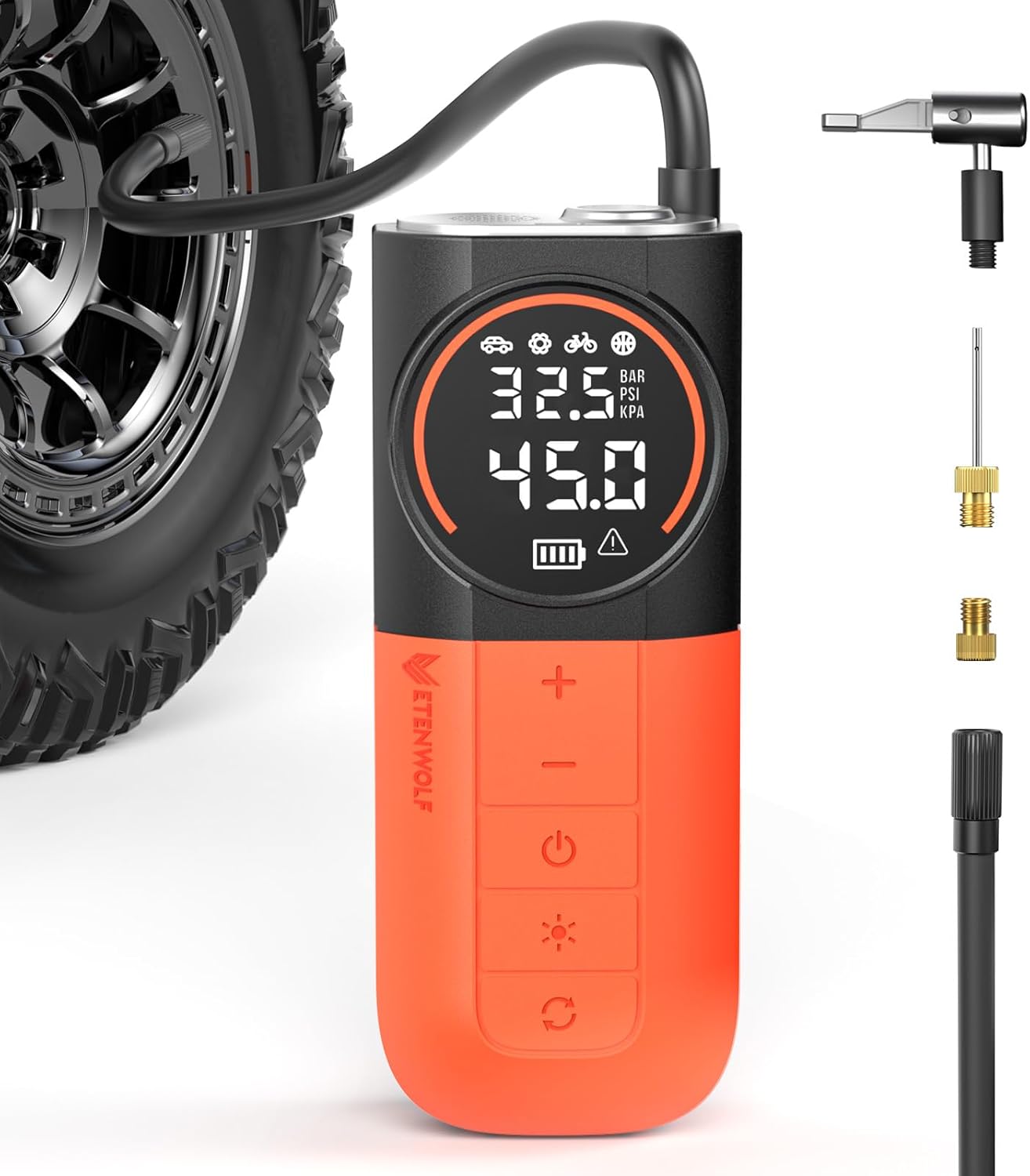
The ETENWOLF S1 cordless tire inflator delivers ultra-fast inflation with up to 160 PSI and a 20 L/min airflow for quicker tire top-offs. Its 5200mAh battery and cooling system support inflating many tires and sports balls on a single charge, while the digital pressure gauge and multi-unit display help you reach the right pressure accurately. With preset modes, pressure memory, an auto-stop feature, and an LED flashlight, it’s built for easy roadside and everyday use.
Why Your Tire Pressure Drops in Winter
Your Hyundai Sonata’s tire pressure drops in winter because cold air contracts. As the air inside the tire cools, it takes up less space and the pressure reading falls. That is why a tire that looked fine yesterday may trigger the TPMS light the next morning.
Hyundai’s owner’s manual guidance says tires typically lose about 1 PSI for every 12°F temperature drop, and many technicians use the similar 1 PSI per 10°F rule as a quick estimate.
This does not always mean your tire has a puncture. It often means the pressure was already close to the warning point before the temperature dropped. Still, never ignore the light. A cold-weather TPMS warning is your reminder to check the actual pressure with a gauge.
- Cold air lowers pressure: The air inside the tire contracts as temperature drops.
- Normal seepage continues: Tires can slowly lose air over time even without a puncture.
- Temperature swings matter: A warm afternoon followed by a freezing night can make the warning appear suddenly.
- TPMS has a threshold: The system warns when pressure is significantly under the recommended level, but it is not a replacement for manual checks.
Find the Correct Hyundai Sonata Tire Pressure
The correct Hyundai Sonata tire pressure depends on the year, trim, tire size, and load. Your best source is always the tire-pressure label on the driver’s door jamb. The owner’s manual is the next best source.
For example, a current Hyundai Sonata owner’s manual lists different cold inflation pressures by tire size, including 36 PSI for 215/60R17 tires and 33 PSI for some 18-inch and 19-inch tire sizes. That is why a single “one-size-fits-all” PSI number can be misleading.
Note: The number molded into the tire sidewall is the tire’s maximum pressure rating, not the recommended pressure for your Sonata. Use the vehicle placard instead.
What to Do When Your TPMS Light Comes On?
When the TPMS light comes on, treat it as a pressure-check warning first. Most of the time, the fix is to inflate one or more tires to the correct cold PSI.
- Slow down and avoid hard driving. Underinflated tires can affect handling, braking, tread wear, and heat buildup.
- Check the pressure with a gauge. Do not rely only on how the tire looks. Radial tires can look normal even when low.
- Inflate to the placard PSI. Add air to the tire or tires that are below the recommended cold pressure.
- Recheck after driving. If the light turns off after inflation and a short drive, the issue was likely low pressure.
- Investigate repeat warnings. If the same tire keeps losing air, look for a nail, valve-stem leak, rim leak, or tire damage.
If the TPMS light flashes for about a minute and then stays on, that usually points to a TPMS malfunction rather than simple low pressure. In that case, check the tires manually and schedule service if the warning continues.
What Not to Do After a Cold-Weather TPMS Warning
A few common mistakes can make a low-pressure warning worse or create a safety risk.
- Do not bleed air from warm tires. Warm tires normally read higher after driving. If you release air while they are warm, they may become underinflated when cold.
- Do not ignore a warning that keeps coming back. Repeated pressure loss usually means a leak or tire damage.
- Do not inflate all tires to the sidewall maximum. That number is not your Sonata’s recommended pressure.
- Do not assume the TPMS checks everything. TPMS warns only after pressure reaches a trigger point; it does not replace monthly tire checks.
Pro Tip: Check tire pressure first thing in the morning before driving. That gives you the cleanest cold reading and avoids the confusion of warm-tire pressure.
How to Identify Low Tire Pressure Symptoms
The TPMS light is the clearest warning, but low tire pressure can also show up in the way your Sonata feels on the road. Pay attention to these signs, especially in winter:
- TPMS warning light: A steady horseshoe-shaped warning with an exclamation point usually means at least one tire is significantly underinflated.
- Soft or sluggish handling: Low pressure can make steering response feel slower.
- Poor traction: Underinflated tires may reduce road contact quality and can feel less stable in rain, snow, or ice.
- Uneven tread wear: Low pressure can wear the outer edges of the tread faster.
- Repeated air loss: If one tire drops again after inflation, inspect it for a puncture, leaking valve stem, or wheel damage.
Do not wait for the tire to look flat. By the time a modern radial tire visibly sags, it may already be dangerously underinflated.
Key Maintenance Tips for Tire Pressure and Safety
Maintaining proper tire pressure is one of the easiest ways to protect your Hyundai Sonata’s handling, tire life, and fuel economy. Check pressure at least once a month, before long trips, and whenever the TPMS light appears.
- Use a reliable gauge: Keep a digital or pencil-style tire gauge in the glove box.
- Check tires cold: Cold readings match the pressure listed on the placard.
- Adjust before big temperature changes: Hyundai says adding up to 3 PSI above the standard pressure is permissible if colder temperatures are expected soon.
- Inspect tread and sidewalls: Look for cuts, nails, bulges, cracking, or uneven wear.
- Recheck after filling: Air pumps can vary, so confirm the final PSI with your own gauge.
Proper tire inflation can also help fuel economy. FuelEconomy.gov says keeping tires inflated to the proper pressure can improve gas mileage by 0.6% on average and up to 3% in some cases.
[Products Worth Considering]

This portable cordless tire inflator delivers up to 160 PSI with fast 17 L/min airflow to help you quickly top up tires and get back on the road. It features dual power mode, running on a 21V rechargeable battery or a 12V DC adapter for convenient roadside use. An automatic shut-off with digital pressure gauge helps prevent overinflation, and a built-in LED light improves visibility in low-light conditions.

Blackline Blackout is a water-based trim and tire dressing that restores rubber, vinyl, and plastic with a rich satin, blackout look. Its no-sling formula dries quickly and helps prevent messy transfer onto paint. The coating repels water and offers UV protection to help prevent fading, cracking, and discoloration for a clean, long-lasting finish.
When to Seek Professional Help for TPMS Issues
Most cold-weather TPMS warnings can be fixed with a cold pressure check and proper inflation. Still, some situations need a technician.
Get professional help if:
- The same tire keeps losing air after you inflate it.
- The TPMS light flashes for about a minute and then stays on.
- The light remains on after all tires are set to the correct cold pressure.
- You see a nail, screw, bulge, crack, or sidewall damage.
- The valve stem leaks or the tire loses pressure overnight.
- You recently replaced tires or wheels and the TPMS warning started afterward.
A tire shop or Hyundai service center can test for leaks, inspect the valve stem and bead area, and diagnose TPMS sensor or module faults.
Tips for Preventing Tire Pressure Issues in Winter
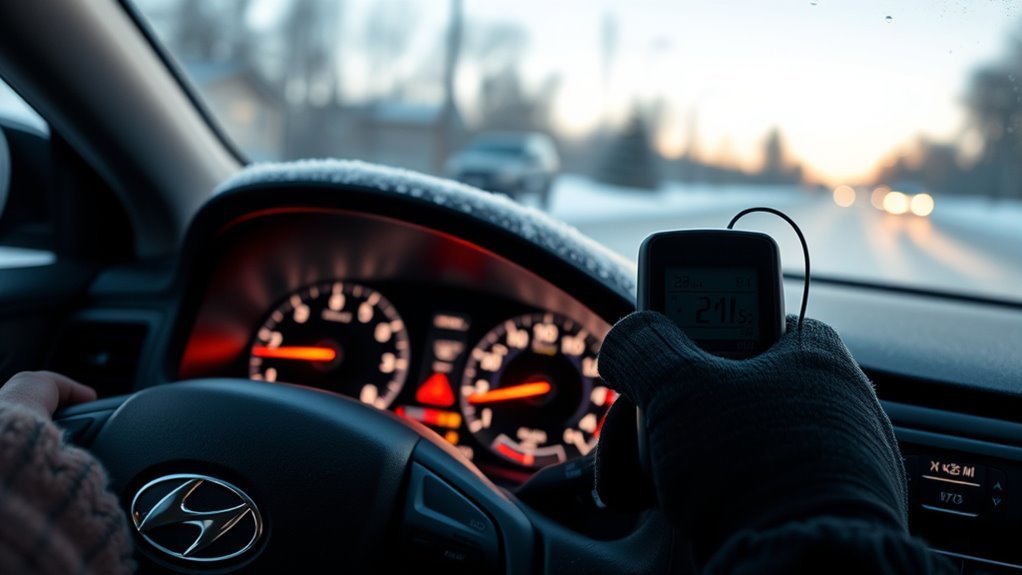
If you want to keep your Hyundai Sonata running smoothly in winter, make tire pressure part of your cold-weather routine. A few minutes of prevention can stop the TPMS light from surprising you on a freezing morning.
- Check pressure before the first cold snap. Inflate to the placard PSI while the tires are cold.
- Watch overnight temperatures. A major temperature drop can lower pressure enough to trigger the TPMS light.
- Carry a portable compressor. It helps when gas-station air pumps are unavailable or inaccurate.
- Replace missing valve caps. They help keep dirt and moisture away from the valve stem.
- Schedule tire repairs quickly. A slow leak becomes more annoying and more dangerous in freezing weather.
The Benefits of Proper Tire Inflation for Safety and Performance
Proper tire inflation helps your Sonata handle the way Hyundai intended. It also helps the tire tread wear more evenly, which can extend tire life and reduce the chance of pressure-related problems.
Enhanced Vehicle Stability
Correct tire pressure helps each tire maintain better contact with the road. That supports steering response, braking stability, and predictable handling in wet or cold conditions.
- Better steering feel and lane stability.
- More even tread wear across the tire.
- Lower risk of heat buildup from severe underinflation.
- More predictable braking and cornering response.
Improved Fuel Efficiency
Underinflated tires create more rolling resistance, which makes the engine work harder. Keeping the tires at the recommended pressure can help your Sonata use fuel more efficiently and reduce unnecessary tread wear.
The fuel savings will not be dramatic from one fill-up, but they add up over time. More importantly, proper inflation supports safer handling and longer tire life.
How to Maintain Optimal Tire Pressure Year-Round
Tire pressure changes throughout the year, not just in winter. Heat can raise pressure, cold can lower it, and normal air seepage can happen slowly over time.
- Monthly: Check all tires when cold and compare them with the door-jamb placard.
- Before road trips: Check pressure, tread depth, and sidewall condition.
- After a big weather swing: Recheck pressure after strong cold fronts or major temperature changes.
- After tire service: Confirm the shop set the pressure to your Sonata’s placard PSI.
- When the TPMS light appears: Check pressure as soon as safely possible, even if the tires look fine.
For the best result, write down your placard PSI and keep a gauge in the car. That way, you can act quickly when the temperature drops or the TPMS light appears.
Frequently Asked Questions
Is it normal for a tire pressure light to come on in cold weather?
Yes. Cold weather can lower tire pressure enough to trigger the TPMS light, especially if the tires were already slightly low. Check the tires cold and inflate them to the PSI listed on your Hyundai Sonata’s door placard.
Is it normal for tire pressure to get low when it is cold?
Yes. Tire pressure naturally drops as temperatures fall because the air inside the tire contracts. Hyundai’s manual guidance says tires typically lose about 1 PSI for every 12°F temperature drop.
How much PSI is normal to lose in winter?
A common estimate is about 1 PSI for every 10–12°F drop. For example, a 30°F temperature drop may lower pressure by about 2.5–3 PSI. Normal slow air loss can add to that, so monthly checks are important.
What PSI should my Hyundai Sonata tires be?
Use the PSI printed on the Tire and Loading Information label on your driver’s door jamb. Current Sonata examples vary by tire size, so do not assume one universal number for every Sonata.
Will the TPMS light reset itself after I add air?
Often, yes. After the tires are inflated to the correct pressure, the light may turn off after a short drive. Some models may require a reset or pressure-set procedure in the instrument cluster, so follow your Sonata owner’s manual.
What does it mean if the TPMS light flashes?
A flashing TPMS light usually points to a system malfunction, such as a sensor issue, wheel compatibility problem, or TPMS communication fault. Check the tire pressure manually first, then schedule service if the flashing continues.
Conclusion
A Hyundai Sonata low tire pressure warning in cold weather is usually normal, but it still deserves attention. Cold air can lower tire pressure by about 1 PSI for every 10–12°F drop, and that can trigger the TPMS light if a tire is already near the warning point. Check all tires when cold, inflate them to the door-placard PSI, and do not ignore a warning that returns, flashes, or points to the same tire again. Proper pressure helps your Sonata handle better, wear tires more evenly, and use fuel more efficiently.
Sources
- Hyundai Owner’s Manual — Tires and wheels — Sonata tire-size PSI examples, cold-weather +3 PSI guidance, and 1 PSI per 12°F pressure-drop note.
- Hyundai Owner’s Manual — Recommended cold tire inflation pressures — cold-tire definition, warm-tire caution, and underinflation safety risks.
- NHTSA TireWise — Tire safety ratings and awareness — tire-pressure checking steps, placard guidance, TPMS explanation, and cold-morning TPMS behavior.
- eCFR — 49 CFR 571.138 Tire Pressure Monitoring Systems — federal TPMS warning threshold and owner-manual tire-pressure language.
- FuelEconomy.gov — Keeping Your Vehicle in Shape — fuel-economy impact of proper tire inflation.

Related Articles

Danger of Using Summer Tires in Winter on a Hyundai Sonata
Potentially perilous, using summer tires in winter on your Hyundai Sonata can compromise safety—discover the hidden dangers that await you on icy roads.
Read More
Can You Mix Nitrogen and Air in Hyundai Sonata Tires? Answered
Discover the implications of mixing nitrogen and air in your Hyundai Sonata tires—are the benefits worth the risks? Explore the answer inside!
Read More
How to Tell If Hyundai Sonata Tires Are Too Old to Use Safely
Understand how to assess the age of your Hyundai Sonata tires and discover crucial signs of deterioration that could compromise your safety on the road.
Read More