
Tire Tread Depth: How It Affects Grip and Safety
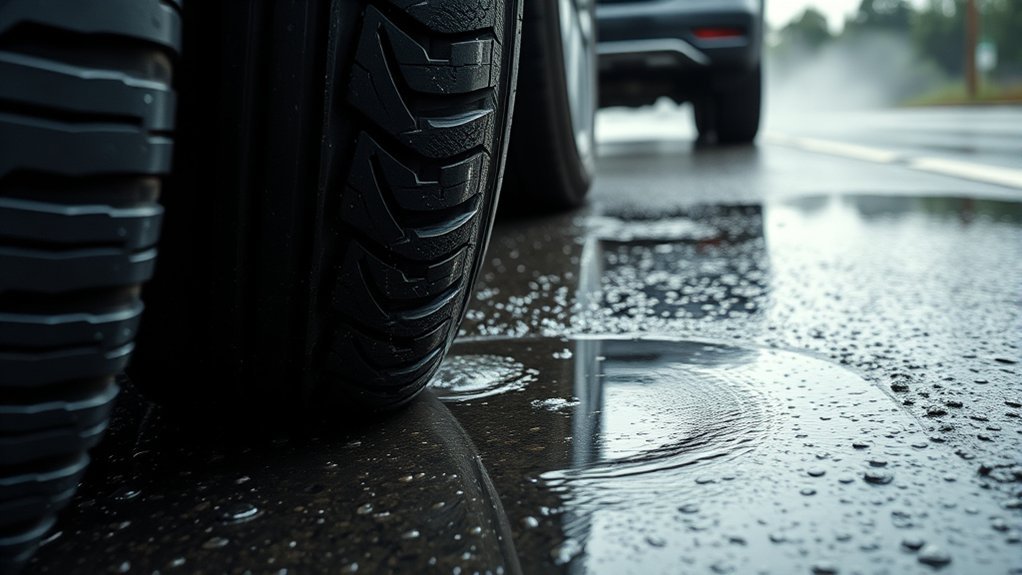
Tire tread depth is the distance from the top of the rubber to the bottom of the grooves, and it directly controls your grip. As tread wears down, the tire sheds less water, so traction drops and stopping distances grow, especially in rain. You can check depth with a penny, quarter, or gauge. Replace tires at 2/32″, and consider 4/32″ for safer wet performance, where the details get even more important.
Key Takeaways
- Tire tread depth directly affects grip, especially on wet roads, because deeper grooves evacuate water better.
- New tires usually start at 10/32″ to 12/32″, providing the best traction and handling.
- As tread wears down, stopping distances increase and hydroplaning risk rises.
- Tires at 4/32″ or less have noticeably reduced wet-weather performance and should be monitored closely.
- Replace tires at 2/32″ tread depth, which is the legal minimum and signals unsafe wear.
[Products Worth Considering]

Monitor tire tread wear with a smart, color-coded depth gauge that shows clear condition ranges at a glance. The bar is range marked for fast, easy readings, helping you maintain safer traction and performance. Each gauge is portable with a pocket clip, and the set includes 20 units for daily use and sharing.

Measure tire tread depth quickly and accurately with this LUMITECO dial gauge that reads in 1/32" increments up to 14/32". The color-coded green/yellow/red zones make it easy to judge tire wear and know when replacement is needed. A rugged, compact design with a protective pouch helps keep the gauge ready for use on cars, trucks, motorcycles, and more.

The SAFELIFE dial tire tread depth gauge measures tread depth in 1/32 inch increments with clear, easy-to-read 2-inch dial face. Color zones using a traffic light system help you quickly judge whether tread is low, marginal, or ample for safer driving. Built with a durable zinc cast body and a metal detect probe for precise, comfortable use across cars, motorcycles, trucks, and buses.
What Is Tire Tread Depth?
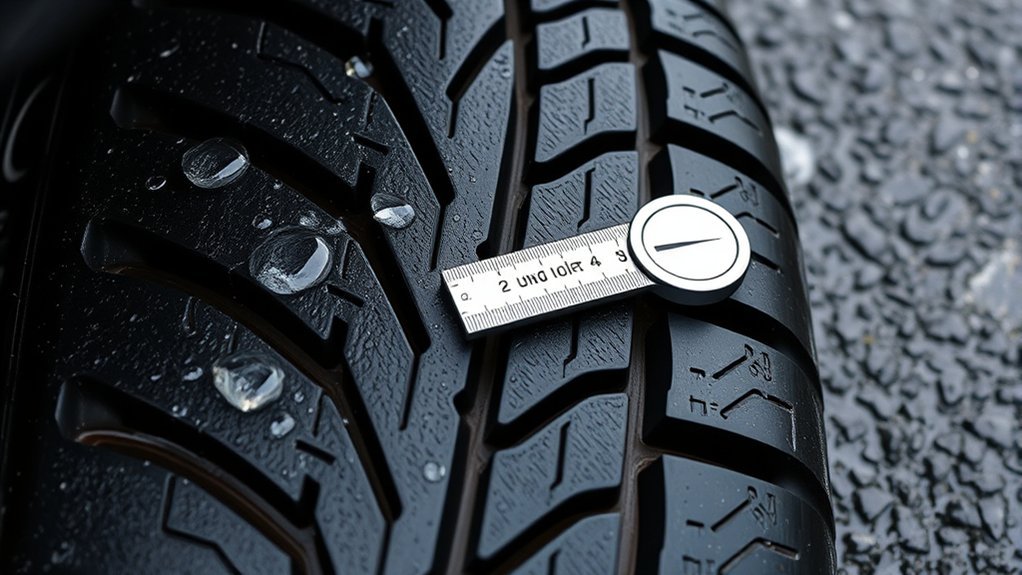
Tire tread depth is the height from the top of the tread rubber to the bottom of the deepest grooves, and it directly affects how well your tires grip the road.
Tire tread depth measures remaining rubber and directly affects how well your tires grip the road.
You measure tire tread depth to assess remaining rubber and evaluate safety. New tires usually start at 10/32″ to 12/32″, but the legal minimum tread depth is 2/32″; below that, your tires count as worn tires.
For practical use, 4/32″ gives better wet-road margin. You can use the penny test: insert a penny into a groove, and if Lincoln’s head shows, you need replacement.
As tread depth decreases, traction drops, hydroplaning risk rises, and stopping distances increase. Regular checks help you catch wear before performance degrades.
When you track depth precisely, you can decide when to replace tires instead of waiting for control problems to appear.
Why Tread Depth Affects Traction
As tread depth wears down, you lose the groove volume needed to move water away from the contact patch, so grip drops quickly on wet or slippery pavement.
You depend on those channels to preserve traction on wet roads and limit hydroplaning when the tire can’t contact the surface. New tires, with 10/32” to 12/32” of tread depth, deliver stronger grip because they evacuate water more effectively and keep braking efficiency higher.
When wear reaches 2/32”, the tire is legally bald, and safety falls sharply. You’ll also notice longer stopping distances, more skidding, and less control during emergency maneuvers or cornering.
Keeping tread depth above 4/32” helps you maintain stable traction across changing conditions. By regularly checking tread depth, you can spot wear before performance drops and replace tires before reduced grip compromises braking efficiency, control, and overall safety.
How Tread Depth Improves Wet-Weather Safety
When roads are wet, sufficient tread depth is what keeps your tires moving water away from the contact patch, which reduces hydroplaning risk and preserves grip.
With deeper tire tread grooves, you let water escape more efficiently, so your wet-weather traction stays higher on slick pavement. At about 4/32 inches of tread depth or more, you get noticeably better braking performance than you’d with tires worn to 2/32 inches or less.
That difference matters because worn tires can extend stopping distances by as much as 30% on wet roads, compromising safety in everyday driving.
Adequate tread depth also improves vehicle control during lane changes, cornering, and sudden maneuvers, where reduced grip can trigger skidding.
In practice, maintaining enough tread depth gives you more stable, predictable response when surfaces are saturated, helping your tire tread manage water load and keep the car under control.
[Products Worth Considering]

Accurately measure tire tread depth with a calibrated gauge marked from 0 to 1 inch in 1/32 inch increments. The color-coded bar helps you quickly identify tread condition ranges, supporting safe driving for trucks, motorcycles, automobiles, and passenger vehicles.

Measure tyre tread depth precisely with a digital gauge that reads in both MM and inches, helping you monitor safe driving conditions. The large LCD screen is easy to operate, and the compact tool fits for cars, trucks, and motorcycles. It provides high accuracy with a 0-25.4mm range and includes a 1-year warranty for added peace of mind.

Keep your tires properly inflated with this analog VONDIOR tire pressure gauge, designed for fast, easy readings without batteries. The swiveling, two-axis hose and large glow dial help you measure at any tire angle with instant visibility. Built with a protective rubber shield, it supports durable, low-maintenance use for cars and trucks.
How to Check Tire Tread Depth
Measuring tread depth lets you verify whether your tires still have enough groove depth to evacuate water and maintain wet-road grip. To measure tire tread, use three checks:
Measuring tread depth helps confirm your tires still have enough groove to shed water and maintain wet-road grip.
- Penny test: Insert a penny into the groove with Lincoln’s head down. If you can see all of Lincoln’s head, your tread depth is below 2/32 inch.
- Quarter test: Place a quarter in the groove. If George Washington’s head is visible, the tread’s too worn to grip the road effectively in wet conditions.
- Tread depth gauge: Read the tool in 32nds of an inch for precise, repeatable results.
Also inspect the tread wear indicator bars molded into the tire; when they sit flush with the tread, wear has reached the legal minimum.
Regularly measuring tread depth helps you track loss before traction drops and can inform when to replace tires, supporting safety while driving.
When to Replace Tires for Safety
Tires should be replaced once tread depth reaches 2/32 of an inch, because that’s the official bald limit and traction drops sharply below it.
You should replace tires earlier, around 4/32 of an inch, if you want better safety on the road in rain and slush. At that point, worn tread reduces traction and stability, weakens gripping the road, and raises hydroplaning risk on wet pavement.
Use inspection methods such as the penny test to monitor wear; if Lincoln’s head shows clearly, your tires need attention.
New tires usually start at 10/32 to 12/32 inches, giving you strong grip and predictable handling.
Don’t wait until stopping distances increase or skidding begins, because worn tires can contribute to accidents.
Regular tread depth checks let you replace tires before performance falls below safe limits, keeping your vehicle responsive under changing conditions.
Frequently Asked Questions
Is a 3/32 Tire Tread Safe?
No, 3/32 tire tread isn’t safe. You should check tread depth measurement, tread wear indicators, and tire safety checks; hydroplaning risks rise. Tire maintenance tips, tire pressure importance, driving conditions impact, seasonal tire changes, tread pattern types, and tire replacement signs matter.
How Does Tread Affect Grip?
You get more grip when tread patterns channel water, boost wet performance, and improve off road traction; your tread design also reduces hydroplaning risk, moderates temperature effects, limits tire wear, and sharpens vehicle handling across driving conditions through tire maintenance.
Can Tread Depth on Tires Lead to Safety Issues?
Yes—worn tread can create serious safety issues. You’ll face higher hydroplaning risk, longer braking distance, and weaker winter performance as tire wear reduces tread patterns; check tread indicators, follow maintenance tips, road conditions, and safety regulations.
What Is the 3% Rule for Tires?
You should replace tires when tread wear reaches 3/32 inch, the 3% rule, so you maintain tire maintenance, safety inspections, and traction. It helps you assess tread patterns, tire pressure, seasonal changes, tread indicators, road noise, driving conditions.
Conclusion
Tire tread depth directly affects your control, especially on wet roads. As tread wears, your tires lose the grooves that channel water away, increasing hydroplaning risk and reducing braking performance. You can check depth with a gauge or the penny test, but replacement is safest before 2/32 inch. In one study, tires with 4/32 inch of tread stopped about 87 feet shorter than bald tires on wet pavement, showing how much tread matters.
[Products Worth Considering]

Steelman white tire marking crayons provide high-contrast, semi-permanent marks for repairing and inspecting tires and equipment. They write on wet or dry, smooth or coarse surfaces including rubber, metal, glass, and wood, making them ideal for puncture location and damage outlining. The lead- and zinc-free crayons resist weather and fading yet wipe away when you no longer need the marks.

The Big Rig Defense Tire Thumper is a truck tire pressure checker that lets you quickly check multiple tires by giving them a firm whack. Listen for a reassuring thump and feel the stick bounce when a tire is fully inflated, helping you get back on the road safely. It features a comfortable, glove-friendly handle and a secure wrist strap for confident use on busy routes.

ETENWOLF T300 is a calibrated digital tire pressure gauge for accurate readings from 3 to 200 PSI across light and heavy-duty vehicles. It includes thermal compensation for reliable performance in extreme cold or heat, with an auto shut-off to extend battery life and an LED for easier reading. The sturdy design supports rugged everyday use, making it ideal for pickups, RVs, and industrial applications.

Related Articles

How to Pass Your Driving Test the First Time
Uncover simple driving test strategies that boost your chances of passing first time, and discover the one mistake most learners overlook.
Read More
How Long Can You Drive a Car Continuously?
Pushing your limits, discover how long you can really drive continuously before fatigue, vehicle stress, and safety risks change the answer.
Read More
Are Run-Flat Tires Worth It? Pros and Cons Compared
Safe in a pinch, run-flat tires promise convenience and protection—but do their tradeoffs make them truly worth it?
Read More