
AWD Tire Rotation Pattern: How Often and How to Do It
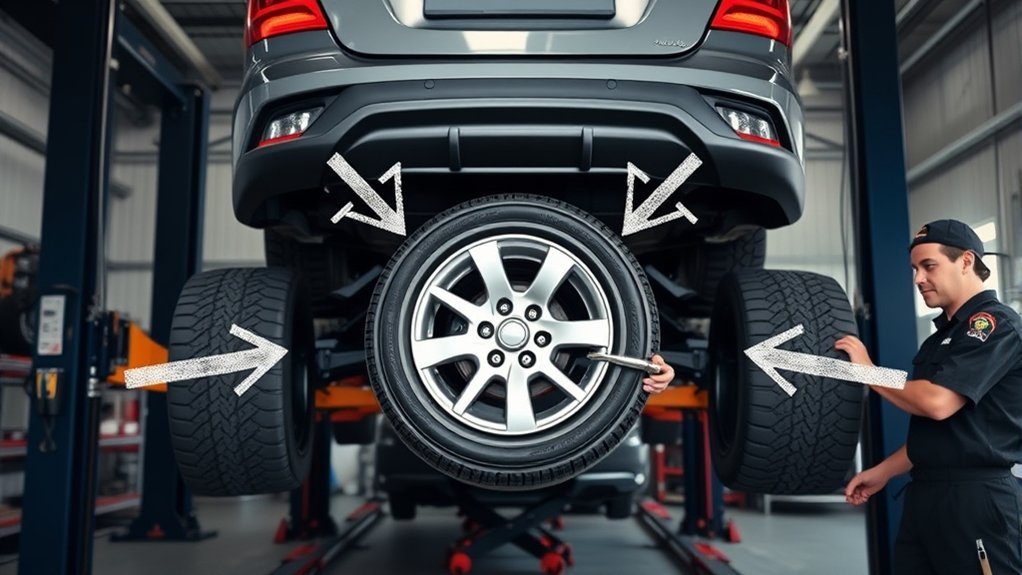
For AWD tire rotation, you usually use a Double X or diagonal pattern: move each tire to a different corner so wear stays even. Rotate every 5,000 to 7,500 miles, or about every six months, unless your owner’s manual says otherwise. Check tread depth, pressure, and sidewalls each time. Replace tires if tread is under 2/32 inch or wear is uneven. Keep going, and you’ll see the exact steps and common pitfalls.
Key Takeaways
- AWD vehicles typically use a “Double X” rotation pattern, swapping tires diagonally to promote even wear.
- Rotate AWD tires every 5,000 to 7,500 miles, or about every six months, unless your owner’s manual says otherwise.
- Regular rotation helps maintain traction, stability, fuel efficiency, and protects the AWD drivetrain from mismatched tire diameters.
- Inspect tread depth, sidewalls, and tire pressure during rotation, and replace tires if tread is below 2/32 inch or damage is present.
- Avoid mismatched tire sizes or patterns, and plan the rotation with routine maintenance; it usually takes 30 to 60 minutes.
[Products Worth Considering]

Monitor tire tread wear with a smart, color-coded depth gauge that shows clear condition ranges at a glance. The bar is range marked for fast, easy readings, helping you maintain safer traction and performance. Each gauge is portable with a pocket clip, and the set includes 20 units for daily use and sharing.

Measure tire tread depth quickly and accurately with this LUMITECO dial gauge that reads in 1/32" increments up to 14/32". The color-coded green/yellow/red zones make it easy to judge tire wear and know when replacement is needed. A rugged, compact design with a protective pouch helps keep the gauge ready for use on cars, trucks, motorcycles, and more.

The SAFELIFE dial tire tread depth gauge measures tread depth in 1/32 inch increments with clear, easy-to-read 2-inch dial face. Color zones using a traffic light system help you quickly judge whether tread is low, marginal, or ample for safer driving. Built with a durable zinc cast body and a metal detect probe for precise, comfortable use across cars, motorcycles, trucks, and buses.
What Is the AWD Tire Rotation Pattern?

The AWD tire rotation pattern is typically the “Double X” pattern, in which you swap the tires diagonally to help them wear evenly. In this tire rotation method, you move each tire to a different corner so your all-wheel drive system distributes wear across all four positions.
AWD tire rotation typically follows the “Double X” pattern, moving tires diagonally to promote even wear.
You use this pattern because all four tires help deliver power, so uneven tread loss can affect traction and stability. When you follow the correct sequence, you support even wear, preserve handling balance, and reduce the chance of premature tire replacement.
During the rotation, inspect each tire’s tread depth and look for cuts, bulges, or other damage before reinstalling it. If you catch wear differences early, you can correct problems before they affect performance.
This pattern gives you a practical way to maintain your AWD vehicle’s grip, safety, and long-term tire condition without unnecessary complexity.
How Often Should You Rotate AWD Tires?
You should rotate your AWD tires every 5,000 to 7,500 miles, or about every six months, unless your manufacturer specifies a different interval.
Your driving conditions matter too, since aggressive driving, heavy loads, or frequent stop-and-go use can increase tread wear and shorten the rotation interval.
Pair each rotation with a tire inspection so you can catch uneven wear early and keep traction, handling, and efficiency within spec.
AWD Rotation Intervals
For most AWD vehicles, you should rotate tires every 5,000 to 7,500 miles or about every six months, unless your owner’s manual specifies a different interval.
This tire rotation schedule helps equalize tread depth because AWD systems constantly distribute power to all wheels, which can accelerate uneven wear.
Use a Double X pattern so the front and rear tires switch diagonally, promoting balanced contact across the set.
Check tread depth and tire pressure each time you rotate; both affect handling, traction, and wear rate.
If you skip scheduled rotation, you can shorten tire life and increase stress on AWD systems.
Keep a log of mileage and dates so you don’t miss the interval, and always follow manufacturer guidance for your specific vehicle.
Driving Conditions Impact
Driving conditions can push AWD tire rotation intervals shorter than the standard 5,000 to 7,500 miles or six months, especially if you drive off-road, on rough terrain, or in stop-and-go conditions that accelerate uneven wear.
You should adjust tire rotation based on how hard your AWD system works.
- Off-road driving increases tread wear on one axle faster.
- Stop-and-go traffic adds heat and scrubs tread.
- Rough driving conditions can force earlier tire rotation.
Because all four wheels stay engaged, small differences in tread wear can build quickly.
Use the manufacturer’s rotation pattern, such as Double X, to keep wear balanced and traction stable.
If your driving conditions are severe, shorten the interval and rotate sooner.
Maintenance And Inspection
AWD tires should be rotated every 5,000 to 7,500 miles, which usually lines up with routine maintenance like oil changes, so it’s easy to stay on schedule.
You should pair each rotation with a visual inspect of tire tread, sidewalls, and inflation pressure. Check for tread depth differences across all four tires; uneven wear can signal misalignment, incorrect tire sizes, or drivetrain stress.
Use the recommended rotation pattern, such as the Double X pattern, to keep wear balanced and preserve traction.
If you skip rotations, you’ll shorten tire life and increase load on AWD components. Consistent inspection lets you catch problems early, maintain handling accuracy, and protect the drivetrain from unnecessary strain.
Why AWD Tire Rotation Matters
You need regular AWD tire rotation to keep tread wear even, since unequal wear can reduce traction, stability, and handling.
When you rotate on schedule, you also help protect the AWD drivetrain from added stress caused by mismatched tire diameters.
Using the correct rotation pattern supports balanced performance and can prevent costly repairs.
Even Wear And Safety
Regular tire rotation keeps tread wear even across an AWD vehicle’s four tires, which helps preserve traction, stability, and predictable handling.
You should use regular tire rotation to extend tread life and maintain even wear, especially because AWD power delivery can accelerate uneven patterns. Rotating every 5,000 to 7,500 miles helps keep grip balanced in cornering, braking, and wet or icy conditions.
- You’ll reduce the chance of traction loss from mismatched tread depth.
- You’ll keep rolling resistance lower, which can support fuel efficiency.
- You’ll maintain consistent contact patches for safer vehicle control.
When you ignore rotation, one tire can wear faster and reduce overall safety.
Keep your tires matched, and you’ll get more stable performance from your AWD system.
AWD Drivetrain Protection
Tire rotation protects the AWD drivetrain by keeping all four tires close in tread depth, which helps the system distribute torque correctly and avoid unnecessary strain. You limit uneven tire wear, so AWD systems don’t fight mismatched rolling diameters. Even a 1/32-inch tread difference can trigger a warning light or stress the transfer case. Rotate your tires every 5,000 to 7,500 miles to maintain balance and preserve handling.
| Interval | Benefit | Risk if Skipped |
|---|---|---|
| 5,000–7,500 miles | Balanced wear | Drivetrain load |
| Equal tread depth | Correct torque split | Warning light |
| Regular service | Better traction | Component failure |
This routine also supports fuel efficiency and safer performance in rain, snow, and dry pavement.
How to Rotate AWD Tires
For AWD vehicles, the best rotation method is the Double X pattern, where the front tires move to the rear while switching sides, and the rear tires move to the front while switching sides.
Perform this tire rotation every 5,000 to 7,500 miles, or follow your manufacturer’s interval. Before you begin, set pressures to spec, then raise the vehicle safely and use matched axle positions.
Rotate AWD tires every 5,000 to 7,500 miles, or per manufacturer guidance, after setting pressures to spec.
If you install two new tires, place them where your manual recommends, then rotate the remaining set on schedule. During each service, visually inspect tread depth, shoulder wear, and sidewalls for uneven wear that AWD can amplify.
- Move each tire diagonally to the opposite axle position.
- Recheck inflation after mounting and before driving.
- Confirm wear is even enough for stable traction and cornering.
This method helps you balance grip, reduce drivetrain stress, and keep acceleration predictable.
Directional Tire Rotation Tips
Directional tires have a marked rotation direction on the sidewall, and you’ll need to keep that direction intact during AWD service by swapping them front to rear without changing sides. This rotation pattern preserves the designed tread bite and keeps handling predictable on your AWD vehicle. Check the arrows on each tire before you move it, then confirm the tread depth and wear pattern while it’s off the car.
| Check | What to Verify | Action |
|---|---|---|
| Sidewall arrow | Matches wheel travel | Keep same side |
| Tread depth | Even across axle | Note abnormal wear |
| Owner’s manual | Tire-specific guidance | Follow manufacturer steps |
Some directional tires can’t be cross-rotated unless you demount them, so don’t improvise. Use the owner’s manual for the exact sequence, then rotate every 5,000 to 7,500 miles to help maximize tread life and maintain consistent grip.
[Products Worth Considering]

Accurately measure tire tread depth with a calibrated gauge marked from 0 to 1 inch in 1/32 inch increments. The color-coded bar helps you quickly identify tread condition ranges, supporting safe driving for trucks, motorcycles, automobiles, and passenger vehicles.

Steelman white tire marking crayons provide high-contrast, semi-permanent marks for repairing and inspecting tires and equipment. They write on wet or dry, smooth or coarse surfaces including rubber, metal, glass, and wood, making them ideal for puncture location and damage outlining. The lead- and zinc-free crayons resist weather and fading yet wipe away when you no longer need the marks.

The VEHLIVE SU-50448 II TPMS relearn tool provides a fast activation reset to restore accurate tire pressure monitoring after sensor replacement or tire rotation. It supports 315 MHz and 433 MHz GM series sensors and helps clear dashboard pressure warnings. With simple two-button operation and horn-confirmed relearning order, you can reprogram sensors conveniently at home.
When to Replace Tires Instead of Rotating
When tread depth drops below 2/32 of an inch, rotation won’t restore usable traction, so you should replace the tires instead. You’re dealing with worn tires that can’t grip wet or snowy pavement, and AWD systems depend on balanced front and rear rolling diameters.
Below 2/32 inch, rotation won’t help—replace worn tires to restore traction.
If one tire pair shows more than 1/8 inch of uneven wear, don’t try to correct it with rotation alone; replace the set or match tread closely. Inspect each rear wheel and the other positions for cuts, bulges, or unrepaired punctures, because structural damage can fail under load.
Also check age: if the rubber is over six years old, replace it even when tread looks acceptable.
- Replace all four tires on AWD vehicles when possible.
- Match tread depth closely if you can’t replace every tire.
- Don’t rotate damaged or severely aged tires.
How Long Tire Rotation Takes
An AWD tire rotation usually takes 30 to 60 minutes, depending on the shop’s workload and your vehicle’s design. You can expect the technician to lift the vehicle, remove each wheel, and complete the tire rotation pattern, including a front tires, rear tires switch or a Double X layout when your drivetrain calls for it. A quick inspection of tread wear and inflation may add a few minutes, but it helps you keep each tire balanced and serviceable.
| Task | Typical Time | Notes |
|---|---|---|
| Lift vehicle | 5 min | Secure setup matters |
| Remove tires | 10 min | Four wheels come off |
| Reposition tires | 10-20 min | Pattern depends on AWD |
| Inspect tires | 5 min | Check tread and pressure |
| Reinstall and torque | 5-10 min | Final verification |
If you schedule tire rotation every 5,000 to 7,500 miles, the visit stays routine. Many shops finish faster when you combine it with an oil change, so you spend less total time waiting.
Common AWD Tire Rotation Mistakes
Even with AWD, you still need to rotate tires on schedule, because skipping the 5,000 to 7,500-mile interval can lead to uneven wear, reduced traction, and faster tire replacement.
In AWD vehicles, tire rotation isn’t optional; it keeps drivetrain loads balanced and handling predictable. If you use the wrong Double X pattern, you can upset cornering stability and reduce control.
You also need to inspect tread depth and inflation pressure, because AWD tires rarely wear perfectly evenly.
- Don’t delay tire rotation past the service interval.
- Don’t install mismatched tire sizes or tread patterns.
- Don’t ignore rotations when changing from winter to summer tires.
Follow the correct pattern, and keep all four tires matched as closely as possible. Small differences in diameter or wear can strain the system and shorten tire life.
Regular checks help you catch problems before they affect traction, stability, or drivetrain durability.
Frequently Asked Questions
How Often Should I Do Tire Rotation for AWD?
You should rotate your AWD tires every 5,000 to 7,500 miles, or about every six months, to control tire wear, protect performance impact, and stay on your maintenance schedule per your manufacturer.
What Is the Best Tire Rotation Pattern for AWD?
You’ll usually get the best AWD tire rotation with a Double X pattern, which evens tire wear. Your driving habits and alignment issues can change results, so you should follow your owner’s manual exactly.
Can I Rotate My Own Tires AWD?
Yes, you can rotate your own AWD tires if you’ve got DIY tire tools, proper jack stands, and a torque wrench. Follow tire maintenance tips, match tread, and you’ll protect AWD performance and guarantee even wear.
What Happens if You Don’t Rotate AWD Tires?
You’ll wear your tires like uneven stones on a path, causing tire wear, handling issues, and possible drivetrain strain. Skipping vehicle maintenance can shorten tread life, reduce traction, and may void warranty coverage.
Conclusion
You keep your AWD system smooth when you stay on schedule and swap tires in the right pattern. Rotate them often, usually every 5,000 to 7,500 miles, to slow uneven wear and support steady steering, safer stopping, and stronger traction. Check tread depth before you move them, and replace tires when wear is too deep or uneven. With careful, consistent rotation, you’ll protect your drivetrain, improve performance, and avoid pricey problems.
[Products Worth Considering]

This universal magnetic jack pad is designed to protect pinch welds when lifting vehicles, helping prevent seam damage or warping. Crafted from solid aluminum with a nylon pad insert, it provides reinforced structural support and a secure fit for most single-vehicle pinch welds. Slotted for strong magnet holding, it supports safe jacking for cars, SUVs, trucks, and more.

Add style while helping protect your tire valve stems with handmade crystal rhinestone caps and a durable plastic insert. These caps resist corrosion and help keep out rain, snow, and muddy water, extending tire life. Textured non-slip design makes them easy to grip for quick install and removal when checking tire pressure.

These aluminum alloy tire valve stem caps with an O-ring seal help protect valve stems from corrosion while adding a clean, stylish look to your vehicle. The universal fit works across cars, trucks, motorcycles, bicycles, and more, making them an easy upgrade for everyday driving and off-road use. Installation is quick, and the included four-pack keeps all your tires dressed and protected.

Related Articles

Wheel Damage: Types, Repair Options, and Costs
Many wheel damages look minor, but some hide costly safety risks—learn which repairs are worth it and when replacement is smarter.
Read More
Tire Balancing Weights: Types, Cost, and Why You Need Them
Precisely chosen tire balancing weights reduce vibration and wear, but which type fits your wheels and what it really costs may surprise you.
Read More
Tire Repair Kits: What’s Inside and How to Use One
Get the essentials of tire repair kits, learn how each tool works, and discover the simple steps that can save your trip.
Read More