
Tire Balancing Weights: Types, Cost, and Why You Need Them
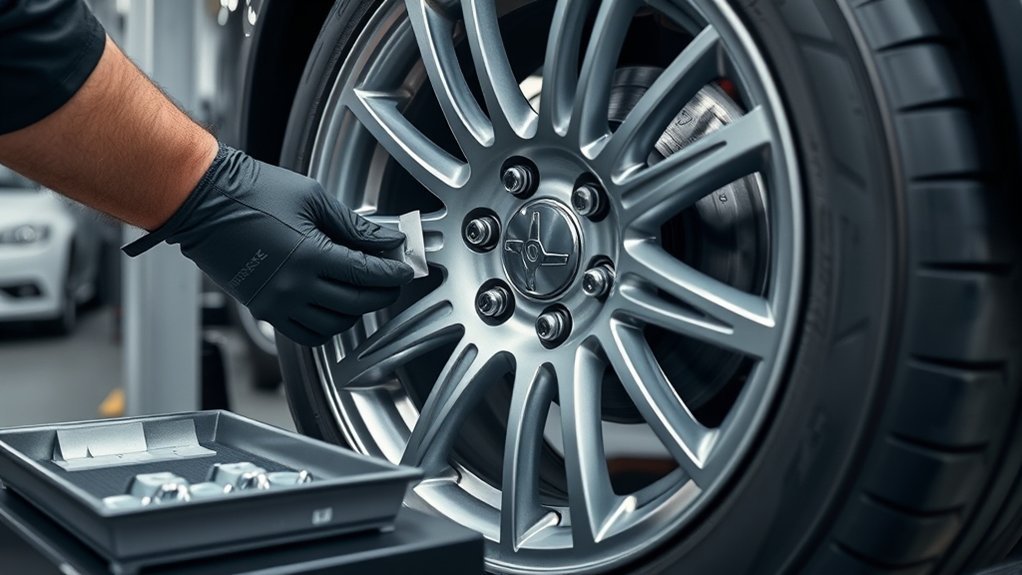
You need tire balancing weights to correct uneven wheel weight, cut vibration, and keep steering, braking, and ride quality stable. Adhesive weights work best on alloy and low-profile wheels, while clip-on weights suit steel rims. Balancing usually costs about $10 to $20 per tire. If you feel shake above 45 mph or see uneven tread wear, your wheels likely need service, and the right weight setup can protect your tires and suspension.
Key Takeaways
- Tire balancing weights correct uneven wheel-tire weight, reducing vibration, improving handling, and extending tire and suspension life.
- Adhesive weights suit alloy and low-profile wheels, while clip-on weights are common for steel rims and easier to install.
- Lead-free zinc and steel weights are available for environmental compliance and modern tire service requirements.
- Proper balancing improves ride comfort, steering response, fuel economy, and safety, especially above 45 mph.
- Tire balancing typically costs $10–$20 per tire, with higher prices for specialty tires or extra handling.
[Products Worth Considering]

This Dr.Roc tire valve stem puller tools set helps install or remove snap-in tubeless valve stems safely and efficiently. It includes ozone-resistant EPDM snap-in valve stems, a valve stem installer, and a valve core remover for quick core removal or installation during tire service. Designed for reliable tubeless tire repair on motorcycles, ATVs, lawn equipment, cars, and trucks.

This metal-free wheel and tire cleaning brush uses dense, fluffy synthetic wool to safely clean rims, spokes, fenders, and engine areas without worrying about damaging surfaces. Its flexible, comfortable design helps you reach detailed areas while maintaining durability, and the extra absorbent fibers work well with wheel spray cleaners for faster cleanup. Reusable and washable performance helps prevent grime and build-up for cleaner vehicles and easier maintenance at home.

This professional wheel and rim brush kit makes it easy to lift brake dust, grime, and dirt from wheels and tires without scratching finishes. The brushes feature soft, metal-free wool heads and a flexible 360-degree rim brush design for reaching hard-to-clean areas. Includes multiple brush types plus accessories for thorough car, motorcycle, and general vehicle detailing.
What Are Tire Balancing Weights?
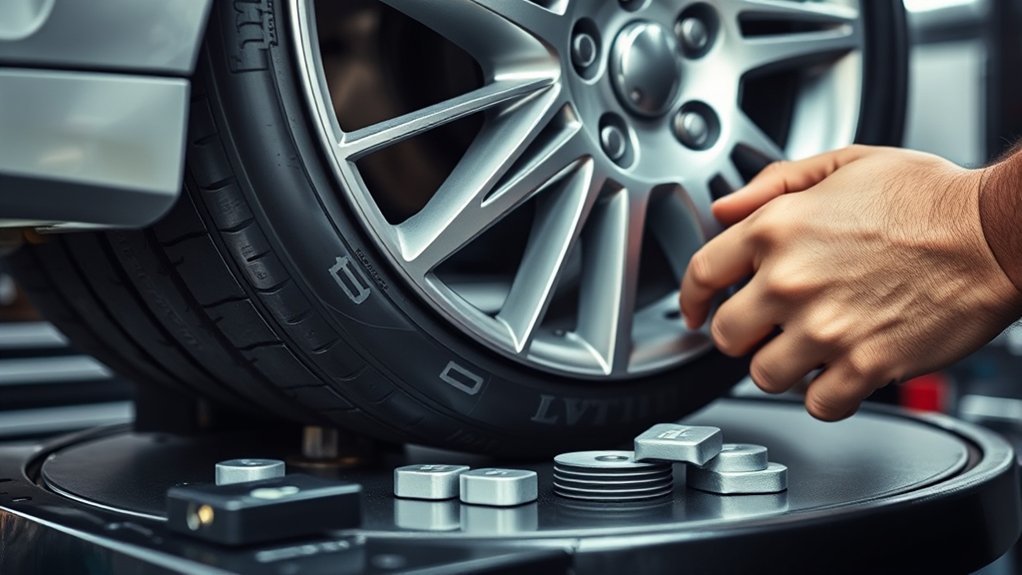
Tire balancing weights are small metallic or composite pieces attached to your vehicle’s rims to correct uneven weight distribution in the tire-wheel assembly and keep the wheel rotating smoothly.
In tire balancing, you use them to offset mass variations that cause vibration, pull, and premature wear. When you install the correct amount, you improve stability, steering response, ride comfort, and fuel economy, helping your vehicle maintain peak performance.
You should treat them as a precision adjustment, not a cosmetic add-on, because even small imbalances can affect safety and handling. Regular balancing, typically every 6,000 miles or after new tire installation, helps you prevent performance loss before it starts.
Types of wheel weights differ by wheel material and application, but their purpose stays the same: restore uniform rotation and protect your tires, suspension, and passengers from the effects of imbalance.
Types of Tire Balancing Weights
When you choose tire balancing weights, you’ll usually compare adhesive options with clip-on designs.
Adhesive and stick-on weights suit alloy and low-profile wheels, while clip-on weights fit steel rims and let you make fast adjustments.
You should also consider lead-free weights, such as zinc and steel, if you need an environmentally compliant balancing solution.
Adhesive vs. Clip-On
Adhesive and clip-on wheel weights each serve different wheel types and service needs, so the right choice depends on fit, appearance, and durability.
You’ll usually choose Adhesive weights for alloy wheels because they hide behind the rim, suit low-profile tires, and support precise balancing on performance vehicles. They bond firmly and resist being thrown off better than clip-on styles.
Use Clip-on Wheel weights on steel wheels when you need fast installation, secure retention, and easy removal during frequent rebalance jobs. They’re reusable, but they can mark wheel lips and let moisture reach the edge if fit isn’t right.
For heavy-duty applications, clip-ons stay practical; for cleaner custom balancing, adhesive weights work best.
Lead-Free Weight Options
As regulations tighten and safety concerns about lead continue to grow, lead-free wheel weights such as zinc and steel have become common replacements in tire service.
You can choose lead-free weights that match your wheel type and balancing needs. Zinc weights work well because they’re nearly as heavy as lead, so you get similar correction with less environmental risk.
For alloy wheels, adhesive weights offer a low-profile fit and help you avoid rim damage. If you service trucks or other heavy-duty vehicles, clip-on versions let you install and remove them quickly during repeated rebalancing.
You’ll also find these weights in grams for imports and quarter-ounce sizes for domestic vehicles, which helps you match specifications accurately across tire applications and maintain proper balance.
Adhesive vs. Clip-On Wheel Weights
Choosing between adhesive and clip-on wheel weights depends on the wheel material, tire profile, and service demands.
For alloy wheels and low-profile tires, adhesive weights suit you best because they bond discreetly to the rim, reduce the chance of lip damage, and support clean wheel balancing. Their backing holds well, so they’re less likely to be thrown off on high-performance tires.
Use clip-on weights when you work on steel wheels or heavy-duty vehicles that need quick installation and frequent rebalancing. They’re easy to fit and remove, but they can mar the wheel lip and let moisture reach the metal, which may promote corrosion.
You’ll also see vehicle-specific clip-on weights, such as FN for Asian, IAW for European, and MC for American applications.
In practice, you should match the weight type to the wheel design, service interval, and appearance requirements.
How Wheel Weights Affect Performance
When you balance your wheels with the correct weights, you’ll improve ride comfort and keep the vehicle stable by reducing vibration at speed.
Proper weight placement also helps preserve fuel economy and tire wear by lowering rolling resistance and preventing uneven tread loss.
If you install and maintain wheel weights correctly, you’ll get more consistent performance and longer tire service life.
Ride Comfort And Stability
Proper wheel balance keeps your tires spinning evenly, reducing vibration and improving ride comfort and stability, especially at highway speeds where small imbalances become more noticeable.
When you use the right weights during tire balancing, you limit dynamic imbalance and keep the wheel-tire assembly running true. That directly improves ride comfort and helps preserve steering precision in corners.
On low-profile tires, adhesive weights work well because they distribute mass without damaging delicate rims, keeping vehicle dynamics consistent.
If you skip regular tire balancing, about every 6,000 miles, you’ll feel more shake through the cabin and notice less stable handling.
Balanced wheels don’t just feel better; they also support safer, more controlled driving by minimizing the forces that disturb suspension response.
Fuel Economy And Wear
Well-balanced wheels help your vehicle use less fuel by rotating smoothly and reducing rolling resistance, which can improve mileage by about 1–2% compared with unbalanced wheels.
When you keep Tires properly balanced, wheel weights play a critical role in controlling vibration and protecting tread from uneven wear. That reduction in wear can extend tire life by up to 30% and help preserve fuel economy over time.
If you ignore dynamic imbalance, you’ll notice poorer cornering stability, weaker grip, and less efficient acceleration and deceleration. Unbalanced wheels can also raise braking distance by as much as 20%, so performance and safety both suffer.
Check balance every 6,000 miles to prevent wear patterns that waste fuel and shorten tire life.
Signs Your Tires Need Balancing?
How can you tell your tires need balancing? Watch for vibration at speeds above 45 mph. If you feel it in the steering wheel, seat, or floorboard, you’re likely seeing signs of imbalance from uneven weight distribution. Tire balancing corrects that condition so your tires balanced run smoother and wear evenly.
| Symptom | Likely pattern | Action |
|---|---|---|
| Steering shake | Front axle imbalance | Inspect and balance |
| Seat or floor vibration | Rear or mixed imbalance | Balance all four |
| Uneven tread wear | Persistent imbalance | Schedule service |
Static imbalance usually creates up-and-down motion; dynamic imbalance can cause side-to-side shake. You should also check for uneven tire wear and rising fuel use. New tires need balancing at installation, and routine tire balancing every 6,000 miles helps prevent irregular tread wear and preserves stability and comfort. If these symptoms appear, don’t ignore them.
How Tire Balancing Works
You start by mounting the tire and wheel on a calibrated balancing machine, which spins the assembly and detects the heavy spot that causes vibration.
You then place clip-on or adhesive weights at the specified locations on the rim to offset that imbalance, based on the wheel’s design and material.
After that, you recheck the assembly and fine-tune the weights until the readings fall within tolerance and the wheel spins smoothly.
[Products Worth Considering]

This tire inflator with pressure gauge delivers long-lasting performance with a durable rubber-protected gauge and sturdy build. The longer hose and 360 swivel air chuck help you seal the valve securely and keep your hands free while measuring, inflating, or deflating. It’s battery-free for reliable use and provides ±2 PSI accuracy in the mid-range for most typical tires, with universal compatibility for 1/4 NPT compressor outputs.

This 3-piece wheel and tire brush set makes it easy to clean light, medium, and heavy dirt from wheels, rims, tires, and exterior surfaces. It includes both soft and stiff bristle options for gentle scrubbing and tough grime removal, helping lift brake dust and road buildup. The long-handle design supports comfortable cleaning across cars, trucks, SUVs, RVs, motorcycles, and more, with simple care instructions to restore brush shape.
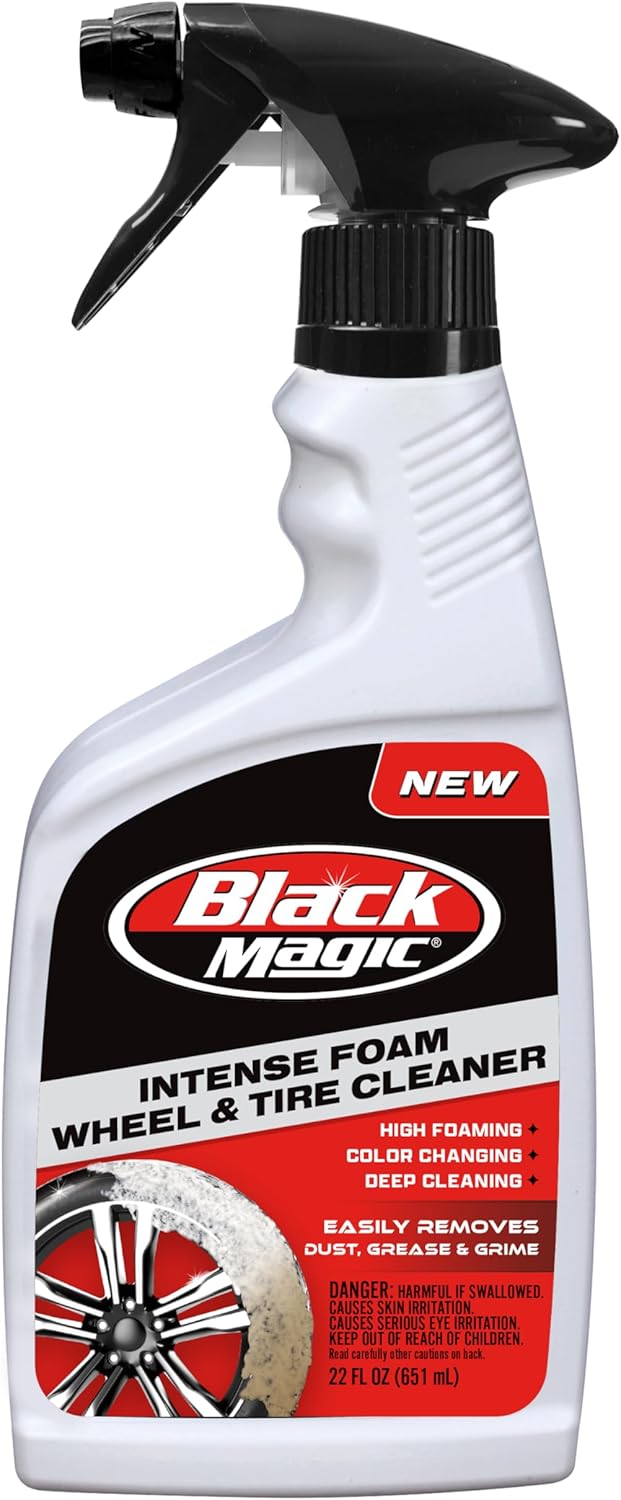
Black Magic Intense Foam Wheel & Tire Cleaner uses a high-foaming action to lift away dirt, grime, and brake dust without scrubbing. The color-changing formula helps show contaminants being dissolved as foam turns from white to brown. Safe for all wheel types and even wheel wells, it leaves a like-new, slick finish with a fresh cherry scent.
Balance Detection Basics
When a tire and wheel assembly goes onto a calibrated balancing machine, the machine spins it and pinpoints the heaviest spot so the technician can correct the imbalance with wheel weights.
You’ll see static imbalance as an up-and-down shake, while dynamic imbalance creates side-to-side vibration that can reduce stability.
To balance your tires properly, a professional tire technician reads the machine’s data, then applies corrections to the tire and wheel assembly so rotation stays even.
Regular balancing, about every 6,000 miles, helps prevent uneven tread wear and protects modern lightweight vehicles from excess vibration.
If the shake persists, bent wheels or worn suspension parts may be involved, and diagnostic tools can separate those faults from a simple imbalance.
Weight Placement Methods
Once the balancing machine identifies the heavy spots, the technician places wheel weights on the rim to offset the tire and wheel assembly’s uneven mass.
You’ll see weight placement methods vary with the imbalance type. For static imbalance, weights go at the top or bottom of the wheel to correct vertical heavy spots. For dynamic imbalance, technicians place weights on both sides to counter lateral movement and keep the assembly tracking smoothly.
Balancing machines guide exact placement, and stick-on weights often secure to clean inner rims when clip-on options aren’t ideal. Proper positioning matters because misapplied weights can trigger vibration, uneven wear, and poorer performance.
When you balance regularly, about every 6,000 miles or with new tires, you help maintain stability and ride comfort.
Recheck And Fine-Tune
After the initial weights are installed, the balancer should be run again to verify that the tire and wheel assembly now rotates evenly. You’ll use tire balancing readings to confirm that any remaining heavy spots are gone.
If the machine still shows a small imbalance, add or shift weights in small increments and retest. This fine-tuning corrects both static and dynamic errors, which matter most at high speeds. Manufacturing variation and uneven wear can leave a wheel slightly off, so don’t assume the first correction is perfect.
A precise recheck helps you reduce vibration, protect handling, and avoid irregular tire wear. For best results, repeat balancing every 6,000 miles and whenever you feel a shake or see signs of instability.
How Much Tire Balancing Costs
How much should tire balancing cost? You’ll usually pay $10 to $20 per tire at a local shop for mounting and balancing, with many services landing near $15 to $20.
If you’re setting your own rate, $10 per tire for a basic mount and balance is a practical target; specialty tires can justify more because they take extra handling and setup.
When you factor a tire purchase, your total cost can rise quickly, so transparent pricing matters. For tires and wheels, competitive packages often include valve stems and average weight charges, which can help you attract more customers without cutting margins.
You should rebalance every 6,000 miles to keep the assembly running smoothly and prevent vibration.
Reusing weights on your own vehicle is fine, but don’t do that for customer work; new parts and consistent procedures keep your service professional, safe, and easier to trust.
How to Choose the Right Wheel Weights
Choosing the right wheel weights starts with matching the weight type to your wheel and tire setup. For alloy rims, use adhesive weights because they bond to the rim without clipping on.
For steel wheels, clip-on weights usually fit better and make adjustments faster. Check your tire profile too: low-profile tires often need adhesive weights to avoid rim contact and cosmetic damage, while heavier-duty vehicles may do better with clip-on weights for easier rebalancing.
You should also confirm the manufacturer’s recommendations, since they specify approved weight styles and sizes for your vehicle’s performance targets.
Match the weight increment to the balancing system: domestic weights are commonly measured in quarter-ounce steps, and imports often use 5-gram increments.
Finally, choose materials that meet local regulations and environmental rules. Non-lead options like zinc are increasingly common, so you can balance each tire accurately while staying compliant and maintaining smooth wheel performance.
Wheel Weight Safety Rules
Wheel weight safety starts with correct fit and placement, because improper installation can lead to vibrations, uneven tire wear, and even tire failure. You should match each weight to your wheel assembly, rim profile, and tire type, then verify the manufacturer’s specified size before you install it.
Use only compatible weights, because mismatched parts can throw off balance, reduce handling precision, and strain braking. After proper installation, check the assembly for uniform distribution and recheck it during routine service to catch shifts early.
If a weight is too heavy, too light, or placed incorrectly, you risk instability and blowouts. You also need to follow local regulations and select environmentally friendly materials and disposal methods that meet environmental standards.
Keep the surface clean before mounting, secure every weight firmly, and inspect for looseness after driving. These safety rules help you protect performance, extend tire life, and maintain predictable control.
Where to Buy Wheel Balancing Weights
Once you know the correct weight type and fit for your wheel assembly, you can source them from local tire shops, online retailers, or used parts marketplaces.
Local tire shops usually stock wheel balancing weights and can verify the correct size, profile, and retention method for your rim. They’ll also help you choose adhesive weights for alloy wheels and clip-on styles for steel wheels, while checking compliance with environmental rules.
Local tire shops can verify the right wheel weight size, fit, and retention method for your rim.
Online retailers, including Amazon and specialty automotive parts sites, give you broad selection, fast comparison, and convenient delivery.
If you need to reduce cost, used parts marketplaces such as eBay can provide lower-priced weights in multiple sizes, but inspect listings carefully for damage or missing adhesive backing.
Always match the weight type to the wheel design, because improper fit can cause imbalance, loss of retention, or brake interference.
Choose the source that gives you the right parts, verified specs, and reliable handling.
Frequently Asked Questions
Are Tire Weights Necessary?
Yes, you need tire weights to correct weight distribution, improve tire performance, and protect driving safety. Without them, you’ll feel vibration, wear tires unevenly, and reduce fuel efficiency, especially after mounting new tires.
Which Is Better, Balancing Beads or Weights?
Weights usually work better for you: they’re precise, cheaper, and easier to service. Balancing beads benefits include dynamic correction, but weight distribution impact is more predictable. Installation techniques comparison favors weights for most tires.
How Many Weights Should It Take to Balance a Tire?
Usually, you’ll need 1 to 8 weights, depending on imbalance severity. Weight placement techniques, tire size variations, and balancing frequency recommendations all affect the count. You’ll typically use fewer for static than dynamic imbalance.
Can a Tire Be Balanced Without Weights?
No, you usually can’t fully balance a tire without weights. You can try tire balance techniques, alternative balancing methods, or weightless balancing options, but they rarely match traditional weights for accuracy, smoothness, and safety.
Conclusion
To keep your vehicle smooth, safe, and efficient, you need the right tire balancing weights for your wheels and driving conditions. Even if balancing seems minor, skipped or incorrect weights can cause vibration, uneven wear, and reduced fuel economy. Choose the proper type, follow wheel weight safety rules, and replace lost weights promptly. When you balance your tires correctly, you’re protecting performance now and preventing costlier repairs later.
[Products Worth Considering]

Malco tire mounting and demounting lubricant is a ready-to-use tire lube formulated to reduce friction during tire installation for passenger cars, light trucks, farm tires, and heavy-duty equipment. It provides rust-inhibiting protection to help reduce corrosion on rims and wheels, and helps support proper tire bead seating during inflation to reduce air leakage. The silicone-free, soap-free formula is whitewall safe to help prevent discoloration on whitewall tires and sensitive sidewall markings.

Keep your tires properly inflated with this analog VONDIOR tire pressure gauge, designed for fast, easy readings without batteries. The swiveling, two-axis hose and large glow dial help you measure at any tire angle with instant visibility. Built with a protective rubber shield, it supports durable, low-maintenance use for cars and trucks.

A concentrated tire and tube mounting compound designed to help simplify mounting rubber tires and tubes on passenger, semi truck, construction, and OTR applications. Its ultra-thick formula packs beads effectively and includes rust inhibitors to help protect against corrosion during use.

Related Articles
Tire Repair Kits: What’s Inside and How to Use One
Get the essentials of tire repair kits, learn how each tool works, and discover the simple steps that can save your trip.
Read More
How to Get More Miles Out of Your Tires: 10 Proven Tips
Maximize tire life with 10 proven tips that save money and boost safety—discover the simple habits that can add many more miles.
Read More
Tire Squeal When Turning: Causes, Fixes, and Prevention
Lingering tire squeal while turning can signal pressure, wear, alignment, or brake issues—discover the simple fixes before costly damage gets worse.
Read More