
Roadside Emergency Tips: 10 Steps Every Driver Needs
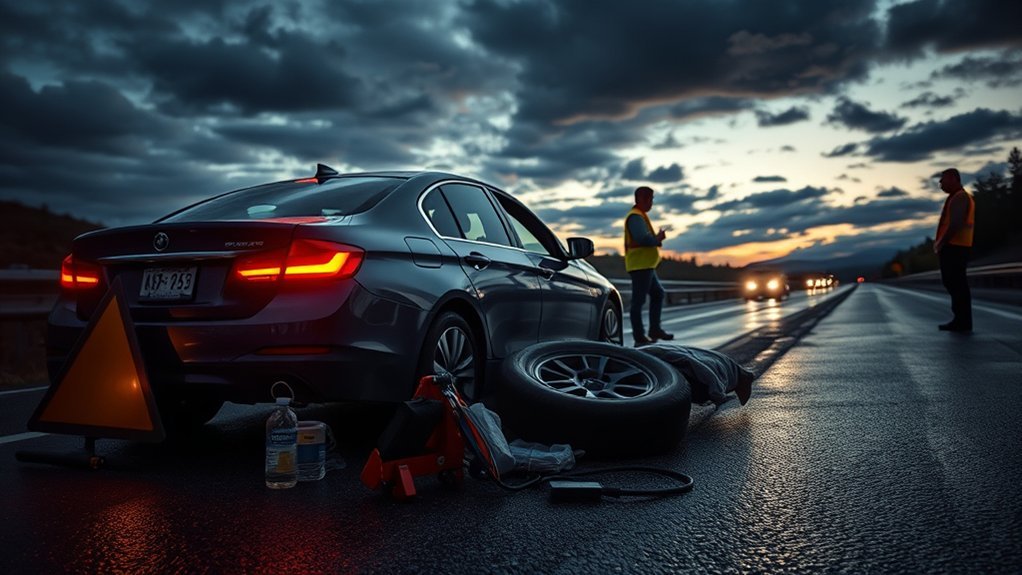
If you have a roadside emergency, stay calm, switch on hazard lights, and steer to the safest shoulder. Keep your seatbelt on until traffic clears, then exit on the passenger side when it’s safe. Set reflective triangles or flares, angle your wheels away from traffic, and call for help with your exact location. Keep a kit with water, a flashlight, and jumper cables. These steps can keep you safe while you learn the rest.
Key Takeaways
- Turn on hazard lights immediately and signal well before pulling over to alert approaching drivers.
- Steer smoothly to a safe shoulder, angle wheels away from traffic, and stay clear of active lanes.
- Stay inside the vehicle when possible, especially in heavy traffic or at night, until it is safe to exit.
- Use reflective triangles, flares, and a reflective vest to improve visibility in low light or bad weather.
- Keep an emergency kit ready with a flashlight, jumper cables, water, snacks, and a charged phone.
[Products Worth Considering]
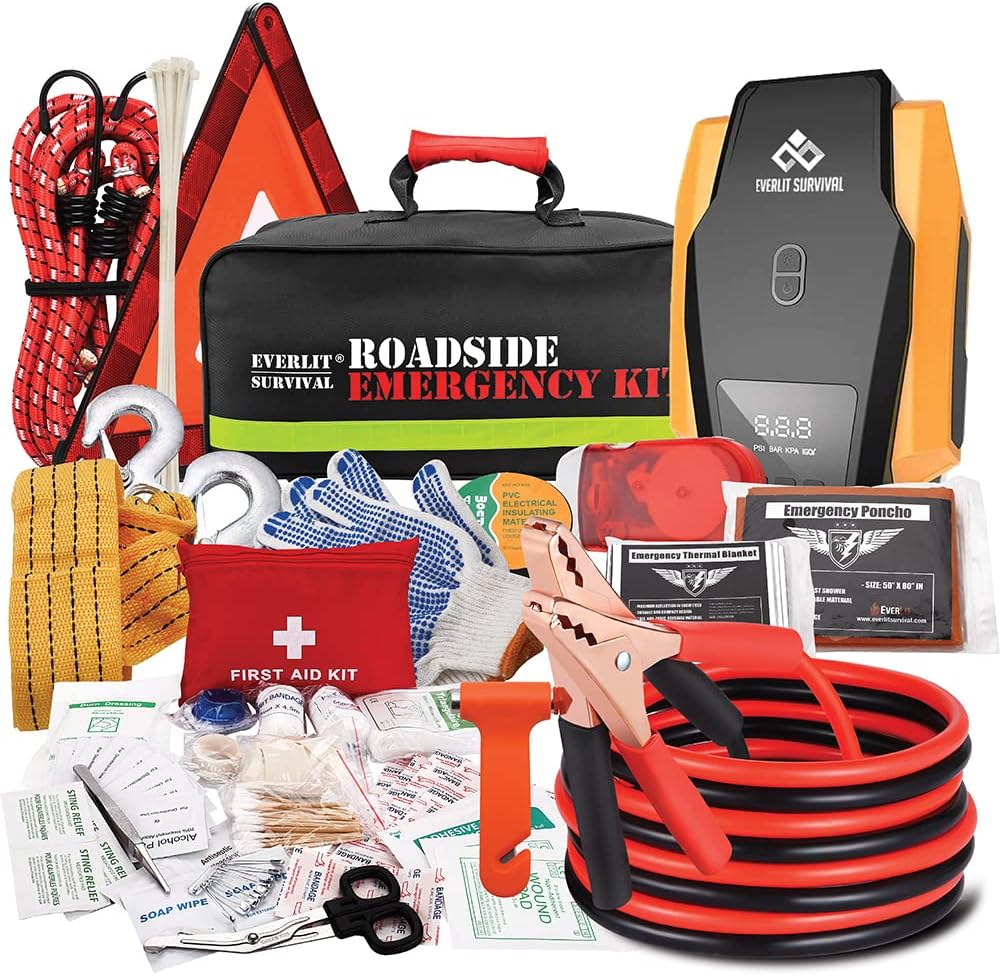
The Everlit Road Guardian emergency kit is designed for roadside breakdowns, combining essential safety gear and roadside tools in one compact bag. It includes a digital 12V auto tire inflator with preset and auto shutoff, plus 12-foot 8-gauge jumper cables to get you moving again. You also get a full 108-piece first aid kit, reflective warning tools, safety gloves, and emergency convenience items for safer travel.

This car emergency kit keeps essential roadside tools organized in a durable, portable bag so you can respond quickly during common driving emergencies. It includes battery jumper cables, a bright LED headlight, first aid supplies, a tire pressure gauge, and safety essentials like gloves and an emergency poncho. Designed for trunk or storage use, it helps you be prepared for dead batteries, minor malfunctions, and unexpected roadside issues.

This roadside assistance kit helps drivers and passengers in urgent situations after an accident or breakdown, providing practical support while waiting for help. It includes a lightweight, compact tire inflator for fast inflation of standard vehicle tires, plus reinforced jumper cable protection for safer handling. Ideal for winter weather, road trips, camping, and travel, with everything stowed neatly in a trunk bag.
Why Roadside Emergencies Turn Dangerous
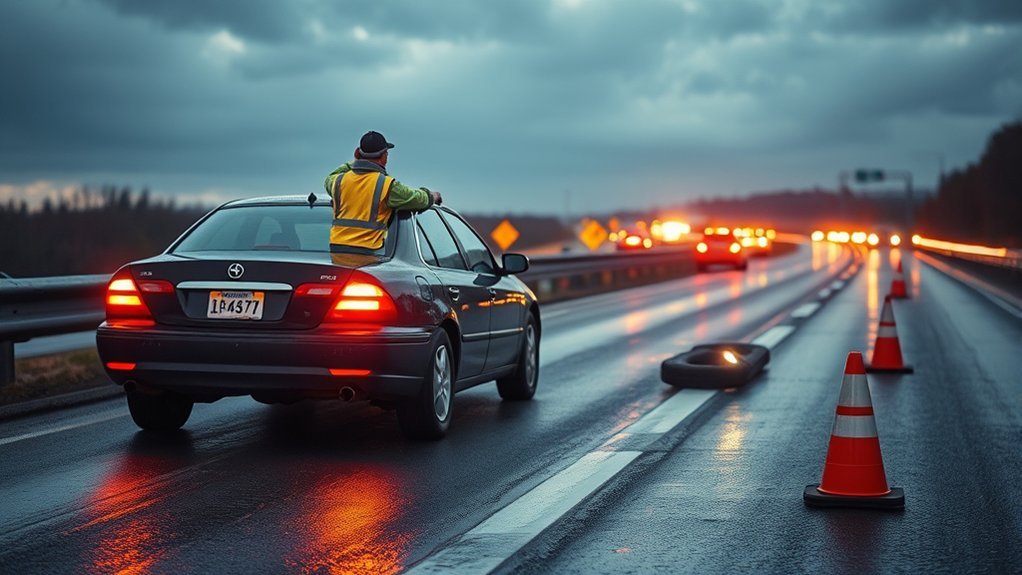
Roadside emergencies turn dangerous fast because a stopped vehicle can become a collision hazard, especially in high-traffic areas, on blind curves, or at night when visibility drops.
A stopped vehicle can become a collision hazard fast, especially in high-traffic areas, blind curves, or at night.
You face a real risk of secondary collisions when other drivers don’t spot your vehicle in time. In 2024, about 5.7 million drivers needed roadside assistance, so these incidents happen often and can escalate quickly.
If you don’t use hazard lights or other warning devices, you make it harder for approaching motorists to react. Stalled cars are especially exposed where traffic moves fast or sightlines are limited.
Your biggest risk often comes from leaving the vehicle too soon; more than 70% of roadside fatalities happen when drivers exit in busy traffic.
Stay inside, stay alert, and keep the situation as visible as possible until conditions improve. That’s how you stay safe while you wait for help.
What to Do First on the Shoulder?
The moment you reach the shoulder, switch on your hazard lights and steer smoothly into the safest pull-off area you can find. Keep calm, stay clear of traffic lanes, and use your Roadside Emergency Kit only after your vehicle’s position is secure.
Follow these steps:
- Stop gently. Don’t brake hard or jerk the wheel.
- Stay visible. Leave your hazard lights on and, if needed, set reflective triangles behind your car.
- Decide whether to remain inside. If traffic is heavy, it’s usually safer to wait seated and belted.
- Call roadside assistance or emergency services right away. Give your exact location, nearby landmarks, and vehicle details.
If you have flares or triangles, place them at 10, 100, and 200 feet behind you to warn oncoming drivers.
Keep your focus on safety, don’t walk into traffic, and wait for help to arrive.
How to Pull Over Safely on Any Road
Signal early, then steer smoothly toward the nearest safe spot, like a wide shoulder or parking lot, so you don’t make a sudden stop.
Turn on your hazard lights right away and pull as far from traffic as you can, with the wheels angled away from the road.
Once you’re stopped, keep the vehicle in park, stay buckled in, and use reflective triangles or flares if you’re on a highway.
Signal Early
Give other drivers plenty of warning by turning on your signal at least 100 feet before you pull over. Your early signal lets traffic react and gives your vehicle room to move safely.
As soon as you notice trouble, switch on your hazard lights so motorists see you sooner, especially at night or in heavy traffic.
- Signal well before the shoulder.
- Use hazard lights right away.
- Stop on the right shoulder or an emergency lane.
- Keep your wheels turned away from traffic.
If you can, exit on the passenger side and move far from the road after you stop.
Clear warnings reduce confusion and help other drivers avoid sudden braking or swerving.
Steer to Safety
Once you’ve alerted traffic, steer to the right shoulder or a marked pull-off area as far from moving vehicles as you can. Use your turn signal early, then ease over smoothly without sudden braking.
Keep safety first: once you stop, turn your wheels away from the road and switch on your warning lights right away. If you’re on a highway, set reflective triangles or flares at 10, 100, and 200 feet behind your vehicle if conditions allow.
Stay calm and keep your focus on traffic flow. If the vehicle can’t move safely, call a roadside assistance service.
When you’re ready to exit your vehicle, do it from the side away from traffic and move well clear of the roadway.
Stop Visible, Secure
As you pull over, aim for the right shoulder or another safe area and use your hazard lights early so other drivers know you’re stopping.
Keep your Roadside move controlled and deliberate. Turn your wheels away from traffic, and stop as far from lanes as you can.
If traffic is heavy or the road is narrow, stay buckled inside until it’s safe to exit; emergency responders can reach you faster if you’re visible and out of danger.
- Signal early with hazards.
- Position off the lane and angle wheels away.
- Set out reflective triangles or flares at 10, 100, and 200 feet.
- Exit from the passenger side and move at least 40 feet away.
This keeps you visible, secure, and easier to protect on any Roadside stop.
Roadside Emergency Kit Checklist
Your roadside emergency kit should cover the basics: flashlight, jumper cables, bottled water, granola bars, a safety blanket, a portable charger, and first aid supplies.
Add visibility gear like flares or reflective triangles so other drivers can see you quickly.
Check the kit regularly, replace expired items, and make sure everything works and fits your climate and medical needs.
Essential Kit Items
A solid roadside emergency kit should cover visibility, basic survival, and communication: pack a flashlight with fresh batteries, flares or reflective triangles, jumper cables, a spare phone charger or high-capacity power bank, bottled water, and non-perishable snacks like granola bars or nuts.
Keep your emergency kit organized and easy to reach. Include a first aid kit, too, and check it regularly so supplies and batteries don’t expire.
- Flashlight and spare batteries
- Jumper cables and charger
- Water and snacks
- Warning devices and a first aid kit
Match the kit to your climate: add a safety blanket for cold weather or a rain poncho for wet conditions.
Replenish items after each trip, and you’ll stay ready when help takes time to arrive.
Visibility And Warning Gear
Visibility gear can make the difference between being seen and being hit, so pack reflective vests, flares, and warning triangles in your roadside kit.
You should keep your warning devices easy to reach and use them fast when you pull over. Turn on your hazard lights right away, then place the first triangle or flare at least ten feet behind your vehicle.
Add more markers at 100 and 200 feet to give approaching drivers enough notice. Choose high visibility gear that works in rain, snow, and fog, so other drivers can spot you in poor weather.
Reflective materials and flares help you stay visible after dark and reduce the chance of another crash.
Kit Checks And Refreshes
Once you’ve made yourself visible on the shoulder, keep your roadside kit ready for the next problem by checking it every six months. Open the kit, test each item, and replace anything expired, dead, or damaged so your emergency supplies stay fully stocked.
- Confirm your first aid kit, flashlight, flares, jumper cables, and tire pressure gauge all work.
- Add granola bars and bottled water, and swap them before they spoil.
- Pack a charged power bank and spare phone charger so you can call for help.
- Refresh the kit for your climate: blankets for cold, extra water for heat.
These quick refreshes help you handle delays, stay safe, and keep control until help arrives.
How to Make Your Car Visible
If you’re forced to stop on the roadside, make your car easy to see right away by switching on your hazard lights and moving it onto the shoulder or another safe spot away from traffic, with the wheels turned away from the road. Make sure your flashing lights stay on, and use reflective gear from your emergency kit if you step out.
| Visibility Tool | Where to Place | Why It Helps |
|---|---|---|
| Hazard lights | On immediately | Alerts drivers fast |
| Reflective triangle | 10 feet behind | Warns close traffic |
| Reflective triangle | 100 feet behind | Extends notice distance |
| Reflective triangle | 200 feet behind | Improves early reaction |
| Reflective vest | On your body | Boosts night visibility |
Keep road flares or triangles ready, and place them at the distances above if it’s safe. Flashing lights, reflective markers, and a vest work together to keep you visible in low light or bad weather.
Tire Blowouts and Flats: What to Do
A tire blowout can be startling, but you need to stay calm, keep a firm grip on the steering wheel, and ease off the accelerator without slamming the brakes.
With tire blowouts, your first job is control, not speed. As your vehicle slows, signal and steer toward a safe stopping place with room around you. Use your hazards so other drivers see you quickly, and set reflective triangles or flares behind you if it’s safe.
Control comes first: steady the wheel, slow down gently, and move to a safe stopping place.
- Keep both hands steady and guide the car straight.
- Ease off the gas and let speed drop naturally.
- Pull over only when you’ve reached a secure spot.
- If you’ve got a flat tire on a fast road, stay inside and wait for help.
Good vehicle maintenance reduces risk, but it can’t prevent every failure. Handle the situation calmly and safely, and you’ll lower the chance of a crash.
[Products Worth Considering]

Milton S-921 pencil tire pressure gauge helps you maintain optimal tire pressure for passenger cars with accurate readings in PSI and kPa. It features a built-in deflator valve for convenient pressure adjustments, plus a single chuck head and nylon indicator bar for easy use on the go. Built from durable plated brass and designed for reliable performance, it’s a practical road trip and cold-weather maintenance tool.

The Gurduenon scissor car jack tire changing kit is designed for quick flat-tire replacement with a lifting capacity of 2.5 tons and a scissor-lift range sized for many vehicles. The complete emergency set includes a ratchet wrench, lug wrench, gloves, a pencil tire pressure gauge, and a storage bag for convenient trunk or garage use. Universal compatibility makes it suitable for cars, SUVs, and other vehicles roadside assistance needs.

The Big Rig Defense Tire Thumper is a truck tire pressure checker that lets you quickly check multiple tires by giving them a firm whack. Listen for a reassuring thump and feel the stick bounce when a tire is fully inflated, helping you get back on the road safely. It features a comfortable, glove-friendly handle and a secure wrist strap for confident use on busy routes.
Can You Safely Change a Tire?
You can change a tire safely only when you’re away from traffic, on flat, stable ground, and your vehicle is securely parked with the parking brake on and hazard lights flashing.
Before you start, make sure you’ve got enough room to work and stay at least 40 feet from moving traffic whenever possible.
Follow your owner’s manual for the correct jack points and tire-changing steps; that guidance helps you avoid damage and injury.
If the shoulder is narrow, the weather is severe, or traffic is heavy, don’t force it. Call for roadside assistance or another vehicle service instead.
These emergency tips protect you better than rushing a risky repair. You can change a tire safely when conditions are right, but you should never trade speed for safety.
If anything feels unstable, wait for professional help.
How to Protect Passengers
- Tell passengers to remain seated and buckled.
- Secure pets in crates or on leashes.
- If you must exit, use the passenger side or the side away from traffic.
- Move everyone at least 40 feet from the vehicle and wait there.
Practice these steps before a trip so everyone knows what to do.
Clear roles reduce panic, prevent wandering, and keep you and your passengers out of traffic.
When help arrives, you’ll already have everyone in a safe, controlled spot.
Roadside Mistakes That Put You at Risk
Even a small roadside mistake can turn a breakdown into a bigger danger if you don’t act quickly and safely. Turn on your hazard lights right away so other drivers notice you before a secondary collision happens, especially at night or on blind curves.
Turn on your hazard lights immediately so other drivers see you before a roadside breakdown becomes a bigger danger.
Don’t step out of the vehicle until you’ve checked traffic conditions and know you can move safely. If you must change a tire, wait for a safe shoulder or call for help; busy roads leave you exposed to passing cars.
Use reflective triangles or flares to boost visibility, because parked vehicles can blend into the road fast. Keep your emergency kit stocked with a flashlight, first aid supplies, water, and warning gear so you’re not scrambling when trouble hits.
Small oversights create big risks, but quick, smart choices keep you protected until help arrives.
How to Practice Roadside Safety Skills
Practice safe pull-off drills in an empty parking lot so you can use your hazard lights, exit smoothly, and stop in a controlled way.
Check your emergency kit often, know where each item is, and make sure everything works before you need it.
Walk through passenger safety scenarios with your family so you know when to get out, how to keep everyone calm, and when to call for professional help instead of trying a quick fix.
Safe Pull-Off Drills
A few careful pull-off drills can sharpen your roadside safety instincts before you ever need them in an emergency.
During regular drives, scan for a safe pull-off, like a wide shoulder or parking lot, so you can react fast. Practice this routine:
- Signal early with your turn indicator at least 100 feet before you move over.
- Simulate safe stopping in an empty lot by easing off the accelerator, braking smoothly, and steering to the edge.
- Use hazard lights right after you stop so other drivers see you sooner.
- Exit safely through the passenger side, then move at least 40 feet from the vehicle.
Repeat these steps until they feel automatic. That way, you’re ready to protect yourself and others when a real roadside stop happens.
Emergency Kit Practice
To build real roadside confidence, regularly rehearse emergency skills in a safe place like an empty parking lot. You can practice pulling over, switching on hazard lights, and setting warning devices without pressure.
Check your emergency kit with family members so everyone knows what’s inside and where it’s stored. Create simple roadside emergencies and ask yourself whether the road conditions make it safe to act.
Review tire-change steps, including when to stay off the shoulder and keep clear of traffic. Talk through mechanical failures, then use your phone or roadside app to contact help.
Keep each practice session calm, brief, and repeatable. The more you rehearse, the faster you’ll recognize hazards, use your tools, and make smart decisions when real trouble starts.
Passenger Safety Scenarios
Once you’ve rehearsed the driver’s tasks, include every passenger in the drill so everyone knows what to do if you need to stop on the roadside. Assign one adult or teen to watch kids and pets, and keep instructions simple and firm.
- Tell passengers to stay buckled in their seat belt until you say it’s safe.
- Practice opening the passenger door and exiting through the passenger side, away from traffic.
- Review the emergency kit together, including reflective vests and flares, so everyone knows where they are.
- Role-play calm waiting: children stay in their car seats, pets stay controlled, and everyone follows your directions until help arrives.
Repeat these drills regularly. Clear habits reduce panic, prevent mistakes, and help you protect everyone fast.
Frequently Asked Questions
What Are 10 Important Safety Tips for Driving?
You’ll drive safer by wearing seat belts, using correct child seats, practicing defensive driving, obeying speed limits, staying alert, avoiding driver distractions, adjusting for weather conditions, maintaining your vehicle, and never driving impaired.
What Are 10 Items You Need for an Emergency Kit?
You need a First Aid kit, jumper cables, Flashlight Batteries, a flashlight, Reflective Triangles, a reflective vest, water, non-perishable snacks, a blanket, and a Portable Phone Charger. You’ll stay safer, visible, and prepared.
What Are 10 Safety Rules on the Road?
Wear your seat belt, obey limits, avoid Driving distractions, adjust to Weather conditions, perform Vehicle maintenance, keep Safe following distance, signal turns, watch pedestrians, never drive impaired, and stay alert—because your car isn’t auditioning for chaos.
What Are the 10 Golden Rules for Road Safety?
You should wear seat belts, obey limits, avoid Distracted Driving, never drink and drive, keep Driver Awareness high, maintain Vehicle Maintenance, respect Weather Conditions, use child seats, stay alert, and signal every move.
Conclusion
When you face a roadside emergency, your next move matters. Pull over safely, stay visible, and use your emergency kit before you do anything else. Keep passengers protected, and never rush a tire change if traffic or conditions make it risky. Practice these steps now, so you can act fast later. Why wait for an emergency to learn what to do? A few minutes of preparation can keep you calm, safe, and in control.
[Products Worth Considering]

Yieokei Tesla jack pads are molded rubber lifting pucks designed for 2016-2026 Model 3/Y/S/X, including Juniper, to fit securely in the jack hole. They cushion the underframe and help position the jack precisely at the factory jack points to reduce risk of battery, paint, or chassis damage. The set also includes a tire repair tool kit for emergency roadside fixes and comes with a portable storage case to keep everything organized.

CKAuto Universal Tire Repair Kit provides a complete emergency solution for fixing flat tire punctures using plug-style repairs without removing the tire from the rim. The kit includes insertion/probe tools, repair plugs, lubricant, valve accessories, and a convenient carry bag for quick roadside use. Designed for tubeless tires across cars, SUVs, trucks, motorcycles, RVs, and more, it’s easy enough for anyone to perform a proper repair.

AstroAI AIRUN H is a compact 12V tire inflator designed for fast, convenient inflation with an easy-to-read digital pressure gauge. Set your target pressure with programmable controls and let the auto shut-off turn off the pump when the preset is reached. It also includes a backlit screen and LED flashlight for nighttime use, with a ToughUltra durability design for longer service life.

Related Articles
How to Break a Car Window in an Emergency Safely
After an emergency, a few simple moves can break a car window safely—but one crucial choice could change everything.
Read More
How to Buy Car Insurance: Coverage Guide for Beginners
Choose the right car insurance coverage and compare smarter to avoid costly gaps—discover the key details beginners often miss.
Read More
How to Get Cheap Car Insurance: 10 Ways to Cut Costs
Maximize savings on cheap car insurance with 10 smart cost-cutting moves, and discover the one strategy most drivers overlook.
Read More