
Toyo RT vs MT Tires: Best Off-Road Choice Compared
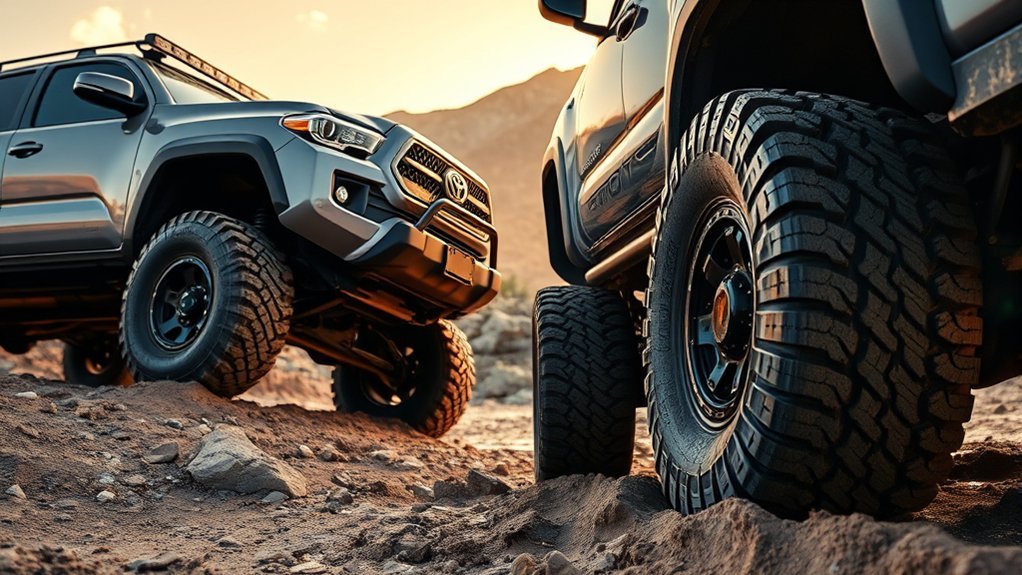
If you want a tire that works well on the street and still handles trails, the Toyo RT is usually the better all-around choice. It runs quieter, offers better wet-road manners, and keeps decent off-road grip for mixed use. The Toyo MT is the stronger option when you spend most of your time in deep mud, rocks, or loose soil. Your terrain, load, and daily mileage decide the better fit, and the differences get clearer from there.
Key Takeaways
- Toyo RT tires balance off-road traction with quieter, more comfortable daily driving.
- Toyo MT tires are best for deep mud, rocks, and extreme off-road conditions.
- RT tires handle wet pavement and mixed terrain better than MT tires.
- MT tires are noisier on-road and generally less comfortable than RT tires.
- Choose RT for versatility, or MT for maximum off-road grip and aggression.
[Products Worth Considering]
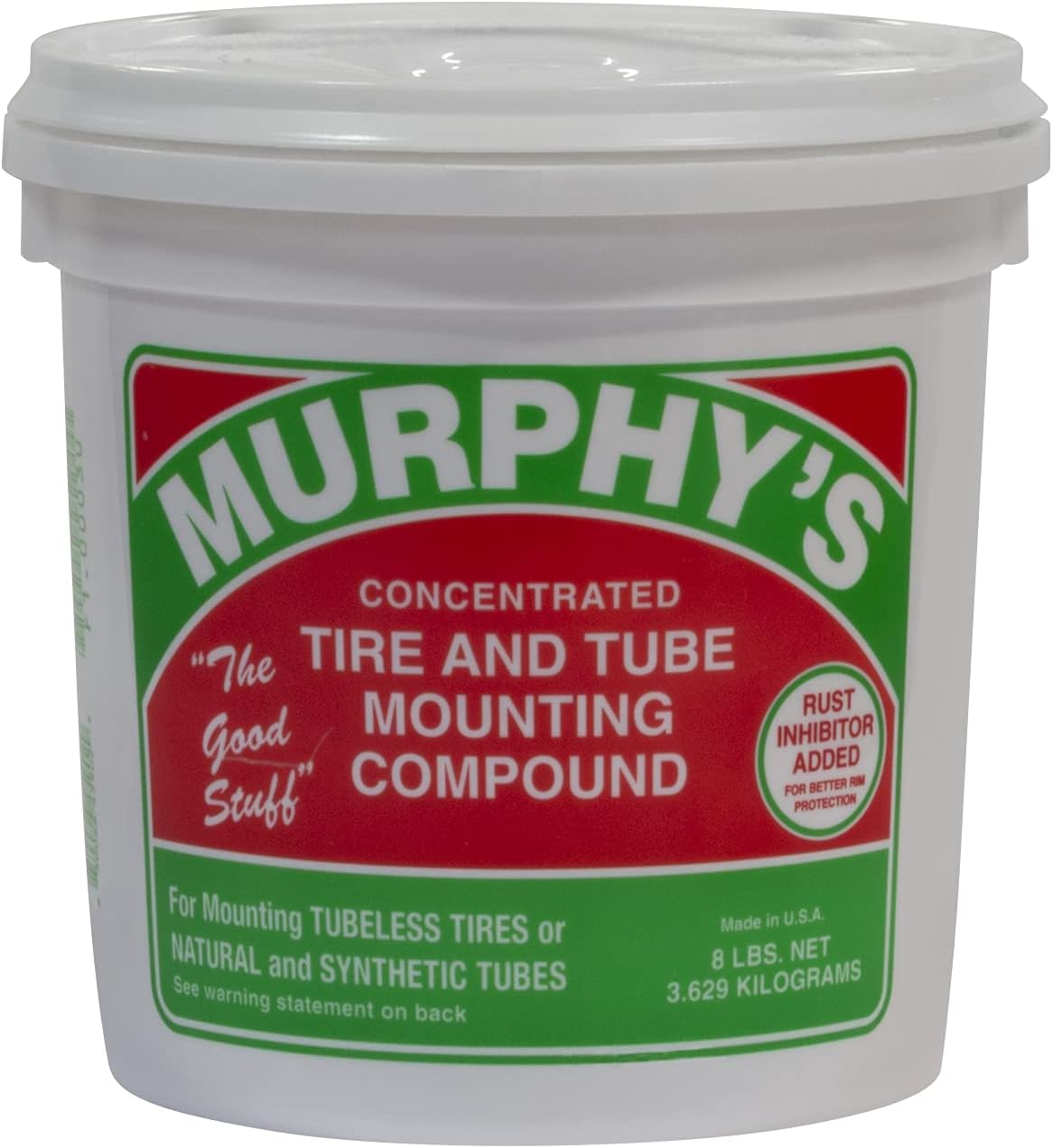
A concentrated tire and tube mounting compound designed to help simplify mounting rubber tires and tubes on passenger, semi truck, construction, and OTR applications. Its ultra-thick formula packs beads effectively and includes rust inhibitors to help protect against corrosion during use.
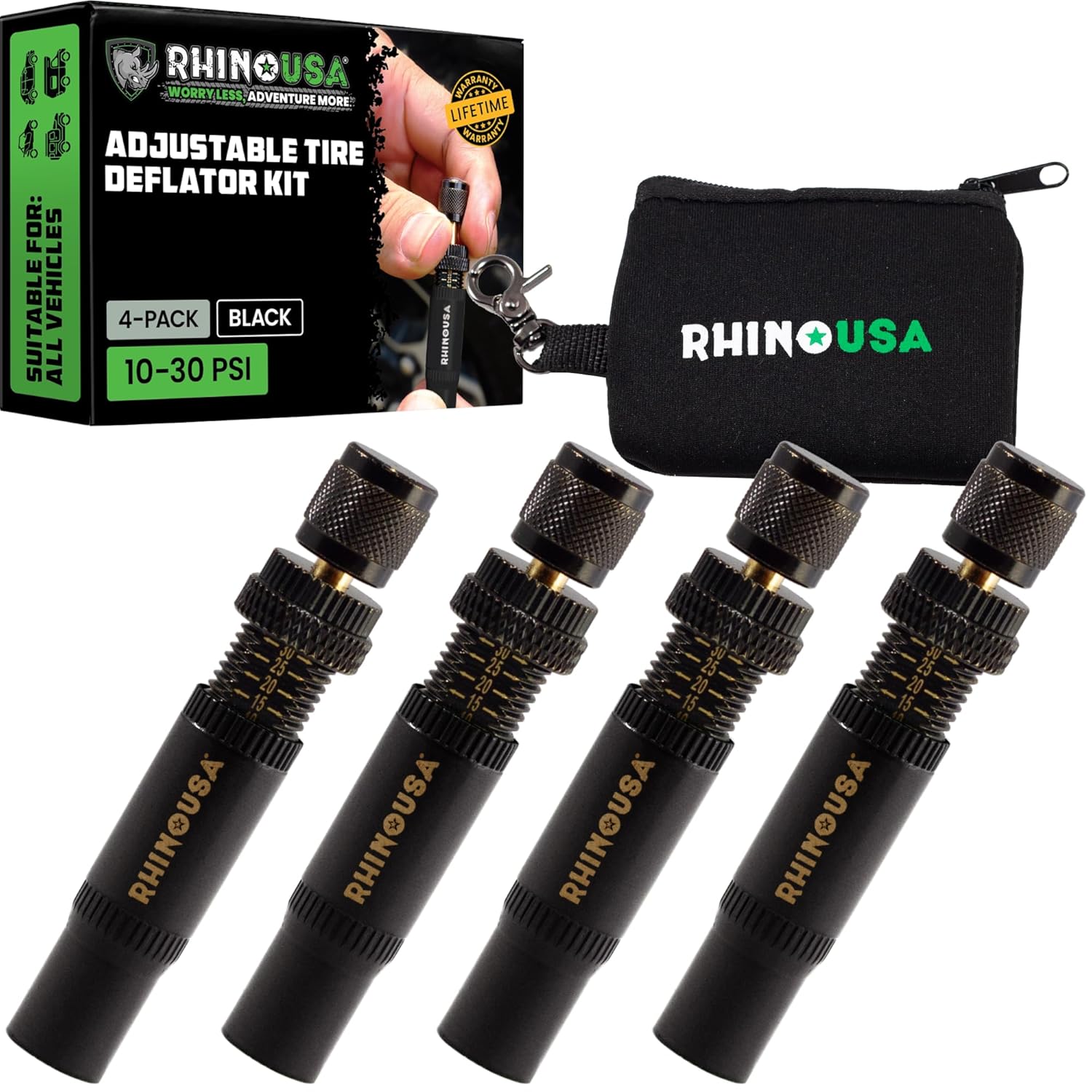
Use the Rhino USA adjustable tire deflators to air down all four tires at once by screwing one deflator onto each valve stem, letting you step away while the tires reach your preset pressure. Each deflator independently adjusts across a 10–30 PSI range with laser-etched indicators for quick setup and verification, making it ideal for beach, sand, and rocky off-road trails.

This ALL-TOP auto-stop tire deflator valve kit lets you air down off-road tires quickly without watching pressure, automatically stopping when your preset PSI is reached. Each valve is individually calibrated for reliable performance with an acceptable +/- 2 PSI tolerance. The adjustable deflator range covers 10 to 30 PSI and includes four valves plus valve caps and a zipper pouch for easy setup on trucks, SUVs, RVs, UTVs, and powersports.
What’s the Difference Between Toyo RT and MT Tires?
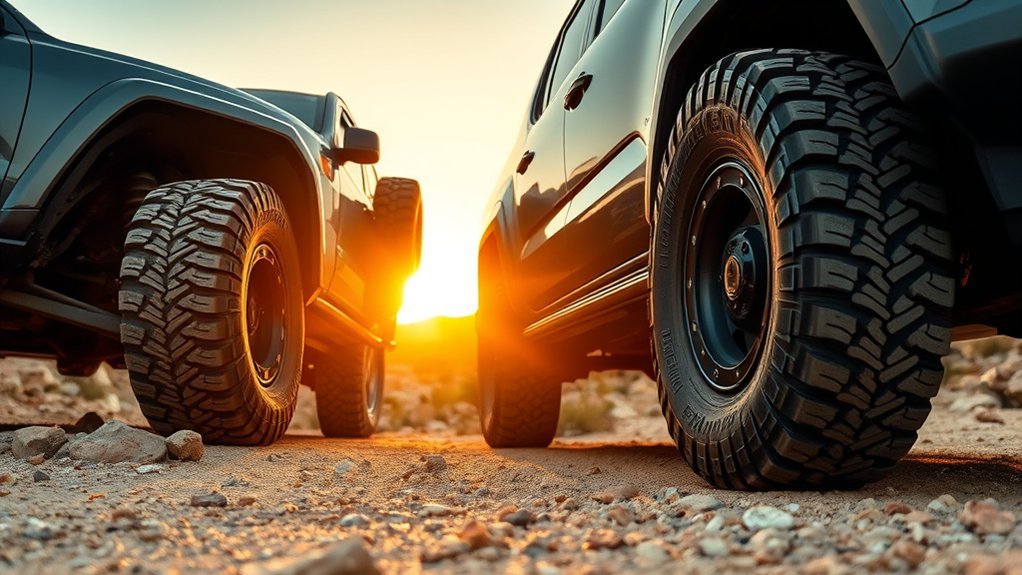
Toyo RT and MT tires serve different purposes: RT models are hybrid terrain tires that balance on-road comfort with off-road capability, while MT models are mud terrain tires built for aggressive traction in muddy, loose, and extreme off-road conditions.
You get a closer contact patch with RT tires, which supports more precise street handling and quieter pavement use. The RT Trail variant adds even less noise and better wet grip, making it closer to some all-terrain tires in daily behavior.
RT tires have a closer contact patch for sharper handling and quieter pavement performance.
MT tires use larger, more open lugs to bite into mud, rocks, and loose soil, so they deliver stronger off-road performance in severe conditions. That design also improves durability in harsh environments, but it can reduce on-road stability and comfort.
If you need snow traction, either type can help depending on tread and compound, yet RT tires usually remain the more versatile choice. MT tires suit dedicated off-road use where traction matters more than refinement.
When Toyo RT Tires Make More Sense
If you need one tire to cover daily driving and moderate off-road use, RT tires make more sense than MTs. Toyo RT tires use a hybrid tread that keeps pavement manners close to a street tire while still giving you enough bite for trails. Compared with a mud terrain tire, you get less noise, better steering response, and a smoother ride in wet weather.
| Use case | RT advantage |
|---|---|
| City commuting | Quieter operation |
| Mixed roads | Better balance |
| Wet weather | Improved traction |
| Heavy-duty off-road | RT Pro durability |
If you drive mostly on highways but still want off-road capability, the Toyo RT Trail fits well because it improves on-road quietness and wet traction. If you need tougher construction for harder use, the RT Pro adds a stronger carcass. You should choose RT when versatility, comfort, and everyday control matter more than maximum mud performance.
Why MT Tires Still Win in Deep Mud
In deep mud, MT tires still outperform hybrid options because their larger, more aggressive tread blocks and wider voids are built to move mud out of the contact patch and keep biting into soft ground.
You get stronger self-cleaning, so the lugs shed packed mud instead of turning slick. That keeps grip consistent when Toyo RT-style hybrids start to float.
MT tires also use deeper channels and wider shoulders, which help displace slurry and reduce slippage in ruts. Their reinforced sidewalls add puncture resistance when hidden rocks or stumps cut through the mud.
If your route is mixed, hybrids are great options, but they can’t match an MT tire’s focused off-road design.
You should also note that snow performance can be acceptable on some MTs, yet mud traction remains their main advantage.
For extreme terrain, MT tires still deliver the most dependable bite and control.
How Toyo RT and MT Tires Affect Road Noise
When you compare Toyo RT and MT tires, you’ll usually hear lower road noise from the RT because its tread design is less aggressive.
MT tires generate more pattern noise on pavement, which can reduce cabin comfort even as they improve off-road traction.
The Toyo RT Trail further cuts noise and improves wet-road behavior, so you get a more balanced on-road compromise.
Road Noise Levels
Toyo RT tires are generally quieter on the road than MT tires, because their tread design balances off-road capability with a less aggressive contact pattern.
If you want a tire that keeps cabin noise lower, the Toyo RT is usually the better choice, especially for daily driving. The RT Trail variant improves street manners further, and its closer contact patch helps reduce noise compared with a typical MT tire.
By contrast, MT tires prioritize traction and usually create more audible road noise, most noticeably at higher speeds.
Even quieter hybrids like the Nitto Ridge Grappler still run louder than Toyo RT.
If you pick the wrong best tire for your use, you can go wrong quickly on comfort.
Tread Pattern Effects
Because tread geometry drives most of the difference, Toyo RT tires use a hybrid pattern that keeps road noise lower than traditional MT tires.
You’ll notice the tread design impact immediately: RT blocks are more refined, so they interrupt airflow less and generate fewer tonal peaks. MT tires use larger, widely spaced lugs, which create more vibration and pronounced hum at speed.
Toyo RT Trail adds even closer contact patches, giving you stronger noise reduction features than the RT Pro, which leans harder toward off-road durability and sounds louder.
Compared with dedicated MTs, you get hybrid performance benefits that preserve traction without the same level of acoustic penalty.
Nitto Ridge Grappler shows a similar compromise, but Toyo’s tread tuning stays more road-oriented overall.
Cabin Comfort Tradeoffs
Road noise has a direct effect on cabin comfort, and that’s where Toyo RT and MT tires diverge most.
If you want better quiet performance, Toyo RT Trail gives you a clear advantage over traditional MT tires. Its hybrid tread helps reduce hum, so you’ll get more road comfort during daily driving.
Toyo RT Pro shifts the balance toward durability, but you’ll hear more noise inside the cabin than with the Trail version.
MT tires, with deeper, more aggressive lugs, usually create the highest sound levels and can wear on long highway trips.
Hybrid choices like the Ridge Grappler sit in the middle, offering moderate noise and usable off-road grip.
Your best pick depends on whether you value cabin comfort or maximum terrain bite.
Wet and Snow Traction: RT vs MT
When wet roads or light snow are part of the mix, RT tires usually have the edge over MT tires because their tread design maintains more rubber contact with the surface and sheds water and slush more effectively.
In this wet performance comparison, you’ll see Toyo RT Trail models deliver better grip than traditional MTs, while Toyo RT Pro leans more toward off-road bite and gives up some wet-road confidence.
Nitto Ridge Grappler adds aggressive cyping, so your snow handling capabilities improve versus many MT patterns.
By contrast, MT tires still excel in deep mud and loose terrain, but their larger voids can reduce contact on rain-slick pavement and packed snow.
If you need mixed-season control, hybrid tire advantages matter: RT-style tires balance traction, stability, and usable winter performance better than a pure mud-terrain design.
You get a more predictable tire when conditions shift from dry dirt to wet asphalt or light snowfall.
Sidewall Strength, Durability, and Tread Life
When you compare sidewall strength, the Toyo RT Pro uses a heavier-duty carcass for better off-road durability, while the RT and RT Trail lean more toward on-road comfort.
You’ll also see a trade-off in tread life: the RT Pro is built for extended off-road use, while the RT Trail is tuned to hold up better in street driving.
Tire pressure and maintenance still matter, since they directly affect durability and service life across both Toyo and Nitto options.
[Products Worth Considering]

Monitor tire tread wear with a smart, color-coded depth gauge that shows clear condition ranges at a glance. The bar is range marked for fast, easy readings, helping you maintain safer traction and performance. Each gauge is portable with a pocket clip, and the set includes 20 units for daily use and sharing.

Protect your spare wheel with a waterproof, dustproof tire cover made to resist sun and harsh weather. The elastic band design makes it easy to install and remove without tools, while reinforced stitching helps it keep its shape. Available in multiple sizes, it fits common RV, trailer, Jeep, SUV, and truck spare tires.

The SAFELIFE dial tire tread depth gauge measures tread depth in 1/32 inch increments with clear, easy-to-read 2-inch dial face. Color zones using a traffic light system help you quickly judge whether tread is low, marginal, or ample for safer driving. Built with a durable zinc cast body and a metal detect probe for precise, comfortable use across cars, motorcycles, trucks, and buses.
Sidewall Strength
Sidewall strength is a key separator here, because thicker, heavier-duty carcasses generally hold up better against cuts, punctures, and impact damage in rough terrain.
You’ll notice the Toyo RT Pro leans hard into sidewall technology, with a reinforced carcass that boosts puncture resistance and off road performance when you air down or crawl over sharp rocks.
The Falcon Wild Peak RT01 also uses thick sidewalls, so it suits heavy loads and camper duty well.
By comparison, the Toyo RT Trail focuses more on road manners, so it gives up some toughness.
The Nitto Ridge Grappler balances both worlds, but it won’t match the RT Pro in severe abuse.
If your terrain is harsher, you’ll benefit from the stronger construction.
Tread Life Durability
Durability and tread life follow closely behind sidewall strength, since a tougher carcass and more resilient tread package usually hold up better under repeated impacts, heat, and abrasion.
In your tread wear analysis, Toyo RT Pro stands out because its heavier duty carcass resists cutting and chunking better than standard RT options. By comparison, the Nitto Ridge Grappler balances comfort and traction, but you’ll see faster wear in severe off road performance.
Falcon Wild Peak RT01 uses thick sidewalls to support durability for heavy-duty loads, while Toyo RT Trail’s closer contact patch can trade some off-road toughness for street mileage.
Best Tire Choice for Overlanding and Camping
For overlanding and camping, Toyo RT Pro tires are the strongest pick if you prioritize off-road durability and load-carrying confidence on rugged terrain. You’ll get the best match when your rig faces long, uneven routes, heavy gear, and repeated trail abuse.
A quick tread pattern analysis shows why: the RT Pro favors bite and stability, while tire longevity factors such as sidewall strength and casing toughness support extended use under load.
- Choose Toyo RT Pro when off road performance matters more than ride comfort.
- Choose Nitto Ridge Grappler if you want a more balanced mix for mixed-surface trips.
- Choose Falken Wildpeak RT01 when thick sidewalls are a priority for camper weight.
If you split time between pavement and dirt, Toyo RT Trail fits better because it runs quieter and handles wet roads more confidently.
Your best tire depends on vehicle weight, trail severity, and how often you move between campsites and highways.
How Tire Design Affects Highway Handling
You’ll see highway handling improve when a tire keeps a stable contact patch, because hybrid terrain designs like the Toyo RT Trail usually maintain better road grip and steering consistency than more aggressive MT tires.
Tread block shape also matters: tighter, shallower patterns generally cut road noise, while large, open blocks on MT tires tend to produce more vibration and hum at speed.
Ciping can boost wet grip by adding biting edges, but if the tire’s compound and carcass are too aggressive, you’ll still feel less stability and comfort on pavement.
Contact Patch Stability
Contact patch stability plays a major role in highway handling because the larger and more consistent the tire-to-road contact area, the better the grip, straight-line stability, and cornering confidence.
You’ll notice that contact patch optimization differs between Toyo RT-style hybrid tires and aggressive MT designs: the RT’s closer footprint supports steadier tracking, while MT lugs can shift load more noticeably. That difference matters when you’re seeking tire performance balance on pavement.
- Wider, steadier contact areas improve lane-keeping at speed.
- Lug arrangement and depth affect how firmly the tread stays planted in turns.
- Proper inflation is one of the most effective stability enhancement techniques.
Compared with MT tires, hybrid patterns typically preserve highway manners without sacrificing too much off-road ability.
Tread Block Road Noise
Tread block spacing and size play a major role in highway noise, since wider voids tend to create more tire roar while tighter patterns usually run quieter.
You’ll notice that tread block spacing on aggressive mud-terrain tires usually amplifies highway sound because more rubber edges hit the pavement. By contrast, the Toyo RT Trail uses a closer contact patch, so it runs quieter and feels more composed on-road.
Hybrid options like the Nitto Ridge Grappler split the difference, giving you a more balanced noise profile. Larger blocks on the Toyo RT Pro and Falcon Wild Peak RT01 increase audible drone at speed.
For noise reduction techniques, keep inflation correct and follow tire maintenance tips so the tread wears evenly and the contact pattern stays consistent.
Ciping And Wet Grip
Ciping and tread pattern shape highway grip just as much as they affect noise, especially when the pavement gets wet. You’ll see clear ciping benefits because each small groove adds biting edges for traction enhancement on slick asphalt.
The Nitto Ridge Grappler uses aggressive ciping, so you get stronger wet performance and usable snow grip without losing versatility.
The Toyo RT Trail keeps a tighter contact patch, which can improve street manners and wet traction while staying quieter than more aggressive RT designs.
The Falcon Wild Peak RT01 also uses aggressive ciping, but its thick sidewalls and loud pattern trade comfort for durability.
- More biting edges mean better wet grip.
- Tighter tread contact can improve highway stability.
- Aggressive patterns often boost traction but increase noise.
Which Tire Fits Your Truck and Terrain?
Which tire fits your truck and terrain depends on how and where you drive.
For Terrain compatibility, MT tires like the Toyo MT suit you best if you spend most of your time in deep mud, loose soil, or other extreme off-road conditions. They deliver maximum traction, but you’ll trade away some road comfort, handling precision, and cabin quietness.
If your Vehicle specifications and Driving preferences point toward mixed use, the Toyo RT family is the more balanced option. The RT Pro uses a heavier duty carcass for rugged trails, while the RT Trail’s closer contact patch improves street behavior without giving up much off-road ability.
For heavy-duty off-roading, MT makes sense. For a truck that still sees pavement, hybrid RT designs usually fit better. Match tread type to axle load, suspension setup, and the surfaces you actually drive most often.
Toyo RT vs MT Tires: Final Takeaways
Toyo RT and MT tires serve different driving priorities, so your best choice comes down to how much on-road use you need to preserve. If you split time between pavement and trails, you’ll likely value Toyo RT advantages more than pure mud grip.
The RT Trail improves quietness and wet traction, and the RT Pro adds carcass strength for heavier duty use, giving you clear hybrid performance benefits without abandoning off-road capability.
- Choose RT if you want balanced traction, lower noise, and better daily drivability.
- Choose MT if you need maximum bite in mud, rocks, and other severe terrain.
- Expect MT tire drawbacks on-road: more noise, less comfort, and reduced wet-road refinement.
In practice, you’re comparing versatility against specialization. RT tires cover mixed conditions more efficiently, while MT tires deliver superior off-road aggression when street manners matter less.
Frequently Asked Questions
Are RT or MT Tires Better?
RT tires are better for mixed driving because you’ll get quieter tire performance, better on-road manners, and solid off road traction. MT tires win only when you need maximum mud grip from aggressive tread design.
What Is the Best Toyo All-Terrain Tire?
You’ll likely want the Toyo Open Country A/T III: it balances tire performance, off road durability, and tread design. You get strong traction, quieter highway manners, and dependable versatility, though trail-focused options trade comfort for toughness.
What Is the Difference Between Toyo MT and RT Tires?
Toyo MT tires have deeper tire tread and stronger off road performance for mud and sand, while RT tires balance street comfort, wet grip, and moderate off-road use. You’ll see better durability comparison, too.
Which Is Better Toyo RT Trail or Cooper Rugged Trek?
You’ll prefer the Toyo RT Trail if you want quieter pavement manners, better wet grip, and solid durability. Choose the Cooper Rugged Trek for stronger off road traction. Your Toyo performance comparison depends on use; tire durability analysis favors both.
Conclusion
If you mostly split time between pavement and dirt, Toyo RT tires usually make more sense; if you’re regularly in deep mud, MT tires still hold the edge. One useful statistic: many RT-style all-terrains deliver around 3–6 dB less cabin noise than MTs, which is a noticeable drop in perceived sound. You’ll want to match tread aggressiveness to your terrain, because the right tire improves traction, handling, and comfort without adding unnecessary compromise.
[Products Worth Considering]

Accurately measure tire tread depth with a calibrated gauge marked from 0 to 1 inch in 1/32 inch increments. The color-coded bar helps you quickly identify tread condition ranges, supporting safe driving for trucks, motorcycles, automobiles, and passenger vehicles.

Mighty Patch for Tired Eyes helps visibly awaken and de-puff under eyes with soothing hydrogel comfort. Infused with niacinamide, tri-hyaluronic acid, panthenol, and allantoin, the patches cool the eye area and refresh the look of tired eyes. Contoured to fit and designed not to slip, they’re worn for 30+ minutes or until clear for a quick morning pick-me-up.

The Continental Grand Prix 5000 is an allround road bike tire engineered for faster rolling, improved ride comfort, and enhanced puncture protection. It features a Vectran Breaker cut-protection layer, Lazer Grip micro-profile tread for confident cornering control, and Active Comfort Technology to damp vibration for smoother rides. BlackChili compound optimizes grip and speed for everyday performance and long-lasting confidence.

Related Articles

How to Reduce Road Noise From Tires: 8 Proven Fixes
Muffle tire drone with 8 proven fixes that reveal the easiest ways to quiet your ride—and one overlooked step may surprise you.
Read More
Racing Tire Technology: How They’re Built for Speed
Ultimate racing tire technology blends grip, heat, and precision in ways that can shave seconds—discover what really makes them so fast.
Read More
Changing Wheel Size: What a Bigger Rim Does to Your Car
Wider rims can sharpen handling and change your car’s feel, but the hidden tradeoffs may surprise you—discover what really happens next.
Read More