
Pirelli vs Continental: Which Tire Grips Better?

If you want the strongest outright grip, Pirelli usually wins, especially on dry, hot pavement and during hard cornering. You’ll feel sharper turn-in, better edge feedback, and quicker heat-up on track. Continental is still very capable, but it’s tuned more for balanced performance, wet traction, and longer wear than maximum bite. If you’re comparing them for driving style and conditions, the details can change the answer more than you’d expect.
Key Takeaways
- Pirelli usually grips better in dry conditions, especially for aggressive cornering and high-speed track driving.
- Continental typically offers better wet-road grip, with strong braking and stable steering in rain.
- Pirelli provides sharper turn-in and more immediate steering feedback at the limit.
- Continental feels more balanced and predictable, but less aggressive than Pirelli.
- For maximum dry performance, choose Pirelli; for all-weather confidence and durability, choose Continental.
[Products Worth Considering]

The Continental Grand Prix 5000 is an allround road bike tire engineered for faster rolling, improved ride comfort, and enhanced puncture protection. It features a Vectran Breaker cut-protection layer, Lazer Grip micro-profile tread for confident cornering control, and Active Comfort Technology to damp vibration for smoother rides. BlackChili compound optimizes grip and speed for everyday performance and long-lasting confidence.
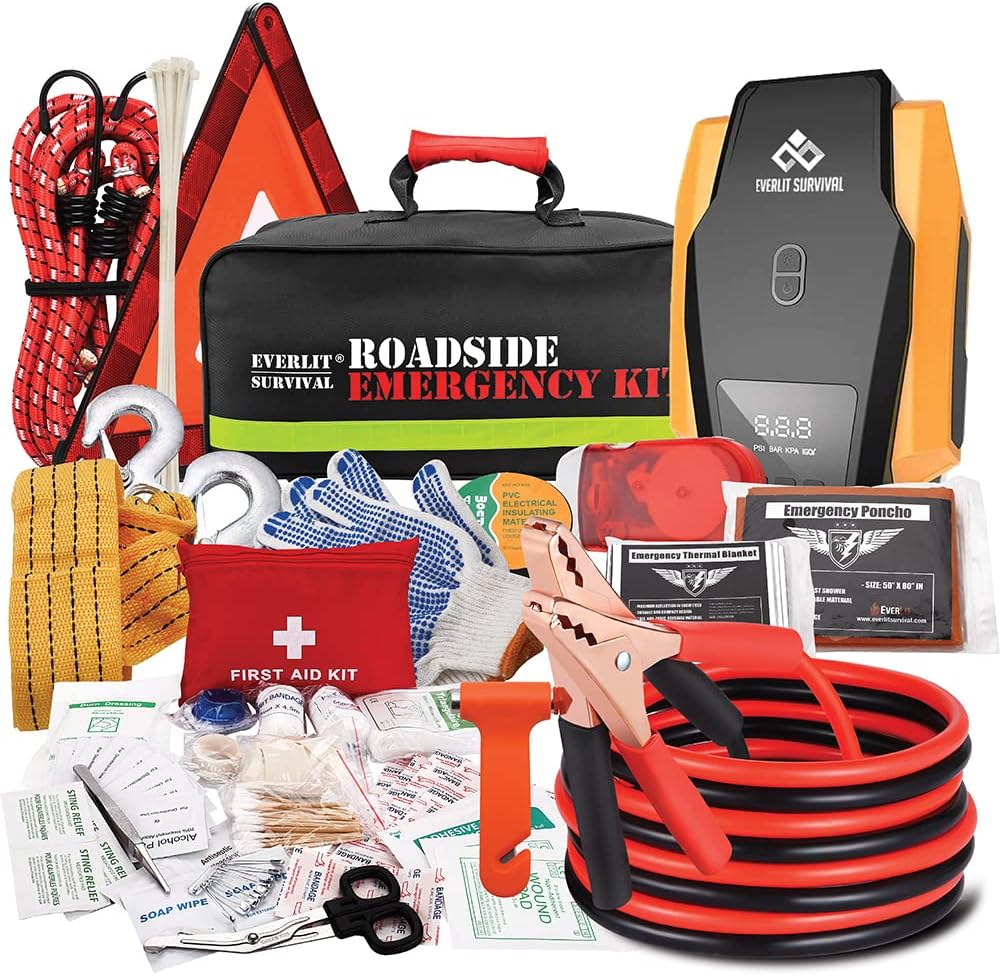
The Everlit Road Guardian emergency kit is designed for roadside breakdowns, combining essential safety gear and roadside tools in one compact bag. It includes a digital 12V auto tire inflator with preset and auto shutoff, plus 12-foot 8-gauge jumper cables to get you moving again. You also get a full 108-piece first aid kit, reflective warning tools, safety gloves, and emergency convenience items for safer travel.

Measure tire tread depth quickly and accurately with this LUMITECO dial gauge that reads in 1/32" increments up to 14/32". The color-coded green/yellow/red zones make it easy to judge tire wear and know when replacement is needed. A rugged, compact design with a protective pouch helps keep the gauge ready for use on cars, trucks, motorcycles, and more.
Which Tire Grips Better for Track Use?
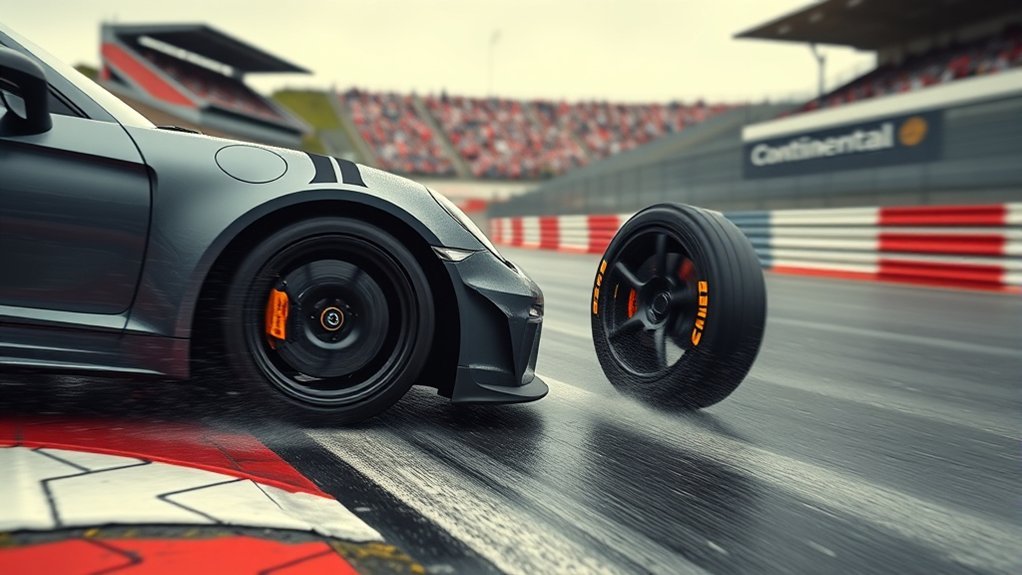
For track use, Pirelli generally grips better than Continental, especially the P Zero™ lineup, which is built for aggressive cornering, strong traction, and high-speed stability.
You’ll notice that Pirelli’s motorsport pedigree, including Formula 1 supply since 2011, supports its track-oriented grip and response.
Compared with Continental’s Contisportcontact 5 and 5P, which deliver strong sport handling and reliable wet grip, Pirelli usually gives you sharper turn-in and more confidence at the limit.
On a circuit, that extra edge can matter when you’re chasing faster laps and consistent traction through loaded corners.
On a circuit, that extra edge can translate into quicker laps and steadier grip through hard-loaded corners.
Continental remains a capable option for track use, but it tends to prioritize balanced performance over outright pace.
If you value maximum grip and racing-style feedback, Pirelli is the more aggressive choice.
If you want competent track use with broader all-around behavior, Continental can still satisfy your needs without matching Pirelli’s peak performance.
Pirelli Grip on Dry, Hot Asphalt?
On dry, hot asphalt, Pirelli tires typically hold an edge because their high-performance compounds and tread patterns are designed to stay cohesive under heat and deliver strong contact patch consistency at speed. When you push them, you’ll feel sharper turn-in, steadier lateral load support, and more driving confidence at the highest levels.
- P Zero™ models prioritize dry grip and high-speed stability.
- The Scorpion Zero Asimmetrico adds strong on-road traction for sporty use.
- Motorsport DNA, including F1 supply duty, informs heat-ready construction.
- Advanced cooling helps reduce degradation on scorching surfaces.
Compared with mainstream touring tires, Pirelli tires usually respond faster and maintain grip longer when surface temperatures climb. You get a tire that resists squirm, preserves steering precision, and rewards aggressive inputs without feeling vague.
For you, that means more consistent performance during hard acceleration, braking, and cornering on hot pavement.
How Does Continental Perform in Wet Conditions?
When the roads turn wet, Continental usually has the advantage, especially if you’re comparing it with performance-focused alternatives that prioritize dry grip.
You get strong wet traction from models like the Ultra Contact UC6, and the ContiSportContact 5 keeps braking and steering stable on soaked pavement. Deep grooves and optimized tread patterns move water away efficiently, so you’re less likely to feel hydroplaning in daily driving.
That makes the car feel much better controlled when rain starts to build. You also get consistent grip across a broad range of speeds, which suits a driving style that values predictability over flash.
Compared with many rivals, Continental’s wet performance is often more confidence-inspiring because the tire holds its line and responds cleanly to inputs. German engineering and rigorous testing show up here: you’re buying a tire tuned for reliable wet-road safety, not just headline-grabbing dry performance.
What Do They Feel Like at the Limit?
At the limit, you’ll feel Pirelli’s steering stay sharper and more communicative, especially in dry cornering, while Continental’s MaxContact MC6 feels more balanced but less aggressive at the edge.
Pirelli also gives you a more progressive breakaway, so you can catch the slide with greater control and confidence.
Continental can feel more stable overall, but it typically trades some ultimate grip and feedback for that steadier behavior.
Steering At The Edge
Pirelli’s edge behavior is typically more communicative, so you feel the buildup to the limit with clearer steering feedback and a sharper sense of grip loss, especially in high-speed corners. You get stronger steering precision, more direct grip feedback, and better cornering stability when you push the P Zero™ hard.
Continental’s MaxContact MC6 still turns in cleanly, but its response feels a bit softer and less immediate at the edge.
- Pirelli loads up progressively
- Continental feels quieter and calmer
- Pirelli tracks faster through sweepers
- Continental prioritizes comfort over sharpness
That means you can place the car with more confidence in Pirelli, while Continental gives you a smoother, more subdued connection.
At the limit, Pirelli feels more exacting and performance-focused, which suits aggressive driving better.
Breakaway Feel And Control
As you approach the limit, Pirelli’s P Zero™ gives you sharper feedback and a more progressive breakaway, so you can sense grip falling away before it fully lets go.
That makes breakaway dynamics easy to read when you’re loading the outside shoulder in fast corners. You get immediate control feedback, which helps you correct earlier and hold a cleaner line at the traction limits.
Continental’s Contisportcontact 5 behaves differently: it eases out more gradually, so the shift feels calmer and more secure. You won’t get the same dramatic signal, but you do get stability and predictability.
If you drive aggressively, Pirelli communicates more. If you want a smoother edge, Continental keeps the car composed.
Which Tire Heats Up Faster on Track?
You’ll usually see Pirelli heat up faster on track, with its softer compounds and P Zero™ construction delivering quicker temperature build-up and earlier grip.
Continental tires can still perform well, but they often need more laps to reach ideal operating temperature, so their initial response is typically slower.
Under repeated heat cycles, that difference can affect how soon you get peak traction and how consistently the tire holds it across early stint laps.
[Products Worth Considering]

Monitor tire tread wear with a smart, color-coded depth gauge that shows clear condition ranges at a glance. The bar is range marked for fast, easy readings, helping you maintain safer traction and performance. Each gauge is portable with a pocket clip, and the set includes 20 units for daily use and sharing.

This tire inflator with pressure gauge delivers long-lasting performance with a durable rubber-protected gauge and sturdy build. The longer hose and 360 swivel air chuck help you seal the valve securely and keep your hands free while measuring, inflating, or deflating. It’s battery-free for reliable use and provides ±2 PSI accuracy in the mid-range for most typical tires, with universal compatibility for 1/4 NPT compressor outputs.

The SAFELIFE dial tire tread depth gauge measures tread depth in 1/32 inch increments with clear, easy-to-read 2-inch dial face. Color zones using a traffic light system help you quickly judge whether tread is low, marginal, or ample for safer driving. Built with a durable zinc cast body and a metal detect probe for precise, comfortable use across cars, motorcycles, trucks, and buses.
Warm-Up Speed Differences
Pirelli tires generally heat up faster on track than Continental tires, often reaching strong grip within 1–2 laps versus roughly 2–3 laps for Continental under similar conditions.
In this tire compound comparison, you’ll notice Pirelli’s specialized construction builds usable traction sooner, while Continental’s profile needs a bit more runtime to stabilize.
- Pirelli P Zero™ compounds generate heat rapidly.
- Continental delivers solid grip, but later.
- Rider feedback analysis often favors Pirelli’s immediate response.
- Temperature sensitivity evaluation shows Pirelli stays more consistent.
You’ll feel the difference most during aggressive riding, when faster warm-up shortens the low-grip phase and sharpens steering precision.
Continental can still perform well, yet Pirelli typically gives you earlier confidence and a more direct track feel.
Track Temperature Response
When track temperatures climb, Pirelli tires typically reach their ideal operating range faster than Continental tires, often delivering usable grip within the first few laps.
You’ll notice this quicker rise from softer compounds and stronger heat management, especially with the P Zero™ under hard acceleration.
Continental compounds still perform well, but you may need more lap time before they bite consistently.
Track heat, ambient temperature effects, and tire pressure impact all shift how quickly each tire settles into its window.
In warmer conditions, Pirelli usually responds more sharply, so you get earlier traction and cleaner turn-in.
Rider feedback influence also matters: you’ll feel Pirelli’s immediate response sooner, which can improve confidence, steering precision, and corner-exit drive during competitive sessions.
Heat Cycle Performance
If you’re comparing heat cycle performance on track, Pirelli tires usually come up to temperature faster than Continental tires, thanks to softer compounds and motorsport-focused construction.
You’ll notice sharper tire responsiveness on your first laps, with the P Zero™ series delivering quick bite and strong initial traction.
Continental models, by contrast, warm more gradually, which can delay peak grip but support steadier thermal stability over a longer stint.
- Pirelli: faster warm-up
- Continental: slower initial heat build
- Pirelli: better early-lap grip
- Continental: stronger sustained consistency
That difference affects heat retention, too.
Pirelli gives you immediate performance, while Continental favors durability and repeatable output.
If you want maximum attack from lap one, Pirelli’s the more aggressive choice.
How Quickly Do They Wear Down?
Wear rate differs noticeably between these brands: Pirelli tires, especially performance-oriented models like the P Zero™, tend to wear faster under aggressive driving and track use because they’re optimized for grip, while Continental tires such as the ContiSportContact 5 usually prioritize durability and longer tread life.
In a tire lifespan comparison, you’ll usually see Pirelli give up tread sooner when you push hard, while Continental maintains usable depth for more miles. Your driving style impact matters a lot here: smooth highway use narrows the gap, but repeated hard acceleration, braking, and cornering accelerate Pirelli’s wear more quickly.
For wear indicators analysis, watch tread depth, shoulder wear, and uneven abrasion; those signs appear earlier on high-grip Pirellis under demanding use. If you want maximum traction, Pirelli trades longevity for performance. If you want fewer replacements and steadier daily-road durability, Continental typically delivers the longer service life.
Does Tread Design Affect Track Grip?
Tread design plays a major role in track grip, and the difference between Pirelli and Continental shows up clearly here. You get stronger traction when tread patterns keep more rubber on the pavement and support stable cornering under load.
- Pirelli uses racing-focused tread patterns that maximize dry-track grip levels.
- Continental tunes its grooves for longevity and comfort, so its track bite is less aggressive.
- Groove depth and layout affect water channeling and how much contact patch you retain.
- Pirelli P Zero™ designs favor a larger contact patch for performance driving.
On a dry circuit, you’ll usually feel Pirelli respond faster at turn-in and under acceleration because its design prioritizes grip over all-around refinement.
Continental still performs well, but its tread geometry trades some outright track sharpness for durability.
If your focus is lap-time consistency, tread design isn’t cosmetic—it directly shapes how much traction you can access.
Which Tire Fits Your Riding Style?
Which tire fits your riding style depends on how much you value outright grip versus day-to-day versatility.
If you ride aggressively, Pirelli’s P Zero™ lineup matches your pace with a motorsport-derived carcass and compound that sharpen turn-in and maximize traction under hard acceleration. For riding preferences analysis, that makes sense when you chase high-speed cornering and track-focused response.
Continental’s Sportcontact series suits you better if you split time between street and track, because it blends predictable handling, comfort, and durability without sacrificing safety.
In tire budget considerations, Continental’s longer wear can offset the higher performance focus of Pirelli.
Seasonal performance differences also matter: Pirelli tends to feel more confident at the limit, while Continental often stays more consistent across mixed conditions.
You should compare how often you ride, how hard you push, and whether mileage or peak grip matters more.
Should You Switch From Continental to Pirelli?
If you’re moving from Continental to Pirelli, the key question is whether your riding priorities justify the jump in performance and cost.
You’ll notice the clearest gain if you value sharper turn-in, stronger high-speed grip, and track-focused traction over all-out mileage. Continental usually wins the tire longevity comparison and comfort, while Pirelli, especially the P Zero™ line, delivers more aggressive feedback and cornering support.
- Choose Pirelli if you ride hard on track.
- Stay with Continental if durability matters more.
- Compare wet and warm-road performance, not just price.
- Read rider testimonials before you buy.
Your decision should hinge on measurable performance feedback, not brand loyalty.
If you’re chasing lap times, Pirelli’s motorsport pedigree can justify the premium. If you commute, tour, or want a balanced street setup, Continental may suit you better.
Test conditions, tire pressures, and your own riding style before switching.
Frequently Asked Questions
Is Continental Better Than Pirelli?
No, you shouldn’t call Continental better overall; it excels in wet grip, comfort, and longevity. Your tire performance choice depends on use. In a grip comparison, Pirelli’s brand reputation favors track-focused traction and handling.
Is Pirelli as Good as Michelin?
Yes, you’ll find Pirelli can match Michelin in performance comparison, especially for sporty grip, but Michelin usually wins on tread durability and wet traction. You’ll trade a bit of longevity for sharper handling and feedback.
What Are the Disadvantages of Continental Tyres?
Continental tyres can cost more, grip less in aggressive driving, and feel firmer on rough roads. You may trade Tread durability and Wet performance for lower Noise levels, but you’ll often sacrifice outright traction and comfort.
Is Continental as Good as Michelin?
Yes, you’ll find Continental nearly as good as Michelin in many tire performance comparison tests, but Michelin often wins handling characteristics analysis. Continental usually scores better in tread life evaluation and ride comfort overall.
Conclusion
If you’re chasing the theory that Pirelli always grips harder than Continental, the answer is nuanced: Pirelli usually feels sharper and builds heat faster on dry, hot track asphalt, while Continental often offers better confidence when conditions turn cool or wet. At the limit, you’ll notice Pirelli’s more immediate bite and Continental’s more progressive feedback. So, if your priorities are outright track grip and faster warm-up, Pirelli’s the stronger choice.
[Products Worth Considering]

Measure tyre tread depth precisely with a digital gauge that reads in both MM and inches, helping you monitor safe driving conditions. The large LCD screen is easy to operate, and the compact tool fits for cars, trucks, and motorcycles. It provides high accuracy with a 0-25.4mm range and includes a 1-year warranty for added peace of mind.

Accurately measure tire tread depth with a calibrated gauge marked from 0 to 1 inch in 1/32 inch increments. The color-coded bar helps you quickly identify tread condition ranges, supporting safe driving for trucks, motorcycles, automobiles, and passenger vehicles.

Mighty Patch for Tired Eyes helps visibly awaken and de-puff under eyes with soothing hydrogel comfort. Infused with niacinamide, tri-hyaluronic acid, panthenol, and allantoin, the patches cool the eye area and refresh the look of tired eyes. Contoured to fit and designed not to slip, they’re worn for 30+ minutes or until clear for a quick morning pick-me-up.

Related Articles
How to Stop Tires From Rubbing: 10 Clearance Fixes
Baffled by tire rub? Discover 10 proven clearance fixes that can save your setup—and find out which one actually works best.
Read More
How to Reduce Road Noise From Tires: 8 Proven Fixes
Muffle tire drone with 8 proven fixes that reveal the easiest ways to quiet your ride—and one overlooked step may surprise you.
Read More
Racing Tire Technology: How They’re Built for Speed
Ultimate racing tire technology blends grip, heat, and precision in ways that can shave seconds—discover what really makes them so fast.
Read More