
2021 Hyundai Sonata Tire Size: OEM Specs & Replacement Options
Choosing replacement tires for a 2021 Hyundai Sonata starts with one simple rule: match the size, load rating, speed rating, and cold tire pressure shown on your driver-side door placard. The common OEM sizes are 205/65R16, 215/55R17, 235/45R18, and 245/40R19, but the right answer depends on your exact trim and wheel package.
Quick Answer
Most 2021 Hyundai Sonata trims use 205/65R16, 215/55R17, 235/45R18, or 245/40R19 tires. Hyundai’s 2021 Sonata manual lists 35 psi cold for the full-size tire options shown in the manual, but you should always follow the driver-side door placard if it differs.
Key Takeaways
- SE and Hybrid Blue commonly use 205/65R16 tires; SEL and most hybrid mid-trims commonly use 215/55R17.
- Limited commonly uses 235/45R18, while SEL Plus and N Line commonly use 245/40R19.
- The 2021 Sonata owner’s manual lists 35 psi cold for the full-size tire sizes in its tire table; compact spare tires are listed at 60 psi.
- Do not go lower than the original load index or speed rating shown on your tire placard or original tire sidewall.
- Alternate sizes should be verified for overall diameter, rim width, offset, TPMS compatibility, brake clearance, and rubbing at full steering lock.
At a Glance
| Time Required | 10–20 minutes to confirm the placard, sidewall, tire pressure, and replacement specs |
| Difficulty | Easy for matching OEM tires; moderate if changing wheel or tire size |
| Tools Needed | Driver-side door placard, tire sidewall, tire-pressure gauge, tread-depth gauge, and a tire-size calculator if comparing alternates |
| Cost | Free to check; replacement tire cost varies by size, brand, season, and installation package |
2021 Sonata OEM Tire Sizes by Trim
The four main 2021 Hyundai Sonata tire sizes are 205/65R16, 215/55R17, 235/45R18, and 245/40R19. Hyundai’s 2021 Sonata product guide lists these wheel and tire combinations for the gas-model lineup, and tire-size listings for the hybrid trims commonly show 205/65R16 for Hybrid Blue and 215/55R17 for Hybrid SEL/Limited. Always confirm your exact car on the driver-side door placard because wheels, production timing, and market equipment can vary.
| 2021 Sonata trim | Common OEM tire size | Wheel size | Cold PSI to verify |
| SE | 205/65R16 | 16 x 6.5J | 35 psi cold, unless placard differs |
| SEL | 215/55R17 | 17 x 7.0J | 35 psi cold, unless placard differs |
| SEL Plus | 245/40R19 | 19 x 8.0J | 35 psi cold, unless placard differs |
| Limited | 235/45R18 | 18 x 7.5J | 35 psi cold, unless placard differs |
| N Line | 245/40R19 | 19 x 8.0J | 35 psi cold, unless placard differs |
| Hybrid Blue | 205/65R16 | 16-inch wheel package | Check the door placard |
| Hybrid SEL / Hybrid Limited | 215/55R17 | 17-inch wheel package | Check the door placard |
Note: The tire label on the driver-side center pillar is the final authority for your specific Sonata. If the placard, owner’s manual, and tire-shop database disagree, follow the placard and confirm with a Hyundai dealer or qualified tire professional.
[Products Worth Considering]

Milton S-921 pencil tire pressure gauge helps you maintain optimal tire pressure for passenger cars with accurate readings in PSI and kPa. It features a built-in deflator valve for convenient pressure adjustments, plus a single chuck head and nylon indicator bar for easy use on the go. Built from durable plated brass and designed for reliable performance, it’s a practical road trip and cold-weather maintenance tool.

Measure tire tread depth quickly and accurately with this LUMITECO dial gauge that reads in 1/32" increments up to 14/32". The color-coded green/yellow/red zones make it easy to judge tire wear and know when replacement is needed. A rugged, compact design with a protective pouch helps keep the gauge ready for use on cars, trucks, motorcycles, and more.

Replace worn or missing TPMS sensors with a pre-programmed 4-pack designed for compatible GM vehicles. These 315MHz sensors provide real-time tire pressure monitoring and alert you if pressure is too high, too low, or if a rapid air leak occurs. Most installations are ready with minimal relearn effort after mounting, helping improve safety and driving confidence.
Trim-by-Trim Wheel Sizes: 16″, 17″, 18″, and 19″
The 2021 Sonata lineup uses different wheel diameters to balance comfort, efficiency, and handling. A 16-inch tire such as 205/65R16 has a taller sidewall, which usually gives the smoothest ride and the most sidewall cushion. A 17-inch tire such as 215/55R17 is a common middle ground for daily driving. The 18-inch 235/45R18 fitment gives the Limited trim a firmer, more responsive feel. The 19-inch 245/40R19 fitment on SEL Plus and N Line gives the sharpest steering response, but it can ride firmer and may be more vulnerable to pothole damage.
How to Read Your Tire Size: What 235/45R18 Means
A tire size such as 235/45R18 is not random. The first number, 235, is the section width in millimeters. The second number, 45, means the sidewall height is 45% of the tire width. The letter R means radial construction. The final number, 18, means the tire fits an 18-inch wheel.
- Width: A wider tire can increase grip, but it can also affect clearance, road noise, and fuel economy.
- Aspect ratio: A lower number usually means a shorter sidewall and sharper steering feel.
- Wheel diameter: The tire must match the wheel diameter exactly; an 18-inch tire cannot fit a 17-inch or 19-inch wheel.
- Load index and speed symbol: These appear after the tire size on many tire sidewalls, such as 94V or 95H. Match or exceed the original rating.
Safe Alternate Tire Sizes for the 2021 Sonata
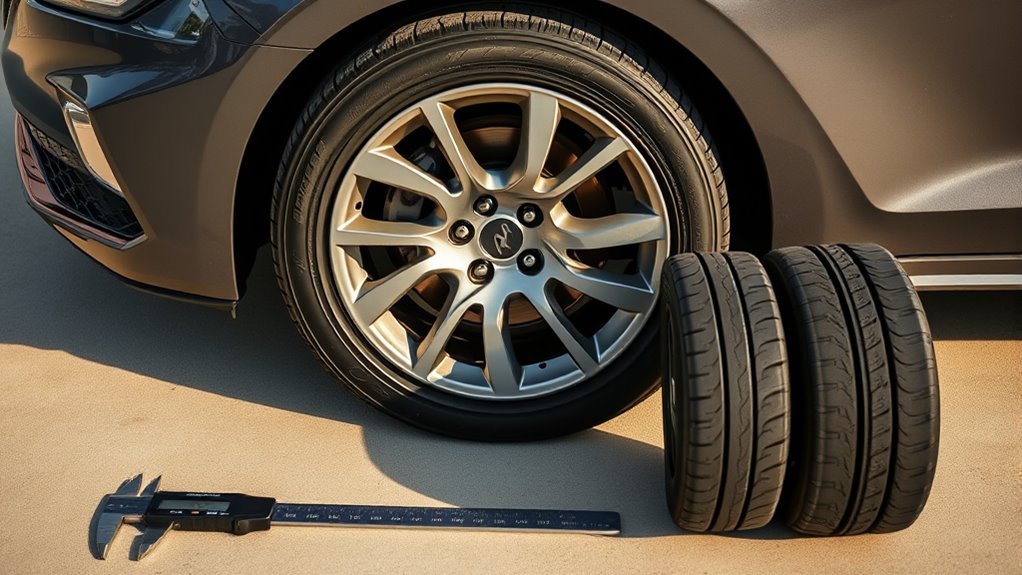
Staying with the OEM size is the safest and easiest choice. If you want a different tire or wheel size, keep the overall tire diameter close to stock, verify the rim width, and make sure the tire does not rub the fender liner, suspension, brake caliper, or inner body at full steering lock and full suspension compression.
Warning: Do not choose a replacement tire with a lower load index or speed rating than the original tire. Do not install a tire size just because it is close in diameter; wheel width, offset, TPMS fitment, brake clearance, and suspension clearance also matter.
As a general fitment screen, many tire shops try to keep overall diameter within about 3% of the original size. That rule helps protect speedometer accuracy and electronic systems, but it is not a complete safety check. Use it as a first filter, not final approval.
| Size | Approx. overall diameter | Best use |
| 205/65R16 | 26.5 in. | OEM 16-inch comfort/efficiency setup |
| 215/55R17 | 26.3 in. | OEM 17-inch daily-driver setup |
| 235/45R18 | 26.3 in. | OEM 18-inch Limited setup |
| 245/40R19 | 26.7 in. | OEM 19-inch SEL Plus / N Line setup |
Possible alternate sizes, such as 215/60R16, 225/50R17, 245/45R18, or 245/35R20, may appear in fitment databases for certain wheel setups. Treat them as candidates only. Before buying, confirm that the exact tire is approved for the wheel width, carries the correct load and speed rating, clears the car, and works with your TPMS sensors.
Load Index and Speed Rating Requirements
The load index tells you how much weight each tire can carry. The speed symbol tells you the tire’s tested speed capability under controlled conditions. For a 2021 Sonata, the safe rule is simple: replace tires with the same or higher load index and the same or higher speed symbol as the tire shown on the door placard or original tire sidewall.
Do not rely on size alone. Two tires can both say 215/55R17 but have different load ratings, speed symbols, tread designs, and performance limits. If the original tire is marked 94V, do not replace it with a lower load index or lower speed symbol unless Hyundai or a qualified tire professional confirms the substitute is approved for your vehicle and driving conditions.
Best Tires for the 2021 Sonata by Season and Driving Style
The best tire for a 2021 Sonata depends on your climate, commute, road surfaces, and trim. Start with the correct size and rating, then choose the tire category that matches how you drive.
[Products Worth Considering]

Accurately measure tire tread depth with a calibrated gauge marked from 0 to 1 inch in 1/32 inch increments. The color-coded bar helps you quickly identify tread condition ranges, supporting safe driving for trucks, motorcycles, automobiles, and passenger vehicles.

Keep your tires properly inflated with this analog VONDIOR tire pressure gauge, designed for fast, easy readings without batteries. The swiveling, two-axis hose and large glow dial help you measure at any tire angle with instant visibility. Built with a protective rubber shield, it supports durable, low-maintenance use for cars and trucks.

The Continental Grand Prix 5000 is an allround road bike tire engineered for faster rolling, improved ride comfort, and enhanced puncture protection. It features a Vectran Breaker cut-protection layer, Lazer Grip micro-profile tread for confident cornering control, and Active Comfort Technology to damp vibration for smoother rides. BlackChili compound optimizes grip and speed for everyday performance and long-lasting confidence.
All-Season and All-Weather Recommendations
For most daily drivers in mild climates, a touring all-season tire is the easiest choice. Look for good wet braking, low road noise, long treadwear, and the exact Sonata size you need. Examples to compare include the Continental TrueContact Tour, Michelin CrossClimate2, and Goodyear Assurance WeatherReady 2, as long as the model is available in your exact size and load/speed rating.
If you see a Three-Peak Mountain Snowflake symbol on an all-weather tire, it means the tire meets a severe-snow traction standard. That can be useful for drivers who get occasional snow but do not want a dedicated winter set. It still does not turn an all-weather tire into a full replacement for a dedicated winter tire in severe ice and snow.
Winter Tire Choices
Use dedicated winter tires if you regularly drive in snow, ice, slush, or temperatures around and below 45°F. Winter tires use rubber compounds and tread designs made to stay more flexible in cold weather. Fit all four tires at the same time so braking, cornering, and stability control remain balanced.
Good winter-tire candidates to compare include the Bridgestone Blizzak WS90 and comparable winter tires from Michelin, Continental, Goodyear, Nokian, and other major brands. Choose the exact size and rating for your trim, and consider a separate set of winter wheels if you swap tires every season.
Premium High-Performance Options
If you drive a Sonata SEL Plus or N Line with 245/40R19 tires, a performance all-season tire can improve steering response and grip while still giving better cold-weather flexibility than a summer tire. Make sure the tire is available in the correct 245/40R19 size, has the proper load and speed rating, and matches your road conditions. Performance tires can ride firmer and may wear faster than touring tires.
Pro Tip: If ride comfort matters more than sporty steering, stay with the smaller OEM wheel size already on your car. Moving from 16 or 17 inches to 19 inches can sharpen handling, but it can also make the ride firmer and increase replacement cost.
Tire Maintenance for 2021 Sonata: Pressure, Rotation, Tread, and Age
Good tire maintenance protects braking, fuel economy, ride quality, and tire life. Check pressure when the tires are cold, before the car has been driven more than a short distance. The 2021 Sonata manual lists 35 psi cold for the full-size tire options shown in its table, while compact spare tires are listed at 60 psi. If your door placard differs, use the placard.
| Maintenance item | What to do | Why it matters |
| Pressure | Check monthly and before long trips with a reliable gauge. | Underinflation can increase heat, wear, fuel use, and stopping distance. |
| Rotation | Follow Hyundai or tire-maker guidance; if none is specified, many tire-care guides use 5,000–8,000 miles as a general interval. | Rotation helps even out front/rear wear and extends tire life. |
| Tread depth | Replace tires at 2/32″ or sooner if wet/snow traction is poor. | Shallow tread increases hydroplaning risk and reduces snow traction. |
| Sidewalls | Look for cracks, bulges, cuts, exposed cords, and impact damage. | Damage can lead to air loss or tire failure. |
| Age | Read the DOT date code and have older, cracked, or rarely used tires inspected. | Rubber condition depends on time, heat, storage, pressure, load, and use. |
How to Choose and Buy Replacement Tires for a 2021 Sonata
Use this checklist before ordering tires online or approving a tire-shop quote:
- Read the door placard. Confirm the exact tire size, load rating, speed rating, and cold PSI for your car.
- Match the wheel diameter. A tire ending in R16 fits a 16-inch wheel only; R17, R18, and R19 are not interchangeable.
- Match or exceed the original load index and speed symbol. Never go lower without professional approval.
- Choose the right category. Touring all-season for comfort, all-weather for occasional snow, winter tires for severe cold/snow, performance tires for sharper handling.
- Check the tire’s date code. Avoid old inventory, especially for winter or performance tires.
- Ask about installation details. Confirm balancing, valve stems, TPMS service, disposal fees, alignment check, and warranty terms.
- After installation, recheck pressure. Set cold pressure to the placard value, then recheck after a few days of normal driving.
The safest replacement tire is not simply the cheapest tire in the right size. It is the tire that matches the Sonata’s placard size, load rating, speed rating, pressure requirement, and your real driving conditions.
Frequently Asked Questions
What tires come on a 2021 Hyundai Sonata?
The common 2021 Hyundai Sonata OEM tire sizes are 205/65R16, 215/55R17, 235/45R18, and 245/40R19. SE commonly uses 205/65R16, SEL commonly uses 215/55R17, Limited commonly uses 235/45R18, and SEL Plus/N Line commonly use 245/40R19. Hybrid trims commonly use 205/65R16 or 215/55R17, depending on trim.
What is my OEM tire size?
Your OEM tire size is printed on the tire placard on the driver-side door pillar and on the sidewall of your current tires. Use the placard first, because it is tied to your exact vehicle configuration.
What tire pressure should a 2021 Hyundai Sonata use?
The 2021 Sonata owner’s manual lists 35 psi cold for the full-size tire options shown in its tire table. Compact spare tires are listed at 60 psi. Always follow the driver-side door placard if it gives a different pressure for your vehicle.
Can I put 19-inch tires on a Sonata that came with 16- or 17-inch wheels?
Only if you also use compatible 19-inch wheels and confirm load rating, speed rating, overall diameter, wheel width, offset, brake clearance, TPMS compatibility, and no rubbing. A 245/40R19 tire cannot mount on a 16- or 17-inch wheel.
Should I buy all-season, all-weather, or winter tires?
Choose touring all-season tires for mild climates and daily commuting. Choose all-weather tires with the Three-Peak Mountain Snowflake symbol if you want better occasional-snow performance. Choose dedicated winter tires if you regularly drive in snow, ice, slush, or cold temperatures around and below 45°F.
What is the best oil for a 2021 Hyundai Sonata?
Oil is separate from tire fitment, but the 2021 Sonata owner’s manual section for the listed engines specifies SAE 0W-20 oil meeting API SN PLUS/SP or ILSAC GF-6. Check your own owner’s manual and engine before buying oil.
Conclusion
The right 2021 Hyundai Sonata tire size depends on your trim: 205/65R16, 215/55R17, 235/45R18, or 245/40R19 are the main OEM sizes. Use the driver-side door placard as your final guide, keep full-size tires at the listed cold PSI, and never downgrade load index or speed rating. If you stay with the OEM size and choose the right tire category for your climate, your Sonata will keep the ride, handling, braking, and efficiency Hyundai designed it to have.
Sources
- Hyundai 2021 Sonata Product Guide — OEM wheel and tire sizes by gas-model trim.
- Hyundai 2021 Sonata Owner’s Manual — tire pressure, spare tire pressure, placard guidance, and maintenance specifications.
- NHTSA TireWise — tire buying, maintenance, labeling, aging, and safety guidance.
- U.S. Tire Manufacturers Association Tire Care and Safety Guide — tire pressure, rotation, tread depth, inspection, and service-life guidance.
- Michelin Winter Tire Guidance — winter tire temperature and traction guidance.
- Goodyear Assurance WeatherReady 2 — example of a current all-weather tire with severe-snow designation information.
[Products Worth Considering]

Black Magic Tire Wet delivers a deep wet-look shine that makes tires appear dark, rich, and freshly detailed. Its long-lasting formula helps resist rain, dust, and road grime for weeks of glossy protection, not days. Apply by spraying onto clean, dry tires—no buffing or wiping required—with a low-sling design to reduce splatter on paint and wheels.

The Topeak SmartGauge D2 delivers precise digital tire pressure readings for bikes, motorcycles, and sports equipment up to 250 psi (17 bar). Its rotating SmartHead works with both Presta and Schrader valves, so you can check pressure quickly without adapters. The LCD display makes it easy to read results in psi, bar, or kg/cm² with an included CR2032 battery for immediate use.

The SAFELIFE dial tire tread depth gauge measures tread depth in 1/32 inch increments with clear, easy-to-read 2-inch dial face. Color zones using a traffic light system help you quickly judge whether tread is low, marginal, or ample for safer driving. Built with a durable zinc cast body and a metal detect probe for precise, comfortable use across cars, motorcycles, trucks, and buses.

Related Articles

Danger of Using Summer Tires in Winter on a Hyundai Sonata
Potentially perilous, using summer tires in winter on your Hyundai Sonata can compromise safety—discover the hidden dangers that await you on icy roads.
Read More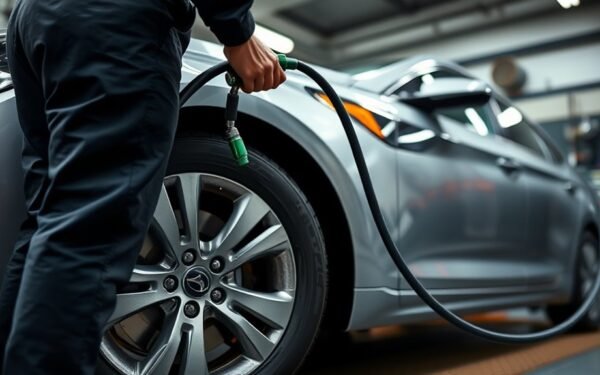
Can You Mix Nitrogen and Air in Hyundai Sonata Tires? Answered
Discover the implications of mixing nitrogen and air in your Hyundai Sonata tires—are the benefits worth the risks? Explore the answer inside!
Read More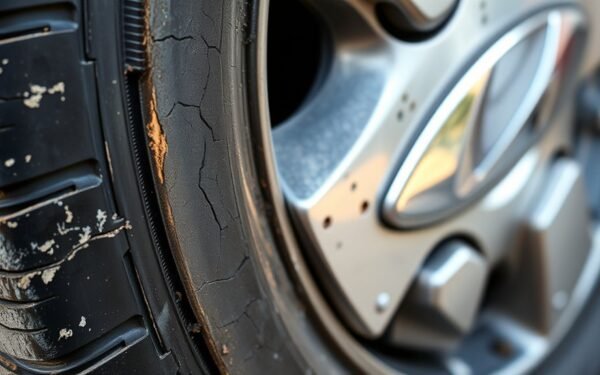
How to Tell If Hyundai Sonata Tires Are Too Old to Use Safely
Understand how to assess the age of your Hyundai Sonata tires and discover crucial signs of deterioration that could compromise your safety on the road.
Read More