
RAV4 Bigger Wheels: 2026 Fitment, MPG & Ride Guide
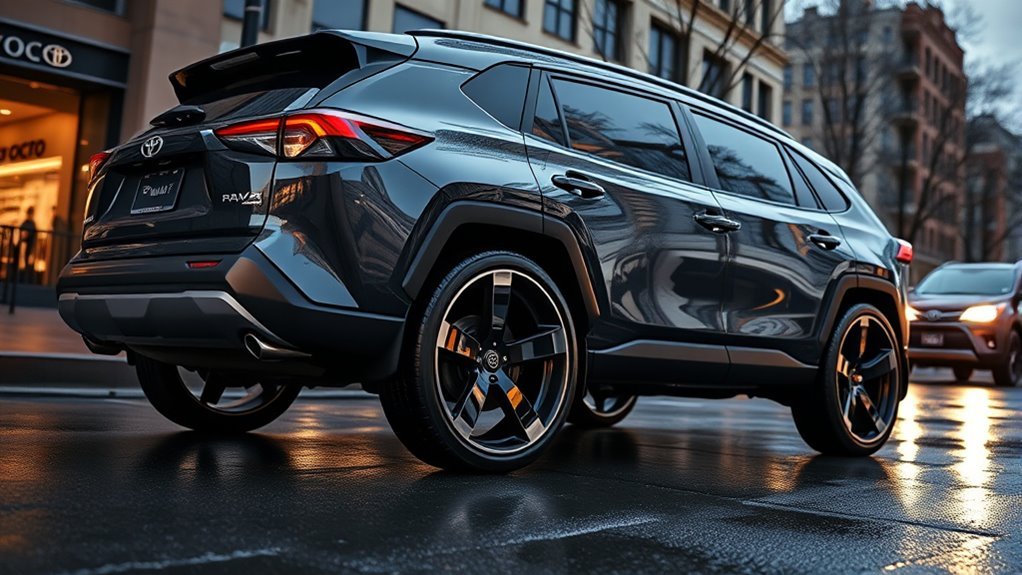
Are Bigger Wheels Good for a Toyota RAV4?
By: TubeTyre · Last updated: July 8, 2026
RAV4 bigger wheels can be a good upgrade if you keep the full wheel-and-tire package close to Toyota’s fitment requirements. The best setup keeps the overall tire diameter near stock, uses the right load index and speed rating, clears the brakes and suspension, and follows the cold tire pressure listed on the vehicle placard. If you only choose by rim size, larger wheels can make the ride harsher, increase road noise, raise replacement costs, and reduce fuel economy.
Quick Answer
Bigger wheels on a RAV4 can improve steering feel and style when paired with the right lower-profile tires, but they are not automatically better. For daily driving, the safest upgrade keeps the tire diameter, load rating, speed rating, offset, TPMS setup, and Toyota fitment guidance close to stock. Drivers on rough roads, snow, or pothole-heavy streets usually do better with more sidewall.
Key Takeaways
- Larger wheels usually mean lower-profile tires, which can sharpen steering response but make potholes and rough pavement feel harsher.
- Fuel economy can drop if the new setup is heavier, has higher rolling resistance, uses a wider tread, or runs at the wrong pressure.
- Do not use a random tire pressure number. Use the cold tire pressure listed on your RAV4’s tire placard or owner’s manual.
- Keep the tire load index, speed rating, overall diameter, offset, and brake clearance within manufacturer-approved limits whenever possible.
- Non-standard tire sizes can affect speedometer accuracy, AWD behavior, Toyota Safety Sense, and available parking-assist functions.
At a Glance
| Time Required | 10–20 minutes to check fitment basics; professional installation and balancing usually take about 1–2 hours. |
| Difficulty | Easy to research; professional fitment is strongly recommended for non-stock wheel sizes. |
| Tools Needed | Tire placard, owner’s manual, tire pressure gauge, tire-size calculator, and a qualified tire/wheel installer. |
| Cost | Varies widely by wheel brand, tire model, TPMS service, mounting, balancing, alignment needs, and whether the setup is OEM or aftermarket. |
[Products Worth Considering]
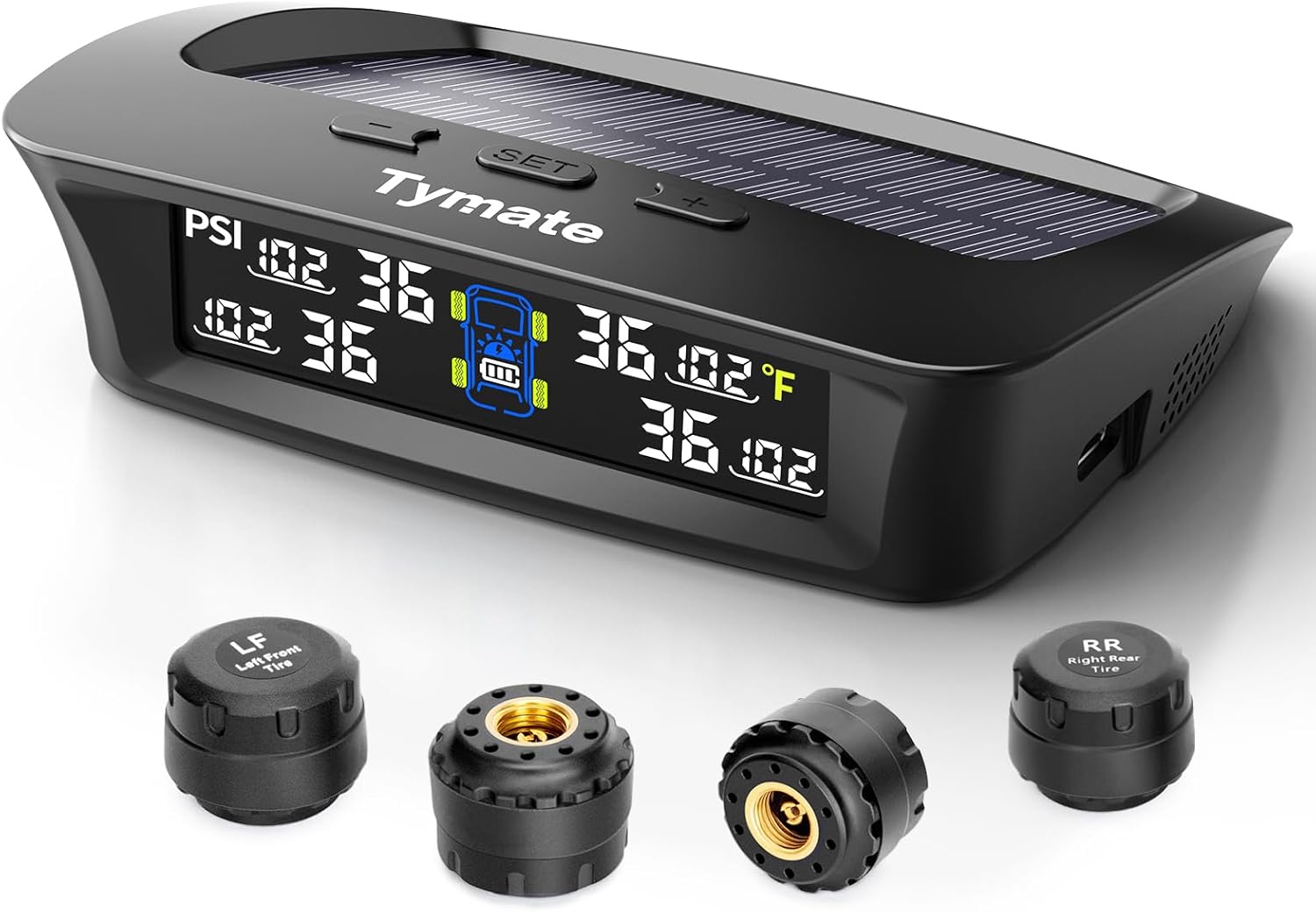
The Tymate TM3 RV TPMS delivers real-time tire pressure monitoring from 0 to 144 PSI with accurate readings and dependable wireless communication. It includes four external sensors with pre-pairing, six alarm modes for rapid leak, pressure extremes, temperature, and signal loss, plus an easy-reference setup for alert thresholds. Solar and USB-C charging help keep the display powered, while the color LCD and adaptive backlight improve visibility for safer driving and towing.

The JACO FlowPro Tire Inflator measures, inflates, and airs down tires up to 100 PSI with battery-free operation and ±2% accuracy after calibration. It features a glowing pressure dial for night visibility, a heavy-duty steel build with a hybrid hose, and a precision push-to-inflate thumb trigger. The patented Lightning Air Chuck locks on for a secure seal, and the kit includes quick-connect hardware for easy inline use with your air compressor.

The TANX hitch bike rack securely fits any 2-inch receiver and carries up to two bikes, including heavy-duty e-bikes and fat tires up to 5 inches wide. Its foldable, smart tilting design lets you access your trunk or tailgate without removing the bikes. An anti-wobble hitch tightener and locking hitch pin help keep the ride stable, while padded, adjustable cradles and straps protect bike finishes during transport.
RAV4 Bigger Wheels Decision Matrix
Use the driving situation first, then choose the wheel size. A larger rim makes the most sense when you drive mostly on clean pavement and want sharper steering. Staying closer to the factory wheel size makes more sense when you care about ride comfort, winter traction, lower replacement cost, and pothole protection.
| Your priority | Better choice | Why |
| Daily comfort, broken pavement, potholes | Stay close to the factory setup | More sidewall helps absorb sharp impacts and lowers wheel-damage risk. |
| Sharper steering on smooth pavement | Mild plus-size setup | A shorter sidewall can reduce flex if the tire quality, load rating, and alignment are right. |
| Winter driving or gravel roads | More sidewall, not the largest rim | Traction, tread type, and tire pressure matter more than rim diameter. |
| Show-first appearance | Largest manufacturer-approved or professionally verified setup | Style gains come with the most comfort, cost, and fitment trade-offs. |
Editorial note: This guide is based on Toyota documentation, NHTSA tire-safety guidance, FuelEconomy.gov, the U.S. Tire Manufacturers Association, and transportation research on rolling resistance. It is not a hands-on test of a specific aftermarket wheel package, so confirm trim-specific fitment before buying.
What Larger Wheels Change on a RAV4
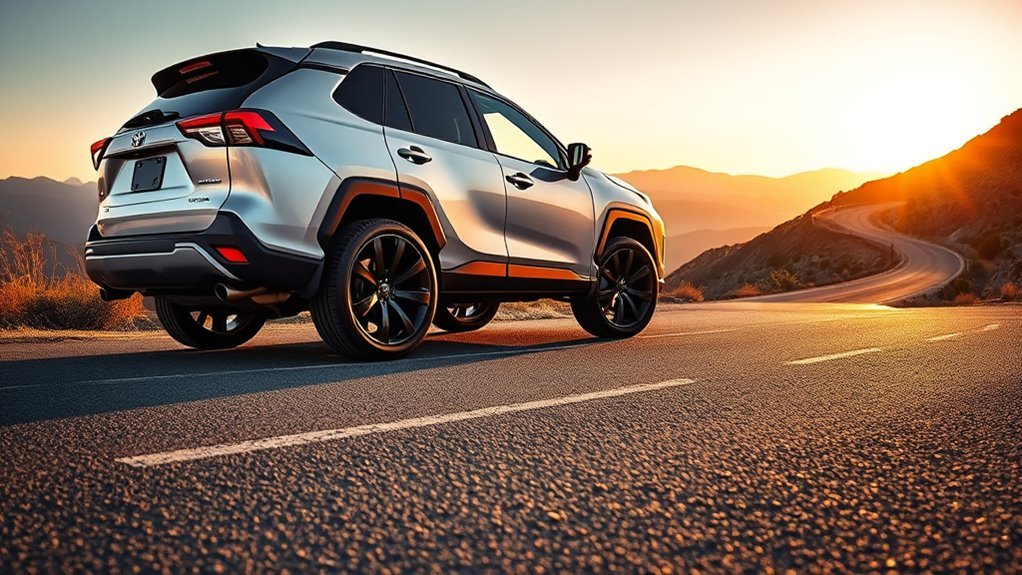
When people talk about bigger wheels, they usually mean moving from a smaller wheel with a taller tire sidewall to a larger wheel with a shorter tire sidewall. That is called plus-sizing. Done correctly, the tire’s overall outside diameter stays close to the original size, so the RAV4’s speedometer, gearing, clearance, and safety systems stay closer to factory expectations.
For current shoppers, Toyota’s official 2026 RAV4 announcement lists 17-, 18-, and 20-inch wheels depending on grade. That does not mean every 20-inch setup fits every RAV4 or works well for every driver. It means Toyota has engineered specific wheel, tire, offset, suspension, and trim combinations for those models.
Note: Wheel diameter is only one part of the upgrade. Tire size, tire compound, tire weight, wheel offset, load rating, and inflation pressure can matter more than the rim size itself.
Do Bigger Wheels Improve RAV4 Performance?
Larger wheels can give your RAV4 a more planted feel, especially when they are paired with wider, lower-profile tires. A shorter sidewall usually flexes less during quick steering inputs, so the vehicle may feel more direct when changing lanes or cornering on smooth pavement.
You may also notice a sportier look. Bigger wheels fill the wheel wells more, reduce the visual gap between tire and body, and can give the RAV4 a more aggressive stance. This is one of the biggest reasons owners choose larger rims.
There can also be brake-clearance benefits. A larger wheel may create room for a larger brake package, but the wheel itself does not automatically improve braking. Stopping distance depends mainly on tire grip, brake condition, brake hardware, road surface, vehicle weight, and driver input.
Pro Tip: If better handling is your goal, compare tire models as carefully as wheel sizes. A high-quality tire in the correct size often improves real-world grip more than simply moving to a larger rim.
Do Larger Wheels Make a RAV4 Ride Rougher?
The biggest comfort trade-off is sidewall height. A lower-profile tire has less rubber between the wheel and the road, so potholes, bridge joints, and rough pavement can feel sharper inside the cabin. You may also hear more tire slap and road noise, especially with performance-oriented or all-terrain tires.
Wheel weight matters too. A heavier wheel-and-tire package can make the suspension work harder over bumps. That extra unsprung weight may reduce ride smoothness and make the RAV4 feel less settled on broken pavement.
To protect ride quality, do not guess at tire pressure. Use the cold inflation pressure printed on your RAV4’s tire information placard or in the owner’s manual. FuelEconomy.gov, a U.S. Department of Energy and EPA resource, explains that the proper pressure is found on the vehicle placard or owner’s manual and that drivers should not use the maximum pressure printed on the tire sidewall as the vehicle recommendation.
Bigger Wheels: Style vs. Function?
Bigger wheels can dramatically change how your RAV4 looks, but the best choice depends on how and where you drive. A setup that looks great on smooth city roads may feel harsh on broken pavement, gravel, snow, or long highway trips.
| Potential benefit | Possible trade-off |
| Sharper steering feel on smooth roads | Harsher impact over potholes and rough pavement |
| Sportier, more premium appearance | Higher wheel and tire replacement cost |
| Possible room for larger brakes | No braking improvement unless the tire or brake package improves too |
| Lower-profile tires can reduce sidewall flex | More wheel damage risk from potholes and curb impacts |
If your RAV4 is mainly a commuter or family vehicle, comfort and durability may matter more than the most aggressive wheel size. If you drive mostly on clean pavement and want a sportier feel, a carefully matched larger wheel-and-tire package can make sense.
How Do Larger Wheels Affect RAV4 Fuel Economy?
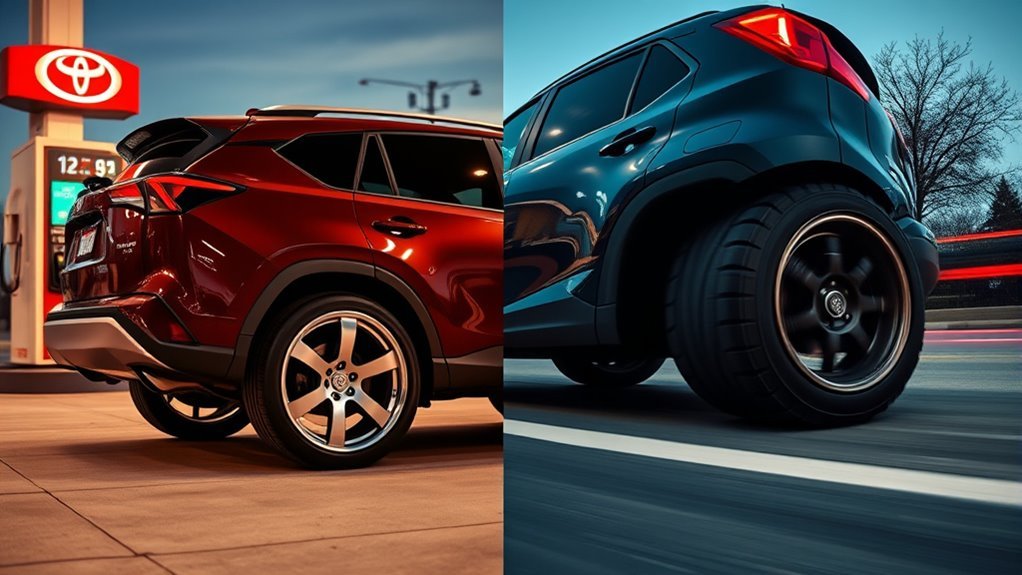
Larger wheels may affect fuel economy, but the rim diameter is not the only reason. The main factors are total wheel-and-tire weight, rolling resistance, tread design, tire width, and inflation pressure. A heavy wheel or aggressive tire can require more energy to accelerate and keep rolling.
Rolling resistance is especially important. The National Academies’ Transportation Research Board report on passenger tires explains that rolling resistance varies among tires and has a measurable effect on vehicle fuel economy. FuelEconomy.gov also notes that keeping tires inflated to the recommended pressure can improve gas mileage, while under-inflation can reduce MPG.
A bigger wheel upgrade is most efficient when the new tire has low rolling resistance, proper load capacity, correct cold pressure, and an overall diameter close to the original tire.
For hybrid and plug-in hybrid RAV4 models, the same principles apply. Extra rotating weight and higher rolling resistance can reduce efficiency, while a well-chosen tire in the correct size can help preserve MPG and EV range.
[Products Worth Considering]

The Fanttik X10 Pro is a cordless portable tire inflator that reaches up to 150 PSI and can inflate an R15 tire in about 35 seconds for quick roadside or home top-ups. With AccuInFlate auto-stop and smart start/stop controls, it helps maintain accurate pressure and frees your hands once the target is reached. A high-visibility digital display and preset modes make it easy to set and monitor inflation for cars, motorcycles, bikes, and balls.
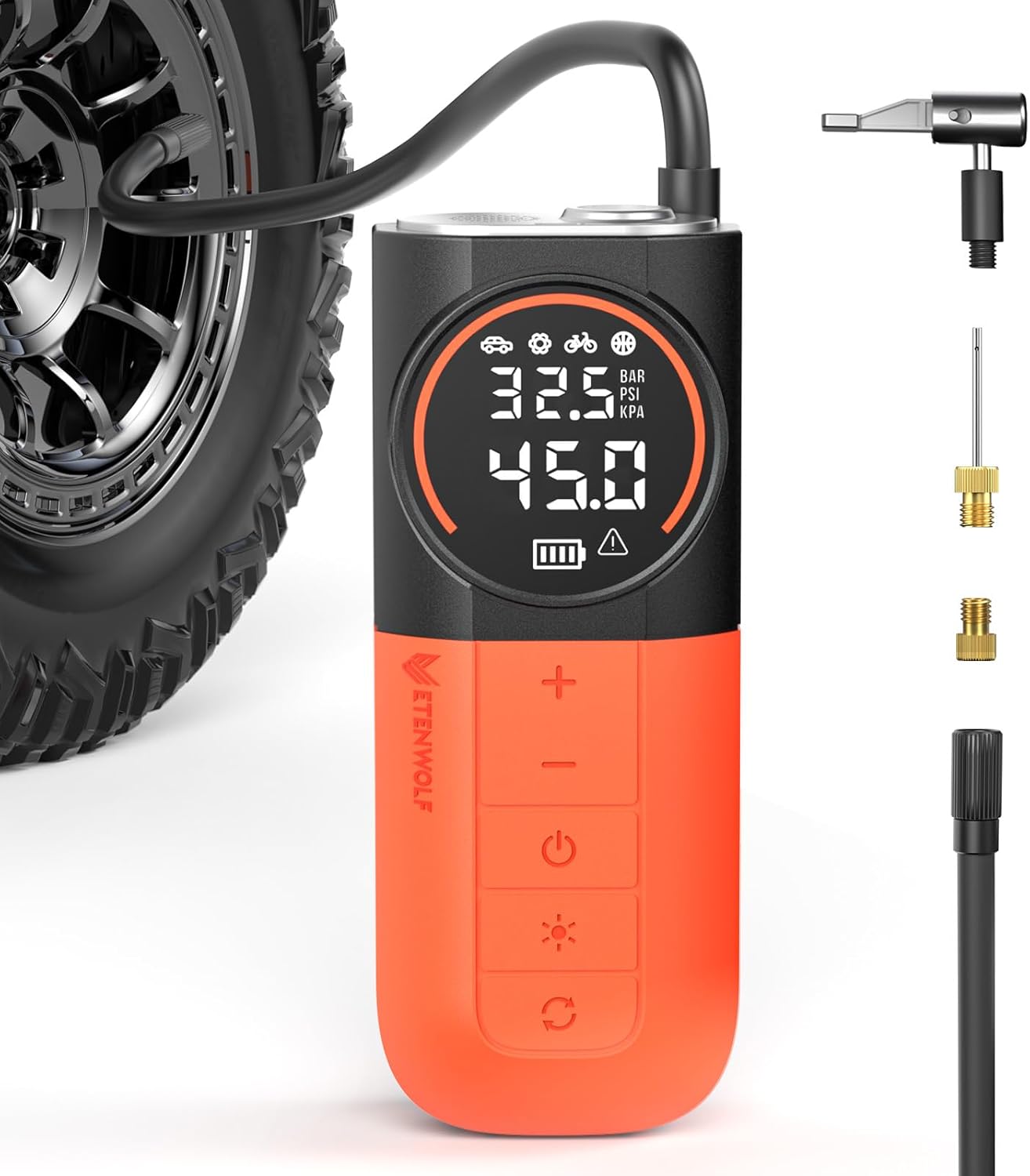
The ETENWOLF S1 cordless tire inflator delivers ultra-fast inflation with up to 160 PSI and a 20 L/min airflow for quicker tire top-offs. Its 5200mAh battery and cooling system support inflating many tires and sports balls on a single charge, while the digital pressure gauge and multi-unit display help you reach the right pressure accurately. With preset modes, pressure memory, an auto-stop feature, and an LED flashlight, it’s built for easy roadside and everyday use.
Fitment Checklist Before Upgrading RAV4 Wheels
Before buying larger wheels, check the full fitment package instead of choosing by appearance alone. A safe wheel upgrade should match the RAV4’s engineering limits and leave enough clearance for the suspension, brakes, fenders, and steering movement.
- Original tire size: Start with the tire size on your RAV4’s tire placard or owner’s manual.
- Overall diameter: Choose a tire that keeps the outside diameter close to the factory size unless Toyota or a qualified professional confirms the change is acceptable.
- Load index: Do not choose a tire with less load-carrying capacity than the original equipment tire.
- Speed rating: Keep the same or higher speed rating unless a tire professional confirms a safe seasonal exception.
- Wheel offset and width: The wrong offset can cause rubbing, poor handling, bearing stress, or fender contact.
- Center bore and bolt pattern: The wheel must mount correctly and sit centered on the hub.
- Brake clearance: Confirm caliper and rotor clearance before installation.
- TPMS compatibility: Make sure the tire pressure monitoring sensors are transferred, replaced, or relearned correctly.
- AWD matching: On AWD models, avoid mixing tire sizes, tread depths, or tire types unless Toyota specifically allows it.
- Alignment and balancing: Have the new setup balanced, then check alignment if the vehicle pulls, vibrates, or wears tires unevenly.
Warning: Toyota’s 2026 RAV4 PHEV owner’s manual excerpt warns that low tire pressure, excessively worn tires, or tires other than the manufacturer-specified size can affect driving support systems. It also warns that Advanced Park may not work properly unless standard-sized tires are used. When in doubt, follow Toyota’s tire guidance and consult a qualified tire professional.
Questions to Ask Before Ordering RAV4 Wheels
Before you pay for wheels, ask the installer to answer these fitment questions in writing. This helps avoid a setup that looks right online but rubs, shakes, triggers TPMS issues, or changes how the RAV4 behaves on the road.
- What tire size will keep the overall outside diameter close to the original tire?
- Does the tire meet or exceed the original load index and speed rating?
- Will the wheel offset clear the struts, brake calipers, fenders, and inner liners at full steering lock?
- Will the TPMS sensors transfer correctly, or does the vehicle need new sensors and a relearn procedure?
- Will this setup affect AWD matching, tire rotation, snow-tire use, or warranty conversations?
Will Bigger Wheels Affect the Speedometer or Safety Systems?
Your RAV4 calculates speed and distance based on wheel rotation. If the new tire’s overall diameter is much larger or smaller than stock, the speedometer and odometer can become less accurate. A larger overall tire diameter can make the vehicle travel farther per rotation, while a smaller diameter does the opposite.
This is why plus-sizing matters. A larger rim with a shorter tire sidewall can keep the overall diameter close to stock. That helps preserve speedometer accuracy, gearing feel, clearance, and compatibility with driver-assist systems.
Modern RAV4 models can also rely on tire size, tire pressure, wheel speed, cameras, radar, and parking sensors for assistance features. A wheel upgrade that looks fine in the driveway can still cause issues if the tire diameter, pressure, or fitment falls outside manufacturer expectations.
Choosing Between Performance and Practicality
Choose larger wheels if you want a sportier appearance, sharper steering feel, and you drive mostly on smooth roads. Stay closer to the factory wheel size if you value comfort, lower tire costs, winter traction, pothole protection, and maximum fuel economy.
For many RAV4 owners, the best compromise is a mild upgrade rather than the largest possible wheel. A moderate wheel size with a high-quality tire often gives you the look you want without sacrificing too much comfort or efficiency.
Use this simple rule: if the upgrade makes the tire sidewall much shorter, the wheel much heavier, or the overall diameter noticeably different from stock, expect more trade-offs. If the upgrade keeps the overall diameter close, uses a properly rated tire, and follows Toyota fitment guidance, it is more likely to feel natural on the road.
Frequently Asked Questions
What are the downsides of bigger rims on a RAV4?
Bigger rims can reduce ride comfort, increase road noise, raise tire replacement costs, add wheel damage risk, and slightly reduce fuel economy if the new wheel-and-tire package is heavier or has higher rolling resistance. The downsides are usually worse when the tire sidewall becomes very short.
Do bigger wheels make a RAV4 handle better?
They can improve steering response if paired with the right lower-profile tire, but bigger wheels alone do not guarantee better handling. Tire grip, wheel weight, tire pressure, suspension condition, and alignment all matter.
Will larger wheels reduce RAV4 fuel economy?
They can. A heavier setup, wider tire, aggressive tread, or higher rolling resistance can reduce MPG. Proper inflation, correct alignment, and choosing efficient tires can reduce the fuel-economy penalty.
Do I need to recalibrate the speedometer after installing bigger wheels?
Not always. If the larger wheel is paired with a shorter tire that keeps the overall tire diameter close to stock, the speedometer change may be small. If the overall diameter changes noticeably, have the setup checked by a professional and verify speedometer accuracy.
What tire pressure should I use with larger RAV4 wheels?
Use the cold tire pressure listed on your RAV4’s tire placard or owner’s manual for the approved tire size. Do not use a random PSI from the internet, and do not use the maximum pressure printed on the tire sidewall as the normal driving pressure.
Can I mix different wheel or tire sizes on an AWD RAV4?
Avoid mixing sizes, tread patterns, or tire depths on an AWD RAV4 unless Toyota specifically allows it. Mismatched tires can affect traction systems, drivetrain behavior, and long-term mechanical reliability.
Are 20-inch wheels available on the 2026 Toyota RAV4?
Yes, Toyota’s 2026 RAV4 announcement lists 17-, 18-, and 20-inch wheels depending on grade. That does not make every 20-inch aftermarket setup safe for every RAV4, so match the tire size, offset, load rating, and trim-specific clearance before buying.
Can bigger wheels affect Toyota Safety Sense or Advanced Park?
They can if the tire size, tire pressure, or vehicle height falls outside Toyota’s expectations. Toyota’s driving-support manual excerpt warns about low tire pressure, worn tires, non-specified tire sizes, and standard-sized tires for Advanced Park operation.
Conclusion
Larger wheels can give your RAV4 a sharper look and more responsive feel, but they also bring real trade-offs in comfort, cost, efficiency, and fitment risk. The best upgrade is not simply the biggest rim you can fit. It is the wheel-and-tire package that keeps the correct load rating, near-stock overall diameter, safe clearance, proper tire pressure, and predictable driving behavior. Before you buy, check the tire placard, confirm the full fitment with a qualified installer, and choose the setup that fits your roads, your driving habits, and Toyota’s specifications.
Sources
- Toyota USA Newsroom — 2026 RAV4 debut — supports current RAV4 wheel-size context and official grade details.
- Toyota 2026 RAV4 PHEV Owner’s Manual excerpt — supports safety-system warnings related to tire pressure and manufacturer-specified tire sizes.
- NHTSA TireWise — supports tire safety, tire maintenance, rim standards, and tire pressure awareness.
- FuelEconomy.gov — Keeping Your Vehicle in Shape — supports tire-pressure and fuel-economy guidance.
- U.S. Tire Manufacturers Association Tire Care and Safety Guide — supports replacement tire size, load capacity, and professional fitment guidance.
- National Academies / Transportation Research Board Special Report 286 — supports rolling-resistance and fuel-economy discussion.

Related Articles

Toyota RAV4 TPMS Reset: Easy Steps That Work
Unlock the secrets to resetting your Toyota RAV4's TPMS effortlessly—discover the essential steps to ensure your tires are always safe.
Read More
Toyota RAV4 Tire Rotation: DIY Steps & Pattern
Take control of your Toyota RAV4's tire maintenance with our simple DIY rotation guide—discover the best steps for optimal performance and longevity!
Read More
Mix Tire Brands on a Toyota RAV4? Expert Guide
Keeping your RAV4 safe? Learn when mixing tire brands risks traction, ABS/TCS and AWD damage — and what exact matches you must insist on.
Read More