
Sonata Tires: OEM Sizes, Lifespan & Replacements
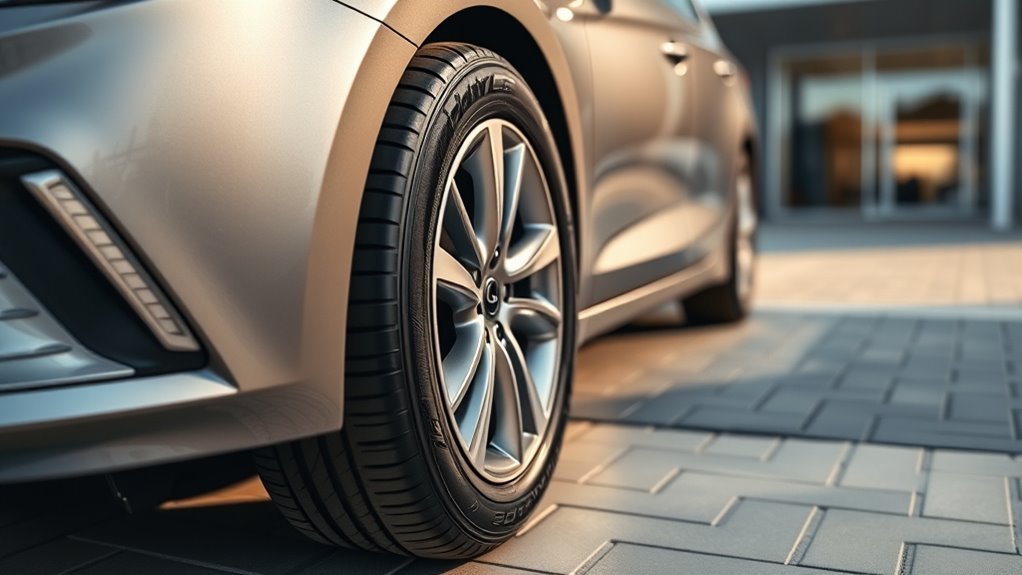
You get factory-specified tires chosen to match each Hyundai Sonata year, trim, wheel size, load rating, and speed rating. Common original equipment tire brands may include Michelin, Kumho, Bridgestone, Continental, Hankook, or other suppliers, depending on model year, trim, market, and production timing. Tire sizes can vary widely across Sonata trims, so the tire placard on your driver-side door jamb should guide every replacement choice. Use this guide to understand factory tire fitment, why size and ratings matter, and how to choose safe replacement options.
Quick Answer
Hyundai Sonata factory tires vary by year, trim, market, and wheel package. Your safest source is the tire information placard on the driver-side door jamb, which lists the correct size, load rating, speed rating, and inflation pressure for your car.
Key Takeaways
- Check your Sonata’s tire placard before buying replacement tires.
- Match the original size, load rating, and speed rating to preserve safe handling.
- OEM tire brands can change by model year, trim, market, and supplier availability.
- Replace tires based on tread depth, age, damage, and uneven wear, not mileage alone.
- Choose all-season, performance, or winter tires based on your climate and driving style.
Factory-Installed Tires on the Hyundai Sonata
Hyundai fits each Sonata trim with tires that match the car’s wheel size, ride goals, handling setup, and load needs. You may see brands such as Michelin, Kumho, Bridgestone, Continental, Hankook, or other original equipment suppliers, depending on the exact vehicle.
Factory choices can change by market, production date, and tire supply. A 2020 Sonata Limited, for example, may use a different tire than a base trim or a hybrid model with a smaller wheel package.
Use the brand on your current tire as a clue, not the final rule. The driver-side tire placard, owner’s manual, and tire size printed on the sidewall give you the most useful replacement details.
[Products Worth Considering]

The SAFELIFE dial tire tread depth gauge measures tread depth in 1/32 inch increments with clear, easy-to-read 2-inch dial face. Color zones using a traffic light system help you quickly judge whether tread is low, marginal, or ample for safer driving. Built with a durable zinc cast body and a metal detect probe for precise, comfortable use across cars, motorcycles, trucks, and buses.

Measure tire tread depth quickly and accurately with this LUMITECO dial gauge that reads in 1/32" increments up to 14/32". The color-coded green/yellow/red zones make it easy to judge tire wear and know when replacement is needed. A rugged, compact design with a protective pouch helps keep the gauge ready for use on cars, trucks, motorcycles, and more.

Monitor tire tread wear with a smart, color-coded depth gauge that shows clear condition ranges at a glance. The bar is range marked for fast, easy readings, helping you maintain safer traction and performance. Each gauge is portable with a pocket clip, and the set includes 20 units for daily use and sharing.
OEM Tire Specs by Sonata Year and Trim
Sonata tire specs depend on the model year, trim, wheel package, and market. Instead of relying only on a brand list, confirm the size and rating on your own vehicle before you buy.
Common Sonata tire sizes often fall between about 16 and 19 inches on many modern trims, though some older or special-market models may differ. Higher trims often use larger wheels, while base or efficiency-focused trims may use smaller ones.
- Check the tire placard: Find the size, cold inflation pressure, load rating, and speed rating.
- Read the sidewall: Match the current tire size only if it matches the placard.
- Confirm your trim: Wheel size can differ between SE, SEL, Limited, N Line, and hybrid trims.
- Ask for OE-equivalent tires: Choose tires that meet or exceed the listed load and speed ratings.
Note: Original equipment tire brands can change during the same model year, so size and ratings matter more than brand matching.
Why OEM Sizes, Load & Speed Ratings Matter
When you match the original equipment tire size, load rating, and speed rating, your Sonata keeps the handling balance Hyundai designed. Correct tires also help protect braking feel, ride height, steering response, and fuel economy.
The load rating tells you how much weight the tire can carry safely. The speed rating reflects the tire’s tested speed capability and performance limits.
Wrong sizes can change the rolling diameter and affect the speedometer, clearance, traction control, and ride quality. Lower ratings can also reduce safety margins when the car carries passengers or cargo.
| Parameter | Effect if OEM | Risk if Incorrect |
|---|---|---|
| Size (diameter/width) | Maintains gearing and clearance | Altered speedometer or rubbing |
| Load rating | Supports design weight | Instability or premature wear |
| Speed rating | Supports safe handling at speed | Overheating or reduced control |
Follow the placard and manual to keep your Sonata predictable on dry roads, wet roads, and highways.
Factory Tire Lifespan: Mileage, Age, and Real-World Factors
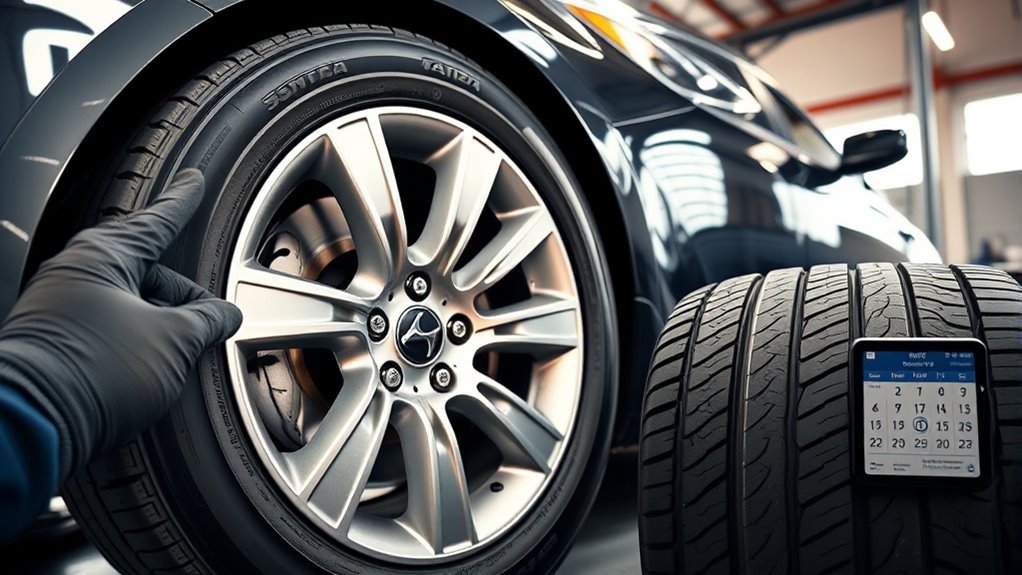
Factory tires can last a wide range of miles because tread compound, alignment, driving style, climate, and road surface all affect wear. Many drivers replace original tires somewhere around 40,000 to 70,000 miles, but your tires may wear sooner or later.
OEM tire size protects handling, but tire life still depends on tread depth, age, maintenance, roads, and driving habits.
Rotate your tires on the schedule in your owner’s manual, or follow your tire shop’s guidance when it differs for your use. Regular pressure checks also help prevent shoulder wear, center wear, and poor fuel economy.
Age matters even when tread remains. Inspect older tires for cracking, hard rubber, bulges, vibration, or uneven wear before you trust them for long trips.
- Rotate tires on the schedule recommended for your vehicle and tire type.
- Check tire pressure when the tires are cold.
- Inspect tread depth across the inner, center, and outer grooves.
- Watch for uneven wear from alignment, suspension, or inflation problems.
- Replace aging or damaged tires even if the tread still looks usable.
When to Replace Sonata OEM Tires: Signs & Measurements
Tread depth gives you the clearest replacement signal. Replace tires at 2/32 inch of tread depth, or sooner if wet traction drops, wear looks uneven, or damage appears.
Use a tread depth gauge at several points across each tire. One low area can matter, especially if the tire shows cupping, feathering, or inner-edge wear.
Inspect the sidewalls for cuts, bulges, cracks, or exposed cords. Don’t repair sidewall damage because that area flexes too much under load.
Warning: Replace a tire with a bulge, exposed cords, or deep sidewall damage before you drive at highway speed.
Keep the correct inflation pressure to slow uneven wear and support safe handling.
[Products Worth Considering]

Measure tyre tread depth precisely with a digital gauge that reads in both MM and inches, helping you monitor safe driving conditions. The large LCD screen is easy to operate, and the compact tool fits for cars, trucks, and motorcycles. It provides high accuracy with a 0-25.4mm range and includes a 1-year warranty for added peace of mind.

Accurately measure tire tread depth with a calibrated gauge marked from 0 to 1 inch in 1/32 inch increments. The color-coded bar helps you quickly identify tread condition ranges, supporting safe driving for trucks, motorcycles, automobiles, and passenger vehicles.

Keep your tires properly inflated with this analog VONDIOR tire pressure gauge, designed for fast, easy readings without batteries. The swiveling, two-axis hose and large glow dial help you measure at any tire angle with instant visibility. Built with a protective rubber shield, it supports durable, low-maintenance use for cars and trucks.
Best Replacement Tires for Sonata (All-Season, Performance, Winter)
The best Sonata replacement tire depends on your climate, wheel size, driving style, and budget. Start with the correct size and ratings, then choose the tire category that fits your roads.
All-season touring tires suit most drivers who want comfort, low noise, and steady wet-road grip. Performance all-season tires suit drivers who want sharper steering and stronger dry handling.
Winter tires make sense if you drive through snow, ice, or long stretches below freezing. They use a cold-weather compound and tread design that all-season tires can’t fully match.
- All-season touring tires: Choose these for comfort, long wear, and daily commuting.
- Grand touring tires: Choose these for a smoother ride and balanced wet-road grip.
- Performance all-season tires: Choose these for sharper handling on larger-wheel trims.
- Winter tires: Choose these for snow, ice, and cold-weather braking.
Well-known options in these categories may include Michelin Primacy, Michelin CrossClimate, Continental ExtremeContact, Bridgestone Turanza, Bridgestone Blizzak, Kumho Solus, and similar OE-equivalent models. Confirm fitment with your exact tire size before you order.
How to Read Your Sonata Tire Sidewall
Your tire sidewall shows the size, load index, speed rating, and tire type. A size such as P235/45R18 tells you the tire width, aspect ratio, radial construction, and wheel diameter.
The number after the size usually shows the load index. The letter after that shows the speed rating, such as H, V, or W.
Match these markings to the tire placard, not only to the tires currently on the car. A previous owner may have installed the wrong size or rating.
Frequently Asked Questions
What Brand of Tires Does the Hyundai Sonata Use?
Hyundai Sonata models can use several original equipment tire brands. Common suppliers may include Michelin, Kumho, Bridgestone, Continental, Hankook, or other brands, depending on trim, market, and production timing.
What Brand of Tires Does Hyundai Use?
Hyundai uses multiple tire suppliers across its lineup. The exact brand can change by vehicle, trim, wheel size, region, and manufacturing date.
How Long Do Factory Tires Last on a Hyundai?
Factory tires on a Hyundai often last about 40,000 to 70,000 miles, but wear can vary a lot. Driving style, alignment, inflation pressure, tire rotation, climate, and road surface all affect tire life.
Can I change to a different tire brand on my Sonata?
Yes, you can use a different tire brand if the tire matches the correct size, load rating, speed rating, and use case. Choose a trusted model that fits your climate and driving needs.
Should I replace all four Sonata tires at once?
Replacing all four tires helps keep grip and handling balanced. If you replace only two, ask your tire shop where to place the new tires and check that the remaining tires have enough tread.
Conclusion
Your Sonata’s safest replacement tire is the one that matches the tire placard, not just the brand that came on the car. Check the size, load rating, speed rating, tread depth, and tire age before you buy.
Choose an all-season, performance, or winter tire that fits your climate and driving style. With the right fitment, your Sonata will keep the ride, grip, and control you expect.
References
- Tires — National Highway Traffic Safety Administration
- Tire Safety: Everything Rides On It — National Highway Traffic Safety Administration
- Hyundai Owners — Hyundai Motor America
[Products Worth Considering]

The Topeak SmartGauge D2 delivers precise digital tire pressure readings for bikes, motorcycles, and sports equipment up to 250 psi (17 bar). Its rotating SmartHead works with both Presta and Schrader valves, so you can check pressure quickly without adapters. The LCD display makes it easy to read results in psi, bar, or kg/cm² with an included CR2032 battery for immediate use.

Replace your worn or missing TPMS sensors with pre-programmed, direct-fit sensors for compatible Ford, Lincoln, and select Mazda models. Each sensor comes ready to activate with a scan tool, helping restore accurate tire pressure monitoring and trouble-free installation. Built with a long-life CR2032 battery and tested before factory release, this set provides dependable performance with a one-year warranty.

The Trivd Frol 1/2" air impact wrench delivers high performance torque up to 1500 ft-lbs with a twin hammer impact mechanism for strong, balanced blows. It features an ergonomic grip, compact lightweight design, and quick-stop control with 3 forward speeds up to 8000 RPM plus a reverse speed. Built for demanding automotive repair and tire shop work, the rear exhaust helps keep debris away from the surface.

Related Articles

Danger of Using Summer Tires in Winter on a Hyundai Sonata
Potentially perilous, using summer tires in winter on your Hyundai Sonata can compromise safety—discover the hidden dangers that await you on icy roads.
Read More
Can You Mix Nitrogen and Air in Hyundai Sonata Tires? Answered
Discover the implications of mixing nitrogen and air in your Hyundai Sonata tires—are the benefits worth the risks? Explore the answer inside!
Read More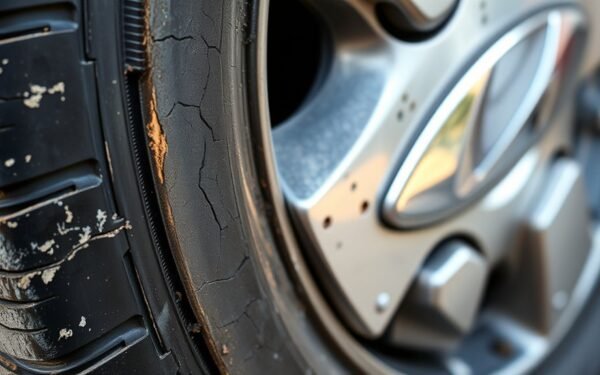
How to Tell If Hyundai Sonata Tires Are Too Old to Use Safely
Understand how to assess the age of your Hyundai Sonata tires and discover crucial signs of deterioration that could compromise your safety on the road.
Read More