
Hyundai Sonata OEM Tire Specifications: Factory Sizes & Ratings
Your Hyundai Sonata tire size depends on the model year, market, and trim, so the safest replacement is always the size shown on the driver-side Tire and Loading Information label. For the 2025 U.S. Hyundai Sonata, the verified factory tire sizes are 205/65R16, 215/55R17, 235/45R18, and 245/40R19, depending on trim.
Last updated: August 18, 2026. The 2025 U.S. trim mapping below was rechecked against Hyundai USA and Hyundai Motor America’s 2025 Sonata product guide.
Quick Answer
The 2025 Hyundai Sonata uses 205/65R16 on SE, 215/55R17 on SEL and hybrid trims, 235/45R18 on SEL Convenience, and 245/40R19 on N Line. Match the tire size, load index, speed rating, wheel diameter, and cold pressure shown on your door placard before buying replacements.
Key Takeaways
- Use the driver-side door placard as the final authority for your exact Sonata tire size and cold inflation pressure.
- For 2025 U.S. Sonata trims, Hyundai lists 16-, 17-, 18-, and 19-inch factory wheel packages.
- Never go lower than the original load index or speed rating shown on your tire/placard.
- Check pressure monthly when tires are cold, rotate as recommended, and replace tires at 2/32 inch tread or sooner for damage, cracking, bulges, vibration, or irregular wear.
At a Glance
| Model-Year Scope | 2025 U.S. Hyundai Sonata trim mapping, with a current-model note for 2026. |
| Factory Tire Sizes | 205/65R16, 215/55R17, 235/45R18, and 245/40R19, depending on 2025 trim. |
| Final Authority | The Tire and Loading Information label on the driver-side center pillar for your exact vehicle. |
| Before You Buy | Match tire size, wheel diameter, load index, speed rating, cold pressure, and TPMS compatibility. |
Quick OE Tire Size Summary (2025 Hyundai Sonata)
For the 2025 U.S. Sonata, Hyundai lists these factory tire and wheel combinations in its official 2025 Sonata Specifications & Features guide. Older Sonata model years can use different 15-, 16-, 17-, 18-, or 19-inch combinations, so do not buy tires from a year-range chart until you confirm your own door label.
| 2025 Sonata Trim | Factory Wheel | Factory Tire Size | Spare / Repair Equipment |
|---|---|---|---|
| SE | 16 x 6.5J aluminum alloy | 205/65R16 | Compact temporary spare T125/80D16 |
| SEL | 17 x 7.0J aluminum alloy | 215/55R17 | Compact temporary spare T125/80D16 |
| SEL Convenience | 18 x 7.5J aluminum alloy | 235/45R18 | Compact temporary spare T125/80D16 |
| N Line | 19 x 8.0J aluminum alloy | 245/40R19 | Tire Mobility Kit |
| Hybrid SEL | 17 x 7.0J aluminum alloy | 215/55R17 | Tire Repair Kit (TMK) |
| Hybrid Limited | 17 x 7.0J aluminum alloy | 215/55R17 | Tire Repair Kit (TMK) |
2026 model-year note: Hyundai USA’s current 2026 Sonata specifications still list the same four tire sizes across the U.S. lineup: 205/65R16, 215/55R17, 235/45R18, and 245/40R19. Trim packaging changed for 2026, so use the 2026 door placard rather than copying the 2025 trim map.
Note: The tire size printed on the sidewall tells you what is currently installed. The Tire and Loading Information label on the driver-side center pillar tells you what Hyundai specified for your exact vehicle.
[Products Worth Considering]

This tire repair kit provides fast emergency puncture repair without removing the tire from the rim, helping you get back on the road quickly. Its screw plug system is designed for punctures in both tread and sidewall and includes a complete patch plug tool set with essential accessories. A portable storage bag makes it easy to carry for cars, trucks, SUVs, motorcycles, and heavy-duty applications.

This tire repair patch tool kit helps you quickly seal small punctures using upgraded mushroom plugs and a built-in roller system that presses for even penetration. The tungsten buffing wheel and HSS twist drill bits prepare the damaged surface for stronger adhesion, while the crown-angle friendly plugs are designed to keep water and debris out. Ideal for puncture repairs on many vehicle types, from cars and trucks to bikes and scooters.

This portable cordless tire inflator delivers up to 160 PSI with fast 17 L/min airflow to help you quickly top up tires and get back on the road. It features dual power mode, running on a 21V rechargeable battery or a 12V DC adapter for convenient roadside use. An automatic shut-off with digital pressure gauge helps prevent overinflation, and a built-in LED light improves visibility in low-light conditions.
How Do I Confirm the Correct Hyundai Sonata Tire Size Before Buying?
Before ordering tires, check three places: the driver-side door placard, the tire sidewall, and the owner’s manual. Hyundai’s tire safety guidance says to use the recommended cold tire pressure from the manual or tire label and to replace tires with the same size, type, construction, and tread pattern originally supplied with the vehicle.
- Open the driver door and read the placard. Confirm size, pressure, and load information.
- Read the current tire sidewall. A code such as 215/55R17 94V shows width, aspect ratio, construction, wheel diameter, load index, and speed rating.
- Match the wheel diameter. A 17-inch tire cannot be mounted on a 16-, 18-, or 19-inch wheel.
- Match or exceed the load index and speed rating. Do not install a lower-rated tire than the original specification.
- Confirm TPMS compatibility. Any wheel swap should preserve working Tire Pressure Monitoring System sensors.
Warning: Installing the wrong tire size or wheel fitment can affect braking, steering, ABS/ESC operation, speedometer accuracy, fender clearance, and tire wear. If the door label and current tire disagree, verify the correct setup with a Hyundai dealer or qualified tire shop before driving on the new set.
Factory Tire Sizes & Specs by Trim (16″, 17″, 18″, 19″)
The 2025 Sonata lineup uses four main tire sizes. Smaller 16- and 17-inch packages prioritize ride comfort and efficiency, the 18-inch SEL Convenience package adds a wider footprint, and the 19-inch N Line package uses a lower-profile performance-oriented size.
How the Four Factory Sizes Compare
Hyundai changes both wheel diameter and tire sidewall height across the 2025 lineup. The nominal overall diameters remain close, which helps preserve gearing, speedometer behavior, and chassis calibration. The values below are calculated from the size code; an individual tire model’s published dimensions can vary slightly.
| Tire Size | Nominal Sidewall | Approx. Overall Diameter | Factory Character |
|---|---|---|---|
| 205/65R16 | 133.3 mm | 26.5 in | More sidewall for ride comfort and wheel protection. |
| 215/55R17 | 118.3 mm | 26.3 in | Balanced comfort, efficiency, and steering response. |
| 235/45R18 | 105.8 mm | 26.3 in | Wider tread and shorter sidewall for a more direct feel. |
| 245/40R19 | 98.0 mm | 26.7 in | Lowest-profile factory setup and quickest steering response. |
For older Sonata model years, use the same decision rule: match the tire placard, not a generic year-range chart. A 2011 Sonata, 2018 Sonata, 2020 Sonata Hybrid, and 2025 Sonata N Line can use different original tire sizes.
OE Tire Load Ratings
The number after the tire size is the load index. For example, a 94 load index carries up to 670 kg per tire, while a 95 load index carries slightly more. The letter after it is the speed rating. Michelin’s load and speed rating guide explains that H, V, W, and Y ratings step upward in maximum sustained speed capability under rated conditions.
Do not treat tire size alone as the full replacement specification. Two tires can both be labeled 215/55R17 yet carry different load or speed ratings. Read the complete service description on your original tire and vehicle placard, then choose a replacement that meets Hyundai’s requirements for your exact car.
Rim Specs and Offsets
Wheel size is more than diameter. You also need the rim width, bolt pattern, center bore, lug thread, and offset. Hyundai lists 2025 U.S. factory wheel widths of 16 x 6.5J, 17 x 7.0J, 18 x 7.5J, and 19 x 8.0J. Current 2025 fitment references consistently list a 5×114.3 bolt pattern, 67.1 mm center bore, and M12 x 1.5 lug thread for the DN8 Sonata. Because offset and brake clearance vary with wheel width and trim, verify the exact aftermarket wheel application with the wheel manufacturer or a Hyundai dealer before ordering.
Pro Tip: If you are changing wheel diameter, keep overall tire diameter close to the original size and confirm inner suspension clearance, outer fender clearance, brake clearance, TPMS fit, and load rating before mounting.
Wheel Fitment: PCD, Center Bore, Lug Size & Offset
When buying replacement wheels for a Sonata, confirm these specs before tire mounting:
- PCD / bolt pattern: The wheel must match the hub’s lug pattern. A mismatch is not safe.
- Center bore: The wheel should be hub-centric or use correct hub-centric rings if the wheel maker allows them.
- Lug thread and seat type: Use the correct thread pitch and nut seat. Do not mix incompatible lug nuts.
- Offset: Too much or too little offset can cause rubbing, poor steering feel, brake clearance problems, or bearing stress.
- Wheel width: The tire must be approved for the rim width being used.
The safest wheel swap is one that matches the original diameter, width, bolt pattern, center bore, offset range, TPMS setup, and load rating for your exact Sonata trim.
Speed Ratings & Load Indexes Explained for the Sonata
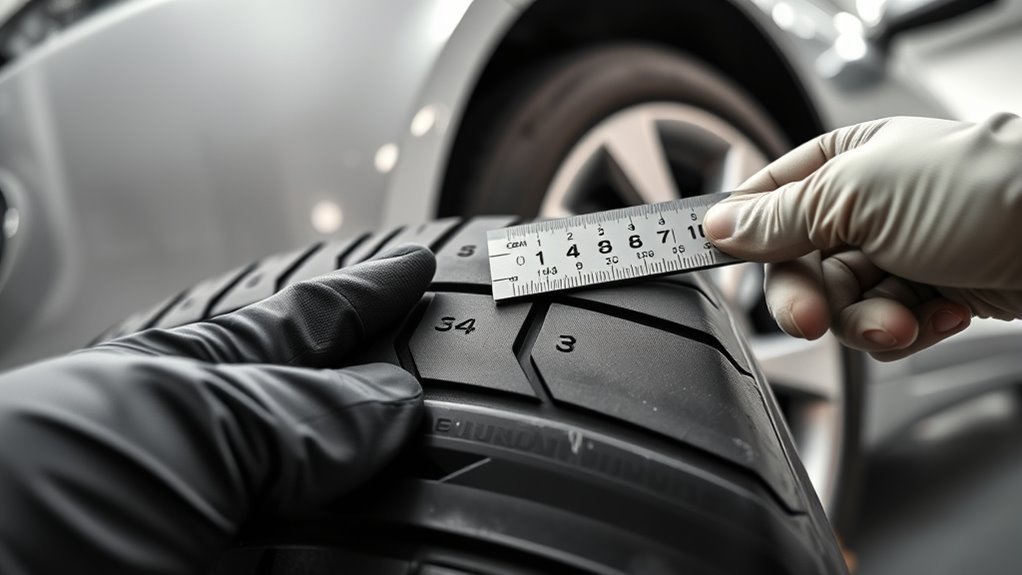
A tire can have the right size but still be the wrong tire if its service description is too low. The load index tells you how much weight each tire can carry, and the speed rating tells you the tire’s sustained speed capability under rated conditions. For normal replacement shopping, match or exceed the original service description shown on the Sonata’s placard and current OE tire.
| Code Element | Example | What It Means |
|---|---|---|
| Width | 215 | Tire width in millimeters. |
| Aspect ratio | 55 | Sidewall height as a percentage of tire width. |
| Construction | R | Radial construction. |
| Wheel diameter | 17 | Wheel diameter in inches. |
| Load index | 94 | Maximum rated load per tire; do not downgrade. |
| Speed rating | V or W | Maximum sustained speed rating under rated load and inflation conditions. |
Hyundai Sonata Tire Lifespan: When to Replace (Miles, Age, Wear)
There is no single mileage number that guarantees a Sonata tire is safe. Replace tires based on tread depth, age, damage, uneven wear, and how the tire performs. NHTSA says tires are not safe and should be replaced when tread depth reaches 2/32 inch. It also notes that some vehicle and tire manufacturers recommend replacing tires at six to 10 years regardless of treadwear. Hyundai’s tire guidance likewise calls for monthly checks of inflation, wear, and damage.
- Replace at 2/32 inch tread depth. Replace sooner if wet traction is poor or treadwear is uneven.
- Inspect monthly. Check inflation, tread, cuts, cracks, punctures, bulges, vibration, and sidewall damage.
- Watch tire age. Find the DOT Tire Identification Number on the sidewall; the last four digits show the week and year of manufacture.
- Rotate as recommended. NHTSA advises following the owner’s manual and notes many vehicles use a 5,000–8,000 mile rotation interval when recommended.
- Do not ignore pressure loss. If one tire repeatedly needs air, have it inspected.
Warning: A tire can be unsafe even with visible tread if it has cracking, bulges, exposed cords, impact damage, severe uneven wear, or repeated air loss.
[Products Worth Considering]

The JACO FlowPro Tire Inflator measures, inflates, and airs down tires up to 100 PSI with battery-free operation and ±2% accuracy after calibration. It features a glowing pressure dial for night visibility, a heavy-duty steel build with a hybrid hose, and a precision push-to-inflate thumb trigger. The patented Lightning Air Chuck locks on for a secure seal, and the kit includes quick-connect hardware for easy inline use with your air compressor.

This compact capsule-style tire repair kit helps you quickly fix punctures and plug flats with minimal effort. The rugged stainless steel shell protects the contents for reliable roadside use, while the simple plug assembly makes repairs fast and tool-free. Suitable for motorcycles, cars, ATVs, UTVs, and even mountain bikes.
Choosing Tires: OEM vs Aftermarket + Recommended Types
OEM-size replacement tires keep the Sonata closest to its factory ride, steering, braking, and efficiency targets. Aftermarket tires are fine when they match the required size, load index, speed rating, and wheel fitment, but they can change noise, ride comfort, steering response, winter traction, tread life, and fuel economy.
OEM Fitment Benefits
- Predictable handling: The size matches Hyundai’s chassis calibration.
- Lower fitment risk: Less chance of rubbing, clearance issues, or speedometer error.
- Simpler replacement: Tire shops can match the placard and original service description.
- TPMS compatibility: Staying with the factory wheel size reduces sensor and fitment complications.
Aftermarket Performance Tradeoffs
Aftermarket tires can improve a specific priority, such as tread life, wet braking, low rolling resistance, or sporty response. The tradeoff is that one gain may reduce another trait. For example, a performance tire may sharpen steering but ride more firmly and wear faster, while a touring all-season may ride quietly but feel less responsive.
| Tire Type | Best For | Tradeoff |
|---|---|---|
| Grand touring all-season | Quiet daily driving, comfort, long tread life | Less sharp than performance tires |
| Performance all-season | N Line owners or drivers wanting quicker steering response | Can ride firmer and wear faster |
| Low rolling resistance | Hybrid efficiency and commuting | Grip and ride feel vary by model |
| Winter tire | Cold climates, snow, ice, slush | Not ideal for warm-weather use |
Seasonal Tire Recommendations
All-season tires are the simplest choice for mild, mixed climates. If you regularly drive in freezing temperatures, snow, or ice, a dedicated winter tire is designed for those conditions and can provide substantially better cold-weather traction than a typical all-season tire. In warm climates, an N Line owner may prefer a performance-oriented tire for sharper response, with the tradeoff of firmer ride, faster wear, or reduced cold-weather capability depending on the tire model.
Installation & Fitment Checks: Pressure, Rotation, Torque, Verification
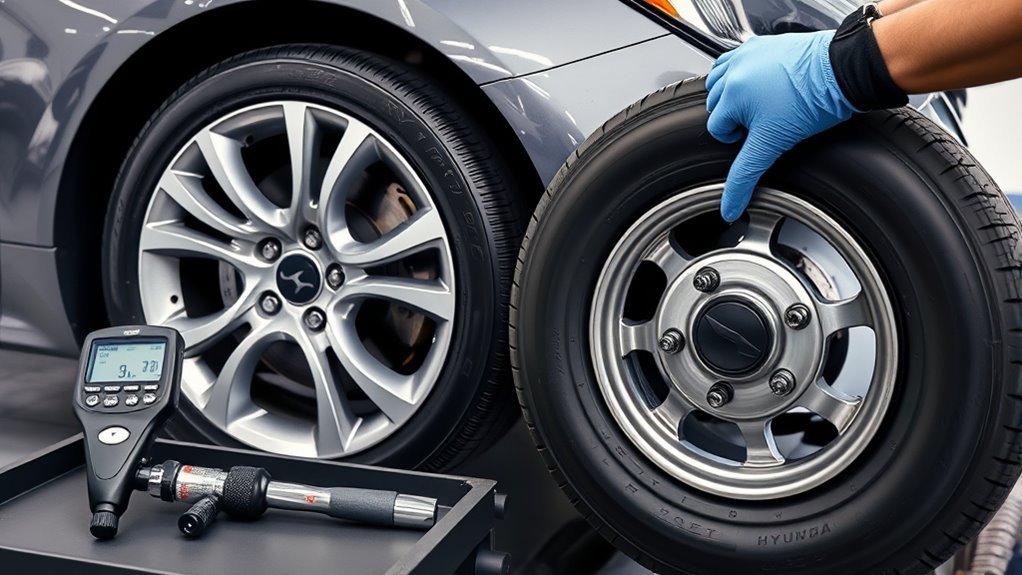
After installing tires or wheels, verify the basics before normal driving. The Hyundai owner’s manual says wheel nuts should be tightened to 79–94 lbf-ft (11–13 kgf-m) after changing a tire. The manual also states the compact temporary spare should be inflated to 60 psi and used only for emergencies.
- Confirm size and service description. Compare each new tire with the door placard and invoice.
- Set cold pressure. Use the pressure shown on the Sonata’s door label, not the maximum pressure molded into the tire sidewall.
- Balance each wheel/tire assembly. Road-test for vibration.
- Check TPMS operation. Make sure all sensors report after driving and no warning lamp remains on.
- Torque lug nuts correctly. Use a calibrated torque wrench and a star pattern; do not rely only on an impact wrench.
- Inspect for rubbing. Turn the steering wheel lock-to-lock and check suspension/fender clearance after any non-OE wheel or tire change.
Note: A compact spare is not a normal replacement tire. Hyundai warns not to operate over 50 mph on the compact spare and to repair or replace the original tire as soon as possible.
Frequently Asked Questions
What is the OEM tire size for a 2025 Hyundai Sonata?
The 2025 U.S. Hyundai Sonata uses 205/65R16 on SE, 215/55R17 on SEL and hybrid trims, 235/45R18 on SEL Convenience, and 245/40R19 on N Line. Always confirm your exact vehicle’s driver-side door placard before buying tires.
How long do factory tires last on a Hyundai Sonata?
Factory tire life varies by tire model, driving style, alignment, road conditions, inflation, and rotation habits. Instead of relying on mileage alone, replace Sonata tires when tread reaches 2/32 inch, when damage appears, when aging cracks or bulges show, or when vibration, noise, or pressure loss indicates a problem.
Can I use a different tire size on my Sonata?
You may be able to use an alternate size only if the overall diameter, load index, speed rating, wheel width, offset, clearance, and TPMS compatibility are correct. For daily driving, the lowest-risk choice is the size listed on your door placard.
What tire pressure should I use?
Use the cold tire pressure printed on your Sonata’s driver-side Tire and Loading Information label. Check pressure when tires are cold, meaning the car has been parked for at least three hours or driven less than about one mile.
What is the wheel lug nut torque for a Hyundai Sonata?
Hyundai’s owner manual lists wheel nut torque at 79–94 lbf-ft (11–13 kgf-m) after changing a tire. Use a calibrated torque wrench and tighten in a star pattern.
Does the 2025 Hyundai Sonata have a spare tire?
SE, SEL, and SEL Convenience use a compact temporary T125/80D16 spare. The N Line uses a Tire Mobility Kit, while Hybrid SEL and Hybrid Limited use a Tire Repair Kit (TMK). Check your trunk before a trip because repair equipment differs by trim.
Conclusion
The right Hyundai Sonata tire size is the one Hyundai specified for your exact model year, trim, and wheel package. For the 2025 U.S. Sonata, that means 205/65R16, 215/55R17, 235/45R18, or 245/40R19 depending on trim. Before buying, photograph the driver-side tire placard, match the required size and service description, confirm wheel fitment and TPMS compatibility, and use the placard’s cold pressure. That one check prevents most fitment mistakes.
Sources
- Hyundai 2025 Sonata Specifications & Features — official 2025 U.S. Sonata wheel and tire sizes by trim.
- Hyundai Owner’s Manual: Tires and Wheels — tire pressure, replacement-size, wear, and safety guidance.
- Hyundai Owner’s Manual: Changing Tires — wheel nut torque, compact spare pressure, and compact spare driving limits.
- NHTSA TireWise Tire Safety — tire pressure, tread depth, rotation, TPMS, tire aging, and replacement guidance.
- Michelin Tire Load Rating & Speed Rating Guide — tire service-description basics.
- Hyundai USA 2026 Sonata Features & Specs — current U.S. model-year tire-size continuity check.
- Wheel-Size.com 2025 Hyundai Sonata Fitment Guide — independent cross-check for wheel fitment details; verify aftermarket wheel applications before purchase.

Related Articles

Danger of Using Summer Tires in Winter on a Hyundai Sonata
Potentially perilous, using summer tires in winter on your Hyundai Sonata can compromise safety—discover the hidden dangers that await you on icy roads.
Read More
Can You Mix Nitrogen and Air in Hyundai Sonata Tires? Answered
Discover the implications of mixing nitrogen and air in your Hyundai Sonata tires—are the benefits worth the risks? Explore the answer inside!
Read More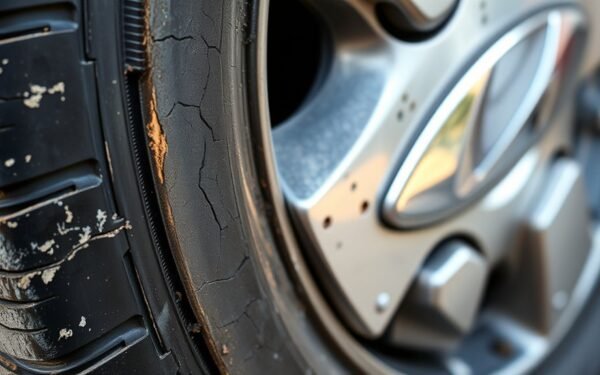
How to Tell If Hyundai Sonata Tires Are Too Old to Use Safely
Understand how to assess the age of your Hyundai Sonata tires and discover crucial signs of deterioration that could compromise your safety on the road.
Read More