
Tire Treadwear Ratings Explained: What UTQG Numbers Really Mean
Treadwear ratings are a comparative index showing how long a tire’s tread should last versus a control tire rated at 100. A higher UTQG number means slower wear under standardized test conditions. Ratings are not mileage guarantees, but they help you estimate tire life. A 400 rating, for example, often lines up with roughly 40,000–60,000 miles depending on load, roads, inflation, driving style, and rotations. Use them to match tires to commuting, performance, or heavy-duty needs, and keep reading for practical selection and maintenance tips.
Quick Answer
UTQG treadwear ratings tell you how a tire’s durability compares to a baseline control tire rated at 100. A tire rated 300 should last about three times longer than that control under the same test conditions. Higher numbers generally mean longer tread life, but real-world mileage depends on your driving habits, tire maintenance, road surfaces, and vehicle load. For daily commuting, look for ratings of 500 or above. For performance driving, ratings between 200 and 300 trade longevity for better grip. These numbers are best used as a comparison tool, not as a mileage promise.
[Products Worth Considering]

EVOULTES heavy duty tire inflator with an integrated gauge delivers accurate pressure readings from 10–120 PSI, helping you inflate, deflate, and check tires in one tool. The 16.5-inch extended dual-head air chuck with swivel base reaches hard-to-access dual wheel valves on trucks and RVs. A brass trigger core and side-mounted air release valve make operation smooth, with standard 1/4" NPT threading and quick-connect compatibility for easy setup.

This portable cordless tire inflator delivers up to 160 PSI with fast 17 L/min airflow to help you quickly top up tires and get back on the road. It features dual power mode, running on a 21V rechargeable battery or a 12V DC adapter for convenient roadside use. An automatic shut-off with digital pressure gauge helps prevent overinflation, and a built-in LED light improves visibility in low-light conditions.

The JACO FlowPro Tire Inflator measures, inflates, and airs down tires up to 100 PSI with battery-free operation and ±2% accuracy after calibration. It features a glowing pressure dial for night visibility, a heavy-duty steel build with a hybrid hose, and a precision push-to-inflate thumb trigger. The patented Lightning Air Chuck locks on for a secure seal, and the kit includes quick-connect hardware for easy inline use with your air compressor.
What UTQG Treadwear Ratings Mean for You
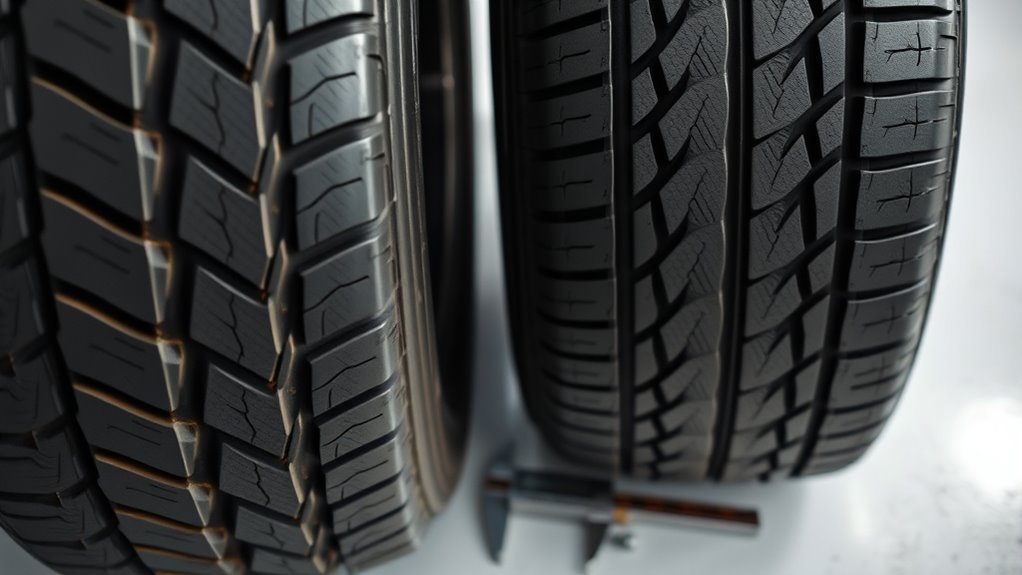
The UTQG treadwear number is a comparative index, not an absolute promise. It gives you a quick way to estimate how long one tire might last compared to another. A rating of 100 is the baseline control, so a tire rated 300 should, under identical test conditions, wear roughly three times slower than that control.
Ratings span roughly 100 to 800 or higher, with bigger numbers pointing to longer tread life. A 400-rated tire often delivers about 40,000–60,000 miles under normal conditions, though that is not guaranteed. Real-world mileage depends on tire design, driver habits, road surfaces, and maintenance.
Treat ratings as a comparison tool. Pair them with your own vehicle use and regular tire inspections rather than relying on the number alone.
How Treadwear Ratings Are Tested
Treadwear ratings come from a controlled 7,200-mile road test on a government-prescribed course near San Angelo, Texas. During the test, candidate tires run in a convoy alongside a Course Monitoring Tire (CMT) rated at 100. The candidate tire’s rating is calculated by comparing its tread loss to the CMT’s wear over that distance.
Tire manufacturers run these tests themselves (or hire independent labs), then assign the ratings. The NHTSA sets the testing procedures, can inspect manufacturer data, and performs spot checks, but it does not conduct routine audits of every tire. Manufacturers are allowed to understate a tire’s grade but cannot overstate it. Because each company tests independently, ratings are most reliable for comparing tires within the same brand rather than across different manufacturers.
Manufacturers test candidate tires against a Course Monitoring Tire over 7,200 miles on a government course in West Texas, then assign the final rating.
- Sample selection and conditioning protocols
- Controlled run parameters: load, speed, route profile
- Periodic tread-depth measurements and data logging
- Statistical analysis to validate rating consistency
Why UTQG Ratings Don’t Compare Well Across Brands
One common misconception is that you can directly compare UTQG numbers from different tire makers. In practice, each manufacturer tests and grades its own tires. The NHTSA sets the procedure, but there is no independent body running the same test on every tire. This means a 400-rated tire from Brand A and a 400-rated tire from Brand B may not wear at the same rate.
Manufacturers sometimes assign lower grades than test results would justify to create a tidy product lineup. A tire that could earn a 480 might get a 400 so it fits neatly below a premium model in the brand’s range. For the most accurate comparison, stick to treadwear numbers within one manufacturer’s lineup, and supplement UTQG data with independent reviews and NHTSA’s own UTQG consumer resources.
UTQG Numbers, Realistic Mileage Ranges, and Warranties
UTQG treadwear numbers are relative benchmarks, not guarantees. A rating of 100 is the baseline, and expected mileage scales from there. A 400-rated tire typically delivers roughly 40,000–60,000 miles, while a 600-rated tire can often exceed 70,000 miles under good conditions.
Use these figures to set realistic expectations and plan your tire budget. Manufacturers commonly tie treadwear ratings to prorated warranty terms. Many warranties fall between 50,000 and 90,000 miles, so the UTQG number often lines up with warranty length.
A rating below 200 usually means the tire is not built for daily commuting. Those lower numbers show up on high-performance summer tires and racing compounds where grip matters more than longevity. Think of UTQG as a planning tool, not a precise predictor.
[Products Worth Considering]

The Fanttik X10 Pro is a cordless portable tire inflator that reaches up to 150 PSI and can inflate an R15 tire in about 35 seconds for quick roadside or home top-ups. With AccuInFlate auto-stop and smart start/stop controls, it helps maintain accurate pressure and frees your hands once the target is reached. A high-visibility digital display and preset modes make it easy to set and monitor inflation for cars, motorcycles, bikes, and balls.
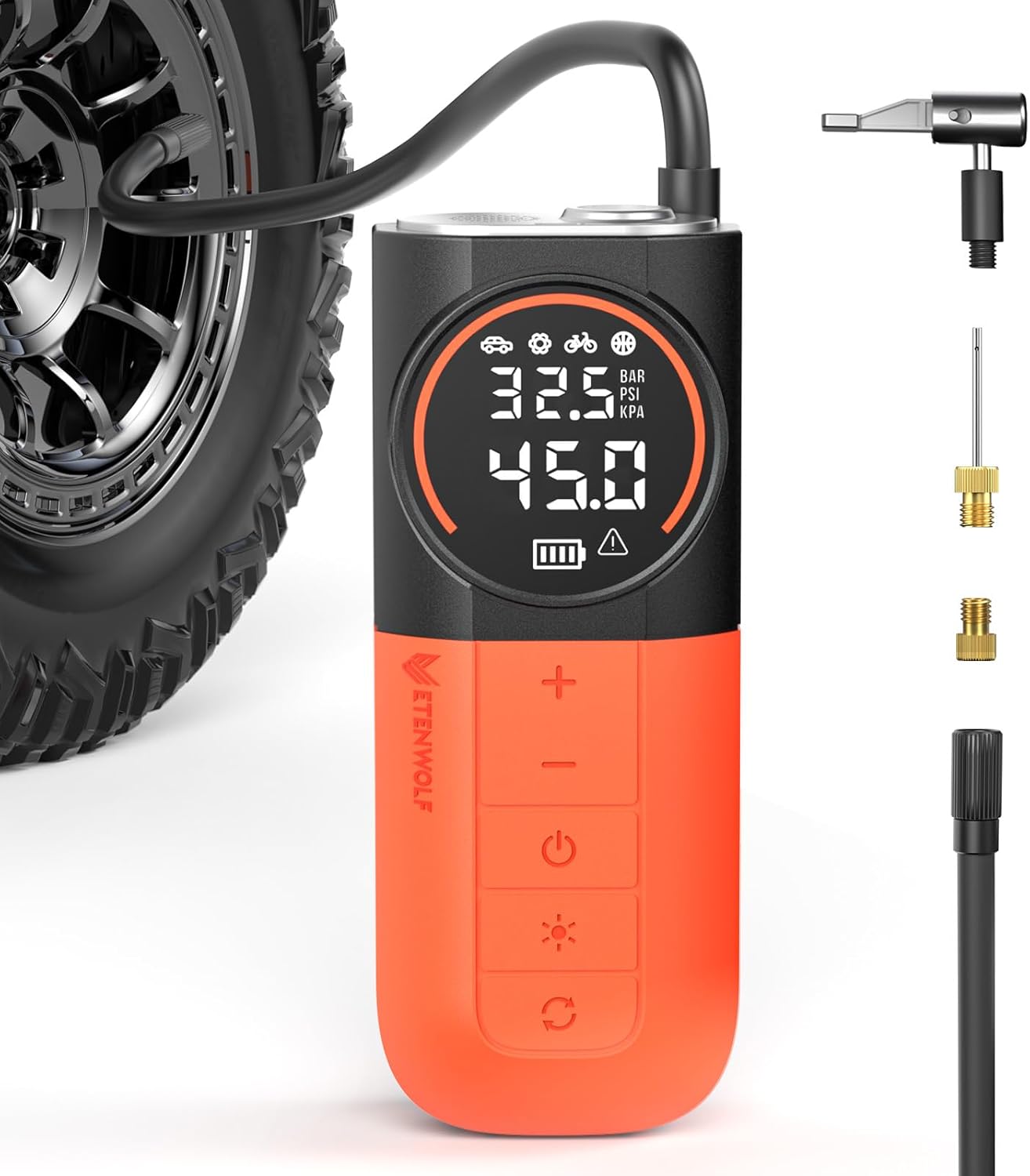
The ETENWOLF S1 cordless tire inflator delivers ultra-fast inflation with up to 160 PSI and a 20 L/min airflow for quicker tire top-offs. Its 5200mAh battery and cooling system support inflating many tires and sports balls on a single charge, while the digital pressure gauge and multi-unit display help you reach the right pressure accurately. With preset modes, pressure memory, an auto-stop feature, and an LED flashlight, it’s built for easy roadside and everyday use.
How Driving, Maintenance, and Vehicle Factors Change Wear
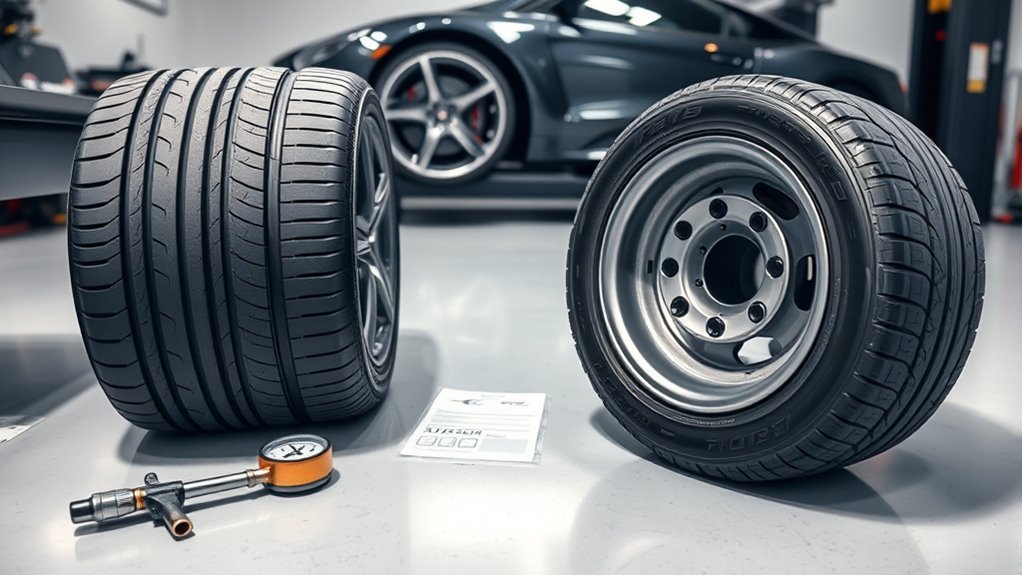
UTQG numbers give you a baseline, but real-world tread life depends heavily on how you drive, maintain, and load your vehicle. Aggressive acceleration and hard braking concentrate stress and speed up edge and center wear.
Improper inflation and skipped rotations create uneven wear patterns. Keeping your tires at the correct pressure and rotating them on schedule restores a uniform contact patch and adds miles. Rough roads and heavy loads increase abrasion, and worn suspension parts amplify localized overloads.
- Driving techniques: avoid hard launches and braking to reduce shear and heat buildup.
- Maintenance practices: rotate, balance, and check pressure on a regular schedule.
- Road condition awareness: track how much rough-road mileage you accumulate.
- Vehicle setup: manage payload and keep your suspension in good shape.
Choosing Tires by Treadwear: Recommendations by Use Case
For daily commuting, choose tires with a treadwear rating of 500 or higher to get the most life out of each set. Expect roughly 40,000–70,000 miles with proper inflation, regular rotations, and normal road conditions.
For performance driving, tires rated 200–300 prioritize grip and handling. You will wear through them faster, but you gain sharper cornering and shorter braking distances.
For all-terrain or off-road use, tread pattern and rubber compound matter more than the treadwear number. Look for aggressive tread blocks and reinforced sidewalls instead of chasing a high rating.
For heavy-duty or towing, pick tires with higher load indices and moderate treadwear ratings to balance durability and strength. Always factor in your driving habits, climate, and road conditions alongside the UTQG number. The Wikipedia UTQG page has a helpful overview of how traction and temperature grades round out the picture.
Frequently Asked Questions
What Does Treadwear 440 Mean?
A treadwear rating of 440 means the tire is about 4.4 times more durable than the 100 baseline control, pointing to roughly 50,000–70,000 miles under good conditions. Use it as a comparison point when matching tires to your driving patterns.
Is 600 Treadwear Better Than 500?
Generally, yes. A 600-rated tire should outlast a 500-rated tire if both come from the same brand and are used under similar conditions. You will still want to consider driving habits, road surfaces, and other performance ratings before deciding.
Is a 420 Treadwear Rating Good?
Yes. A 420 rating puts the tire in the mid-range, with an expected lifespan around 40,000–60,000 miles. You get a solid balance of durability and grip, sitting between longer-lasting touring tires and softer performance compounds.
Conclusion
UTQG treadwear numbers give you a comparative baseline, not a guaranteed lifespan. Think of the rating like a map: it shows relative wear tendencies, not exact distances. Use ratings alongside your driving habits, inflation, alignment, load, and your vehicle’s torque to predict real-world mileage and choose warranties. For daily driving, favor higher ratings. For performance needs, weigh grip against longevity. Regular maintenance will preserve whatever treadwear rating you pick.

Related Articles
What Does THE P Stand For on a Tire? Full Meaning Explained
I’ll explain what the “P” on a tire really means and why it could change how you choose your next set.
Read More
How to Use a Tubeless Tire Repair Kit: Complete Field Guide
Learn how to fix tubeless tire punctures fast with the right kit, because one small mistake can leave you stranded on the trail.
Read More
How to Tell a Tire’s Diameter: Easy Guide to Reading Tire Size
Want to decode tire sidewall numbers and find the right diameter, but wonder what those hidden digits really mean?
Read More