
How to Make RAV4 Tires Last Longer: A Maintenance Guide
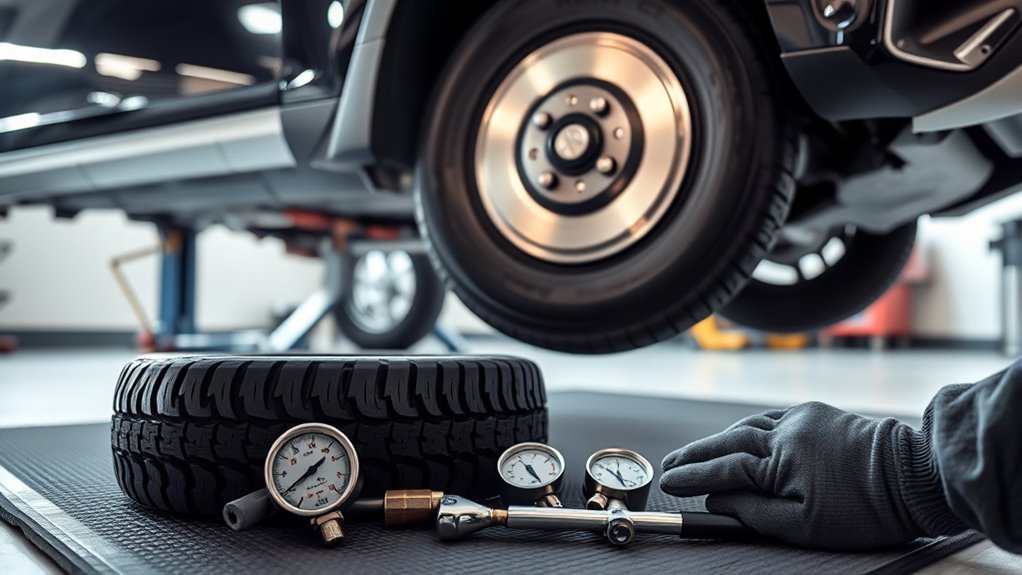
Making your RAV4 tires last longer comes down to a simple routine: keep them inflated to the correct cold PSI, rotate them on schedule, watch tread depth, and fix uneven wear early. These checks also help your RAV4 brake, steer, and handle better in rain, snow, heat, and everyday commuting.
Quick Answer
To make RAV4 tires last longer, check cold tire pressure monthly, rotate tires about every 5,000 miles or as your Toyota maintenance guide recommends, inspect tread and sidewalls, and correct alignment or balance problems as soon as you notice pulling, vibration, or uneven wear.
Key Takeaways
- Use the cold PSI on your RAV4 driver-door placard or owner’s manual, not the maximum PSI printed on the tire sidewall.
- Replace tires at 2/32 inch of tread at the latest; consider planning replacement earlier if you often drive in heavy rain.
- Rotate tires on the Toyota schedule, commonly every 5,000 miles or 6 months for many RAV4 maintenance guides.
- Uneven wear, pulling, vibration, cracks, bulges, exposed cords, or repeated pressure loss mean the tire or suspension needs professional attention.
- Do not forget the spare. Check its pressure, age, condition, and temporary-use limits before long trips.
At a Glance
| Time Required | 5 minutes monthly; 20–45 minutes for a tire shop rotation or inspection |
| Difficulty | Easy for pressure and tread checks; professional service recommended for rotation, balancing, and alignment |
| Tools Needed | Tire pressure gauge, tread-depth gauge or penny, flashlight, air pump, and your RAV4 owner’s manual |
| Cost | Usually free for DIY checks; tire rotation, balancing, or alignment costs vary by shop and location |
Identifying When to Replace Your Tires
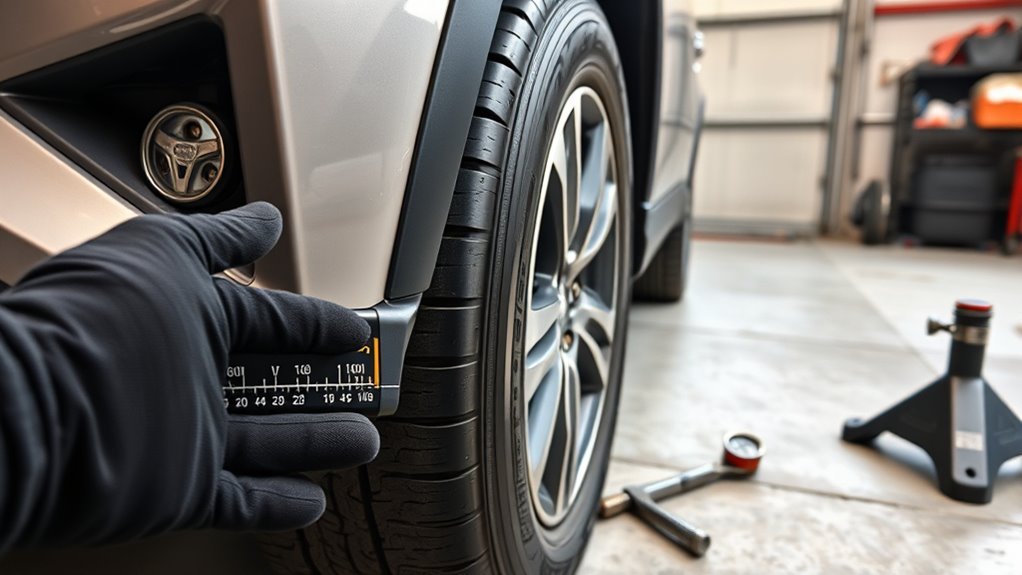
Start with tread depth. Tires should be replaced when the tread reaches 2/32 inch at the latest. The penny test is a quick check: place a penny into the tread with Lincoln’s head upside down and facing you. If you can see the top of Lincoln’s head, the tire is at the minimum replacement point.
Warning: Do not keep driving on a tire with a bulge, exposed cords, a deep sidewall crack, repeated air loss, or tread worn to 2/32 inch. Replace it or have it inspected before normal driving.
A tread-depth gauge is more accurate than the penny test and costs very little. Check several grooves across each tire, not just one spot, because alignment or inflation problems can wear one edge faster than the rest of the tread.
| Tread Reading | What It Means | Best Action |
|---|---|---|
| 6/32 inch or deeper | Usually healthy for normal driving if wear is even | Keep checking monthly |
| 4/32 inch | Wet-road performance can drop noticeably | Start shopping, especially if you drive in frequent rain |
| 2/32 inch | Minimum replacement point | Replace the tire |
| Uneven readings across the tire | Possible pressure, alignment, suspension, or balance issue | Have the tire and vehicle inspected |
Also look at tire age. Tread can look acceptable while the rubber is aging. Find the DOT Tire Identification Number on the sidewall; the last four digits show the week and year the tire was made. If your RAV4 is low-mileage, stored outside, or driven in hot climates, aging can matter before tread is fully worn.
[Products Worth Considering]

EVOULTES heavy duty tire inflator with an integrated gauge delivers accurate pressure readings from 10–120 PSI, helping you inflate, deflate, and check tires in one tool. The 16.5-inch extended dual-head air chuck with swivel base reaches hard-to-access dual wheel valves on trucks and RVs. A brass trigger core and side-mounted air release valve make operation smooth, with standard 1/4" NPT threading and quick-connect compatibility for easy setup.

This portable cordless tire inflator delivers up to 160 PSI with fast 17 L/min airflow to help you quickly top up tires and get back on the road. It features dual power mode, running on a 21V rechargeable battery or a 12V DC adapter for convenient roadside use. An automatic shut-off with digital pressure gauge helps prevent overinflation, and a built-in LED light improves visibility in low-light conditions.

The JACO FlowPro Tire Inflator measures, inflates, and airs down tires up to 100 PSI with battery-free operation and ±2% accuracy after calibration. It features a glowing pressure dial for night visibility, a heavy-duty steel build with a hybrid hose, and a precision push-to-inflate thumb trigger. The patented Lightning Air Chuck locks on for a secure seal, and the kit includes quick-connect hardware for easy inline use with your air compressor.
Choosing Tires Based on Your Driving Conditions
The best RAV4 tire depends on climate, road surface, and how you use the vehicle. Staying with the size, load rating, and speed rating recommended by Toyota is the safest starting point. You can find the correct tire size on the driver-door Tire and Loading Information Label or in your owner’s manual.
| Tire Type | Best Conditions | RAV4 Owner Notes |
|---|---|---|
| All-season tires | Daily driving in mild to moderate climates | A practical default for many RAV4 owners, but not the best choice for severe winter roads |
| Winter tires | Snow, ice, and consistently cold weather | Use a matching set of four winter tires for balanced braking and handling |
| All-terrain tires | Gravel roads, light trails, and rougher surfaces | Useful for Adventure or TRD-style use, but may increase road noise or reduce fuel economy |
| Performance-oriented tires | Dry handling and responsive steering | May wear faster if driven aggressively or used on rough roads |
Note: Avoid mixing different tire sizes, tread patterns, or wear levels on your RAV4 unless Toyota and the tire manufacturer allow it. A mismatched set can affect traction, AWD behavior, braking, and stability-control performance.
Why Tire Rotation Extends Longevity
Regular tire rotation helps even out wear between front and rear tires. On many Toyota RAV4 maintenance schedules, tire rotation appears at 5,000-mile or 6-month service intervals, and NHTSA also advises checking the owner’s manual and rotating within the manufacturer’s recommended interval.
Front tires often carry more steering and braking load, so they can wear differently from rear tires. Rotation moves tires to new positions so the set wears more evenly. This can help preserve traction, ride quality, and fuel efficiency while lowering the chance that one tire becomes unsafe before the others.
Always follow the rotation pattern for your exact RAV4 and tire setup. Directional tires, staggered sizes, or some specialty tire designs may require a different pattern. If you are unsure, ask the tire shop to follow the Toyota manual for your model year.
Assessing Tread Wear: What You Need to Know
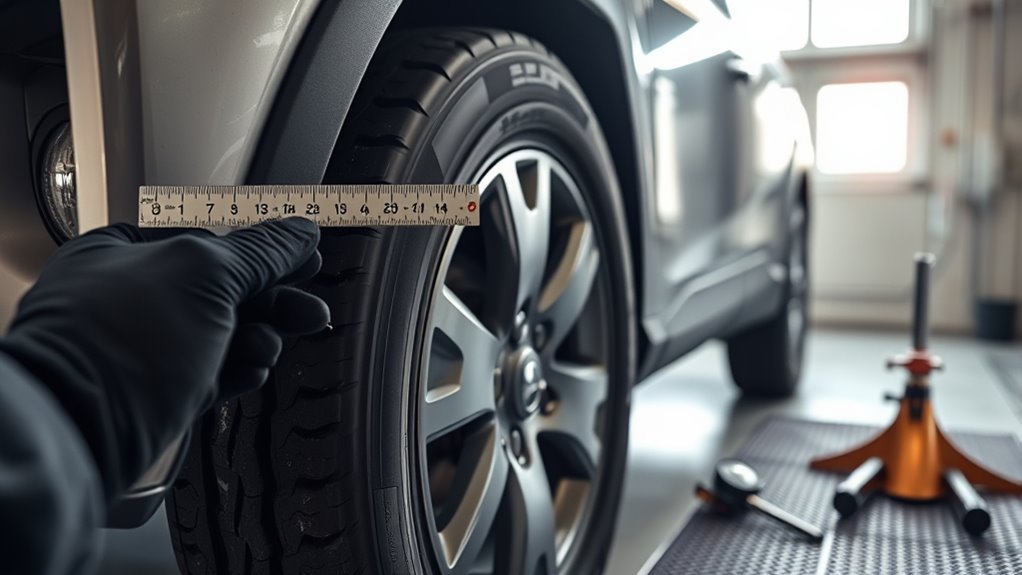
Use three checks together: tread depth, wear pattern, and tire age. A tire can fail one check even if it passes the others. For example, a tire may have enough tread in the middle but be bald on the inner edge because of poor alignment.
- Park on a flat surface and let the tires cool if you recently drove.
- Use a tread-depth gauge in several grooves on each tire.
- Look for wear bars, which are raised indicators molded into the tread grooves.
- Inspect the inner and outer edges with a flashlight.
- Check sidewalls for cracks, cuts, bubbles, or scuff damage.
- Compare all four tires for uneven wear or mismatched tread depth.
| Wear Pattern | Likely Cause | What to Do |
|---|---|---|
| Center tread worn faster | Possible overinflation or load/usage issue | Reset pressure cold to the door-placard PSI |
| Both outer edges worn faster | Possible underinflation or frequent hard cornering | Check for leaks and adjust pressure |
| One edge worn faster | Possible alignment problem | Schedule alignment and suspension inspection |
| Cupping or scalloped dips | Possible worn suspension parts, imbalance, or rotation neglect | Have tires, shocks/struts, and balance checked |
| Feathered tread blocks | Possible toe alignment issue | Get a professional alignment check |
Why Proper Alignment and Balancing Matter for Your Ride
Alignment and balancing protect your tires in different ways. Alignment sets the wheel angles so the tires meet the road correctly. Balancing corrects uneven weight around the tire and wheel assembly so the wheel spins smoothly.
Signs your RAV4 may need alignment or balancing include steering pull, a crooked steering wheel, vibration at certain speeds, uneven tread wear, or a tire that keeps getting noisy after rotation. Do not wait until the tire is ruined. A quick inspection can often stop a small wear problem from becoming a full set of premature replacements.
Pro Tip: Ask for an alignment check after hitting a major pothole, curb, or road debris. Even if the RAV4 still drives normally, a small alignment change can quietly scrub tread off one edge.
Signs It’s Time for a Tire Replacement
Replace or professionally inspect your RAV4 tires when you see any of these warning signs:
- Tread depth at 2/32 inch or the wear bars are level with the tread.
- Bulges, blisters, deep cuts, exposed cords, or sidewall cracking.
- Repeated pressure loss even after inflation.
- Severe vibration, thumping, or new tire noise.
- Uneven wear that returns after rotation or pressure correction.
- Tires that are old enough to raise aging concerns, especially if the vehicle is driven infrequently or stored in heat and sunlight.
Tread Depth Inspection
Check tread monthly when you check tire pressure. The penny test is useful in a pinch, but a tread-depth gauge gives you a number you can track. Write the readings down or save them in your phone so you can spot fast wear before it becomes unsafe.
Visible Damage Assessment
Look closely at the sidewall and tread surface. Cracks, gouges, punctures near the sidewall, bubbles, and exposed cords are not normal wear. If you are unsure whether damage is safe, avoid highway driving and have the tire inspected by a qualified technician.
Uneven Wear Patterns
Uneven wear usually means something else needs attention. Check pressure first, then look at rotation history, alignment, balance, suspension parts, and driving habits. Replacing a worn tire without fixing the cause can make the next tire wear out the same way.
Best Practices for Keeping Your Spare Tire in Top Shape
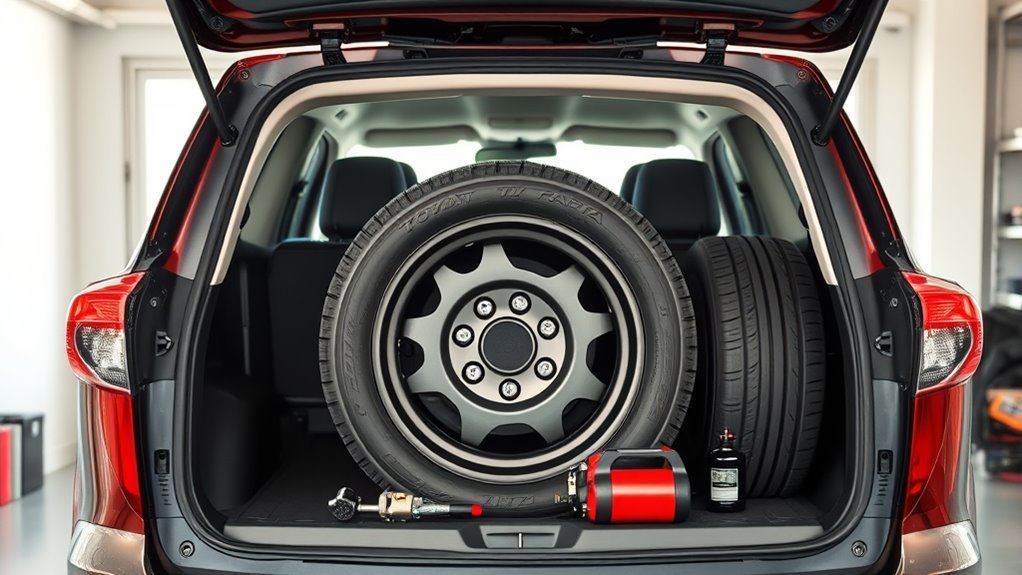
Your spare tire needs attention even if it has never touched the road. Check its pressure, condition, age, and tools before road trips. If your RAV4 has a compact temporary spare, it is meant for short emergency use, not normal driving.
[Products Worth Considering]

This portable cordless tire inflator delivers fast, efficient inflation for cars, motorcycles, bikes, and sports balls with a digital pressure gauge. Use the one-click PSI preset with auto shut-off for accurate, hands-free topping to your target pressure up to 150 PSI. It’s compact and rechargeable with a built-in emergency LED light plus valve adapters and accessories for quick, ready-to-go use.

The Fanttik X10 Pro is a cordless portable tire inflator that reaches up to 150 PSI and can inflate an R15 tire in about 35 seconds for quick roadside or home top-ups. With AccuInFlate auto-stop and smart start/stop controls, it helps maintain accurate pressure and frees your hands once the target is reached. A high-visibility digital display and preset modes make it easy to set and monitor inflation for cars, motorcycles, bikes, and balls.
Regular Pressure Checks
Check the spare when you check the other tires. Compact temporary spares often use much higher pressure than road tires, commonly around 60 psi, but you should always use the pressure printed on the spare, the driver-door placard, or your owner’s manual. A low spare is almost useless during a roadside emergency.
Proper Storage Techniques
- Keep it clean and dry: Moisture and road debris can age rubber and corrode wheels or hardware.
- Protect it from damage: If the spare is stored under the vehicle, inspect it more often for impact damage, rust, and weather exposure.
- Check the tools: Confirm that the jack, lug wrench, wheel-lock key, and any inflator kit are present and usable.
Timely Replacement Recommendations
A spare can age out before it wears out. Check the DOT date code and inspect for cracks or hard, brittle rubber. Do not use a spare as a long-term replacement for a worn tire. After installing a compact spare, drive slowly, avoid long distances, and replace or repair the road tire as soon as possible.
How to Check RAV4 Tire Pressure Correctly
Correct tire pressure is one of the easiest ways to improve tire life. Underinflation builds heat, increases wear, and can damage the tire. Overinflation can reduce ride comfort and cause uneven center wear.
- Find the recommended cold PSI on the driver-door Tire and Loading Information Label or in your RAV4 owner’s manual.
- Check pressure when tires are cold, ideally before driving or after the vehicle has been parked for at least three hours.
- Use a reliable tire pressure gauge on all four road tires and the spare.
- Add or release air until each tire matches the recommended cold pressure.
- Recheck after adding air, then reinstall the valve caps.
Do not use the tire sidewall’s maximum PSI as your normal inflation target. That number is the tire’s maximum cold pressure, not Toyota’s recommended operating pressure for your RAV4.
Note: TPMS is helpful, but it is not a replacement for monthly gauge checks. A TPMS light usually means pressure is already significantly low.
Seasonal and Driving Habits That Shorten Tire Life
Weather and driving style can change how quickly your RAV4 tires wear. Heat, underinflation, high-speed driving, heavy loads, potholes, rough gravel, and aggressive braking can all increase stress on the tire. Cold weather can also lower tire pressure enough to trigger the TPMS light.
Before winter, inspect tread depth and consider winter tires if you regularly drive on snow or ice. Before summer road trips, check pressure, tread, sidewall condition, and spare tire readiness. If you tow, carry heavy cargo, or drive rough roads often, inspect tires more frequently than a light commuter would.
Monthly RAV4 Tire Maintenance Checklist
- Check cold pressure on all four tires and the spare.
- Measure tread depth in multiple grooves on every tire.
- Look for cracks, bulges, cuts, nails, screws, and exposed cords.
- Compare inner, center, and outer tread wear.
- Check whether the steering wheel pulls or vibrates during normal driving.
- Confirm your next rotation mileage or service date.
- Inspect the spare tire and make sure the jack and lug wrench are present.
When to Seek Expert Tire Maintenance Services
Schedule professional tire service if your RAV4 pulls to one side, vibrates at speed, wears tires unevenly, loses air repeatedly, or makes new thumping or humming noises. A tire technician can check for punctures, balance problems, bent wheels, suspension wear, and alignment issues.
You should also get help before a long trip if the tread is close to the minimum, the tires are old, the spare is questionable, or you are unsure whether visible damage is safe. Tire problems are easier and cheaper to solve before they happen on the shoulder of a highway.
Frequently Asked Questions
How does weather affect tire lifespan and performance?
Hot weather can raise tire temperature and increase stress, especially if tires are underinflated. Cold weather can lower tire pressure and trigger the TPMS light. Check pressure more often during big temperature swings and before long trips.
Can I mix different tire brands on my RAV4?
It is best to use four matching tires with the same size, type, load rating, speed rating, and similar tread depth. Mixing brands or tread patterns can affect handling, braking, traction, and AWD behavior. If you must replace only one or two tires, ask a tire professional what is safe for your exact RAV4.
What tools do I need for basic tire maintenance?
Keep a tire pressure gauge, tread-depth gauge, flashlight, and portable air pump in your garage or vehicle. For roadside emergencies, confirm that your RAV4 has the correct jack, lug wrench, wheel-lock key if needed, and spare or tire repair kit.
How does tire pressure impact fuel efficiency?
Low tire pressure increases rolling resistance, which can reduce fuel economy and wear tires faster. Proper cold inflation helps the tire roll as designed, supports even tread wear, and improves safety.
Are there specific tire care tips for winter driving?
Yes. Check pressure more often because cold weather can lower PSI. Make sure tread depth is strong before snow season, use four matching winter tires if you regularly drive on snow or ice, and inspect tires after pothole impacts.
How often should I rotate RAV4 tires?
Follow your Toyota maintenance guide for your model year. Many RAV4 schedules list tire rotation at about every 5,000 miles or 6 months. Rotate sooner if a technician finds uneven wear.
Should I replace tires based on age even if tread looks good?
Yes, tire age matters. Rubber can age from heat, sunlight, storage, and time. Check the DOT date code and ask a tire professional to inspect older tires, especially on low-mileage vehicles or spare tires.
Conclusion
Your RAV4 tires will last longer when you treat tire care as a monthly habit instead of a once-a-year repair. Check cold pressure, measure tread depth, rotate on schedule, watch for uneven wear, and deal with alignment or vibration problems early. The payoff is simple: safer braking, better handling, smoother driving, and fewer surprise tire replacements.
Sources
- NHTSA TireWise — tire pressure, tread depth, penny test, rotation, TPMS, alignment, balancing, tire aging, and blowout safety guidance.
- Toyota 2025 RAV4 Owner’s Manual: Tires — RAV4 tire inspection, treadwear indicators, uneven wear, and spare tire condition guidance.
- Toyota 2023 RAV4 Warranty & Maintenance Guide — scheduled maintenance and tire rotation interval reference.
- AAA Worn Tires Wet-Weather Research — wet-road stopping distance and 4/32-inch tread-depth safety guidance.

Related Articles

Toyota RAV4 TPMS Reset: Easy Steps That Work
Unlock the secrets to resetting your Toyota RAV4's TPMS effortlessly—discover the essential steps to ensure your tires are always safe.
Read More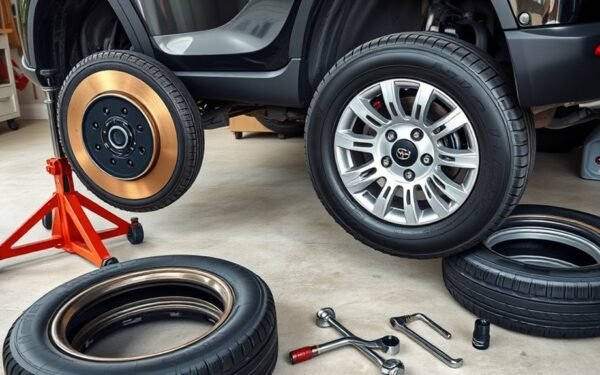
Toyota RAV4 Tire Rotation: DIY Steps & Pattern
Take control of your Toyota RAV4's tire maintenance with our simple DIY rotation guide—discover the best steps for optimal performance and longevity!
Read More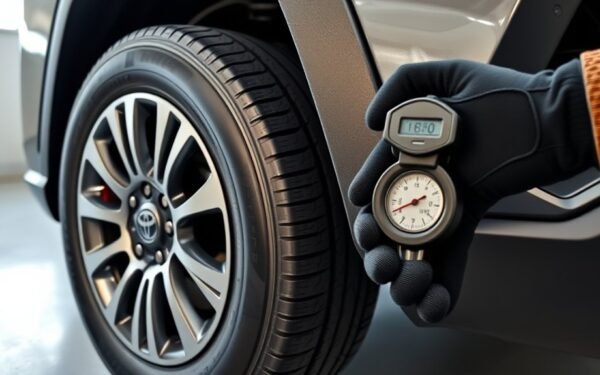
Mix Tire Brands on a Toyota RAV4? Expert Guide
Keeping your RAV4 safe? Learn when mixing tire brands risks traction, ABS/TCS and AWD damage — and what exact matches you must insist on.
Read More