
Is Crosswind a Good Tire? Budget Brand Performance Review

CrossWind can be a good tire if you want a lower-cost option for normal commuting, highway driving, and mixed everyday roads. The key is choosing the right CrossWind model for your vehicle and climate. CrossWind is not a premium benchmark tire, and it is not the best choice for severe winter driving or high-performance use, but it can make sense when value matters most.
Quick Answer
Yes, CrossWind tires are good for budget-focused drivers who need dependable everyday traction, basic comfort, and model-specific mileage warranty coverage. They are best for commuting, light trucks, SUVs, and moderate conditions. Choose winter-rated tires for harsh snow and compare the exact size, load rating, speed rating, and warranty before buying.
Key Takeaways
- CrossWind is a value tire brand marketed and distributed by TBC Brands in the U.S. and Canada.
- The current CrossWind family includes all-season, highway, all-terrain, rugged-terrain, mud-terrain, and ultra-high-performance options.
- Several CrossWind models list mileage warranties from 50,000 to 55,000 miles, but actual tread life depends on maintenance, alignment, load, road surface, and driving style.
- CrossWind all-season tires can suit rain and light winter use, but they should not replace dedicated winter tires in deep snow, ice, or severe cold.
- Before buying, check your exact tire size, load index, speed rating, UTQG rating, 3PMSF marking, DOT date code, and warranty terms.
Are CrossWind Tires Worth Buying?

Yes, CrossWind tires are worth considering if you want a practical tire at a lower price than many premium brands. They fit the buyer who needs safe, normal transportation more than maximum cornering grip, the quietest ride, or top-tier wet braking.
The brand is part of TBC Brands’ private-brand tire portfolio. TBC says CrossWind tires are marketed and distributed exclusively by TBC Brands in the U.S. and Canada and are used on passenger, SUV, and light-truck vehicles. That makes CrossWind a value-focused choice, not an unknown no-name tire.
Still, you should compare the exact CrossWind model, not just the brand name. A CrossWind HP010 Plus does not serve the same driver as a CrossWind TrailTraxx, RuggedTraxx, HT2, or MT. The tread pattern, warranty, load range, and snow rating all change by model.
Note: Do not judge any tire by brand alone. Check the exact size, load index, speed rating, UTQG rating, tread depth, warranty, and winter marking for the specific tire you plan to buy.
[Products Worth Considering]

The Continental Grand Prix 5000 is an allround road bike tire engineered for faster rolling, improved ride comfort, and enhanced puncture protection. It features a Vectran Breaker cut-protection layer, Lazer Grip micro-profile tread for confident cornering control, and Active Comfort Technology to damp vibration for smoother rides. BlackChili compound optimizes grip and speed for everyday performance and long-lasting confidence.

The 22800 wheel stud installer makes replacing wheel studs quick and secure, saving time and effort during tire service. It uses a ratchet or impact wrench to pull new studs firmly into place, helping when existing studs are too long. Compatible with most automotive wheels and light-duty truck wheel studs, it’s designed for easy, tool-assisted installation.

The Big Rig Defense Tire Thumper is a truck tire pressure checker that lets you quickly check multiple tires by giving them a firm whack. Listen for a reassuring thump and feel the stick bounce when a tire is fully inflated, helping you get back on the road safely. It features a comfortable, glove-friendly handle and a secure wrist strap for confident use on busy routes.
How CrossWind Tires Handle Rain, Snow, and Highways
CrossWind tires are mainly built for value-minded daily driving. On highways, the all-season and highway models are the best fit because they are designed for paved-road stability, normal ride comfort, and longer-distance use. For SUVs and light trucks, the HT2 is the highway all-season option, while TrailTraxx and RuggedTraxx are aimed more at all-terrain and rugged-terrain use.
In rain, look for the tire’s traction rating and tread design. The NHTSA TireWise guide explains that tire traction grades show a tire’s ability to stop on wet pavement. A higher traction grade is better, but real wet-road safety also depends on tread depth, tire pressure, road speed, and how much standing water is on the road.
In snow, be careful. NHTSA notes that all-season tires have some mud and snow capability, but winter tires are more effective than all-season tires in deep snow. That means a CrossWind all-season tire may be fine for mild winter roads, but it is not the right tool for regular ice, steep snowy roads, or harsh winter climates. Additionally, their performance is commendable in light snow conditions, making them a suitable choice for driver needs in milder winter climates.
Warning: Do not use a standard all-season tire as your main winter tire if you drive often on ice, deep snow, mountain passes, or untreated roads. Look for a true winter tire or a tire with the Three-Peak Mountain Snowflake marking when severe snow traction matters.
Which CrossWind Tire Model Fits Your Driving?
CrossWind is not just one tire. The official TBC Brands CrossWind page lists several current model families, and each one fits a different driver.
| CrossWind Model | Best Fit | What to Know |
| HP010 Plus | Passenger cars and everyday all-season use | Listed by TBC as a performance all-season tire with a 50,000-mile mileage warranty. |
| HT2 | SUVs, light trucks, and highway driving | Listed as a highway all-season SUV/LT tire with a 55,000-mile mileage warranty. |
| Ultra Sport+ | Drivers who want a sportier all-season tire | Listed as an ultra-high-performance all-season tire with a 50,000-mile mileage warranty. |
| TrailTraxx | All-terrain SUV and truck use | Listed as an all-terrain tire with a 55,000-mile mileage warranty. |
| RuggedTraxx | Rugged terrain and mixed road use | Listed as a rugged-terrain tire with a 50,000-mile mileage warranty. |
| MT | Mud-terrain and traction-focused light-truck use | Best for drivers who need off-road bite and accept more road noise and ride tradeoffs. |
CrossWind Tire Pros and Cons From Real Owners
Owner feedback on CrossWind tires often centers on value. Drivers commonly choose them because they cost less than many premium alternatives while still giving them acceptable grip, ride quality, and stability for normal use.
The main pros are simple: lower purchase price, practical all-season options, several SUV and light-truck choices, and warranty coverage on many models. If your driving is mostly commuting, errands, school runs, highway travel, or light truck use, CrossWind can be a sensible choice.
The tradeoffs are also worth knowing. Budget tires may not match premium tires for wet braking, emergency handling, cabin noise, ride refinement, severe winter traction, or long-term independent test results. Some drivers may also notice more road noise on aggressive all-terrain, rugged-terrain, or mud-terrain patterns.
- Best strength: value for everyday driving.
- Best fit: normal commuting, light truck use, highway driving, and moderate weather.
- Main caution: choose the model carefully because snow rating, warranty, speed rating, and load rating vary.
Additionally, many users find that tread depth plays a significant role in enhancing traction and overall performance, particularly in changing weather conditions.
How CrossWind Tires Compare to BFGoodrich and Bridgestone

CrossWind competes mainly on price and practical value. BFGoodrich and Bridgestone compete more strongly on brand recognition, model range, motorsport or OE reputation, dealer support, and broader independent testing history. That does not mean every BFGoodrich or Bridgestone tire is automatically better for every driver, but it does mean CrossWind should be compared model by model.
If you drive a basic commuter car, a properly sized CrossWind all-season tire may give you the value you need. If you drive fast, tow heavy loads, live in a harsh winter region, or care about the shortest wet braking distances, you may be happier with a better-tested premium tire or a dedicated winter tire.
| Category | CrossWind | Premium Brands |
| Price | Usually the stronger value play | Often higher upfront cost |
| Everyday commuting | Good fit when the correct model is chosen | Good fit with more model depth |
| Wet braking and emergency handling | Check ratings and reviews by exact model | Often stronger in independent tests, depending on model |
| Snow and ice | Use only suitable 3PMSF or winter-rated models for serious snow | More dedicated winter and all-weather options |
| Best buyer | Budget-focused driver who wants dependable basic use | Driver who wants maximum refinement or proven test performance |
If you want performance without surrendering your budget, CrossWind gives you a credible option. It is not a luxury badge, yet it can deliver enough consistency for many daily drivers where it counts: durability and control, and confidence over distance.
Best Uses for CrossWind Tires
CrossWind tires fit best when you need dependable all-around performance without paying premium-brand prices. They make the most sense for drivers who want a solid replacement tire for normal road use, not a tire built for racing, heavy towing, or severe winter service.
- Daily commuting: HP010 Plus and other all-season options fit basic passenger-car use.
- Highway SUV and light-truck driving: HT2 is the better match for paved-road SUV/LT use.
- Mixed pavement and dirt roads: TrailTraxx or RuggedTraxx can make more sense than a passenger all-season tire.
- Mud and off-road traction: MT is the more aggressive option, but expect more road noise and comfort tradeoffs.
You should skip CrossWind if you need premium-level wet braking, the quietest possible ride, track-day handling, heavy-duty commercial service, or frequent ice and deep-snow traction. Additionally, their ability to deliver dependable all-season performance makes them suitable for varied driving conditions when the model matches your vehicle and climate.
[Products Worth Considering]

The ETENWOLF T600 digital tire pressure gauge delivers precise, manually calibrated readings to ANSI B40.7 Grade 2A standards with ±0.5% PSI accuracy. Its 360° rotating nozzle and display hold make it easy to check pressures from any angle, while a bleed button helps dial tires to the perfect level. With a 0–250 PSI range and support for PSI, BAR, and KPA, it’s a convenient tool for maintaining tire performance across many vehicles and seasons.

Protect tire valves from water, dust, and sand to help prevent leaks and support safe driving. These universal stem caps install quickly by hand and feature durable aluminum alloy construction with an inner sealing ring for better air retention. Compatible with cars, SUVs, trucks, motorcycles, and bicycles for everyday convenience.

Measure tyre tread depth precisely with a digital gauge that reads in both MM and inches, helping you monitor safe driving conditions. The large LCD screen is easy to operate, and the compact tool fits for cars, trucks, and motorcycles. It provides high accuracy with a 0-25.4mm range and includes a 1-year warranty for added peace of mind.
What to Check Before Buying CrossWind Tires
Before you buy CrossWind tires, confirm the details that affect safety and value. The correct tire is the one that matches your vehicle, your driving, and your local weather.
- Size: Match the tire size on your door placard or owner’s manual unless a qualified tire professional confirms an approved alternate.
- Load index: Do not choose a tire with a lower load rating than your vehicle requires.
- Speed rating: Match or exceed the rating recommended for your vehicle and driving needs.
- UTQG rating: Use treadwear, traction, and temperature grades as comparison tools, not as a guaranteed lifespan promise.
- 3PMSF marking: Look for the Three-Peak Mountain Snowflake symbol if you need stronger snow capability.
- DOT date code: Avoid old stock when possible, especially if the tire will be used for long trips or harsh climates.
- Warranty: Read the mileage warranty and exclusions. Road hazard damage, poor alignment, underinflation, and missed rotations can affect coverage.
- Registration and recalls: Register the tire and check for recalls through NHTSA or the tire seller.
Pro Tip: If two tires are close in price, choose the one with the better fit for your actual weather and driving. A cheaper tire is not a better value if it is noisy, wears unevenly, or lacks the snow or load rating you need.
How to Make CrossWind Tires Last Longer
Good maintenance matters as much as brand choice. NHTSA recommends checking tire pressure at least once a month when the tires are cold. The correct pressure is on your vehicle’s tire placard or owner’s manual, not the maximum pressure printed on the tire sidewall.
You should also check tread depth monthly. NHTSA says tires are not safe and should be replaced when tread is worn down to 2/32 of an inch. In wet or snowy areas, many drivers replace tires earlier because deeper tread helps move water and slush away from the contact patch.
To protect tread life, rotate the tires on the schedule in your owner’s manual, keep the wheels balanced, fix alignment problems early, and avoid overloading the vehicle. If the tire shows cuts, cracks, bulges, exposed cords, vibration, or uneven wear, have it inspected before your next long drive.
Frequently Asked Questions
How many miles do CrossWind tires last?
It depends on the model, vehicle, road surface, alignment, load, pressure, and rotation schedule. TBC lists several CrossWind models with 50,000 to 55,000 mile mileage warranties, including HP010 Plus, HT2, Ultra Sport+, TrailTraxx, and RuggedTraxx. A mileage warranty is not a guaranteed lifespan, so inspect tread depth and wear regularly.
Who makes CrossWind tires?
CrossWind is marketed and distributed by TBC Brands in the U.S. and Canada. TBC Brands describes itself as a large marketer of private-brand tires and says its brands are produced by internationally recognized manufacturers. For the most accurate origin details, check the DOT code and sidewall markings on the exact tire you buy.
Are CrossWind tires good in snow?
Some CrossWind tires may handle light snow, but not every CrossWind tire is built for serious winter use. Check whether the exact model has the Three-Peak Mountain Snowflake marking. If you drive often on ice, deep snow, mountain roads, or untreated roads, choose a dedicated winter tire or a true snow-rated model.
What tire brands should you stay away from?
Stay away from any tire that does not match your vehicle’s size, load rating, and speed rating. Also be cautious with brands or sellers that provide no warranty details, no DOT information, poor wet-grip feedback, repeated uneven-wear complaints, or unclear support. A cheap tire is not worth it if safety, fitment, or support is weak.
What are the top 3 best tire brands?
There is no single top-three list that fits every driver. Michelin, Bridgestone, Continental, Goodyear, Pirelli, BFGoodrich, and others all make strong tires in specific categories. The best tire for you depends on your vehicle, climate, budget, road conditions, and whether you need touring comfort, winter traction, all-terrain strength, or high-performance grip.
Conclusion
CrossWind tires are a practical budget pick for the right driver. They make the most sense if you want affordable everyday performance, model-specific warranty coverage, and enough grip for normal commuting, highway travel, and moderate weather. They are not the best choice for severe winter roads, aggressive performance driving, or shoppers who want the strongest independent test record.
If you choose CrossWind, buy by the exact model, not just the brand name. Check the tire size, load index, speed rating, UTQG rating, 3PMSF marking, DOT date code, and warranty terms. When those details match your vehicle and driving conditions, CrossWind can be a smart value tire.
Sources
- TBC Brands CrossWind Tires — backs up CrossWind distribution, model family, and listed mileage warranties.
- TBC Brands — backs up TBC’s role as a private-brand tire marketer and distributor.
- NHTSA TireWise — backs up tire pressure, tread depth, tire ratings, tire recalls, and winter tire guidance.
[Products Worth Considering]
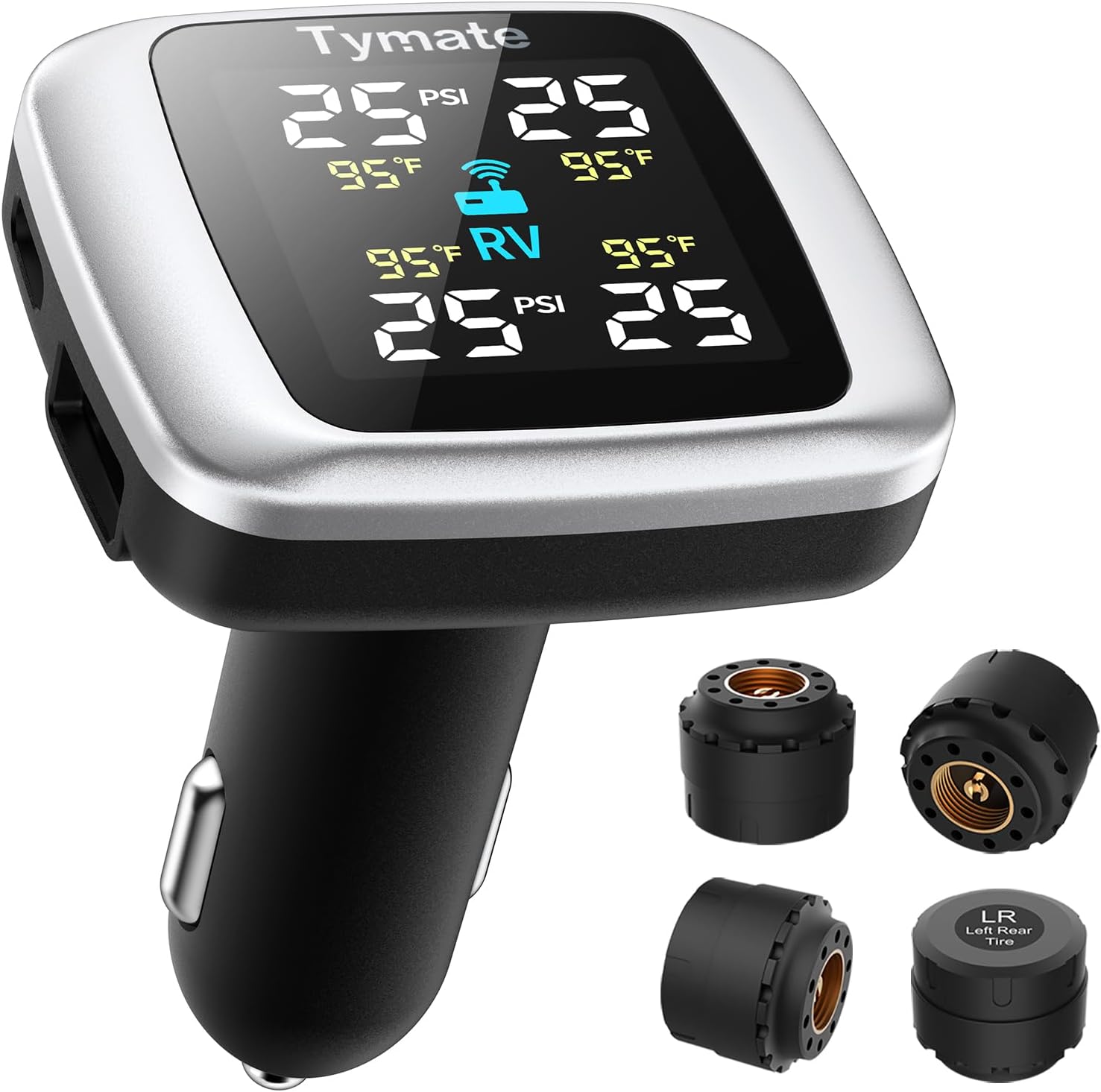
Tymate TM7 is a wireless tire pressure monitoring system that delivers real-time pressure and temperature readings for safer driving. It includes four external sensors, a bright color LCD display with adjustable backlight, and six alarm modes for high/low pressure, fast leakage, high temperature, and sensor signal or battery issues. The system covers a wide 0–144 PSI range and plugs into your vehicle’s cigarette lighter socket for quick DIY setup.

Accurately measure tire tread depth with a calibrated gauge marked from 0 to 1 inch in 1/32 inch increments. The color-coded bar helps you quickly identify tread condition ranges, supporting safe driving for trucks, motorcycles, automobiles, and passenger vehicles.

This tire repair kit provides fast emergency puncture repair without removing the tire from the rim, helping you get back on the road quickly. Its screw plug system is designed for punctures in both tread and sidewall and includes a complete patch plug tool set with essential accessories. A portable storage bag makes it easy to carry for cars, trucks, SUVs, motorcycles, and heavy-duty applications.

Related Articles

Best SUV Tires 2026: Top Picks for Comfort, Traction, and Long Tread Life
You rely on your SUV for daily driving, towing, and weekend trips, so tire choice directly affects your safety, comfort, and long‑term costs. This…
Read More
Best Tires for 2500HD Duramax 2026: Heavy-Duty Tires for Towing and Work Trucks
You depend on your 2500HD Duramax to tow heavy loads and handle demanding worksite conditions, so tire choice is not optional. The right tires…
Read More
Best Mastercraft Tires 2026: Reliable Tire Picks for Trucks, SUVs, and Daily Drivers
You need tires that match how you drive, where you live, and what your vehicle carries. This guide highlights Mastercraft models that stand out…
Read More