
Tire Maintenance Schedule for Toyota RAV4: A Checklist

Keeping your Toyota RAV4 tires in good shape is simple when you follow a repeatable schedule. Check cold tire pressure and visible damage every month, rotate the tires at Toyota’s regular service interval, measure tread depth, and act quickly when you notice vibration, pulling, bulges, cracking, or uneven wear. Use the tire pressure label on your driver’s door jamb and your exact model-year maintenance guide as the final authority.
Quick Answer
For most RAV4 owners, the core tire schedule is: check cold tire pressure and tread monthly, rotate tires about every 5,000 miles or six months, inspect for damage at every service, balance when vibration appears or tires are installed, and replace tires at 2/32 inch tread or sooner if damaged, aged, or unsafe.
Key Takeaways
- Check all tires, including the spare if equipped, at least monthly when the tires are cold.
- Use the PSI shown on the Tire and Loading Information Label, not the maximum PSI printed on the tire sidewall.
- Rotate RAV4 tires at the regular Toyota service interval, commonly every 5,000 miles or six months.
- Replace tires when tread reaches 2/32 inch, when treadwear indicators show, or when you find bulges, cracks, cords, or repeated pressure loss.
- Have alignment, suspension, and balancing checked when the RAV4 pulls, vibrates, or shows uneven tread wear.
At a Glance
| Time Required | 5–10 minutes for a monthly pressure and visual check; 30–60 minutes for tire rotation at home if you have proper tools and experience. |
| Difficulty | Easy for pressure, tread, and visual checks; moderate for rotation; professional help recommended for alignment, balancing, suspension, and tire mounting. |
| Tools Needed | Tire pressure gauge, air compressor, tread-depth gauge or penny, flashlight, valve caps, service log, and proper lifting tools if rotating tires. |
| Cost | Monthly checks are usually free after buying a gauge. Rotation, balancing, alignment, and tire replacement costs vary by shop, tire size, and location. |
Quick Tire Care Checklist for RAV4 Owners
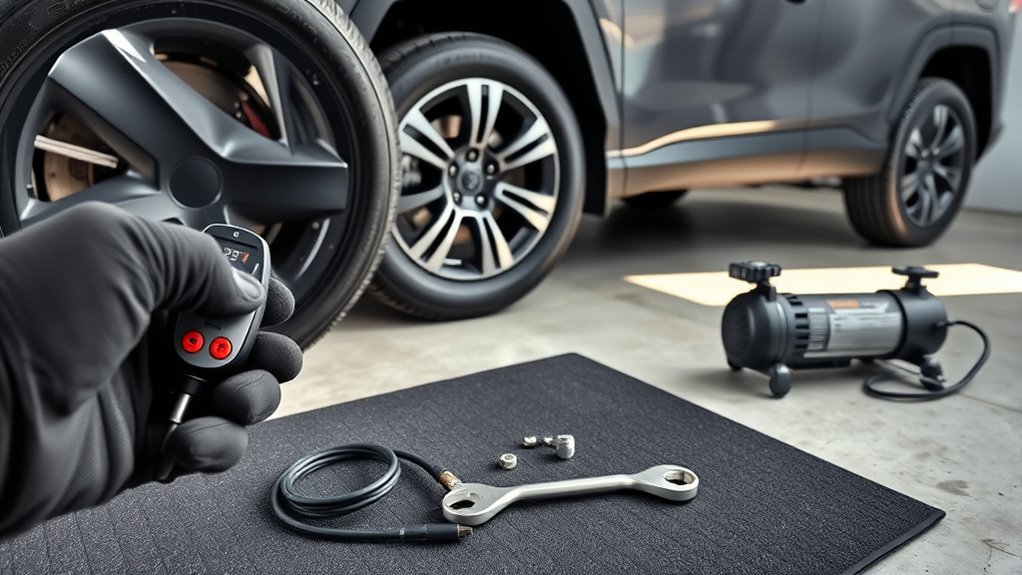
Use this checklist to keep your RAV4 tires safe, even, and efficient:
- Monthly: Check cold tire pressure, inspect tread and sidewalls, look for nails or cuts, and confirm valve caps are installed.
- Every 5,000 miles or six months: Rotate tires according to your owner’s manual and inspect for damage or uneven wear.
- At every rotation: Recheck tire pressure after the tires are moved and initialize or update the tire pressure warning system if your model requires it.
- When vibration appears: Have the wheels balanced and inspect for bent wheels, damaged tires, or suspension wear.
- When the RAV4 pulls or tread wears unevenly: Have alignment and suspension checked by a qualified technician.
- When tread is low or tires are damaged: Replace tires before they become unsafe. Do not keep driving on tires with exposed cords, bulges, deep cuts, or repeated air loss.
Warning: Never crawl under a vehicle supported only by a jack. If you rotate tires at home, use the correct jack points, wheel chocks, jack stands, and torque specifications from your owner’s manual. If you are not comfortable lifting the vehicle, have a shop rotate the tires.
[Products Worth Considering]

The JACO FlowPro Tire Inflator measures, inflates, and airs down tires up to 100 PSI with battery-free operation and ±2% accuracy after calibration. It features a glowing pressure dial for night visibility, a heavy-duty steel build with a hybrid hose, and a precision push-to-inflate thumb trigger. The patented Lightning Air Chuck locks on for a secure seal, and the kit includes quick-connect hardware for easy inline use with your air compressor.

This portable cordless tire inflator delivers up to 160 PSI with fast 17 L/min airflow to help you quickly top up tires and get back on the road. It features dual power mode, running on a 21V rechargeable battery or a 12V DC adapter for convenient roadside use. An automatic shut-off with digital pressure gauge helps prevent overinflation, and a built-in LED light improves visibility in low-light conditions.
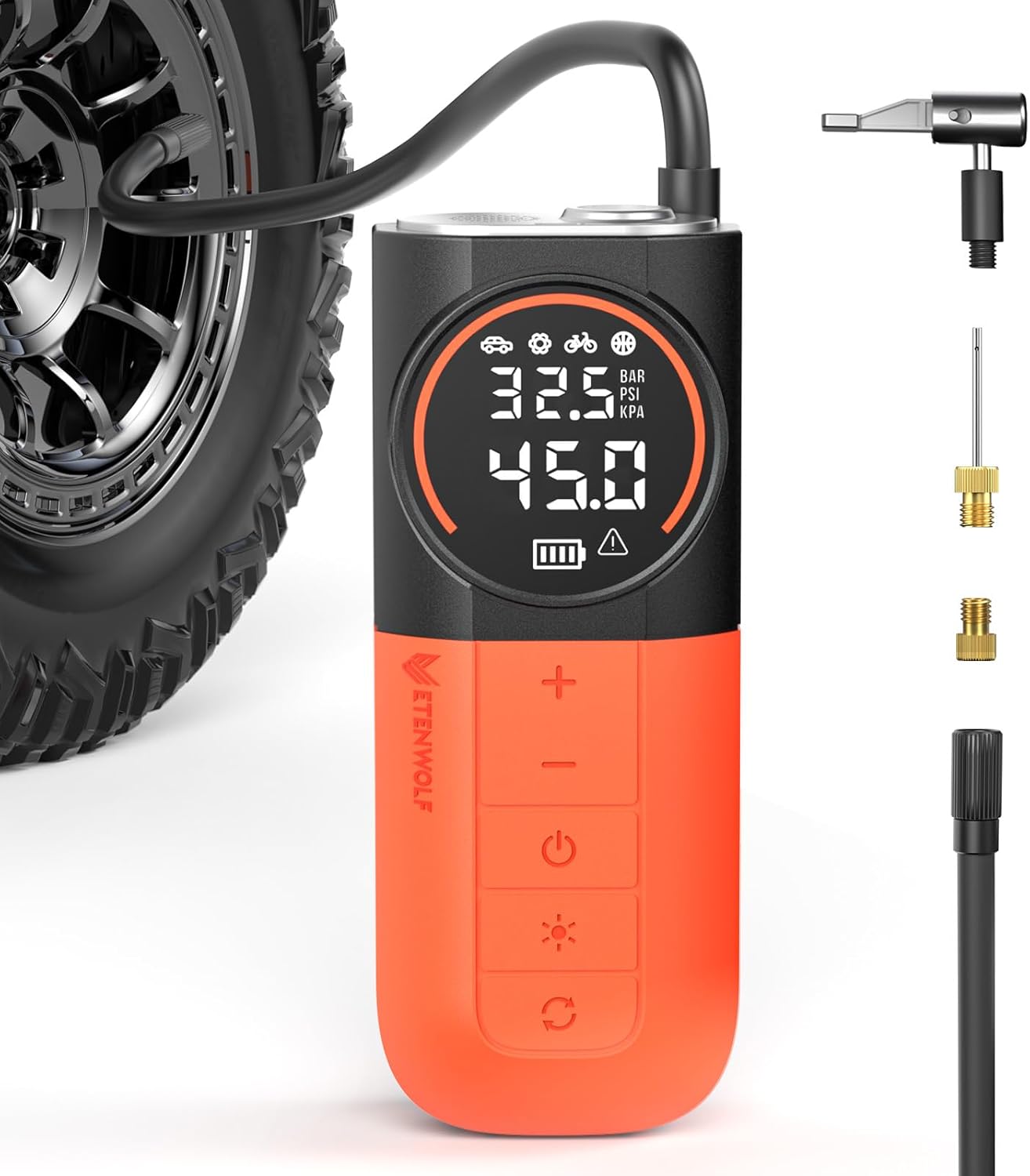
The ETENWOLF S1 cordless tire inflator delivers ultra-fast inflation with up to 160 PSI and a 20 L/min airflow for quicker tire top-offs. Its 5200mAh battery and cooling system support inflating many tires and sports balls on a single charge, while the digital pressure gauge and multi-unit display help you reach the right pressure accurately. With preset modes, pressure memory, an auto-stop feature, and an LED flashlight, it’s built for easy roadside and everyday use.
RAV4 Tire Maintenance Schedule by Interval
| Interval | What to Do | Why It Matters |
| Every month | Check cold tire pressure, tread depth, sidewalls, valve stems, and the spare tire if equipped. | Catches slow leaks, punctures, cracks, bulges, and low tread before they become roadside problems. |
| Every 5,000 miles or six months | Rotate tires and inspect for damage and uneven wear, following the Toyota maintenance guide for your exact RAV4. | Helps equalize front-to-rear wear and supports predictable handling. |
| Every 10,000–30,000 miles | Track tread readings, look for feathering or cupping, and balance wheels if vibration appears. | Early wear patterns can point to alignment, balancing, suspension, or inflation issues. |
| Every 40,000–60,000 miles | Expect many tires to be nearing replacement depending on tire type, road conditions, driving style, alignment, and maintenance history. | Mileage alone does not decide replacement; tread, age, condition, and performance do. |
| Any time | Stop and inspect if the TPMS light comes on, the steering wheel shakes, the vehicle pulls, or you hit a pothole or curb. | Pressure loss, impact damage, and alignment changes can happen between scheduled services. |
Why Follow a Tire Maintenance Schedule
A tire schedule protects three things: safety, tire life, and fuel economy. Proper pressure keeps the tire’s contact patch working as designed. Rotation spreads wear more evenly across the front and rear axles. Tread checks help you replace tires before wet-road grip becomes dangerously weak.
The National Highway Traffic Safety Administration recommends monthly tire-pressure checks and tread inspections, and it notes that TPMS is not a substitute for regular tire maintenance. The U.S. Department of Energy and EPA’s FuelEconomy.gov also reports that proper tire inflation can improve gas mileage by 0.6% on average and up to 3% in some cases.
Proper tire pressure is one of the easiest maintenance wins: it supports safer handling, longer tire life, and better fuel economy with only a few minutes of monthly work.
Monthly RAV4 Tire Checks: Pressure, Visuals, and Valve Care
Start with cold tires. A tire is “cold” when the RAV4 has been parked for at least three hours or driven only a short distance at low speed. Use a quality pressure gauge and compare each tire with the PSI on the Tire and Loading Information Label on the driver’s door jamb, not the maximum PSI molded into the tire sidewall.
- Check pressure: Remove the valve cap, press the gauge squarely onto the valve stem, read the pressure, and add or release air as needed.
- Inspect the tread: Look for low tread, nails, stones, cuts, missing chunks, and uneven wear from inner edge to outer edge.
- Inspect sidewalls: Replace or professionally inspect any tire with bulges, deep cracks, exposed cords, or sidewall cuts.
- Check valve stems and caps: Replace missing caps and look for cracking or leaks around the stem.
- Check the spare: If your RAV4 has a spare tire, check its pressure and condition too. A flat spare will not help during an emergency.
Pro Tip: Check tire pressure in the morning before driving. Temperature swings can change pressure, so recheck during the first cold snap of fall and during major seasonal changes.
Every 5,000 Miles: Rotation, Inflation Adjustment, and Quick Tread Check
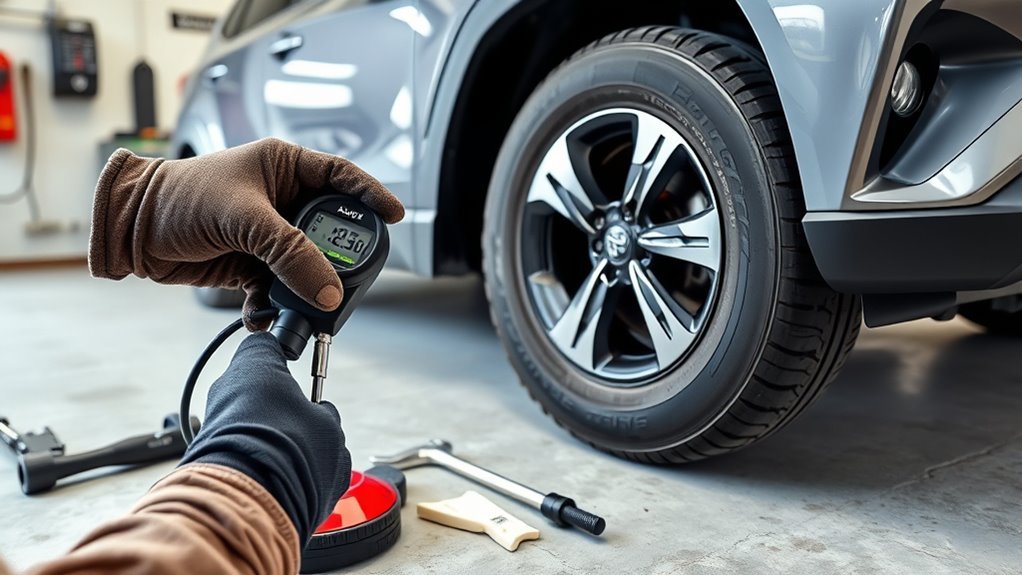
Toyota maintenance guides commonly use a 5,000-mile or six-month service rhythm, and RAV4 maintenance charts include recurring tire rotation. At this service, rotate the tires according to the pattern in your owner’s manual, check each tire for damage, and reset or initialize the tire pressure warning system if your model requires it after rotation.
Tire Rotation Pattern
The correct rotation pattern depends on tire type, tire size, drivetrain, and whether your tires are directional:
- Non-directional tires with the same size front and rear: Many RAV4s can use a front-to-rear and cross pattern, but follow the diagram in your owner’s manual.
- Directional tires: Keep each tire on the same side of the vehicle and move front-to-rear only unless the tires are dismounted and remounted.
- Different front and rear sizes: Some vehicles should not rotate front-to-rear. Check the owner’s manual and tire placard.
- Spare tire: Do not include a compact temporary spare in the normal rotation. If your RAV4 has a full-size matching spare, follow Toyota’s instructions for that setup.
Tire Pressure Targets
Your target PSI is vehicle-specific. It may vary by model year, trim, tire size, load, and market. Find the correct cold PSI on the driver-side Tire and Loading Information Label and confirm it in the Toyota owner’s manual for your exact RAV4.
After rotation, check pressure again. A tire moved from front to rear may still need adjustment, especially if your RAV4 has different front and rear PSI recommendations.
Quick Tread Inspection
Use a tread-depth gauge for the most accurate reading. Measure several grooves across each tire and record the lowest reading. If you do not have a gauge, use the penny test: place a penny into the tread with Lincoln’s head upside down. If you can see the top of Lincoln’s head, the tire is at or near the 2/32-inch replacement threshold.
- Replace at 2/32 inch: This is the common minimum safety threshold, not a performance target.
- Consider replacing earlier for wet or winter driving: Wet-road and snow traction can drop before the legal minimum.
- Watch for treadwear indicators: When the tread is level with the indicator bars, replace the tire.
- Replace immediately for serious damage: Bulges, exposed cords, deep cuts, or air loss are not “wait until next service” issues.
TPMS After Rotation and Pressure Changes
The tire pressure warning light is helpful, but it does not replace a gauge. If the light comes on, check all tires as soon as it is safe. If the light flashes for about a minute and then stays on, the TPMS may have a system fault and should be inspected.
Some RAV4 models require the tire pressure warning system to be initialized or updated after tire rotation, tire replacement, wheel replacement, or pressure adjustment. The exact menu steps vary by model year and display type, so follow your Toyota owner’s manual.
Note: Do not reset TPMS to hide a warning. First set all tires to the correct cold PSI, inspect for leaks or damage, then initialize the system only if your manual instructs you to do so.
[Products Worth Considering]

The Fanttik X10 Pro is a cordless portable tire inflator that reaches up to 150 PSI and can inflate an R15 tire in about 35 seconds for quick roadside or home top-ups. With AccuInFlate auto-stop and smart start/stop controls, it helps maintain accurate pressure and frees your hands once the target is reached. A high-visibility digital display and preset modes make it easy to set and monitor inflation for cars, motorcycles, bikes, and balls.

This tire repair patch tool kit helps you quickly seal small punctures using upgraded mushroom plugs and a built-in roller system that presses for even penetration. The tungsten buffing wheel and HSS twist drill bits prepare the damaged surface for stronger adhesion, while the crown-angle friendly plugs are designed to keep water and debris out. Ideal for puncture repairs on many vehicle types, from cars and trucks to bikes and scooters.
10,000–30,000 Miles: Tread Depth, Alignment, and Wheel Balancing
Between 10,000 and 30,000 miles, your service log becomes useful. Compare tread readings from each rotation. If one tire or one edge is wearing faster, the issue is usually pressure, alignment, suspension, driving conditions, or lack of rotation.
Wheel balancing is not just a calendar item. Have wheels balanced when new tires are installed, after a tire is repaired or remounted, or when you feel vibration through the steering wheel, seat, or floor. Have alignment checked if the RAV4 pulls to one side, the steering wheel is off-center, the vehicle recently hit a curb or pothole, or tread wear is uneven.
Common Tire Wear Patterns and What They Mean
| Wear Pattern | Possible Cause | What to Do |
| Both outer edges worn | Underinflation or frequent hard cornering | Set cold PSI correctly and inspect for leaks. |
| Center tread worn faster | Overinflation or incorrect pressure for load | Reset pressure to the door-jamb placard value. |
| One edge worn | Alignment or suspension issue | Schedule alignment and suspension inspection. |
| Cupping or scalloping | Worn shocks/struts, imbalance, or suspension looseness | Have tires, balance, suspension, and wheel bearings checked. |
| Feathering | Toe alignment problem | Get an alignment before the wear pattern ruins the tires. |
40,000–60,000 Miles: When to Replace Tires and Check Suspension
Many RAV4 tires may approach replacement somewhere in this mileage range, but there is no single mileage rule. Tire life depends on tire model, treadwear rating, road surface, climate, load, alignment, inflation, rotation history, and driving style.
Replace tires when any of these conditions apply:
- Tread is at or below 2/32 inch.
- Treadwear indicators are level with the tread.
- The tire has a sidewall bulge, exposed cords, deep cracks, or a puncture that cannot be safely repaired.
- The tire repeatedly loses pressure even after valve and bead inspection.
- The tire is old enough that the tire manufacturer or vehicle manufacturer recommends replacement, even if tread remains.
- Wet, winter, or off-road traction no longer feels safe for your driving conditions.
Suspension matters because worn shocks, struts, ball joints, bushings, or steering components can destroy new tires quickly. Before installing a new set, ask the shop to inspect alignment and suspension if your old tires show uneven wear.
Seasonal Tires and Off-Season Storage
If you use dedicated winter tires, summer tires, or all-terrain tires, add a seasonal inspection when you swap sets. Confirm that all four tires match in size, load rating, speed rating, and general wear level unless your owner’s manual states otherwise.
Store off-season tires in a clean, cool, dry, dark place away from direct sunlight, oil, grease, water, electric motors, battery chargers, welding equipment, and generators. The Tire Industry Association recommends storage conditions that reduce exposure to moisture, damage, and ozone sources.
Frequently Asked Questions
How often should you change tires on a Toyota RAV4?
Change RAV4 tires when tread reaches 2/32 inch, when treadwear indicators show, when the tire has unsafe damage, or when age and performance make the tire unreliable. Many tires last tens of thousands of miles, but mileage alone should not decide replacement.
What is the RAV4 tire rotation schedule?
A practical schedule is every 5,000 miles or six months, matching Toyota’s regular maintenance rhythm for many RAV4 model years. Always confirm the interval and pattern in the maintenance guide and owner’s manual for your exact year, trim, drivetrain, and tire setup.
What is the RAV4 maintenance schedule?
Toyota maintenance guides commonly use 5,000-mile or six-month intervals. Tire-related tasks include rotation, pressure checks, tread checks, and damage inspection. Other maintenance items vary by model year, gas/hybrid/plug-in hybrid version, drivetrain, climate, and driving conditions.
What is the 90,000-mile service on a Toyota RAV4?
The 90,000-mile service depends on your RAV4’s model year and drivetrain. Tire care still includes rotation, pressure adjustment, tread inspection, and damage checks. Your maintenance guide may also list filters, oil service, brake inspections, transfer case or rear differential service, and other inspections where applicable.
Should I replace all four tires on an AWD RAV4?
For AWD models, matching tire size, type, and tread depth is important because uneven rolling diameter can stress drivetrain components. If one tire is damaged, ask a tire professional whether one, two, or all four tires should be replaced based on tread depth, tire model, and Toyota guidance.
Do I need an alignment every time I rotate tires?
No. Rotation and alignment are different services. Rotate tires on schedule. Get an alignment when the RAV4 pulls, the steering wheel is off-center, tire wear is uneven, or the vehicle has hit a curb, pothole, or road debris hard enough to affect handling.
Conclusion
A good RAV4 tire maintenance schedule is simple: check cold pressure and tread monthly, rotate tires at the regular Toyota service interval, watch for uneven wear, and replace tires based on tread depth, age, damage, and real-world performance. Keep a service log with PSI readings, tread measurements, rotation mileage, and alignment or balancing notes. That record helps you catch problems early, protect your tire investment, and keep your RAV4 predictable on the road.
Sources
- Toyota 2025 RAV4 Warranty & Maintenance Guide — RAV4 maintenance intervals, tire rotation, and inspection guidance.
- Toyota 2025 RAV4 Hybrid Owner’s Manual: Tire Inflation Pressure — tire pressure checking and adjustment guidance.
- NHTSA TireWise — tire pressure, tread depth, TPMS, tire aging, rotation, balancing, and alignment safety guidance.
- FuelEconomy.gov: Keeping Your Vehicle in Shape — fuel economy impact of proper tire inflation.
- Tire Industry Association: Tire Storage Guidance — safe off-season tire storage conditions.

Related Articles

Toyota RAV4 TPMS Reset: Easy Steps That Work
Unlock the secrets to resetting your Toyota RAV4's TPMS effortlessly—discover the essential steps to ensure your tires are always safe.
Read More
Toyota RAV4 Tire Rotation: DIY Steps & Pattern
Take control of your Toyota RAV4's tire maintenance with our simple DIY rotation guide—discover the best steps for optimal performance and longevity!
Read More
Mix Tire Brands on a Toyota RAV4? Expert Guide
Keeping your RAV4 safe? Learn when mixing tire brands risks traction, ABS/TCS and AWD damage — and what exact matches you must insist on.
Read More