
How to Apply Tire Shine: Step-by-Step Guide for a Perfect Finish
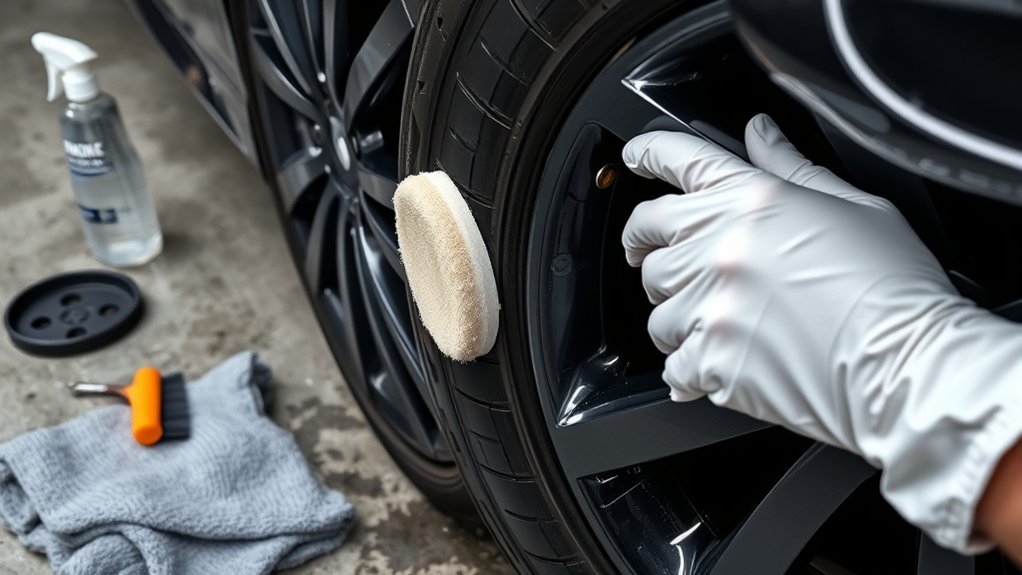
Tire shine can give clean sidewalls a dark satin finish or a high-gloss look, but the result depends more on preparation and restraint than on using a large amount of product. Clean the rubber, let it dry, apply the dressing only to the sidewall, remove excess when the label calls for it, and wait for the product-specific dry or cure time before driving.
Quick Answer
To apply tire shine correctly, clean and dry the tire, put a small amount on a foam applicator, and spread a thin coat across the outer sidewall only. Keep it off the tread and brakes, wipe away excess or overspray, and follow the product label for drying and curing before driving.
Key Takeaways
- Start with cool, clean, completely dry sidewalls so the dressing spreads evenly.
- Apply tire shine to the outer sidewall only, never to the tread, brake parts, pedals, floors, or motorcycle and bicycle tires unless the label explicitly permits it.
- A foam applicator usually gives better control than spraying directly onto the tire.
- Use a thin coat, wipe off excess when directed, and clean overspray from wheels and paint immediately.
- Drying time varies by formula, so use the label rather than a universal 5–10-minute rule.
At a Glance
| Time Required | About 20–40 minutes for cleaning and application, plus the product’s stated drying or curing time |
| Difficulty | Beginner |
| Tools Needed | Tire-safe cleaner, tire brush, water, microfiber towels, foam applicator, and protective gloves recommended by the label |
| Cost | Low; usually the cost of the cleaner and dressing if you already own basic wash tools |
Safety Before Applying Tire Shine
Park on a level surface, set the parking brake, and work on cool tires in the shade or in a well-ventilated area. Read the product label and safety data instructions before use. Some sprays can make pavement slippery or stain concrete, so place a towel or mat under the tire and wash spills with detergent promptly.
Warning: Apply dressing only to the tire’s outer sidewall. Do not put it on the tread, brake rotors, drums, pads, pedals, floors, or any surface where added slipperiness could reduce control. Meguiar’s specifically warns against contact with tire tread and brake components.
Inspect the sidewall before you clean it. Tire shine is cosmetic and cannot repair cracking, cuts, exposed cords, bubbles, or bulges. Stop and have the tire inspected by a qualified tire professional if you see damage.
[Products Worth Considering]

Adam’s Pro Tire Hex Grip applicators are molded foam sponges designed for precise, even tire dressing application. The ergonomic grip helps you spread product without overapplying, reducing sling that can splash onto paint and helping keep your hands clean during wheel and trim detailing. They’re durable, washable, and reusable for repeated detailing sessions.

Cristal Products Untouchable Tire Shine Spray delivers a deep, wet-look gloss that enhances your vehicle’s tires. It’s quick-drying and spreads smoothly for consistent, streak-free coverage, while forming a protective coating against UV rays, road grime, and weather. Suitable for all tire types, it helps restore dull, faded tires to a showroom-quality finish.

Blackline Blackout is a water-based trim and tire dressing that restores rubber, vinyl, and plastic with a rich satin, blackout look. Its no-sling formula dries quickly and helps prevent messy transfer onto paint. The coating repels water and offers UV protection to help prevent fading, cracking, and discoloration for a clean, long-lasting finish.
Choose the Right Tire Shine Product
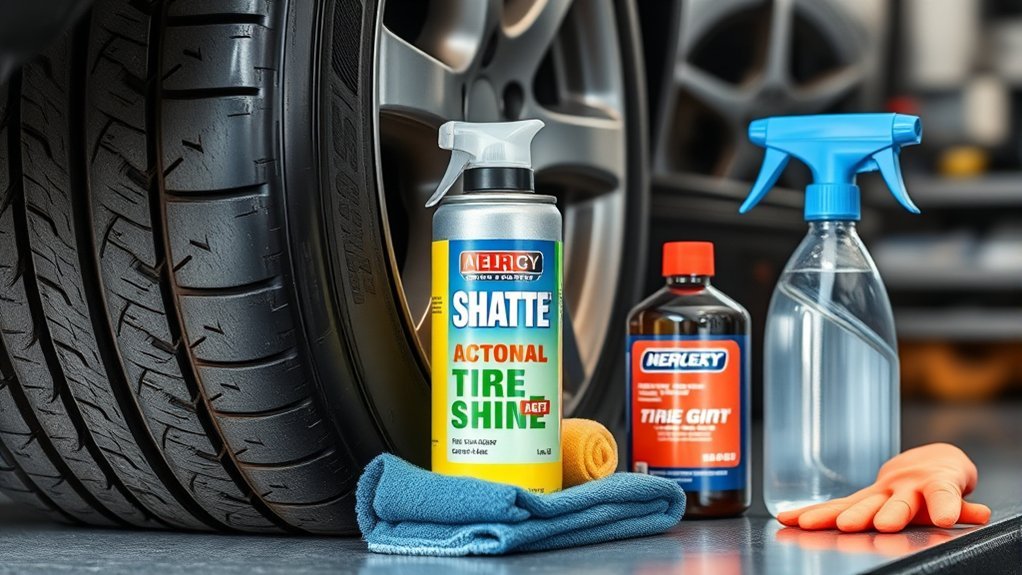
Choose a dressing that matches the finish you want and the time you can allow it to dry. Water-based products are often easier to spread and clean up, while gels and coatings may offer a darker or more durable finish. Formula alone does not guarantee gloss, safety, or longevity, so compare the label’s approved surfaces, application method, drying time, and warnings.
| Format | Best For | Main Consideration |
|---|---|---|
| Spray | Fast coverage | More overspray risk; spraying onto an applicator improves control |
| Gel or lotion | Controlled hand application | Easy to overapply; spread thinly and remove excess as directed |
| Foam | Convenient application | Some formulas can be used on wet tires, while others require dry rubber |
| Ceramic or SiO2 coating | Longer-lasting finish | May require a much longer cure before driving |
Check whether the product is approved for whitewalls, raised white lettering, specialty rubber, or previously coated tires. Test a small area when compatibility is uncertain. Selecting a dressing is separate from choosing premium all-season tires; shine changes appearance, not the tire’s load rating, grip, or construction.
Clean Tires Before Applying Shine
Old dressing, road film, brake dust, and browning can make a new coat look patchy. Michelin advises using non-petroleum tire-cleaning products or plain soap and water, while Mothers recommends applying dressing only after the tire has been cleaned and dried. Use a cleaner that is approved for both your tire and wheel finish.
Proper tire maintenance also includes pressure checks, tread inspection, rotation, and alignment. Tire shine does not replace any of those tasks.
Remove Dirt and Grime
- Rinse loose dirt from the tire and wheel.
- Apply a tire-safe cleaner according to its dwell-time directions. Do not let the cleaner dry on the surface.
- Scrub the sidewall with a dedicated firm, non-abrasive tire brush.
- Rinse the brush separately so you do not spread dirty residue back onto the rubber.
- Rinse the tire thoroughly. Repeat only if old dressing or brown residue remains.
Do not assume stronger chemicals are better. Harsh petroleum-based cleaners can be unsuitable for tire rubber, and acidic or alkaline wheel cleaners may not be approved for every wheel finish. Follow both the tire-cleaner and wheel-cleaner labels.
Dry Tires Completely
Use a clean microfiber towel to dry the sidewall, wheel face, and the edges where water collects. Then allow the tire to air-dry in the shade. Most dressings perform best on dry rubber, although a few foam products are specifically labeled for wet or dry use. The package directions take priority.
Pro Tip: If the cleaning foam still turns brown immediately, scrub and rinse once more before dressing. Applying over old product buildup is a common cause of uneven color and sling.
Pick the Best Tire Shine Applicator
A curved foam tire applicator gives you good control around lettering and raised sidewall details. A soft, lint-free microfiber towel can also work, but it may absorb more product. Brushes are useful on aggressive sidewall textures, provided the bristles are soft enough not to scratch nearby wheel finishes.
Apply the dressing to the applicator first when you want the most control over overspray, waste, and sidewall coverage.
- Use a dedicated applicator that is clean and dry.
- Load it with a small amount of product rather than soaking it.
- Work around the sidewall in sections, including raised lettering.
- Wash or discard the applicator according to the product instructions.
The applicator affects neatness, not vehicle noise. Low-noise tire performance comes from tire design, construction, tread pattern, road surface, and inflation.
Apply Tire Shine in Thin, Even Coats
- Shake or mix the product if the label instructs you to do so.
- Apply a small amount to a foam pad or towel. For a direct-spray product, hold the nozzle at the distance stated on the label and use a controlled sweeping motion.
- Spread one thin coat over the outer sidewall. Keep the product away from the tread shoulder and wheel-brake components.
- Check for missed areas around raised lettering and textured rubber, but do not flood grooves.
- Remove drips and overspray from wheels, paint, concrete, or asphalt immediately as directed by the manufacturer.
- Wipe off unabsorbed product with a clean microfiber when the label calls for buffing or excess removal.
A second coat can deepen the finish, but apply it only after the first coat has set for the stated interval. More product does not automatically last longer and can increase sling. Tire shine also does not extend tread life; inflation, alignment, rotation, driving conditions, and tire design matter far more.
Let Tire Shine Dry Fully
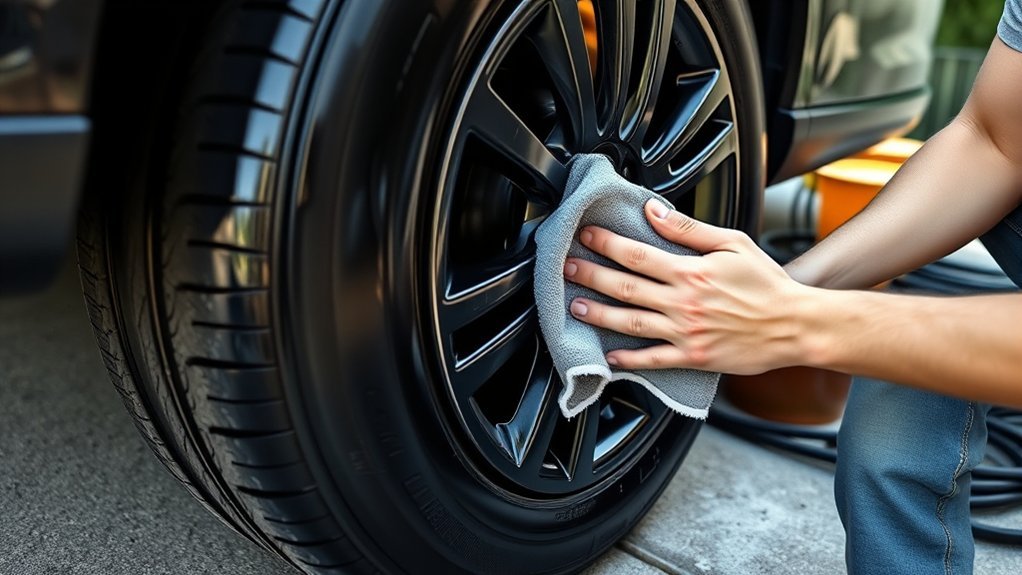
Do not use one drying time for every dressing. Some conventional sprays dry in a few minutes, some gels need 10–15 minutes, and some ceramic coatings call for an hour before driving plus a longer full cure. Temperature, humidity, coat thickness, and airflow can also change the result. Follow the package directions and wait longer when the sidewall still looks wet or feels tacky.
Why Dry Time Matters
Drying allows the coating to level or bond as designed. Driving while excess product remains wet can throw droplets onto paint, wheels, and wheel wells. A dry-to-the-touch finish is useful evidence, but it does not override a longer manufacturer-specified cure time.
Cheap or expensive tires still require the same safety rule. A list of RAV4 tire options may help with shopping, but the dressing label determines when the vehicle can be driven.
Avoid Tire Sling
| Cause | Correction |
|---|---|
| Dirty or previously dressed rubber | Clean and rinse until residue is removed |
| Too much product | Apply a thinner coat and wipe away excess when permitted |
| Driving before the stated dry time | Wait for the full label-specified interval |
| Overspray near tread or wheel | Spray onto an applicator or shield surrounding surfaces |
Layer Thin Coats
For more gloss, apply a second light coat only when the first coat is ready according to the label. Avoid repeatedly layering over dusty or greasy residue. If the finish has already attracted dirt, wash the sidewall before adding more product.
Prevent Tire Sling and Overspray
Spraying onto an applicator is the simplest way to protect paint, wheel faces, brake parts, and pavement. If the product is designed for direct spraying, use a close, controlled sweep and stop before the sidewall becomes saturated. Keep a clean microfiber towel nearby so you can remove mist or drips immediately.
Never use tire dressing to improve traction. Keep it off the tread because wet grip depends on the tire’s compound and tread design, not sidewall gloss. For actual tire selection, consult vehicle-fitment information and resources about traction in wet conditions.
Note: If spray reaches a brake rotor or pad, do not simply drive and hope it burns off. Follow the vehicle and product manufacturer’s cleaning guidance or have the brake system inspected before driving.
[Products Worth Considering]

This oesee 8-piece wheel care kit helps you clean, scrub, and dry wheels safely with purpose-built brushes and towels. The scratch-free microfiber wheel brush lifts brake dust and grime, while the stiff pro-grip tire brush removes tire browning and embedded dirt. A twist loop microfiber drying towel and an applicator help achieve a streak-free finish and cleaner, more even product application.

This wheel brush kit delivers pro-level cleaning at home, lifting dirt, grime, and brake dust to help restore wheel appearance. It includes multiple brush styles and applicator pads for tackling different wheel surfaces, with gentle, metal-free bristles designed to reduce scratching risk. The flat and double-ended brushes are built for comfort and reach, making wheel care easier for cars, trucks, and RVs.
Troubleshoot Common Tire Shine Problems
| Problem | Likely Cause | Fix |
|---|---|---|
| Patchy finish | Moisture, old dressing, or uneven application | Clean, dry, and reapply one thin coat |
| Greasy surface | Too much product or incomplete cure | Remove excess if allowed and extend drying time |
| Sling on paint | Overapplication or driving too soon | Clean the paint promptly, reduce the coat, and follow the label time |
| Brown residue returns | Contamination, old product, or normal antiozonant migration | Use a tire-approved cleaner and avoid aggressive repeated stripping |
| White spots or streaks | Product incompatibility, water, or dried residue | Clean a test area and confirm compatibility before reapplying |
Maintain Tire Shine Between Washes
Rinse road salt, mud, and chemical residue from tires as part of normal washing. Avoid stacking fresh dressing over dust. A gentle wash preserves a cleaner finish and gives you a chance to inspect pressure, tread, and sidewall condition.
UV claims vary by product, and tire dressing should not be treated as structural protection against cracking. Parking out of direct sun can reduce cosmetic fading, but tire age, storage, inflation, heat, and service conditions still matter. A UTQG rating concerns treadwear, traction, and temperature grading for applicable passenger tires; it does not measure how long tire shine will last.
Know When to Reapply Tire Shine
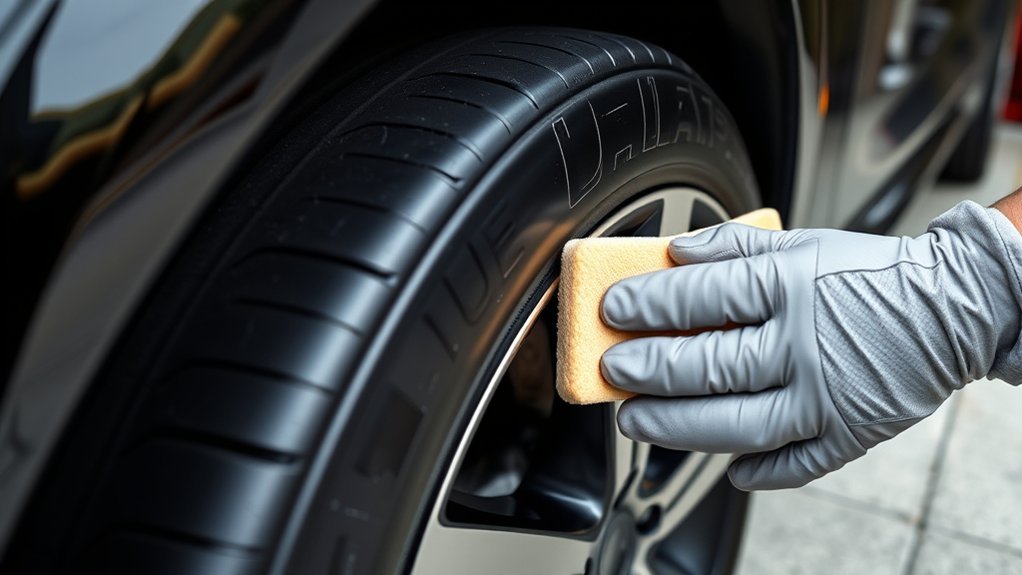
Reapply when the finish has faded and the sidewall is clean, not on an automatic weekly schedule. Rain, car washes, mileage, storage, road salt, off-road use, and the product formula all affect durability. Some dressings may last days, while coatings can last longer under favorable conditions.
| What You See | What to Do |
|---|---|
| Even finish with light dust | Wash gently; do not automatically add more dressing |
| Dull but clean sidewall | Apply one light maintenance coat if desired |
| Greasy buildup or recurring sling | Clean off the old residue before reapplying |
| Cracks, cuts, bulges, or exposed material | Do not hide the damage; seek professional inspection |
Tire quality affects vehicle performance, but dressing does not. Use suitable seasonal tires, such as properly fitted winter tires, when conditions require them.
Frequently Asked Questions
Do you apply tire shine when tires are wet or dry?
Most tire dressings should be applied to clean, dry sidewalls because water can dilute the product and cause uneven coverage. Some tire foams are specifically labeled for wet or dry tires, so always follow the directions for the exact product you are using.
What is the “3 tire rule”?
“3 tire rule” is not a recognized tire-industry or detailing standard for applying shine. The reliable rule is simpler: dress the outer sidewall only, keep the product off all four tire treads and brake components, and follow the manufacturer’s label.
Can I apply tire shine with a rag?
Yes. Use a clean, soft, lint-free cloth and apply a small amount at a time. A curved foam applicator is often easier to control and wastes less product, but a microfiber cloth is acceptable when the product label allows hand application.
What do professional detailers use for tire shine?
Professionals use many types of water-based dressings, gels, sprays, and coatings. Their consistent advantage is technique: thorough cleaning, controlled application, thin coverage, excess removal when required, and enough drying time. No credible evidence supports a universal claim that most professionals use one formula type.
Does tire shine damage tires?
A product designed for automotive tire sidewalls should be used only as directed. Avoid petroleum-based tire cleaners, unapproved solvents, excessive repeated stripping, and products that are not labeled for tire rubber. Stop using any product that causes discoloration, softening, or other unexpected changes.
Can I use car tire shine on motorcycle or bicycle tires?
Do not use it unless the product manufacturer specifically approves that application. Many tire-shine labels prohibit use on motorcycle and bicycle tires because overspray or migration onto the tread can create a serious slip risk.
Conclusion
The best tire-shine result comes from a clean sidewall, a compatible product, and a thin, controlled application. Keep the dressing off tread and brakes, wipe up drips and overspray, and follow the label’s exact dry or cure time. Reapply only after the finish fades and the rubber has been cleaned again.
Sources
- Michelin USA: Tire Care and Maintenance FAQs — supports avoiding petroleum-based tire cleaners.
- Mothers: Tire Care Guide — supports cleaning and drying tires before applying dressing and using controlled application.
- Meguiar’s Hybrid Ceramic Tire Shine Directions — supports clean, dry application, overspray removal, and keeping dressing off tread and brake parts.
- Armor All Extreme Shield Ceramic Tire Coating Directions — shows that drying and full-curing times can vary significantly by formula.
- Rust-Oleum Wipe New Blazing Wet Tire Shine Directions — supports thin, even application, excess removal, and avoiding driving while the product is extremely wet.

Related Articles
AWD Tire Rotation Pattern: How Often and How to Do It
W**ondering the right AWD tire rotation pattern and timing? Discover the simple method, ideal schedule, and mistakes to avoid before your tires wear unevenly.
Read More
Wheel Damage: Types, Repair Options, and Costs
Many wheel damages look minor, but some hide costly safety risks—learn which repairs are worth it and when replacement is smarter.
Read More
Tire Balancing Weights: Types, Cost, and Why You Need Them
Precisely chosen tire balancing weights reduce vibration and wear, but which type fits your wheels and what it really costs may surprise you.
Read More