
How Big Is a 275 60R20 Tire? Full Size Breakdown & Dimensions
A 275/60R20 tire is about 33 inches tall, 10.8 inches wide, and built for a 20-inch wheel. The size gives many trucks and SUVs a tall sidewall, useful ground clearance, and a smooth ride on rough pavement. Still, tire size alone does not confirm fitment. You also need to check wheel width, offset, load rating, speed rating, and the tire label on your vehicle.
Quick Answer
A 275/60R20 tire measures about 10.83 inches wide, has a 6.50-inch sidewall, and stands about 32.99 inches tall overall. Its circumference is about 103.6 inches, so it sits very close to a 33-inch tire, but actual dimensions can vary slightly by tire model.
Key Takeaways
- A 275/60R20 tire is about 32.99 inches tall and 10.83 inches wide.
- The 60 aspect ratio gives it a sidewall height of about 6.50 inches.
- It fits a 20-inch wheel, but you still need to verify approved rim width for the exact tire model.
- It is close to a 33-inch tire in height, but it is not the same as every 33-inch tire.
- Before you buy, check your vehicle’s door-jamb tire label, load rating, speed rating, wheel offset, and clearance.
What Does 275/60R20 Mean?
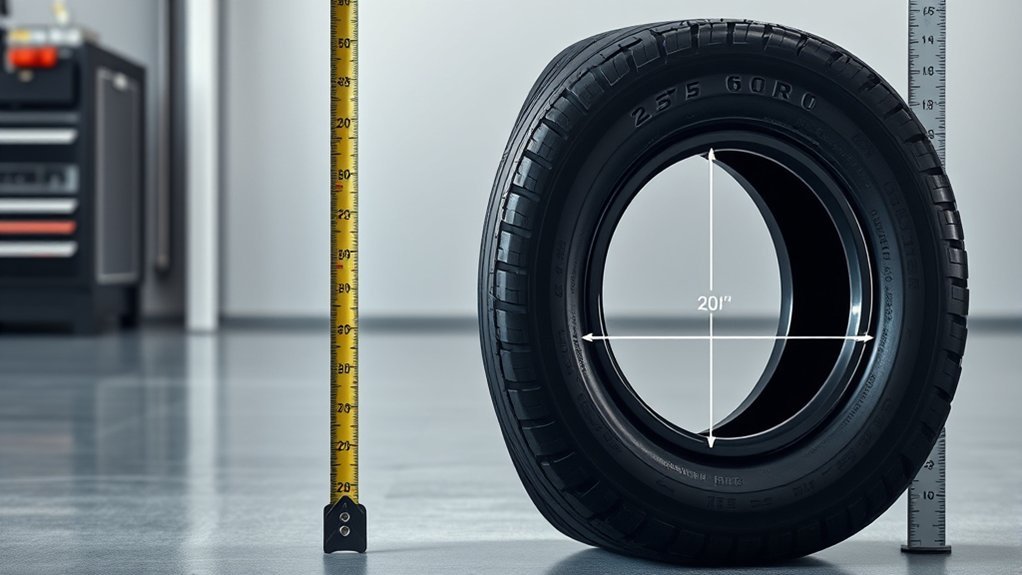
A 275/60R20 tire size breaks down into four main parts. The 275 is the tire’s nominal section width in millimeters. In inches, that equals about 10.83 inches. The 60 is the aspect ratio, which means the sidewall height equals 60% of the section width. That gives this tire a sidewall of about 165 mm, or 6.50 inches.
The R means the tire uses radial construction. Most modern passenger, SUV, and light-truck tires use radial construction because it supports stable handling, tread life, and ride comfort. The 20 means the tire mounts on a 20-inch wheel.
Put together, those numbers describe a tire that is roughly 33 inches tall. Use that as a sizing reference, but do not treat it as a complete fitment approval. The safest tire size for your vehicle is the one listed in your owner’s manual or on the Tire and Loading Information Label on the vehicle.
[Products Worth Considering]

RVMATE dual-axle RV tire covers help shield your tires from sunlight, snow, rust, and dirt to keep them in better condition in harsh weather. Made with heavy-duty waterproof, UV-resistant 420D Oxford fabric, they provide strong shading and help reduce wear. They install easily by placing the cover on the wheel and fastening the rope for a stable fit.

Keep RV, trailer, or truck dual-axle tires protected with waterproof, UV-resistant covers that help guard against sunlight, snow, rust, and dirt. The dual tire covers are easy to install with a rope/bungee fastener for a stable fit that won’t easily slip. Designed for 27–30 inch diameter wheels, they help maintain tire condition through harsh weather.

Camco Trailer Aid Plus tandem tire ramp lifts your trailer for quick, safe tire changes with ample clearance from its 5 1/2-inch lift. It helps you change a flat tire without unloading cargo, making roadside and routine maintenance more efficient. The heavy-duty, waterproof and rustproof polymer design supports up to 15,000 lb and is built for easy portability and storage.
How Big Is a 275/60R20 Tire?
A 275/60R20 tire is about 10.83 inches wide, 6.50 inches tall at the sidewall, and 32.99 inches tall overall. Its circumference is about 103.6 inches, and it turns roughly 611 revolutions per mile before accounting for load, tread design, inflation, and real-world rolling radius.
| 275/60R20 Spec | Approximate Value |
|---|---|
| Section width | 275 mm / 10.83 in |
| Aspect ratio | 60% |
| Sidewall height | 165 mm / 6.50 in |
| Wheel diameter | 20 in |
| Overall diameter | 32.99 in |
| Circumference | 103.6 in |
| Approximate revolutions per mile | 611 revs/mile |
Tire Size Breakdown
The tire-size formula is simple once you know the parts:
Sidewall height = 275 mm × 0.60 = 165 mm. Overall diameter = 20 in + 2 sidewalls = about 32.99 in.
Here is the inch conversion:
- Width: 275 ÷ 25.4 = 10.83 inches
- Sidewall: 165 ÷ 25.4 = 6.50 inches
- Diameter: 20 + 6.50 + 6.50 = 32.99 inches
- Circumference: 32.99 × 3.1416 = about 103.6 inches
Overall Diameter Details
At about 33 inches in overall diameter, a 275/60R20 tire sits in the tall-truck-tire category. That size can add ground clearance compared with a shorter tire, and the taller sidewall can help absorb broken pavement, gravel roads, and mild trail impacts.
Actual measured diameter can still vary by brand and tread pattern. A highway-terrain tire, all-terrain tire, and mud-terrain tire may all share the same printed size but measure slightly differently when mounted, inflated, and loaded. Always check the tire manufacturer’s specification sheet before comparing exact clearance.
Vehicle Fitment Impact
A 275/60R20 can fit many full-size trucks and large SUVs, but only when the wheel, suspension, trim package, and vehicle load requirements support it. You may see this size on some Ford F-150, Ram 1500, Chevrolet Silverado, GMC Sierra, Toyota Tundra, Nissan Armada, and similar full-size applications. That does not mean it fits every trim or every wheel.
Warning: Do not choose a 275/60R20 tire by size alone. Confirm the load index, speed rating, approved rim width, tire pressure, wheel offset, brake clearance, fender clearance, and suspension clearance before mounting it.
275/60R20 to Inches Conversion
A 275/60R20 tire converts to about 10.83 inches wide, with a 6.50-inch sidewall and an overall diameter of about 32.99 inches. The 275 is the nominal section width, not the exact tread width. Tread width changes by tire model, tread design, and manufacturer.
The conversion matters because tire diameter affects more than appearance. It can change speedometer reading, final-drive feel, braking response, clearance, and shift behavior. If your original tire is much smaller or larger, compare the percentage difference before switching.
Pro Tip: Keep a replacement tire within about 3% of the original tire’s overall diameter unless your vehicle, suspension, and gearing are set up for a larger change.
275/60R20 vs 33-Inch Tires
A 275/60R20 is very close to a 33-inch tire because its calculated diameter is 32.99 inches. In everyday conversation, you can call it a 33-inch-class tire. For fitment, however, you should compare the exact width, diameter, wheel width, and clearance.
Diameter Comparison
A 275/60R20 and a true 33-inch tire are almost the same height. The difference is only about 0.01 inch in calculated diameter, which is too small to matter in most real-world fitment checks. The larger issue is width.
For example, a 33×12.50R20 tire is close in height, but it is about 12.5 inches wide. A 275/60R20 is about 10.83 inches wide. That means a 33×12.50R20 may need more fender, control-arm, frame, and mud-flap clearance.
Fitment And Clearance
Because a 275/60R20 measures about 33 inches tall, it usually needs the same vertical clearance as many 33-inch tires. You still need to check lateral clearance at full steering lock and suspension compression. Rubbing may show up only when you turn sharply, hit a dip, tow, or load the vehicle.
Many 275/60R20 tires are listed for 7.5- to 9.5-inch wheels, but that is not a universal rule. The approved rim-width range belongs to the specific tire model. Check the tire maker’s specification sheet or a tire professional before mounting.
Closest Equivalent Tire Sizes
The closest equivalent tire sizes to 275/60R20 should stay near its 32.99-inch diameter. A small change can be fine, but a wider or taller tire can affect rubbing, steering feel, fuel economy, and speedometer accuracy.
| Size | Approx. Diameter | Difference vs 275/60R20 | Fitment Note |
|---|---|---|---|
| 33×12.50R20 | 33.00 in | About the same height | Much wider; check rubbing carefully |
| 285/60R20 | 33.46 in | About 1.4% taller | Slightly taller and wider |
| 295/55R20 | 32.78 in | About 0.7% shorter | Wider but close in height |
| 305/55R20 | 33.21 in | About 0.7% taller | Much wider; may need more wheel offset clearance |
| 275/55R20 | 31.91 in | About 3.3% shorter | Shorter sidewall; may affect speedometer |
| 275/65R20 | 34.07 in | About 3.3% taller | Taller; more likely to rub on stock setups |
Note: Tire calculators use nominal dimensions. A real tire’s mounted height can change with brand, tread depth, rim width, pressure, and vehicle load.
Which Vehicles Use 275/60R20 Tires?
You will usually find 275/60R20 tires on full-size pickups and large SUVs, especially models that use 20-inch wheels and need a mix of highway comfort, towing stability, and light off-road capability. Common examples can include certain trims of the Ford F-150, Ram 1500, Chevrolet Silverado, GMC Sierra, Toyota Tundra, Nissan Armada, Infiniti QX80, and similar vehicles.
That list is only a starting point. Vehicle fitment can change by year, trim, wheel package, suspension package, and market. Use the tire label on the driver-side door jamb or the owner’s manual as your first source. If your vehicle did not come with 275/60R20 tires, confirm the change with a qualified tire shop before buying.
[Products Worth Considering]

Secure your trailer or RV tires with a scissor-style wheel chock stabilizer that applies opposing force to help prevent wheel shift. It fits tight wheel gaps from 3.5 inches up to 12 inches and works for travel trailers, campers, fifth wheels, toy haulers, and heavy-duty trucks. The surface uses new electrophoretic technology to help prevent rust for reliable travel use.

Camco’s RV wheel chocks with an attached rope help keep your travel trailer securely in place for safer unhitching or parking. This 2-pack is compatible with wheels up to 26-inch diameter and features durable UV-resistant construction for reliable outdoor performance. The rope enables quick, safe removal so you can prepare for your next trip with less hassle.
Will 275/60R20 Fit Stock Wheels?
A 275/60R20 will fit only if your stock wheels are 20 inches in diameter and fall within the approved rim-width range for the exact tire model. Many tires in this size are commonly paired with truck and SUV wheels, but wheel diameter alone is not enough.
Check these items before mounting:
- Wheel diameter: The wheel must be 20 inches.
- Wheel width: Match the tire maker’s approved rim-width range.
- Wheel offset: Offset affects inner clearance and fender position.
- Load index: The tire must meet or exceed your vehicle’s required load capacity.
- Speed rating: The rating should match your vehicle and use.
- Clearance: Check fenders, liners, mud flaps, suspension parts, brake parts, and full steering lock.
- Pressure: Use the vehicle manufacturer’s recommended cold tire pressure, not the maximum pressure molded on the tire sidewall.
How 275/60R20 Affects Ride and Handling
A 275/60R20 tire can make a truck or SUV feel more comfortable on rough roads because the 6.5-inch sidewall gives the tire more room to absorb impacts. The near-33-inch diameter can also add ground clearance compared with shorter tire sizes.
| Change | Possible Effect |
|---|---|
| Taller diameter | More ground clearance, but possible gearing and speedometer changes |
| Taller sidewall | Smoother ride, but slightly softer steering response |
| Wider footprint than smaller sizes | Potential traction gain, but more rubbing risk |
| More tire mass on some models | Possible drop in fuel economy and slower acceleration |
On rough roads, the taller sidewall can be a plus. On fast corners, it may feel less sharp than a shorter-sidewall tire. Tread pattern matters too. A highway-terrain 275/60R20 usually feels quieter and smoother than an aggressive all-terrain tire in the same size.
Speedometer and Gearing Impact
Tire diameter affects how far your vehicle travels per wheel revolution. If you switch from a smaller tire to a 275/60R20, your speedometer may read slower than your actual road speed. If you switch from a larger tire to a 275/60R20, it may read faster.
Use this simple rule: if the new tire is 3% taller than your original tire, your actual speed may be about 3% faster than the speedometer shows. That difference can also affect transmission shift points, axle gearing feel, and driver-assistance systems on some vehicles.
How to Choose the Right 275/60R20 Tire
Choosing the right 275/60R20 tire starts with fitment and intended use. This size can work well for highway driving, towing, mixed-use truck driving, and light off-road travel, but the best tire depends on your vehicle and driving conditions.
- For highway comfort: Choose a highway-terrain or touring all-season tire with low road-noise ratings.
- For mixed driving: Choose an all-terrain tire with good wet braking, stable highway manners, and enough tread depth for gravel or dirt.
- For snow regions: Look for a tire with the Three-Peak Mountain Snowflake symbol, or use dedicated winter tires when conditions require them.
- For towing or hauling:

Related Articles
How Much Does Tire Retreading Cost?
Whether you’re pricing passenger or truck tires, tire retreading costs vary widely, and the real reasons behind the savings may surprise you.
Read More
Firestone Tire Installation Cost: Full Price Guide
Compare Firestone tire installation costs and discover what hidden fees could change your final bill.
Read More
Tire Rack vs Costco: Which Is Better for Tires?
Pick the better tire deal between Tire Rack and Costco before hidden differences change your choice.
Read More