
How to Inspect Tires for Damage on Your Toyota RAV4
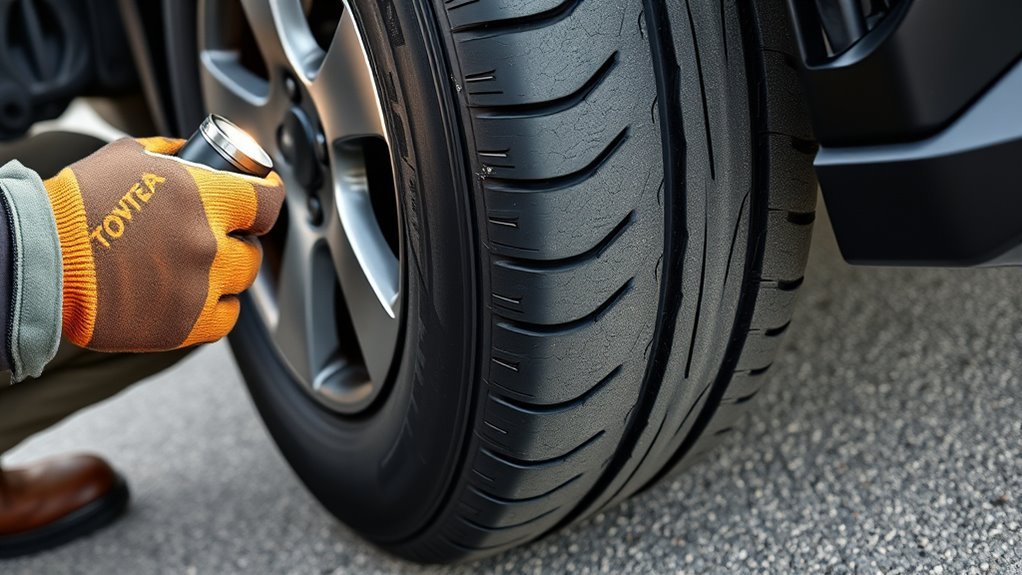
Inspecting your Toyota RAV4’s tires takes only a few minutes, but it can help you catch tread wear, sidewall damage, low pressure, bulges, and vibration-related problems before they become unsafe. Park on level ground, let the tires cool, and check each tire carefully, including the inside shoulder and spare tire if your RAV4 has one.
Quick Answer
To check Toyota RAV4 tires for damage, inspect tread depth, tread wear bars, sidewalls, air pressure, bulges, cuts, punctures, and uneven wear. Replace tires if tread reaches 2/32 inch, a sidewall is cracked or bulging, cords are visible, or the vehicle vibrates, pulls, or handles poorly.
Key Takeaways
- Check your RAV4’s tires at least monthly and before long trips, especially tread depth, sidewalls, pressure, and uneven wear.
- Use the penny test as a quick screen, but a tread depth gauge gives the most accurate reading.
- Bulges, blisters, exposed cords, deep sidewall cuts, and repeated air loss are safety issues that usually require tire replacement.
- Do not rely only on the Toyota TPMS warning light; use a tire pressure gauge when the tires are cold.
At a Glance
| Time Required | 5–10 minutes |
| Difficulty | Easy |
| Tools Needed | Tire pressure gauge, tread depth gauge or penny, flashlight, gloves |
| Cost | Free if you already have the tools; usually low cost for a gauge |
Key Signs Your Tires Need Maintenance
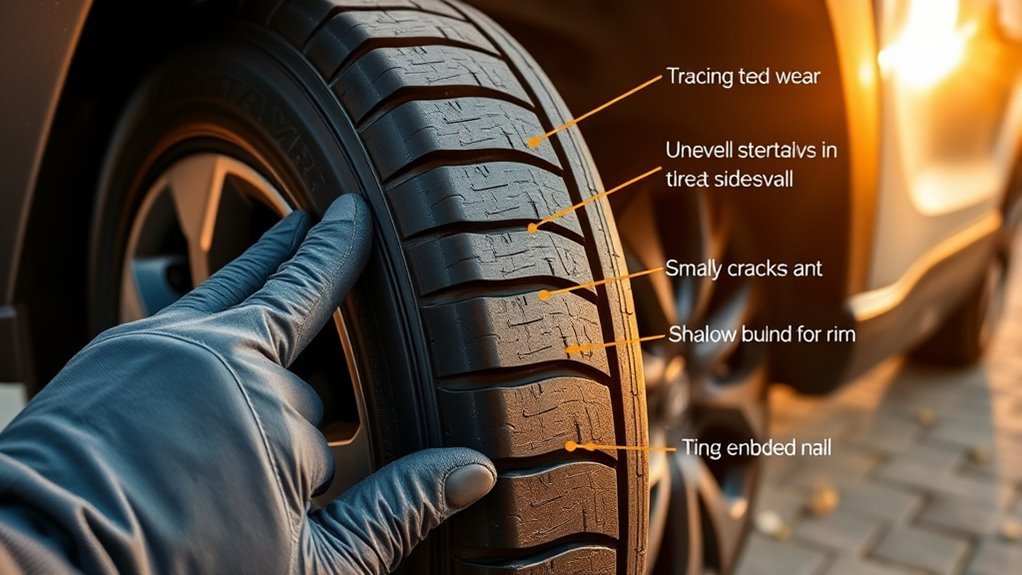
Start with a full walkaround. Look at all four tires from the front, rear, and side. If possible, turn the steering wheel left and right so you can see more of the front tire shoulders. According to NHTSA tire safety guidance, drivers should inspect tires for cuts, punctures, bulges, scrapes, cracks, bumps, uneven wear, and insufficient tread.
- Low tread depth: If the top of Lincoln’s head is visible during the penny test, the tire is near or at the 2/32-inch replacement threshold.
- Tread wear bars: If the built-in treadwear indicator bars are flush with the tread, the tire is worn out.
- Sidewall cracks, cuts, or exposed cords: These can weaken the tire and increase the risk of air loss or failure.
- Bulges or blisters: These can signal internal damage and should be treated as urgent.
- Uneven wear: Feathering, cupping, one-edge wear, or center wear may point to alignment, suspension, rotation, or inflation problems.
- Vibration or pulling: A shaking steering wheel, floor vibration, or pulling to one side needs prompt inspection.
Warning: Do not keep driving on a tire with a bulge, exposed cords, severe sidewall damage, or rapid air loss. Install the spare if it is safe and properly inflated, or call roadside assistance.
[Products Worth Considering]

The JACO FlowPro Tire Inflator measures, inflates, and airs down tires up to 100 PSI with battery-free operation and ±2% accuracy after calibration. It features a glowing pressure dial for night visibility, a heavy-duty steel build with a hybrid hose, and a precision push-to-inflate thumb trigger. The patented Lightning Air Chuck locks on for a secure seal, and the kit includes quick-connect hardware for easy inline use with your air compressor.

Blackline Blackout is a water-based trim and tire dressing that restores rubber, vinyl, and plastic with a rich satin, blackout look. Its no-sling formula dries quickly and helps prevent messy transfer onto paint. The coating repels water and offers UV protection to help prevent fading, cracking, and discoloration for a clean, long-lasting finish.

Adam’s Pro Tire Hex Grip applicators are molded foam sponges designed for precise, even tire dressing application. The ergonomic grip helps you spread product without overapplying, reducing sling that can splash onto paint and helping keep your hands clean during wheel and trim detailing. They’re durable, washable, and reusable for repeated detailing sessions.
Step-by-Step RAV4 Tire Inspection Checklist
Use this simple process when checking your Toyota RAV4 tires at home:
- Park safely: Stop on level ground, set the parking brake, and inspect the tires in good light.
- Let the tires cool: For pressure checks, wait at least three hours after driving when possible. Cold tire pressure gives the most accurate reading.
- Check pressure first: Use the PSI listed on the driver’s door placard or in the owner’s manual, not the maximum PSI molded into the tire sidewall.
- Inspect the tread: Look for low tread, embedded nails or screws, missing chunks, cracks, and uneven wear.
- Measure tread depth: Use a tread depth gauge in several grooves across each tire. If you do not have one, use the penny test as a quick screen.
- Check the sidewalls: Look on both inner and outer sidewalls for cracks, cuts, bulges, blisters, scuffs, and exposed cords.
- Check valve stems and caps: Make sure the valve stems are not cracked and the caps are installed.
- Watch how the RAV4 drives: Vibration, pulling, thumping, or new road noise can point to tire, wheel, alignment, or suspension problems.
Pro Tip: Take a quick photo of unusual tire wear before visiting a tire shop. It helps the technician see the pattern clearly, especially if the tire is rotated or replaced during service.
How to Spot Sidewall Damage
Sidewall damage is serious because the sidewall flexes constantly while you drive. Inspect the outer sidewall first, then check the inner sidewall with a flashlight. Look for cracks, cuts, grooves, scrapes, missing rubber, exposed fabric or steel cords, and any area that looks swollen.
A shallow cosmetic scuff may not require replacement, but a deep cut, visible cord, bulge, or sidewall puncture needs professional evaluation. The Tire Industry Association states that punctures or damage in the shoulder or sidewall area are not repairable.
| Sidewall Sign | What It May Mean | Recommended Action |
|---|---|---|
| Light surface scuff | Cosmetic curb rub | Monitor closely |
| Deep cut or gouge | Possible structural damage | Have the tire inspected |
| Exposed cords | Unsafe tire structure | Replace the tire |
| Bulge or blister | Internal cord or ply damage | Stop using the tire |
| Repeated air loss | Leak, rim issue, valve issue, or hidden damage | Schedule service |
Measuring Tread Depth: Tips and Techniques
Tread depth affects traction, braking, and wet-road control. NHTSA recommends replacing tires when tread is at least below 2/32 inch and explains the penny test this way: place a penny into the tread with Lincoln’s head upside down; if you can see the top of Lincoln’s head, the tire needs replacement.
For the most accurate check, use a tread depth gauge. Measure the inner, center, and outer grooves of each tire. A tire may pass in one groove but fail in another, especially if the alignment or inflation has been off.
| Measurement Method | How to Use It | What to Look For |
|---|---|---|
| Penny Test | Insert a penny with Lincoln’s head upside down | If the top of the head is visible, replace the tire |
| Tread Wear Indicators | Find the bars molded across the tread grooves | If bars are flush with tread, replace the tire |
| Tread Depth Gauge | Measure several grooves across each tire | Low or uneven readings show wear or alignment issues |
Treadwear indicator bars are built into the tire grooves. When they are level with the surrounding tread, the tire has reached the replacement point.
Understanding Bulges and Blisters on Your Tires
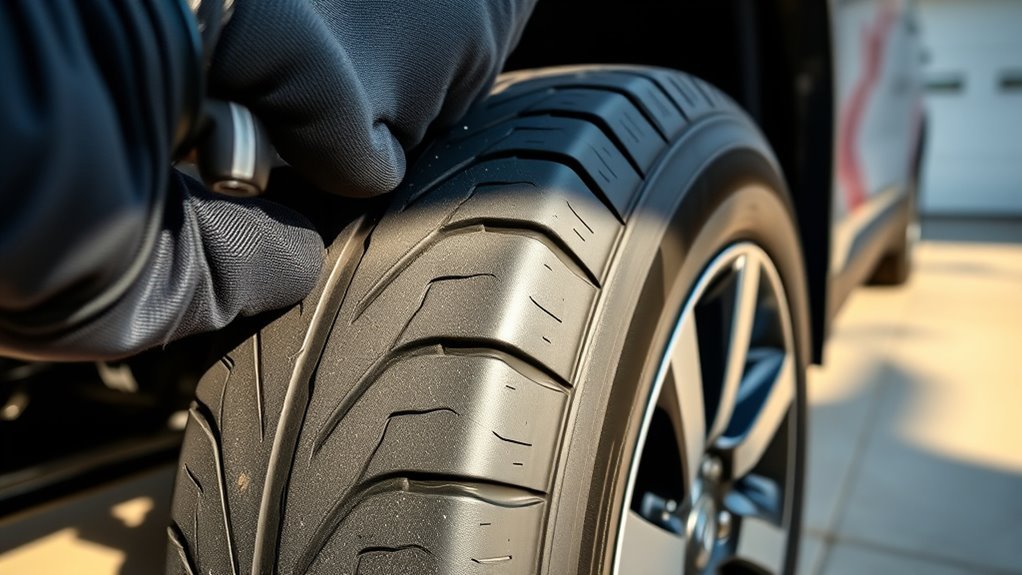
Bulges and blisters are outward protrusions on the tire sidewall or tread area. They often happen after impact with a pothole, curb, or road debris. A bulge can mean the internal cords or plies are damaged, allowing air pressure to push outward against a weakened area.
Do not treat a bulge like normal wear. A tire with a bulge can fail suddenly, especially at highway speed, under heavy load, or in hot weather. Replace the tire or have it inspected by a qualified tire technician before driving farther than necessary.
- Outward protrusions: A rounded bump or bubble on the sidewall is a danger sign.
- Impact history: A recent pothole or curb strike can damage the tire internally even if the wheel looks fine.
- Uneven ride: Thumping, vibration, or steering shake may appear with internal tire damage.
- Heat and speed: Long highway drives can make a weakened tire more likely to fail.
Checking Tire Pressure and TPMS Warnings
Proper tire pressure helps your RAV4 brake, steer, ride, and wear correctly. Toyota’s 2024 RAV4 owner information says tire inflation pressure should be checked at least once per month. Your exact recommended PSI is on the driver’s door placard and in the owner’s manual.
Check pressure when the tires are cold. NHTSA advises that cold pressure means the vehicle has been parked for at least three hours. Do not inflate to the number molded on the tire sidewall; that is the tire’s maximum pressure, not the vehicle’s recommended pressure.
Note: Toyota explains that the Tire Pressure Monitor alerts you when tire pressure is critically low, but you should still check tire pressure regularly with a gauge and not rely only on the warning light.
What Uneven Tread Wear Can Tell You
Uneven tread wear is a clue. It can show that a tire has been underinflated, overinflated, misaligned, unbalanced, overloaded, or affected by worn suspension parts. Compare the inner edge, center, and outer edge of each tire.
| Wear Pattern | Possible Cause | What to Do |
|---|---|---|
| Both outer edges worn | Underinflation or hard cornering | Check pressure and inspect alignment |
| Center worn faster | Overinflation | Set pressure to the door placard PSI |
| One edge worn | Alignment issue | Schedule an alignment check |
| Cupping or scalloping | Balance, shock, strut, or suspension wear | Have suspension and tires inspected |
| Patchy wear | Rotation, balance, or tire condition issue | Rotate, balance, and inspect tires |
[Products Worth Considering]

EVOULTES heavy duty tire inflator with an integrated gauge delivers accurate pressure readings from 10–120 PSI, helping you inflate, deflate, and check tires in one tool. The 16.5-inch extended dual-head air chuck with swivel base reaches hard-to-access dual wheel valves on trucks and RVs. A brass trigger core and side-mounted air release valve make operation smooth, with standard 1/4" NPT threading and quick-connect compatibility for easy setup.

Universal magnetic jack pad with aluminum grooved design to protect vehicle pinch welds during lifting. Durable nylon pad inserts are upgraded and secured with screws to resist damage and keep in place. Designed to fit most single vehicle pinpoint welds for safer, stable jacking when changing tires, repairs, or performing oil changes.
What to Do About Vibration and Handling Issues
If you notice vibration in the steering wheel, seat, or floor, do not ignore it. Tire vibration can come from imbalance, uneven wear, internal tire separation, a bent wheel, alignment problems, or worn suspension parts. If your Toyota RAV4 pulls to one side, the cause may be low pressure, uneven tire wear, brake drag, or wheel alignment.
Common Causes of Vibration
- Unbalanced tires: Often felt as steering wheel shake at certain speeds.
- Misalignment: May cause pulling, off-center steering, or one-edge tread wear.
- Internal tire damage: Can cause thumping, vibration, or a visible bulge.
- Incorrect tire pressure: Overinflation or underinflation can affect ride quality and handling.
- Bent wheel or suspension wear: Can appear after hitting a pothole or curb.
When to Seek Help
Seek professional help if vibration continues after checking pressure, if the RAV4 pulls to one side, or if you see uneven wear, sidewall damage, bulges, exposed cords, or repeated air loss. A technician can inspect the tire inside and out, check wheel balance, and look for alignment or suspension problems.
| Symptoms | Recommended Action |
|---|---|
| Excessive vibration | Inspect tires, wheels, and balance |
| Vehicle pulls to one side | Check tire pressure and alignment |
| Vibration during acceleration or braking | Inspect tires, wheels, brakes, and suspension |
| Difficulty steering | Stop driving if severe and schedule service |
| Unusual thumping or humming | Check for tire damage, uneven wear, or wheel bearing issues |
When Should You Get Your Tires Checked by a Pro?
Get your RAV4 tires checked by a professional if you find damage, the tread is near the wear bars, the tire keeps losing air, the TPMS warning light returns after inflation, or the vehicle vibrates, pulls, or handles differently. Toyota’s general maintenance guidance says tires should not be damaged or excessively worn and should be rotated according to the maintenance schedule.
- Tread depth is 2/32 inch or lower: Replace the tire.
- Treadwear indicators are showing: Replace the tire.
- Sidewall damage is deep: Have the tire inspected and expect replacement if cords are affected.
- Bulges or blisters are visible: Stop using the tire and replace it.
- Uneven wear is obvious: Ask for alignment, rotation, balance, and suspension checks.
- Pressure drops repeatedly: Have the valve stem, wheel, bead, and tire checked for leaks.
How Often Should You Inspect RAV4 Tires?
Check tire pressure and visible condition at least once per month. Also inspect the tires before long road trips, after hitting a pothole or curb, before towing or carrying a heavy load, and when seasons change. Temperature changes can affect tire pressure, so pressure checks are especially useful when weather shifts from warm to cold.
For tire rotation intervals, follow the maintenance schedule for your model year, drivetrain, and tire type. Rotating tires on schedule helps reduce uneven wear and gives you another chance to spot damage early.
Frequently Asked Questions
How do I check Toyota RAV4 tires for damage?
Check the tread depth, treadwear bars, sidewalls, valve stems, air pressure, and driving feel. Look for cuts, cracks, punctures, bulges, exposed cords, uneven wear, repeated pressure loss, vibration, and pulling. Use a flashlight to inspect the inner sidewalls and tire shoulders.
Is the penny test enough for tire safety?
The penny test is useful for spotting tires near the 2/32-inch minimum, but a tread depth gauge is more accurate. Measure several grooves across each tire because uneven wear can make one part of the tire unsafe before the rest looks worn.
Can a sidewall cut or bulge be repaired?
Usually, no. Sidewall and shoulder damage are not considered proper repair areas. A bulge, blister, exposed cord, or deep sidewall cut means the tire should be inspected immediately and usually replaced.
Why does my RAV4 vibrate after tire damage?
Vibration can come from an unbalanced tire, uneven tread wear, internal tire damage, a bent wheel, alignment problems, or worn suspension parts. If vibration starts after a pothole hit or curb strike, have the tire and wheel inspected before continuing long-distance driving.
Should I trust the TPMS light instead of checking tire pressure?
No. TPMS is a warning system, not a replacement for a pressure gauge. Check pressure when the tires are cold and use the recommended PSI on the driver’s door placard or in your RAV4 owner’s manual.
Conclusion
Regular tire inspections are one of the simplest ways to keep your Toyota RAV4 safe, stable, and ready for daily driving. Check tread depth, sidewalls, pressure, wear patterns, and driving feel at least monthly. If you see a bulge, deep cut, exposed cords, treadwear bars, repeated air loss, or persistent vibration, stop guessing and have the tire inspected by a qualified professional.
Sources
- NHTSA TireWise — tire safety, tread, pressure, and maintenance guidance.
- NHTSA Summer Driving & Road Trip Tips — tire inspection, cold pressure checks, penny test, and 2/32-inch tread guidance.
- Toyota 2024 RAV4 Tire Inflation Pressure — Toyota guidance on checking and maintaining tire inflation pressure.
- Toyota 2024 RAV4 General Maintenance — Toyota guidance on tire condition, wear, pressure, rotation, and wheel nuts.
- Toyota Tire Pressure Monitor Support — TPMS reminder that drivers should still check tire pressure regularly with a gauge.
- Tire Industry Association Tire Repair — repair limits for tread, shoulder, and sidewall tire damage.

Related Articles

Toyota RAV4 TPMS Reset: Easy Steps That Work
Unlock the secrets to resetting your Toyota RAV4's TPMS effortlessly—discover the essential steps to ensure your tires are always safe.
Read More
Toyota RAV4 Tire Rotation: DIY Steps & Pattern
Take control of your Toyota RAV4's tire maintenance with our simple DIY rotation guide—discover the best steps for optimal performance and longevity!
Read More
Mix Tire Brands on a Toyota RAV4? Expert Guide
Keeping your RAV4 safe? Learn when mixing tire brands risks traction, ABS/TCS and AWD damage — and what exact matches you must insist on.
Read More