
How to Check If a Tire Is Good: Tread, Age & Damage Inspection
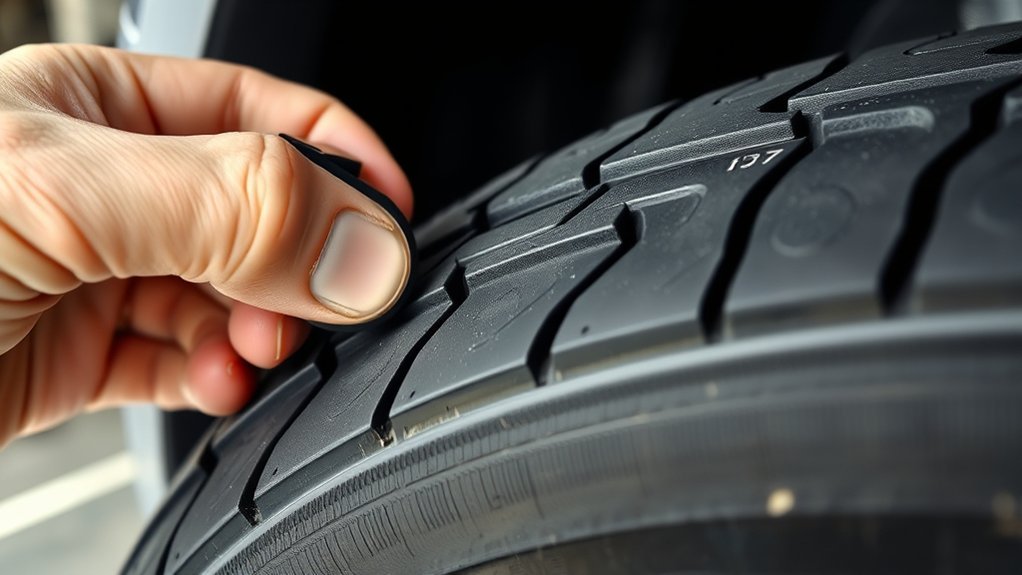
To tell if a tire is still good, make sure it passes every basic safety check: tread is above 2/32 inch at the most-worn spot, there are no bulges, exposed cords, tread separation, severe cracks, or unsafe punctures, wear is reasonably even, cold tire pressure matches the vehicle placard, and the tire is still within the vehicle or tire maker’s age guidance. If you often drive in rain, start planning replacement around 4/32 inch rather than waiting for the 2/32-inch minimum.
Last updated: August 18, 2026 — tread, age, pressure, repair, and replacement guidance rechecked against current NHTSA, USTMA, Bridgestone, Continental, and CAA guidance.
Quick Answer
A tire is still usable only if its most-worn tread area is above 2/32 inch, it has no structural damage or severe cracking, it holds the correct cold pressure, and its age and wear pattern are acceptable. A small tread-area puncture can sometimes be repaired professionally, but sidewall or shoulder damage is a replacement issue. For frequent wet-road driving, 4/32 inch is a practical point to start planning replacement.
Key Takeaways
- Measure tread depth in the inner, center, and outer grooves; judge the tire by the lowest reading and replace at or below 2/32 inch.
- Use the penny test for a fast screening check, but use a tread-depth gauge for a more precise reading.
- If you regularly drive in rain, start planning replacement around 4/32 inch because wet braking and hydroplaning resistance decline as tread wears.
- Stop using a tire with a sidewall bulge, exposed cords, tread separation, severe cracking, or sudden pressure loss.
- Read the DOT/TIN date code; Bridgestone calls for a professional inspection after five years and replacement by 10 years, including the spare, while vehicle-specific guidance can be stricter.
At a Glance
| Time Required | Varies; inspect all four tires and the spare |
| Difficulty | Easy for basic checks; see a tire professional for damage, vibration, or uneven wear |
| Tools Needed | Tread-depth gauge, tire-pressure gauge, flashlight, penny, quarter, and your owner’s manual |
| Cost | Low cost if you already own the gauges; tire-shop inspection policies and fees vary |
How to Tell If a Tire Is Still Good at a Glance
Use the most serious condition you find to make the decision. A tire does not pass simply because one tread groove looks deep enough.
| What You Find | What It Means | What to Do |
|---|---|---|
| Sidewall bulge, exposed cords, tread separation, severe cracking, or sudden air loss | Possible structural failure | Stop using the tire. Install a safe spare or arrange towing/inspection. |
| Tread at or below 2/32 inch at the most-worn spot | At the minimum service limit | Replace the tire. |
| Tread around 3/32 to 4/32 inch | Above the minimum, but wet-road margin is reduced | Plan replacement soon, especially before heavy rain or winter driving. |
| Uneven wear, repeated pressure loss, new vibration, pulling, or thumping | Possible tire, wheel, alignment, or suspension problem | Have it professionally inspected before relying on the tire for highway driving. |
| More than 4/32 inch, even wear, no damage, correct pressure, acceptable age | Basic checks pass | Keep checking pressure, tread, and damage monthly. |
[Products Worth Considering]

EVOULTES heavy duty tire inflator with an integrated gauge delivers accurate pressure readings from 10–120 PSI, helping you inflate, deflate, and check tires in one tool. The 16.5-inch extended dual-head air chuck with swivel base reaches hard-to-access dual wheel valves on trucks and RVs. A brass trigger core and side-mounted air release valve make operation smooth, with standard 1/4" NPT threading and quick-connect compatibility for easy setup.

This portable cordless tire inflator delivers up to 160 PSI with fast 17 L/min airflow to help you quickly top up tires and get back on the road. It features dual power mode, running on a 21V rechargeable battery or a 12V DC adapter for convenient roadside use. An automatic shut-off with digital pressure gauge helps prevent overinflation, and a built-in LED light improves visibility in low-light conditions.

The JACO FlowPro Tire Inflator measures, inflates, and airs down tires up to 100 PSI with battery-free operation and ±2% accuracy after calibration. It features a glowing pressure dial for night visibility, a heavy-duty steel build with a hybrid hose, and a precision push-to-inflate thumb trigger. The patented Lightning Air Chuck locks on for a secure seal, and the kit includes quick-connect hardware for easy inline use with your air compressor.
How Do You Check Tire Tread Depth?
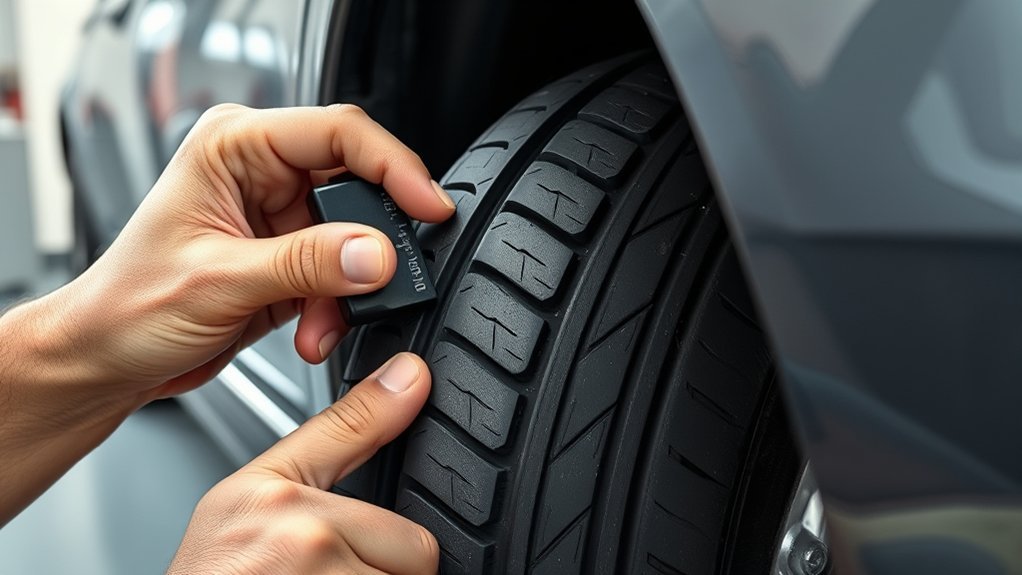
Start with tire tread depth, because tread is what helps the tire grip the road and move water out of the contact patch. Check each tire in at least three places: the inner groove, center groove, and outer groove. If one section is much lower than the rest, the tire may have an alignment, inflation, or suspension problem.
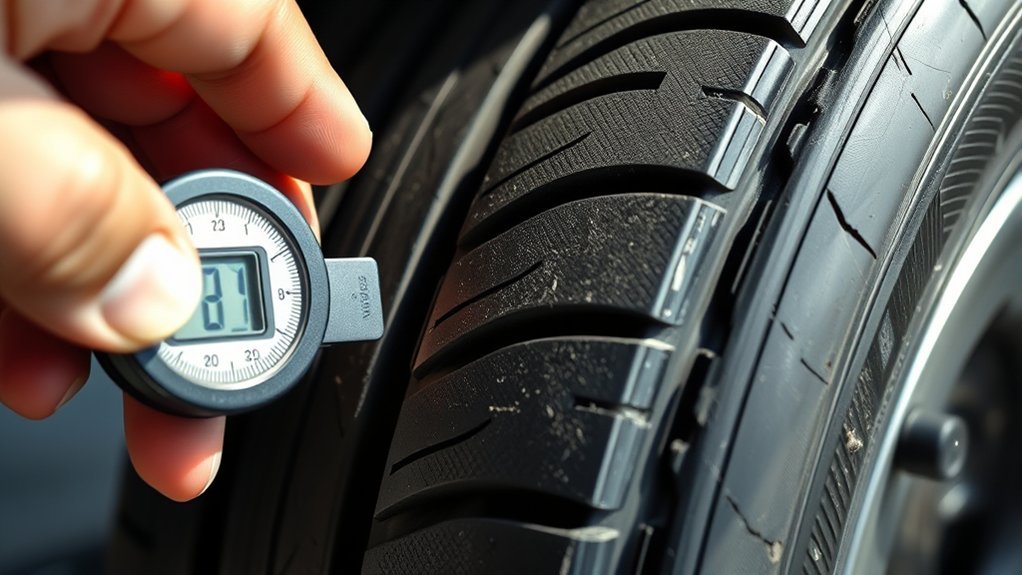
Use a tread-depth gauge if you have one. Insert the probe into the groove, press the base flat against the tread, and read the measurement in 32nds of an inch. New-tire tread depth varies by tire type and model, so use the tire maker’s specification if you need a new-tire baseline.
For a measurement-only walkthrough, see TubeTyre’s guide to measuring tire tread depth.
Treat 2/32 inch as the minimum replacement point. USTMA tire-care guidance says tires should be at least 2/32 inch, and the National Highway Traffic Safety Administration explains that tread worn to the minimum, physical damage, irregular wear, and tire aging are all reasons to stop using a tire.
Pro Tip: Do not measure only the easiest groove to reach. Turn the steering wheel to improve access to the front tires, use a flashlight, and check the inside shoulder where hidden wear often appears first.
How Does the Penny Test Work?
The penny test is a quick field check when you do not have a tread-depth gauge. Place a penny into the tread groove with Lincoln’s head facing down. If you can see the top of Lincoln’s head, the tread is likely at or below 2/32 inch and the tire should be replaced.
Repeat the penny test in several grooves and on several points around each tire. One good spot does not make the whole tire safe. The most worn area is the one that matters most.
Penny Test Basics
- Place the penny upside down into a main tread groove.
- If part of Lincoln’s head is covered, the tire has more than about 2/32 inch in that spot.
- If Lincoln’s full head is visible, replace the tire.
- Check all four tires and your spare if it is a full-size spare.
Reading Tread Depth
The penny test tells you when a tire is near the minimum. It does not tell you whether the tire is ideal for heavy rain, snow, towing, or long trips. For that, use a gauge and compare your reading with driving conditions. If the tire is close to the limit, plan replacement before it becomes urgent.
What Does the Quarter Test Tell You?
The quarter test is a rough screening check for about 4/32 inch of tread. Place a quarter into the tread groove with Washington’s head facing down. If the tread reaches part of Washington’s head, the tire has roughly 4/32 inch or more in that spot. Confirm borderline readings with a tread-depth gauge.
Why does that matter? Wet braking and hydroplaning resistance decline as tread gets shallower. Tire Rack wet-braking testing found much longer stopping distances as tread dropped from new depth to 4/32 inch and then to 2/32 inch. If you often drive in rain, start shopping before the tire reaches the bare minimum.
A tire can be above the minimum tread limit and still perform poorly in heavy rain. For wet-weather driving, 4/32 inch is a smart planning point, not a legal line.
Use Tread Wear Bars
Most tires have built-in tread wear indicator bars molded across the grooves. These raised bars become easy to see as the tread wears down. When the tread surface is flush with the wear bars, the tire is at its service limit and should be replaced.
Check several wear bars around the tire. If only one shoulder is flush with the bars while the rest of the tire looks deeper, the tire still needs attention because uneven wear can reduce grip and point to a mechanical issue.
What Tire Damage Means You Should Stop Driving?
Inspect the sidewalls and tread surface for cuts, cracks, bulges, punctures, exposed cords, bubbles, or dry rot. Use a flashlight to check the inner sidewall too, because damage on the inside of the tire can be hard to see from outside the vehicle.
Dry rot often looks like small cracks, weathered rubber, or a brittle surface. It may appear on sidewalls, tread blocks, or in grooves. Tires that sit outside, sit unused for long periods, or operate in hot climates can age even when the tread still looks deep.
Warning: Do not keep driving on a tire with a sidewall bulge, exposed cords, severe cracking, sudden pressure loss, or damage near the sidewall. Install the spare if it is safe to do so and have the tire inspected by a qualified professional.
How Do You Check Tire Age With the DOT Code?
Tread depth is only one part of tire safety. Rubber and internal tire materials age over time, so you also need to check the tire’s DOT Tire Identification Number, often called the DOT code or TIN. Look on the sidewall for the letters “DOT” followed by a series of letters and numbers. The full code may appear on only one side of the tire, so check both sidewalls if needed.
The last four digits show the tire’s manufacture week and year. For example, a code ending in 2319 means the tire was made in the 23rd week of 2019. A code ending in 0324 means the third week of 2024. Continental’s tire replacement guidance explains the same week-and-year format.
If you need help finding the full code, see TubeTyre’s DOT date-code guide.
Note: Tires made before 2000 used a three-digit date format. Any tire with a pre-2000 date code is far beyond normal service life and should not be used.
How Old Is Too Old for a Tire?
If a tire is more than 10 years old, replace it even if the tread looks good. Bridgestone replacement guidance recommends removing tires manufactured 10 years prior or longer from service, including the spare. Continental gives the same 10-year replacement advice for tires and spare tires.
Age guidance can be stricter depending on the vehicle manufacturer, tire manufacturer, climate, storage, and use. NHTSA notes that some vehicle and tire manufacturers recommend replacement at six to 10 years regardless of treadwear. If your owner’s manual or tire maker gives a shorter interval, follow the shorter interval.
- Inspect tires monthly for pressure, treadwear, and damage.
- Have tires professionally inspected after about five years of service.
- Replace tires by 10 years from the manufacture date, or earlier if the vehicle or tire maker says so.
- Check the spare tire too, because it ages even when it is rarely used.
Check for Uneven Tread Wear
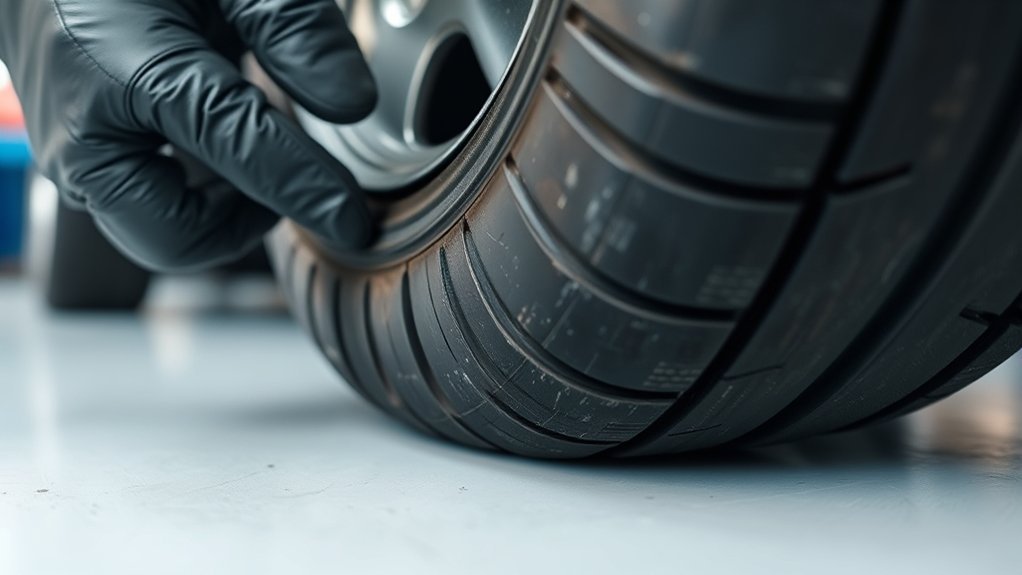
Uneven tread wear is a warning sign. It can point to underinflation, overinflation, wheel misalignment, worn suspension parts, poor rotation habits, or damaged components. Even if the deepest groove looks usable, one badly worn shoulder can make the tire unsafe.
Look for these patterns:
- Center wear: often linked to overinflation or a tire/load mismatch.
- Both-edge wear: often linked to underinflation or heavy cornering.
- One-edge wear: often linked to alignment or suspension problems.
- Cupping or scalloping: often linked to worn shocks, struts, balance issues, or suspension problems.
- Feathering: often linked to toe alignment problems.
If you find uneven wear, do not just replace the tire and ignore the cause. Have the alignment, suspension, balance, and inflation checked so the next tire does not wear out the same way.
[Products Worth Considering]

The Fanttik X10 Pro is a cordless portable tire inflator that reaches up to 150 PSI and can inflate an R15 tire in about 35 seconds for quick roadside or home top-ups. With AccuInFlate auto-stop and smart start/stop controls, it helps maintain accurate pressure and frees your hands once the target is reached. A high-visibility digital display and preset modes make it easy to set and monitor inflation for cars, motorcycles, bikes, and balls.
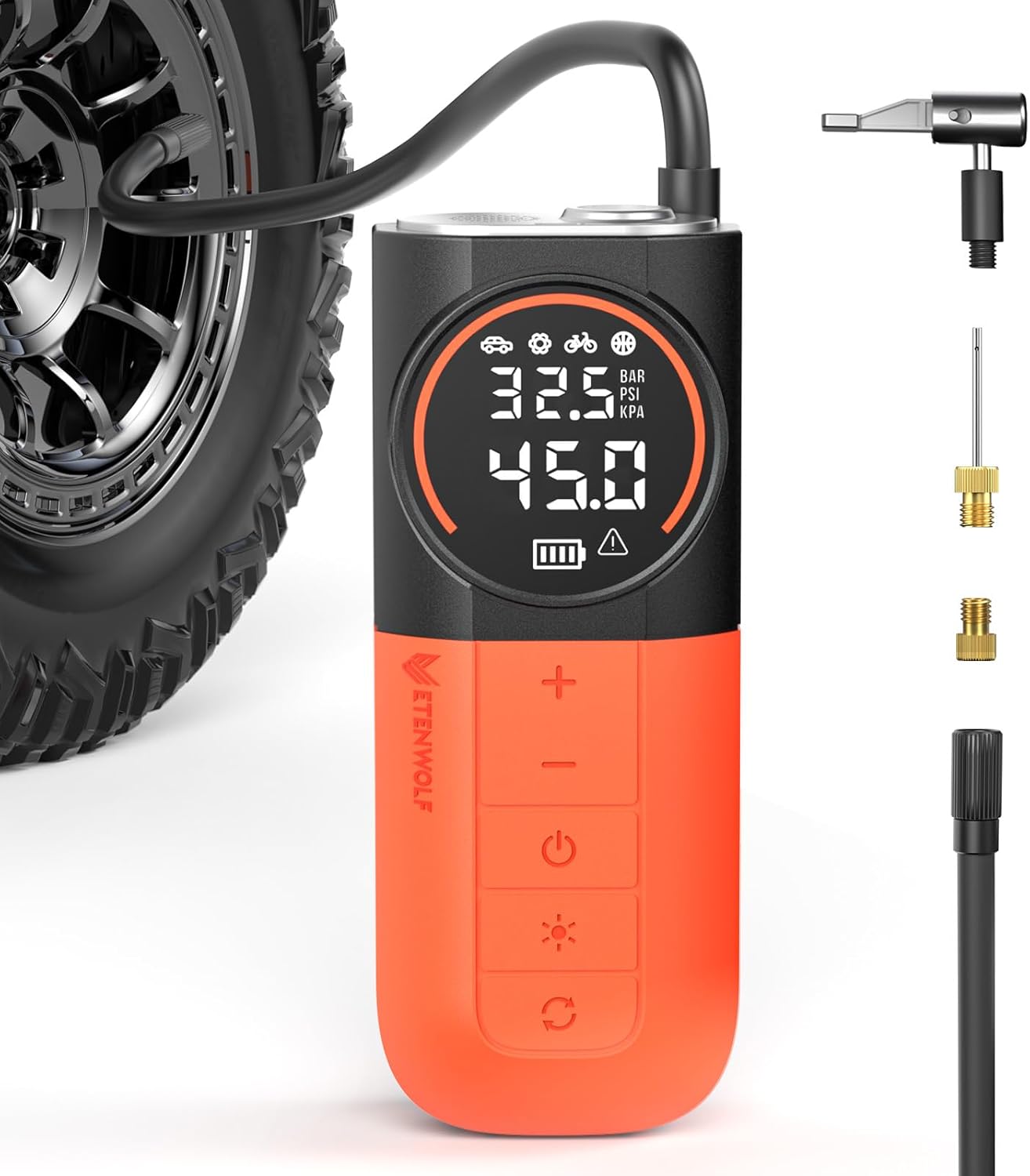
The ETENWOLF S1 cordless tire inflator delivers ultra-fast inflation with up to 160 PSI and a 20 L/min airflow for quicker tire top-offs. Its 5200mAh battery and cooling system support inflating many tires and sports balls on a single charge, while the digital pressure gauge and multi-unit display help you reach the right pressure accurately. With preset modes, pressure memory, an auto-stop feature, and an LED flashlight, it’s built for easy roadside and everyday use.
Check Tire Pressure Before You Decide
A tire can look fine and still be unsafe if it is underinflated. Check pressure when the tires are cold, meaning the vehicle has been parked for at least three hours or driven only a short distance at low speed. Use the pressure listed on the driver-side door placard or in the owner’s manual, not the maximum pressure molded on the tire sidewall.
Do not rely only on the Tire Pressure Monitoring System. TPMS is useful, but it is not a replacement for monthly pressure checks with a gauge. Underinflation can cause heat buildup, uneven wear, poor fuel economy, and tire damage.
When Can a Tire Be Repaired Safely?
Some punctures can be repaired, but only within strict limits. USTMA tire-repair guidance limits standard passenger/light-truck repairs to punctures in the tread area that are no larger than 1/4 inch (6 mm). The tire must be removed from the wheel and inspected internally before repair. Damage that reaches the shoulder or sidewall is not repairable under that guidance.
A proper permanent repair fills the puncture with a rubber stem and seals the inner liner with a patch, often as a one-piece combination unit. A plug-only, outside-in repair is not an acceptable permanent repair under USTMA guidance. A tire that was driven flat may also have hidden internal damage and must be inspected before anyone decides it can be repaired.
Should You Buy New or Used Tires?
New tires give you a known starting point: full tread depth, correct size, correct load and speed ratings, no unknown repair history, and a warranty. They are usually the safer choice for daily driving.
Used tires can cost less, but the risk is higher. You may not know whether the tire was overloaded, underinflated, driven flat, repaired poorly, stored badly, recalled, or damaged internally. If you are considering used tires, check tread depth, DOT age, sidewall condition, repair history, matching size, load rating, speed rating, and whether the tire has any recalls.
New Tire Benefits
- Known tread depth and condition.
- Matching size, load rating, and speed rating for your vehicle.
- No hidden impact or run-flat history.
- Better wet-weather margin than worn tires.
- Manufacturer warranty support.
Used Tire Risks
- Unknown age, storage, and repair history.
- Possible internal damage that is not visible from outside.
- Uneven wear that can cause vibration, noise, or poor handling.
- Less tread life remaining.
- Higher chance of mismatched tires on the same vehicle.
Replace the Rear Tires First
If you replace only two tires on a vehicle with the same tire size on all four corners, install the new or deeper-tread tires on the rear axle. Bridgestone’s replacement guidance gives the same rear-axle recommendation when only two tires are replaced. Better rear tread helps preserve vehicle stability when traction is limited.
This advice applies even to many front-wheel-drive vehicles. However, always check your owner’s manual if your vehicle has all-wheel drive, four-wheel drive, staggered tire sizes, directional tires, different front/rear specifications, or special manufacturer requirements. Some AWD vehicles need closely matched tread depths to protect the drivetrain.
- Best option: replace all four tires as a matched set.
- If replacing two: put the new pair on the rear axle when fitment allows.
- Match tire size, type, load index, speed rating, and category.
- Rotate tires on schedule so they wear evenly and replacement decisions are simpler later.
Check Your Spare Tire and Recalls
Your spare tire can age out even if it has never been used. Check its pressure, tread, sidewall condition, and DOT date code. If it is a compact temporary spare, follow the speed and distance limits printed on the tire and in the owner’s manual.
You should also check whether your tire has an open recall. Use the DOT/TIN on the sidewall and the tire brand/model information, then check the tire maker’s recall page or the NHTSA recalls tool. Do not keep driving on a recalled tire that the manufacturer says should be replaced.
Frequently Asked Questions
Are 20-year-old tires still good?
No. A 20-year-old tire should be replaced even if it still has tread. Rubber and internal materials degrade with age, and Bridgestone and Continental recommend removing tires from service by 10 years from manufacture, including spare tires. Replace 20-year-old tires before driving on them.
Is 7/32 tread depth good or bad?
A 7/32 inch tread depth is generally good for many normal driving conditions. It is well above the 2/32 inch minimum replacement point and above the 4/32 inch wet-weather planning point. Still, check tire age, pressure, sidewall condition, and whether the tread is wearing evenly.
What is the 7/7 rule for tires?
The 7-for-7 rule usually refers to seasonal tire changes, not tire age or tread depth. CAA guidance describes it as waiting for about seven consistent days around 7°C (45°F) when switching between winter and non-winter tires. It is not a tread-replacement standard; use tread depth, condition, pressure, and manufacturer age guidance to judge whether a tire is still good.
How do I tell if a tire still has good tread?
Use a tread-depth gauge across the inner, center, and outer grooves. More than 2/32 inch means the tire is above the minimum replacement point, while 4/32 inch or more is a better target for wet driving. Also check that the tread is even and not flush with the wear bars.
Can a tire be unsafe even if it has good tread?
Yes. A tire can have good tread and still be unsafe because of age, dry rot, sidewall cracks, bulges, exposed cords, punctures, internal damage, recalls, or repeated pressure loss. Tread depth is only one part of a complete tire inspection.
Should I replace tires at 4/32 inch?
You do not always have to replace tires at 4/32 inch, but it is a smart planning point if you drive in rain often. Wet braking and hydroplaning resistance get worse as tread wears down, so waiting until 2/32 inch can leave you with poor wet-road grip.
Conclusion
To decide if your tire is still good, check tread depth, wear bars, sidewall damage, dry rot, tire pressure, uneven wear, DOT age, and recalls. Replace any tire at or below 2/32 inch, any tire with serious damage, and any tire that is too old for the manufacturer’s guidance. When the result is uncertain, have a qualified tire professional inspect it before you rely on it at highway speed.
Sources
- National Highway Traffic Safety Administration: TireWise — tire aging, DOT/TIN date code, tire pressure, damage, TPMS, and safety inspection guidance.
- U.S. Tire Manufacturers Association: Tire Care Essentials — 2/32 inch tread guidance, penny test, wear bars, monthly inspections, and rotation intervals.
- Bridgestone Americas: Tire Replacement Guidance — tread checks, five-year inspection guidance, 10-year replacement guidance, used tire risks, and rear-axle placement for two new tires.
- Continental Tires: Replacing Tires — DOT date-code reading and 10-year tire age guidance.
- U.S. Tire Manufacturers Association: Tire Repair Basics — repairable tread-area puncture limits, internal inspection, and patch-plus-stem repair guidance.
- Tire Rack: Tread Depth and Wet Braking — wet-braking performance comparison at different tread depths.
- Tire Rack: Where to Install New Pairs of Tires — explanation of why two new tires generally go on the rear axle for same-size fitments.

Related Articles
Slashed Tire or Blowout? How to Tell the Difference
A slashed tire or blowout? Spot the clues fast, but one subtle sign could change everything.
Read More
How to Break a Car Window in an Emergency Safely
After an emergency, a few simple moves can break a car window safely—but one crucial choice could change everything.
Read More
How to Buy Car Insurance: Coverage Guide for Beginners
Choose the right car insurance coverage and compare smarter to avoid costly gaps—discover the key details beginners often miss.
Read More