
How Tall Is a 285 75R16 Tire? Exact Height, Width & Dimensions
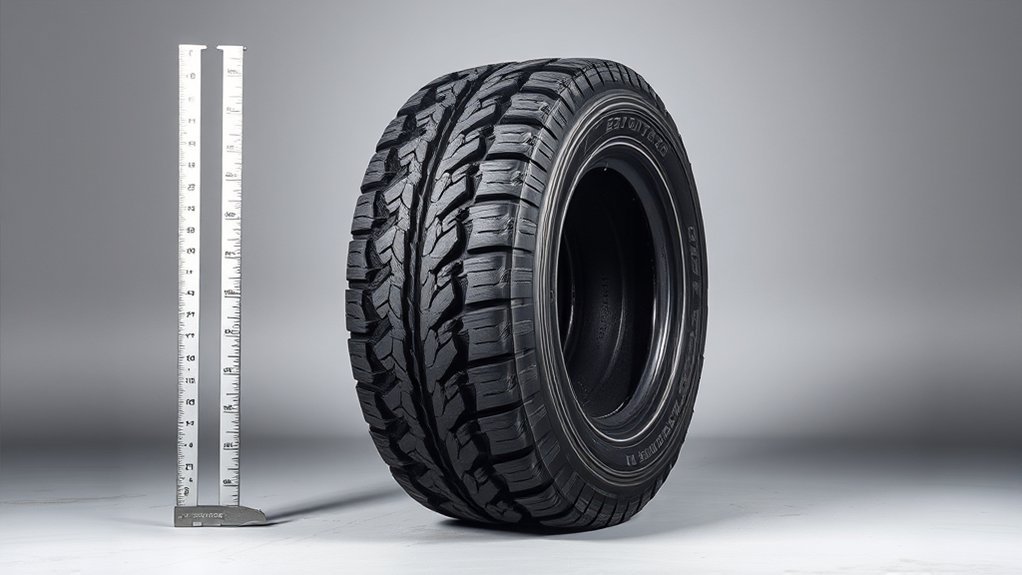
A 285/75R16 tire is a common light-truck size that works out to roughly 32.8 inches tall, 11.2 inches wide by nominal section width, and 8.4 inches of sidewall. That makes it close to a 33-inch tire, but exact fit depends on the tire model, wheel width, wheel offset, suspension setup, and your vehicle’s original tire size.
Quick Answer
A 285/75R16 tire is about 32.8 inches tall, 11.2 inches wide, and has an 8.4-inch sidewall. It fits a 16-inch wheel and is usually approved for wheels around 7.5 to 9 inches wide, though you should always confirm the exact tire manufacturer’s spec sheet.
Key Takeaways
- A 285/75R16 tire is about 32.8 inches tall, so it is often rounded up and called a 33-inch tire.
- The 285 number is the tire’s nominal section width, not the tread width.
- The sidewall is about 8.4 inches tall because 75% of 285 mm equals 213.75 mm.
- Theoretical revolutions per mile are about 615, but manufacturer loaded specs may be closer to the low 630s.
- Most LT285/75R16 tires need a wheel around 7.5 to 9 inches wide; a 16×7 wheel is usually outside the approved range unless the tire maker says otherwise.
285/75R16 Tire Size Chart
The numbers below are the standard calculated dimensions for a 285/75R16 tire. Use them as a planning guide, then check the exact spec sheet for the tire model you plan to buy. For example, General Tire’s LT285/75R16 Grabber A/TX listing shows a 32.8-inch diameter, 11.3-inch overall section width on an 8.0-inch measuring rim, 7.5- to 9.0-inch approved rim width, and 633 loaded revolutions per mile.
| Overall Diameter | About 32.8 inches / 834 mm |
| Nominal Section Width | 285 mm / about 11.2 inches |
| Sidewall Height | 213.75 mm / about 8.4 inches |
| Wheel Diameter | 16 inches |
| Circumference | About 103.1 inches / 2619 mm |
| Revolutions Per Mile | About 615 theoretical; manufacturer loaded specs vary by model |
[Products Worth Considering]

Keep RV, trailer, or truck dual-axle tires protected with waterproof, UV-resistant covers that help guard against sunlight, snow, rust, and dirt. The dual tire covers are easy to install with a rope/bungee fastener for a stable fit that won’t easily slip. Designed for 27–30 inch diameter wheels, they help maintain tire condition through harsh weather.
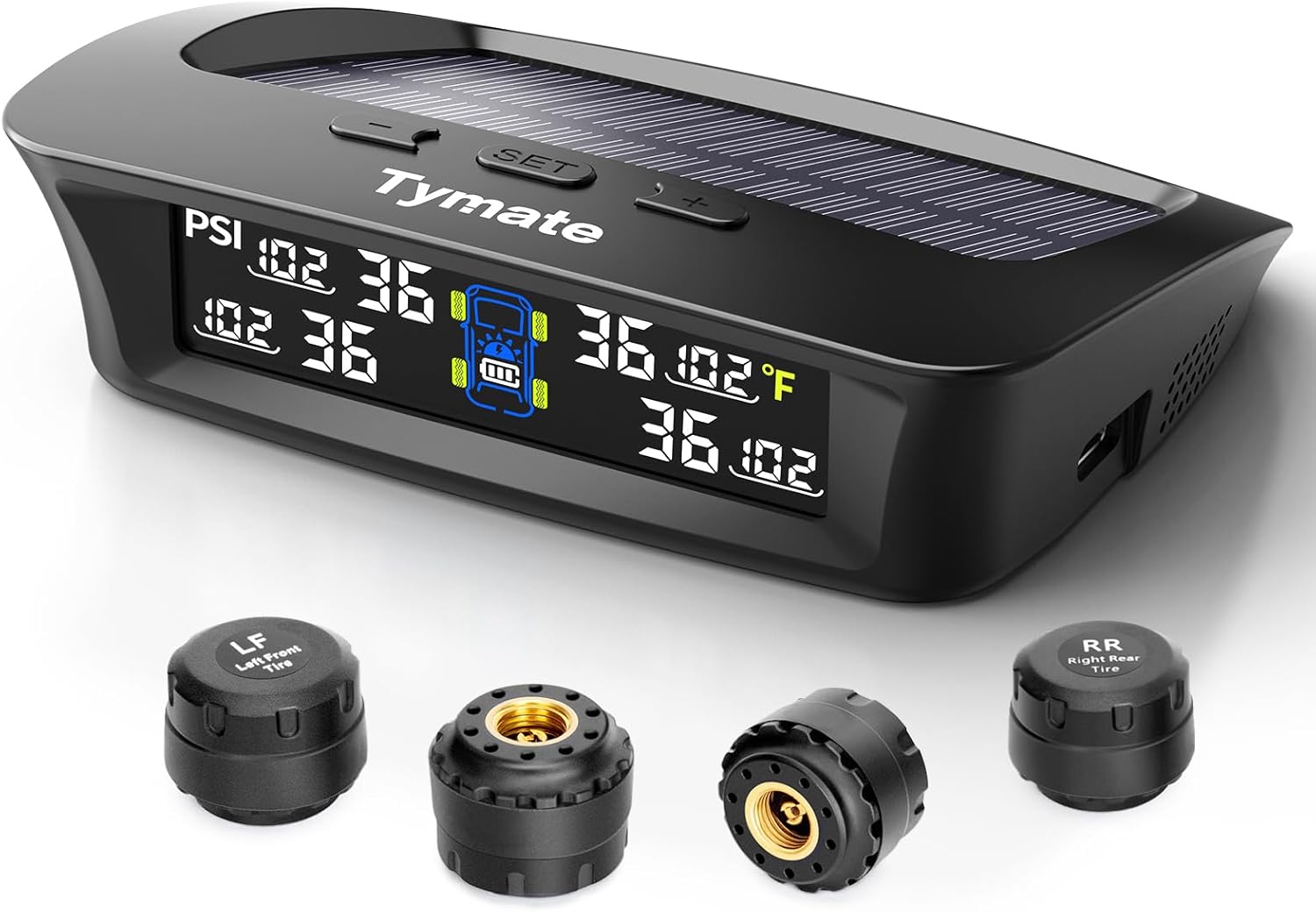
The Tymate TM3 RV TPMS delivers real-time tire pressure monitoring from 0 to 144 PSI with accurate readings and dependable wireless communication. It includes four external sensors with pre-pairing, six alarm modes for rapid leak, pressure extremes, temperature, and signal loss, plus an easy-reference setup for alert thresholds. Solar and USB-C charging help keep the display powered, while the color LCD and adaptive backlight improve visibility for safer driving and towing.

EVOULTES heavy duty tire inflator with an integrated gauge delivers accurate pressure readings from 10–120 PSI, helping you inflate, deflate, and check tires in one tool. The 16.5-inch extended dual-head air chuck with swivel base reaches hard-to-access dual wheel valves on trucks and RVs. A brass trigger core and side-mounted air release valve make operation smooth, with standard 1/4" NPT threading and quick-connect compatibility for easy setup.
How Tall Is a 285/75R16 Tire?
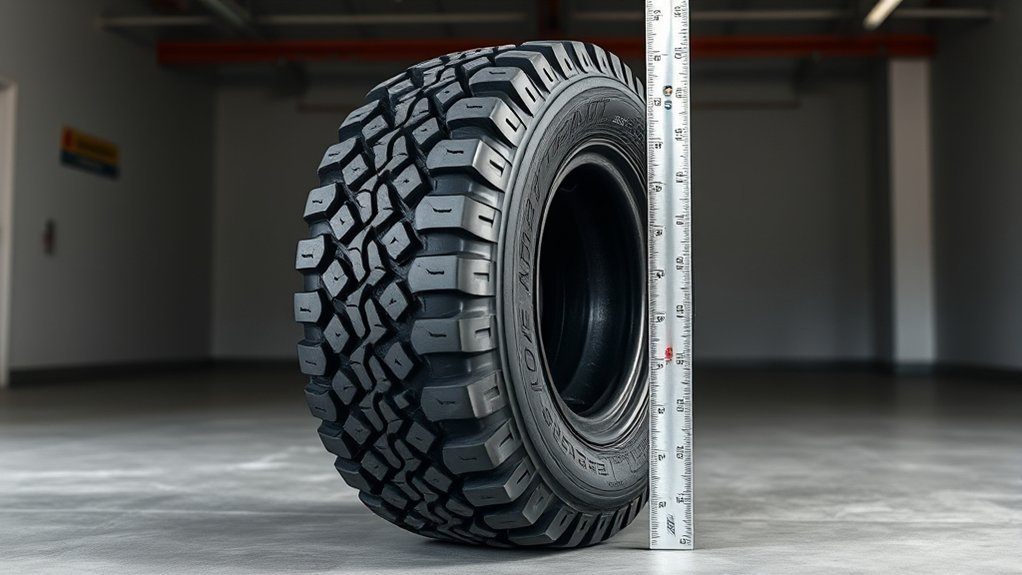
A 285/75R16 tire is about 32.8 inches tall overall. The math is simple:
- Sidewall height: 285 mm × 0.75 = 213.75 mm
- Sidewall in inches: 213.75 ÷ 25.4 = 8.4 inches
- Overall diameter: 16 inches + 8.4 inches + 8.4 inches = about 32.8 inches
That is why many people call a 285/75R16 a “33-inch tire.” It is not a true 33.0-inch tire on paper, but it is close enough that tire shoppers, off-roaders, and truck owners often group it with 33-inch sizes.
Note: Tire dimensions vary slightly by brand, tread pattern, rim width, inflation pressure, and load. Always check the tire manufacturer’s spec sheet before buying.
What Does 285/75R16 Mean?
The 285/75R16 code tells you the tire’s nominal width, sidewall ratio, construction type, and wheel diameter. The Tire Industry Association describes the first number as the approximate section width from sidewall to sidewall, while the NHTSA tire safety guide explains that the aspect ratio is the tire’s height-to-width ratio.
| Code | Meaning |
|---|---|
| 285 | Nominal section width of 285 mm, measured from sidewall to sidewall |
| 75 | Aspect ratio; the sidewall height is 75% of the section width |
| R | Radial construction |
| 16 | Fits a 16-inch wheel diameter |
In plain English, 285/75R16 means a radial tire that is about 11.2 inches wide, has a tall 75-series sidewall, and mounts on a 16-inch wheel.
What Are the Width, Sidewall, and Circumference?
For a 285/75R16 tire, the nominal section width is 285 mm, or about 11.2 inches. The sidewall is about 8.4 inches tall, and the overall tire diameter is about 32.8 inches.
The circumference is about 103.1 inches. If you divide 63,360 inches in a mile by that circumference, you get roughly 615 theoretical revolutions per mile. Real manufacturer specs can be different because tires flatten slightly under load. That is why a manufacturer may publish loaded revolutions per mile in the low 630s for a tire that still has a 32.8-inch overall diameter.
Use 32.8 inches as the planning height, but use the manufacturer’s published spec sheet when you need exact fitment, gearing, or speedometer calculations.
Will 285/75R16 Tires Fit Your Wheels and Vehicle?
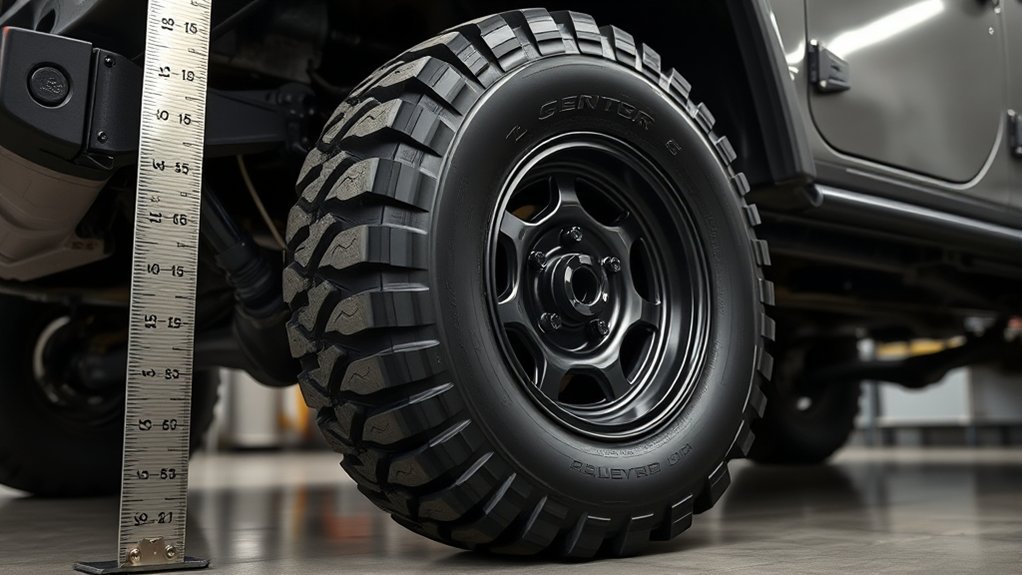
A 285/75R16 tire fits a 16-inch wheel diameter, but wheel diameter is only the first requirement. You also need the right wheel width, offset, load rating, and vehicle clearance.
Many LT285/75R16 tires are approved for wheels around 7.5 to 9 inches wide. An 8-inch wheel is a common measuring rim and often gives a balanced sidewall shape. Some models may allow a slightly wider range, so the final answer always comes from the specific tire’s spec sheet.
Warning: Do not assume a 285/75R16 is safe on a 16×7 wheel. Most manufacturer specs list 7.5 inches as the minimum approved wheel width for this size. If the tire maker does not approve 7 inches, use a different wheel or a narrower tire.
Fitment Checklist Before Buying
- Wheel width: Check the approved rim width for the exact tire model.
- Wheel offset and backspacing: A wider tire can rub control arms, sway bars, fender liners, or mud flaps.
- Steering clearance: Turn lock-to-lock and check both sides.
- Suspension compression: Check clearance when the suspension is loaded or flexed.
- Load index and load range: Match or exceed your vehicle’s requirements.
- Inflation pressure: Use the vehicle placard and tire load/inflation guidance, not just the maximum pressure printed on the sidewall.
Pro Tip: If you are moving up from a smaller stock tire, measure clearance with the wheels turned and the suspension compressed. A tire can clear while parked but rub during turns, bumps, towing, or off-road flex.
How Does a 285/75R16 Change Speedometer Accuracy?
A larger tire travels farther with each revolution. That means your vehicle may move faster than the speedometer shows if the speedometer was calibrated for a smaller original tire. Tire Rack explains that speedometers are based on tire revolutions calculated from the original tire size, so changing tire diameter affects speedometer accuracy.
Use this simple formula:
Actual speed = speedometer reading × new tire diameter ÷ original tire diameter
For example, if your truck came with 265/75R16 tires at about 31.6 inches tall and you move to 285/75R16 at about 32.8 inches tall, the new tire is about 3.7% taller. At an indicated 60 mph, your actual speed would be about 62.2 mph before recalibration.
| Original Tire Size | Approx. Diameter | Change to 285/75R16 |
|---|---|---|
| 265/75R16 | 31.6 in | About 3.7% taller |
| 285/70R16 | 31.7 in | About 3.5% taller |
| 245/75R16 | 30.5 in | About 7.6% taller |
If the change is large, recalibration may be worth doing. Tire Rack also notes that major diameter changes can affect ABS, traction control, and stability-control behavior because those systems rely on wheel-speed data.
[Products Worth Considering]

This portable cordless tire inflator delivers up to 160 PSI with fast 17 L/min airflow to help you quickly top up tires and get back on the road. It features dual power mode, running on a 21V rechargeable battery or a 12V DC adapter for convenient roadside use. An automatic shut-off with digital pressure gauge helps prevent overinflation, and a built-in LED light improves visibility in low-light conditions.
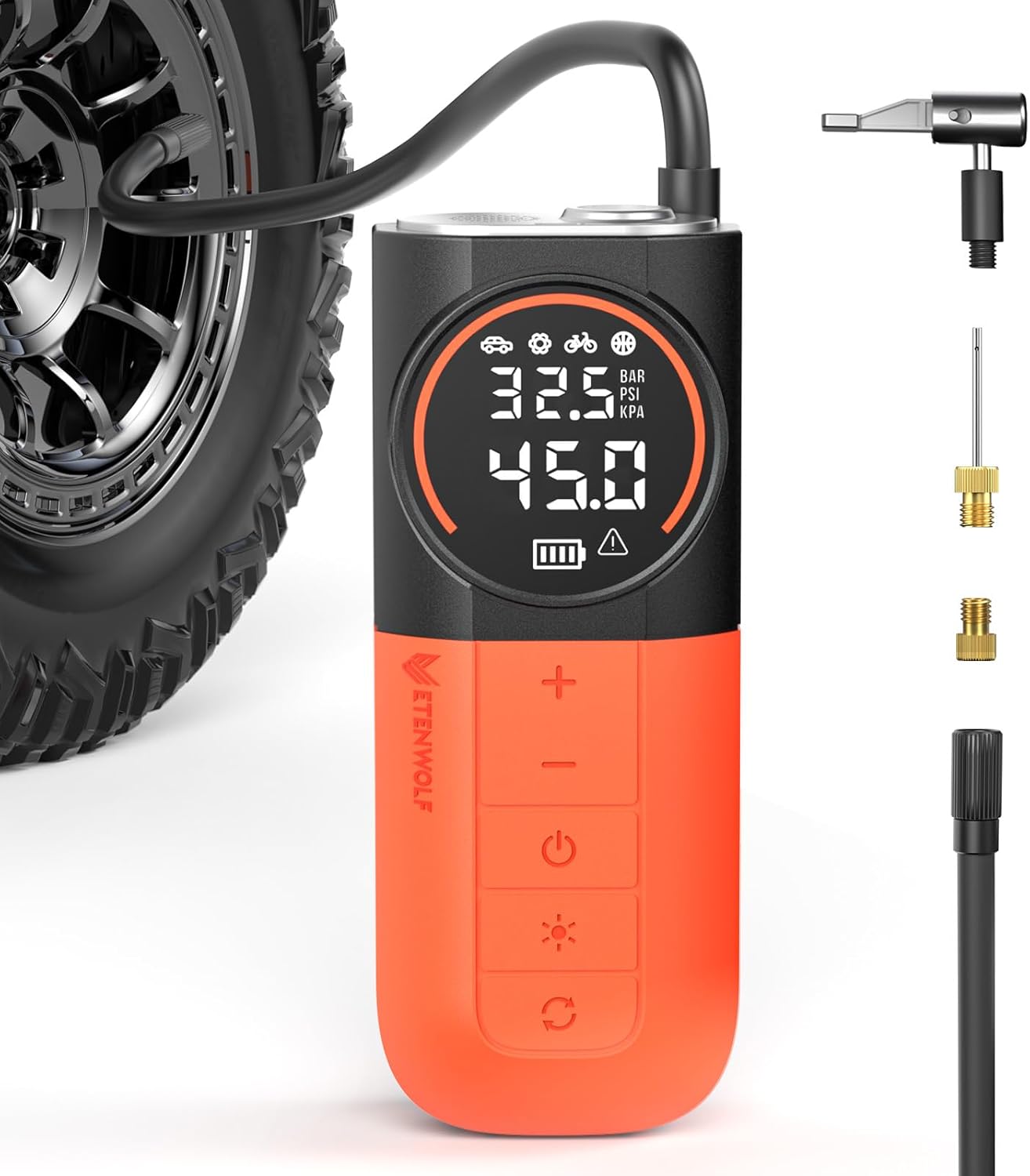
The ETENWOLF S1 cordless tire inflator delivers ultra-fast inflation with up to 160 PSI and a 20 L/min airflow for quicker tire top-offs. Its 5200mAh battery and cooling system support inflating many tires and sports balls on a single charge, while the digital pressure gauge and multi-unit display help you reach the right pressure accurately. With preset modes, pressure memory, an auto-stop feature, and an LED flashlight, it’s built for easy roadside and everyday use.
How Do 285/75R16 Tires Change Performance?
Moving to a 285/75R16 can change how your vehicle feels. The taller diameter can raise ground clearance, but the gain is only half the tire-diameter increase. For example, moving from a 31.6-inch tire to a 32.8-inch tire adds about 1.2 inches of total diameter, which gives roughly 0.6 inch of extra ground clearance at the axle.
The wider footprint may help traction in some conditions, especially off-road, but it can also increase weight, rolling resistance, and steering effort. Results depend on the tire’s tread design, rubber compound, inflation pressure, vehicle weight, and road surface.
- Ground clearance: Usually improves when replacing a smaller tire.
- Ride comfort: The tall sidewall can absorb impacts well.
- Steering feel: Wider and heavier tires may feel slower to turn.
- Fuel economy: May drop because of added weight and rolling resistance.
- Gearing: A taller tire effectively raises gearing, which can soften acceleration.
- Braking: Added tire weight and diameter can affect stopping feel and brake workload.
Load Range, Load Index, and Speed Rating
Not every 285/75R16 tire has the same load rating or speed rating. Many LT285/75R16 tires are Load Range E, but you still need to check the full service description printed after the size, such as 126R or 126/123Q.
The NHTSA tire safety guide explains that load index is a measurement of how much weight each tire can support, while the speed rating shows the speed the tire is designed to handle for extended periods. In NHTSA’s speed-rating chart, Q equals 99 mph and R equals 106 mph.
A manufacturer spec sheet gives the model-specific answer. General Tire’s LT285/75R16 Grabber A/TX, for example, lists Load Range E, load index 126, speed rating R, 80 psi maximum inflation pressure, and 3,750 lb maximum load. Another 285/75R16 model may have a different service description, so do not assume all tires in this size are identical.
285/75R16 vs Similar Tire Sizes
Comparing nearby sizes helps you understand what changes when you go taller, wider, or both.
| Tire Size | Approx. Diameter | Approx. Width | Main Difference |
|---|---|---|---|
| 265/75R16 | 31.6 in | 10.4 in | Narrower and shorter |
| 285/70R16 | 31.7 in | 11.2 in | Same nominal width, shorter sidewall |
| 285/75R16 | 32.8 in | 11.2 in | Common near-33-inch 16-inch tire |
| 295/75R16 | 33.4 in | 11.6 in | Taller and wider than 285/75R16 |
Frequently Asked Questions
Is a 285/75R16 a 33-inch tire?
Yes, it is commonly called a 33-inch tire, but its calculated diameter is about 32.8 inches. That makes it very close to 33 inches, though not exactly 33.0 inches on paper.
What is a 285/75R16 tire in inches?
A 285/75R16 tire is about 32.8 inches tall, 11.2 inches wide by nominal section width, and has an 8.4-inch sidewall. Its circumference is about 103.1 inches.
Will a 285/75R16 fit a 16×7 rim?
Usually, no. Many LT285/75R16 tires list 7.5 inches as the minimum approved wheel width. A 16×7 rim is generally too narrow unless the tire manufacturer specifically lists 7 inches as approved for that exact model.
What is the best rim width for 285/75R16?
An 8-inch-wide wheel is a common match because many manufacturers use an 8-inch measuring rim for this size. Most LT285/75R16 tires are approved for a range around 7.5 to 9 inches, but the exact range depends on the tire model.
Which tire is taller, 285/75R16 or 295/75R16?
A 295/75R16 is taller if the aspect ratio and wheel diameter stay the same. A 285/75R16 is about 32.8 inches tall, while a 295/75R16 is about 33.4 inches tall.
What is the difference between 285/75R16 and 285/70R16?
Both sizes have the same nominal 285 mm section width, but the 285/75R16 has a taller sidewall. A 285/75R16 is about 32.8 inches tall, while a 285/70R16 is about 31.7 inches tall.
Do I need to recalibrate my speedometer after installing 285/75R16 tires?
You may need to recalibrate if 285/75R16 is meaningfully taller than your original tire size. The bigger the diameter change, the more your speedometer, odometer, shift behavior, and driver-assist systems may be affected.
Conclusion
A 285/75R16 tire gives you a tall, broad light-truck footprint: about 32.8 inches in overall diameter, 11.2 inches of nominal section width, and 8.4 inches of sidewall. It is close enough to a 33-inch tire for everyday comparison, but fitment still depends on your wheel width, offset, clearance, load rating, and original tire size. Before buying, check the exact tire manufacturer’s spec sheet, confirm your wheel is within the approved range, and measure your vehicle for rubbing at full steering lock and suspension compression.
Sources
- General Tire Grabber A/TX Specifications — backs LT285/75R16 model-specific diameter, section width, approved rim width, load range, max load, and loaded revolutions per mile.
- NHTSA Tire Safety Guide — backs sidewall markings, aspect ratio, rim diameter, load index, and speed rating explanations.
- Tire Industry Association: Reading a Tire Sidewall — backs tire width, aspect ratio, radial construction, and bead/rim diameter definitions.
- Tire Rack: How Do I Check Speedometer Accuracy? — backs speedometer effects from changing tire diameter.
- Tire Rack: Plus Size Wheels & Tires — backs guidance that diameter changes can affect speedometer accuracy, ABS, traction control, and stability systems.

Related Articles
How Much Do Used Tires Cost? Price Guide
A quick guide to used tire prices reveals what you’ll really pay, and the factors that could save you more than you expect.
Read More
Walmart Tire Return Policy: Rules and Time Limits
At Walmart, tire returns have strict rules and time limits, but one overlooked detail could determine whether your refund gets approved.
Read More
How Often Does Costco Have Tire Sales?
Just how often does Costco discount tires, and when are the biggest savings hidden?
Read More