
How Tires Perform in Rain: A Guide for Toyota RAV4 Drivers
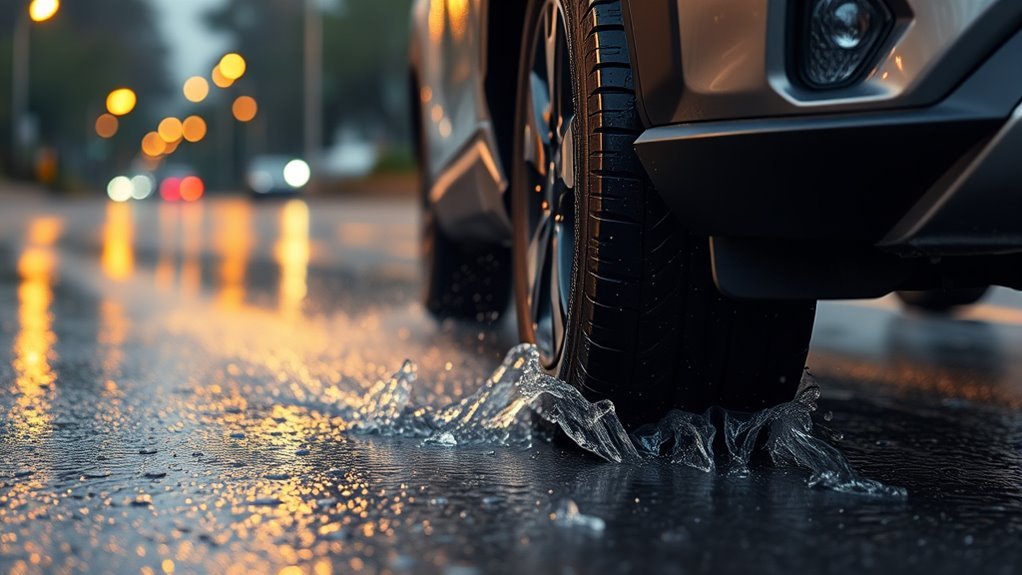
You need RAV4 tires that can move water out of the contact patch, brake predictably on wet pavement, and stay stable during sudden rain. The best choice depends on your climate: a premium all-season tire can be excellent for warm rain, while a 3PMSF all-weather tire makes more sense where rain, cold, slush, and light snow overlap. Whatever you buy, tire condition matters as much as tire type: keep the correct PSI, measure tread depth often, and replace tires early when wet grip starts to fade.
Quick Answer
For a Toyota RAV4 in rain, choose tires with strong wet-braking reviews, wide circumferential grooves, dense siping, and silica-rich tread compounds. Use all-weather 3PMSF tires if you also face cold, slush, or snow. Keep tread at least 4/32″ for rain safety and inflate to the PSI listed on your RAV4 door placard.
Key Takeaways
- The best rainy-road tires for a RAV4 have deep water channels, plenty of sipes, and a rubber compound designed for wet grip.
- 3PMSF is a severe-snow symbol, not a rain rating, but 3PMSF all-weather tires are useful in mixed rain, cold, slush, and snow.
- Replace tires before wet performance becomes risky. AAA testing found big wet-braking and handling losses when all-season tires were worn to 4/32″.
- Check the driver-side door placard for the correct tire size, load rating, and cold tire pressure for your exact RAV4.
At a Glance
| Time Required | 5 minutes for checks; 30–60 minutes for tire shopping research |
| Difficulty | Easy |
| Tools Needed | Tread-depth gauge, tire-pressure gauge, owner’s manual or door placard |
| Cost | Free for checks; replacement cost varies by size, brand, warranty, and installation fees |
Best Tires for RAV4 in Rain
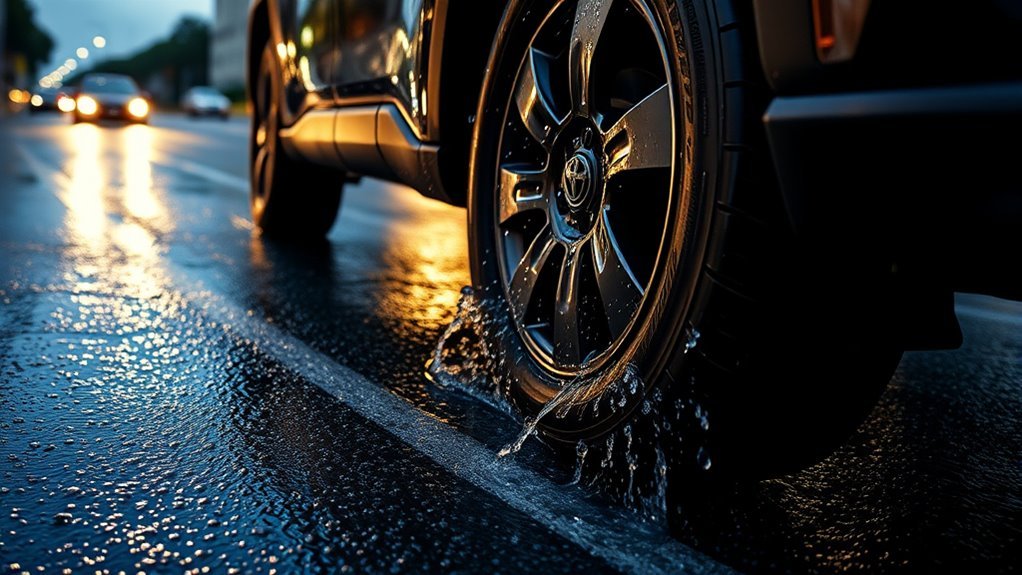
The best rain tires for a RAV4 are not simply the most expensive tires on the rack. Look for tires that show proven wet braking, hydroplaning resistance, and stable handling in independent testing or retailer test data. On the tire itself, prioritize the correct size, load index, speed rating, and service description for your RAV4 before comparing tread design.
For most RAV4 drivers, the strongest options fall into three groups:
- Premium all-season touring tires: Best for drivers in mild or warm climates who mainly need wet-road braking, comfort, and quiet highway manners.
- All-weather tires with the 3PMSF symbol: Best for drivers who see rain plus cold mornings, slush, or occasional snow. These are a better one-set solution than standard all-seasons in mixed winter weather.
- Dedicated winter tires: Best for regions with frequent snow, ice, and freezing rain. They are not necessary for every rainy climate, but they give the most cold-weather grip when temperatures stay low.
Note: AWD helps your RAV4 accelerate, but it does not shorten braking distance on wet pavement. Braking and cornering still depend heavily on tire grip, tread depth, inflation, and speed.
[Products Worth Considering]

This portable cordless tire inflator delivers up to 160 PSI with fast 17 L/min airflow to help you quickly top up tires and get back on the road. It features dual power mode, running on a 21V rechargeable battery or a 12V DC adapter for convenient roadside use. An automatic shut-off with digital pressure gauge helps prevent overinflation, and a built-in LED light improves visibility in low-light conditions.

EVOULTES heavy duty tire inflator with an integrated gauge delivers accurate pressure readings from 10–120 PSI, helping you inflate, deflate, and check tires in one tool. The 16.5-inch extended dual-head air chuck with swivel base reaches hard-to-access dual wheel valves on trucks and RVs. A brass trigger core and side-mounted air release valve make operation smooth, with standard 1/4" NPT threading and quick-connect compatibility for easy setup.

The JACO FlowPro Tire Inflator measures, inflates, and airs down tires up to 100 PSI with battery-free operation and ±2% accuracy after calibration. It features a glowing pressure dial for night visibility, a heavy-duty steel build with a hybrid hose, and a precision push-to-inflate thumb trigger. The patented Lightning Air Chuck locks on for a secure seal, and the kit includes quick-connect hardware for easy inline use with your air compressor.
How Wet Traction Works: Grooves, Sipes, and Silica
Rain reduces traction because water can separate the tire from the pavement. A good wet-weather tire fights that in three ways: it pushes water away, keeps rubber flexible enough to grip, and maintains a stable contact patch under braking and cornering.
Grooves Channel Water
Wide circumferential grooves are the long channels that run around the tire. They help move water away from the contact patch so the tire can stay connected to the road. Deeper, open tread channels usually improve hydroplaning resistance, especially at highway speeds and during heavy rain.
Sipes Add Biting Edges
Sipes are the small cuts across tread blocks. They create extra biting edges and help the tread conform to the wet road surface. More siping is not always better if it makes the tread feel squirmy, so look for tires with stable blocks and well-designed siping rather than a tread that looks overly soft or fragile.
Silica Compounds Improve Wet Grip
Modern wet-weather tire compounds often use silica to improve grip on wet pavement while limiting rolling resistance. A silica-rich compound is especially helpful in cool, wet weather because it can stay more flexible than a harder compound. That said, compound claims vary by brand, so compare real wet-braking results when available.
Warning: No tire can prevent hydroplaning if you drive too fast through standing water. Slow down before puddles, avoid sudden steering inputs, and increase following distance in heavy rain.
Tread Depth, Wear, and Braking on Wet Roads
Tread depth is one of the biggest wet-safety factors you can control. Many U.S. state inspection rules use 2/32″ as a legal minimum, but that does not mean 2/32″ is a smart target for rain. For wet-weather driving, treat 4/32″ as the practical replacement warning point.
AAA testing found that all-season tires worn to 4/32″ had 42% to 44% longer wet stopping distances than new tires in its test vehicles, and wet handling dropped by 28% to 33%.
How to Measure Tread Depth
Use a tread-depth gauge and measure several spots across each tire: inner edge, center, and outer edge. Uneven readings can point to alignment, rotation, inflation, or suspension problems. If one part of the tire is near 4/32″, do not rely on the deepest groove to judge safety.
You can also use the quarter test as a quick check. Insert a U.S. quarter into the tread with Washington’s head facing down. If the top of his head is fully visible, your tread is around 4/32″ or less, and wet traction should be taken seriously.
Why Worn Tires Stop Later
As tread wears down, the grooves have less space to move water. The tire may still feel fine on dry roads, but wet braking, cornering, and hydroplaning resistance can drop sharply. Aging also matters: old rubber can harden even when tread remains, so inspect the tire date code and ask a tire professional if the tires are six years old or older.
Why Proper Tire Inflation Helps Prevent Hydroplaning
Correct tire pressure helps the tread keep its designed shape. If a RAV4 tire is underinflated, the contact patch can distort, the tread may not evacuate water as intended, and the tire can run hotter. Overinflation is also a problem because it can reduce the tire’s ability to conform to the road surface and may increase center wear.
Use the cold tire pressure listed on the driver-side door placard, not the maximum PSI molded on the tire sidewall. Toyota’s RAV4 manual directs owners to use the vehicle’s tire and loading information label for tire pressure, tire size, and load information. Check pressure when the tires are cold, ideally before driving or after the vehicle has been parked for several hours.
Pro Tip: Check tire pressure at least monthly and before long trips. Temperature changes can move PSI up or down, so a tire that was correct in warm weather may be low after a cold front.
Read Tire Markings: 3PMSF, M+S, UTQG, Size, and Load Rating
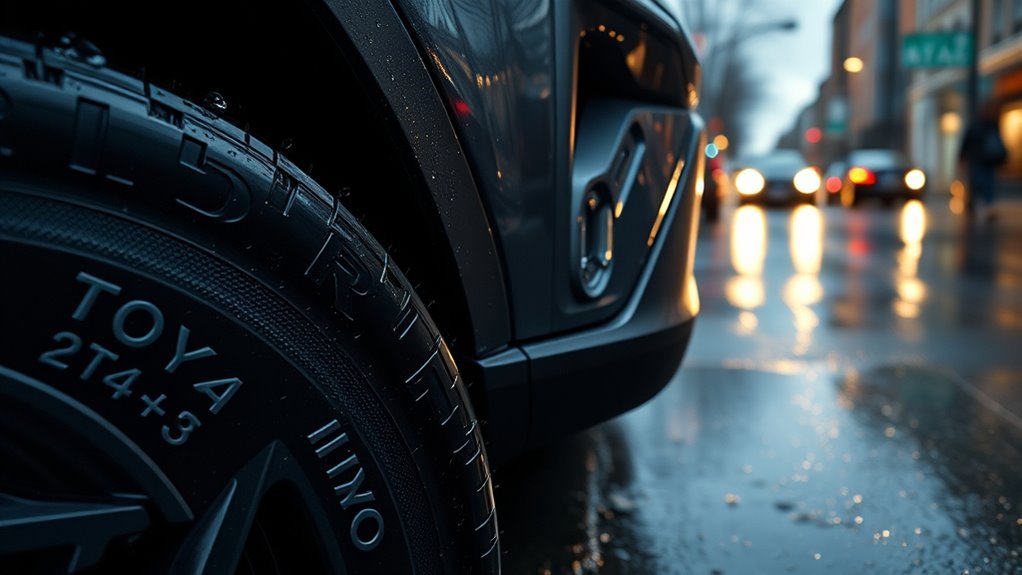
Tire markings can help you narrow your choices, but they are easy to misunderstand. Do not buy a tire for rain based on one symbol alone. Use the sidewall, the RAV4 door placard, and independent wet-performance information together.
3PMSF Winter Symbol
The Three-Peak Mountain Snowflake symbol means the tire meets a severe-snow performance definition. USTMA describes the symbol as a mountain with a snowflake placed near the M+S designation on qualifying tires. This is valuable if your rainy season also includes cold roads, slush, or snow.
For pure warm-weather rain, however, 3PMSF is not automatically better than a premium all-season tire with excellent wet-braking results. Some all-weather tires trade a little warm-weather steering sharpness or tread life for cold-weather capability. Match the tire to your real driving conditions.
M+S Marking
M+S means mud and snow, but it is a broad marking and does not guarantee severe-snow traction. If winter capability matters, look for 3PMSF in addition to M+S. If rain is your main concern, compare wet braking, hydroplaning resistance, and tread depth instead of relying on M+S alone.
UTQG Traction Grades
In the U.S., tire sidewalls may show a UTQG traction grade such as AA, A, B, or C. This grade is useful, but it does not tell the whole wet-performance story. It is based on specific government test conditions and does not fully capture hydroplaning resistance, cornering feel, noise, ride, or how the tire performs as it wears.
RAV4 Size, Load Index, and Speed Rating
Before choosing a model, confirm the exact size and service description on your RAV4. Depending on year and trim, RAV4 tires may use different wheel sizes, so do not assume another RAV4 owner’s tire size matches yours. The door placard is the most reliable starting point for tire size, cold PSI, and load information.
Best Tire Types for RAV4: All-Season, All-Weather, and Winter
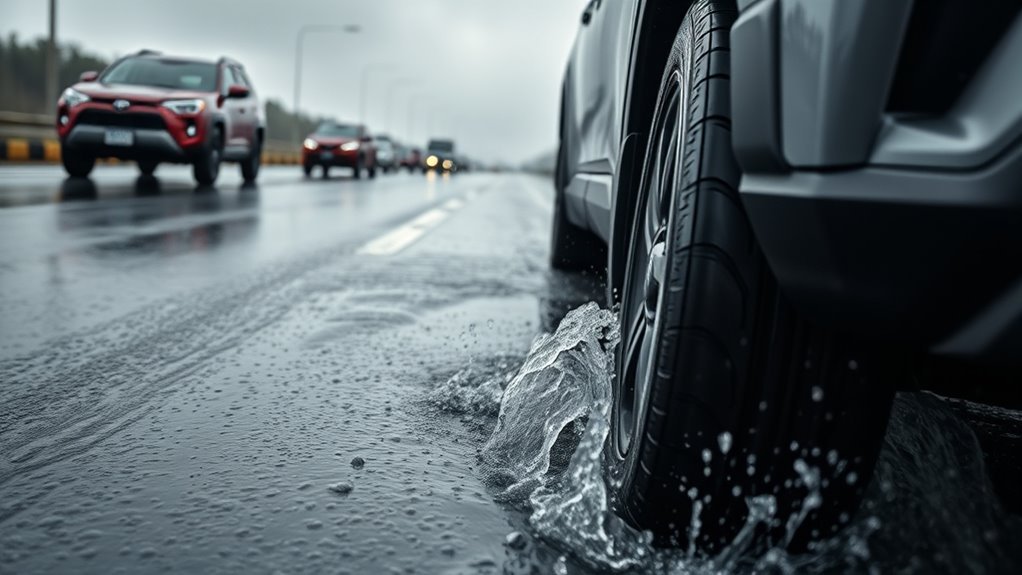
Your best tire type depends on your local weather, driving style, and tolerance for seasonal tire swaps. Here is how to choose without overbuying.
All-Season Tires
Choose a premium all-season touring or crossover/SUV tire if you mostly drive in warm or mild rain. These tires usually balance wet braking, tread life, comfort, and low road noise. They are a strong fit for RAV4 owners who do not deal with regular snow or icy mornings.
When comparing all-season tires, focus on wet braking, hydroplaning resistance, warranty, ride quality, and noise. A cheaper tire can still perform well, but do not choose by price alone. AAA’s all-season tire study found price was not always a reliable indicator of wet performance.
All-Weather Tires
Choose an all-weather tire if you want one set of tires for rain, cold weather, slush, and light-to-moderate snow. All-weather tires usually carry the 3PMSF symbol, which makes them more versatile than standard all-season tires in winter conditions.
The tradeoff is that some all-weather tires may be louder, less efficient, or less crisp in warm weather than a premium touring all-season tire. For many RAV4 drivers in mixed climates, that compromise is worth it.
Winter Tires
Choose dedicated winter tires if you frequently drive in freezing rain, snow, ice, or mountain conditions. Winter tires use softer cold-weather compounds and tread designs built for low temperatures. They are not just for deep snow; they also help when pavement is cold and slick.
Do not run winter tires year-round in warm climates unless the tire manufacturer specifically allows it. Warm pavement can increase wear and reduce the benefits you bought them for.
Pick Tires by Driving Style and Local Rainfall
The right rain tire for a RAV4 in Seattle may not be the right tire for a RAV4 in Florida, Arizona, or the Northeast. Start with how and where you drive.
[Products Worth Considering]

This portable cordless tire inflator delivers fast, efficient inflation for cars, motorcycles, bikes, and sports balls with a digital pressure gauge. Use the one-click PSI preset with auto shut-off for accurate, hands-free topping to your target pressure up to 150 PSI. It’s compact and rechargeable with a built-in emergency LED light plus valve adapters and accessories for quick, ready-to-go use.
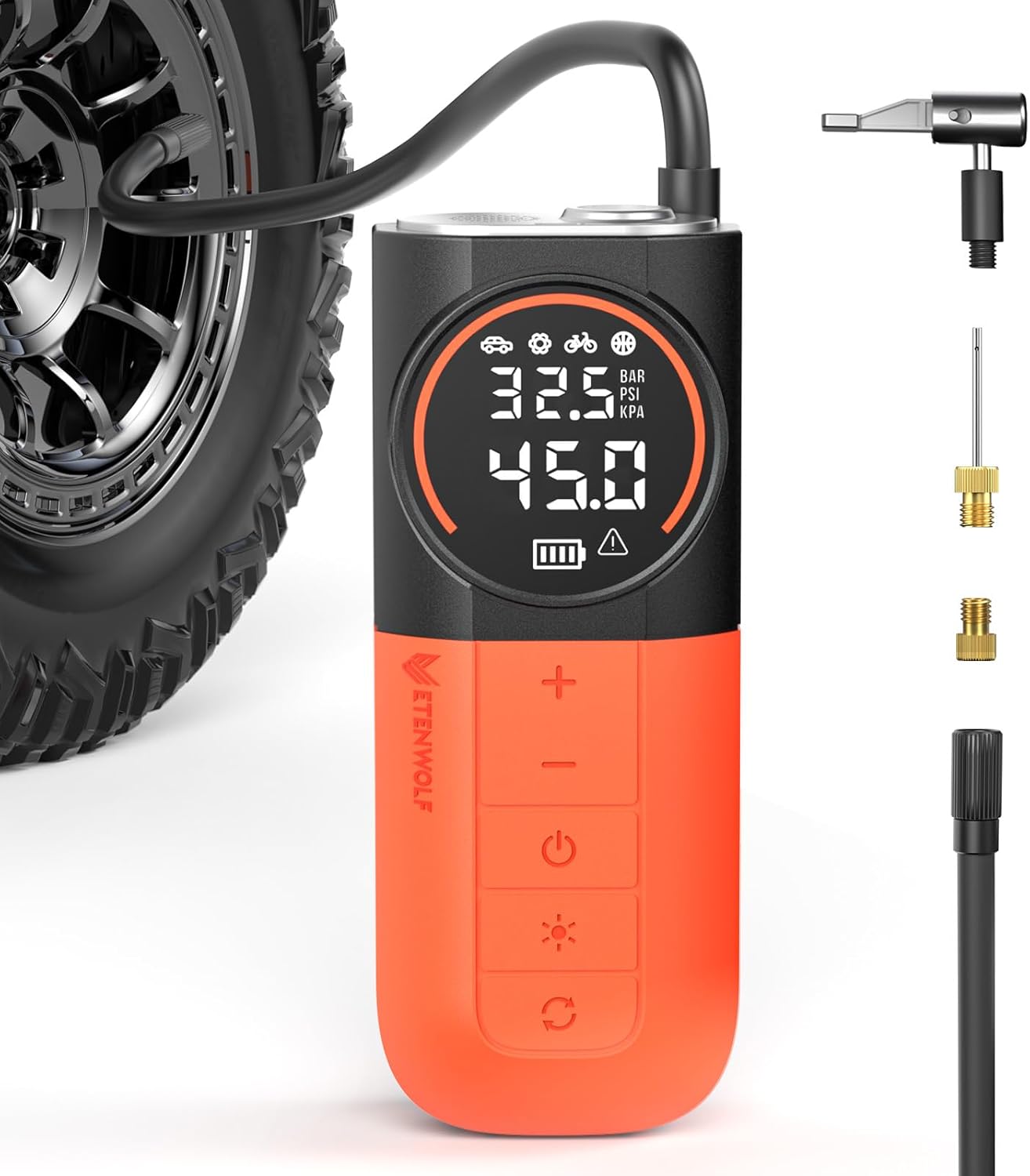
The ETENWOLF S1 cordless tire inflator delivers ultra-fast inflation with up to 160 PSI and a 20 L/min airflow for quicker tire top-offs. Its 5200mAh battery and cooling system support inflating many tires and sports balls on a single charge, while the digital pressure gauge and multi-unit display help you reach the right pressure accurately. With preset modes, pressure memory, an auto-stop feature, and an LED flashlight, it’s built for easy roadside and everyday use.
City Driving and Stop-and-Go Traffic
If you drive mostly in town, prioritize wet braking and predictable low-speed grip. You will notice the benefit during sudden stops at traffic lights, crosswalks, and intersections. Dense siping and a wet-focused compound matter more than a rugged-looking tread.
Highway Driving
If you spend a lot of time at highway speed, prioritize hydroplaning resistance, stability, and noise control. Look for strong circumferential grooves, solid center ribs, and independent wet-road testing. Replace early if tread drops toward 4/32″, because highway-speed rain leaves little margin for worn tires.
Heavy Rain Climates
In areas with frequent downpours, avoid tires with shallow, closed tread patterns unless testing proves they handle water well. Deep channels, stable shoulder blocks, and strong wet braking should be high on your list. If heavy rain comes with warm temperatures, a wet-focused all-season tire may be the best match.
Cold, Wet, and Mixed Climates
If rain often arrives with temperatures near freezing, an all-weather tire with 3PMSF becomes more attractive. Cold pavement changes how rubber behaves, and a tire that feels fine in summer rain may become less confident in cold rain or slush.
Quick Checks to Keep RAV4 Tires Rain-Ready
You can complete a basic rain-safety tire check in under five minutes. Make this part of your monthly routine and repeat it before road trips or storm season.
- Check tread depth: Measure inner, center, and outer grooves on all four tires. Plan replacement when wet-weather tread depth approaches 4/32″.
- Check tire pressure cold: Use the PSI on the driver-side door placard. Do not use the maximum sidewall pressure as your target.
- Look for uneven wear: Feathering, cupping, or one-sided wear can point to alignment, rotation, balance, or suspension issues.
- Inspect for damage: Look for sidewall bubbles, cuts, punctures, exposed cords, and objects lodged in the tread.
- Confirm tire age: Read the DOT date code. If the tires are older, ask a professional to inspect them even if tread remains.
- Rotate on schedule: Follow the maintenance interval in your owner’s manual or the tire manufacturer’s guidance to keep wear even.
Note: If your RAV4 has a temporary spare, inspect it too. A rainstorm is the wrong time to discover that the spare is low, damaged, or missing required tools.
When to Replace Tires for Safe Wet Braking
Replace RAV4 tires when any tire approaches 4/32″ and you regularly drive in rain. Replace immediately if a tire reaches 2/32″, shows cords, has sidewall damage, develops a bubble, or cannot hold pressure. Also replace tires in sets when needed to protect balanced handling and AWD system operation.
For AWD RAV4 models, tire diameter differences can matter. If one tire is damaged and the other three are partly worn, ask a tire professional whether the new tire must be shaved to match or whether all four should be replaced. Keeping matched tread depth helps the drivetrain and keeps wet handling predictable.
Budgeting and Buying Tips: Getting Rain-Ready for Less
You can buy safer rain tires without wasting money. The key is to compare the right features and avoid choosing only by brand name or price.
- Start with the door placard: Match the correct size, load index, and speed rating for your exact RAV4.
- Compare wet braking first: Prioritize test results and owner feedback about rain performance over aggressive tread appearance.
- Check total installed cost: Include mounting, balancing, valve stems, tire disposal, taxes, alignment, road-hazard coverage, and warranty terms.
- Shop before the tires are urgent: Replacing before the rainy season gives you more time to compare rebates and promotions.
- Do not mix mismatched tires casually: Different tread depths, brands, or patterns can affect wet handling, especially on AWD models.
- Consider value, not just price: A slightly more expensive tire that lasts longer and brakes better in rain may cost less per safe mile.
Frequently Asked Questions
What tires are better for driving a RAV4 in the rain?
Choose tires with strong wet-braking results, wide water channels, stable tread blocks, plentiful siping, and a silica-rich compound. For warm rain, a premium all-season touring tire can be excellent. For cold rain, slush, and occasional snow, choose a 3PMSF all-weather tire.
Are all-weather tires better than all-season tires for rain?
Not always. All-weather tires are better when rain comes with cold, slush, or snow. In warm rain, a premium all-season tire with excellent wet-braking test results may feel quieter, smoother, and more responsive than some all-weather tires.
Does the 3PMSF symbol mean a tire is best for rain?
No. 3PMSF is a severe-snow symbol, not a wet-grip rating. It is useful if your RAV4 sees cold rain, snow, or slush, but you should still compare wet braking, hydroplaning resistance, tread life, and noise before buying.
What tread depth is safe for rain?
For wet roads, plan replacement when tread depth approaches 4/32″. Tires may be legally usable at 2/32″ in many places, but wet braking and hydroplaning resistance can be much worse before that point.
Should I replace all four tires on an AWD RAV4?
Often, yes, especially if the remaining tires are significantly worn. AWD systems work best when tire diameters are closely matched. If one tire is damaged, ask a tire professional whether one matched replacement, tire shaving, or a full set is the safest choice.
What PSI should RAV4 tires be for rain?
Use the cold tire pressure printed on your RAV4’s driver-side door placard. Do not lower tire pressure for rain, and do not use the maximum PSI on the tire sidewall as your target pressure.
Conclusion
The safest rain tire for your RAV4 is the one that fits your vehicle correctly, has proven wet-road performance, and still has enough tread depth to move water. For warm rainy climates, compare premium all-season tires with strong wet braking. For cold rain, slush, and occasional snow, look at 3PMSF all-weather tires. Then keep them safe with monthly PSI checks, tread-depth measurements, rotations, and prompt replacement before wet braking becomes a gamble.
Sources
- NHTSA TireWise — tire safety, ratings, maintenance, labels, and consumer tire guidance.
- NHTSA Tire Safety Brochure — tire pressure, load limits, inspections, tread, and basic tire maintenance.
- AAA All-Season Tire Testing Report — wet stopping distance and handling differences for new tires versus tires worn to 4/32″.
- AAA Newsroom: Tread Lightly — summary of wet-road stopping distance and handling risks from worn tires.
- U.S. Tire Manufacturers Association TISB 37 — 3PMSF severe-snow tire symbol definition and marking information.
- Toyota RAV4 Owner’s Manual: Tire Inflation Pressure — checking the vehicle placard and tire inflation guidance.

Related Articles

Toyota RAV4 TPMS Reset: Easy Steps That Work
Unlock the secrets to resetting your Toyota RAV4's TPMS effortlessly—discover the essential steps to ensure your tires are always safe.
Read More
Toyota RAV4 Tire Rotation: DIY Steps & Pattern
Take control of your Toyota RAV4's tire maintenance with our simple DIY rotation guide—discover the best steps for optimal performance and longevity!
Read More
Mix Tire Brands on a Toyota RAV4? Expert Guide
Keeping your RAV4 safe? Learn when mixing tire brands risks traction, ABS/TCS and AWD damage — and what exact matches you must insist on.
Read More