What Are Tire Socks? Snow Traction Alternative Explained
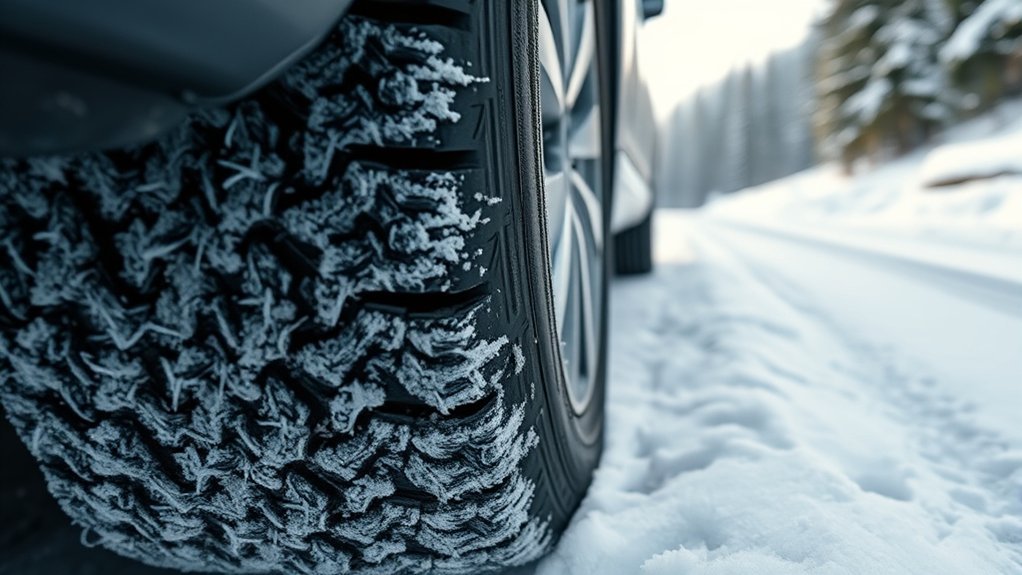
Tire socks, also called snow socks or textile tire chains, are fabric traction covers that slip over your tires to help your vehicle grip snow and ice. They are lighter and easier to store than metal chains, but they are still temporary traction devices. Use them for short winter stretches, emergencies, and chain-control areas only when your product, vehicle, and local rules allow it.
Quick Answer
Tire socks are woven fabric covers that fit over your drive tires to add short-term traction on snow and ice. They are easier to install than chains and useful for low-clearance vehicles, but they wear quickly on bare pavement and are not a replacement for winter tires in regular snow-belt driving.
Key Takeaways
- Tire socks improve temporary traction by adding a high-friction textile layer between the tire and snow or ice.
- They are best for short, low-speed use, not long trips on mixed pavement.
- Most passenger-car textile tire socks should stay at or below about 30 mph, but your product instructions may set a lower limit.
- Legality depends on the state, road, chain-control order, and whether your exact product is approved.
- Winter tires remain the better choice if you regularly drive in cold, snowy, or icy weather.
At a Glance
| Time Required | About 3–10 minutes once you have practiced and can stop safely |
| Difficulty | Easy to moderate, depending on wheel-well clearance and weather |
| Tools Needed | Correctly sized tire socks, gloves, flashlight, and a safe flat place to stop |
| Cost | Varies by brand, tire size, and vehicle class; usually sold as a reusable pair |
What Are Tire Socks?

Tire socks are textile traction devices that stretch over a tire like a fitted fabric cover. Instead of using metal links to dig into snow, they use woven road-contact fabric, tension, and friction to help the tire bite into snow and ice.
Most tire socks are sold in pairs and are installed on the vehicle’s drive tires. Front-wheel-drive vehicles usually need them on the front tires. Rear-wheel-drive vehicles usually need them on the rear tires. All-wheel-drive and four-wheel-drive vehicles can be more complicated, so check your owner’s manual and the tire sock instructions before choosing one pair or two.
They are popular because they are compact, lightweight, quieter than chains, and less likely to scratch alloy wheels. They are also helpful on many low-clearance vehicles where metal chains may not be recommended.
Note: “Tire socks” is a general term. Approval, fit, speed limits, and durability depend on the exact brand and model you buy. Always match the product to your tire size and vehicle manual.
How Tire Socks Work on Snow and Ice
Tire socks work by creating a fabric contact patch between the tire and the slippery surface. The textile surface helps increase friction on snow and ice, while the elastic fit keeps the sock centered around the tread. Some products also use a road-contact fabric designed to absorb the thin water layer that can form between the tire and snow, which helps improve dry friction.
| Feature | What It Does |
|---|---|
| Textile road-contact fabric | Adds friction between the tire and snow or ice |
| Elastic fit | Keeps the sock tight around the tire |
| Low-profile design | Helps vehicles with limited wheel-well clearance |
| Soft fabric construction | Runs quieter than most metal chains and is gentler on wheels |
The benefit is real, but it is limited. Tire socks help most when you need to get through a snowy pass, climb a short icy driveway, leave a parking area, or comply with a chain-control requirement that accepts textile traction devices. They do not turn all-season tires into winter tires, and they do not make ice safe at normal road speeds.
Tire Socks vs. Snow Chains and Winter Tires
Tire socks, snow chains, and winter tires solve different problems. Tire socks are the easiest to carry and install, chains are usually tougher for repeated harsh use, and winter tires are the best foundation for regular cold-weather driving.
| Option | Best For | Limitations |
|---|---|---|
| Tire socks | Short-term traction, low-clearance vehicles, emergency kits, accepted chain alternatives | Wear quickly on bare pavement and are not for high-speed use |
| Snow chains | Deep snow, steep grades, frequent chain-control driving, heavy-duty use | Heavier, louder, harder to install, and may not fit low-clearance vehicles |
| Winter tires | Regular winter driving, cold pavement, snow, slush, and ice | Require seasonal installation and storage if you use a second tire set |
If you drive in snow often, start with proper winter tires. Transport Canada recommends looking for the peaked mountain snowflake symbol because those tires meet specific snow-traction performance requirements and are designed for severe snow conditions. NHTSA also recommends checking tires carefully before winter travel and considering snow tires where appropriate.
When Tire Socks Are Worth Using

Tire socks are worth using when you need temporary traction and want something easier to store than chains. They are especially useful for drivers who rarely see winter weather but want a compact emergency option in the trunk.
Use tire socks when:
- You need short-term traction on snow-covered or icy roads.
- Your vehicle has limited clearance and chains are not recommended.
- You need a quieter, lighter alternative to chains for occasional use.
- Your local chain-control rules accept your exact textile traction device.
- You want emergency traction for a driveway, mountain pass, or parking-lot exit.
Avoid tire socks when:
- The road is mostly bare pavement.
- You need to drive at highway speed.
- The socks are torn, frayed, or do not fit snugly.
- Your owner’s manual prohibits textile or fabric traction devices.
- Local law requires a different device for your vehicle class.
Warning: Do not treat tire socks as a cure for unsafe conditions. Slow down, avoid sudden steering or braking, and remove them when you reach cleared roads. Bare pavement can quickly damage textile traction devices.
How to Install Tire Socks in 3 Steps
Practice at home before you need them in a storm. The basic process is simple, and AutoSock’s installation guide uses the same three-step pattern: cover the top half of the tire, move the vehicle half a wheel turn, then pull the sock over the remaining tire surface.
- Park safely and prepare the tire. Stop on a flat, safe surface away from traffic. Turn on hazard lights, set the parking brake, and put on gloves. Confirm that you are installing the socks on the correct drive tires.
- Pull the sock over the top half of the tire. Center the fabric over the tread and pull it down as far as possible. Smooth out bunching on the front and inner side of the tire.
- Move half a wheel turn and finish the fit. Drive forward or backward slowly by about half a tire rotation. Stop, set the brake again, and pull the remaining fabric over the uncovered part of the tire.
After both socks are installed, check that the fabric is centered and snug. Many textile devices self-center as you begin moving, but you should still stop after a short distance if anything feels loose, noisy, or unbalanced.
Pro Tip: Keep the socks, gloves, and a small flashlight together in one bag. The easiest installation is the one you practiced before your hands are cold and the road is slick.
Tire Sock Speed Limits and Driving Tips
Most passenger-car tire socks are designed for low-speed use. AutoSock’s U.S. guidance says passenger cars should drive at or below 50 km/h, while buses and forklifts should stay at or below 30 km/h, and drivers may need to go slower when conditions require it. Follow the limit printed in your product manual, the road signs, and the weather in front of you.
Use these driving habits with tire socks:
- Keep speed low and steady.
- Accelerate gently to avoid wheelspin.
- Brake early and smoothly.
- Turn gradually instead of making sharp steering inputs.
- Avoid dry pavement whenever possible.
- Pull over safely if you feel vibration, thumping, or slipping.
Leave traction control and stability systems active unless your vehicle manual says otherwise. Some product instructions specifically advise keeping anti-slip programs such as ASR or ESP activated.
Are Tire Socks Legal in the USA?

Tire socks can be legal in the USA, but you should not assume every fabric traction product is accepted everywhere. Legality depends on the exact product, your vehicle type, the state, the road, and the chain-control level in effect.
For example, AutoSock says its textile traction device is approved in all 50 states. Colorado’s traction law page says drivers may comply with chains or an approved alternative traction device during certain traction and chain-law conditions, and it publishes an approved-product list. Washington’s alternative traction device rule requires testing, documentation, and approval standards for products used when chains are required.
Federal and State Rules
There is no single simple rule that makes every tire sock automatically valid on every U.S. road. Some states publish approved-product lists. Some allow manufacturer-certified alternative traction devices. Some enforcement decisions depend on the road, vehicle class, and weather emergency.
Before a winter trip, check:
- Your state DOT or highway patrol chain-law page.
- The specific road or mountain-pass restriction.
- Whether your product is approved as an alternative traction device.
- How many tires must be covered for your vehicle type.
- Your vehicle owner’s manual for traction-device restrictions.
Chain Law Compliance
In a chain-control area, “tire socks allowed” usually means approved textile traction devices are allowed, not every generic fabric product. Keep the product packaging or approval information in the vehicle so you can show what device you are using if asked at a checkpoint.
Check Local Regulations
Rules can change before and during a storm. Recheck regulations before every winter trip, especially when crossing state lines or driving through mountain passes. If a sign, officer, or DOT alert requires a device you do not have, do not continue into the restricted area.
How to Size, Remove, and Store Tire Socks
Correct sizing matters. A sock that is too small may not fit over the tire, and one that is too large can slip, bunch, or wear out quickly. Read your tire sidewall and match the width, aspect ratio, and rim diameter to the product size chart.
Choosing the Right Size
Your tire size looks like a sequence such as 225/60R17. Use the full tire code, not just the wheel diameter. If your vehicle has optional tire sizes, verify the actual size printed on the tire currently mounted on the vehicle.
Before buying, confirm:
- The tire sock fits your exact tire size.
- The product is rated for your vehicle class and load.
- Your owner’s manual allows fabric traction devices.
- You have enough wheel-well clearance.
- The product is accepted where you plan to drive.
Safe Removal Steps
Remove tire socks as soon as road conditions allow. Stop in a safe, flat place away from traffic, set the parking brake, and pull the fabric off the top of the tire. If part of the sock is trapped under the tire, move the vehicle slightly and finish removing it.
Do not yank aggressively if the sock is frozen to the tire. Let it loosen or move the vehicle carefully. After removal, inspect both socks for tears, thinning fabric, broken seams, or heavy wear.
Drying and Storage
Shake off snow, dirt, sand, and grit after use. Let the socks dry completely before packing them away. Some textile traction devices are washable, but you should follow the care instructions for your exact product.
- Dry them before storage to reduce mildew and odor.
- Store them in a cool, dry place.
- Keep gloves and instructions in the same bag.
- Replace them if the fabric is torn or badly worn.
- Do not leave them mounted overnight if they may freeze to the tire.
Tire Sock Troubleshooting
If tire socks do not feel right after installation, stop safely and inspect them. Most problems come from wrong sizing, uneven fitting, dry pavement, or driving too fast for conditions.
| Problem | Likely Cause | What to Do |
|---|---|---|
| Sock will not fit | Wrong size or not enough clearance | Recheck the tire sidewall and product size chart |
| Sock slips or bunches | Loose fit or uneven installation | Stop, recenter the sock, and pull it evenly over the tread |
| Vibration or thumping | Sock is not centered or is damaged | Stop safely and inspect before continuing |
| Fast wear | Driving on cleared pavement | Remove the socks when you leave snow or ice |
| Poor traction | Ice, deep snow, worn tire, or wrong product | Slow down, avoid sudden inputs, and consider chains or winter tires for harsher conditions |
Frequently Asked Questions
Are tire socks as good as chains?
Not always. Tire socks are usually easier to install, quieter, lighter, and better for low-clearance vehicles. Chains are usually more durable for repeated harsh use, deep snow, and steep winter conditions. Choose based on your vehicle manual, local law, and how often you drive in severe winter weather.
Are tire socks legal in all states?
Do not assume every tire sock is legal everywhere. Some specific textile traction devices are approved in many chain-law areas, but rules depend on the state, road, vehicle class, and product. Check the state DOT or highway patrol before your trip.
How does a tire sock work?
A tire sock wraps around the tire tread and adds a fabric contact surface. That textile layer increases friction on snow and ice, helping the tire grip better than rubber alone in short-term low-speed conditions.
How fast can I drive with tire socks?
For many passenger-car tire socks, the upper limit is about 30 mph or 50 km/h, but some vehicle classes and products have lower limits. Always follow your product manual, posted signs, and road conditions. Slower is safer on ice.
Can I drive on dry pavement with tire socks?
Only for the shortest practical distance if you must reach a safe removal spot. Textile tire socks are made for snow and ice. Bare pavement can wear the fabric quickly and reduce their useful life.
Do tire socks go on the front or rear tires?
Install them on the drive tires unless your product instructions or vehicle manual says otherwise. Front-wheel-drive vehicles usually use them on the front tires. Rear-wheel-drive vehicles usually use them on the rear tires.
Can I use tire socks on an AWD or 4WD vehicle?
Often yes, but check your owner’s manual first. Some AWD and 4WD systems have specific traction-device rules, and some vehicles may require devices on more than one axle or prohibit certain devices because of clearance.
Conclusion
Tire socks are a practical winter traction tool when you use them for the right job. Keep a correctly sized pair in your vehicle if you occasionally face snow, ice, mountain passes, or chain-control areas that accept approved textile devices. For regular winter driving, use proper winter tires, keep your speed low, and treat tire socks as a temporary helper rather than a permanent substitute.
Sources
- AutoSock Installation Guide — three-step installation and cleared-road removal guidance
- AutoSock U.S. Installation and Use Guidance — recommended speeds, use on snow and ice, and care guidance
- AutoSock U.S. Regulations — product-specific U.S. approval claims
- Colorado Department of Transportation Traction and Chain Laws — approved alternative traction device example and compliance rules
- Washington Administrative Code 204-24-035 — alternative traction device approval standards
- Transport Canada: Using Winter Tires — winter tire symbol, cold-weather traction, and tread guidance

Related Articles

What Is a All Season Tire? Complete Guide & Best Options
One guide reveals what all-season tires really do—and which best options could keep you guessing until the final recommendation.
Read More
What Are Tire Chains? How They Work & When to Use Them
Tire chains boost traction on snow and ice, but when should you use them and what happens if you don’t?
Read More
What Is a Studdable Tire? Complete Guide & Best Options
Ought you choose a studdable tire for winter traction, or is a studless option better?
Read More