
What Does 116T Mean on a Tire? Load, Speed & Rating Guide
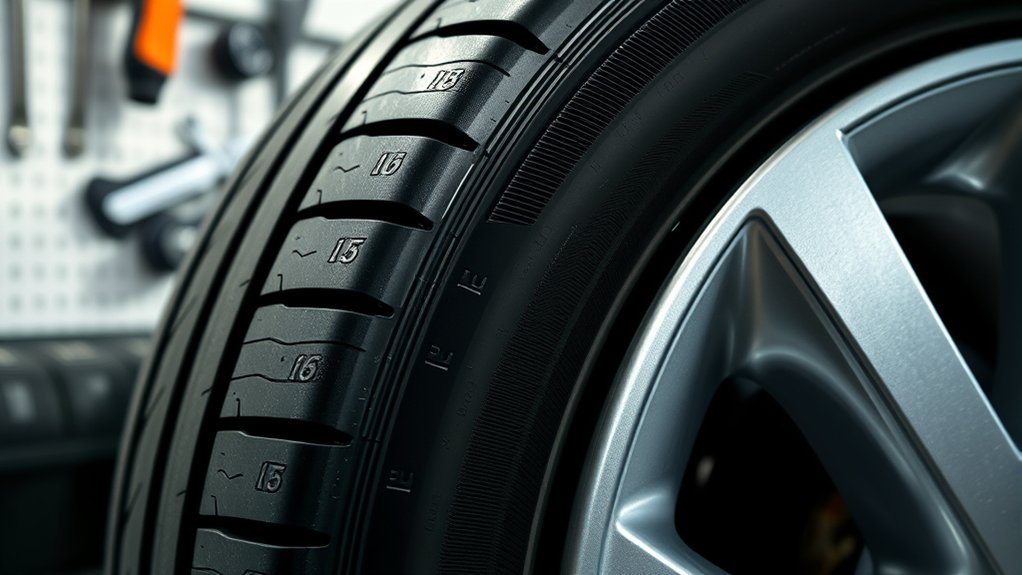
A 116T tire has two ratings in its service description: 116 is the load index, and T is the speed rating. In plain English, a 116 load index means the tire can carry up to 2,756 pounds per tire when properly inflated and used as specified, while a T speed rating means the tire is rated for up to 118 mph (190 km/h) under controlled test conditions.
Last updated: June 19, 2026 · Reviewed by: [VERIFY: add real tire-service reviewer or editorial byline]
Quick Answer
A 116T tire means the tire has a 116 load index and a T speed symbol. The 116 rating equals 2,756 pounds per tire when properly inflated, and the T rating equals 118 mph under specified conditions. Always match both ratings to your vehicle placard or owner’s manual.
Key Takeaways
- 116 is the load index, meaning up to 2,756 lb per tire when the tire is properly inflated and used within its limits.
- T is the speed rating, meaning up to 118 mph (190 km/h) under controlled test conditions.
- 116T does not tell you the tire type by itself. Check the full sidewall size for P, LT, ST, XL, load range, or dual-load markings.
- For trucks and SUVs, match the full tire size, load index, speed rating, tire type, and cold PSI on the vehicle placard.
- If a passenger-type tire is used on a truck, SUV, bus, or trailer, its load rating may need to be reduced by dividing by 1.10 for fitment calculations.
116T at a Glance
| 116 Load Index | 2,756 lb (1,250 kg) per tire when properly inflated and used within the tire manufacturer’s limits |
| T Speed Rating | 118 mph (190 km/h) under controlled test conditions |
| Fitment Checks | Full sidewall size, tire type, vehicle placard, owner’s manual, wheel rating, and cold PSI |
| Important Limit | Tire capacity does not increase vehicle GVWR, GAWR, payload, or towing ratings |
What Does 116T Mean on a Tire?
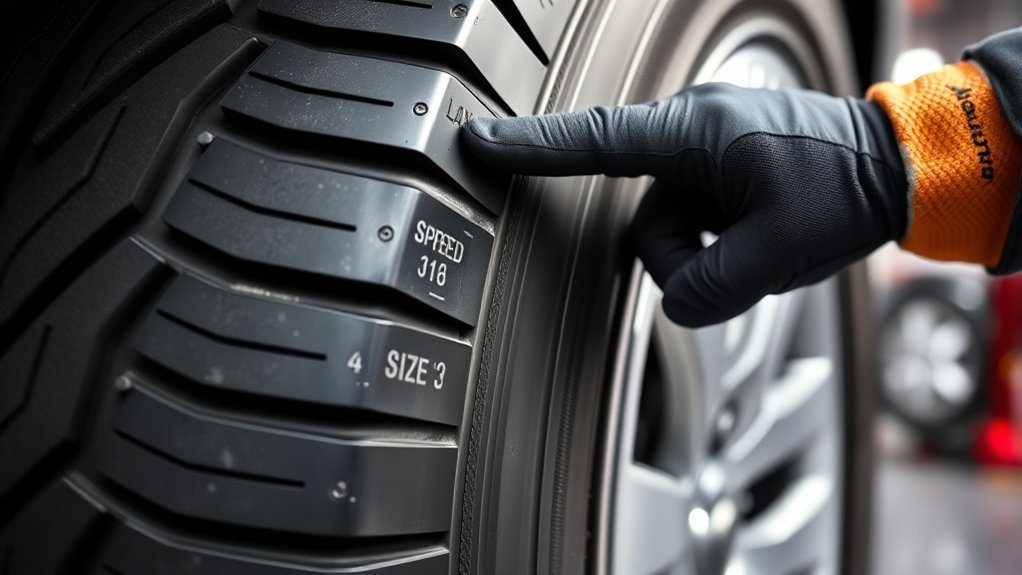
A tire marked 116T uses a standard tire service description. The number is the load index, and the letter is the speed rating.
- 116 load index: up to 2,756 lb (1,250 kg) per tire when properly inflated and used according to the tire manufacturer’s specifications.
- T speed rating: up to 118 mph (190 km/h) under controlled test conditions.
These ratings are not decorations on the sidewall. They tell you whether the tire can safely support the vehicle’s load and meet the speed capability required by the vehicle manufacturer. For replacement tires, the safest rule is to use the size, load index, speed rating, tire type, and cold inflation pressure listed on the vehicle placard or owner’s manual.
Warning: Do not use the 2,756 lb number as your vehicle’s payload rating. Vehicle payload is limited by the vehicle’s GVWR, GAWR, suspension, wheels, brakes, and manufacturer placard—not just the tires.
[Products Worth Considering]

The AUTOWN tire repair kit is designed to quickly fix punctures and plug flats with professional-quality steel components. It includes a T-handle and spiral probe tool for...
How to Read 116T on a Tire
To read 116T, split it into two parts:
- 116 = load index. This is a standardized code that points to the tire’s maximum load capacity.
- T = speed symbol. This is the tire’s tested speed capability under proper load and inflation conditions.
You will usually see this code after the tire size, such as:
275/65R18 116T
On most modern passenger, SUV, and light-truck tire sizes, the load index and speed symbol appear immediately after the rim size. If the tire also carries markings such as XL, LT, Load Range E, or a dual index like 120/116, treat those as part of the fitment check too.
In that example, 275/65R18 describes the tire size, while 116T describes the load and speed rating. The full sidewall matters because a tire can share the same 116T service description while still differing in construction, tread design, sidewall strength, load range, or vehicle application.
How to Tell If 116T Fits Your Vehicle
A 116T tire is a fitment match only when the full tire specification matches your vehicle’s required size, load capacity, speed rating, tire type, and inflation pressure. Use the 116T code as a starting point, not the final buying decision.
| Check | Why it matters | What to do |
|---|---|---|
| Full size code | Two tires can both say 116T but use different sizes or construction. | Match the size on the placard unless a qualified tire professional approves an alternative. |
| Load index | A lower load index can leave the tire below the vehicle’s required carrying capacity. | Use a tire that meets or exceeds the required load index, after any required passenger-tire derating. |
| Speed rating | Speed rating also reflects heat resistance under the tire’s rated load. | Do not install a lower speed rating unless your vehicle maker or tire professional approves the change. |
| Tire type and load range | P-metric, Euro-metric, LT, ST, SL, XL, and Load Range E markings are separate from 116T. | Do not replace an LT or trailer tire with a passenger-type 116T tire just because the load number looks similar. |
What 116T Does Not Tell You
A common mistake is assuming that 116T tells the whole story. It does not. The code tells you load index and speed rating only. It does not automatically tell you whether the tire is:
- P-metric, such as P275/65R18
- Euro-metric, such as 275/65R18 with no P prefix
- LT-metric, such as LT275/65R18
- ST, meaning special trailer tire
- SL or XL, meaning standard load or extra load
- Load Range E, often described as 10-ply rated on LT tires
- Dual-rated, such as 120/116, where one number applies to single use and the other to dual-wheel use
To identify the tire type, look at the full sidewall code. Continental’s tire-marking guide explains that sidewall markings include size, construction, load index, speed rating, DOT code, and other details, so the service description is only one piece of the tire’s identity.
Note: If your tire says 120/116, the two numbers are not random. On many LT tires, the first number is the single-tire load index and the second is the dual-tire load index.
What the T Speed Rating Means
The T speed rating means the tire is rated for up to 118 mph (190 km/h) under specified test conditions. It does not mean you should drive at that speed, and it does not override posted speed limits, weather, tire condition, inflation pressure, or vehicle load.
Speed ratings are closely tied to heat control. When a tire is underinflated, overloaded, damaged, or driven too fast for conditions, it can build heat faster. That heat can reduce durability and increase the risk of failure. This is why a T-rated tire should still be matched to the vehicle manufacturer’s required speed rating, not chosen only because the number sounds high enough.
Compared with an H-rated tire, a T-rated tire has a lower speed rating. T is rated to 118 mph, while H is rated to 130 mph. That does not automatically make H “better” for every vehicle. The better choice is the tire that matches or exceeds the original equipment requirement while fitting the correct size, load index, tire type, and driving use.
Is 116T Safe for Your Truck or SUV?
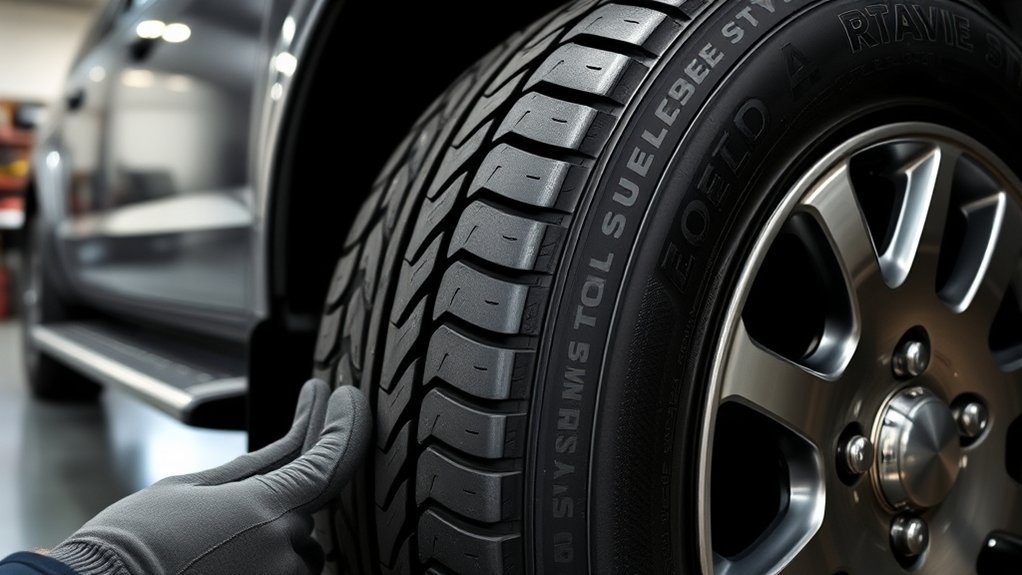
A 116T tire can be safe for a truck or SUV only when it matches the vehicle manufacturer’s requirements. The rating by itself is not enough. Check the driver-door placard, certification label, or owner’s manual before buying or installing tires.
Use this checklist:
- Match the tire size: The size should match the placard unless a qualified tire professional confirms an approved alternative.
- Match or exceed the load index: Do not install a tire with a lower load index than the vehicle requires.
- Match or exceed the speed rating: Do not downgrade speed rating unless the vehicle manufacturer or a tire professional approves a specific seasonal exception.
- Check tire type: Do not replace an LT tire with a passenger-type tire just because the numbers look close.
- Use the correct cold PSI: The correct pressure is the vehicle manufacturer’s recommended cold inflation pressure, not simply the maximum pressure printed on the tire sidewall.
- Consider towing and hauling: Frequent towing, heavy cargo, rough roads, or commercial use may require LT tires or a higher load range.
Warning: Under U.S. tire-selection rules, when passenger-car tires are installed on multipurpose passenger vehicles, trucks, buses, or trailers, each tire’s load rating is reduced by dividing it by 1.10 for fitment calculations. That means a 2,756 lb passenger-type tire may count as about 2,505 lb in that application.
This does not mean every 116T tire is unsafe on an SUV. Many SUVs and light trucks are originally equipped with passenger-type or Euro-metric tires. It means you must compare the tire to the exact vehicle placard and use case instead of relying on “116T” alone.
116T vs LT Tires
The difference between a 116T tire and an LT tire depends on the full sidewall code. 116T is a load-and-speed service description. LT is a tire type marking that means light truck. They describe different things.
| Feature | 116T Service Description | LT Tire Marking |
|---|---|---|
| What it tells you | Load index 116 and T speed rating | Light truck tire type/application |
| Load information | 116 = 2,756 lb per tire when properly inflated | May use load range letters and sometimes dual load indexes |
| Ride feel | Often smoother if it is a passenger-type SUV tire | Often stiffer because LT tires are built for heavier service |
| Best use | Daily driving when it matches the vehicle placard | Towing, hauling, rough roads, work trucks, or OE LT applications |
| Main caution | Does not identify tire type by itself | Requires correct pressure and load range for the vehicle |
If your truck came with LT tires, do not switch to a 116T passenger-type tire without checking axle ratings, load requirements, inflation tables, wheel rating, and towing needs. If your SUV came with 116T tires from the factory, replacing them with the same size and equal or higher service description is usually the simplest path.
Pro Tip: When replacing tires, photograph the driver-door placard and the tire sidewall before shopping. Compare size, load index, speed rating, tire type, and recommended cold PSI before you buy.
Common Mistakes When Choosing a 116T Tire
- Assuming 116T means 10-ply: It does not. Ply rating or load range is a separate marking.
- Ignoring the full tire size: A 116T tire in one size may not be an approved replacement for a different size.
- Using sidewall max pressure as daily pressure: Use the vehicle’s recommended cold PSI unless a tire professional gives fitment-specific guidance.
- Multiplying 2,756 lb by four and calling it payload: Vehicle payload is controlled by the vehicle’s ratings, not only tire capacity.
- Replacing LT tires with passenger tires without derating: Passenger-type tires on trucks/SUVs may need the 1.10 load reduction.
- Choosing a lower speed rating to save money: A lower speed rating can affect handling, heat resistance, and compliance with manufacturer requirements.
Frequently Asked Questions
What does 116T mean on a tire?
116T means the tire has a 116 load index and a T speed rating. The 116 load index equals 2,756 lb per tire when properly inflated, and the T speed rating equals 118 mph under controlled test conditions.
Which tire rating is better, H or T?
H has a higher speed rating than T. H is rated up to 130 mph, while T is rated up to 118 mph. That does not mean H is always the better tire. The right tire is the one that matches or exceeds your vehicle’s required size, load index, speed rating, and tire type.
What is the difference between 116 and 123 tires?
A 116 load index is rated for 2,756 lb per tire, while a 123 load index is rated for 3,417 lb per tire when properly inflated and used as specified. The higher number gives more load capacity, but it does not increase your vehicle’s legal payload or axle rating.
Are 116T tires 10-ply?
No. You cannot tell ply rating from 116T alone. The 116 is the load index, and T is the speed rating. If you need a 10-ply-rated tire, look for an LT tire with Load Range E or another load range specified by your vehicle manufacturer.
Is 116T good for towing?
It depends on the vehicle, trailer tongue weight, axle ratings, tire type, and placard requirements. A 116T tire may be fine for light-duty use if it matches the vehicle’s original specification, but frequent towing or heavy hauling may require LT tires or a higher load range.
Can I use 116T instead of 113T?
Only use 116T instead of 113T if the tire size, tire type, wheel fitment, cold PSI, and vehicle requirements also match. A 116 load index is higher than 113, but the full sidewall code and placard still decide whether the tire is appropriate.
Can I replace 116T tires with 116H tires?
Usually, a 116H tire can replace a 116T tire if the size, tire type, load rating, wheel fitment, and vehicle requirements all match, because H has a higher speed rating than T. Still, check the vehicle placard and owner’s manual before changing tire specifications.
Conclusion
A 116T tire means the tire has a 116 load index and a T speed rating. In practical terms, that is 2,756 lb per tire and 118 mph under specified conditions. The rating can be perfectly suitable when it matches your vehicle’s original requirements, but it should never be judged alone. Check the full sidewall, the vehicle placard, the owner’s manual, the recommended cold PSI, and your real use—especially if you tow, haul, or are switching between passenger-type and LT tires.
Sources
- Michelin: Tire Load Rating & Speed Rating Explained — supports load index, speed rating, and replacement-rating guidance.
- Continental: Tire Markings — supports sidewall-code interpretation and the difference between tire size, load index, and speed rating.
- Continental: Speed Index — supports the T speed rating of 118 mph / 190 km/h and speed-rating cautions.
- NHTSA Tire Safety Brochure — supports cold inflation pressure, load-carrying capacity, and tire-safety guidance.
- 49 CFR § 571.110 — supports vehicle tire placard requirements and the 1.10 derating rule for passenger-car tires on MPVs, trucks, buses, and trailers.
- Goodyear: Tire Load Index Chart — supports tire load-index chart interpretation.

Related Articles

best BFGoodrich tires for toyota 4runner
You want tires that match the 4Runner’s combination of daily driving and weekend adventure. Choosing the right BFGoodrich set matters because it affects safety,…
Read More
best tires for lifted toyota 4runner
Choosing the right tires for your lifted Toyota 4Runner matters because the wrong set can hurt traction, ride quality, fuel economy, and safety. You…
Read More
best tires for toyota 4runner with 3 inch lift
You’ve lifted your 4Runner and now the tires matter as much as the suspension. Choosing the right tires for a 3 inch lift affects…
Read More