
RAV4 Tread Guide: 5 Steps to Choose Better Tires
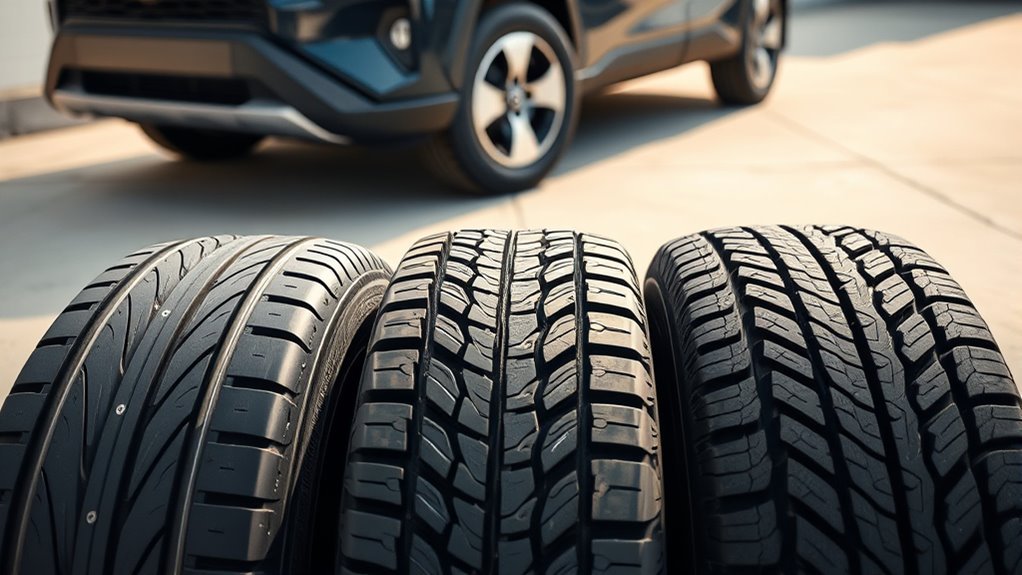
Choosing the wrong tread can make your RAV4 feel noisy, less sure in rain, or less efficient on long drives. Match tread type to the roads you use most: symmetrical tread suits quiet daily driving, asymmetrical tread improves cornering and wet grip, and directional tread helps move water and slush away from the tire. Winter tires work best for cold snow and ice, while all-terrain or mud-terrain tread helps on trails but adds road noise and rolling resistance. Check your owner’s manual or door placard for the correct OEM tire size, then rotate and inspect your tires on a regular schedule.
What’s in This Article
- Quick Answer: Best RAV4 Tread
- Why Tread Pattern Affects RAV4 Safety and Fuel Economy
- Which Driving Conditions Matter Most for RAV4 Owners?
- Symmetrical Tread: Best RAV4 Uses
- Asymmetrical Tread: When It Improves Handling and Cornering
- Directional Tread: Wet-Weather and Light-Snow Benefits for RAV4s
- Hybrid Directional-Asymmetrical Treads: Pros and Cons
- Off-Road and Mud-Terrain Treads: Tradeoffs for RAV4 Adventures
- Winter vs All-Season vs Performance Treads: Choose by Season & Trim
- 5-Step RAV4 Tire Decision: Budget, Driving, Trim, Size, Rotation
- Frequently Asked Questions
- Conclusion
Quick Answer: Best RAV4 Tread

For most RAV4 drivers, an all-season tire with a symmetrical or asymmetrical tread gives the best mix of comfort, wet grip, and tread life. Choose asymmetrical tread if you want better steering response and cornering stability. Choose directional tread if you often drive through heavy rain or light snow.
If you face regular snow, ice, or long cold spells, use winter tires instead of relying on all-season tread. If you drive on gravel roads, muddy tracks, or rough trails, an all-terrain tire gives more bite than a highway tire. Always confirm the correct size and load rating for your trim before you buy.
Key Takeaways
- Choose tread based on your usual roads, not rare driving conditions.
- Use all-season tires for mild climates and normal daily driving.
- Switch to winter tires for regular snow, ice, or cold weather.
- Pick all-terrain tread only if you drive off pavement often.
- Rotate, balance, and check tire pressure to extend tread life.
[Products Worth Considering]

EVOULTES heavy duty tire inflator with an integrated gauge delivers accurate pressure readings from 10–120 PSI, helping you inflate, deflate, and check tires in one tool. The 16.5-inch extended dual-head air chuck with swivel base reaches hard-to-access dual wheel valves on trucks and RVs. A brass trigger core and side-mounted air release valve make operation smooth, with standard 1/4" NPT threading and quick-connect compatibility for easy setup.

This portable cordless tire inflator delivers up to 160 PSI with fast 17 L/min airflow to help you quickly top up tires and get back on the road. It features dual power mode, running on a 21V rechargeable battery or a 12V DC adapter for convenient roadside use. An automatic shut-off with digital pressure gauge helps prevent overinflation, and a built-in LED light improves visibility in low-light conditions.

The AstroAI L7 Air Tire Inflator refills car tires quickly with up to 150PSI max pressure and a fast 1-minute inflation claim. It includes 5 preset modes for car, motorcycle, bicycle, balls, and manual use, along with an auto shutoff to help prevent overinflation. Designed for convenience, it features a digital gauge with unit switching, a top LED light with multiple modes, and USB-C/USB ports for backup power.
Why Tread Pattern Affects RAV4 Safety and Fuel Economy
Tread design changes how your RAV4 grips the road, clears water, and rolls over pavement. Deeper grooves and sipes help move water away from the contact patch, which can improve control on wet roads.
Tread shape and rubber compound also affect rolling resistance. Deep, blocky tread often creates more drag, while smoother highway tread usually rolls with less effort. That means tire choice can affect fuel use, road noise, and steering feel.
Inspect your tires often so the tread can do its job. Uneven wear, low pressure, or worn tread can reduce wet grip and make your RAV4 feel less stable.
Wet Traction Impact
Your RAV4’s wet-weather safety depends on how well the tread clears water. Directional V-shaped grooves, wide channels, and dense sipes can reduce hydroplaning risk and help braking on wet roads.
Check tread depth before rainy seasons and replace tires before they reach the legal minimum. Many drivers use 4/32 inch as a safer wet-weather planning point because shallow tread loses water-clearing ability sooner.
Keep your tires inflated to the pressure listed on the door placard. Proper pressure helps the tire keep a steady contact patch and limits uneven wear.
Rolling Resistance Effects
Rolling resistance measures how much energy a tire uses as it rolls. Lower rolling resistance can help fuel economy, but the tire still needs enough grip for your climate and roads.
- Symmetrical tread usually gives quiet comfort and low rolling resistance.
- Asymmetrical tread balances wet grip, dry grip, and daily ride comfort.
- Directional tread improves water evacuation but may add more tread noise.
Use the tire type that fits your main driving pattern. The best tire saves fuel only if it also keeps you in control.
Which Driving Conditions Matter Most for RAV4 Owners?
Your local roads should guide your tire choice. Focus on the conditions you face every week, such as rain, snow, heat, gravel, or highway miles.
For wet pavement, choose tread that clears water well and keeps a stable contact patch. For regular snow or ice, use winter tires with deeper grooves and dense sipes. For trails, use a more open all-terrain tread that can grip loose soil and gravel.
Don’t buy a tire for one rare trip if it makes daily driving worse. A mud-terrain tire can help on rough trails, but it may feel loud and heavy on city streets.
Note: Your RAV4’s door placard and owner’s manual should guide tire size, load rating, and tire pressure.
Symmetrical Tread: Best RAV4 Uses
Symmetrical tread uses the same pattern across the tire face. This design helps keep road noise low and gives steady contact with the pavement.
Choose symmetrical tread if you use your RAV4 for commuting, school runs, errands, and highway trips. You’ll get predictable handling, simple rotations, and good comfort in mild weather.
- Daily commuting: A stable contact patch helps the tire roll smoothly.
- Quiet highway travel: Balanced tread blocks reduce road noise.
- Light rain: Basic grooves and sipes handle mild wet conditions.
Symmetrical tread does not suit deep snow, mud, or aggressive driving. It works best when you want simple, low-maintenance reliability.
Asymmetrical Tread: When It Improves Handling and Cornering

Choose asymmetrical tread if you want sharper steering, better cornering, and strong wet-road control. These tires use different tread zones for different jobs.
The inner tread area often uses deeper grooves to move water away from the tire. The outer shoulder often uses larger blocks to support cornering and improve lateral grip.
This design works well for RAV4 drivers who want one tire for commuting, wet roads, and more confident turns. Follow the tire maker’s rotation rules so the tread wears evenly.
Directional Tread: Wet-Weather and Light-Snow Benefits for RAV4s
Directional tread often uses V-shaped grooves that point in one rolling direction. This pattern helps push water, slush, and light snow away from the contact patch.
Choose directional tires if you often drive in heavy rain or light snow. They can improve hydroplaning resistance, wet braking, and straight-line stability on slick roads.
- Mounting: Install each tire according to the sidewall rotation arrow.
- Handling: Use directional tread for better water and slush evacuation.
- Maintenance: Rotate on schedule and keep each tire rolling the correct way.
Warning: Mounting directional tires backward can reduce wet traction and defeat the tread’s water-clearing design.
[Products Worth Considering]
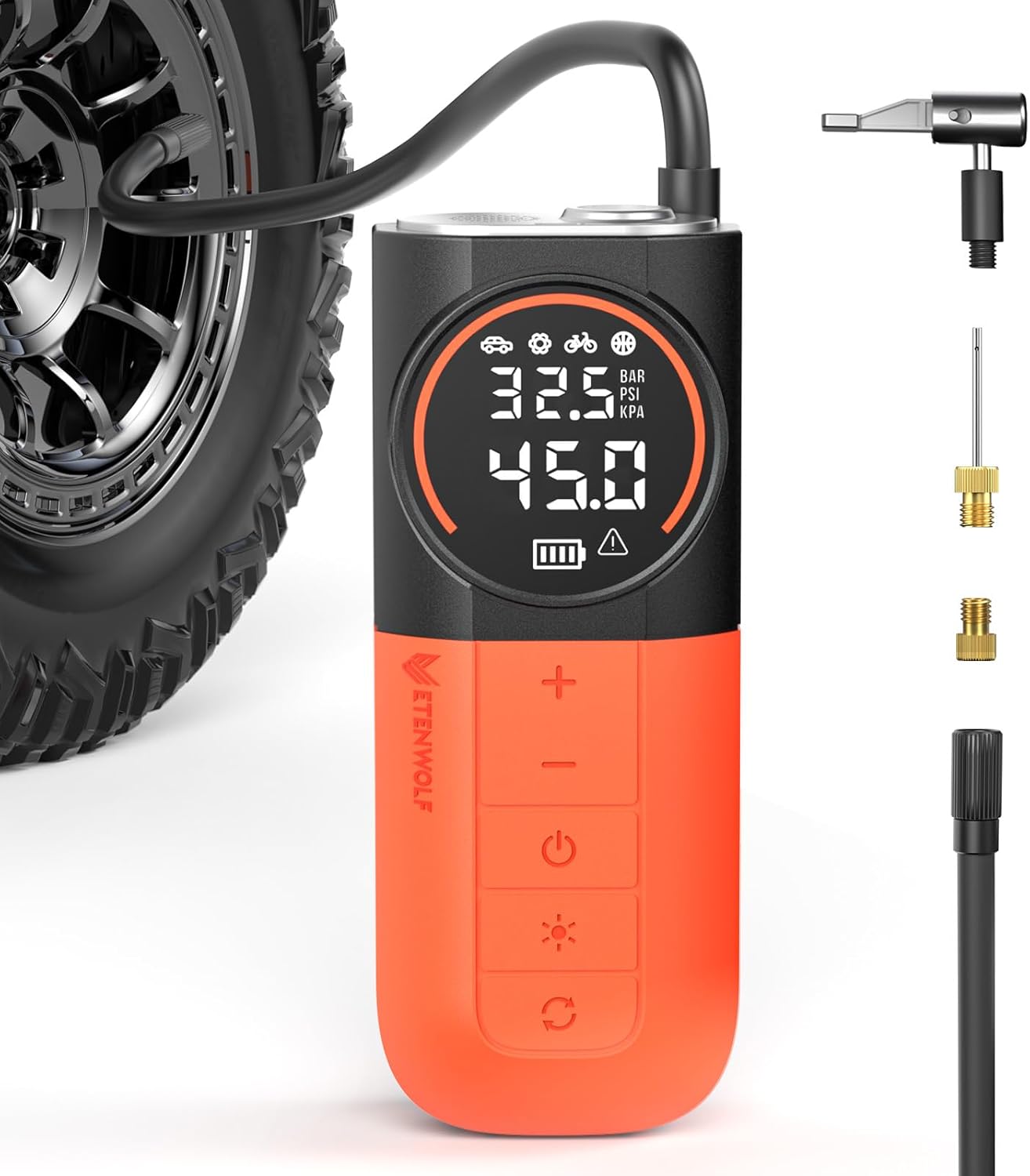
The ETENWOLF S1 cordless tire inflator delivers ultra-fast inflation with up to 160 PSI and a 20 L/min airflow for quicker tire top-offs. Its 5200mAh battery and cooling system support inflating many tires and sports balls on a single charge, while the digital pressure gauge and multi-unit display help you reach the right pressure accurately. With preset modes, pressure memory, an auto-stop feature, and an LED flashlight, it’s built for easy roadside and everyday use.

The JACO FlowPro Tire Inflator measures, inflates, and airs down tires up to 100 PSI with battery-free operation and ±2% accuracy after calibration. It features a glowing pressure dial for night visibility, a heavy-duty steel build with a hybrid hose, and a precision push-to-inflate thumb trigger. The patented Lightning Air Chuck locks on for a secure seal, and the kit includes quick-connect hardware for easy inline use with your air compressor.
Hybrid Directional-Asymmetrical Treads: Pros and Cons
Hybrid directional-asymmetrical tread blends two ideas. It uses directional channels to clear water and asymmetrical zones to support cornering.
This design can give strong wet traction, good steering response, and stable dry-road handling. The tradeoff comes from price, installation rules, and more complex rotation limits.
Choose this tread if you want one tire that handles rain, curves, and daily driving well. Check the sidewall and tire maker’s instructions before rotating or replacing it.
Improved Wet Traction
Hybrid tread designs can improve wet grip by using inner grooves and biting edges to move water away. The outside shoulder can stay firm for dry turns and quick lane changes.
- Water evacuation: Wide grooves help keep the contact patch clear.
- Targeted grip: Sipes and tread zones add bite on slick pavement.
- Balanced handling: Shoulder blocks help support steering and cornering.
Complex Rotation Rules
Hybrid tread may limit how you rotate your tires. Some tires can move front to back on the same side, while others allow more rotation patterns.
Read the sidewall and tire maker’s guide before you rotate them. Wrong rotation can increase uneven wear and reduce wet-weather performance.
Balanced Performance Tradeoffs
Hybrid tread gives you a broad performance range, but it often costs more than a simple highway tire. You’ll need to decide whether the added grip and control match your driving needs.
- Assess mileage: Compare warranty coverage, treadwear rating, and expected use.
- Prioritize conditions: Choose hybrid tread for rain, curves, and mixed driving.
- Maintain carefully: Follow rotation rules to protect tread life.
Off-Road and Mud-Terrain Treads: Tradeoffs for RAV4 Adventures
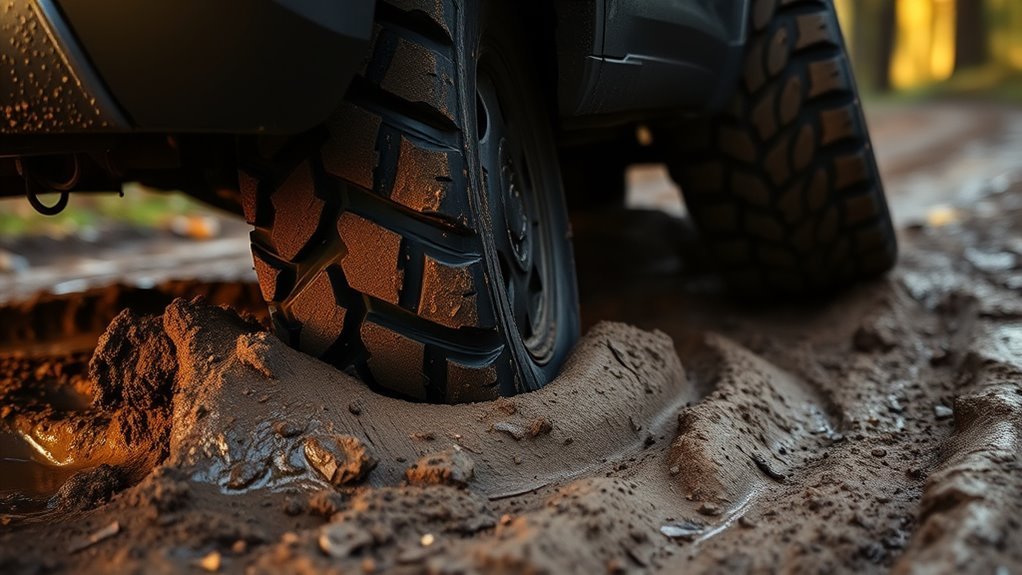
If you take your RAV4 off pavement, all-terrain or mud-terrain tread can add useful grip. These tires use larger blocks, deeper grooves, and stronger shoulders to handle loose and uneven ground.
All-terrain tread works best for gravel, dirt roads, campsites, and light trails. Mud-terrain tread suits deeper mud and rougher routes, but it can feel loud and stiff on pavement.
Expect tradeoffs. Aggressive tread can raise road noise, reduce ride comfort, and wear faster during highway driving. Choose it only when your normal routes justify the penalty.
Winter vs All-Season vs Performance Treads: Choose by Season & Trim
Match tread type to your season and RAV4 trim. Wheel size, suspension tuning, and driving goals can change what tire works best.
Winter tires help most when temperatures stay cold and roads bring snow or ice. All-season tires suit mild climates and daily use. Performance tires improve dry-road response, but they may wear faster and lose grip in cold weather.
Seasonal Performance Tradeoffs
Winter, all-season, and performance tires each solve a different problem. You’ll get the best results when you use each tire in the setting it was built for.
- Winter: Choose for snow, ice, and cold roads.
- All-season: Choose for mild weather and year-round convenience.
- Performance: Choose for sharp dry handling and quicker steering response.
Don’t run winter tires all year in warm climates. Warm pavement can wear the softer winter compound faster.
Trim-Specific Tire Needs
Your RAV4 trim can affect tire size, wheel diameter, and handling feel. Always confirm the exact size on the tire placard before buying.
LE, XLE, and Hybrid trims often work well with quiet all-season tires in mild areas. Adventure or off-road-focused trims may benefit from all-terrain tires if you use them beyond pavement. Sportier trims can feel more responsive with performance-oriented tread.
5-Step RAV4 Tire Decision: Budget, Driving, Trim, Size, Rotation
Use a simple process before you buy tires for your RAV4. This helps you balance price, safety, comfort, and tread life.
- Set your budget: Compare price, warranty, expected tread life, and installation costs.
- Match your roads: Choose all-season, winter, performance, or all-terrain tread based on your normal driving.
- Confirm your size: Check the door placard, owner’s manual, or current tire sidewall.
- Check ratings: Match the proper load rating and speed rating for your RAV4.
- Plan maintenance: Rotate, balance, inspect tread depth, and check pressure each month.
Pro tip: Buy tires in a full set when you can, especially on all-wheel-drive RAV4 models.
Frequently Asked Questions
What Tire Tread Pattern Is Best?
The best tire tread pattern depends on your climate and driving style. Most RAV4 drivers do well with all-season symmetrical or asymmetrical tread because it balances comfort, wet grip, and tread life.
What Tires Are Best for a Toyota RAV4?
All-season tires work best for most Toyota RAV4 owners in mild climates. Choose winter tires for regular snow and ice, all-terrain tires for trails, or performance tires for sharper dry-road handling.
What Does Toyota Recommend for Tire Rotation?
Toyota maintenance schedules commonly place tire rotation around normal service intervals, but your exact interval depends on model year and driving use. Check your owner’s manual and rotate sooner if you notice uneven wear.
What Is the 3% Tire Rule?
The 3% tire rule means replacement tire diameter or circumference should stay close to the original size. Staying within that range helps protect handling, speedometer accuracy, braking, and drivetrain behavior.
Can You Put All-Terrain Tires on a RAV4?
Yes, you can use all-terrain tires on many RAV4 trims if the size, load rating, and clearance fit correctly. Expect more road noise and a firmer ride than you’d get from a highway all-season tire.
Conclusion
The best RAV4 tread is the one that matches your real driving conditions. Choose symmetrical tread for quiet daily use, asymmetrical tread for better handling, directional tread for wet roads, and winter tread for snow and ice.
Before you buy, confirm your tire size, load rating, climate needs, and rotation limits. A good tread choice helps your RAV4 feel safer, quieter, and more confident every time you drive.

Related Articles

Toyota RAV4 TPMS Reset: Easy Steps That Work
Unlock the secrets to resetting your Toyota RAV4's TPMS effortlessly—discover the essential steps to ensure your tires are always safe.
Read More
Toyota RAV4 Tire Rotation: DIY Steps & Pattern
Take control of your Toyota RAV4's tire maintenance with our simple DIY rotation guide—discover the best steps for optimal performance and longevity!
Read More
Mix Tire Brands on a Toyota RAV4? Expert Guide
Keeping your RAV4 safe? Learn when mixing tire brands risks traction, ABS/TCS and AWD damage — and what exact matches you must insist on.
Read More