
How Much Does a Tractor Tire Weigh? Exact Weight Guide
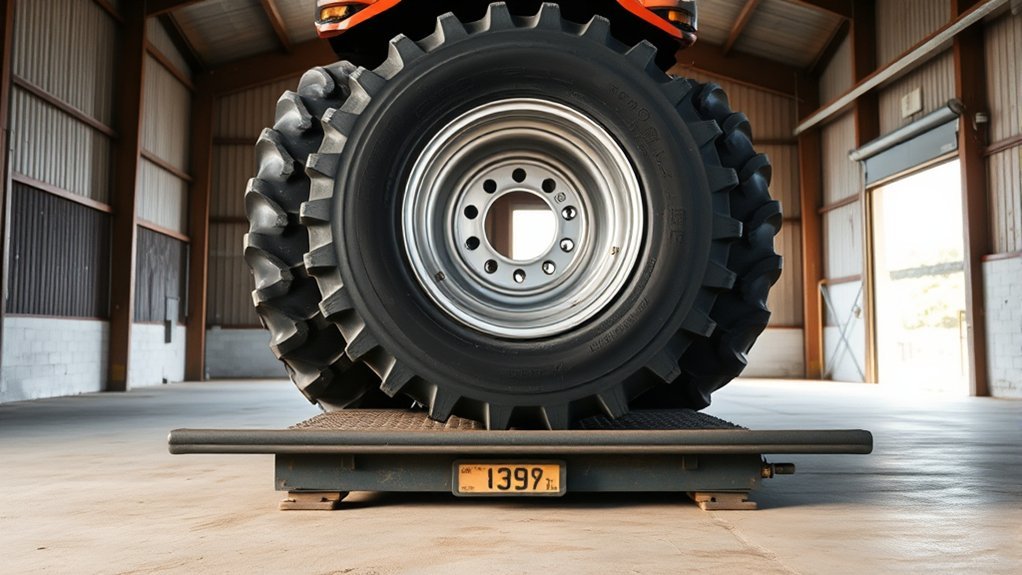
A tractor tire can weigh anywhere from a few dozen pounds to more than 1,000 pounds, depending on the tractor size, tire position, construction, tread depth, and whether the tire is filled with liquid ballast. The most useful answer is not one single number, but the difference between an empty tire, a mounted tire and rim, and a loaded tire with fluid inside.
Quick Answer
Most empty tractor tires weigh about 30 to 700 pounds, while very large agricultural or industrial tires can reach 1,000 pounds or more. Common rear tractor tires often fall around 150 to 600 pounds empty. Liquid ballast can add roughly 100 to more than 1,000 pounds per tire, depending on tire size and fill fluid.
Key Takeaways
- Small compact tractor tires may weigh under 100 pounds, while large rear or industrial tires can weigh several hundred pounds each.
- A published tire weight usually means the tire only, not the rim, tube, wheel center, wheel weights, or liquid ballast.
- Liquid ballast can add major weight; a 14.9-24 tire can gain roughly 400 to 550 pounds at a 75% fill, depending on the fluid.
- The exact number should come from the tire sidewall size plus the manufacturer’s data sheet, dealer lookup, or a scale.
- Never handle, inflate, mount, or demount large tractor tires casually; the weight and stored air pressure can be dangerous.
How Much Does a Tractor Tire Weigh?
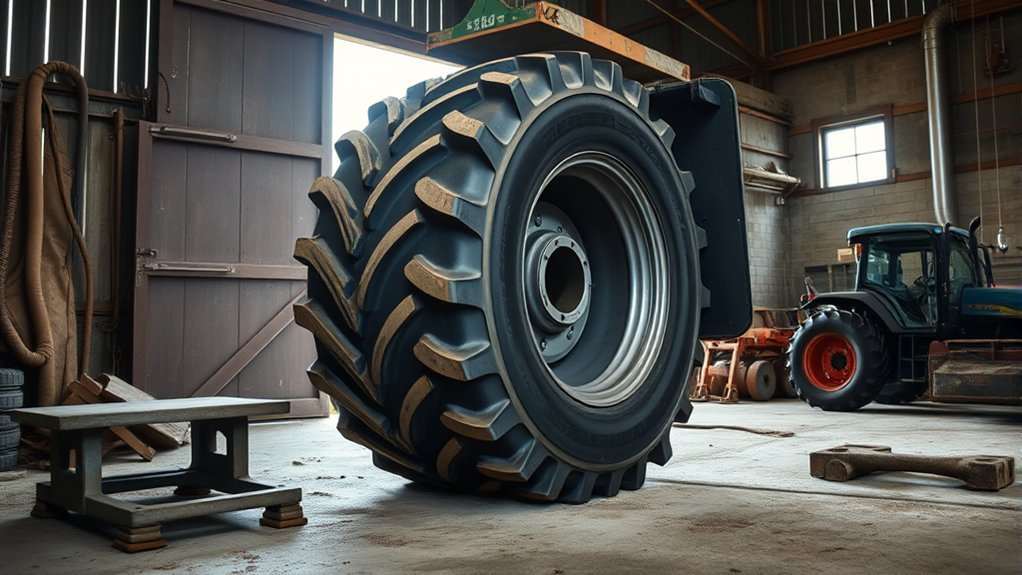
An empty tractor tire may weigh as little as 30 to 80 pounds on a small compact tractor, around 150 to 400 pounds on many utility tractor rear tires, and 500 to 1,000+ pounds on large agricultural, loader, or industrial tires. The exact figure changes with the tire size, ply or star rating, radial or bias construction, tread design, casing strength, and whether the tire is new or worn.
That is why a single “average tractor tire weight” can be misleading. A front tire on a compact tractor is not in the same category as a tall row-crop rear tire or a 25-inch industrial loader tire. If you are moving, shipping, replacing, or using a tire for workouts, always identify the tire size first and then check the tire maker’s specifications.
Warning: Large tractor tires and rim assemblies can cause serious injury during lifting, inflation, mounting, or demounting. OSHA’s rim-wheel servicing rule applies to large vehicles such as tractors and off-road machines. Use proper lifting equipment and have rim service done by trained tire professionals.
[Products Worth Considering]

Two-pack 26" bicycle inner tubes for tires sized 1.75 to 2.125, built with a 35mm AV Schrader valve for easy compatibility. The thicker inner wall and premium butyl rubber...
Tractor Tire Weight by Size
The table below gives practical empty-tire ranges. These are not guaranteed weights for every brand or tread pattern, but they show what you can expect before adding rims, tubes, cast wheel weights, or liquid ballast.
| Tire / Tractor Type | Typical Empty Tire Weight | Common Use |
| Small front compact tractor tire | About 30–80 lb | Lawn, garden, sub-compact, compact tractors |
| Compact rear tractor tire | About 60–150 lb | Small acreage tractors and compact loaders |
| Utility tractor rear tire | About 150–400 lb | 40–100 hp tractors, hay work, loader work |
| Row-crop rear tractor tire | About 300–700 lb | Larger farm tractors and field work |
| Large agricultural or industrial tire | About 700–1,000+ lb | High-horsepower tractors, loaders, earthmoving equipment |
Manufacturer Examples for 25-Inch Tires
Some commonly quoted “tractor tire” sizes, such as 17.5R25, 20.5R25, and 23.5R25, are often used on loader, construction, and industrial equipment as well as some heavy-duty applications. They are useful examples because manufacturers publish exact weights for them.
| Example Tire Size | Published Example Weight | What This Means |
| 17.5R25 | About 307 lb in one Titan MXL listing | A “small” 25-inch industrial tire is still very heavy. |
| 20.5R25 | About 454 lb in one Titan MXL listing | Size and tread design quickly add weight. |
| 23.5R25 | About 615 lb in one Titan MXL listing | Larger casing, tread, and load rating increase weight. |
These examples show why the sidewall size alone is not enough. Two tires with the same size can weigh differently if one has deeper tread, stronger casing, a different ply or star rating, or a different tread compound.
Front vs. Rear Tractor Tire Weight
Rear tractor tires usually weigh much more than front tires because they are larger and carry more of the pulling load. On two-wheel-drive tractors, the rear tires provide most of the traction. On mechanical front-wheel-drive tractors, the front tires also pull, but the rear tires are still usually larger and heavier.
If the tractor has a front-end loader, rear tire weight becomes even more important. Rear ballast helps counterbalance the loader and keeps more weight on the rear axle. That does not mean “more weight is always better,” though. Too much ballast can waste fuel, increase rolling resistance, and add unnecessary stress to axles and drivetrain parts.
What Makes Tractor Tires Heavier?
Tread and Casing
The tread is one of the biggest contributors to tractor tire weight. Deep agricultural lugs, industrial tread blocks, and heavy rubber compounds all add mass. A new tire can also weigh more than the same tire after years of wear because worn lugs remove pounds of rubber.
The casing adds weight too. Higher load ratings require stronger materials, more reinforcement, and a casing that can handle heavy axle loads and torque. Radial and bias-ply tires may also differ in weight because their internal construction is different.
Bead Area and Sidewall Strength
The bead is the reinforced part of the tire that seats against the rim. Tractor tires need strong bead areas because they work under heavy torque, rough ground, low speeds, and high loads. Strong sidewalls and reinforced bead designs help the tire hold shape, stay seated, and resist damage, but they also add weight.
Rims, Tubes, Wheel Weights, and Liquid Ballast
When someone says “tractor tire weight,” ask whether they mean the tire only or the full wheel assembly. The rim, tube, cast wheel weights, and liquid ballast can make the assembly much heavier than the tire itself.
- Tire only: the published tire weight from a manufacturer or dealer.
- Tire and rim: includes the metal wheel, which can add significant weight.
- Wheel weights: cast weights bolted to the wheel; each plate may add dozens to hundreds of pounds depending on tractor size.
- Liquid-filled tire: includes fluid ballast inside the tire, often filled to about 75% so some air space remains.
How Liquid Ballast Affects Tractor Tire Weight
Liquid ballast can add more weight than many people expect. The final number depends on tire size, fill percentage, and fluid type. Water is lighter than calcium chloride or beet-juice-style ballast, while some antifreeze mixes fall in between. Many technical charts use a 75% fill level, which leaves air space for cushioning and expansion.
A 14.9-24 rear tractor tire can gain roughly 392 pounds with water, about 452 pounds with antifreeze, about 503 pounds with beet juice, or about 546 pounds with calcium chloride at a 75% fill.
That example explains why “about 500 pounds per tire” can be right for one tire and wrong for another. A small compact tire may take only a few dozen pounds of fluid, while a very large rear tire can take 1,000 pounds or more.
Simple Ballast Weight Formula
Use this simple formula when you know the tire’s fill volume:
Ballast weight = gallons of fluid × pounds per gallon
For example, if a tire holds 47 gallons at the chosen fill level and the fluid weighs about 8.3 pounds per gallon, the ballast adds about 390 pounds. If the fluid is closer to 11 pounds per gallon, the same tire can gain more than 500 pounds.
Note: Do not fill a tire completely with liquid. Tire and ballast charts commonly leave air space because liquid does not compress like air. Overfilling can hurt ride quality and may create service problems.
Liquid Ballast Pros and Cons
Liquid ballast improves traction by adding weight low on the tractor. It can also help counterbalance a front loader and reduce wheel slip under heavy drawbar loads. However, it is harder to remove than cast weights, can make tire service more difficult, and may reduce ride comfort because there is less air cushion inside the tire.
Calcium chloride is heavy and effective, but it can be corrosive if it leaks. Beet-juice ballast is also heavy and popular because it is less corrosive. Water is cheap but freezes unless protected. Windshield washer fluid and antifreeze blends vary by formula and may be lighter than beet juice or calcium chloride.
How to Find Your Tractor Tire Weight
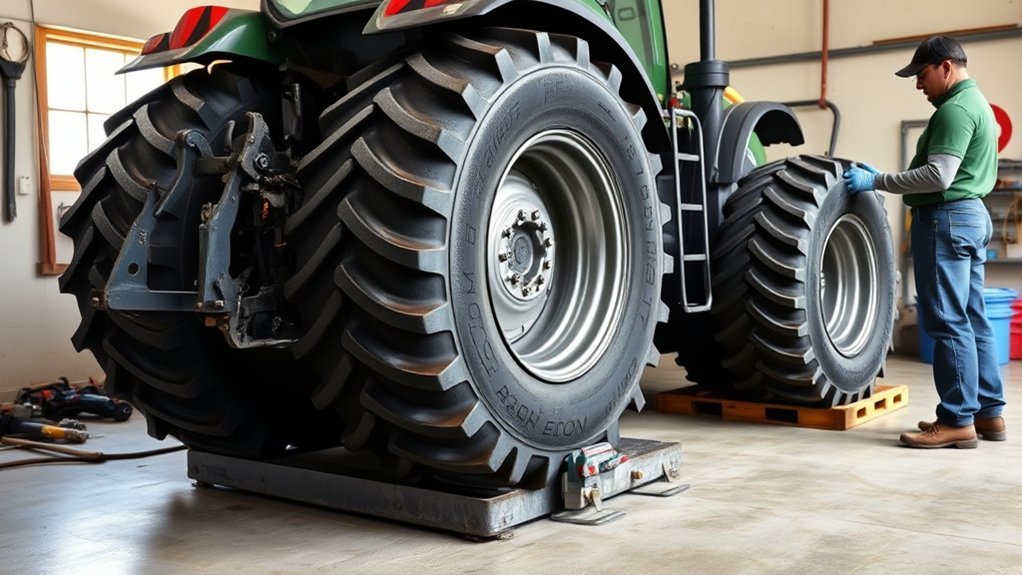
The most reliable way to find your tractor tire weight is to identify the tire size and model, then check a manufacturer data sheet or dealer listing. Do not rely on guesswork if you are shipping the tire, using a hoist, loading a trailer, or planning ballast.
At a Glance
| Time Required | 5–15 minutes for a spec lookup; longer if the tire must be weighed at a shop |
| Difficulty | Easy for tire-only specs; moderate if ballast or rim weight must be included |
| Tools Needed | Flashlight, phone camera, sidewall size, manufacturer data sheet, dealer lookup, or scale |
| Cost | Usually free for a spec lookup; shop weighing or service fees vary |
Step 1: Read the Sidewall
Look for the size marking on the tire sidewall. It may look like 14.9-24, 18.4R38, 480/80R42, 17.5R25, or another format. The sidewall may also show load index, speed symbol, construction type, ply rating, bead warnings, and the tire model name.
Step 2: Find the Exact Brand and Model
The same size can weigh differently across brands and tread patterns. Write down the brand, model, size, ply or star rating, and whether the tire is radial or bias-ply. Then search the manufacturer’s data sheet or ask a tire dealer for the published tire weight.
Step 3: Decide Which Weight You Need
Before you calculate anything, decide what you are trying to measure:
- For shipping: use tire-only weight unless the rim is included.
- For lifting: include tire, rim, wheel weights, and any fluid inside.
- For tractor setup: include total machine weight, axle split, implements, loader, and ballast.
- For tire flipping: use the actual tire-only weight, not a guess based on size.
Step 4: Account for Ballast
If the tire is liquid-filled, the tire-only number is not enough. Find the tire size on a ballast chart, identify the fill fluid, and add the ballast weight. If you do not know what fluid is inside, a tire shop can test or drain a small amount safely.
Step 5: Weigh It When Accuracy Matters
For transport, hoisting, equipment repair, or trailer loading, weighing is best. A tire dealer, farm service shop, truck scale, or equipment scale can give a real number for the tire or full wheel assembly.
Pro Tip: Take a clear photo of the sidewall before calling a dealer. The size, brand, model, load rating, and construction details help them find the exact published weight faster.
Why Tire Weight Matters on a Tractor
Tractor tire weight affects traction, stability, soil compaction, fuel use, steering, and transport safety. Enough tire weight and ballast help the tractor transfer power to the ground. Too little weight can cause excessive wheel slip, wasted fuel, and faster tire wear. Too much weight can increase rolling resistance, compact soil, strain drivetrain parts, and make the tractor less efficient.
Tire weight is especially important when using a front-end loader, heavy rear implement, or drawbar load. A loader shifts weight forward, so rear ballast may be needed to restore stability. A heavy rear-mounted implement can lift weight from the front axle, so front ballast may be needed for steering control. Always follow the tractor operator’s manual for ballast, axle load, and tire inflation guidance.
Tire Weight and Soil Compaction
More weight is not automatically better. If the tractor carries more weight than needed, the tires can sink deeper and increase soil compaction. Correct inflation pressure, proper ballast, and the right tire size help spread the load and protect the field.
Tire Weight and Fuel Use
A tractor with too little ballast may spin. A tractor with too much ballast may waste power just moving its own weight. The goal is balanced traction, not maximum weight. In field work, the best setup is usually the lightest practical ballast that keeps wheel slip in the recommended range for the tractor and soil condition.
Frequently Asked Questions
How much does an empty tractor tire weigh?
An empty tractor tire can weigh about 30 pounds on a small compact front tire, 60 to 150 pounds on many compact rear tires, 150 to 400 pounds on many utility rear tires, and 500 to 1,000+ pounds on large agricultural or industrial tires. The exact weight depends on size, brand, tread, casing, and load rating.
What is the weight of a tractor tire with liquid ballast?
A liquid-filled tractor tire can weigh hundreds of pounds more than the same tire empty. For example, a 14.9-24 tire at a 75% fill can add roughly 392 pounds with water, about 452 pounds with antifreeze, about 503 pounds with beet juice, or about 546 pounds with calcium chloride. Larger tires can add much more.
How much does a tractor tire weigh that people flip?
Tractor tires used for flipping often weigh about 200 to 600 pounds, but the right weight depends on the athlete and training goal. Beginners usually need a lighter tire with manageable height and good grip. Advanced athletes may use 500 pounds or more. Avoid tires with exposed wire, sharp bead damage, chemical residue, or unstable sidewalls.
What is the 3% rule for tractor tires?
There is no universal tractor tire weight rule that says a trailer load should be 3% of combined weight. When people mention a percentage rule for tractor tires, they may be talking about MFWD lead/lag, which compares front and rear tire rolling circumference. Many setups aim for slight positive front lead, but the correct range depends on the tractor. Check the owner’s manual, tire data, or dealer before changing tire sizes.
Does the rim count in tractor tire weight?
Manufacturer tire weight usually means the tire only. If the tire is mounted, the rim, tube, valve hardware, wheel center, cast wheel weights, and liquid ballast all add weight. For lifting or hauling, use the total wheel assembly weight, not just the tire-only number.
How do I know if my tractor tires are loaded?
A loaded tire may sound dull when tapped, feel much heavier than expected, or release liquid at the valve stem when the valve is positioned low. Do not remove valve cores or drain fluid without proper tools and protection. A tire dealer can confirm the fluid type and estimate the added weight safely.
Conclusion
Tractor tire weight depends on more than size. A small compact tire may weigh less than 100 pounds, a common rear utility tire may weigh a few hundred pounds, and a large agricultural or industrial tire can reach 1,000 pounds or more. Liquid ballast, rims, tubes, and wheel weights can add hundreds of extra pounds.
For a rough estimate, use the tire size and category. For a real answer, read the sidewall, identify the exact model, check the manufacturer’s data, and add ballast separately. That gives you the number you need for safe lifting, hauling, replacement, field setup, or tire-flip training.
Sources
- Titan MXL tire specifications — manufacturer example weights for 17.5R25, 20.5R25, and 23.5R25 tires.
- Titan Liquid Weighing of Tractor Tires — 75% liquid-fill examples for tractor tire ballast.
- Farm Energy Extension: Ballasting Tractors for Optimal Fuel Efficiency — ballast types, overfill caution, and efficiency tradeoffs.
- Firestone: How to Read a Farm Tire Sidewall — sidewall size, load index, speed rating, and safety-marking guidance.
- Titan Lead/Lag Calculator — MFWD rolling circumference and tire matching context.
- OSHA 29 CFR 1910.177 — rim-wheel servicing rules for large vehicles including tractors and off-road machines.

Related Articles
What Does THE P Stand For on a Tire? Full Meaning Explained
I’ll explain what the “P” on a tire really means and why it could change how you choose your next set.
Read More
How to Use a Tubeless Tire Repair Kit: Complete Field Guide
Learn how to fix tubeless tire punctures fast with the right kit, because one small mistake can leave you stranded on the trail.
Read More
How to Tell a Tire’s Diameter: Easy Guide to Reading Tire Size
Want to decode tire sidewall numbers and find the right diameter, but wonder what those hidden digits really mean?
Read More