
RAV4 Tire Size Guide: 17-20 Inch Fitment Tips
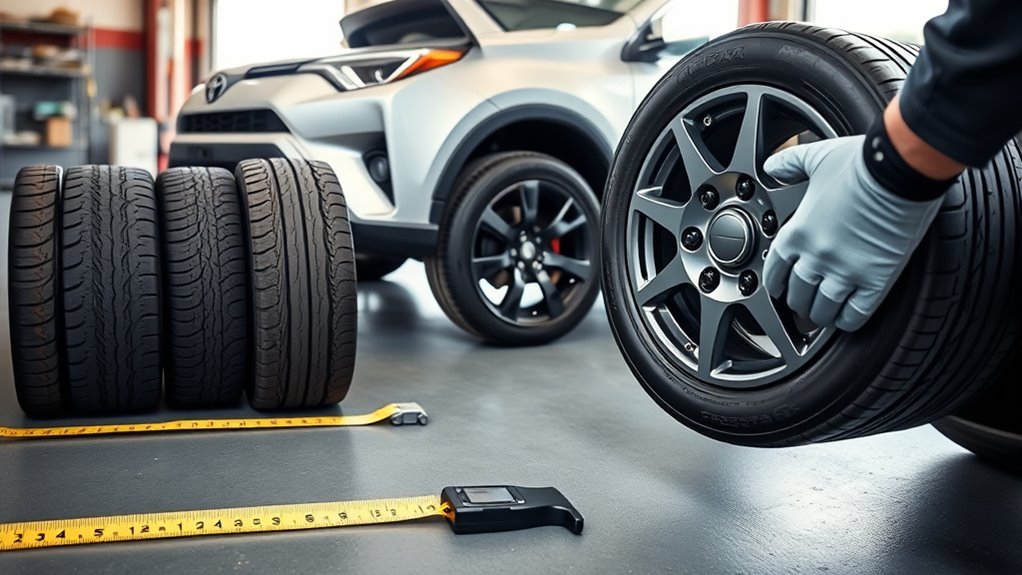
Choosing the wrong Toyota RAV4 tire size can hurt ride quality, handling, and speedometer accuracy. Your safest choice is the tire size printed on the driver-side door placard, but several factory and close-fit aftermarket sizes may work by year, trim, and wheel size. This guide explains common RAV4 tire sizes, wheel fitment basics, safe swap limits, and how to choose tires for your driving style.
Quick Answer
Common Toyota RAV4 tire sizes include 215/70R16, 225/65R17, 235/55R18, 235/60R18, and 235/50R20. Match your exact year and trim before buying, and keep overall tire diameter close to the factory size. Use the door placard, owner’s manual, or tire sidewall as your final fitment check.
Key Takeaways
- Check your door placard first because RAV4 tire sizes vary by year, trim, and wheel package.
- Keep replacement tires close to the original overall diameter to protect clearance and speedometer accuracy.
- Confirm bolt pattern, offset, center bore, and rim width before buying aftermarket wheels.
- Choose all-season tires for daily comfort or all-terrain tires for more gravel and trail use.
- Rotate your tires on schedule and check cold tire pressure to extend tire life.
Which RAV4 Years and Trims Use Each Tire Size? (Quick Reference)
Toyota RAV4 tire sizes vary by model year, trim, drivetrain, and wheel package. Common factory sizes include 215/70R16, 225/65R17, 235/55R18, 235/60R18, and 235/50R20. Always confirm the exact size on your driver-side door placard before you buy tires.
Older 1996 to 2005 RAV4 models commonly use 215/70R16 tires. Many 2006 to 2011 models use either 215/70R16 or 225/65R17, depending on trim and drivetrain. Later RAV4 trims often use 17-inch or 18-inch wheels, while some newer appearance or premium packages use larger wheels.
Your door placard gives the correct tire size, load rating, and cold tire pressure for your vehicle. Use it as the final source because trim names and wheel packages can vary by market.
[Products Worth Considering]
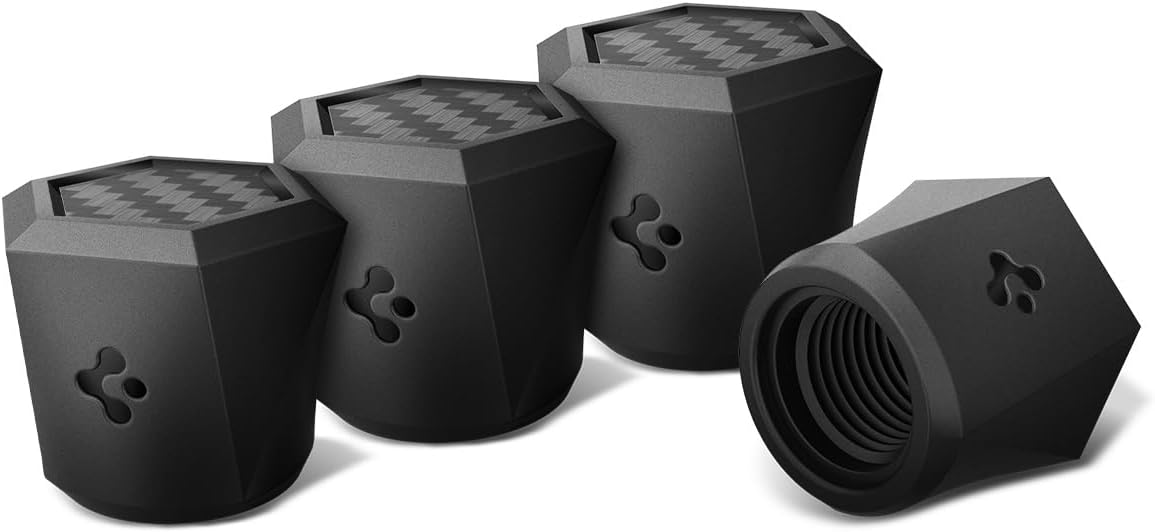
Spigen magnetic tire valve caps attach securely to metal surfaces so you never have to search for lost caps. Designed for Schrader valve stems, they install quickly, help protect against air leakage and corrosion, and feature a light magnet that won’t interfere with TPMS signals.

Upgrade your Toyota tire setup with these corrosion-resistant, leak-proof valve stem caps designed to help protect the valve core from water, snow, and road grime. The caps feature a snug rubber seal and durable copper alloy construction to resist rust and oxidation while maintaining stable tire pressure. Ideal for replacing worn original caps and keeping your wheels looking clean and stylish.

These universal aluminum tire valve stem caps help protect valve cores from corrosion caused by dirt, water, and snow while helping prevent air leaks to maintain steady tire pressure. They’re easy to install with a simple screw-on fit and are suitable for cars, SUVs, trucks, bicycles, motorcycles, and other vehicles. The stylish black caps add a clean, standout look to your wheels while supporting reliable long-term performance.
Factory RAV4 Wheel Sizes Explained: 17″, 18″, 19″, and 20″ Pros and Trade-Offs
Wheel size changes how your RAV4 rides, steers, and absorbs road impacts. A smaller wheel usually uses a taller tire sidewall, which improves comfort and helps absorb potholes. A larger wheel usually uses a shorter sidewall, which sharpens response but can make the ride firmer.
| Wheel Size | Pros | Trade-offs |
|---|---|---|
| 17″ | Better ride comfort, lower tire cost | Less aggressive appearance |
| 18″ | Good balance of comfort and handling | Slightly firmer ride than 17-inch wheels |
| 19″/20″ | Sharper response and stronger visual presence | Stiffer ride, more road noise, and less sidewall protection |
Pick wheel size based on how you drive. Stay with smaller wheels if comfort, winter use, and lower replacement cost matter most. Choose larger wheels only when you accept the firmer ride and higher tire cost.
How to Check RAV4 Wheel Fitment: Bolt Pattern, Offset, and Rim Width
Before you buy wheels, check the bolt pattern, offset, center bore, rim width, and tire diameter. Many RAV4 models use a 5×114.3mm bolt pattern, but you should still verify your exact year and trim. The bolt pattern must match, or the wheel will not mount safely.
Offset controls how far the wheel sits inward or outward from the hub. A large offset change can cause rubbing, poor steering feel, or extra stress on suspension parts. Rim width also matters because the tire bead must seat correctly on the wheel.
Warning: Never install wheels based on bolt pattern alone because offset, center bore, load rating, and lug hardware also affect safety.
After you install wheels, torque the lug nuts to the Toyota specification for your model. Recheck torque after a short drive if your installer recommends it. Get an alignment if the vehicle pulls, the steering wheel sits off-center, or the tires show uneven wear.
Safe RAV4 Tire Swaps and Maximum Diameter Limits (Will It Rub or Need Mods?)
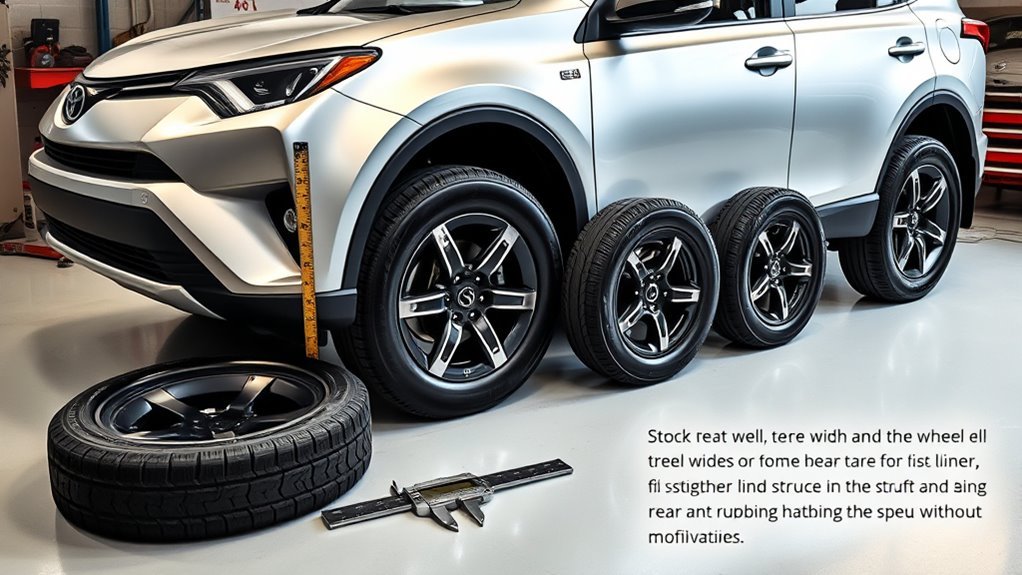
Safe tire swaps start with the factory size for your exact RAV4. Keep the new tire’s overall diameter close to the original size to help protect clearance, speedometer accuracy, anti-lock braking system behavior, and traction control performance. Many fitment guides use about a 3% diameter difference as a practical limit, but your vehicle’s clearance still matters.
Some RAV4 owners move from a factory size such as 225/60R18 to nearby sizes like 235/60R18. Wider or taller tires may fit some vehicles, but they can rub during sharp turns, full suspension compression, or heavy cargo loads. Test fitment matters more than a general chart.
Measure clearance at full steering lock and check the inner fender, strut area, and mud flap area. If clearance looks tight, choose a more conservative size. Tires that barely fit when parked can still rub when the suspension moves.
Pro tip: Compare tire diameter, width, and load rating before you compare tread style or price.
Choosing RAV4 Tires by Use: All-Season vs. All-Terrain, Noise vs. Warranty Trade-Offs
Choose RAV4 tires based on where you drive most. All-season tires suit commuting, highway use, rain, and light snow. All-terrain tires add grip on gravel, dirt, and mild trails, but they often create more road noise.
Touring tires focus on comfort, quiet ride quality, and long tread life. Performance-focused tires can improve steering feel, but they may wear faster or ride harder. Winter tires make the biggest difference if you drive often on snow, ice, or freezing roads.
| Type | Strength | Trade-off |
|---|---|---|
| All-Season | Comfort and balanced daily performance | Limited off-road grip |
| All-Terrain | Better off-pavement traction | Higher noise and firmer ride |
| Touring | Long tread life and low noise | Less aggressive traction |
| Winter | Better cold-weather grip | Poor warm-weather wear and handling |
Match the tire’s speed rating and load index to your RAV4’s requirements. A tire can fit the wheel and still fail to meet the proper load rating. Your tire shop can confirm this before installation.
[Products Worth Considering]

These universal tire valve stem caps help protect your valve core from dust, debris, moisture, and corrosion, supporting more stable tire pressure. The aluminum alloy design resists long-term wear, while the sealing construction helps help prevent air leakage. They twist on easily for quick installation and help safeguard driving safety across cars, SUVs, trucks, and motorcycles.

This 4-pack kit converts Presta bike valves to standard Schrader valves so you can inflate with any regular pump or air compressor. The solid brass adapters include an O-ring for a tight, leak-proof seal and provide a simple screw-on setup. Compatible with road bikes, mountain bikes, e-bikes, and e-scooters, it’s designed for convenient, everyday carry readiness.
What Should You Check Before Buying RAV4 Replacement Tires?
Start with the tire size, load index, and speed rating on your current tire or door placard. Then check the tire’s production date, warranty terms, expected road noise, and wet braking performance. These details matter as much as the brand name.
You should also check whether your RAV4 uses a tire pressure monitoring system (TPMS) sensor in each wheel. New wheels may need compatible sensors or sensor transfer from the old wheels. Ask your installer about relearning or programming the sensors after installation.
Frequently Asked Questions
How Often Should I Rotate RAV4 Tires for Even Wear?
Rotate your RAV4 tires every 5,000 to 7,500 miles, unless your owner’s manual gives a different interval. Regular rotation helps prevent uneven wear, improves tread life, and keeps handling more consistent.
Can I Mix Summer and All-Season Tires on a RAV4?
You should not mix summer and all-season tires on a RAV4. Mixed tire types can reduce grip balance and create unpredictable handling in rain, snow, or emergency maneuvers.
What Tire Pressure Is Recommended for a Loaded RAV4?
Use the cold tire pressure listed on your driver-side door placard, even when the vehicle carries normal cargo. If you tow, carry heavy loads, or drive long distances, check your owner’s manual for load-specific guidance.
How Long Do RAV4 Tires Typically Last in Mileage?
Many RAV4 tires last about 40,000 to 70,000 miles, depending on tire type, alignment, rotation habits, road surface, and driving style. Replace tires sooner if tread depth gets too low, sidewalls crack, or uneven wear appears.
Are Run-Flat Tires Compatible With a RAV4?
Run-flat tires can work on a RAV4 only when the size, load rating, wheel type, and tire pressure monitoring system support them. They add short-distance mobility after some punctures, but they often cost more and ride firmer.
Can You Put Bigger Tires on a RAV4 Without a Lift?
You can sometimes install a slightly larger tire without a lift, but clearance depends on your year, trim, wheel offset, and tire brand. Stay close to the factory diameter if you want the lowest risk of rubbing.
Conclusion
The right RAV4 tire size starts with your door placard, not a generic fitment chart. Match the factory size when you want the safest and simplest replacement. If you upsize, keep diameter changes small and confirm clearance before you commit. Choose the tread type that fits your roads, and your RAV4 will feel safer, quieter, and easier to live with.
References
- Toyota Owner’s Manuals and Warranty Guides — Toyota
- Tires — National Highway Traffic Safety Administration
- Tire Rotation — Tire Industry Association

Related Articles

Toyota RAV4 TPMS Reset: Easy Steps That Work
Unlock the secrets to resetting your Toyota RAV4's TPMS effortlessly—discover the essential steps to ensure your tires are always safe.
Read More
Toyota RAV4 Tire Rotation: DIY Steps & Pattern
Take control of your Toyota RAV4's tire maintenance with our simple DIY rotation guide—discover the best steps for optimal performance and longevity!
Read More
Mix Tire Brands on a Toyota RAV4? Expert Guide
Keeping your RAV4 safe? Learn when mixing tire brands risks traction, ABS/TCS and AWD damage — and what exact matches you must insist on.
Read More
One Comment