
CZRWJXW Tire Valve Stem Tool Kit Review: Valve Core Removal and Replacement Tool Set

Disclosure: This roundup is reader-supported. When you click through Amazon links, we may earn a referral commission on qualifying purchases at no extra cost to you.
A leaking valve stem can flatten a tire even when the tread and bead are still sound, but replacing the stem usually means a shop visit or extra tire equipment. The CZRWJXW Tire Valve Stem Tool Kit is designed to remove standard snap-in rubber stems and install replacements while the tire remains on the rim. Its broad kit contents and longer puller make it useful for home garages, trailers, lawn equipment, motorcycles, and ATVs. The main limits are equally important: it fits 0.453-inch valve holes, it is not made for TPMS valve assemblies, and proper lubrication and controlled force are needed.
Quick Verdict
Rating: 8/10, recommended with compatibility checks
Best For: DIY owners servicing standard 0.453-inch snap-in rubber valve stems on light-duty tubeless tires
Bottom Line: You get a more complete kit than a basic valve-core tool, including three stem lengths, replacement cores, caps, gloves, a hook, and a positioning tube. It can save time on compatible wheels, but it should not be used on TPMS assemblies, metal clamp-in stems, or an application with an unverified pressure rating.
Key Specifications
|
Specification |
Detail |
|---|---|
|
Brand |
CZRWJXW |
|
Model |
CZ00089 Tire Valve Tool Kit |
|
Product type |
Snap-in valve stem and valve core removal and installation kit |
|
Compatible valve hole |
0.453 inch |
|
Included stems |
4 TR412, 4 TR413, and 4 TR414 snap-in rubber stems |
|
Other included parts |
12 valve cores, 2 valve caps, 4-way core tool, red core tool, valve stem hook, puller, positioning tube, and 1 pair of gloves |
|
Package dimensions |
11.02 x 3.54 x 1.42 inches |
|
Item weight |
1.21 pounds |
|
Not compatible with |
TPMS valve assemblies, metal clamp-in stems, and non-0.453-inch valve holes |
|
Best use |
Light-duty tubeless tire service after confirming stem type, hole size, and pressure rating |
[Products Worth Considering]

This multi-function tire valve stem removal tool set makes it fast to remove, install, bleed, and clean valve cores for easier tire maintenance. It includes valve core removers, a 4-way spool tool, replacement valve caps, and spare cores to handle replacements and repairs with confidence. Universal compatibility suits cars, trucks, motorcycles, bicycles, and more for roadside convenience.

This 4-in-1 tire valve core removal tool helps you deflate, unblock, and remove or install valve cores quickly for easier tire repair. The multifunction design also supports re-taping damaged threads and reaming inside the valve stem for smoother service. Included as a 2-pack, it’s compact for convenient carry and works for cars, bicycles, and motorcycles.

Camco Trailer Aid Plus tandem tire ramp lifts your trailer for quick, safe tire changes with ample clearance from its 5 1/2-inch lift. It helps you change a flat tire without unloading cargo, making roadside and routine maintenance more efficient. The heavy-duty, waterproof and rustproof polymer design supports up to 15,000 lb and is built for easy portability and storage.
CZRWJXW Tire Valve Stem Tool Kit
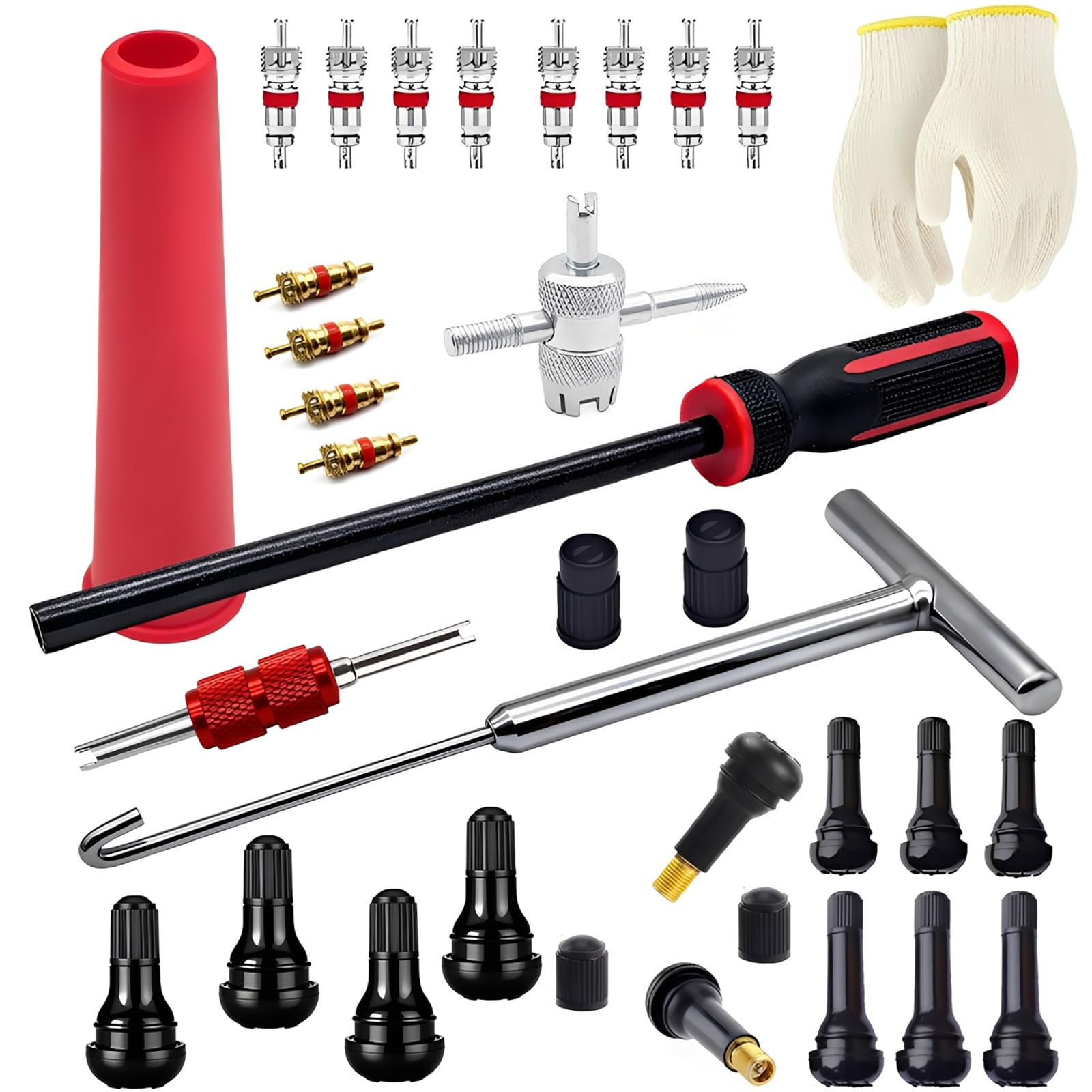
This is a valve-service kit for standard tubeless wheels that use pull-through rubber snap-in stems. Instead of breaking the tire bead to reach the inside of the rim, you use the hook to remove the old stem and the positioning tube and puller to guide a compatible replacement through the valve hole.
The package is more complete than a single puller. You receive 12 replacement stems in TR412, TR413, and TR414 sizes, plus 12 cores, two combination caps, two core tools, a hook, a longer one-piece puller, a positioning tube, and reusable gloves. The range of stem lengths gives you options, but you still need to match the original valve type, rim hole, wheel-cover clearance, and tire pressure requirement.
Before You Buy: Confirm that your wheel uses a 0.453-inch hole and a standard snap-in rubber valve stem. The manufacturer specifically says this kit is not suitable for TPMS systems, so do not use it on a valve with an attached pressure sensor or on a metal clamp-in assembly.
Who Should Buy It?
Best For
- DIY owners who maintain cars, trailers, mowers, motorcycles, or ATVs with compatible snap-in stems
- Households or small shops that want several replacement stem lengths and cores in one compact kit
- Users who can safely deflate a tire, identify the valve type, and work with steady hand pressure
Skip If
- Your valve is part of a direct TPMS sensor or uses a metal clamp-in design
- Your wheel has a different valve-hole diameter or requires a high-pressure valve not included here
- You need to inspect rim corrosion, bead damage, or the inside of the tire during the repair
Fit and Compatibility
The kit is listed for a 0.453-inch valve hole, a common size for many standard snap-in passenger and light-duty applications. It includes TR412, TR413, and TR414 stems, which mainly differ in exposed length. That helps when a short stem is difficult to reach or a long stem would interfere with a wheel cover.
Do not choose a replacement by length alone. Compare the old stem with the new one, check the wheel hole size, and confirm that the valve pressure rating is suitable for the tire and wheel. Special Trailer tires, higher-pressure light-truck tires, performance applications, and metal clamp-in systems may require a different valve design.
Tools and Build Quality
Longer One-Piece Puller
The puller uses an integrated design, so you do not have to assemble several loose sections before each repair. Its longer handle gives you leverage and a more controlled grip when drawing the lubricated rubber stem through the positioning tube and rim hole.
More leverage also means you can overload the stem or tool if the valve is misaligned. Stop if the force rises sharply, then recheck the hole, lubrication, stem size, and positioning tube rather than pulling harder.
Valve Stem Hook and Core Tools
The metal hook is shaped to catch the old rubber stem after the tire is fully deflated. The 4-way tool and smaller red tool handle routine valve-core removal and installation, giving you a separate option when only the core is leaking.
The listing also describes the puller handle as a way for experienced users to judge pressure by tapping a tire. You should not rely on sound or feel for an inflation reading. Use an accurate tire-pressure gauge and inflate to the vehicle or equipment manufacturer’s cold-pressure specification.
Replacement Parts in the Box
Twelve stems and 12 cores make the kit useful for more than one repair. The two caps combine dust protection with a small core-tool function, while the gloves help keep lubricant and road dirt off your hands. A dedicated rubber-approved tire lubricant is not listed among the included items, so plan to supply it separately.
Installation and Ease of Use
Replacing a core is the easiest task because you remove the cap, fully deflate the tire, unscrew the old core, install a matching new core, and check for leaks after inflation. Replacing a full stem takes more technique because the old stem must be extracted and the new one aligned with the rim hole.
The positioning tube is the key part of the no-bead-break design. It helps guide the new stem toward the valve hole from outside the wheel. Once the stem is threaded onto the puller, you apply controlled leverage until the seating ring clears the outside face of the rim.
Pro Tip: Use a rubber lubricant approved by the valve manufacturer on a standard snap-in stem. Apply enough to help the rubber pass through the hole, keep the stem straight, and stop pulling as soon as its seating ring clears the rim.
Step-by-Step Use
- Park or place the equipment on a stable, level surface and secure it against movement.
- Remove the valve cap and valve core so the tire is completely deflated before you work on the stem.
- Confirm that the old assembly is a standard rubber snap-in stem, not a TPMS or metal clamp-in valve.
- Use the hook to remove the old stem without gouging the rim’s valve-hole surface.
- Check the visible valve hole for rust, burrs, sharp edges, or damage. Stop and use a tire professional if the sealing area is questionable.
- Select a compatible replacement stem and apply manufacturer-approved rubber lubricant.
- Thread the stem onto the puller, position the guide tube, align the parts, and pull with steady pressure.
- Stop when the stem’s seating ring clears the outside of the rim, then inspect the rubber for tearing or distortion.
- Install the valve core, inflate with a gauge to the specified cold pressure, fit the cap, and check the core and stem base for leaks.
How It Performs in Real Use
Passenger-Car Maintenance
On an older wheel with a conventional rubber snap-in stem, the kit can save a trip to the tire shop when the stem is cracked or leaking. The 0.453-inch limitation and TPMS exclusion mean you must identify the valve before starting, because many newer vehicles use sensor-mounted stems.
Trailer and Lawn-Equipment Tires
The compact tools are useful when a mower, utility trailer, or garden cart has a simple tubeless wheel that is awkward to transport. The included stem lengths improve your odds of matching the original, but higher-pressure trailer applications still require a valve with the correct rating.
Motorcycles and ATVs
The hook, positioning tube, and puller fit easily in a workshop drawer or trail-service box. You still need enough access around the rim, and you should not treat the kit as a substitute for inspecting tire damage after an impact, puncture, or sudden pressure loss.
Repeated Home or Fleet Use
The 12 stems and 12 cores offer better repeat-use value than a puller sold by itself. Durability depends on technique, because forcing a dry, oversized, or misaligned stem can damage the replacement rubber or overload the puller.
Customer Feedback
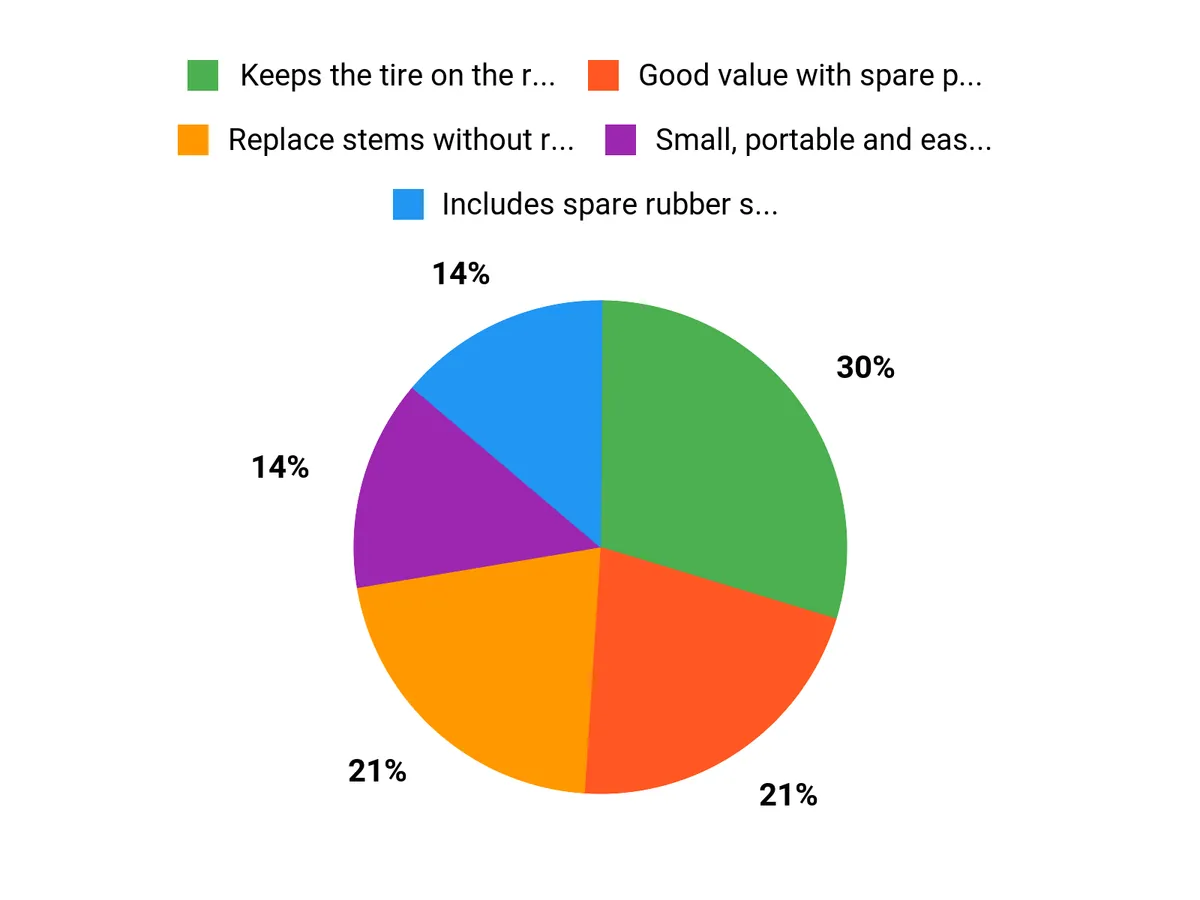
At the time of verification, the Amazon listing showed a 4.6 out of 5 rating from 26 customer ratings. Positive comments focus on the time saved, the number of included parts, and the ability to handle a standard stem without dismounting the tire from the rim.
The main caution in the original review material is tool breakage when too much force is used. That concern fits the design: the longer handle supplies leverage, but lubrication, alignment, and a correct stem match should do most of the work.
Overall Sentiment: Positive, with a technique-related durability caveat

[Products Worth Considering]

This tire repair screw set includes self-tapping plugs and a screwdriver to help you quickly complete tubeless tire repairs for many vehicle types. The set provides two...
Pros and Cons
Pros
- Installs compatible snap-in stems while the tire remains mounted on the rim
- Includes 12 stems across TR412, TR413, and TR414 lengths
- Provides 12 cores, two caps, two core tools, a hook, a puller, a positioning tube, and gloves
- Longer one-piece puller gives you controlled leverage without loose extension parts
- Compact 1.21-pound package is easy to store with tire-service tools
Cons
- Limited to 0.453-inch valve holes and standard snap-in rubber stems
- Not suitable for TPMS valve assemblies or metal clamp-in valves
- Can require trial and error, and excessive force may damage the stem or puller
Compatibility and Safety
Always remove the valve core and confirm that the tire is fully deflated before removing a stem. Wear eye protection, keep your face and body out of the valve’s direct path, and secure the vehicle or equipment so it cannot move while you work.
Use only a valve that matches the wheel hole, tire type, intended pressure, and vehicle application. Replace any stem that tears or becomes distorted during installation. After inflation, verify pressure with a gauge and check for leakage around both the valve core and the stem base.
This kit does not let you inspect the inner rim, bead seat, or tire liner. A tire professional is the better choice when you see corrosion, a damaged valve hole, sidewall damage, bead leakage, repeated pressure loss, or a TPMS fault.
Is It Worth the Price?
At the article’s verified price of $27.99, the CZRWJXW kit sits above very basic core tools and simple pullers, but it includes a wider set of replacement parts. You receive three stem lengths, 12 cores, two caps, two core tools, a hook, a guide tube, gloves, and the longer puller.
It offers strong value when you maintain several compatible tires or want parts ready for future repairs. It is less compelling when you only need one valve core, own mostly TPMS-equipped vehicles, or need professional inspection of the wheel and tire interior.
How It Compares to Alternatives
The FullMayPro 38-piece quick-change kit is worth comparing if you want a lower-cost set with TR413, TR414, and TR418 stems. The LOGOL 51025 is a simpler option with four TR413 stems when you do not need as many lengths or accessories.
The CZRWJXW kit makes the most sense when you value its longer one-piece puller, metal hook, positioning tube, and mixed TR412, TR413, and TR414 supply. A conventional tire-machine service remains the better alternative for TPMS work, high-pressure applications, rim corrosion, or any repair that requires an internal inspection.
Why Customers Choose It
You choose this kit when you want more than a valve-core wrench but do not want to buy a tire changer for occasional stem repairs. Its strongest buying points are the mixed set of 12 snap-in stems, the complete removal and installation tool group, and the compact package.
The tradeoff is narrower compatibility than the word “universal” sometimes suggests in this product category. The listing restricts the kit to 0.453-inch stems and excludes TPMS systems, so a quick visual and dimensional check before purchase matters.
Frequently Asked Questions
Will this kit work with TPMS valve stems?
No. The product listing specifically says the kit is not suitable for TPMS systems. A sensor-mounted snap-in or clamp-in valve needs the correct TPMS service parts and procedures.
What valve stems are included?
The package includes four TR412, four TR413, and four TR414 rubber snap-in stems. It also includes 12 replacement valve cores and two valve caps.
Does the tire have to come off the rim?
The kit is designed to replace a compatible snap-in stem while the tire stays mounted on the rim. You must still fully deflate the tire, identify the valve correctly, and stop if the rim hole or sealing area appears damaged.
What size valve hole does it fit?
The manufacturer lists compatibility with 0.453-inch valve holes. Do not force one of the included stems into a smaller or larger opening.
What lubricant should you use?
Use a rubber lubricant approved by the valve manufacturer for a standard snap-in valve. Avoid improvising with a product that may attack rubber, leave the stem slippery after installation, or promote rim corrosion.
Can you use the puller to check tire pressure by sound?
Do not use tapping as your pressure measurement. Check cold pressure with an accurate gauge and use the vehicle placard, equipment label, or owner’s manual for the correct specification.
Who should skip this kit?
Skip it when your wheel uses TPMS, a metal clamp-in stem, a different hole diameter, or a high-pressure valve with requirements you cannot verify. You should also use a tire professional when the wheel, bead, or tire needs internal inspection.
The Bottom Line
The CZRWJXW Tire Valve Stem Tool Kit is a practical buy for DIY users who service standard 0.453-inch snap-in rubber stems and want a complete set of pullers, guides, cores, caps, and three stem lengths. Its main strength is the broad kit content, while its main limitation is strict compatibility, especially the lack of TPMS support. Skip it when you cannot verify the stem type and pressure rating or when the tire and wheel need professional inspection.
Ready to Buy?
Check the latest price, package details, and compatibility notes before you decide.

Related Articles

Best Westlake Tires 2026: Affordable Tires for Daily Driving and All-Season Use
You spend a lot of time on the road, and the tires you choose affect safety, comfort, fuel economy, and long-term costs. Westlake offers…
Read More
Best Sailun Tires 2026: Affordable Tire Picks for Everyday Driving
You rely on tires for safety, fuel economy and ride comfort, so choosing the right Sailun model matters more than just price. This guide…
Read More
Best Snow Tires for Trucks 2026: Winter Truck Tires for Safe Cold-Weather Driving
Winter tires are one of the most effective upgrades you can make to keep your truck safe when temperatures drop and roads become snow-…
Read More