
Tire Pressure at Altitude: PSI Rules for 1,000 Ft
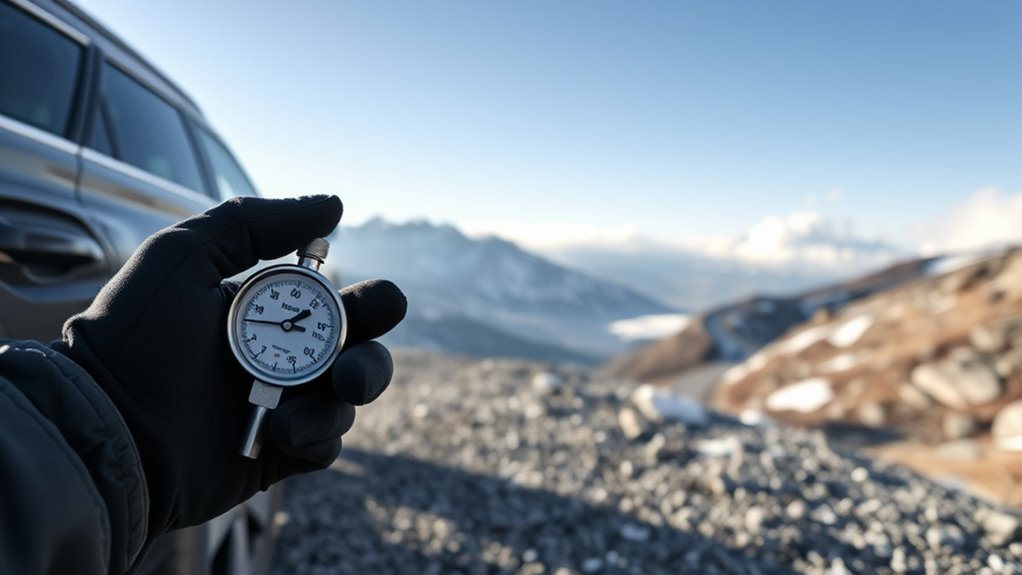
Elevation can make a good tire reading look wrong fast, especially when temperature changes at the same time. As you climb, lower outside air pressure usually makes your gauge reading rise by about 0.5 pounds per square inch (PSI) per 1,000 feet, while colder air can pull it back down. Use your vehicle’s cold tire pressure spec, check with a reliable gauge, and adjust only after you account for altitude, temperature, and whether the tires are truly cold.
Quick Answer
Set tires to the vehicle manufacturer’s cold PSI, not the number molded into the tire sidewall. When you climb, expect the gauge reading to rise by about 0.5 PSI per 1,000 feet because outside air pressure drops. When temperature changes, expect about 1 PSI of tire pressure change for every 10°F. Recheck cold tires before major climbs, after long descents, and before you bleed or add air.
Key Takeaways
- Use the tire pressure on your driver’s door placard or owner’s manual as your target.
- Expect gauge PSI to rise about 0.5 PSI for every 1,000 feet you gain.
- Expect temperature to change tire pressure about 1 PSI for every 10°F.
- Check tires cold, because driving heat can raise readings and lead you to bleed too much air.
- Get help if pressure drops fast, the tire wears unevenly, or the vehicle pulls or vibrates.
Quick Rule: Set Tire PSI for Changes in Elevation
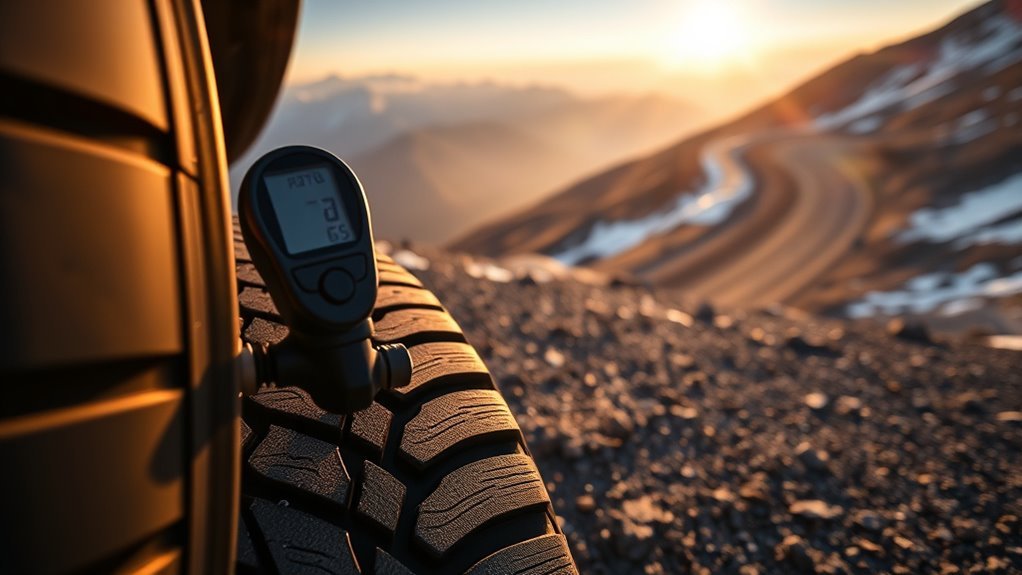
When you climb in elevation, expect your tire pressure gauge to read about 0.5 PSI higher per 1,000 feet gained. Lower atmospheric pressure raises the difference between the air inside the tire and the air outside it. That difference creates the gauge reading.
Start with the manufacturer-recommended cold tire pressure at your current location. You can find it on the driver’s door placard or in the owner’s manual. Do not use the tire sidewall number as your normal target, because that number shows the maximum cold pressure the tire can carry.
If you drive from sea level to high elevation, the gauge may rise even if you never add air. If you plan to stay at altitude, adjust cold tires back toward the placard PSI. If you only pass through, avoid large changes unless the tires fall outside a safe range.
Measure Tire PSI Correctly and Interpret Readings at Altitude
Measure tire pressure when the tires are cold, after the vehicle has sat for at least three hours. Driving heats the air inside the tire and raises the gauge reading. A hot reading can make you bleed air that the tire still needs after it cools.
Use a calibrated gauge or a high-quality digital gauge. Record the altitude, outdoor temperature, and cold PSI each time you check. These notes help you spot normal changes and catch leaks early.
A tire gauge shows pressure above local outside air pressure. At higher elevation, outside air pressure drops, so the same tire can show a higher gauge PSI. Compare your reading to the vehicle’s cold PSI spec after you account for altitude and temperature.
Note: Do not bleed hot tires just because they read high after driving.
How Many PSI to Add or Subtract Per 1,000 Ft and Per 10°F
Altitude and temperature can pull pressure readings in opposite directions. A climb raises the gauge reading by about 0.5 PSI per 1,000 feet, but colder air can lower tire pressure by about 1 PSI per 10°F. Check both before you add or release air.
Use the table as a practical field guide. Make small changes, then recheck with the same gauge. Aim for the manufacturer’s cold PSI unless your owner’s manual gives a special load or terrain setting.
| Change type | Approximate effect | Action |
|---|---|---|
| +1,000 ft | +0.5 PSI gauge rise | Bleed only if cold PSI exceeds the target |
| -1,000 ft | -0.5 PSI gauge drop | Add air if cold PSI falls below the target |
| +10°F | +1.0 PSI | Recheck cold before bleeding air |
| -10°F | -1.0 PSI | Add air if cold PSI is low |
| Large trip change | ±2–3 PSI possible | Recheck at each major stop |
Before You Begin: What You’ll Need
Plan on 10 to 15 minutes for a basic tire pressure check and adjustment. Add more time if you need to inspect tread, valve stems, or a slow leak.
- A calibrated tire pressure gauge
- Your vehicle tire placard or owner’s manual
- A portable inflator or access to an air pump
- Valve caps and a flashlight for inspection
- A phone, map app, or altimeter to estimate elevation
Which Pressure Should You Use: Placard or Sidewall?
Use the cold tire pressure listed by the vehicle manufacturer. The driver’s door placard accounts for the vehicle’s weight, handling, and normal tire size. The tire sidewall lists a maximum pressure, not your daily driving target.
If you changed tire size, load rating, or wheel setup, ask a tire technician for a correct target pressure. A wrong target can reduce grip, increase wear, or make the tire run hotter.
Practical Steps for Ascent, High-Elevation Driving, and Descent
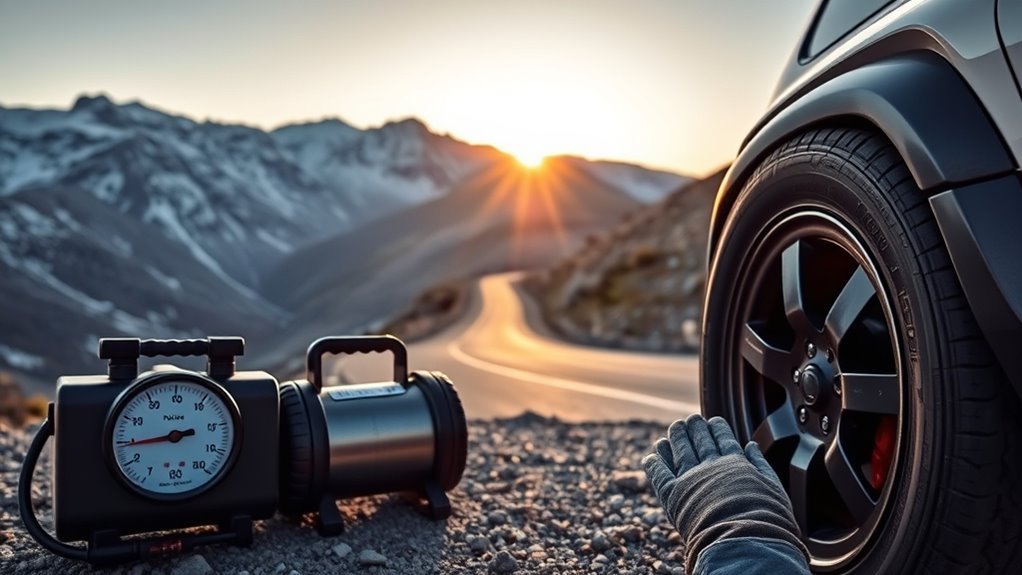
Follow a simple routine before you climb, while you drive at altitude, and after you descend. Small checks help you avoid overcorrection.
- Check cold pressure before the trip. Set each tire to the manufacturer’s cold PSI before you start driving.
- Record the starting conditions. Note the pressure, temperature, and starting elevation so you can compare later readings.
- Recheck after a major elevation change. Stop safely, let the tires cool when possible, and measure with the same gauge.
- Adjust in small steps. Add or release air only when the cold reading sits outside your target range.
- Inspect before descent. Look for valve leaks, sidewall damage, low tread, or uneven wear before long downhill driving.
- Check again after descent. Once the tires cool, bring them back to the placard PSI if the reading has changed.
Warning: Stop and inspect the tire right away if pressure drops quickly, the vehicle pulls, or you feel vibration.
Troubleshooting, Safety Checks, and When to Get Professional Help
When pressure changes more than you expect, start with a cold tire check. Compare each tire with the placard PSI and with the other tires on the same axle. A difference of 2 to 3 PSI can point to temperature change, gauge error, or a slow leak.
Use the tire pressure monitoring system (TPMS) as a warning tool, not as your only gauge. TPMS alerts can help you catch a low tire, but a handheld gauge gives you a direct reading. Recheck the tire after the alert and inspect the valve, rim, tread, and sidewall.
Call a tire technician if pressure keeps dropping, the tire wears unevenly, or the vehicle pulls to one side. Ask for a leak test, valve inspection, wheel balance, and alignment check. These checks help protect handling, tire life, and braking control.
Frequently Asked Questions
Do Tire Pressure Changes Affect Electric Vehicle Range Differently?
Yes, electric vehicle (EV) drivers may notice range changes sooner because low tire pressure raises rolling resistance. The same tire physics apply to gas vehicles, but EV range estimates often make the change easier to see.
Can Altitude-Induced Pressure Changes Damage TPMS Sensors?
Normal altitude changes should not damage TPMS sensors. They can still trigger alerts when pressure crosses the system’s threshold, so confirm the reading with a tire gauge.
Do Seasonal Altitude Trips Require Different Tire Types?
You don’t need different tires only because you change altitude. Choose tires based on temperature, road surface, snow, ice, load, and tread needs.
How Does Altitude Affect Tire Pressure in Motorcycles Versus Cars?
Motorcycles follow the same pressure rules, but their smaller tires and handling demands make small pressure changes feel more obvious. Check motorcycle tires more often during mountain trips.
Are Nitrogen-Filled Tires Less Affected by Elevation Changes?
Nitrogen-filled tires still change pressure with altitude and temperature. Dry nitrogen may reduce moisture-related swings and slow some leakage, but you still need regular cold pressure checks.

Related Articles
What Is a Fat Tire? Complete Guide & Best Options
I’ll show you what makes fat tires different, which setups work best, and why the right choice could change your ride.
Read More
What Does W Mean on a Tire? Load, Speed & Rating Guide
Huh, what does W on a tire really mean, and why could choosing the wrong rating affect your safety and performance?
Read More
What Does Tire Flipping Work? Muscles, Benefits & Workout Guide
Strong tire flips hammer your entire body, but which muscles and benefits matter most?
Read More