
Tire Recycling Explained: What Happens to Old Tires
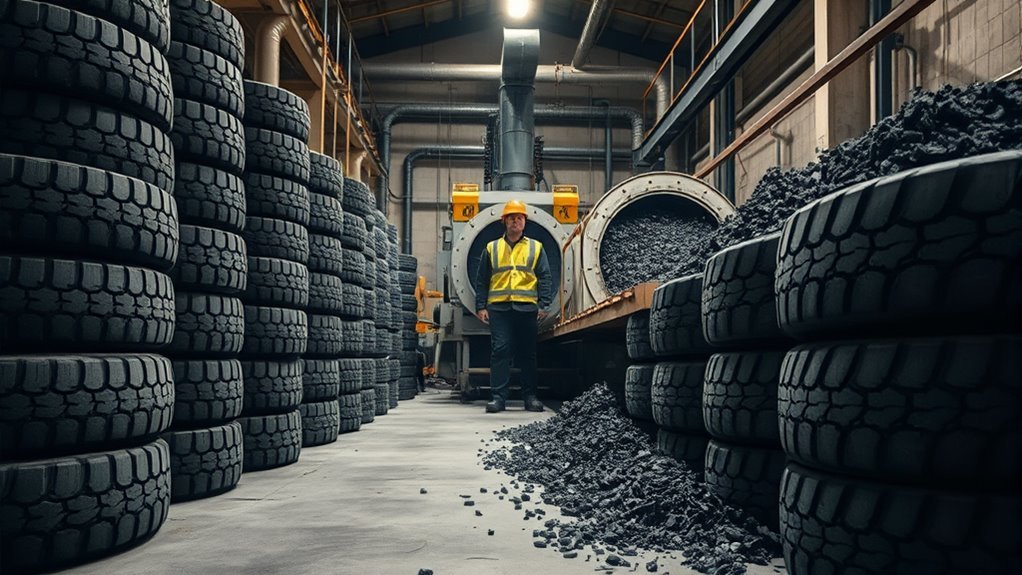
Old tires do not simply disappear after a shop, municipality, or cleanup crew collects them. A recycler inspects and sorts them, removes rims when needed, cuts or shreds the tire, separates rubber, steel, and fiber, and then sends each material stream into products such as rubber modified asphalt, molded mats, tire-derived aggregate, recovered steel, or regulated tire-derived fuel.
Quick Answer
Old tires are recycled by inspecting and sorting them, removing rims or beads when needed, shredding the rubber, and separating steel and textile fiber from usable rubber. The recovered material can become crumb rubber, rubber modified asphalt, playground surfacing, molded goods, civil-engineering fill, fuel, pyrolysis oil, or reclaimed rubber.
Key Takeaways
- The main recycling path is mechanical: inspect, sort, de-rim, cut, shred, grind, and separate rubber, steel, and fiber.
- Recovered tire rubber is commonly used in ground rubber products, asphalt, sports surfaces, molded mats, and tire-derived aggregate for construction.
- Steel is recovered with magnets, while textile fiber is usually removed with air or screening systems.
- Pyrolysis and devulcanization can recover oil, gas, char, carbon black, or reusable rubber compounds, but they require careful economics and permitting.
- Tire piles must be controlled because they can create fire hazards, mosquito breeding areas, illegal dumping problems, and water-quality concerns.
Tire Recycling: Collection, Acceptance, and Sorting
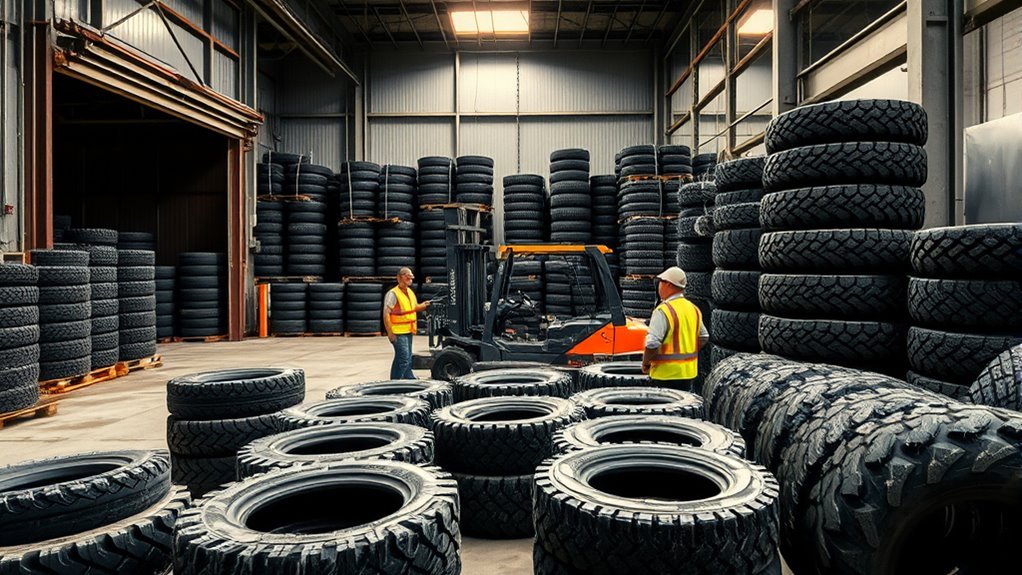
When tires arrive from auto shops, fleet yards, construction sites, municipal drop-off days, or cleanup programs, recycling facilities inspect them against acceptance rules before any cutting or shredding begins. Operators check tire type, size, condition, contamination, rim status, and whether the load matches shipping paperwork.
This first step matters because passenger tires, truck tires, off-road tires, and heavy-equipment tires do not always move through the same equipment. A load with dirt, oil, debris, or mixed waste may need extra handling or may be rejected. Facilities also stage approved tires by size and condition so shredders, conveyors, magnets, screens, and air separators can run safely and efficiently.
Note: Rules vary by state and facility. Some programs accept passenger tires only, while others accept truck, agricultural, or off-road tires. Most facilities charge a fee because transportation, storage, fire prevention, processing, and documentation all add cost.
[Products Worth Considering]

This VEVOR tire bead breaker uses a slide-hammer impact and wedge tip to separate tire beads from rims quickly and efficiently without damaging hub surfaces. The long handle and sturdy steel construction help reduce user strain while providing reliable, portable tire changing for cars, trucks, and more. Ideal for home mechanics and repair shops handling multiple vehicle tire sizes.
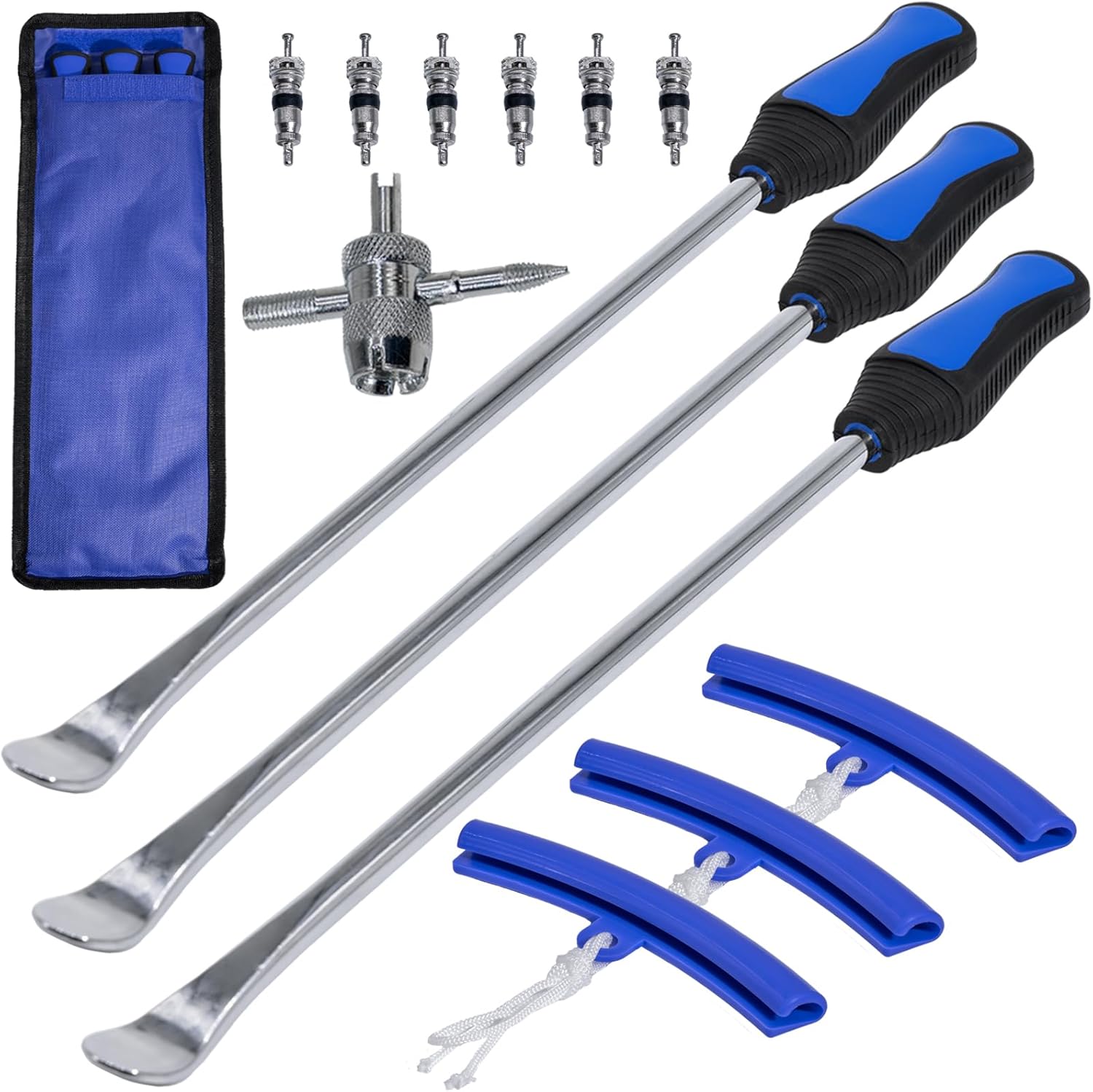
This tire spoon set helps you remove and install motorcycle, dirt bike, lawn tractor, and bicycle tires with extra leverage from a 14.5-inch spoon length. The kit includes tire removal tools, rim protectors, and a valve tool to simplify repairs and help protect rims during changing. Designed for quick, on-the-go service, it’s convenient for garage work, trails, and track-side fixes.

This 20-piece tire changer kit makes motorcycle and bike tire repairs easier with extended 14.5-inch spoons for leverage and access. Built from CrV steel with a corrosion-resistant chrome finish, it helps resist bending while protecting rims and tubes using smooth rounded spoons and included rim protectors. The all-in-one set includes valve removal and accessory tools for faster tire changes across motorcycles, bicycles, ATVs, and lawn equipment.
Processing Steps: Rim Removal, Sidewall Cutting, Shredding
The physical recycling process usually starts with rim removal when tires arrive still mounted on wheels. Rims are separated so the metal can go into a metal recycling stream and so the tire can be handled safely by downstream equipment.
Some facilities then cut the sidewall or bead area before full shredding. This can reduce stress on equipment, expose embedded steel, and create more consistent feedstock. Tires are then fed into industrial shredders that tear them into chips or strips. Operators monitor feed rate, torque, blade wear, temperature, dust, and particle size so the material is small enough for separation without being overprocessed too early.
- Primary shredding: Whole tires are reduced into rough chips or strips.
- Secondary shredding or granulation: Chips are reduced into smaller rubber pieces for screening and separation.
- Grinding: Rubber is processed into ground rubber or crumb rubber, depending on the target product.
- Screening and recirculation: Oversized pieces are sent back through the system until they meet the desired size range.
Warning: Tire recycling is industrial work. Cutting, shredding, grinding, and stockpiling tires require guarded machinery, dust control, fire prevention, traffic control, and local permits. Do not try to shred or burn tires at home.
Material Separation: Rubber Crumb, Steel, and Fiber Recovery
Once tires are shredded, the material is still a mix of rubber, steel, textile fiber, and small amounts of additives. Facilities separate these streams with screens, magnets, air systems, and repeated grinding. The goal is not just to keep tires out of dumps; it is to make clean, saleable materials.
End-of-life tires contain valuable recoverable material. Published reviews commonly report rubber as the largest fraction, with steel often in the 5%–30% range and textile fiber making up a smaller but important stream.
The main separation steps are:
- Size classification: Screens sort rubber pieces into defined sizes. Coarser chips can be used in civil engineering, while finer crumb rubber can be used in asphalt, mats, molded goods, and sports surfaces.
- Magnetic extraction: Strong magnets pull out steel belts and bead wire. This steel can be sold into metal recycling markets after additional cleaning.
- Air and vibratory separation: Air classifiers, shaker tables, and similar systems remove lighter textile fibers and dust from rubber particles.
- Quality checks: Producers test particle size, steel content, fiber content, moisture, and contamination because end users often require tight specifications.
Clean separation improves product value. Rubber with too much wire or fiber can damage paving equipment, reduce performance in molded products, and fail buyer specifications. That is why many plants use more than one screening, magnetic, or air-separation step before the material leaves the site.
Recycling Methods: Ambient Grinding, Cryogenic, Pyrolysis, Devulcanization
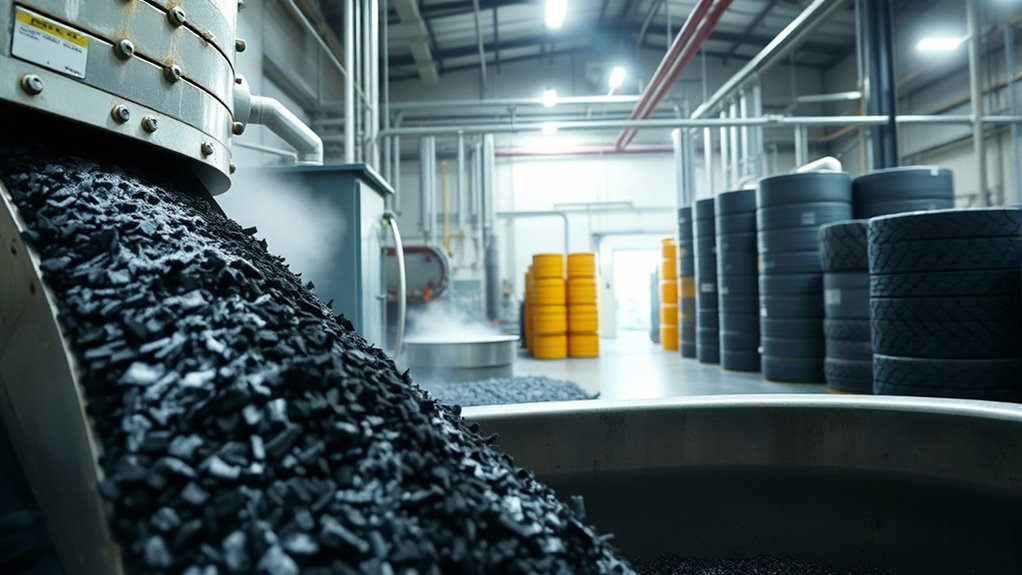
Different tire recycling methods create different outputs. The right method depends on local markets, energy cost, equipment cost, product specifications, and environmental rules.
Ambient Grinding
Ambient grinding processes tire rubber at or near room temperature. It is widely used because it is practical, proven, and suitable for producing many grades of ground rubber and crumb rubber. Granulators, mills, screens, magnets, and air separators reduce and clean the material step by step.
Ambient grinding is often a good fit for bulk applications such as rubber modified asphalt, molded rubber products, landscape mulch, and certain sports or playground surfaces. The tradeoff is that it may produce rougher particles than cryogenic grinding, depending on the equipment and target size.
Cryogenic Grinding
Cryogenic grinding cools tire rubber, often with liquid nitrogen, until it becomes brittle. The brittle rubber fractures more easily, which can produce smaller and cleaner particles with smoother surfaces. This can help when a buyer needs fine, consistent crumb rubber.
The drawback is cost. Cryogenic systems can require higher capital investment and more energy or cryogen input, so the process needs a market that pays enough for the finer material.
Pyrolysis
Pyrolysis heats tires in a low-oxygen or oxygen-free environment so the rubber breaks down into products such as oil, gas, recovered carbon black or char, and recovered steel. The process can recover useful energy and materials, but the economics depend heavily on product quality, emissions control, offtake agreements, and operating consistency.
Pyrolysis should not be confused with open burning. A properly designed pyrolysis plant is an engineered, permitted system with temperature control, air-pollution controls, product handling, and safety systems.
Devulcanization
Devulcanization tries to break some of the sulfur crosslinks that make vulcanized tire rubber elastic and durable. The goal is to make recycled rubber easier to blend into new rubber compounds. Methods can include mechanical, thermal, chemical, microwave, ultrasonic, or biological approaches.
Devulcanization is promising because it can move recycled rubber closer to higher-value manufacturing uses. However, it must be controlled carefully: too little devulcanization leaves the rubber hard to reprocess, while too much can damage the polymer chains and reduce performance.
Pro Tip: For most communities, the best recycling method is the one with a dependable local market. A simple crumb-rubber plant with steady asphalt, mat, or molded-product buyers may outperform a more advanced technology that has no reliable outlet for its products.
Products From Recycled Tires: Asphalt, Playgrounds, Fuel, Construction Uses
Recycled tires can become several different products, depending on particle size, cleanliness, and local demand. The largest markets often include ground rubber, civil-engineering applications, and energy recovery.
Rubber Modified Asphalt
Ground tire rubber can be blended with asphalt binder or asphalt mixtures to create rubber modified asphalt. When designed correctly, rubber modified asphalt can improve flexibility, help resist cracking, reduce road noise in some applications, and create a high-volume market for scrap tires.
Playground and Sports Surfaces
Crumb rubber is used in poured-in-place playground surfaces, rubber tiles, athletic tracks, and some synthetic turf infill systems. These products use rubber’s shock-absorbing properties, but buyers should check product specifications, local safety guidance, drainage design, and maintenance requirements before installation.
Molded Rubber Products
Clean crumb rubber can be molded into mats, parking stops, speed bumps, dock bumpers, landscaping products, livestock mats, and other durable goods. These markets often require consistent particle size and low steel or fiber contamination.
Tire-Derived Aggregate for Construction
Shredded tires can become tire-derived aggregate, also called TDA. According to CalRecycle, TDA can be used in applications such as lightweight fill, retaining wall backfill, drainage layers, vibration mitigation, landfill projects, and road repair. Its low weight and drainage properties make it useful where heavy soil or stone would create engineering problems.
Tire-Derived Fuel
Tire-derived fuel, or TDF, is shredded or whole scrap tire material used as supplemental fuel in suitable industrial facilities such as cement kilns, pulp and paper mills, and some boilers. The U.S. Environmental Protection Agency has recognized TDF as a viable alternative to fossil fuels when used in appropriate, well-controlled facilities. EPA materials also note that TDF has a higher heating value than coal.
Still, recycling into material products is generally preferred when good markets exist. Energy recovery can be useful for managing scrap tires that cannot be economically turned into higher-value products, but it must meet air-quality, storage, handling, and permitting requirements.
Why Tires Are Difficult to Recycle
Tires are engineered to resist heat, water, abrasion, sunlight, heavy loads, and road impact. Those same qualities make them hard to recycle. A tire is not one simple material; it is a composite product made from natural rubber, synthetic rubber, carbon black, silica, steel, textile reinforcement, oils, sulfur, zinc compounds, antioxidants, and other additives.
The biggest technical challenges are:
- Vulcanized rubber: Sulfur crosslinks make tire rubber strong and elastic, but they also make it difficult to melt and remold like ordinary plastic.
- Embedded steel and fiber: Belts, beads, and reinforcement must be separated before rubber can meet many product specifications.
- Variable feedstock: Passenger, truck, off-road, and industrial tires differ in size, composition, and steel content.
- Contamination: Dirt, road debris, oil, rims, and mixed waste increase processing cost.
- Market limits: Recycling works best when local buyers can absorb the finished rubber, steel, fiber, oil, char, or aggregate.
Because of these challenges, a strong tire recycling system depends on more than shredding equipment. It needs collection programs, transportation, permits, fire-safe storage, quality control, and steady end markets.
[Products Worth Considering]

Camco Trailer Aid Plus tandem tire ramp lifts your trailer for quick, safe tire changes with ample clearance from its 5 1/2-inch lift. It helps you change a flat tire without unloading cargo, making roadside and routine maintenance more efficient. The heavy-duty, waterproof and rustproof polymer design supports up to 15,000 lb and is built for easy portability and storage.

Wykodra tire plugs provide quick vulcanizing repairs for tubeless tires, helping you seal punctures and get back on the road. The industrial-strength rubber creates a long-lasting, leak-resistant bond and is designed for emergency fixes without removing the tire. Choose between two standard plug sizes with color-matched options for small to larger damage across many vehicles and off-road uses.
Environmental, Safety, and Regulatory Issues for Tire Recycling in NJ
When you manage tire recycling in New Jersey, you need to address environmental health risks, fire prevention, documentation, and proper disposal or recycling through authorized facilities. New Jersey facilities that handle solid waste may need approvals through the NJDEP Bureau of Solid Waste Permitting, and operators should confirm the current requirements for their specific activity, location, and tire volume.
Environmental Health Risks
Improperly stored tires can create serious public-health and environmental problems. Whole tires collect water and can become breeding sites for mosquitoes. Large piles can attract rodents, create blight, and become difficult to control. If a tire pile catches fire, it can produce heavy smoke and oily runoff that may harm air, soil, and water.
The U.S. EPA continues to treat abandoned tire piles as a safety issue because they increase fire risk and can become breeding grounds for disease-carrying animals. That is why legal recycling, controlled storage, and documented shipment matter as much as the grinding process itself.
Fire Prevention Measures
Tire fires are difficult to extinguish because tires store a lot of energy and can burn for a long time once ignited. Fire prevention starts with limiting pile size, creating access lanes, keeping ignition sources away, controlling vegetation, maintaining drainage, and separating tire storage areas from buildings and other combustibles.
Facilities should also keep emergency access clear, train employees, inspect storage areas, and coordinate with local fire officials. Shredding or processing tires can reduce the risks created by large whole-tire piles, but shredded rubber still needs safe storage and housekeeping.
Compliance and Permitting
If you operate or plan a tire recycling facility in New Jersey, check NJDEP requirements before accepting tires. Depending on the operation, requirements can include solid waste approvals, storage limits, fire prevention controls, recordkeeping, site plans, stormwater controls, and documentation showing where tires came from and where recovered materials went.
Good records protect both the operator and the community. Track incoming tire counts or weights, generator information, carrier information, processing dates, outgoing product shipments, rejected loads, and disposal records for non-recyclable residue.
How to Recycle Old Tires Responsibly
If you are a homeowner or small business with old tires, the safest route is to use a legal collection option instead of storing tires on your property.
- Ask your tire shop. Many retailers accept old tires when you buy replacements, usually for a recycling or disposal fee.
- Check municipal programs. Some towns or counties run tire amnesty days, recycling events, or transfer-station drop-offs.
- Use licensed haulers or permitted facilities. Businesses with larger volumes should confirm that the hauler and destination facility are authorized to handle scrap tires.
- Remove rims if required. Some collection sites charge less for tires without rims, while others accept mounted tires for an extra fee.
- Do not dump or burn tires. Illegal dumping creates fire, mosquito, cleanup, and enforcement problems for the entire community.
Note: Before hauling a large number of tires, call the facility first. Ask what tire types they accept, whether rims must be removed, what the fee is, and whether they need an appointment or paperwork.
Frequently Asked Questions
Do old tires get recycled into new tires?
Sometimes, but not usually as a simple one-for-one loop. Some recovered rubber, recovered carbon black, and devulcanized rubber can be used in new rubber compounds, including tire-related applications. However, most scrap tires are currently turned into ground rubber products, asphalt, tire-derived aggregate, recovered steel, or regulated energy-recovery fuel.
Is it better to recycle tires or burn them for energy?
Material recycling is usually preferred when there is a strong market for the recovered rubber, steel, or aggregate. Tire-derived fuel can still be a regulated option for tires that cannot be economically recycled into products, especially when used in well-controlled industrial facilities with proper permits and emissions controls.
Why is it so difficult to recycle tires?
Tires are difficult to recycle because they are made from vulcanized rubber reinforced with steel and textile fiber. They also contain carbon black, oils, sulfur, zinc compounds, and other additives. Separating those materials and turning them into clean, consistent products requires specialized machinery and strong end markets.
What is crumb rubber?
Crumb rubber is finely ground recycled tire rubber. It is made by reducing tire chips through grinding and screening, then removing most of the steel and fiber. Depending on its size and cleanliness, crumb rubber can be used in asphalt, mats, playground surfacing, molded goods, and other products.
Can I throw old tires in the trash?
In many places, tires are not accepted in regular curbside trash because they are bulky, hard to landfill, and create fire and mosquito risks when mismanaged. Use a tire retailer, municipal collection event, transfer station, licensed hauler, or permitted recycling facility instead.
Conclusion
Recycled tires are not waste when they move through the right system. A controlled recycling process inspects and sorts the tires, removes rims or beads when needed, shreds and grinds the rubber, separates steel and fiber, and turns the recovered material into asphalt, molded goods, playground surfacing, tire-derived aggregate, fuel, pyrolysis products, or reclaimed rubber.
The best outcome depends on clean collection, safe storage, strong processing controls, reliable markets, and compliance with state and local rules. When those pieces work together, tire recycling reduces illegal dumping, lowers fire risk, recovers useful materials, and keeps a difficult waste stream moving back into productive use.
Sources
- U.S. EPA — Scrap Tires — general scrap tire management, markets, and environmental concerns.
- U.S. EPA — Tire-Derived Fuel — regulated energy recovery uses and heating-value context.
- CalRecycle — Tire-Derived Aggregate — civil-engineering uses for shredded scrap tires.
- U.S. Tire Manufacturers Association — Rubber Modified Asphalt — uses and performance benefits of ground tire rubber in asphalt.
- NJDEP — Solid Waste Permitting — New Jersey solid waste permitting responsibilities and facility oversight.
- Energies — Review on Management of End-of-Life Tires — tire recycling technologies, material fractions, and end-use options.

Related Articles
Best Mastercraft Tires 2026: Reliable Tire Picks for Trucks, SUVs, and Daily Drivers
You need tires that match how you drive, where you live, and what your vehicle carries. This guide highlights Mastercraft models that stand out…
Read More
Best Lionhart Tires 2026: Budget Performance Tires for Cars and SUVs
You want tires that deliver confident handling, predictable braking, and acceptable longevity without stretching your budget. Lionhart’s 2026 lineup focuses on delivering those trade-offs…
Read More
Best Winter Tires for Snow 2026: Reliable Tires for Ice, Slush, and Cold Roads
You drive differently in winter because the road does. Choosing the right winter tires reduces stopping distances, improves cornering on ice and slush, and…
Read More