
Driving on a Flat Tire: How to Get to Safety Without Damage
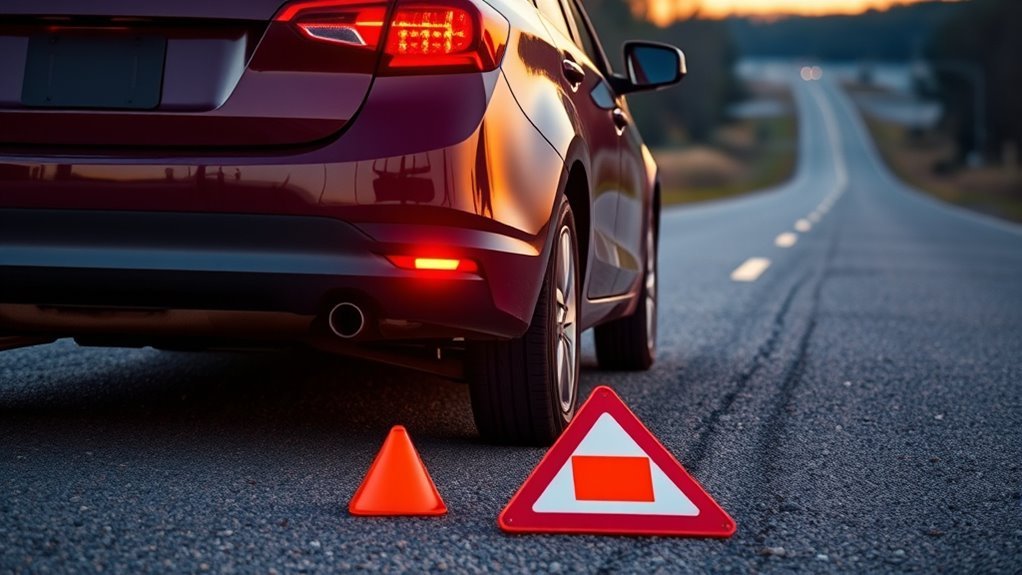
Feeling a tire go flat while you’re driving is stressful, but the safest response is simple: stay calm, slow down smoothly, keep the wheel as straight as possible, and get out of traffic only as far as needed. Do not try to “make it home” on a standard flat tire. Once you are stopped in a safe place, inspect the tire from a safe distance and choose a spare, inflator/sealant, run-flat procedure, roadside assistance, or tow.
Quick Answer
If you have a standard tire, drive only far enough to reach a safe shoulder, turnout, or parking lot—ideally just a few feet once you know it is flat. Go slowly, avoid hard braking, and steer smoothly. Run-flat tires may allow limited driving, often up to 50 miles, but only if your vehicle and tire manufacturer allow it.
Key Takeaways
- A flat tire can cause vibration, pulling, noise, steering changes, or a tire pressure warning.
- Do not brake hard or make sharp turns. Ease off the accelerator, turn on hazards, and steer smoothly.
- With a standard tire, move only far enough to get out of danger. Driving on a flat can damage the tire, rim, wheel, suspension, and brake parts.
- Run-flat tires are different: some can travel limited distances after pressure loss, but you must follow the tire and vehicle manufacturer’s limits.
- Sidewall damage, exposed cords, shredded tread, or very low pressure usually means you should not drive farther or attempt a roadside fix.
At a Glance
| Time Required | 5–20 minutes to stop safely and decide what to do next |
| Difficulty | Easy to moderate; changing a tire is harder in traffic, bad weather, or poor lighting |
| Tools Needed | Hazard lights, phone, pressure gauge, spare tire, jack, lug wrench, inflator/sealant kit, wheel chocks, gloves, flashlight |
| Cost | Often free with a usable spare; repair or replacement cost depends on tire damage, wheel damage, and roadside/towing coverage |
Recognize a Flat Tire While Driving
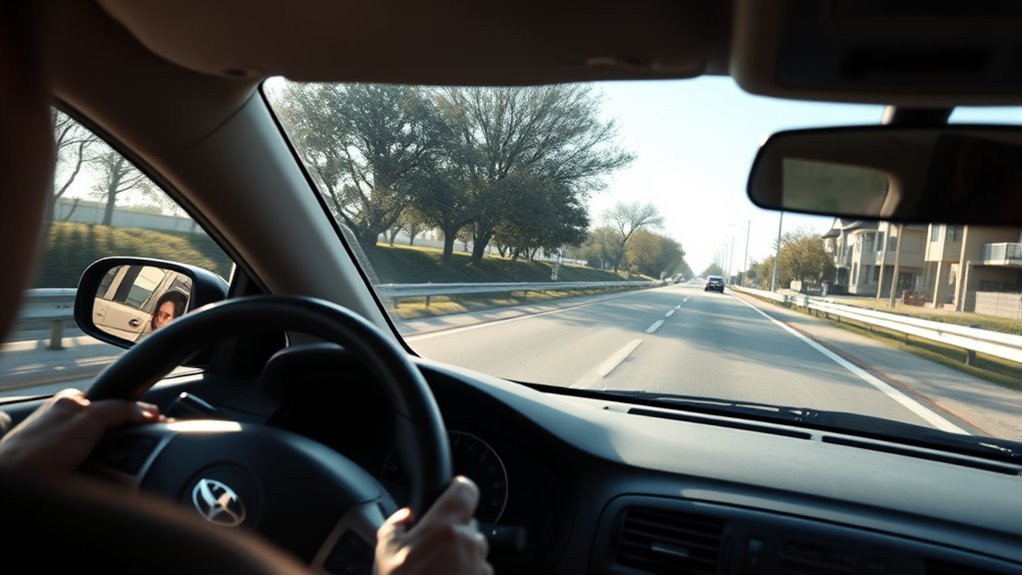
When a tire is losing air while you are driving, you may notice a strong vibration through the steering wheel or seat, the vehicle pulling to one side, a flapping or thumping sound, sluggish steering, or a tire pressure monitoring system warning light. Treat any of these signs as a reason to slow down and prepare to stop safely.
The pull often points toward the failing tire, but do not stare down at the wheels or make sudden corrections. Keep your eyes up, scan traffic, and focus on controlling the vehicle. A tire can lose air slowly from a puncture or rapidly from a blowout, so your first job is to keep the vehicle stable.
Warning: A TPMS light does not mean it is safe to keep driving. It means one or more tires may be significantly underinflated and should be checked as soon as it is safe.
Slow Down and Steer Straight: Immediate Safety Steps
If you suspect a flat tire, avoid panic inputs. Sudden braking, swerving, or jerky steering can make the vehicle harder to control, especially at highway speed. Ease off the accelerator, hold the steering wheel firmly, and let the vehicle slow in a straight line.
Slow smoothly, keep the wheel steady, turn on your hazard lights, and move only as far as needed to reach a safer place.
- Ease off the accelerator and allow speed to drop gradually.
- Keep the steering wheel steady with small, smooth corrections.
- Turn on your hazard lights early so other drivers know you are having a problem.
- Signal before changing lanes or moving toward the shoulder.
- Avoid stopping in a travel lane unless the vehicle cannot move safely.
Stop Safely: Where to Pull Over and How to Get There
Look for the nearest safe place to stop, such as a wide, level shoulder, a parking lot, a rest area, a side street, or a well-lit turnout. Choose a spot that gives you space away from traffic and enough level ground to inspect the tire or use a spare if needed.
Once you reach the spot, stop as far from moving traffic as practical, shift to park, set the parking brake, and keep your hazard lights on. If you are on a highway shoulder, stay aware of traffic at all times. In many situations, especially on a narrow shoulder or at night, the safest move is to remain in the vehicle with your seat belt on while you call for help.
Note: Do not attempt a tire change on the traffic side of the vehicle, on a slope, on soft ground, or where passing vehicles are too close. Call roadside assistance or a tow instead.
Inspect the Tire Safely: What to Check and What Not to Touch

After stopping, inspect only if you can do it safely. Stay out of traffic, use a flashlight if visibility is poor, and give the tire and wheel time to cool if they smell hot or look damaged. Start with a visual check instead of grabbing or squeezing the tire.
- Look for nails, screws, cuts, bulges, shredded tread, exposed cords, or a tire separated from the rim.
- Check the sidewall carefully. Sidewall cuts, bubbles, and splits are serious and usually make the tire unsafe to repair.
- Use a pressure gauge if you can reach the valve safely. Very low pressure means the tire should not be driven on.
- Do not pull out a nail or screw at the roadside. Removing it can make the tire lose air faster.
- Take photos of visible damage for the repair shop, insurance claim, or roadside service provider.
How Far and How Fast Can You Move With a Flat Tire?
With a standard tire, the safest answer is: only far enough to get out of immediate danger. Once a tire is flat or nearly flat, the sidewall can collapse, the rim can cut into the rubber, and the wheel can be damaged. Even short driving can turn a repairable puncture into a replacement.
| Situation | Recommended Distance | Recommended Speed |
|---|---|---|
| Standard tire | Only far enough to reach a safe shoulder, turnout, or parking spot | As slow as practical; avoid normal driving speeds |
| Run-flat tire | Follow the vehicle/tire manual; many run-flats allow limited travel, often up to 50 miles | Follow the tire maker’s limit; many specify up to 50 mph |
| Immediate danger | Move only enough to clear the hazard | As slow and controlled as possible |
Run-flat tires are built for temporary mobility after air loss. For example, Bridgestone states that its run-flat tires can work up to 50 miles after a puncture so you can reach a safe place to stop. That does not mean every tire has the same limit. Check your owner’s manual, tire sidewall, and tire manufacturer guidance.
Warning: Do not drive on a flat standard tire to save time or avoid a tow. The tire may come apart, the rim may be damaged, and steering or braking control can become worse.
Emergency Fixes: Spare Tire, Inflator/Sealant, Run-Flat, or Tow
Once you are safely stopped, choose the fix that matches your tire, vehicle, tools, and location. The right choice depends on whether the damage is small, where the puncture is, whether you have a usable spare, and whether it is safe to work beside the vehicle.
Using a Spare Tire
A spare tire is often the fastest way to get moving again, but only if it is properly inflated, compatible with your vehicle, and safe to install. Before lifting the car, confirm that the ground is level and firm, the parking brake is set, and the jack points match the owner’s manual.
- Check the spare tire pressure before installing it. Compact spares often require higher pressure than regular tires, so use the number on the tire or in the vehicle manual.
- Use the correct jack point and never put any part of your body under a vehicle supported only by a jack.
- Tighten lug nuts in a star pattern, lower the vehicle carefully, and recheck tightness.
- Drive conservatively to a tire shop. Compact spares are temporary and usually have speed and distance limits printed on the tire or listed in the manual.
If the spare is flat, cracked, too old, missing, or the road location is unsafe, call roadside assistance or a tow instead of forcing the repair.
Inflator, Sealant, or Run-Flat
Tire inflators and sealants can help with some small punctures in the tread area, but they are temporary. They usually will not fix sidewall damage, large cuts, bead leaks, shredded tires, or damage caused by driving too far on a flat. Sealant can also affect tire pressure sensors or complicate repair, so tell the technician if you used it.
Run-flat tires are different because their reinforced construction can support limited driving after pressure loss. Still, you should slow down, avoid hard cornering, and head to a safe service location immediately. Do not assume the tire can be repaired afterward; many run-flat repairs depend on the tire maker’s rules and how far it was driven with low pressure.
Pro Tip: Before you ever get a flat, check whether your vehicle has a spare, a sealant kit, run-flat tires, or no tire emergency equipment at all. Many newer vehicles do not include a traditional spare.
When to Call a Tow
Call a tow or roadside service if the tire has sidewall damage, exposed cords, a cracked or bent wheel, a missing spare, a flat spare, or damage that sealant cannot handle. You should also call for help if you are on a narrow shoulder, in heavy traffic, in bad weather, at night, or anywhere you do not feel safe working on the vehicle.
Roadside services such as AAA roadside assistance can help with towing, tire changes, and other emergency support depending on your coverage and location.
After the Incident: Damage Check, Repair vs. Replace, and Prevention Tips
After a flat tire, have the tire and wheel inspected by a trained technician. A puncture can look small from the outside while the inner liner, sidewall, or cords are damaged inside. Driving even a short distance with very low pressure can reduce the chance of a safe repair.
Inspect Tire and Wheel
Ask the shop to inspect the tire off the wheel, not just from the outside. The technician should check the tread, sidewall, inner liner, bead area, valve stem, wheel, and tire pressure sensor if equipped.
- Scan the sidewalls and tread for cuts, bulges, exposed cords, or separation.
- Check the rim for bends, cracks, deformation, or sharp edges that could cut a tire.
- Look for uneven tread wear that may point to alignment, suspension, or inflation problems.
- Check nearby brake and suspension parts if the vehicle was driven while the tire was flat.
Repairable or Replace?
A tire may be repairable when the puncture is small and located in the tread area. According to the U.S. Tire Manufacturers Association, repairs should generally be limited to tread-area punctures no larger than 1/4 inch, and the tire should be removed from the rim so the inside can be inspected.
Replace the tire if the puncture is in the sidewall or shoulder, the tread is shredded, cords are exposed, the tire was driven flat long enough to damage the inside, the puncture is too large, or previous repairs overlap. A plug-only roadside repair should be treated as temporary until a professional confirms whether a proper repair is possible.
Preventive Maintenance Steps
Good tire maintenance lowers the odds of a sudden flat and helps you catch problems before they leave you stranded. The National Highway Traffic Safety Administration recommends checking tire pressure at least once a month, including the spare, and inspecting tires for uneven wear, cracks, foreign objects, and other damage.
- Check pressure monthly and before long trips. Use the pressure listed on the driver’s door placard or owner’s manual, not the maximum number on the tire sidewall.
- Inspect tread and sidewalls for nails, cuts, bulges, cracks, and exposed cords.
- Rotate tires on the schedule in your owner’s manual or tire warranty guide.
- Replace tires that are worn, aged, damaged, or repeatedly losing air.
- Keep a pressure gauge, flashlight, gloves, inflator, and the correct tire-changing tools in the vehicle.
- Check your spare tire, jack, and lug wrench before road trips.
Frequently Asked Questions
How long can you drive on a flat tire before it is ruined?
With a standard tire, it can be ruined very quickly. Drive only far enough to get out of traffic and reach a safe stopping place. Continuing to drive can damage the sidewall, rim, suspension, and brake parts.
How do you safely drive on a flat tire?
Slow down gradually, keep both hands on the wheel, steer as straight as possible, turn on your hazard lights, signal carefully, and move only far enough to reach a safe shoulder, parking lot, or turnout. Avoid hard braking, sharp turns, and normal driving speeds.
Can I drive home on a flat tire?
Not with a standard flat tire. Driving home may destroy the tire and damage the wheel. Stop safely, then use a spare, inflator/sealant kit, run-flat procedure, roadside assistance, or a tow.
Is it safe to use tire sealant after a flat?
Sealant may help with a small tread puncture, but it will not fix sidewall damage, large cuts, shredded tires, or a tire that has been driven flat. Use it only according to the product and vehicle instructions, then have the tire inspected by a professional.
What is the 7/7 rule for tires?
The 7/7 rule is a simple maintenance reminder some drivers use: check tire pressure about every 7 days and rotate tires about every 7,000 miles. It is not an official rule for every vehicle. Always follow your owner’s manual and tire manufacturer schedule.
Conclusion
A flat tire is a control-and-safety problem first, not a convenience problem. Stay calm, slow gradually, keep the vehicle steady, turn on your hazards, and stop in the safest nearby location. With a standard tire, do not keep driving except to clear immediate danger. Afterward, let a trained technician inspect the tire, wheel, and related parts so you know whether the tire can be repaired or must be replaced.
Sources
- NHTSA TireWise — tire pressure, tire safety, TPMS, tread, and maintenance guidance
- NHTSA Tire Safety Checklist — monthly pressure checks, spare tire checks, and tire inspection guidance
- U.S. Tire Manufacturers Association Tire Repair Basics — repair limits, tread puncture guidance, and internal inspection requirements
- Bridgestone Run-Flat Tires — run-flat temporary mobility guidance after a puncture
- AAA Roadside Assistance — roadside help, towing, and flat tire support options

Related Articles
Why Put a Plastic Bottle on Your Tire? The Viral Trick Explained
Mysterious plastic bottle on your tire? Discover the viral trick’s surprising truth and what it really means before you assume it’s protecting your car.
Read More
What Happens When a Tire Blows Out at Highway Speed? Full Guide
Buckle up to discover what really happens when a tire blows out at highway speed, and why your next move could change everything.
Read More
What Does V Mean on a Tire? Load, Speed & Rating Guide
Need to know what “V” means on a tire and how load and speed ratings affect safety?
Read More