
Run-Flat Tires vs Regular Tires: 2026 Guide
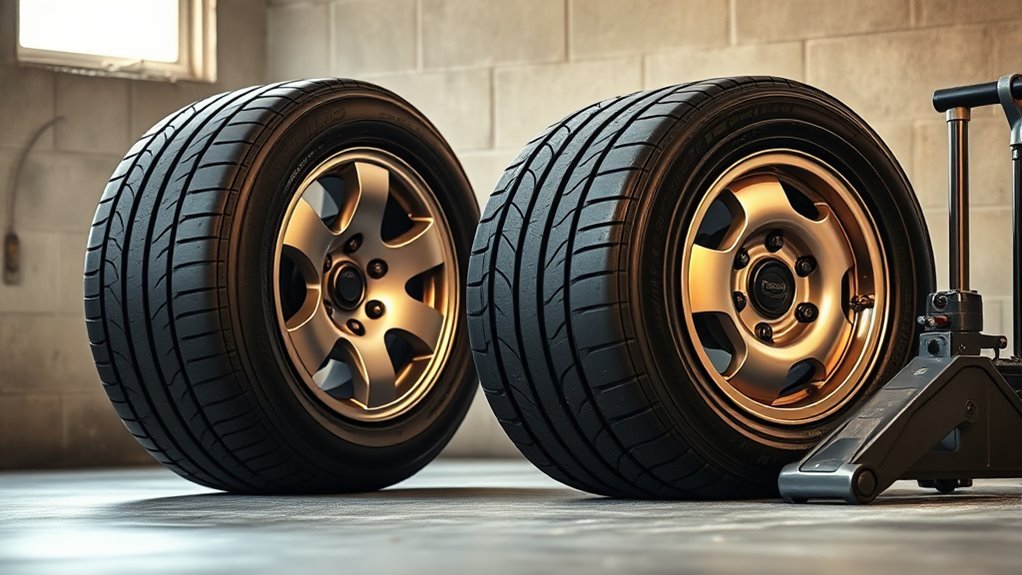
A flat tire can turn a normal drive into a stressful stop on the shoulder. Run-flat tires reduce that risk by letting you keep driving for a short distance after pressure loss, but they cost more and usually ride firmer. Regular tires cost less, feel smoother, and repair more easily, but a puncture can force you to stop right away. This guide compares safety, comfort, cost, repair rules, and the best use cases so you can choose the tire that fits how you drive.
Quick Answer
Choose run-flat tires if you value short-distance mobility after a puncture and want to avoid changing a tire on the roadside. Choose regular tires if you want a softer ride, lower costs, and easier repairs. Your best choice depends on your vehicle, driving routes, budget, and comfort needs.
Key Takeaways
- Run-flat tires can help you keep driving for a limited distance after a puncture.
- Regular tires usually cost less, ride softer, and offer more repair options.
- Run-flats need a working tire pressure monitoring system (TPMS) because pressure loss can be hard to see.
- Luxury and performance vehicles may need run-flats if the suspension and safety systems were tuned for them.
- Your safest choice depends on where you drive, how far you travel, and how much comfort matters to you.
Quick Verdict: Which Tire to Pick
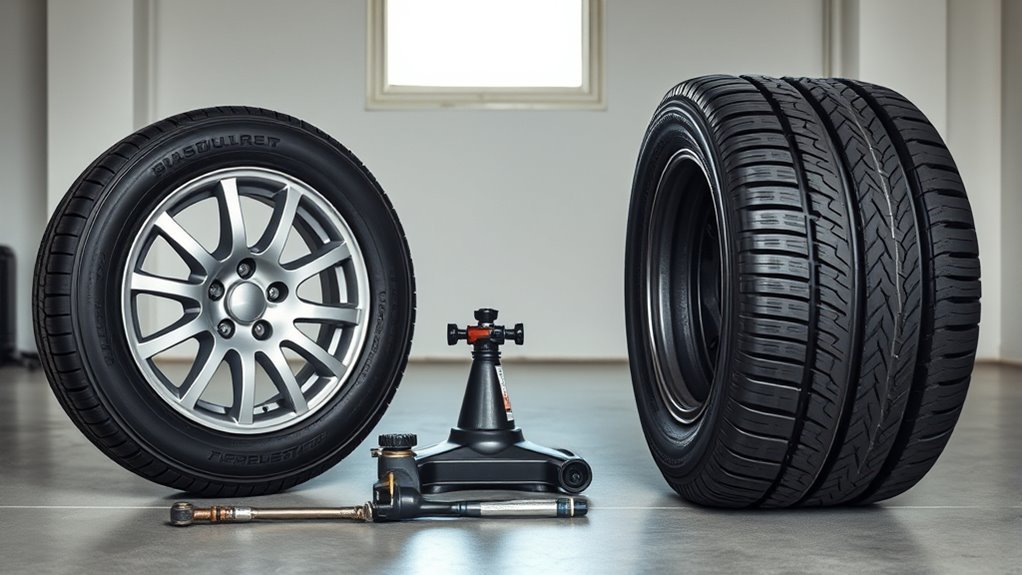
Pick run-flat tires if you care most about on-road security and short mobility after a puncture. Many run-flats let you drive about 50 miles at reduced speed, but you should follow the tire maker’s limit for your exact model. They also cost more, ride firmer, and may need replacement instead of repair after a puncture.
Pick regular tires if you want lower purchase costs, easier repair, less road noise, and a softer ride. They don’t give you the same limp-home ability after a puncture, so you’ll need a spare tire, tire repair kit, roadside help, or another backup plan.
| Best Choice | Choose It If You Want | Main Trade-Off |
|---|---|---|
| Run-flat tires | Short-distance mobility after a puncture | Higher cost and firmer ride |
| Regular tires | Comfort, lower cost, and easier repair | Immediate stop after many punctures |
[Products Worth Considering]

The Tymate TM3 RV TPMS delivers real-time tire pressure monitoring from 0 to 144 PSI with accurate readings and dependable wireless communication. It includes four external sensors with pre-pairing, six alarm modes for rapid leak, pressure extremes, temperature, and signal loss, plus an easy-reference setup for alert thresholds. Solar and USB-C charging help keep the display powered, while the color LCD and adaptive backlight improve visibility for safer driving and towing.

This roadside assistance kit helps drivers and passengers in urgent situations after an accident or breakdown, providing practical support while waiting for help. It includes a lightweight, compact tire inflator for fast inflation of standard vehicle tires, plus reinforced jumper cable protection for safer handling. Ideal for winter weather, road trips, camping, and travel, with everything stowed neatly in a trunk bag.

This AUTOWN flat tire repair kit is designed for quick, reliable puncture repairs using a plug kit and spiral probe tool to simplify installation. Built for durability and safe handling, it offers strong adhesion and flexibility to help maintain tire air tightness. With a portable storage case and a multi-vehicle approach, it’s suitable for cars, motorcycles, ATVs, tractors, lawn mowers, RVs, jeeps, and trucks.
How Run-Flat vs Regular Tires Work
You rely on reinforced sidewalls in run-flat tires to support the vehicle after air pressure drops. Regular tires depend on internal pressure to carry the load, so they lose support quickly when a puncture releases air.
When a puncture occurs, a run-flat’s stiff sidewall or support system helps you drive at reduced speeds for a limited distance. A standard tire usually collapses and needs immediate attention. These pressure-loss mechanics explain why run-flats feel heavier and stiffer, and why they need different repair and inspection rules.
Reinforced Sidewall Design
Run-flat tires use ultra-stiff, reinforced sidewalls that can carry your vehicle after a puncture. Regular tires rely on air pressure for support, so the sidewall can fold when pressure drops too low.
The reinforced rubber helps keep the bead seated and supports the vehicle long enough for you to reach a safer place. Many run-flats allow about 50 miles of driving at reduced speed, but the exact limit depends on the tire and vehicle.
That self-supporting design trades flex for strength. You’ll often feel a firmer ride and more impact from rough pavement. You also need a tire pressure monitoring system (TPMS) because a run-flat may not look flat right away.
Pressure Loss Mechanics
When a tire loses pressure, its load support depends on its construction. Run-flat tires use reinforced sidewalls or support rings, while regular tires rely on air alone.
You’ll notice run-flats give you more control after a puncture because the sidewall still carries some load. Regular tires lose shape faster, which can damage the tire, wheel, or vehicle if you keep driving.
| Feature | Run-Flat Tires | Regular Tires |
|---|---|---|
| Support | Reinforced sidewall or support ring | Air pressure |
| Puncture distance | Limited mobility, often about 50 miles | Stop as soon as it’s safe |
| Warning system | TPMS required | TPMS common on modern vehicles |
| Ride feel | Firmer | Smoother |
| Repair outcome | Often needs inspection or replacement | Often patchable if damage allows |
Ride, Noise, Handling, and Real-World Performance
Expect a firmer ride with run-flat tires because their reinforced sidewalls pass more road force into the cabin. Standard tires usually smooth bumps better because their sidewalls flex more.
You may also hear more road noise from run-flats, especially on coarse pavement. Steering can feel sharp when the tire has full pressure, but handling changes once pressure drops. Run-flats give you a safe path to service, not permission to drive normally after a puncture.
Ride Comfort Differences
If you value comfort and quiet, standard tires will usually feel gentler than run-flats. Their softer sidewalls absorb bumps and reduce road vibration.
Run-flats trade cushioning for puncture support. Impacts can feel sharper, and rough roads can make the cabin feel busier. Choose standard tires if comfort matters most, and choose run-flats if post-puncture mobility matters more.
| Feature | Regular Tires | Run-Flat Tires |
|---|---|---|
| Ride | Softer | Firmer |
| Handling | More forgiving on rough roads | More rigid feel |
Tire Noise Levels
Noise follows the same pattern as comfort. Run-flats use stiffer sidewalls and heavier construction, which can send more vibration into the cabin.
Standard tires usually deliver better noise control and a calmer ride. If you spend long hours driving, the quieter feel can matter as much as the purchase price.
Handling Under Deflation
Run-flat tires let you keep driving after a puncture, but pressure loss still changes how the car responds. You may feel slower steering, less grip, harsher impacts, and more road noise.
Slow down right away when TPMS warns you of pressure loss. Drive only as far and as fast as your tire maker allows. A run-flat helps you reach help, but it does not make a damaged tire safe for normal driving.
Warning: Never ignore a TPMS warning on run-flat tires, because the tire may look normal while pressure has already dropped.
Run-Flat vs Regular Tires: Cost & Lifespan
Run-flat tires use reinforced sidewalls and heavier materials, so they usually cost more than standard tires. The original price gap can vary by size, brand, vehicle, and speed rating, so compare exact replacements before you buy.
Run-flats may also cost more over time because many shops and manufacturers limit repairs after pressure loss. Regular tires usually give you more repair options when the puncture sits in the repairable tread area and the tire has no unsafe damage.
A basic cost benefit analysis often favors regular tires if you want lower upfront cost, smoother driving, and cheaper repair options. Run-flats still make sense if you value on-the-road safety, convenience, and the ability to reach service without changing a tire beside traffic.
[Products Worth Considering]
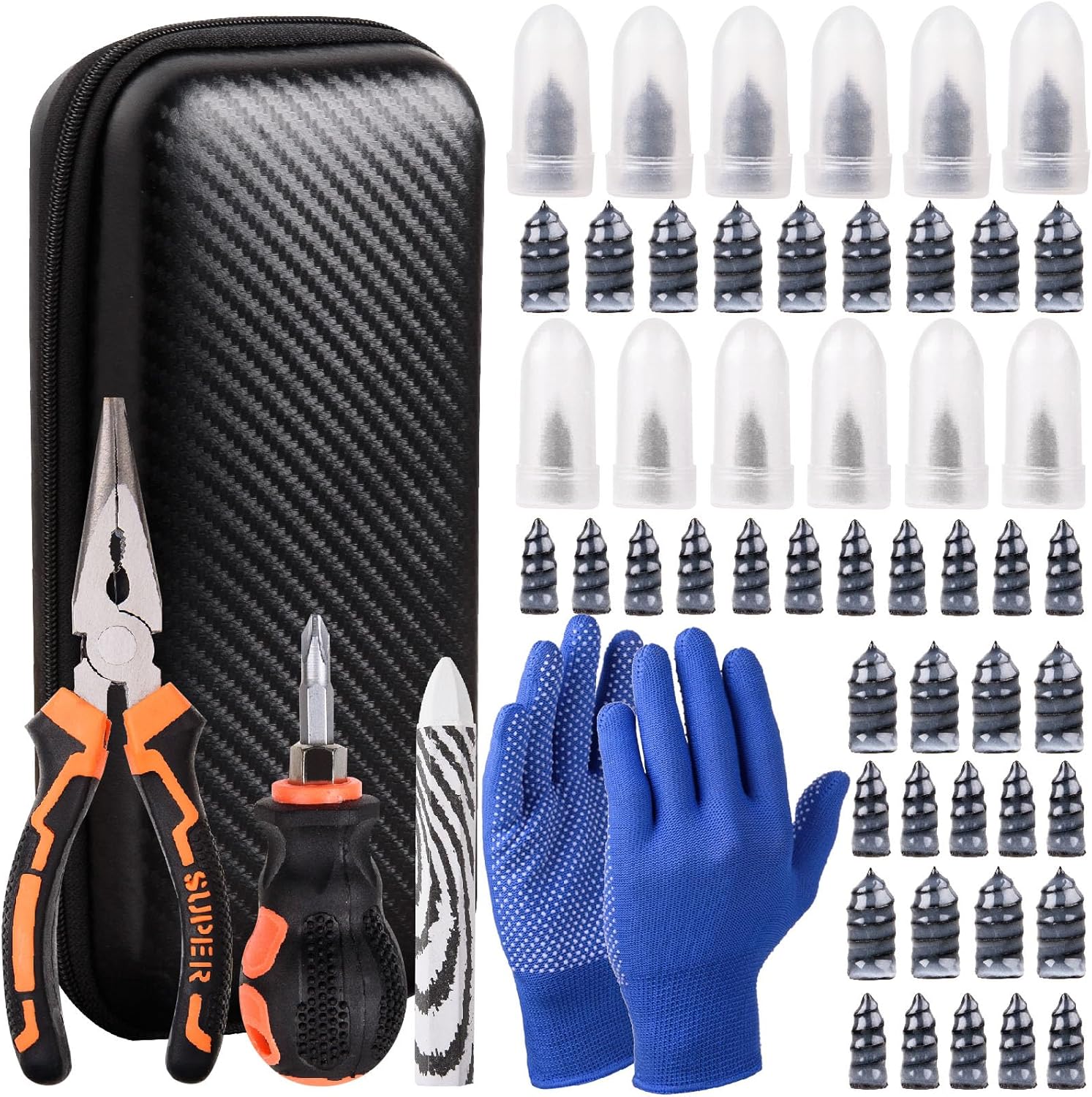
This tire sidewall puncture repair kit fixes flats fast without removing the tire, helping you get back on the road in minutes. It includes self-tapping repair nails, essential tools, gloves, and a portable storage bag for convenient roadside use. Designed for tubeless tires, it helps create a tight, leak-resistant seal for cars, motorcycles, trucks, SUVs, and ATVs.

This tire repair kit provides fast emergency puncture repair without removing the tire from the rim, helping you get back on the road quickly. Its screw plug system is designed for punctures in both tread and sidewall and includes a complete patch plug tool set with essential accessories. A portable storage bag makes it easy to carry for cars, trucks, SUVs, motorcycles, and heavy-duty applications.

Flat-Free Design: This 4.10/3.50-4 tire and wheel holds 440 lbs per unit, solid build eliminates punctures and the need for inflation, making it an ideal upgrade for hand trucks and dollies
Repairability, Inspection, and Replacement Rules
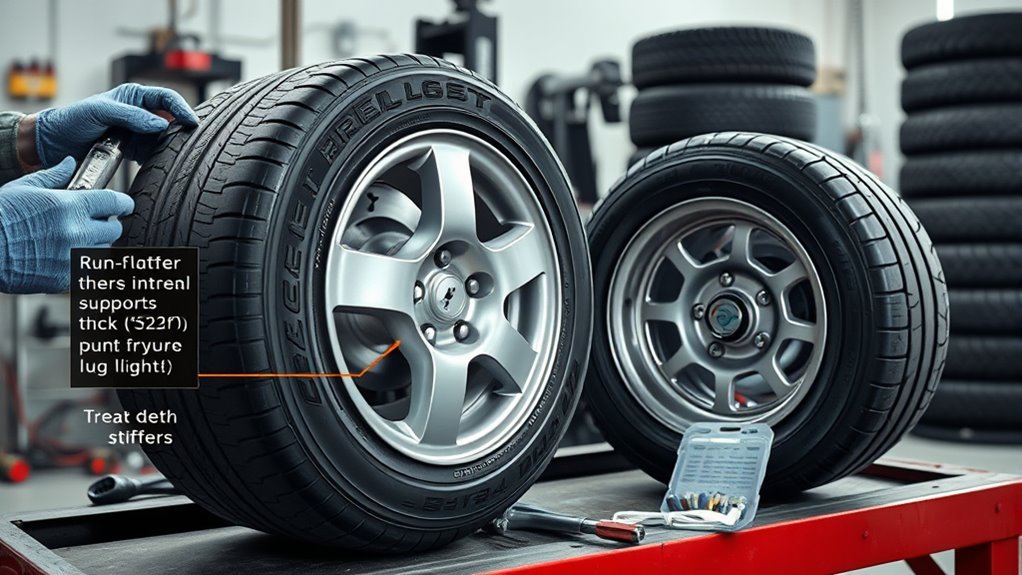
Cost and lifespan lead straight into repairability and inspection. Some run-flat tires carry repair limits because driving after pressure loss can damage the sidewall or inner liner.
That means a punctured run-flat may need a full internal inspection before any repair decision. In many cases, the safest answer is replacement. Standard tires often accept a patch-plug repair after a simple tread puncture, as long as the damage meets accepted repair limits.
After you drive on a run-flat with low or zero pressure, replace it or inspect it based on the tire maker’s rules. You should also check the matching tire on the same axle, because uneven tread depth can affect handling and traction.
Note: A tire shop must inspect the inside of a damaged tire before it can judge repair safety.
Choose by Vehicle, Driving Style, and Use Case
If your vehicle came with run-flat tires from the factory, check the owner’s manual before switching. Some luxury and performance models use suspension tuning, TPMS settings, and cargo space plans that assume run-flat tires.
For many everyday cars, standard tires offer better comfort, lower cost, and easier repairability. Match the tire to your routes, your backup plan, and your comfort needs.
[Products Worth Considering]

Up to 80,000-mile limited treadwear coverage

The optimized profile and innovative material are designed to reduce fuel consumption and CO2 emission

Emergency flat tire repair solution, connect, inflate and go! The easiest and quickest way to temporarily repair a flat tire in an emergency
Choose Run-Flat Tires If…
- You drive in heavy traffic and want to avoid roadside tire changes.
- Your vehicle came with run-flats and lacks a spare tire.
- You value short-distance mobility after a puncture more than ride softness.
- You often drive routes where stopping on the shoulder feels unsafe.
Choose Regular Tires If…
- You want a smoother, quieter ride for daily driving.
- You want lower purchase costs and more repair options.
- You carry a spare, repair kit, or roadside assistance plan.
- You drive long distances and want less fatigue from harsh road feel.
What to Check Before Switching Tire Types
Before you switch from run-flats to regular tires, confirm that your vehicle has a safe backup for punctures. Many cars fitted with run-flats do not include a spare tire, jack, or storage space for one.
You should also check your owner’s manual, tire placard, load rating, speed rating, and wheel size. Match the tire type to the vehicle’s requirements, not only to price. If your lease, warranty, or insurance policy has tire rules, review them before you change tire types.
Pro tip: If you switch to regular tires, carry a spare, sealant kit, inflator, or roadside assistance plan.
Frequently Asked Questions
How Much More Do Run-Flat Tires Cost Than Regular Tires?
Run-flat tires usually cost more than regular tires in the same size and performance class. The exact difference depends on brand, vehicle fitment, speed rating, and availability, so compare installed prices rather than tire-only prices.
Do I Have to Tell My Insurance if I Change From Run Flat Tyres?
You should tell your insurer before changing from run-flat tyres to standard tyres. The change can affect the vehicle’s safety equipment, roadside risk, and original specification. Ask your insurer to confirm the change in writing so you avoid claim disputes.
Can You Repair a Run-Flat Tire After a Puncture?
Sometimes, but you should not assume repair is safe. The tire maker, damage location, driven distance, speed after pressure loss, and internal condition all affect the decision. Have a qualified tire shop inspect the tire before repair.
Do Run-Flat Tires Need TPMS?
Yes, run-flat tires need a working tire pressure monitoring system (TPMS). Because the reinforced sidewall can hide visible pressure loss, TPMS gives you the warning you need to slow down and seek service.
Can I Mix Run-Flat and Regular Tires?
You should avoid mixing run-flat and regular tires on the same vehicle unless the vehicle maker allows it. Different sidewall stiffness, grip, and deflation behavior can affect handling and braking. Use a matched set when possible.
Conclusion
Your best tire choice depends on the trade-off you value most: short-distance mobility after a puncture or everyday comfort and lower cost. Choose run-flat tires if you want more control after pressure loss and your vehicle supports them. Choose regular tires if you want ride quality, lower expense, and simpler maintenance.
Before you buy, check your owner’s manual, tire size, load rating, and backup plan for flats. The right tire should fit your vehicle, your routes, and the way you want to drive.

Related Articles
Who Makes Kumho Tires? Brand and Factory Guide
From South Korea to global factories, find out who really makes Kumho tires—and why their production story may surprise you.
Read More
Are Michelin Tires Worth the Price?
Do Michelin tires justify their premium price, or are you paying for a badge; discover what really drives their value and decide for yourself.
Read More
Where Are Continental Tires Made?
Originating from a global network of advanced factories, Continental tires are made in surprising places—find out which plant could be behind yours.
Read More