
Tymate TM7 TPMS Review: Is It Worth Buying in 2026?
As an Amazon Associate, we earn from qualifying purchases. This never changes the price you pay or our honest take on the product.
Reviewed by the TubeTyre Editorial Team · Updated July 2026
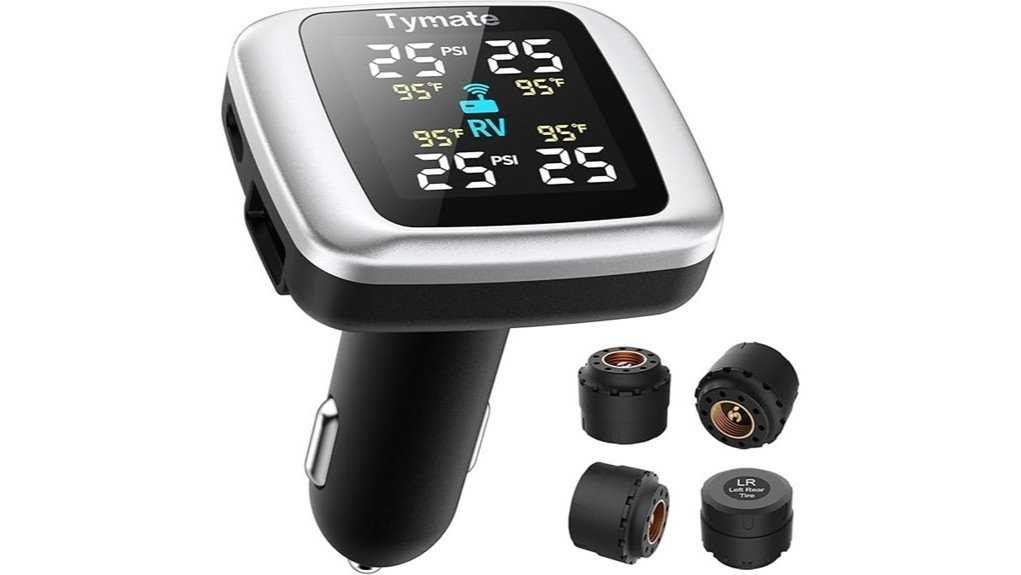
Checking tire pressure with a gauge before every drive gets old fast, and a slow leak can drop a tire to a dangerous level before you ever notice. The Tymate TM7 Tire Pressure Monitoring System puts live pressure and temperature readings from all four tires on a small color screen on your dash. This review covers how it performs, who it fits, and where its external-sensor design has tradeoffs, so you can decide whether it belongs in your vehicle. It is a strong safety upgrade for older cars, RVs, and trucks with no factory system, though the screw-on sensors need an occasional check to stay sealed and accurate.
Our rating: 4.4 / 5
Bottom line: the TM7 gives you clear, real-time readings for all four tires with a genuinely fast plug-in setup, which makes it a smart, low-cost safety add-on for vehicles without factory TPMS. The main tradeoff is that the external screw-on sensors sit exposed on the valve stems, so they can loosen over time and eventually need a coin-cell battery swap.
Key Takeaways
- The Tymate TM7 is a wireless TPMS with four external screw-on sensors and a color LCD display.
- It installs in about five minutes and powers through your vehicle’s 12V cigarette lighter socket.
- It reads tire pressure from 0 to 144 PSI plus temperature, and it flags gradual leaks early.
- Six alarms cover high and low pressure, fast leakage, overheating, weak sensor battery, and signal loss.
- It suits RVs, SUVs, trucks, sedans, and trailers, and the monitor adds two USB charging ports.
[Products Worth Considering]
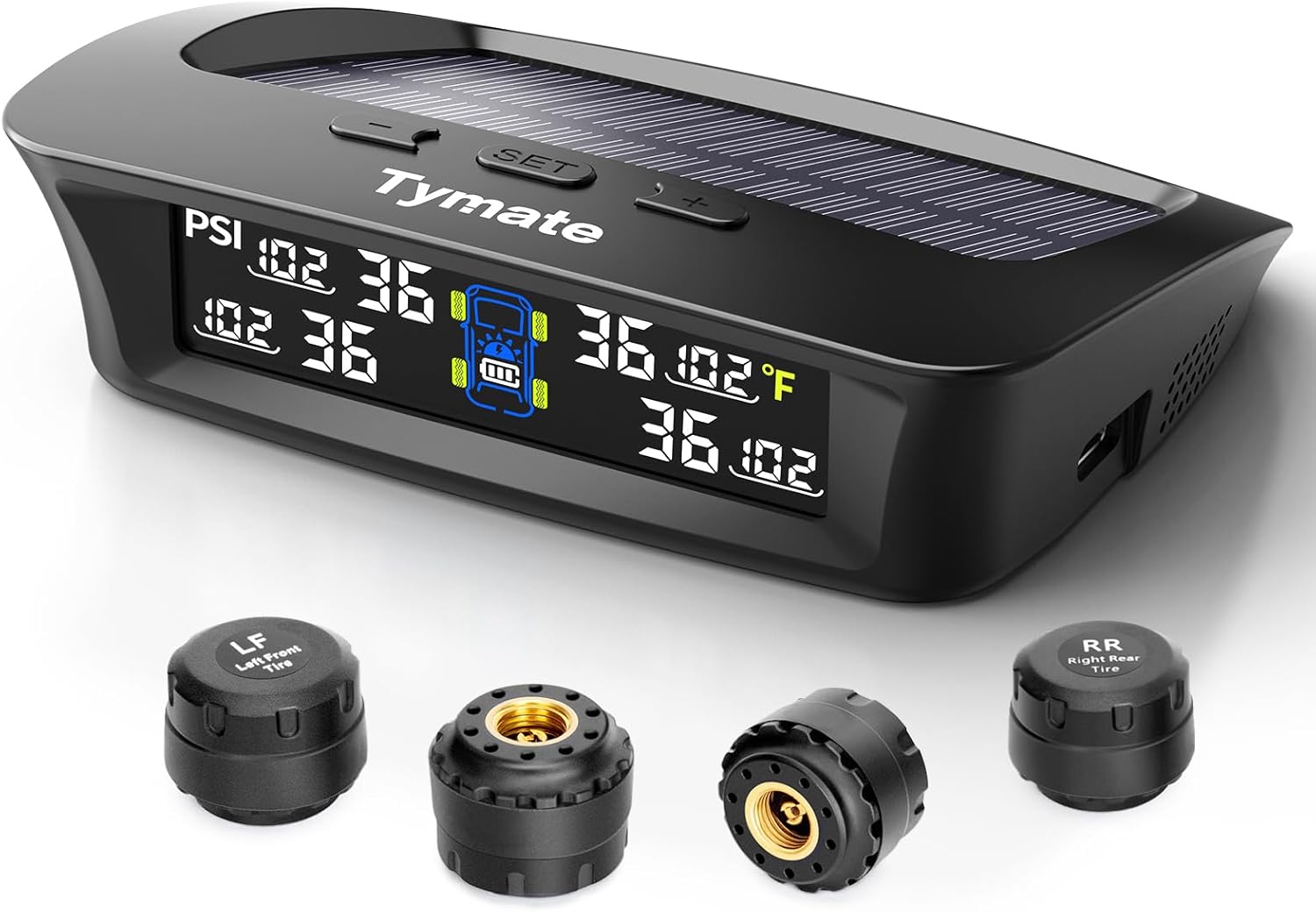
The Tymate TM3 RV TPMS delivers real-time tire pressure monitoring from 0 to 144 PSI with accurate readings and dependable wireless communication. It includes four external sensors with pre-pairing, six alarm modes for rapid leak, pressure extremes, temperature, and signal loss, plus an easy-reference setup for alert thresholds. Solar and USB-C charging help keep the display powered, while the color LCD and adaptive backlight improve visibility for safer driving and towing.
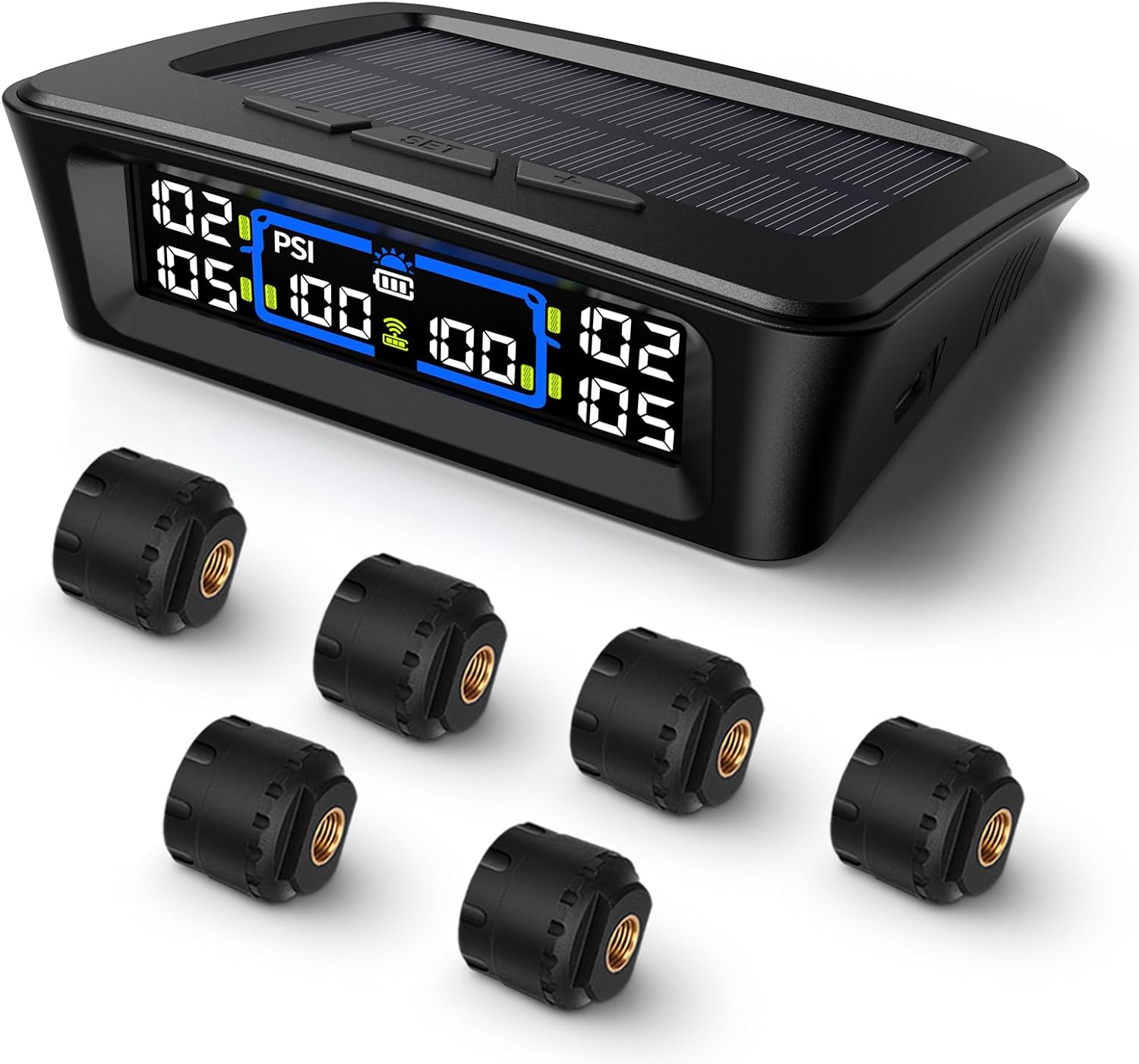
The Tymate TM12 RV TPMS delivers real-time tire pressure and temperature monitoring with a stable 433Hz display for safer long-distance driving. It supports simultaneous monitoring across vehicle and trailer zones, includes six alarm modes for pressure, temperature, leakage, battery, and signal loss, and features easy DIY installation with auto calibration. Power is supplied via USB-C charging or solar recharging, with a wide 0–144 PSI range and up to 50 ft signal coverage for RVs and towable trailers.
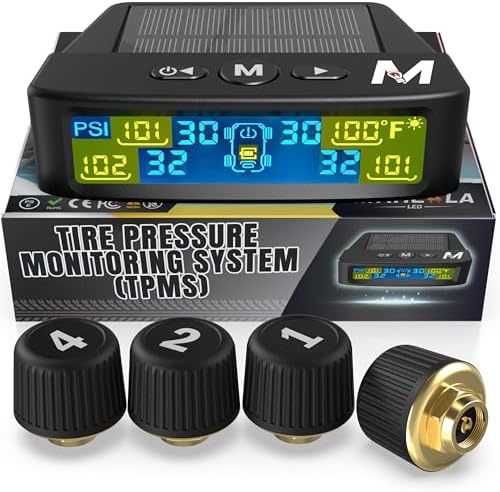
Marcala’s TPMS set of four sensors helps you monitor tire pressure and temperature in real time while driving, with updates every second. The bright color LCD uses auto-dimming for easy viewing, powered by dual solar and USB charging, and offers six alarm modes. Built for trailers, RVs, campers, trucks, and towing setups, the sensors support monitoring 1-4 wheels up to 98 PSI with IP67 waterproof protection.
Tymate TM7 Specifications
| Brand | Tymate |
| Model | TM7 |
| Product type | Wireless TPMS with external cap-style sensors |
| Sensors | 4 external, screw onto the valve stems |
| Pressure range | 0 to 144 PSI |
| Accuracy | ±1.5 PSI or ±3°F |
| Display | Color LCD with adjustable backlight |
| Power | 12V cigarette lighter adapter |
| Extra ports | 2 USB charging ports on the monitor |
| Alarm modes | 6 (high/low pressure, fast leak, high temperature, low sensor battery, signal loss) |
| Signal range | Built-in signal booster, plus an optional RP05 repeater for longer rigs and trailers |
| Sensor battery | Replaceable CR1632 coin cell |
| Sensor battery life | Up to about 2 years, depending on use |
| Anti-theft | Locking hex nuts included to deter sensor theft |
| In the box | Monitor, cigarette lighter adapter, 4 sensors, anti-theft nuts, wrench, battery tool, spare O-rings |
| Best for | RVs, SUVs, trucks, sedans, and trailers without factory TPMS |
What the Tymate TM7 Is
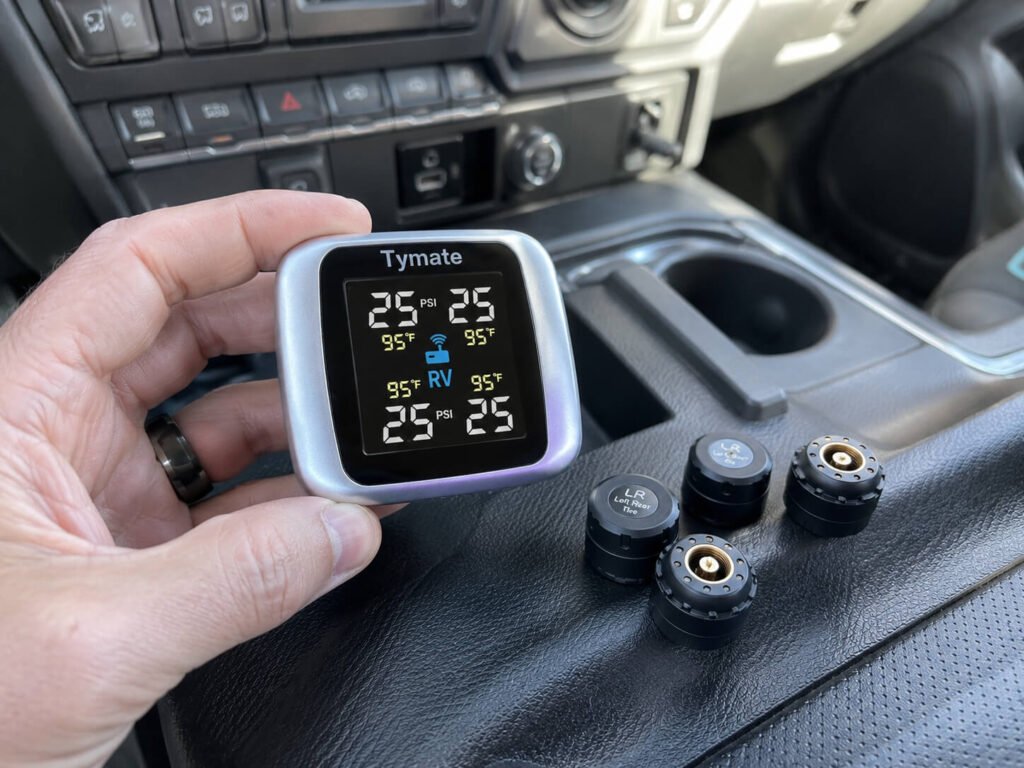
The Tymate TM7 is an aftermarket tire pressure monitoring system built for drivers who want live tire data without professional installation. Four sensors thread onto your valve stems like standard caps and send pressure and temperature readings to a compact color monitor that plugs into your cigarette lighter. It is aimed at RVs, SUVs, pickups, sedans, and travel trailers, especially older vehicles that never came with a factory TPMS.
The appeal is simple visibility. Instead of guessing or kneeling down with a gauge, you glance at the screen and see all four tires at once, with alerts that trigger before a slow leak turns into a flat. The color LCD, adjustable backlight, and two spare USB ports round out a setup that stays out of your way in the cabin.
How the TM7 Monitors Tire Pressure
Each of the four external sensors measures air pressure from 0 to 144 PSI and temperature, with rated accuracy of ±1.5 PSI or ±3°F. Readings update in real time on the monitor, so you can watch for pressure drops, heat buildup, and slow leaks that often signal a nail or a failing valve before the tire looks low.
When you first install a sensor, the current pressure becomes that tire’s reference value. From there, the monitor raises a high-pressure alert if a tire climbs about 25 percent above its reference and a low-pressure alert if it falls roughly 15 percent below. That means it is worth setting your tires to the correct pressure before pairing, so the alerts track against the right baseline. The wireless link keeps working across sedans, SUVs, RVs, trucks, and trailers.
Tymate TM7 Alerts and Display
The TM7 is easy to read at a glance. The color LCD keeps the numbers legible, and the adjustable backlight handles both bright daylight and night driving. Its six alarms cover the failures that actually matter on the road: high and low pressure, rapid leakage, excess heat, a weak sensor battery, and lost signal.
| Feature | What it does for you |
|---|---|
| Color LCD | Clear, at-a-glance readings for all four tires |
| Adjustable backlight | Stays readable day or night |
| Pressure alarms | Early warning for slow leaks and over-inflation |
| Temperature alarm | Flags overheating on long or loaded drives |
| Low-battery and signal alerts | Tells you when a sensor needs attention |
Tymate TM7 Installation and Power Setup
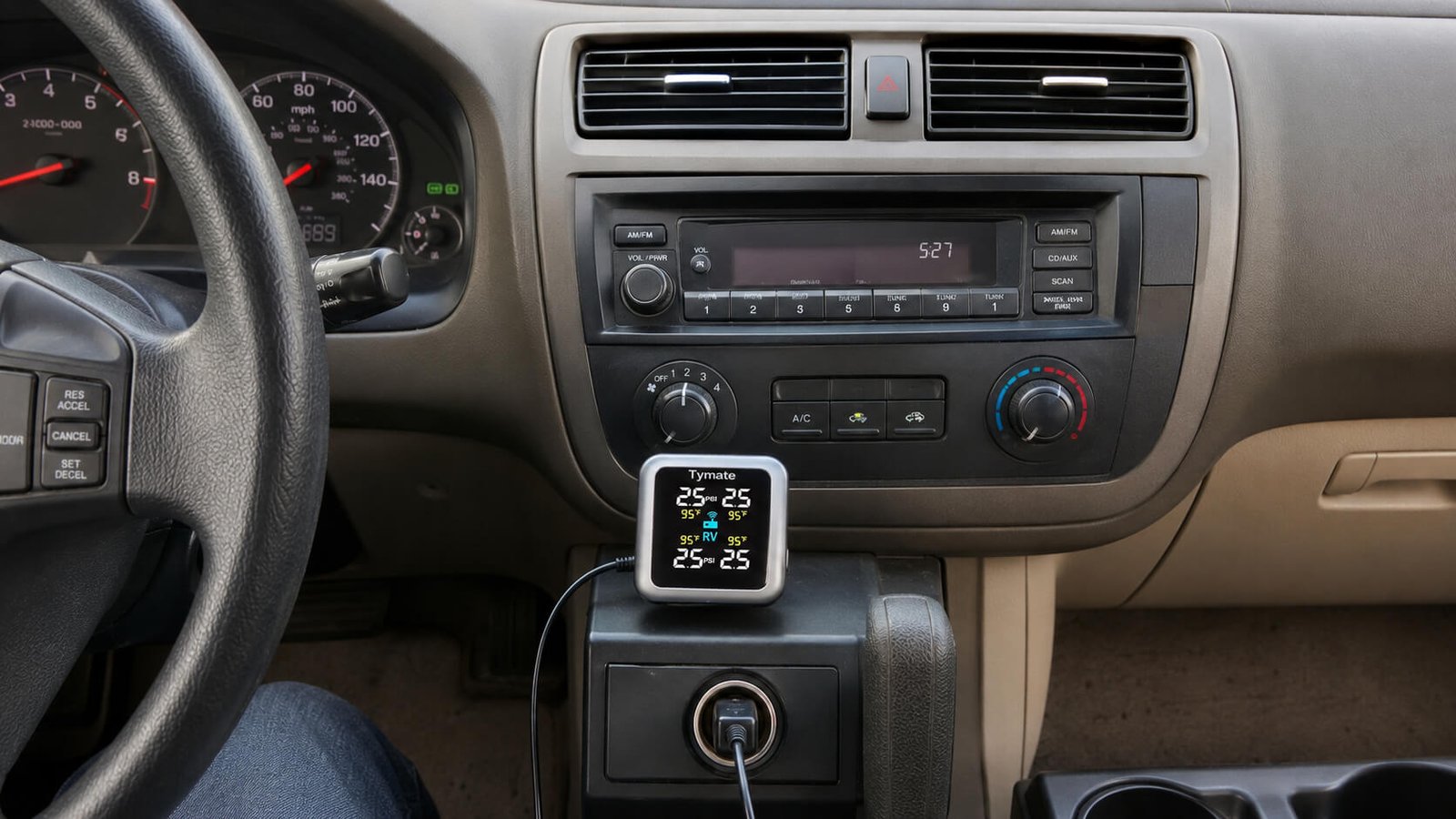
Setup is the TM7’s strongest practical feature. The monitor plugs into your cigarette lighter, so it powers on with no wiring and no trip to a shop, which keeps the whole install to about five minutes. The recommended order matters: plug in and power up the monitor first, then screw the sensors onto the valve stems so each one pairs cleanly.
Each sensor threads on like a valve cap, and the included locking hex nuts let you secure them against theft using the supplied wrench. The monitor draws power from the 12V socket while giving you two USB ports for charging a phone or dash cam, so you are not sacrificing a charging spot to add tire monitoring.
Fit, Compatibility, and Valve Stems
Because the sensors screw onto standard tire valves, the TM7 works on most cars, SUVs, pickups, RVs, and trailers regardless of age. It fits both rubber and metal valve stems, though on metal stems it is worth checking clearance and tightening gently so the sensor seats squarely and seals. Set each tire to its correct pressure before you pair the sensors, since that reading becomes the alert baseline.
The base system covers four tires. If you run dual rear wheels or tow a trailer, each additional tire needs its own sensor, and longer rigs may need the built-in signal booster switched on or the optional RP05 repeater to keep the signal steady from back to front.
Sensor Design and Durability
External sensors are what make the TM7 cheap and easy to install, and they are also where its tradeoffs live. Sitting on the outside of the valve, each sensor is exposed to road spray, dust, and weather, so Tymate includes spare O-rings and designs the sensors to resist dust and water. The locking hex nuts matter here too, because an unsecured cap-style sensor can be unscrewed by anyone.
The upside is serviceability. When a sensor battery runs down after roughly two years, you swap the CR1632 coin cell yourself with the included tool instead of replacing the whole sensor. The downside compared with internal (in-wheel) sensors is that external units add a little weight to the valve stem and need the occasional check to confirm they are snug and sealed.
How It Performs in Real Use
Ratings only tell you so much. Here is how the TM7 tends to fit into everyday driving.
[Products Worth Considering]

The SKÖG Chuck Mates Platinum uses a patented RatchetSeal push-to-connect system for instant, secure, air-tight attachment to standard tire valve stems. It features an easy...
Daily commuting
For a sedan or SUV commuter, the value is catching a slow leak early. A tire losing a pound or two each day shows up on the screen long before it looks flat, which turns a roadside blowout into a planned stop at the shop.
RV and road trips
On an RV or a long highway trip, both the pressure and temperature alerts earn their keep. Heat builds in tires under sustained load, and the temperature alarm gives you a heads-up before a hot, under-inflated tire becomes a failure far from home.
Towing a trailer
Trailer tires are easy to ignore because you cannot feel them going soft from the driver’s seat. With a sensor on each trailer tire, the TM7 watches them for you. On longer trailers, turn on the signal booster or add the repeater so the rear readings stay reliable.
Cold-weather driving
Tire pressure drops as temperatures fall, so a cold snap can quietly push a tire below spec overnight. Seeing all four values before you pull out lets you top up before you drive rather than chasing a low-pressure light later.
Setup and Placement Tips
A few habits get the most out of the system:
- Inflate every tire to its correct pressure before pairing sensors, so the alert baseline is right.
- Hand-tighten each sensor, then fit the locking nut so it stays put and sealed.
- Note which sensor goes on which wheel during install to keep the display positions accurate.
- If a rear tire reads intermittently on a long vehicle, turn on the signal booster or use the repeater.
Before You Use It
The TM7 is a monitoring aid, not a replacement for basic tire care. Use it alongside routine visual checks and a manual gauge, and always follow your vehicle’s recommended pressure on the door-jamb sticker rather than the number on the tire sidewall. If an alert fires, treat it as a prompt to inspect the tire, not a diagnosis on its own.
Who the Tymate TM7 Is Best For
Best for:
- Owners of older cars, SUVs, or trucks with no factory tire monitoring who want a fast, no-wiring upgrade.
- RV and trailer owners who need eyes on tires they cannot feel from the driver’s seat.
- Drivers who want live pressure and temperature data on a clear color screen without professional install.
Skip it if:
- You want fully hidden, tamper-proof sensors and do not mind paying for in-wheel installation.
- Your vehicle already has a reliable factory TPMS you are happy with.
- You would rather not do occasional sensor checks or coin-cell battery swaps.
Pros and Cons
- About a five-minute, no-wiring install using the cigarette lighter
- Clear color LCD with adjustable backlight for day or night
- Wide 0 to 144 PSI range covers cars, trucks, RVs, and trailers
- Six useful alarms, including fast-leak and high-temperature warnings
- Replaceable CR1632 batteries and anti-theft nuts included
- External sensors are exposed and can loosen or be tampered with
- Adds a little weight to each valve stem versus internal sensors
- Longer rigs and trailers may need the repeater for a steady signal
- Sensors need an occasional check and battery swaps over time
Pricing and Value
The TM7 sits in the budget tier of tire monitoring, and that is exactly where it makes sense. For far less than in-wheel sensor systems or a professional install, you get real-time pressure and temperature data on all four tires with a setup almost anyone can finish in the driveway.
It is a smart buy for older vehicles, RVs, and trailers that never had factory monitoring, and it is worth considering if you want early warnings without ongoing cost. It is not the best fit if you need hidden, maintenance-free sensors, since the external design trades a little upkeep for its low price and easy install.
How It Compares
Within Tymate’s own range, the TM7 is the plug-in, dash-monitor option. If you want to keep the dash clear, the windshield-mounted TM8 or the solar-charging M7-3 are worth comparing, and the M7-3 adds a six-wheel display for larger rigs. Against internal (in-wheel) TPMS systems from other brands, the TM7 is cheaper and far easier to install, but those hidden sensors resist tampering and skip the exposed-cap upkeep. The TM7 makes the most sense if you want the quickest, lowest-cost path to live tire data on a vehicle without factory monitoring.
Frequently Asked Questions
How long do the sensor batteries last?
Can the TM7 monitor dual rear tires?
Does it work with metal valve stems?
Will the external sensors leak air?
What should I do if a sensor stops transmitting?
Can I use it on a tow vehicle and trailer at the same time?
Is it a replacement for checking tires by hand?
Final Verdict
The Tymate TM7 is an easy recommendation for drivers who want live tire pressure and temperature data without wiring or a shop visit, especially on older cars, RVs, and trailers with no factory system. Its real strength is fast, low-cost visibility across all four tires; its main limitation is the exposed external sensors, which need the occasional check and eventual battery swap. If you want hidden, maintenance-free monitoring, look at an in-wheel system instead. For most drivers upgrading an older vehicle, it earns its 4.4 out of 5.
Fast plug-in setup, clear color display, and six safety alarms for RVs, trucks, and daily drivers.

Related Articles
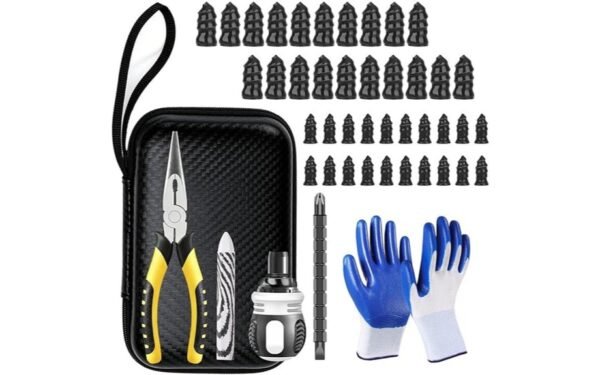
Tire Screw Plug Repair Kit Review
Compact tire screw plug repair kit review reveals fast roadside fixes, but which punctures are truly safe enough to trust?
Read More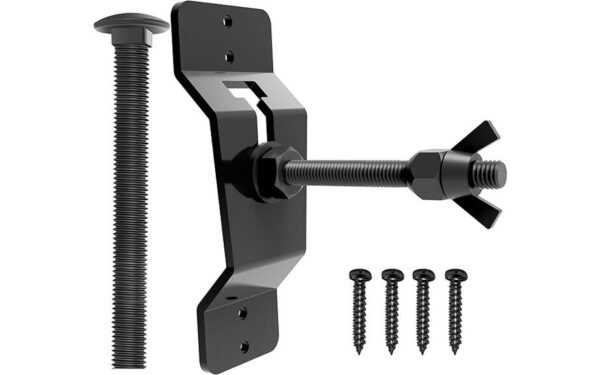
Wall Mount Spare Tire Carrier Mount Review
I review the wall mount spare tire carrier’s fit, strength, and stability—see what could make or break your trailer setup.
Read More
Socpuro Tire Repair Patch Tool Kit Review
Great for quick DIY puncture fixes, the Socpuro Tire Repair Patch Tool Kit has limits and surprises you’ll want to know before buying.
Read More