
4-Pack GM TPMS Sensors Review
Disclosure: As an Amazon Associate, we earn from qualifying purchases. If you click a link on this page and make a purchase, we may receive a small commission at no extra cost to you.
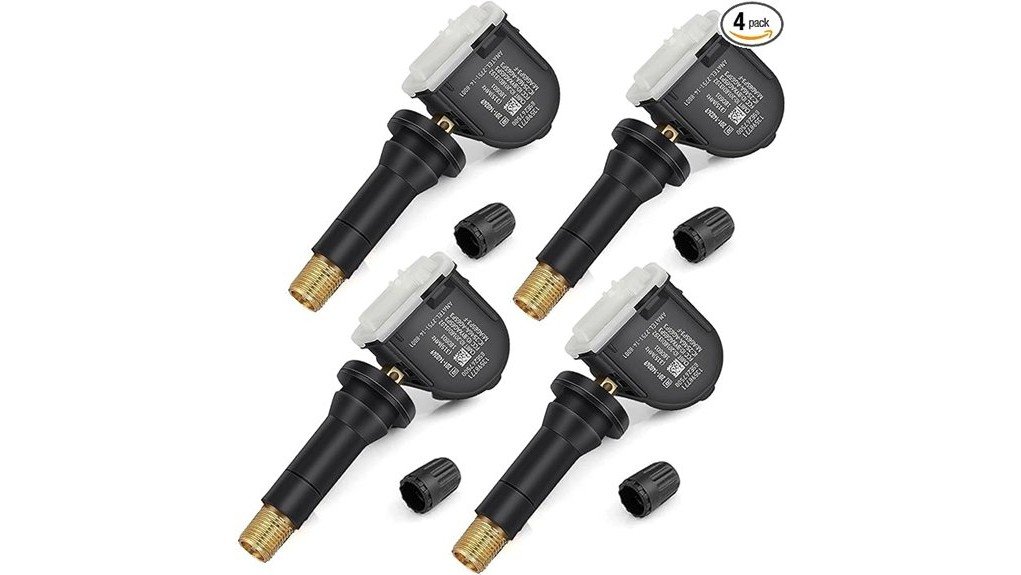
A failed tire-pressure sensor can leave the TPMS warning light on, hide a slow leak, or make a second wheel set harder to manage. The Yikesai 4-Pack GM TPMS Sensors offers four pre-programmed 315MHz replacement sensors for selected Chevrolet, GMC, Buick, Cadillac, Hummer, Pontiac, and Saturn applications. The set is affordable and includes useful OE-number cross-references, but compatibility is narrower than the phrase “fits GM” suggests. This review explains the fitment checks, installation work, relearn process, and tradeoffs you should understand before buying.
Quick Verdict
Rating: 8.2/10, recommended with fitment caveats
Best For: Owners of compatible older GM vehicles who need a complete four-sensor replacement set
Bottom Line: The Yikesai set combines pre-programmed 315MHz electronics, four-sensor value, and broad older-GM coverage. Its main limitation is application accuracy, because frequency, OE number, model year, wheel design, and relearn method must all match your vehicle.
| Specification | Detail |
|---|---|
| Brand | Yikesai |
| Model | YT-TPMS-GM-001 |
| Product type | Direct tire-pressure monitoring system replacement sensors |
| Quantity | 4 sensors |
| Frequency | 315MHz |
| Programming status | Pre-programmed, vehicle relearn still required |
| Key OE references | 13598771, 13598772, 13586335, and 13581558 |
| Seller-stated pressure range | 15 to 65 psi |
| Seller-stated operating temperature | -40°C to 125°C |
| Housing | ABS+PC plastic with waterproof, shock-resistant, and corrosion-resistant treatment |
| Item weight | 3.52 ounces for the listed product |
| Best use | Replacing failed sensors or equipping a compatible second wheel set |
| Important requirement | Verify VIN, model year, OE number, frequency, valve-hole fit, and relearn procedure before installation |
Key Takeaways
- This is a Yikesai aftermarket four-pack, not a set of GM Original Equipment sensors.
- The sensors are pre-programmed for compatible applications, but they still need to be learned by the vehicle after installation.
- Fitment covers many older Chevrolet, GMC, Buick, Cadillac, Hummer, Pontiac, and Saturn vehicles that use matching 315MHz sensors.
- The ABS+PC housing and coated electronics are designed for water, shock, corrosion, and wide temperature exposure.
- Physical installation requires tire service work, and some vehicles need a TPMS activation tool to complete the relearn.
[Products Worth Considering]
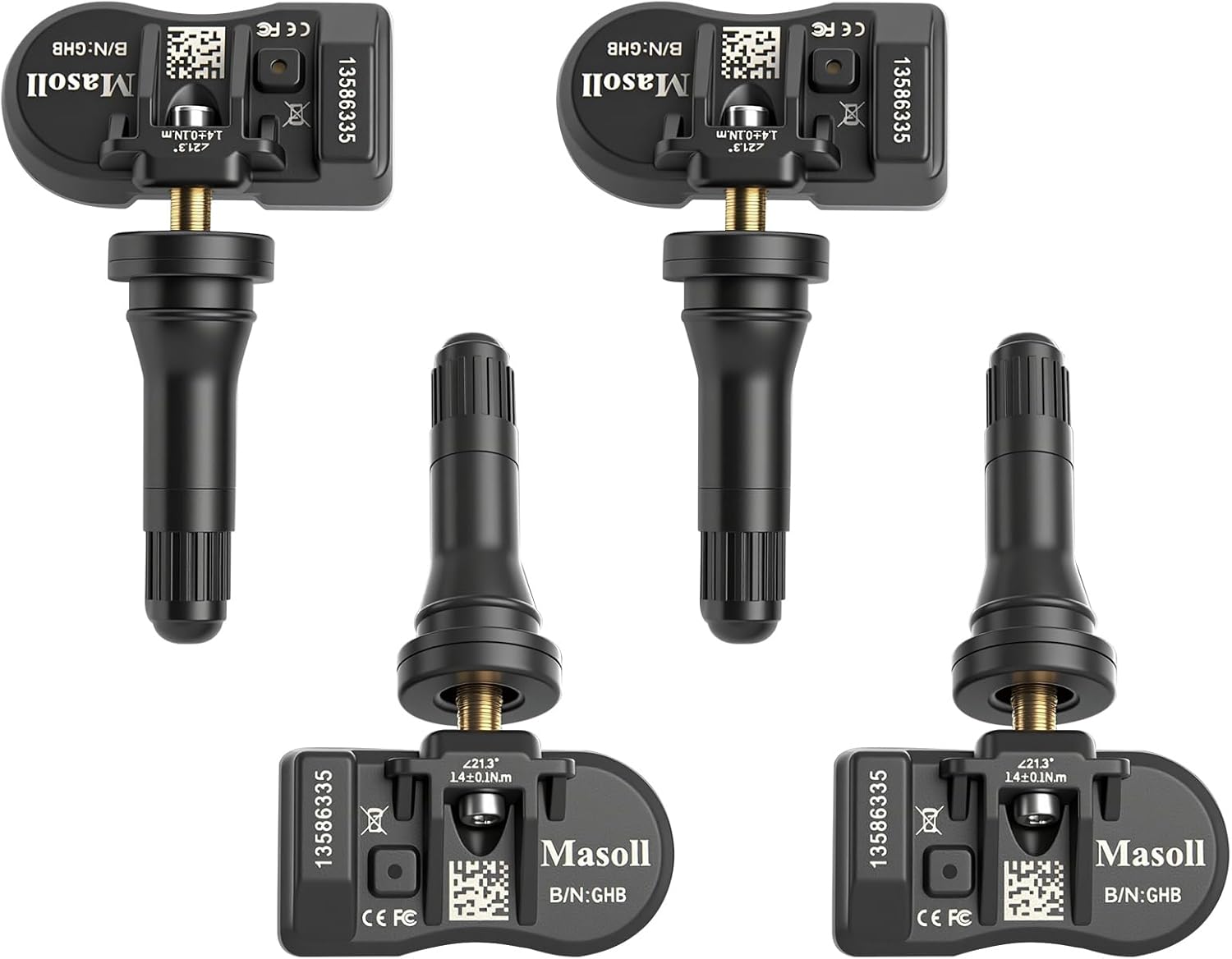
Masoll TPMS sensors are designed for most GM vehicles after 2006, helping you clear tire pressure warnings with OEM-level 315/433MHz compatibility. The 4-pack includes pre-programmed sensors, but re-learning is required after installation using a GM TPMS relearn tool or scan tool. Built with a dual-antenna design and a long-life CR2050 battery, these sensors deliver reliable performance in extreme temperatures with corrosion-resistant valve construction.

Replace worn or missing TPMS sensors with a pre-programmed 4-pack designed for compatible GM vehicles. These 315MHz sensors provide real-time tire pressure monitoring and alert you if pressure is too high, too low, or if a rapid air leak occurs. Most installations are ready with minimal relearn effort after mounting, helping improve safety and driving confidence.

Replace worn or malfunctioning GM TPMS sensors with this 433MHz pre-programmed sensor set designed for compatibility with many Chevrolet, Buick, GMC, and Cadillac models. It includes guidance for proper OBDII relearning/pairing after installation and supports reliable long-term operation with a high-performance CR2032 battery. Quality tested for durability and performance to help restore accurate tire pressure monitoring.
What Is the Yikesai GM TPMS Sensor Set?
The Yikesai YT-TPMS-GM-001 is a four-pack of direct TPMS sensors that mount inside compatible wheels and transmit tire-pressure information to the vehicle at 315MHz. Each unit is intended to replace a failed, damaged, or battery-depleted sensor in a supported GM-platform application.
The main selling point is convenience. The electronics arrive pre-programmed, so you should not need to write vehicle data to a blank universal sensor. Pre-programmed does not mean automatically paired, however. After mounting the sensors, you still need to follow the vehicle’s sensor-matching or relearn procedure.
Who Should Buy It?
Best For
- Owners replacing all four aging sensors on a confirmed 315MHz GM application
- Drivers setting up compatible winter or spare wheels that need their own sensors
- Budget-focused buyers who can verify the old OE number before ordering
Skip If
- Your vehicle uses a different frequency, OE number, or valve-stem design
- You want a confirmed GM Original Equipment part with dealer-level parts support
- You cannot complete tire mounting and the required vehicle relearn safely
Before You Buy: Do not order these sensors based only on the GM badge or 315MHz frequency. Match the OE number on your original sensor, confirm the exact model year and trim, check the VIN through a reliable parts catalog or dealer, and verify that your wheels accept the same valve-stem style.
Fitment and OE-Number Matching
The listing names applications across Chevrolet, GMC, Buick, Cadillac, Hummer, Pontiac, and Saturn. Common examples include selected Silverado, Tahoe, Suburban, Traverse, Express, Sierra, Yukon, Acadia, Savana, Enclave, LaCrosse, Lucerne, CTS, Escalade, SRX, and H2 model years. Coverage is not universal, and even the same vehicle name can use different sensors across production years or trim changes.
The clearest buying check is the part number. The listing title cross-references 13598771, 13598772, 13586335, and 13581558, with additional replacement numbers shown in the product details. Compare your existing sensor number and a VIN-based catalog result before the tire is removed from the wheel.
Pro Tip: Photograph the label or part number on one original sensor during your next tire service. That image gives you a stronger fitment reference than a broad online vehicle list when you need replacements later.
Materials, Build, and Durability
Yikesai lists a high-strength ABS+PC outer shell and coated internal electronics designed to resist water, impact, and corrosion. The stated operating range of -40°C to 125°C is suitable on paper for cold-weather starts, summer road heat, rain, snow, and normal brake-area temperature changes.
The housing follows an OE-style internal-wheel design, which helps protect the electronics from direct road impact. It is still a service part mounted in a harsh location. Incorrect installation, a damaged valve seat, wheel corrosion, tire-machine contact, or excessive torque can cause leaks or physical damage even when the sensor electronics are sound.
Installation and Relearn Requirements
Installation is not a simple exterior swap. The tire must be deflated and unseated from the rim so the old sensor can be removed and the new assembly can be installed correctly. A tire shop has the mounting equipment, valve-service tools, and torque information needed to reduce the chance of bead, wheel, or sensor damage.
After mounting, the vehicle must learn the identity and wheel position of each new sensor. These Yikesai sensors are pre-programmed, which removes the separate step required by blank universal sensors. Most compatible GM vehicles still need a manual relearn sequence, and many use an activation tool such as an EL-50448-style trigger to wake each sensor in left-front, right-front, right-rear, and left-rear order.
Some vehicles may support a pressure-change method or a different scan-tool process. Do not assume that driving alone will complete the relearn. Follow the exact procedure in your owner’s manual or service information for your model year.
Pressure Monitoring and Dashboard Alerts
Once installed and learned, each sensor measures pressure inside its tire and sends data to the vehicle’s TPMS receiver. The listing states a 15 to 65 psi measuring range and a 300-meter sensing distance. The long listed distance is less important than correct frequency, sensor ID recognition, and reliable communication within the vehicle.
The dashboard may show individual tire pressures on equipped vehicles or may provide a warning lamp when pressure falls far enough below the recommended level. The system can help alert you to a slow loss or a faster leak, but it cannot inspect tread damage, confirm tire temperature by touch, or replace regular pressure checks.
[Products Worth Considering]
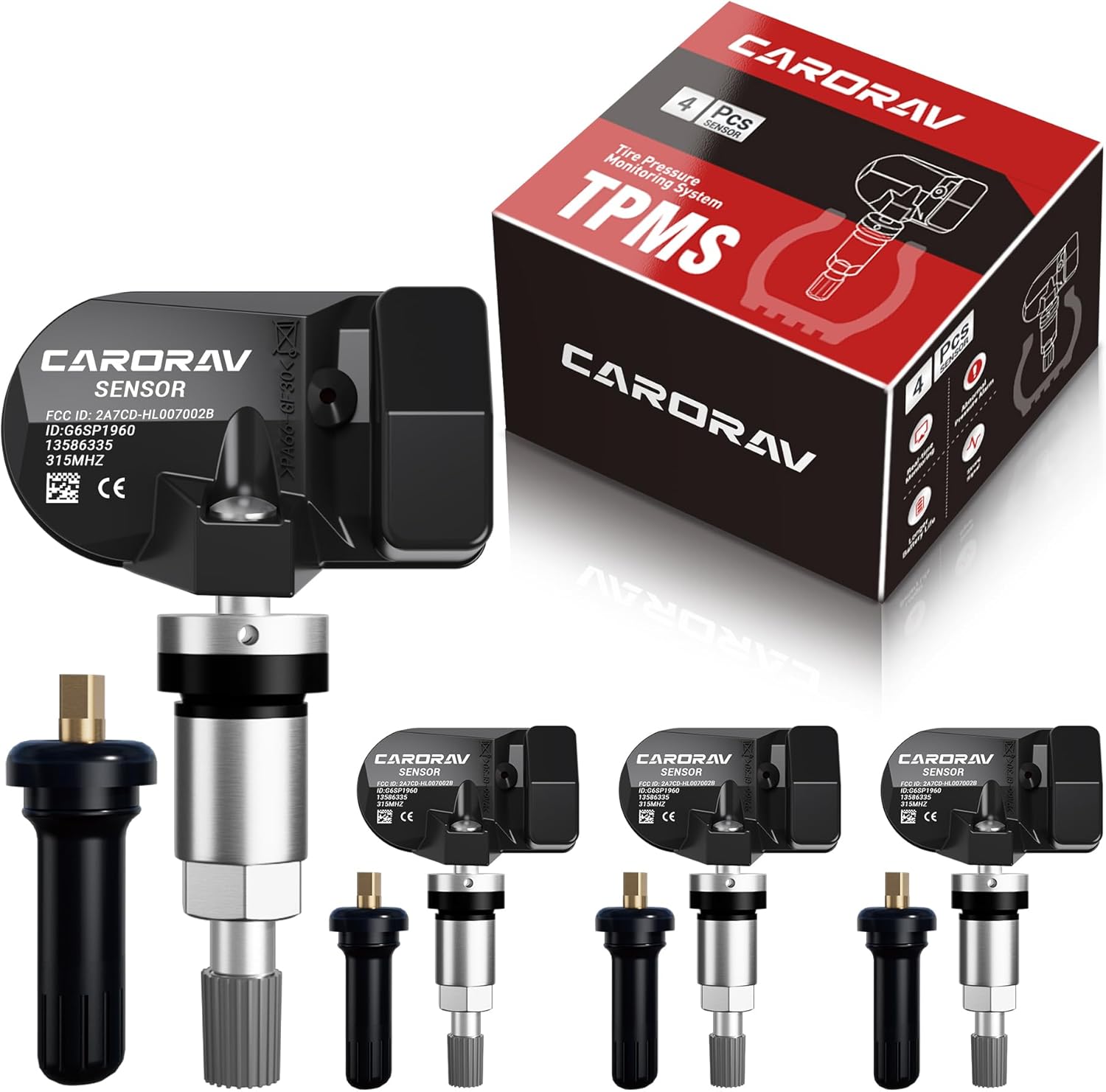
Replace worn or missing TPMS sensors with CARORAV pre-programmed GM-compatible sensors for a smoother installation experience. These 315MHz replacement sensors help monitor tire pressure in real time with long battery life, and they are designed to withstand harsh temperatures. Manual or OBDII relearn may be required to reset the system for proper recognition.
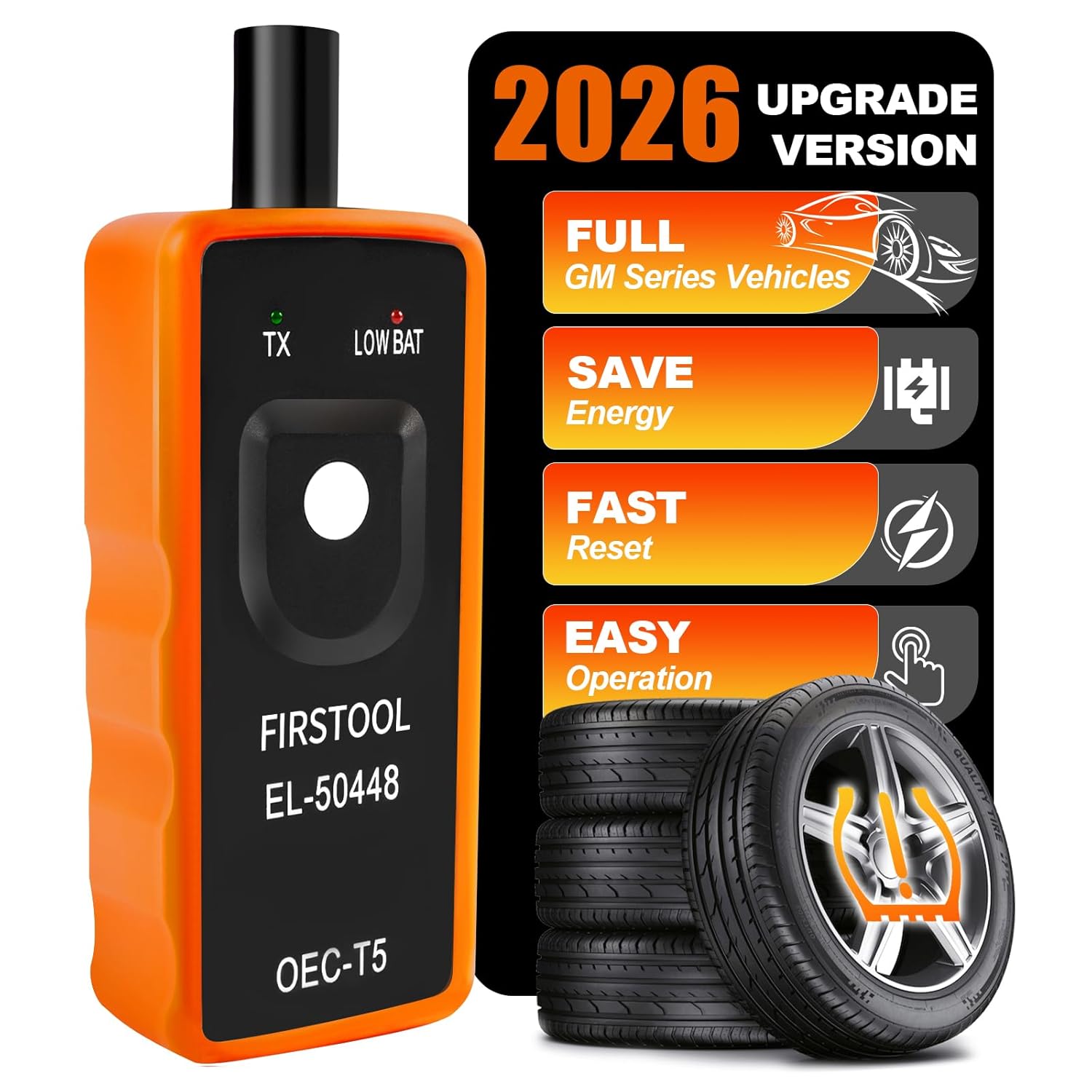
This TPMS relearn tool helps you quickly activate, match, and reset GM tire pressure sensors to keep the vehicle monitoring system working properly. It clears tire pressure alarms and dashboard warning lights after sensor replacement or tire rotation, and supports learning for common 315/433 MHz TPMS sensors. Designed for simple one-button operation, it can help you avoid unnecessary trips to repair shops.

Masoll Gen 2 external TPMS sensors are a DIY replacement set of 4 for select GM vehicles made after 2006, helping you shut off the TPMS warning light quickly. Simply screw the sensors onto the tire valves and sync to your car ECU using the included EL-50448 relearn tool. Dual-frequency 315/433 MHz design provides OEM-level performance with accurate readings and replaceable batteries for about two years.
How It Performs in Real Use
Replacing a Failed Sensor
When one original sensor has a dead battery or damaged valve, a matching Yikesai sensor can restore pressure reporting after installation and relearn. Replacing only one is possible, but a four-pack makes more sense when all original sensors are similar in age and you want to avoid paying for repeated tire dismounting as the remaining batteries fail.
Using a Winter Wheel Set
A second wheel set can use these sensors when the wheels and vehicle application match. You may need to repeat the relearn each time you swap between summer and winter wheels, depending on how many sensor IDs your vehicle stores. Confirm that the aftermarket wheel has the correct valve-hole dimensions and enough clearance for the sensor body.
Daily Commuting and Highway Use
For normal driving, the practical benefit is restored dashboard information rather than a change in how the vehicle drives. A working TPMS can warn you about significant pressure loss before it becomes obvious from steering feel. You should still check all tires cold with a quality gauge and inflate them to the pressure on the driver-door placard.
Long-Term Ownership
The product listing does not state a specific battery-life warranty, so you should not assume an exact service interval. Direct TPMS batteries are sealed inside the sensor, which means the complete unit is normally replaced when the battery is depleted. Valve hardware should also be inspected whenever a tire is serviced.
Compatibility and Safety
Correct fitment affects both electronics and air sealing. A sensor with the wrong frequency will not communicate correctly, while an unsuitable stem or valve-hole fit can leak. Have the valve seat cleaned, use the correct service hardware, and follow the specified torque for the sensor design and wheel.
TPMS is a warning system, not a substitute for tire maintenance. Check pressure when the tires are cold, use the placard value rather than the maximum pressure molded on the tire sidewall, and inspect any tire that repeatedly loses air. The NHTSA TireWise guidance also recommends checking the tires promptly when the TPMS warning appears.
Pros and Cons
Pros
- Four pre-programmed 315MHz sensors in one package
- Cross-references several common older-GM OE numbers
- ABS+PC housing with waterproof and corrosion-resistant treatment
- Useful for full-set replacement or compatible seasonal wheels
- Lower-complexity setup than blank programmable universal sensors
Cons
- Broad vehicle lists can hide model-year and trim differences
- Professional tire installation is usually required
- A relearn tool or vehicle-specific procedure may still be necessary
Is It Worth the Price?
This Yikesai four-pack sits in the budget aftermarket tier. It offers strong value when all four sensors match your vehicle and you can install them during scheduled tire work. Buying a full set can also reduce future labor compared with replacing similar-age sensors one at a time.
The value falls quickly when fitment is uncertain. A lower purchase cost does not help if the frequency is wrong, the vehicle will not learn the IDs, or the valve design does not suit the wheel. Budget for mounting, balancing, relearn work, and possible replacement service when comparing the total cost.
How It Compares to Alternatives
An ACDelco vehicle-specific sensor is the better comparison when you prioritize GM Original Equipment branding and parts-catalog support, though a set may cost more. A programmable Schrader EZ-sensor can cover more frequencies and wheel configurations, but it requires compatible programming equipment and the correct service kit.
The Yikesai set makes the most sense when you have already confirmed one of its supported 315MHz applications and want four pre-programmed sensors at an aftermarket price. It is less appealing when your vehicle or aftermarket wheels need a specialized sensor angle, clamp-in stem, higher pressure range, or newer-frequency application.
Frequently Asked Questions
Are these genuine GM Original Equipment sensors?
No. They are Yikesai aftermarket sensors designed to replace selected GM OE numbers. They may provide OE-style fit and function in compatible applications, but they are not branded GM or ACDelco parts.
Do the sensors need programming?
The sensors are sold as pre-programmed, so they should not need vehicle data written to them like blank universal sensors. Your vehicle still needs a relearn or sensor-matching procedure after installation.
Will driving automatically complete the relearn?
Do not assume it will. Many compatible GM vehicles use a manual learn mode and an activation tool at each wheel, while some models use another procedure. Check the owner’s manual or service information for your exact model year.
Are valve stems included?
The current listing presents the product as four complete sensor assemblies with attached valve-stem hardware. Review the latest package photos and included-components details before ordering because bundle contents can change.
Can I use them with aftermarket or winter wheels?
Possibly, but vehicle compatibility alone is not enough. The wheel must accept the stem style and valve-hole size, and it must provide enough room for the sensor body without tire-machine or wheel-barrel interference.
What pressure range do they support?
The seller lists a 15 to 65 psi measuring range. That suits many passenger vehicles and light-duty applications in the fitment list, but you should not use the set where the required cold pressure falls outside the stated range.
How long do the sensor batteries last?
The listing does not provide a product-specific battery-life figure, so an exact lifespan should not be promised. The battery is sealed inside a direct TPMS sensor, and the complete sensor is normally replaced when the battery is depleted.
Can I install the sensors myself?
Only if you have proper tire-service equipment, torque information, and relearn tools. For most owners, professional installation is safer because the tire bead must be moved and the wheel should be checked for valve-seat corrosion or damage.
The Bottom Line
The Yikesai 4-Pack GM TPMS Sensors is a sensible budget choice for a confirmed older-GM 315MHz application, especially when you want to replace four similar-age sensors during one tire-service visit. Skip it when the OE number, frequency, wheel fit, or relearn method is uncertain, because compatibility is the product’s biggest limitation. Its strongest advantages are pre-programmed electronics, four-pack value, and useful older-GM coverage.
Ready to Buy?
Check the latest product details and confirm your OE number before you decide.
[Products Worth Considering]

Autel MX TPMS sensors combine 315MHz and 433MHz in a single easy-to-install press-in design for faster tire service. They support wireless programming with strong signal performance, and the sensors are clone-able for streamlined replacement. Built for reliability and tested to SAE standards, each sensor includes a series number for quality control.
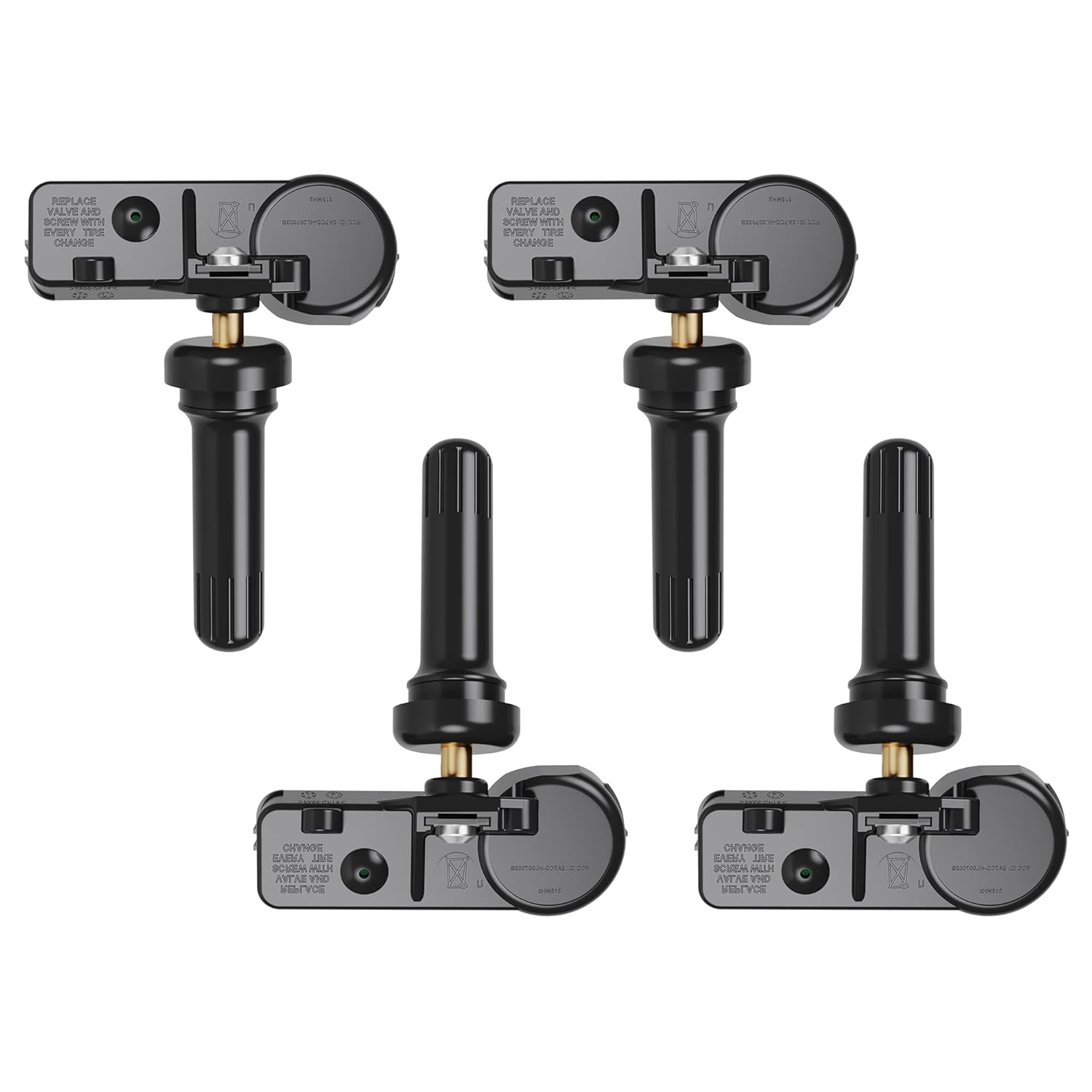
Replace worn or faulty TPMS sensors with this brand new 315MHz GM-compatible replacement set for select Chevy, GMC, Buick, Cadillac, and similar vehicles. These sensors are pre-programmed for your make/model/year and typically only require activation with a scan tool. Built for long service life with a high-temperature battery, they help maintain reliable tire pressure monitoring for safer driving.

Replace your worn or missing TPMS sensors with pre-programmed, direct-fit sensors for compatible Ford, Lincoln, and select Mazda models. Each sensor comes ready to activate with a scan tool, helping restore accurate tire pressure monitoring and trouble-free installation. Built with a long-life CR2032 battery and tested before factory release, this set provides dependable performance with a one-year warranty.

Related Articles
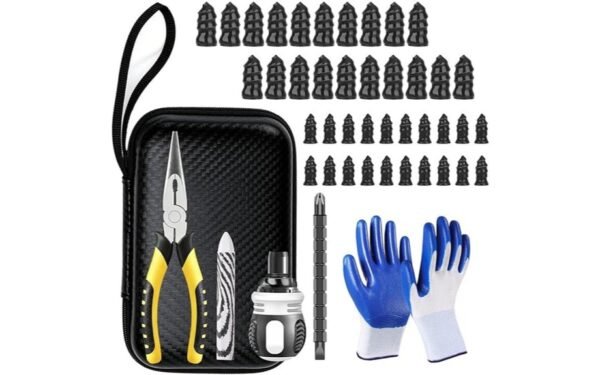
Tire Screw Plug Repair Kit Review
Compact tire screw plug repair kit review reveals fast roadside fixes, but which punctures are truly safe enough to trust?
Read More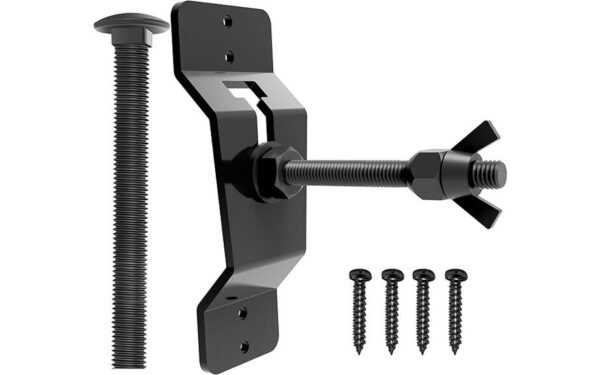
Wall Mount Spare Tire Carrier Mount Review
I review the wall mount spare tire carrier’s fit, strength, and stability—see what could make or break your trailer setup.
Read More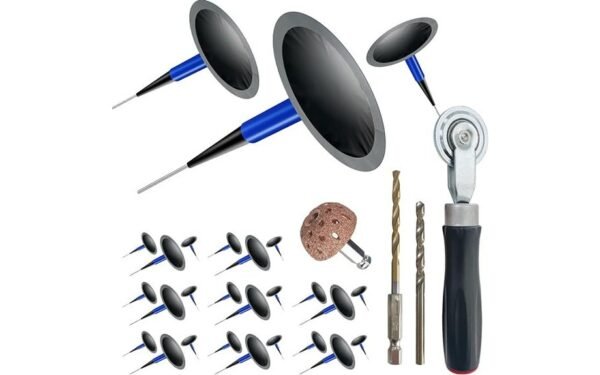
Socpuro Tire Repair Patch Tool Kit Review
Great for quick DIY puncture fixes, the Socpuro Tire Repair Patch Tool Kit has limits and surprises you’ll want to know before buying.
Read More