
Milton S-925 Pencil Tire Pressure Gauge Review
Disclosure: As an Amazon Associate, we earn from qualifying purchases. If you click a link on this page and make a purchase, we may receive a small commission at no extra cost to you.
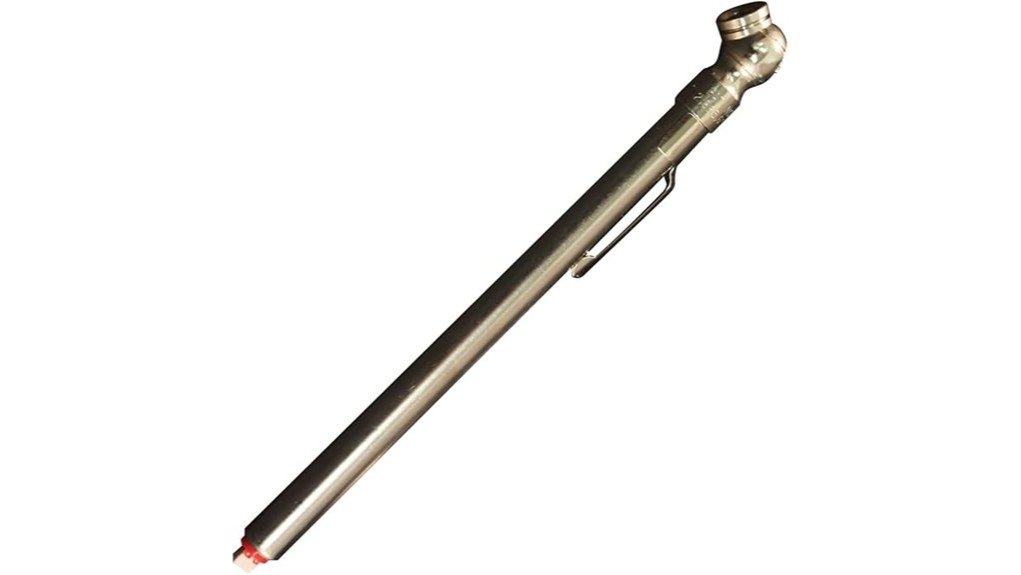
Checking a truck, RV, or high-pressure bicycle tire should not require batteries, an app, or a bulky tool. The Milton S-925 is a compact pencil tire pressure gauge with a 20 to 120 PSI scale, 2 PSI increments, and a built-in deflator valve. Its main strengths are portability, simple operation, and durable nickel-plated brass construction. Its main limitation is equally clear: 2 PSI graduations and a small mechanical scale are less precise and easier to misread than a good digital or large-dial gauge.
Quick Verdict
Rating: 8.4/10, recommended with caveats
Best For: Truck and RV owners, roadside kits, garages, and bicycles with compatible Schrader valves
Bottom Line: The Milton S-925 is a sturdy, battery-free gauge that covers higher pressures than a typical passenger-car pencil gauge. Choose it for quick routine checks, but use a finer digital or dial gauge when you need 1 PSI resolution or easier reading.
Milton S-925 Specifications
| Specification | Detail |
|---|---|
| Brand | Milton Industries |
| Model | S-925 |
| Product type | Mechanical pencil tire pressure gauge |
| Pressure range | 20 to 120 PSI |
| Scale | 2 PSI increments; PSI and kPa markings |
| Chuck | Single-head chuck for compatible Schrader-style valve stems |
| Pressure adjustment | Built-in deflator valve |
| Body material | Nickel-plated brass tubing |
| Indicator | Four-sided nylon indicator bar |
| Power | No batteries required |
| Storage feature | Built-in pocket clip |
| Intended use | Trucks, RVs, and compatible bicycle tires |
| Country of manufacture | Made in the USA, according to Milton |
| Package note | Amazon metadata has shown conflicting single-unit and 10-pack wording. Confirm the quantity displayed at checkout. |
[Products Worth Considering]

The AstroAI 2 pack air chucks provide a heavy-duty, closed-flow locking design that helps keep air flowing during inflation while securely attaching to the valve stem. Built with 250 PSI rated brass components and compatible with Schrader valves, they feature 1/4" female NPT threads for a wide fit with common inflators. The straight tip and locking clip make filling tires and monitoring pressure more convenient.
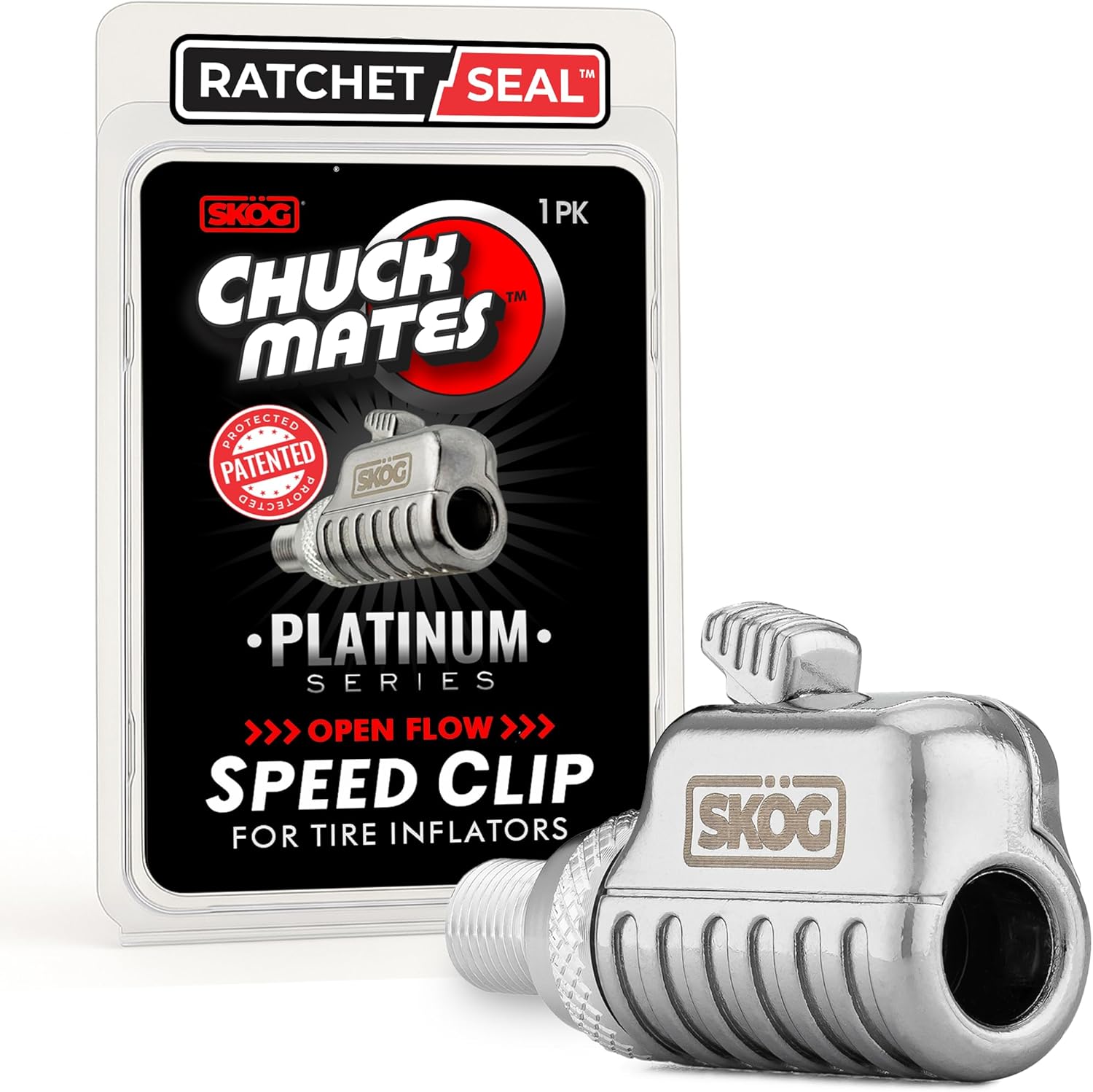
The SKÖG Chuck Mates Platinum uses a patented RatchetSeal push-to-connect system for instant, secure, air-tight attachment to standard tire valve stems. It features an easy push-button release for quick disconnects, plus 360° swivel open-flow airflow to keep operation smooth and kink-free. Universal Schrader compatibility makes it ideal for cars, bikes, motorcycles, RVs, trucks, and more.
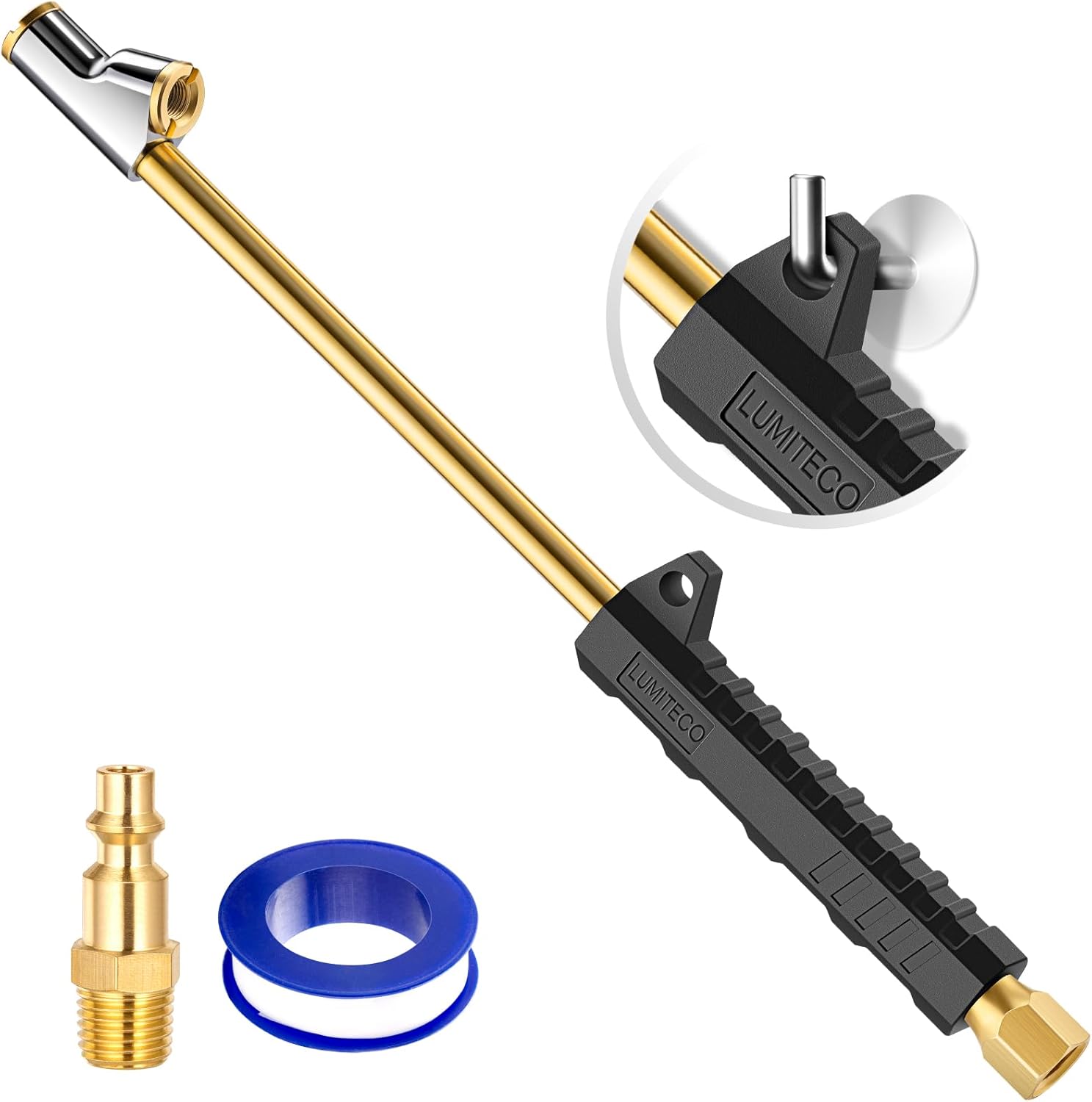
The LUMITECO 12" extended reach dual head air chuck is designed for hard-to-reach truck, RV, and bus dual wheels, making tire inflation quick and easier. It features a straight foot lock-on chuck for inner tires and a 30° reverse chuck for outer valves, with a closed-flow design that only allows air when engaged. Built with a brass body and ergonomic rubber grip, it connects easily using a 1/4" FNPT thread plus a standard quick plug for compressor-ready inflation.
Key Takeaways
- The 20 to 120 PSI range suits many truck, RV, trailer, and high-pressure bicycle applications.
- The gauge reads in 2 PSI increments, so it favors speed and simplicity over fine 1 PSI adjustments.
- Nickel-plated brass, a nylon indicator bar, and battery-free operation make it practical for a glove box or tool bag.
- The single-head chuck works best on accessible Schrader-style stems, not recessed inner dual-wheel valves.
- The built-in deflator lets you release small amounts of air without reaching for a separate tool.
What Is the Milton S-925?
The Milton S-925 is a mechanical pencil-style gauge made for tire pressures from 20 to 120 PSI. You press its single-head chuck squarely onto the valve stem, and air pressure pushes the nylon indicator bar out of the brass body. You then remove the gauge and read the scale at the body edge.
Unlike a digital gauge, it needs no battery and has no screen to crack or dim. Milton positions it for trucks, RVs, and bicycles, where pressures can exceed the upper limit of many 50 or 60 PSI passenger-car gauges. The pocket clip also makes it easy to store in a tool roll, console, or roadside kit.
Who Should Buy It?
Best For
- You need a compact gauge for truck, RV, trailer, or higher-pressure bicycle tires.
- You want a battery-free backup that can stay in a vehicle or tool bag.
- You prefer a simple mechanical scale and a built-in air-release feature.
Skip If
- You need readings below 20 PSI or adjustments in 1 PSI or smaller steps.
- Your vehicle has hard-to-reach inner dual-wheel stems that call for a dual-head or extended chuck.
- You need a large illuminated display for low-light use or limited vision.
Before You Buy: Check both the pressure range and package quantity. This gauge does not read below 20 PSI, and Amazon product metadata has displayed conflicting wording about whether the offer contains one gauge or a 10-pack.
Build Quality and Materials
The S-925 uses nickel-plated brass tubing rather than a thin plastic shell. That gives it a firm feel and helps protect the internal piston during routine garage or roadside use. The white four-sided nylon indicator bar slides out during a reading and stays extended after you remove the gauge.
The design is durable, but it is not immune to dirt, moisture, or impact. Fine debris around the chuck can prevent a clean seal, and bending or crushing the indicator bar can affect movement. Store the gauge dry and avoid leaving it loose under heavy tools.
Accuracy, Range, and Readability
The verified working range is 20 to 120 PSI, marked in 2 PSI increments and also labeled in kPa. That range is the S-925’s main advantage over a common 5 to 50 PSI passenger-car pencil gauge. It can cover many light-truck, RV, trailer, and higher-pressure bicycle applications without reaching the top of the scale.
Milton describes the gauge as accurate, but the accessible product information does not publish a numerical tolerance. The 2 PSI graduations also mean you cannot read or set pressure as finely as you can with a quality 0.1 PSI digital gauge. For routine checks, the scale is adequate. For performance tuning or diagnosing a small pressure difference, compare it with a trusted reference gauge.
Fit and Valve Compatibility
The straight single-head chuck is designed for common Schrader-style valve stems. It works well when the valve is exposed and easy to approach directly. On bicycles with Presta valves, you need a suitable adapter, and the gauge still cannot read below its 20 PSI minimum.
For dual rear wheels, deeply recessed stems, or awkward valve angles, the S-925 can be frustrating. A dual-head truck gauge such as the Milton S-929 is better suited to reaching inner and outer dually valves. Always confirm that your valve stem is accessible before choosing a straight single-head design.
How to Use the Milton S-925 Correctly
- Find the vehicle manufacturer’s recommended cold tire pressure on the driver’s door placard or in the owner’s manual.
- Check the tire when it is cold, ideally before driving or after the vehicle has been parked for at least three hours.
- Remove the valve cap and press the chuck straight and firmly onto the valve stem. A brief hiss is normal, but continued hissing means the seal is not square.
- Pull the gauge away and read the indicator bar where it meets the body.
- If pressure is high, use the deflator valve in short taps, then measure again.
- Replace the valve cap and repeat the check for the remaining tires, including the spare when applicable.
Pro Tip: Take two readings on each tire. If they differ, reseat the chuck more squarely and use the repeated value rather than averaging a poor seal.
[Products Worth Considering]

This dual head and ball air chuck set provides closed-flow tire inflation that routes air only through the chuck engaged with the valve. It includes both dual-head and ball-head chucks plus quick plug fittings for easy, fast connections to air lines and compressors. Built for reliable, leak-resistant operation, it’s ideal for filling Schrader valves on bikes, motorcycles, cars, trucks, and more.

This solid brass tire inflation hose adapter screws into your inflator and uses a locking press clip to securely clamp onto the tire valve stem. It helps reduce air leakage for fast, efficient pumping and is designed for reliable performance with a wide range of vehicles and inflator setups.
How It Performs in Real Use
Truck and RV Checks
The 120 PSI upper limit gives you more room than a standard passenger-car pencil gauge. The compact body stores easily in an RV compartment or pickup console. The tradeoff is reach, because a single straight chuck may not access every dual-wheel valve.
Bicycle Tires
The range can suit many road, commuter, and other higher-pressure bicycle tires fitted with Schrader valves. It is less useful for low-pressure mountain-bike setups below 20 PSI, and Presta valves require an adapter. The 2 PSI scale is also coarse for riders who tune pressure in small increments.
Roadside Backup
Battery-free operation is valuable when a digital gauge has a dead cell or a cold-weather display problem. The pocket clip and slim body make the S-925 easy to keep with a portable inflator. It also lets you bleed off excess pressure without carrying a separate valve tool.
Garage or Fleet Use
For quick checks across several vehicles, the simple push-and-read action is efficient. A shop that needs documented, repeatable readings may prefer a calibrated dial or digital service gauge with a published tolerance and a larger display.
Safety and Maintenance
Use the vehicle manufacturer’s recommended cold pressure, not the maximum pressure molded into the tire sidewall. The National Highway Traffic Safety Administration advises checking tire pressure when the tires are cold and locating the correct specification on the driver’s door placard or in the owner’s manual. See NHTSA tire safety guidance for the full procedure.
Keep the chuck and indicator bar clean. Wipe the exterior with a dry cloth, do not add oil or solvent to the gauge, and store it where the indicator cannot be bent. Milton also advises checking pressure when tires are cold; the manufacturer’s current product details are available on the official Milton S-925 product page.
Pros and Cons
Pros
- 20 to 120 PSI range covers many higher-pressure applications.
- Nickel-plated brass body is sturdier than a basic plastic gauge.
- No batteries, charging, or electronic display required.
- Built-in deflator supports quick pressure corrections.
- Pocket clip and pencil shape make storage simple.
Cons
- 2 PSI increments are too coarse for fine pressure tuning.
- Single-head chuck is not ideal for recessed dually valves.
- Package quantity and some retailer specifications are inconsistent, so you should verify the listing before purchase.
Is It Worth the Price?
The S-925 sits in the budget hand-tool category and offers strong value when you need a compact, higher-range gauge without electronics. Its brass construction, deflator valve, and 120 PSI capacity make it more useful for trucks and RVs than a low-range passenger-car pencil gauge.
It is not the best fit if easy low-light reading, published accuracy tolerance, or 1 PSI resolution matters more than portability. You also need to confirm the current package quantity because the Amazon metadata has used inconsistent single-unit and 10-pack wording.
How It Compares to Alternatives
The Milton S-921 is a better match for standard passenger vehicles because its 5 to 50 PSI range uses finer 1 PSI increments. The Milton S-929 keeps a 20 to 120 PSI range but adds a dual-head chuck for truck and dually access.
The S-925 makes the most sense when you want the smallest, simplest option and your valve stems are easy to reach. A digital gauge is easier to read and often offers finer resolution, but it depends on batteries and adds electronics that this mechanical design avoids.
Frequently Asked Questions
What pressure range does the Milton S-925 measure?
It measures from 20 to 120 PSI in 2 PSI increments and also includes kPa markings. It is not suitable for tire pressures below 20 PSI.
Does the Milton S-925 include a built-in deflator?
Yes. The built-in deflator lets you release air in short taps, but you should recheck the pressure after each adjustment.
Can you use it on bicycle tires?
Yes, when the tire uses an accessible Schrader valve and the recommended pressure is at least 20 PSI. A Presta valve needs an adapter, and low-pressure bike tires fall outside the gauge’s range.
Is it a good gauge for dual rear wheels?
Only when both valve stems are easy to reach with a straight single-head chuck. For recessed inner dually valves, a dual-head or extended truck gauge is usually more practical.
How many gauges come in the Amazon package?
The listing metadata has shown conflicting information, including a one-count field and wording that mentions a 10-pack. Check the selected offer, quantity, seller details, and checkout page before ordering.
Is the Milton S-925 made in the USA?
Milton’s official product information identifies the S-925 as made in the USA. The gauge uses nickel-plated brass tubing and a four-sided nylon indicator bar.
How accurate is the S-925?
Milton describes it as an accurate mechanical gauge, but the accessible product page does not state a numerical tolerance. Its 2 PSI scale is suitable for routine checks, not fine 0.1 or 1 PSI tuning.
What is the most common reading mistake?
The most common mistake is holding the chuck at an angle, which causes air leakage and an unreliable reading. Press it squarely onto the stem and take a second reading to confirm the result.
The Bottom Line
The Milton S-925 is a smart buy for truck, RV, trailer, and compatible bicycle owners who want a compact, battery-free gauge with a 120 PSI ceiling. Skip it if you need below-20-PSI readings, fine 1 PSI adjustments, or a dual-head chuck for recessed valves. Its strongest qualities are durable simplicity and portability, while its coarse scale and listing-quantity confusion are the main caveats.
Ready to Buy?
Check the latest price, seller, and package quantity before you decide.

Related Articles
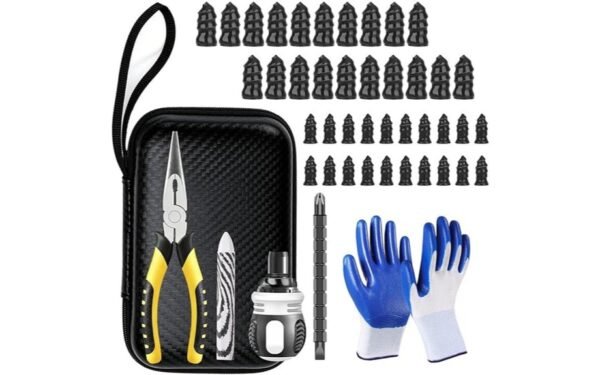
Tire Screw Plug Repair Kit Review
Compact tire screw plug repair kit review reveals fast roadside fixes, but which punctures are truly safe enough to trust?
Read More
Wall Mount Spare Tire Carrier Mount Review
I review the wall mount spare tire carrier’s fit, strength, and stability—see what could make or break your trailer setup.
Read More
Socpuro Tire Repair Patch Tool Kit Review
Great for quick DIY puncture fixes, the Socpuro Tire Repair Patch Tool Kit has limits and surprises you’ll want to know before buying.
Read More