
TPMS Sensors: 6 Steps to Diagnose Warning Lights

Last updated: July 7, 2026 · Reviewed for accuracy by: Editorial Team
A TPMS warning light means one or more tires may be under-inflated, or the monitoring system has a sensor, signal, or relearn fault. Pull over if the vehicle feels unstable, then check every tire when cold with a calibrated gauge. Set each tire to the pressure listed on the driver’s door placard or owner’s manual, not the tire sidewall. If the light stays on after the pressure is correct, scan the TPMS system and inspect the valve stems, sensor IDs, batteries, and relearn status.
Quick Answer
When your TPMS light comes on, check all four tires and the spare if it has a sensor. Inflate or deflate each tire to the cold pressure listed on the driver’s door placard or owner’s manual. If the warning stays on, scan the TPMS system, inspect the valve stems, and replace any failed sensor before completing the relearn procedure.
Key Takeaways
- Check tire pressure with a calibrated gauge before you assume a TPMS sensor failed.
- Use the vehicle’s door placard or owner’s manual for the correct PSI, not the tire sidewall.
- A flashing TPMS light followed by a steady light often points to a system malfunction.
- Scan each TPMS sensor to read its ID, battery status, signal strength, and fault codes.
- Replace damaged or non-transmitting sensors, then complete the proper relearn process.
- Do not ignore a TPMS warning because low tire pressure can affect handling, braking, and tire wear.
How TPMS Sensors Work and Why They Matter to Safety
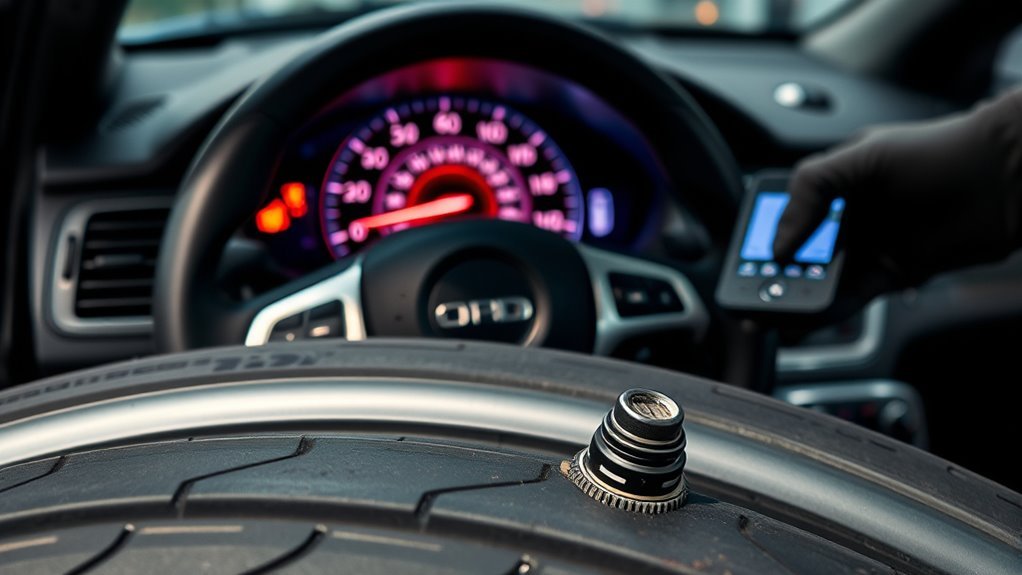
Tire pressure changes with load, temperature, and small air leaks. Your vehicle uses a tire pressure monitoring system to warn you before a tire becomes unsafe.
Under 49 CFR 571.138, Standard No. 138, a compliant TPMS must warn drivers of significant tire under-inflation and related safety problems. The system also has rules for malfunction warnings when it cannot monitor pressure correctly.
Most direct TPMS sensors mount on the valve stem or inside the wheel. They measure air pressure and send the reading to the vehicle’s control module by radio signal.
The system compares those readings with the vehicle maker’s threshold. If a tire drops too low, the dashboard warning light alerts you so you can act before the tire overheats or loses grip.
Working sensors help protect steering control, braking performance, tire life, and fuel economy. Treat TPMS checks as routine maintenance, not just emergency repairs.
Direct vs. Indirect TPMS: Why the Diagnosis Changes
Before you replace parts, confirm which TPMS type your vehicle uses. A direct system uses pressure sensors in the wheels. An indirect system estimates tire pressure from wheel-speed data and usually needs a reset after you correct tire pressure or rotate tires.
| TPMS Type | How It Detects a Problem | Common Fix Path |
|---|---|---|
| Direct TPMS | Wheel sensors transmit pressure, ID, and status data. | Check PSI, scan sensor IDs, inspect valve hardware, then relearn if needed. |
| Indirect TPMS | ABS or wheel-speed data flags a tire that rolls differently. | Correct tire pressure, confirm tire size match, then reset or drive through the learning cycle. |
This difference matters because an indirect TPMS may not have a replaceable wheel sensor. A direct TPMS fault, by contrast, can come from a dead sensor battery, damaged valve stem, wrong sensor frequency, or missing sensor ID.
Quick Action: What to Do When the TPMS Light Comes On
When the TPMS warning light appears, act in a clear order. You need to confirm whether the issue comes from low tire pressure, a leaking tire, or a system fault.
- Pull over safely if the tire feels flat, the car pulls, or handling feels unstable.
- Check each tire with a calibrated gauge once the tires are cool.
- Compare each reading with the PSI listed on the driver’s door placard or owner’s manual.
- Inflate or deflate each tire to the correct pressure.
- Inspect each tire, valve stem, and visible sensor area for damage, corrosion, or leaks.
- Drive for a short distance if your vehicle resets automatically after pressure correction.
Warning: Do not keep driving on a tire that looks flat, feels unstable, or loses pressure again after inflation.
Cold weather can lower tire pressure enough to trigger the warning light. Recheck the pressure after major temperature changes, especially before long trips.
If the tires match the recommended PSI and the light stays on, scan the system. The problem may come from a weak sensor battery, a failed sensor, incompatible wheels, or an incomplete relearn.
TPMS Light Patterns: What Steady, Flashing, and Returning Warnings Mean
The light pattern gives you a useful first clue. Confirm your exact vehicle behavior in the owner’s manual because dashboard logic can vary by model.
| Light Behavior | Likely Meaning | Best Next Step |
|---|---|---|
| Steady TPMS light | One or more tires may be under-inflated. | Check cold PSI, inflate to placard pressure, and inspect for leaks. |
| Flashes, then stays on | The TPMS may have a malfunction. | Scan the system for sensor, ID, signal, or module faults. |
| Returns after inflation | A tire may be leaking, or the relearn did not complete. | Recheck PSI the next day, inspect valve stems, then perform the correct relearn. |
| No reading for one wheel | A sensor may be dead, missing, blocked, or unregistered. | Trigger each sensor with a TPMS scan tool and compare sensor IDs. |
What You’ll Need Before Diagnosing TPMS Sensors
Gather the right tools before you start. Good tools help you separate a true tire problem from a sensor or control module fault.
- Calibrated tire pressure gauge
- Air compressor or tire inflator
- TPMS diagnostic scanner
- Basic hand tools for valve stem and wheel service
- Vehicle owner’s manual or service information
- Replacement sensors that match your vehicle, if needed
A basic pressure check is quick. Sensor replacement, programming, and relearn can take longer if the shop needs to dismount tires or register each sensor ID.
Diagnose a Faulty TPMS Sensor: Tools and 6 Steps
Use a TPMS diagnostic scanner, such as a compatible shop-grade tool, to trigger sensors and read system data. Pair the scan with a manual pressure check so you don’t mistake low pressure for sensor failure.
Start with the right tools: a TPMS scanner, a calibrated gauge, and basic hand tools help you find the fault without guessing.
- Record the symptoms, including a steady light, flashing light, or wrong dashboard PSI reading.
- Confirm each tire’s pressure with your calibrated gauge to rule out low air or leaks.
- Scan each sensor and record its ID, battery status, frequency, and signal response.
- Trigger each sensor manually to confirm that it transmits a signal.
- Inspect each valve stem and sensor area for corrosion, impact damage, leaks, or loose fittings.
- Install the correct replacement sensor if needed, then complete the vehicle maker’s relearn procedure.
This process helps you avoid replacing good parts. It also shows whether the fault comes from one sensor, several sensors, or the receiver system.
Read TPMS Trouble Codes: What Each Code Means
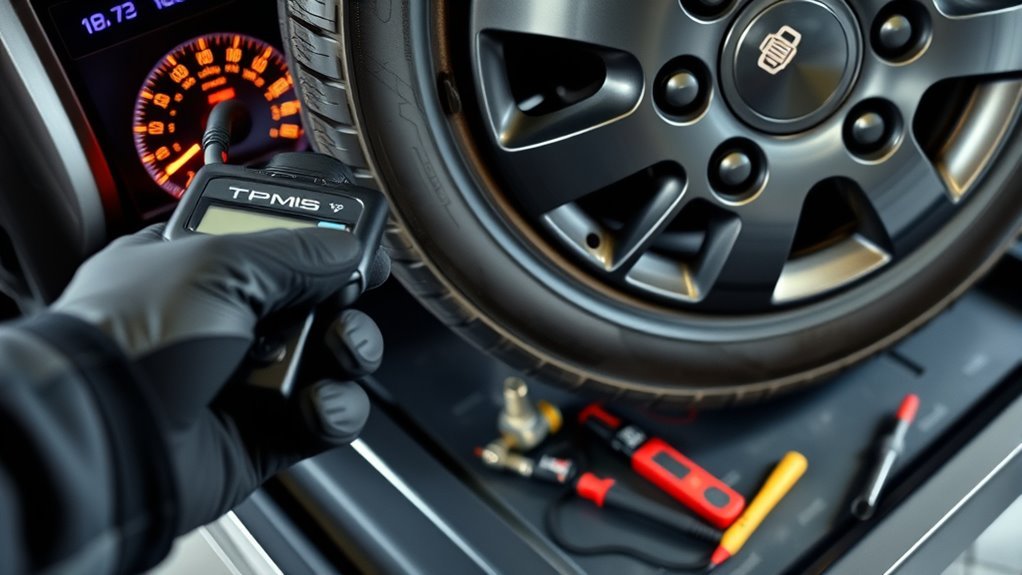
After you verify tire pressure and inspect the hardware, read the TPMS trouble codes. These codes help identify the part of the system that needs attention.
A scanner can pull electronic control unit (ECU) codes that point to a sensor, signal, battery, relearn, or module issue. Code meanings vary by make, model, year, and scanner database.
Check the vehicle service manual before you replace parts based on one code. A pressure mismatch, wheel rotation, aftermarket wheel, or missing relearn can sometimes mimic a failed sensor.
Log each code, the affected wheel position, and the related pressure reading. Then compare those notes with the scan results and visual inspection.
Common TPMS Failures: Causes and How to Spot Them
A TPMS warning light that stays on after you correct tire pressure often points to a sensor or system fault. Odd readings, such as the same PSI on every wheel, can also suggest a bad signal or relearn issue.
Common TPMS failure signs include:
- A warning light that stays on after pressure correction
- A flashing TPMS light at startup
- One tire showing no reading on the dashboard
- Identical or erratic PSI readings across multiple wheels
- A sensor that will not trigger during a scan
- Corrosion, cracks, or leaks around a valve stem
Direct TPMS sensors are usually sealed battery-powered units, so a dead battery often means replacing the full sensor. Road impacts, corrosion, salt, moisture, and improper tire service can also shorten sensor life.
Cold weather can expose weak batteries or lower tire pressure enough to trigger alerts. Check pressure first, then scan the system if the warning remains.
TPMS Relearn and Reset: Step-by-Step Procedures
A TPMS reset clears or updates sensor information after tire service, wheel rotation, or sensor replacement. Each vehicle maker uses its own method, so follow the owner’s manual or service guide.
- Set all tires to the recommended cold PSI.
- Turn the ignition to the required position listed in the owner’s manual.
- Start the relearn mode using the reset button, dashboard menu, or scan tool.
- Trigger each sensor in the required wheel order if your vehicle needs a manual sequence.
- Confirm that the horn, dash message, or scan tool shows each sensor registered.
- Drive the vehicle if the system requires a road test to complete the reset.
Note: Some vehicles relearn sensor IDs automatically, while others need a scan tool or a set wheel sequence.
Reset the ECU after installing new sensors or swapping wheels if your vehicle requires it. If the light stays on after a correct relearn, scan each sensor again for battery, frequency, and communication faults.
Repair or Replace TPMS Sensors: Costs, Timing, and When to Swap
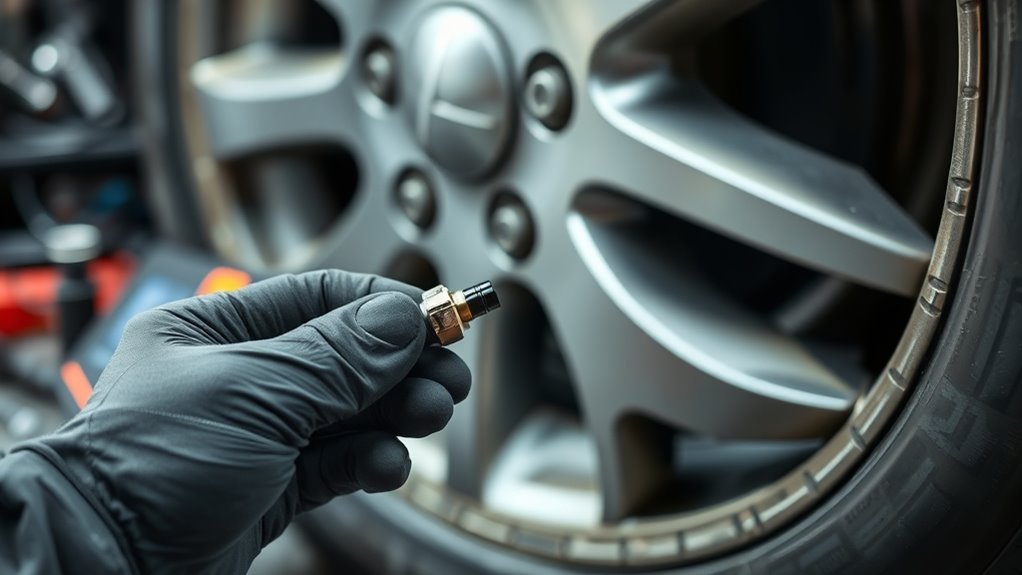
When you decide whether to repair or replace a TPMS sensor, compare short-term cost with long-term reliability. A quick valve service may fix a leak, but a dead battery or failed transmitter usually needs sensor replacement.
Ask for the full installed price before service. TPMS costs vary by vehicle, sensor type, programming method, wheel design, and local labor rate.
Replacement Timing Guidelines
Plan sensor replacement when a scan shows a weak battery, no signal, cracked housing, severe corrosion, or repeated communication faults. Also replace damaged valve hardware if it cannot seal safely.
Coordinate sensor replacement with tire installation when possible. The shop already has access to the wheel, which can reduce labor and downtime.
Keep a record of sensor installation dates, scan results, and relearn events. Those notes help you spot repeat faults and plan future service.
Cost Comparison Options
Repair may make sense when the valve core, seal, or nut leaks but the sensor still works. Replacement makes more sense when the battery dies, the housing cracks, or the sensor stops transmitting.
| Option | Best For | Notes |
|---|---|---|
| Replace | Dead battery, damage, or no signal | Restores full function but costs more upfront |
| Repair service kit | Leaking seals or valve hardware | Lower cost but won’t fix failed electronics |
| Replace during tire service | Aging or questionable sensors | Can reduce labor during planned tire work |
| Delay replacement | Confirmed working sensors with no faults | Monitor scan results and pressure readings closely |
Choose replacement when reliability matters more than a temporary fix. Use repair kits only when the sensor electronics still test properly.
Preventive Maintenance to Extend TPMS Sensor Life
You can extend TPMS sensor life by keeping tire pressure within the vehicle maker’s recommended range. Proper pressure reduces heat, tire wear, and stress on the system.
Check tire pressure monthly, before long trips, and after major temperature swings. Use the same calibrated gauge each time when possible.
During tire rotations or replacements, ask the shop to inspect the sensor seating, valve core, seals, and nut torque. Salt, grime, and moisture can corrode valve hardware and cause leaks.
Avoid potholes and curb impacts when you can. Physical shock can damage the sensor housing or loosen the valve assembly.
Pro tip: Replace service kits during tire changes if the shop removes a TPMS valve stem from the wheel.
When to Seek Professional Help
Get professional service if the TPMS light flashes, stays on after pressure correction, or returns soon after a reset. A shop can scan sensor IDs, test signal strength, and confirm whether the vehicle accepts the relearn.
You should also get help if a tire keeps losing air, a valve stem shows corrosion, or the dashboard shows no reading for one wheel. These problems can affect safe handling and tire life.
Professional service matters after sensor replacement because many vehicles need a precise relearn sequence. Skipping that step can leave the warning light on even with good sensors.
Frequently Asked Questions
What does a TPMS warning light mean?
A TPMS warning light means one or more tires may be significantly under-inflated, or the monitoring system has a sensor, signal, relearn, or module fault. Check tire pressure first, then scan the system if the light stays on.
What should you do first when the TPMS light comes on?
Pull over if the vehicle feels unstable. Check each tire when cold with a calibrated gauge, then inflate or deflate the tires to the vehicle placard or owner’s manual pressure.
Why is my TPMS light flashing instead of staying solid?
On many vehicles, a flashing TPMS light followed by a steady light points to a TPMS malfunction. The cause may be a failed sensor, weak battery, missing sensor ID, incompatible wheel, or communication fault.
Why is my TPMS light on but my tires look fine?
A tire can be low before it looks visibly flat. Use a gauge to confirm pressure. If every tire matches the placard and the light remains on, scan the TPMS sensors and check the relearn status.
Can you drive with the TPMS light on?
You can drive cautiously for a short distance if all tires look normal and your gauge confirms correct pressure. Do not keep driving if a tire looks low, the car pulls, handling changes, or the warning returns after inflation.
Do new TPMS sensors need programming?
Many replacement TPMS sensors need programming, relearning, or both before the vehicle can recognize them. Follow the vehicle service information and the sensor manufacturer’s instructions.
How often should you replace TPMS sensors?
Replace TPMS sensors when a scan shows a dead or weak battery, no signal, damaged housing, corrosion, or repeated communication faults. Exact service life varies by sensor design and vehicle use.
Do auto parts stores fix TPMS sensors?
Many auto parts stores sell TPMS sensors, service kits, and scan tools, but tire mounting, programming, and relearn work often requires a tire shop or repair shop. Confirm services with the specific store before you go.
Sources Used for Fact-Checking
Conclusion
A TPMS warning light deserves prompt attention because it can point to low tire pressure or a system fault. Start with a manual pressure check, correct each tire to the recommended cold PSI, and inspect for leaks or damage.
If the light stays on, scan the sensors and complete the correct relearn process after any repair. Careful checks help you avoid false warnings, protect your tires, and keep every drive safer.

Related Articles

How to Use a Tire Spoon: Pro Technique for Mounting Tires
Careful technique makes tire mounting easier, but the real pro trick for using a tire spoon starts with one overlooked step.
Read More
How to Unmount a Tire: Tools, Steps & Pro Tips for Clean Removal
Start unmounting a tire with the right tools and pro tricks, then discover the cleanest way to avoid costly damage.
Read More
How to Tie a Tire Swing: Safe Knot & Hanging Guide
D**iscover the safest knot, rope, and branch choices for a tire swing, plus expert tips that could prevent a dangerous mistake.
Read More