
How Rim Width Affects Tire Size on the Honda Accord
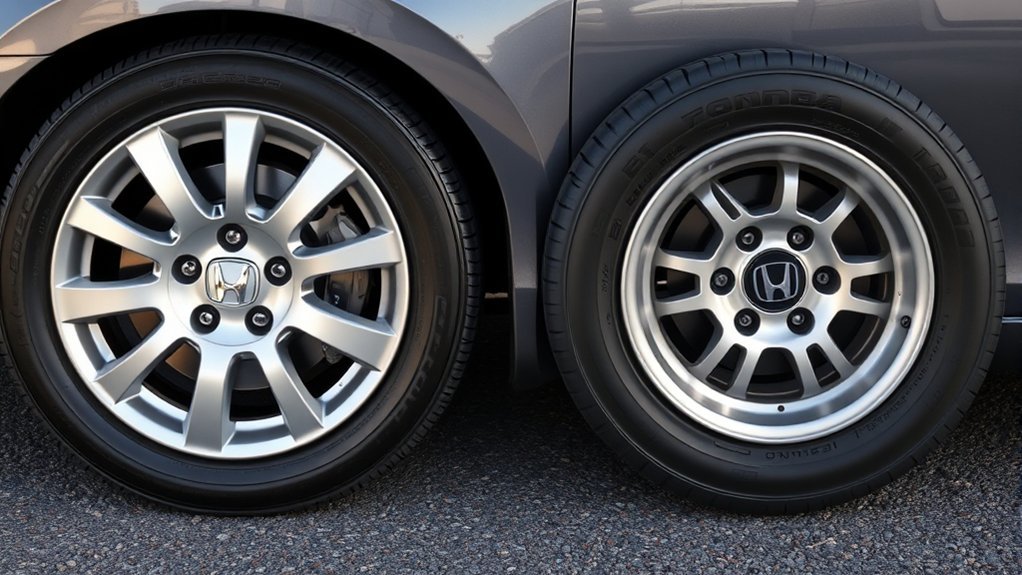
Rim width directly affects tire size compatibility on a Honda Accord because it changes how the tire bead seats, how much sidewall support the tire has, and how the tread sits on the road. On many 10th-generation Accord Sport and Touring 19-inch setups, the factory tire size is 235/40R19, and common OEM 19-inch alloy wheels are listed as 19×8.5J. That makes 235/40R19 the safest baseline, while sizes such as 245/40R19 or some 255-width options require extra checks for rim approval, load rating, offset, and fender clearance.
Quick Answer
Rim width affects Honda Accord tire size by controlling which tire widths can safely seat on the wheel. An 8.5-inch rim commonly works well with the OEM 235/40R19 size, and a mild 245/40R19 upsize may work when the tire maker approves the rim width. Wider 255 tires need careful clearance, offset, load-rating, and pressure checks.
Key Takeaways
- Start with the door placard. Confirm your Accord’s factory tire size, load rating, and cold tire pressure before shopping.
- Rim width is only one fitment factor. You also need the tire manufacturer’s approved rim-width range, wheel offset, overall diameter, and suspension clearance.
- 235/40R19 is the safe baseline for many 2020 Accord Sport, Sport 2.0T, and Touring 2.0T 19-inch trims.
- 245/40R19 is a common mild upsize, but it slightly increases diameter and can change steering feel.
- Do not use one universal PSI number. Use the cold tire pressure listed on the driver-door tire placard or owner’s manual.
At a Glance
| Time Required | 10–20 minutes to check your tire placard, wheel size, and candidate tire specs |
| Difficulty | Beginner for OEM replacement; intermediate for upsizing |
| Tools Needed | Driver-door tire placard, tire sidewall specs, wheel width/offset information, tire pressure gauge, and a fitment calculator |
| Cost | Free to verify fitment; tire and installation costs vary by brand, size, and alignment needs |
Why Rim Width Matters for Tire Selection
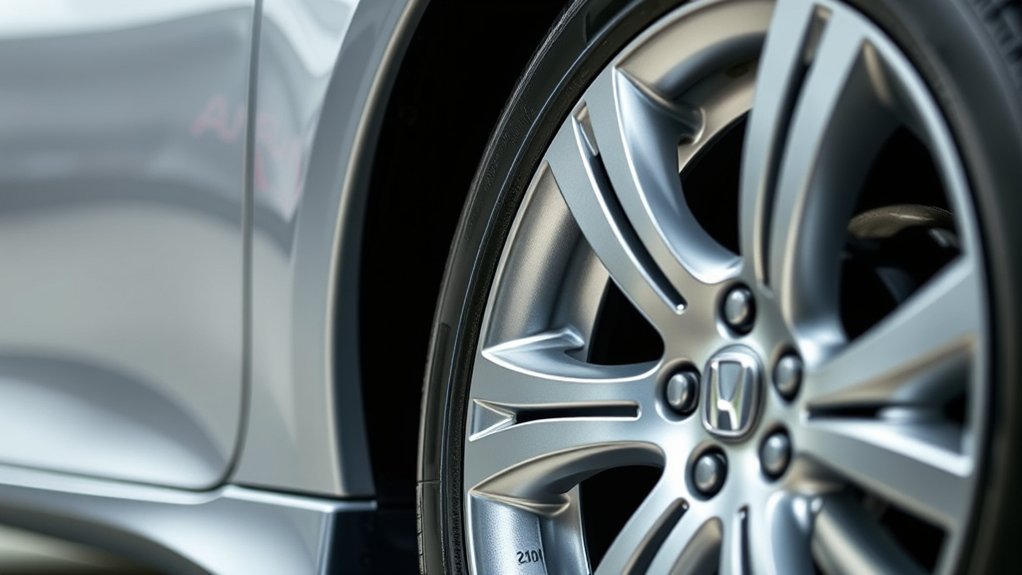
Rim width matters because the tire’s beads must sit securely on the wheel, and the sidewalls need enough support to keep the tread shape stable. If the rim is too narrow for the tire, the sidewall can bulge and the tread may feel less precise. If the rim is too wide, the sidewall can stretch, increasing the risk of bead-seat and impact-damage problems.
For many Honda Accord owners with 19-inch Sport or Touring wheels, the practical starting point is the factory 235/40R19 size. Honda lists 235/40R19 all-season tires for 2020 Accord Sport, Sport 2.0T, and Touring 2.0T trims, while other trims use different wheel and tire packages. That means your exact trim, wheel, and tire placard matter more than a generic internet fitment chart.
Note: A tire size that fits one Accord may not fit another if the wheel width, offset, suspension height, trim, or brake package is different. Always verify your own vehicle before buying tires.
Wider tires can improve dry grip when the tire compound, tread design, and alignment are also right. But width alone does not guarantee better performance. A poorly matched wider tire can increase tramlining, rub the fender liner, reduce ride comfort, or wear unevenly.
[Products Worth Considering]
The Everlit Road Guardian emergency kit is designed for roadside breakdowns, combining essential safety gear and roadside tools in one compact bag. It includes a digital 12V...
How Rim Width Influences Tire Size Compatibility
Rim width influences tire size compatibility by changing how the tire’s sidewall sits between the bead and tread. A slightly wider tire on the correct rim can place more rubber on the road, but the tire still has to be approved for that wheel width by the tire manufacturer.
For example, a 235/40R19 tire means the tire is about 235 mm wide, the sidewall height is 40% of that width, and the tire fits a 19-inch wheel. Michelin explains that tire markings also include important service details such as load rating and speed rating. Those ratings should meet or exceed the vehicle manufacturer’s requirements.
Tire Fitment Guidelines
Use this sequence before choosing a wider tire for your Honda Accord:
- Confirm the factory size. Check the driver-door tire placard and current tire sidewall.
- Confirm wheel width. Look for wheel markings, OEM parts information, or a trusted wheel spec source.
- Check the approved rim-width range. The exact tire model should list the wheel widths it is designed to fit.
- Compare overall diameter. Keep the new tire close to the OEM diameter to limit speedometer and clearance issues.
- Match load and speed ratings. Do not choose a lower load index or speed rating than Honda requires for your vehicle.
- Inspect clearance. Check inside shoulder, strut clearance, fender liner clearance, and steering-lock clearance.
Warning: Do not choose a tire only because the width “fits” the rim. A safe fit also needs the right load rating, speed rating, tire pressure, offset, diameter, and clearance under compression and full steering lock.
Impact on Handling Performance
A wider tire can change handling in three main ways: it can increase the contact patch, stiffen the sidewall feel, and change steering response. On a Honda Accord, moving from 235 to 245 width can feel more planted in dry cornering, but it may also make the steering heavier or more sensitive to grooves in the road.
- Wider tires may improve dry grip when the tire compound and alignment are appropriate.
- Wider tires can increase tramlining on uneven pavement.
- Lower-profile tires usually sharpen steering but reduce bump absorption.
- Incorrect pressure can reduce grip, increase wear, and damage the tire.
- Alignment becomes more important after upsizing because wider tires can show uneven wear faster.
The best handling setup is not always the widest tire. For daily driving, a high-quality tire in the factory size often performs better than a cheap, wider tire.
How Tire Width Affects Handling
Tire width affects handling by changing the size and shape of the contact patch. A mild width increase, such as 235 mm to 245 mm, can improve cornering confidence and braking feel on dry pavement. It can also add a little sidewall protection because the tire may sit slightly wider than the rim lip.
The trade-off is that wider tires can be less forgiving. They may follow road grooves, make steering feel heavier, add rolling resistance, and reduce wet-weather confidence if the tread pattern cannot evacuate water well. That is why the tire’s design matters as much as the size. A premium 235/40R19 tire may outperform a lower-quality 245 or 255 tire in rain, braking, and comfort.
For most Accord owners, 235/40R19 remains the balanced choice. A 245/40R19 tire is a reasonable mild upsize only when the exact tire is approved for your rim and there is enough clearance. A 255-width setup is more aggressive and should be checked by a tire professional before installation.
Understanding Aspect Ratios and Sidewall Heights
The aspect ratio is the sidewall height as a percentage of the tire width. In 235/40R19, the “40” means the sidewall height is 40% of 235 mm. In 245/40R19, the sidewall is 40% of 245 mm, so the tire becomes both wider and slightly taller.
That small height change affects comfort, speedometer accuracy, gearing feel, and clearance. A taller tire can cushion bumps better but may rub more easily. A shorter tire can sharpen response but may ride harsher and offer less wheel protection.
- Higher aspect ratio: more sidewall, more cushioning, usually more diameter.
- Lower aspect ratio: less sidewall, sharper feel, more risk of wheel damage from potholes.
- Same aspect ratio with wider width: the tire usually becomes taller because the sidewall percentage is based on a larger width.
- 20-inch plus-sizing: usually needs a lower aspect ratio to keep the overall diameter close to OEM.
Pro Tip: When comparing tire sizes, look at overall diameter, not just width. A 245/40R19 is only a mild change from 235/40R19, but a 245/40R20 is much taller and is usually the wrong direction for a simple Accord tire upsize.
Benefits of Wider Tires for Grip and Stability
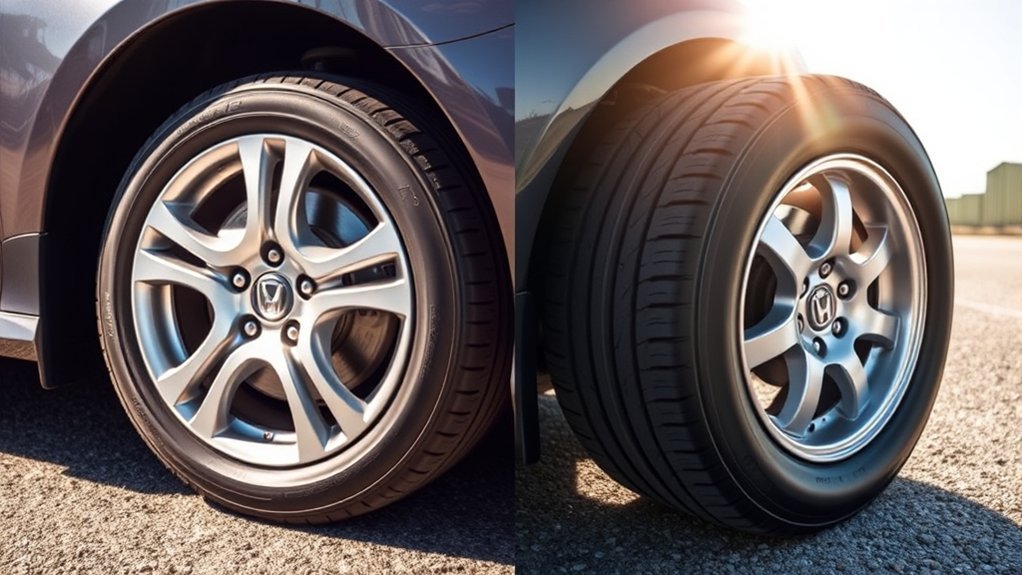
Wider tires can help grip and stability when they are properly matched to the wheel and vehicle. More tread width can help during acceleration, cornering, and braking, especially with a performance all-season or summer tire. This is why some Accord owners consider 245-width tires on 19-inch wheels.
However, the benefit is not automatic. Tire compound, tread depth, tread design, inflation pressure, and alignment all affect traction. A wider tire with poor wet traction can be worse in rain than the factory size with a better tread pattern.
Enhanced Cornering Performance
A wider tire can improve cornering when it keeps the tread flatter during lateral load. On an Accord with an 8.5-inch wheel, a mild upsize can add a more planted feel, especially during quick lane changes or sweeping turns.
- More width can increase the available contact patch.
- Correct rim support helps the tread stay stable.
- Performance tires can improve steering feedback.
- Proper alignment helps prevent shoulder wear.
- Too much width can rub or make the car track road grooves.
Improved Braking Efficiency
In dry conditions, a wider and higher-grip tire may shorten braking distance compared with a narrower or lower-grip tire. In wet conditions, tread design and compound are just as important as width. If the tire cannot move water away from the contact patch, extra width can increase hydroplaning risk.
For a daily-driven Accord, choose a tire category that matches your use: grand touring all-season for comfort, performance all-season for sharper handling, summer tire for warm-weather grip, or winter tire for snow and ice. Do not rely on width alone.
Top Tire Sizes Based on Rim Width for the Honda Accord

The best tire size depends on your exact Accord, but the chart below uses 235/40R19 as the baseline because it is the factory 19-inch size for several 2020 Accord Sport and Touring trims. Diameter changes are approximate and should be confirmed with the exact tire model before purchase.
| Tire Size | Approx. Diameter Change vs. 235/40R19 | Fitment Notes |
| 235/40R19 | 0% | Best baseline for many 19-inch Accord Sport/Touring setups; easiest size for OEM-like ride and speedometer accuracy. |
| 245/40R19 | About +1.2% | Common mild upsize. May add grip and rim protection, but confirm tire maker rim-width approval and check clearance. |
| 255/35R19 | About -1.4% | Aggressive width. Can fit some setups but needs careful offset, fender, suspension, and load-rating checks. |
| 235/35R20 | About +0.3% | A closer 20-inch plus-size option, but it requires 20-inch wheels and has less sidewall protection. |
| 245/35R20 | About +1.3% | A popular 20-inch performance look. Confirm load rating because low-profile tires can vary by model. |
| 255/35R20 | About +2.4% | Near the upper end of the usual diameter window and wider than stock. Check rubbing before committing. |
Warning: Avoid treating 245/40R20 as a simple Accord upgrade from 235/40R19. It is roughly 5% taller, which can affect speedometer accuracy, clearance, gearing feel, and driver-assistance system behavior.
Owner Experiences With Tire Size Choices
Owner experiences can be helpful, but they are not a substitute for measuring your car. Some Honda Accord owners report good results with 245-width tires on factory-style 19-inch wheels because the tire looks fuller and adds a little curb protection. Others prefer the sharper, lighter feel of the original 235/40R19 size.
The difference between 235/40R19 and 245/40R19 is small but noticeable. The 245/40R19 size is about 1.2% taller, so when the speedometer shows 60 mph, the car is traveling about 60.7 mph. That is minor for many drivers, but it is still worth knowing before buying.
Reports about 255-width tires vary more because fitment depends heavily on wheel offset, tire model, alignment, ride height, and whether the car is loaded with passengers. If you want 255 tires, have a tire shop check inner and outer clearance before installation.
Tips for Selecting and Maintaining Tires
Choosing the right tire size is only the first step. Maintenance determines whether the tire performs safely over time. NHTSA recommends checking tire pressure at least monthly when the tires are cold, using the tire placard or owner’s manual as the pressure source, not the maximum pressure printed on the tire sidewall.
- Check cold pressure monthly. Use the pressure listed on the driver-door placard or owner’s manual.
- Do not rely only on TPMS. TPMS warns when pressure is significantly low; it does not replace regular gauge checks.
- Recheck after upsizing. Ask the tire installer whether the new tire needs a different load-inflation approach.
- Inspect rubbing marks. After installation, check fender liners and inner suspension areas after a few days of driving.
- Rotate on schedule. Follow the owner’s manual; NHTSA notes that many vehicles use 5,000–8,000-mile rotation intervals when recommended.
- Replace worn tires. Tires are not safe when tread is worn to 2/32 inch, and wet traction can decline before that point.
- Get an alignment. Wider tires can reveal camber or toe problems faster through uneven shoulder wear.
If you change tire size, ask the installer to confirm the load index, speed rating, directional/asymmetric mounting, balance, valve stems, and TPMS reset or calibration process for your Accord.
Frequently Asked Questions
Does rim width affect tire size?
Yes. Rim width affects which tire widths can safely mount on the wheel and how the sidewall supports the tread. A tire that is too wide or too narrow for the rim can change handling, wear, bead seating, and ride comfort. Always check the tire manufacturer’s approved rim-width range for the exact tire model.
What tire size fits an 8.5-inch Honda Accord rim?
For many Accord 19×8.5J setups, 235/40R19 is the factory-style baseline and 245/40R19 is a common mild upsize. Some 255-width tires may work, but they need more clearance and offset checks. The final answer depends on the exact tire model’s approved rim-width range, load rating, and your vehicle’s clearance.
Can I put 245 tires on stock Honda Accord Sport or Touring wheels?
Often, yes, 245/40R19 can work as a mild upsize on many 19-inch Accord Sport or Touring wheels, but it is not automatic. Confirm your wheel width, tire model rim-width approval, load index, speed rating, and fender clearance before buying. Expect a slightly taller diameter and a small speedometer change.
Is a 255 tire too wide for a Honda Accord?
A 255 tire is aggressive for many Accord setups. It may fit with the right wheel width, offset, alignment, and tire model, but it has a higher chance of rubbing than 235 or 245. It is best for owners who are willing to measure clearance carefully or work with a fitment specialist.
What’s better, 33 or 35 tires?
For a Honda Accord, 33-inch and 35-inch tires are not appropriate tire sizes; those terms usually apply to trucks and off-road vehicles. If you mean a 35-series sidewall versus a 40-series sidewall, the better choice depends on wheel diameter and overall tire diameter. A 35-series tire is common on 20-inch plus-size setups, while a 40-series tire is common on the factory 19-inch 235/40R19 setup.
What PSI should I use after changing tire size?
Start with the cold tire pressure listed on the driver-door tire placard or owner’s manual. Do not use the tire sidewall maximum pressure as your operating pressure. If you change tire size or load rating, ask the tire installer to confirm the correct load-inflation approach for the replacement tire.
Will wider tires affect my speedometer?
They can. Speedometer change depends on overall tire diameter, not just width. For example, 245/40R19 is about 1.2% taller than 235/40R19, so the actual speed is about 60.7 mph when the speedometer shows 60 mph. Larger diameter changes can cause bigger accuracy and clearance issues.
Conclusion
Rim width affects Honda Accord tire size because it controls how the tire sits on the wheel and how the sidewall supports the tread. For many 19-inch Accord Sport and Touring setups, 235/40R19 is the safest factory-style choice, while 245/40R19 is the most practical mild upsize when the tire is approved for the rim and the car has enough clearance.
If you want a wider or larger-diameter setup, do not guess. Check the tire placard, wheel width, offset, load rating, speed rating, overall diameter, and cold tire pressure requirements. The right tire size is not just about appearance; it is about keeping the Accord safe, predictable, and comfortable on real roads.
Sources
- Honda Info Center — 2020 Accord Wheels and Tires — confirms 2020 Accord trim tire sizes including 235/40R19 on Sport and Touring 19-inch trims.
- Honda OEM Accord wheel listings — supports OEM 19×8.5J wheel context for relevant Accord applications.
- NHTSA TireWise — supports tire pressure, tread depth, tire size, rotation, TPMS, and tire safety guidance.
- Michelin Tire Markings Explained — supports tire width, aspect ratio, wheel diameter, load rating, speed rating, and sidewall-marking explanations.
- Michelin Tire Pressure Guide — supports cold tire pressure checks and using the vehicle placard or owner’s manual rather than sidewall maximum pressure.

Related Articles
How Tall Is a 305 70 R17 Tire? Exact Height, Width & Dimensions
Curious how tall a 305 70 R17 tire really is—and whether it fits your truck?
Read More
Can-Am Defender Tire Size Guide: Stock Specs & Upgrade Options
Just how big can you go on a Can-Am Defender before mods become necessary?
Read More
How Tall Is a 275 65 20 Tire? Exact Height, Width & Dimensions
Check the exact height, width, and hidden fitment effects of a 275/65R20 tire before you buy or upgrade.
Read More