
Honda Accord PCD and Bolt Pattern Specs Explained
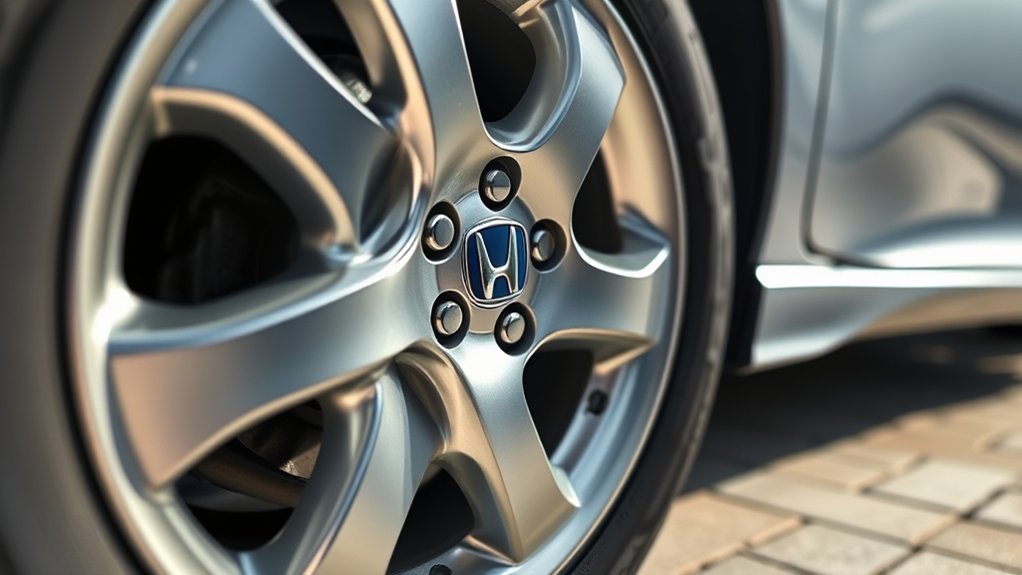
If you are upgrading wheels on a Honda Accord, do not choose by style or bolt pattern alone. The right fit depends on the Accord’s year, trim, engine, wheel width, offset, center bore, brake clearance, tire size, load rating, lug hardware, and TPMS setup. The safest approach is to match the factory specs as closely as possible, then verify the wheel on the car before driving.
Quick Answer
Most newer U.S.-market Honda Accord models use a 5×114.3 bolt pattern with a 64.1 mm center bore, but older Accords are not all the same. Many 1990–2002 4-cylinder Accords use 4×114.3, while many 2003-newer Accords use 5×114.3. Always verify by year, trim, engine, and existing wheel before buying.
Key Takeaways
- The common modern Accord bolt pattern is 5×114.3, but 1990–2002 4-cylinder models commonly use 4×114.3.
- Most 1990-newer Accord wheels use a 64.1 mm center bore, but the safest rule is to verify your exact year and trim.
- Offset is not one-size-fits-all. Many Accord setups fall near +45 mm to +55 mm, but wheel width changes how that offset fits.
- Confirm brake-caliper clearance, tire diameter, load rating, lug nut seat type, and TPMS compatibility before driving.
- For current Accord models, Honda lists 17×7.5J and 19×8.5J wheel options depending on trim.
At a Glance
| Common Modern Bolt Pattern | 5×114.3, common on many 2003-newer U.S.-market Accords |
| Older Accord Exception | Many 1990–2002 4-cylinder Accords use 4×114.3; some V6 trims use 5×114.3 |
| Center Bore | 64.1 mm on many 1990-newer Accord fitments; use hub-centric rings if aftermarket wheels have a larger bore |
| Typical Lug Thread | M12 x 1.5 on many Accord models; confirm before ordering lug nuts |
| Offset Range | Many factory-style setups land around +45 mm to +55 mm, but the right offset depends on wheel width and trim |
| Installation Check | Test fit, torque lug nuts to spec, check brake clearance, recalibrate TPMS when required, and inspect for rubbing |
How to Choose the Right Wheels for Your Honda Accord
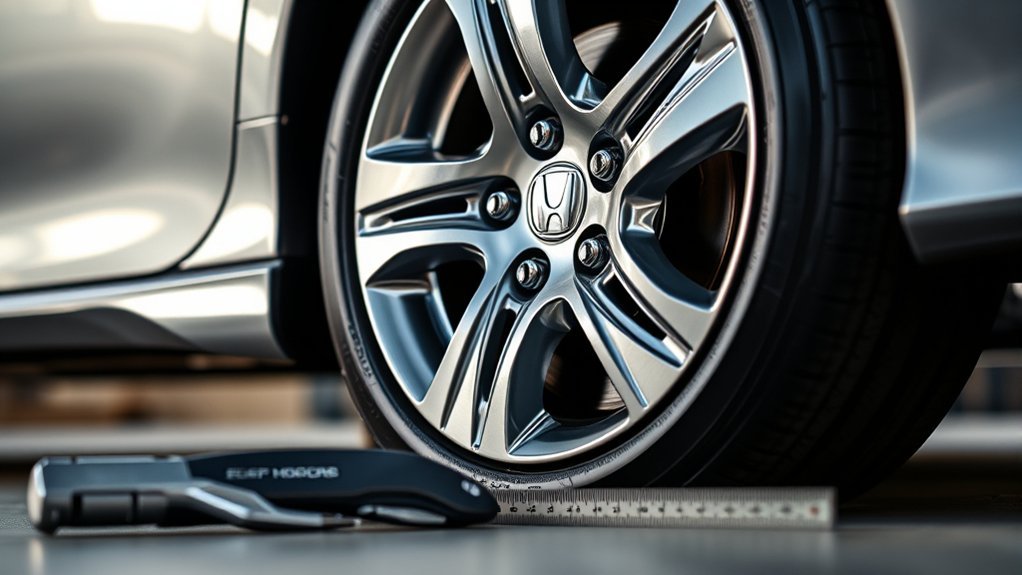
Start with the exact vehicle: year, market, body style, trim, engine, and current wheel size. A 2001 Accord LX 4-cylinder and a 2025 Accord Touring Hybrid do not use the same wheel setup, even though both are Accords.
Before buying wheels, confirm these specs:
- Bolt pattern / PCD: The number of lugs and the diameter of the circle they form, such as 4×114.3 or 5×114.3.
- Center bore: The hole in the center of the wheel that fits over the hub. Many Accords use 64.1 mm.
- Offset: How far the wheel mounting face sits from the wheel centerline. Too much change can cause rubbing, poor steering feel, or bearing stress.
- Wheel width: A wider wheel changes inner suspension clearance and outer fender clearance.
- Tire size: The tire should keep the overall diameter close to stock so the speedometer, ABS, traction control, and fender clearance stay within a safe range.
- Load rating: The wheel and tire must be rated to carry the vehicle safely.
- Lug hardware: Thread pitch, lug seat shape, and shank length must match the wheel and hub.
- Brake clearance: The spoke shape and barrel must clear the brake calipers, especially on Sport, Touring, V6, hybrid, and upgraded-brake setups.
- TPMS: Replacement wheels must work with your Accord’s tire-pressure monitoring system or calibration process.
Warning: A wheel can have the correct bolt pattern and still be unsafe. Wrong offset, weak load rating, poor brake clearance, incorrect lug seat, or missing hub support can cause vibration, rubbing, loose lug nuts, or wheel damage.
[Products Worth Considering]

The AstroAI L7 Air Tire Inflator refills car tires quickly with up to 150PSI max pressure and a fast 1-minute inflation claim. It includes 5 preset modes for car, motorcycle,...
Understanding the Honda Accord Bolt Pattern and PCD
The bolt pattern, also called PCD or Pitch Circle Diameter, tells you how many wheel studs the car has and how far apart they are. A 5×114.3 wheel has five lug holes arranged on a 114.3 mm circle. A 4×114.3 wheel has four lug holes on the same diameter circle, so it will not fit a 5-lug hub.
For many newer U.S.-market Honda Accord models, the common bolt pattern is 5×114.3. However, the original article’s simple “1998 onward” rule is not safe. Many 1990–2002 4-cylinder Accords use 4×114.3, while many 1998–2002 V6 trims and most 2003-newer U.S.-market Accords use 5×114.3. Older, imported, wagon, coupe, and regional variants can differ, so treat any chart as a starting point, not the final answer.
Note: If your Accord is a swapped, imported, rebuilt, or modified car, check the actual hub and current wheel. Previous owners may have changed hubs, brakes, spacers, or suspension parts.
Honda Accord Bolt Pattern by Generation
Use this table as a practical starting point for common U.S.-market Accord fitment. Always verify your exact vehicle before ordering because trim, engine, market, and model-year changes can affect the final fit.
| Accord Years | Common Bolt Pattern | Fitment Notes |
|---|---|---|
| 1990–1997 | 4×114.3 | Common for many 4-lug Accord models from this era. Verify wheel diameter and offset because older trims often used smaller OE wheels. |
| 1998–2002 | 4×114.3 or 5×114.3 | Do not assume. Many 4-cylinder trims are 4-lug, while V6 trims commonly use 5-lug hubs. |
| 2003–2007 | 5×114.3 | Common U.S.-market 7th-gen fitment. Check 15-, 16-, and 17-inch OE-style options by trim. |
| 2008–2012 | 5×114.3 | Brake clearance and TPMS compatibility become more important when moving to larger wheels. |
| 2013–2017 | 5×114.3 | Match tire load index and overall diameter when changing from base wheels to larger Sport-style wheels. |
| 2018–2022 | 5×114.3 | 17- to 19-inch setups are common depending on trim. Watch for fender and brake clearance on wider aftermarket wheels. |
| 2023–2026 | 5×114.3 | Honda lists current Accord wheel options including 17×7.5J and 19×8.5J, with 225/50R17 94V or 235/40R19 96V tires depending on trim. |
Specifications You Need to Know for Honda Accord Generations
The main Accord wheel specs to check are bolt pattern, center bore, offset, wheel width, tire size, and lug hardware. A wheel that matches only one or two of those specs can still fit poorly.
Center Bore and Hub-Centric Rings
Many Honda Accord wheels use a 64.1 mm center bore. This matters because the hub helps center the wheel. If an aftermarket wheel has a larger center bore, use the correct hub-centric ring to fill the gap. Without proper hub centering, you may feel vibration even when the wheels and tires are balanced.
Offset and Wheel Width
Offset is usually marked as ET. A higher positive offset pulls the wheel inward. A lower positive offset pushes the wheel outward. Many Accord setups sit around the +45 mm to +55 mm range, but the right number depends on wheel width.
For example, a 19×8.5 wheel with a +50 offset does not sit the same as a 17×7.5 wheel with the same offset. The wider wheel extends farther inward and outward, so it can hit the strut, fender liner, or outer fender even when the offset looks “close.”
Current Honda Accord Wheel and Tire Sizes
For the current 2026 Accord, Honda lists wheel options such as 17 x 7.5J and 19 x 8.5J, with tire sizes including 225/50R17 94V and 235/40R19 96V depending on trim. That does not mean every older Accord can safely use those wheels. It means recent trims were engineered around those diameters, brake packages, and tire sizes.
The best wheel upgrade is not the biggest wheel that bolts on. It is the wheel that matches the Accord’s hub, clears the brakes, supports the load, keeps the tire diameter close to stock, and drives without rubbing or vibration.
Key Factors to Ensure Proper Aftermarket Wheel Fitment
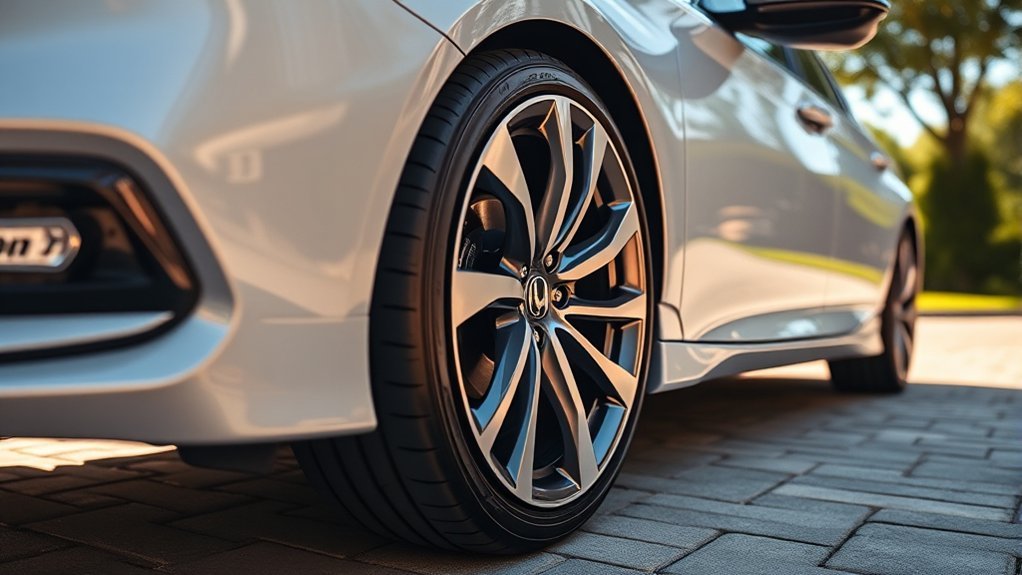
Selecting the right aftermarket wheels for your Honda Accord goes beyond finding a stylish design. Use this checklist before you buy:
- Confirm the bolt pattern: Check your exact year, trim, engine, and current wheel. Do not rely only on “Accord compatible” listings.
- Measure or verify the center bore: Most 1990-newer Accord fitments use 64.1 mm, but aftermarket wheels often have larger bores and need rings.
- Stay close to OE offset: Small changes are usually easier to fit than aggressive low-offset wheels.
- Check wheel width: Wider wheels need more clearance on both the inner suspension side and the outer fender side.
- Match tire diameter: Keep the new tire’s overall diameter close to the factory size to reduce speedometer and clearance problems.
- Match load index and speed rating: Use tires that meet or exceed the load and speed rating shown for your factory tire size.
- Check brake clearance: Test fit the front wheel first because front calipers usually need the most clearance.
- Use the correct lug nuts: Confirm M12 x 1.5 thread where applicable, plus the correct seat style for the wheel.
- Handle TPMS correctly: Install compatible sensors or recalibrate the system depending on your Accord’s setup.
- Torque the wheels correctly: Honda lists 80 lbf-ft / 108 N·m as the wheel nut torque for standard-equipped 2025 Accord tires.
Pro Tip: If you are changing wheel diameter, check tire size with the driver-side door-jamb label, the owner’s manual, and a reputable tire-size calculator. NHTSA recommends using the owner’s manual or Tire and Loading Information Label to find the correct tire size and pressure.
TPMS, Load Rating, and Safety Checks
TPMS Compatibility
TPMS is not just a dashboard light. Federal TPMS rules require the system to warn drivers about significant under-inflation, and the regulation notes that replacement or alternate tires and wheels can prevent TPMS from working properly. That is why wheel changes should include TPMS planning, not just wheel sizing.
Some Accord models use direct TPMS sensors in the wheels. Others use an indirect system that compares wheel-speed data and needs calibration. Honda’s 2025 Accord owner-manual information says TPMS must be calibrated whenever tires are rotated. After wheel or tire changes, follow your exact owner’s manual instructions and drive only after the system is working correctly.
Load Rating and Tire Pressure
Your wheels and tires must support the Accord’s weight, passengers, cargo, and driving loads. The tire’s load index appears in the tire size, such as the 94V in 225/50R17 94V or the 96V in 235/40R19 96V. Do not install a tire with a lower load index than the factory-equivalent tire unless a qualified tire professional confirms it is safe.
Use the cold tire pressure listed on the Accord’s door-jamb placard or in the owner’s manual, not the maximum pressure printed on the tire sidewall. NHTSA also recommends checking tire pressure at least once a month when tires are cold.
Lug Nuts and Torque
Use lug nuts that match both the Accord’s studs and the wheel’s seat design. Factory-style Honda wheels may use a different seat shape than many aftermarket wheels. If the seat does not match, the lug nut can loosen or damage the wheel.
Warning: Never install wheels with an impact gun alone and call it finished. Start lug nuts by hand, tighten in a star pattern, use a calibrated torque wrench, and recheck torque after the first short drive if recommended by your installer or wheel manufacturer.
Mistakes to Avoid When Choosing Accord Wheels
When choosing wheels for your Honda Accord, overlooking one small spec can lead to rubbing, vibration, warning lights, or unsafe installation. Avoid these common mistakes:
| Mistake | Impact | Better Fix |
|---|---|---|
| Assuming every 1998-newer Accord is 5×114.3 | Can lead to buying wheels that do not bolt on | Verify by exact year, trim, engine, and current hub |
| Ignoring center bore | Can cause vibration or poor hub support | Use 64.1 mm hub fitment or correct hub-centric rings |
| Choosing aggressive low offset | Can rub fenders or change steering feel | Stay close to OE offset and account for wheel width |
| Skipping brake-caliper test fit | Can cause spoke or barrel contact with the caliper | Test fit the front wheel before mounting all tires |
| Using the wrong lug nut seat | Can damage wheels or allow lug nuts to loosen | Match lug thread, seat type, shank, and torque spec |
| Lowering tire load index | Can reduce safety margin under passengers, cargo, heat, or impacts | Meet or exceed the factory-equivalent load rating |
| Forgetting TPMS | Can trigger warning lights or reduce pressure-monitoring function | Install compatible sensors or perform the required calibration |
Troubleshooting After Installing Aftermarket Wheels
If the Accord does not feel right after a wheel change, do not ignore it. Use these symptoms to narrow down the likely issue:
- Vibration at highway speed: Check wheel balance, hub-centric rings, center bore fit, bent wheels, or uneven tire wear.
- Rubbing over bumps: Check offset, tire width, tire diameter, ride height, fender liner contact, and suspension travel.
- Clicking or scraping near the brakes: Stop driving and inspect caliper clearance, wheel weights, dust shields, and spoke contact.
- Steering pull: Check alignment, tire pressure, tire construction differences, and uneven tire wear.
- TPMS warning light: Confirm sensor compatibility or run the correct TPMS calibration process from the owner’s manual.
- Lug nuts loosening: Stop driving, inspect the lug seat match, thread engagement, wheel mounting surface, and torque procedure.
Note: If a wheel shop says “it fits” because the bolt pattern matches, ask them to confirm center bore, offset, wheel width, tire size, load rating, brake clearance, TPMS function, and lug nut seat type too.
Frequently Asked Questions
What bolt pattern does a Honda Accord use?
Many newer U.S.-market Honda Accord models use 5×114.3, but older Accords are not all the same. Many 1990–2002 4-cylinder Accords use 4×114.3, while many 1998–2002 V6 trims and most 2003-newer U.S.-market Accords use 5×114.3. Verify your exact year, trim, engine, and current wheel before buying.
Is 5×114.3 the same as 5×4.5?
Yes. 5×114.3 mm is often listed as 5×4.5 inches. The measurement is the same bolt circle expressed in metric or imperial units. You still need to check center bore, offset, wheel width, brake clearance, and lug seat type.
Do Honda Civic or CR-V wheels fit a Honda Accord?
Some Honda wheels may share a 5×114.3 bolt pattern, but that does not guarantee fitment. Center bore, offset, wheel width, tire size, load rating, lug seat, and brake clearance can differ. Treat any cross-model swap as a full fitment check, not a bolt-pattern match.
Do I need hub-centric rings for aftermarket Accord wheels?
You need hub-centric rings if the aftermarket wheel’s center bore is larger than the Accord hub. Many Accords use a 64.1 mm hub bore, while universal aftermarket wheels often have larger center bores. The ring helps center the wheel and can reduce vibration.
What offset is best for Honda Accord wheels?
Many factory-style Accord wheel setups are around +45 mm to +55 mm, but the best offset depends on wheel width, tire size, suspension height, and brake clearance. A wider wheel with the same offset can sit much closer to the strut and fender than a narrower factory wheel.
Can I put 19-inch wheels on a Honda Accord?
Yes, many newer Accord trims came with or offered 19-inch wheels. For example, current Accord trims include 19 x 8.5J wheel options with 235/40R19 tires. Older Accords may need a different width, offset, tire size, and brake-clearance check before moving to 19-inch wheels.
Sources
- Honda Accord Sedan Features & Specs — current Accord wheel and tire sizes by trim.
- Honda 2025 Accord Owner’s Manual: Tire Rotation — wheel nut torque and TPMS calibration guidance.
- NHTSA Tire Safety — tire size, tire pressure, tire maintenance, and door-jamb label guidance.
- 49 CFR § 571.138 TPMS Standard — tire pressure monitoring system requirements and replacement wheel/tire warning language.
- SAE J2530 Aftermarket Wheels Standard — performance, certification, test, and marking requirements for aftermarket wheels.
- Wheel-Size Honda Accord Fitment Database — year-by-year Accord PCD, center bore, offset, and tire-size reference data.
Conclusion
Choosing the right wheels for your Honda Accord is about more than making the car look better. The safest fit starts with the correct bolt pattern, but it also depends on center bore, offset, wheel width, tire size, brake clearance, load rating, lug hardware, and TPMS compatibility.
For many newer Accords, 5×114.3 is the common bolt pattern, but older models and 1998–2002 trims can vary. Confirm your exact vehicle, stay close to factory specs, test fit before driving, and torque the wheels properly. A wheel that fits correctly will look better, ride smoother, and protect the safety and performance Honda built into the Accord.

Related Articles
How Tall Is a 305 70 R17 Tire? Exact Height, Width & Dimensions
Curious how tall a 305 70 R17 tire really is—and whether it fits your truck?
Read More
Can-Am Defender Tire Size Guide: Stock Specs & Upgrade Options
Just how big can you go on a Can-Am Defender before mods become necessary?
Read More
How Tall Is a 275 65 20 Tire? Exact Height, Width & Dimensions
Check the exact height, width, and hidden fitment effects of a 275/65R20 tire before you buy or upgrade.
Read More