
Winter Tires vs All-Season: Performance in Cold Explained
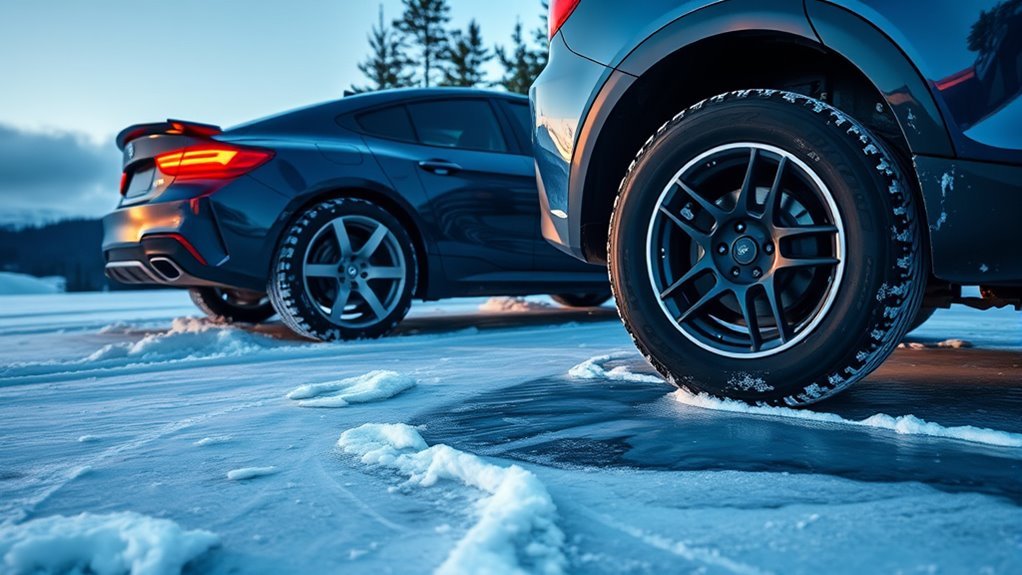
You should fit winter tires once daily temperatures drop below 7°C (45°F) because their softer rubber and deeper, sipe-rich treads stay pliable and bite snow and ice, cutting stopping distances and reducing ABS/stability interventions. All-season tires harden in cold, lose lateral grip and can trigger stability control, raising crash risk. 3PMS-rated all-weather tires help in light snow but won’t match dedicated winter compounds in severe conditions. Keep going to learn when and how to switch.
Quick Answer: Do You Need Winter Tires in Cold Weather?
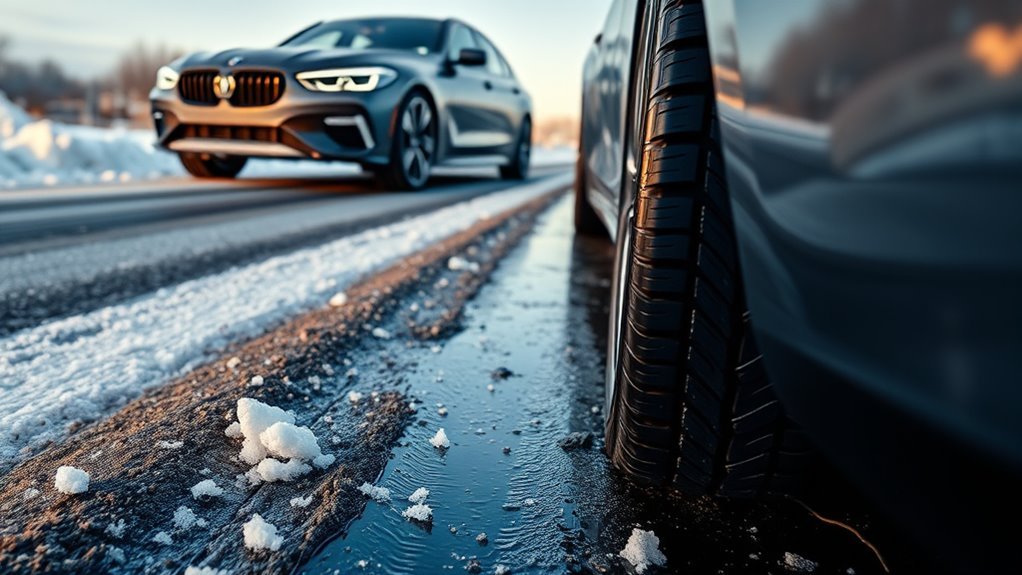
Need winter tires in cold weather? You do if temperatures regularly sink below 7°C, because winter tires retain flexibility and traction where all-season tires harden and lose grip. You’ll notice deeper treads and rubber compounds engineered for snow and ice; objective testing shows winter tires can cut stopping distance on ice by as much as 23 feet at 12 mph versus all-season models. If you face heavy snowfall or persistent icy roads, choose tires bearing the Three-Peak Mountain Snowflake (3PMS) symbol—these pass standardized snow-traction tests and deliver measurable safety gains. For mild winters or rare flurries, all-season tires offer acceptable performance, but they’re a compromise when conditions worsen. Plan tire maintenance around seasonal storage: swap and inspect tires before cold spells, check pressures and tread depth, and store the off-season set clean, dry, and rotated to prevent flat-spotting. That approach preserves performance and gives you operational freedom in winter conditions.
Quick Decision Checklist: When to Swap to Winter Tires
When the daily temperature consistently falls below 7°C (45°F), you should plan to mount winter tires to maintain ideal traction and braking. Also swap when you regularly encounter frost, snow accumulation, or persistent icy roads, since winter compounds and tread patterns outperform all-seasons under those conditions. Always fit a full set and remount all-seasons once temperatures remain above 7°C to avoid accelerated winter-tire wear and handling imbalance.
Temperature Thresholds
If temperatures consistently drop below 7°C (45°F) in your area, swap to winter tires: they’re engineered to stay flexible and provide superior traction in cold conditions, whereas all-season tires begin losing grip below that threshold. Assess temperature impact on tire performance by monitoring forecasts and daily minima; the rule of thumb is clear—consistent sub‑7°C readings justify the change. In controlled tests, winter compounds maintain elasticity and reduce stopping distances (up to 23 feet improvement at 12 mph on ice) relative to all‑season rubber. Remember that winter tires worn in warmer climates will age faster because their softer compounds overheat above 7°C. You want control and freedom on winter roads: switching at the temperature threshold optimizes safety, traction, and longevity without unnecessary tire misuse.
Road Condition Triggers
You’ve already got the temperature rule—now look at what’s actually on the road and how often it changes. Use concrete road condition indicators: persistent snow >2.5 cm, visible ice cover, or repeated freeze-thaw cycles. Correlate those with tire performance metrics —traction, braking distance, and handling stability—measured declines in all-season tires below 7°C. If forecasts predict consecutive days of snow or ice, install winter tires for consistent metrics. In regions with frequent weather swings, swap during cold snaps to prevent temporary performance degradation. Prioritize objective triggers over guesswork: measurable accumulation, confirmed ice, and multi-day cold forecasts. That empowers you to act decisively and maintain control, mobility, and safety.
Winter Tires vs All‑Season: How They Behave in Cold
Because rubber compounds stiffen in cold, winter tires keep pliability below 7°C and maintain traction on ice and snow, while all-season tires begin losing grip as their harder compounds become less effective. You’ll notice winter tires preserve tire flexibility and snow traction through specialized polymers that remain soft at low temperatures and through tread geometries that evacuate slush. That combination produces more contact patches and bite edges, translating into measurable control gains.
Technically, winter tread depth and siping increase shear resistance on packed snow and reduce hydroplaning risk in melting conditions. Empirical tests show winter rubber can cut stopping distance on ice by up to 23 feet at 12 mph versus all-seasons, a substantial safety margin. You should treat all-season tires as a compromise optimized for moderate climates; they may manage light snow but won’t sustain grip or predictable handling in heavy snow or prolonged freezing. Choosing winter tires is a deliberate step toward mobility freedom in harsh winter environments.
Why Rubber Compounds Matter Below 7°C (45°F)
When temperatures drop below about 7°C (45°F), tire rubber chemistry directly governs grip because all-season compounds harden and lose the surface conformity needed to bite into ice and snow. You need to know that all-season rubber begins to stiffen around this threshold, causing measurable loss in traction; studies and manufacturer data show up to ~20% lower icy-road traction versus winter-specific compounds. Winter tires use formulations with plasticizers and elastomers that preserve rubber flexibility at low temperatures, so the tread can conform to microtexture and irregularities rather than skidding over them. That preserved rubber flexibility directly improves cold performance: it shortens stopping distances and maintains lateral control when you demand safety and mobility. Choosing winter compounds is a deliberate act of emancipation from seasonal risk—you’re opting for engineered low-temperature resilience instead of relying on compromised, hardened rubber. Assess compound ratings and certified cold-weather performance when you equip your vehicle for winter.
Tread Design: Sipes, Voids, and Biting Edges Explained
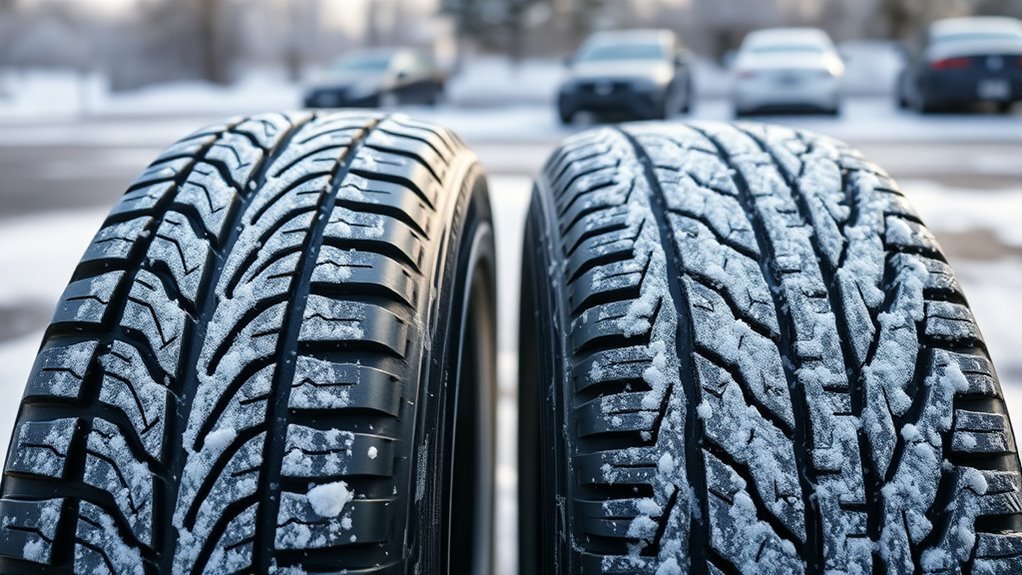
Having rubber that stays pliable below about 7°C helps, but tread geometry is what actually converts that flexibility into traction on ice, snow and slush. You’ll see sipes as thin slits that multiply biting edges; each edge increases micro‑contact and shear resistance on wet and icy surfaces. Voids are the inter‑block channels that evacuate water, slush, and snow; their volume and patterning reduce hydroplaning risk while preserving contact patch stability. Winter tires combine deeper tread depths with high sipe density and engineered void ratios to prevent snow packing and maintain progressive bite. That design reflects deliberate tread optimization: balancing edge count, void percentage, and block stiffness to maximize grip without sacrificing wear life. In a performance comparison, winter tread architectures consistently deliver superior traction metrics on low‑temperature, low‑friction substrates versus all‑season designs. You can thus choose tires that liberate your mobility in winter by prioritizing validated tread geometry parameters rather than cosmetic patterns.
Braking and Cornering: Real‑World Performance Gaps
When you compare braking, winter tires can cut stopping distances on ice by substantial margins—studies report up to 23 feet shorter stopping at 12 mph versus all-season tires. That same compound flexibility and tread geometry maintain lateral bite below 7°C, so you’ll retain cornering grip and avoid stability-control interventions that all-season tires often trigger. These measured performance gaps translate directly to reduced crash risk in cold, snowy, and icy conditions.
Shorter Stopping Distances
Because stopping distance on ice and snow is dominated by tire compound and tread design, switching to winter tires can cut braking distances dramatically — studies report up to a 23‑foot advantage at 12 mph on ice versus all‑season tires. You gain measurable stopping efficiency because winter rubber stays pliant below 45°F while all‑season compounds harden and lose grip. Deeper tread and siping evacuate snow and slush from the contact patch, preserving ice traction and increasing friction under braking. That reduces ABS intervention and the frequency of stability control corrections, so you retain directional control longer and stop sooner. For liberation-seeking drivers, the data-driven choice is clear: fit winter tires to minimize kinetic energy at impact and maximize predictable, repeatable stopping performance in cold, mixed winter surfaces.
Cornering Grip Differences
One clear advantage of winter tires is their superior cornering grip in cold conditions: softer compounds and deeper, highly siped treads stay pliant below about 7°C and provide many more biting edges than all‑season rubber, producing substantially higher lateral traction on snow and ice. You’ll notice in traction comparison testing that winter tires deliver up to 50% better cornering grip in severe winter conditions, translating to fewer ESC interventions and more predictable handling. Technical measures—lateral g, slip angle thresholds, and real‑world stopping reductions (up to 23 feet at 12 mph on ice)—confirm the tire performance gap. If you want operational freedom in winter, choosing winter tires reduces control loss during sharp turns and improves resilience against unexpected slide initiation.
When a 3PMS All‑Weather Tire Is Good Enough
If you live in a region with mild winters and infrequent heavy snow, a 3PMS-rated all‑weather tire can deliver reliable year‑round performance: you gain 3PMS advantages without seasonal swaps, simplifying maintenance and reducing cost. In a tire comparison against standard all‑season rubber, 3PMS all‑weather compounds stay flexible below 7°C (45°F) and maintain traction on light snow, improving braking and low‑speed control. The Three-Peak Mountain Snowflake certification verifies specific snow-traction thresholds, so you get measurable capability for moderate conditions. You should expect better cold grip than non‑rated all‑seasons but not the extreme bite or lateral control of dedicated winter tires on deep snow or ice. For liberated drivers seeking freedom from tire storage and seasonal changeovers, 3PMS all‑weather is pragmatic: it covers most commuting and occasional winter excursions while preserving performance in warm months. Choose based on prevailing conditions, winter frequency, and your tolerance for residual risk.
Regional and Driving Scenarios That Require Winter Tires
When you regularly drive where temperatures fall below 7°C (45°F) or where roads stay icy or buried under snow, winter tires are required to preserve traction and shorten stopping distances—tests show they can cut braking on ice by up to about 7 meters (23 feet) compared with all‑season tires at low speeds. In regional climates with consistent ice, heavy snowfall, or unplowed routes, you should choose winter tires to maintain control and reduce crash risk. For urban driving with reliable clearing and occasional light snow, a 3PMS all‑weather may suffice, but in snowy conditions or rural commutes you’ll need dedicated winter rubber. The performance comparison is clear: winter compounds remain pliable below 7°C, delivering superior grip and handling versus all‑season rubber. Prioritize tire safety as part of winter preparedness—fit winter tires before sustained cold arrives, and you’ll liberate yourself from reactive compromises, preserving mobility and reducing emergency maneuvers when roads turn hazardous.
Cost, Lifespan, and Logistics of a Second Tire Set
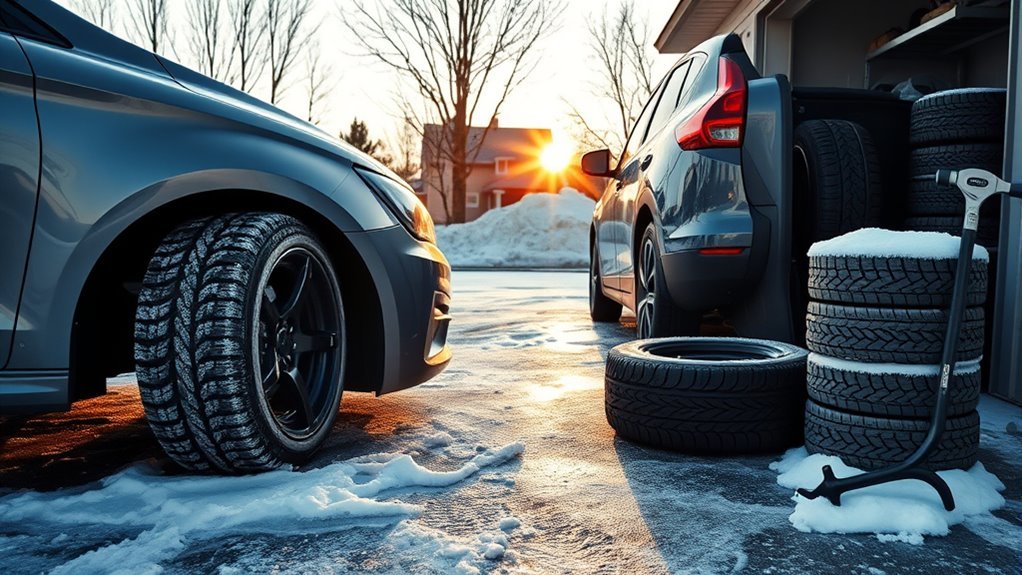
Having established where winter tires are necessary for safe winter driving, you should also weigh the costs and logistics of keeping a dedicated second tire set. Winter tires average ~40,000 miles versus 60,000–80,000 miles for all-seasons, so expect faster wear due to aggressive tread. Budget the replacement cadence accordingly and factor improved winter traction and shorter stopping distances into risk calculations.
A separate set of wheels (~$200 each) reduces mounting frequency and can amortize within one–two winters by avoiding $15–$60 per-wheel mounting fees. Plan for secure tire storage and clear seasonal maintenance schedules: label sets, monitor tread depth, rotate before long-term storage, and maintain correct pressures to prevent flat-spotting. If you drive in consistent winter conditions, the safety gains justify the logistics and expense. Choose the second set if you value control and autonomy on icy roads; otherwise, quantify costs versus marginal safety benefits before committing.
How to Identify Winter Tires and a Switching Checklist
How can you quickly verify that a tire is designed for true winter performance? Look for the Three-Peak Mountain Snowflake (3PMS) symbol; it certifies specific snow-traction performance. An Ice Grip symbol indicates superior ice braking and handling. Don’t rely on M+S alone—it denotes tread style, not proven winter capability. For liberation on cold roads, you’ll choose proven symbols and act decisively.
| Checkpoint | Action |
|---|---|
| Symbol | Confirm 3PMS; note Ice Grip if present |
| Set | Install a full set to preserve stability |
| Timing | Mount when temps consistently drop below 7°C (45°F) |
| Pressure | Monitor and adjust tire pressure as temps fall |
Your switching checklist: verify symbols, fit a full set, mount before sustained cold, and check pressures regularly. Include tire maintenance routines and plan seasonal storage to protect rubber and balance. These steps give you measurable safety gains and freedom from weather-imposed limits.
Frequently Asked Questions
Can Winter Tires Be Used on Summer Roads Without Damage?
Yes—you can use winter tires on summer roads briefly, but they’ll suffer accelerated tread wear and show temperature sensitivity; the softer compound degrades faster, reducing grip and fuel efficiency, so avoid prolonged warm-season use.
Do Winter Tires Affect Fuel Economy Year-Round?
Remember that solo road trip where your MPG dropped? You’ll see winter tires lower fuel efficiency about 3–7% in warm months; they increase tire wear if used year-round, so swap seasonally to preserve performance and freedom.
Are Studded Tires Legal in My Area and When Allowed?
Check local laws: studded tires may be restricted seasonally or banned; consult municipal stud regulations and authorized tire installation windows. You’ll act informed, secure mobility freedom while complying with evidence-based safety and environmental limits.
Can Winter Tires Reduce Insurance Premiums After a Claim?
Yes — like a safety net, winter tires can yield insurance savings after a claim, but insurers’ claim considerations vary; you should document installation, seasonality, and tread evidence to support reduced risk assessments and premium adjustments.
How Do Winter Tires Perform on Electric Vehicles’ Heavier Weight?
You’ll find winter tires handle EVs’ heavier weight well: their tire composition and reinforced casings plus adjusted tread manage added mass and altered weight distribution, improving grip and braking in cold conditions, backed by traction testing data.
Conclusion
You should switch to winter tires when temperatures regularly dip below 7°C (45°F); studies show winter rubber can cut stopping distance on ice by up to 30% versus all‑season tires. That performance gap stems from softer compounds and dense siping that retain flexibility and bite in cold conditions. If you drive in frequent snow, ice, or sustained cold, plan for a dedicated winter set, track tread wear, and follow a clear swap checklist to preserve safety and tire life.
Related Articles
Latex vs TPU Tubes: Best Performance Guide
Uncover whether latex’s unbeatable rolling resistance or TPU’s lighter, tougher profile wins your rides — and what trade-offs you’ll actually feel in the saddle.
Read More
Wide vs Narrow Tires: Ultimate Grip vs MPG Guide
A concise guide comparing wide and narrow tires for grip, speed, and fuel efficiency—discover which suits your driving needs and why it matters.
Read More
Motorcycle Tire Pressure Chart: Recommended PSI by Type
Discover ideal PSI ranges for road, track, and wet motorcycle tires — practical tips and adjustments await to optimize grip and safety.
Read More