
Why Tire Speed Rating Matters for Your Safety

You need the right tire speed rating because it limits how much heat, grip, and structural stress your tires can handle at speed, keeping handling predictable and failure risk low. Using lower-rated tires risks rapid heat buildup, accelerated wear, and blowouts under load, while mismatched tires reduce stability and emergency response. Manufacturers set recommended ratings for a reason, and upgrades should be approved. Keep pressure, tread, and rotation current to preserve safety—learn more about safe upgrades and checks.
What a Tire Speed Rating Is : And the One Thing to Check Now
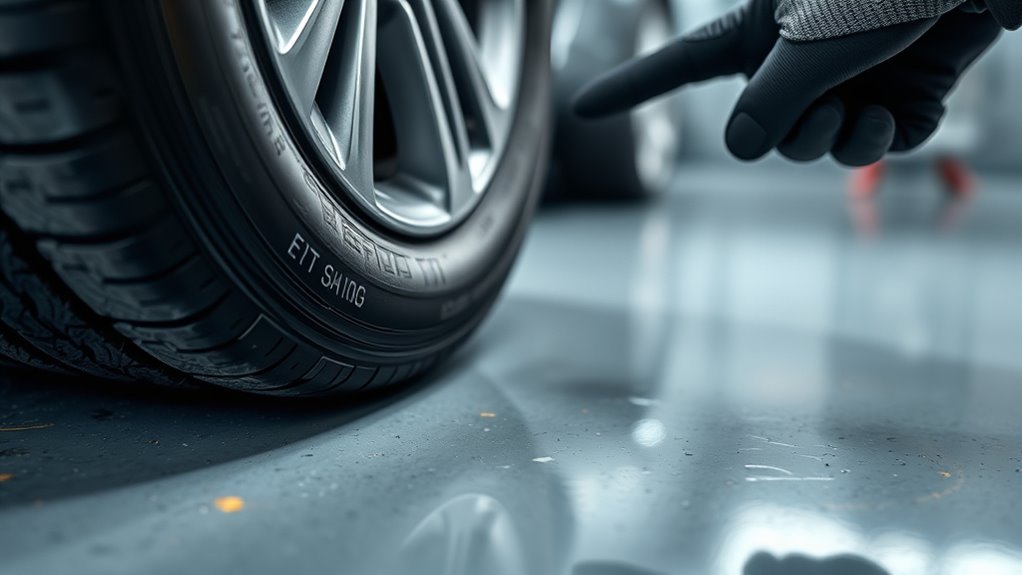
When you check a tire’s sidewall, you’ll see a letter after the load index—that’s the speed rating, a standardized code (for example, V equals 149 mph) that tells you the maximum speed the tire can safely sustain under load; matching or exceeding your vehicle’s recommended rating is the one thing you should verify now to maintain handling and safety, since the lowest-rated tire will limit vehicle speed and mismatches can degrade performance. You’ll read tire codes and numerical load indices together; the letter condenses laboratory-verified performance metrics into a single, comparable symbol. You should consult your owner’s manual or the tire placard to confirm the manufacturer’s recommended rating, and choose tires that meet or exceed it. Higher-rated tires often deliver sharper handling and elevated performance metrics, though they can change ride comfort. Verifying the speed rating is a simple, empowering step: it preserves the intended vehicle dynamics and prevents a single low-rated tire from constraining your car’s capability.
Why Tire Speed Ratings Affect Safety: Heat, Handling, Failure Risk
When you exceed a tire’s speed rating, the rubber and internal components generate more heat than they’re designed to shed, which degrades structure and reduces stability. Tires rated for higher speeds use stiffer compounds and stronger construction to resist increased cornering and braking forces, so they maintain predictable handling under load. Running tires with inadequate or mismatched speed ratings raises the risk of structural failure or sudden loss of control, so always match or exceed the vehicle’s required rating.
Heat Buildup And Stability
Because higher speed ratings reflect specific design choices in materials and construction, your tires’ ability to dissipate heat and remain stable at speed differs markedly by rating. You should care because tire composition and thermal resistance determine how much heat a tire tolerates before performance degrades. Higher-rated tires use compounds and constructions that spread heat, preserving contact patch integrity and structural stability. If your tires are under-rated for your vehicle’s speed, heat buildup accelerates wear and raises failure risk.
- Higher speed rating = better thermal resistance
- Materials engineered for heat dispersion
- Construction that maintains shape under load
- Matched ratings reduce uneven heating
- Underrated tires shorten safe operating window
Choose liberating control: match ratings to your driving.
Handling And Failure Risk
One clear way speed ratings affect safety is by changing how a tire responds to heat and loads during high-speed maneuvers, and that directly alters handling and failure risk. You rely on rated tires for predictable tire performance; underrating raises heat, wear, and the chance of catastrophic failure. Mixing ratings forces the whole system to the weakest link, reducing cornering grip and increasing stopping distance. Regularly exceeding ratings accelerates degradation and instability, with clear safety implications.
| Factor | Effect |
|---|---|
| Low rating | More heat, reduced stability |
| High rating | Better cornering, braking |
| Mixed set | Limited to lowest rating |
| Overuse | Faster wear, higher failure risk |
Choose tires that match vehicle demands and recommended ratings.
Where to Find Your Tire’s Speed Rating (And Your Vehicle’s Recommended Rating)
Look at the tire sidewall to find your tire’s speed rating—it’s the single letter (e.g., V) that usually follows the numeric load index—and cross-check that letter with the vehicle owner’s manual or the driver’s-side doorjamb sticker to confirm the manufacturer’s recommended rating for safe, ideal performance. You’ll use tire identification and familiar rating systems to verify that the letter matches the vehicle’s needs. If markings aren’t clear, get help from a tire professional or trusted resources like Les Schwab.
- Read the full sidewall code: size, load index, then the speed letter
- Consult the owner’s manual for the manufacturer’s recommended rating
- Check the driver’s-side doorjamb sticker for factory tire specs
- Use established rating systems charts to decode the letter into mph
- Ask a qualified technician when markings or recommendations conflict
This approach gives you precise, evidence-based confirmation so you can choose tires that preserve performance, safety, and your freedom on the road.
How Mismatched Tire Speed Ratings Create Hazards
If you mix tires with different speed ratings, your top safe speed becomes limited by the lowest-rated tire, which can compromise performance and safety at highway speeds. Uneven ratings also produce inconsistent handling and stability—worse steering response and cornering predictability—raising the chance of loss of control in emergencies. Additionally, a lower-rated tire driven beyond its design limits will build excess heat and wear faster, increasing the risk of tread failure or blowout.
Different Rated Tires Limit Speed
Mixing tires with different speed ratings reduces the vehicle’s maximum safe speed to that of the lowest-rated tire, and that limitation can create real hazards. You need clear tire compatibility to respect posted speed limits and protect yourself from preventable failures. Tires are engineered for specific maximum speeds; exceeding a lower-rated tire’s rating raises heat and failure risk. For example, H-rated and S-rated tires together force you to treat the car as S-rated.
- Check ratings on all four tires before high-speed driving.
- Replace mismatched tires to restore consistent performance.
- Prioritize matching load and speed ratings, not just tread.
- Know that lower-rated tires limit your safe operating envelope.
- Use professional guidance when replacing mixed tires.
Respecting ratings frees you to drive confidently and safely.
Uneven Handling And Stability
Because one tire’s speed rating sets the car’s safe performance envelope, pairing a higher-rated tire with a lower-rated one can produce uneven handling and destabilize the vehicle as speeds rise. You rely on predictable tire dynamics; mismatched ratings let the weakest tire dictate limits, degrading handling performance during acceleration and cornering. That imbalance creates inconsistent traction and steering response, so you may struggle to maintain control in turns or poor weather. Braking becomes unpredictable too—different-rated tires react unevenly under stress, lengthening stopping distances in emergencies. Uneven heat buildup can cause one tire to overheat or fail, sharply increasing crash risk. If you value freedom on the road, prioritize matched speed ratings to preserve stable handling performance and safety.
Increased Tread And Heat Wear
When you run tires with different speed ratings, the lower-rated tire will heat and wear faster under high-speed or high-load conditions, reducing tread life and raising the risk of failure. You need consistent ratings to protect tire longevity and preserve predictable performance impact. Heat accelerates compound breakdown, causing uneven tread wear and greater blowout risk when speeds exceed the weakest tire’s rating. That single tire sets the vehicle’s safe limit; mismatches undermine handling and braking.
- Lower-rated tire accumulates heat faster under load
- Excessive heat shortens tread life and structural integrity
- Uneven wear degrades traction and increases accident risk
- One weak tire limits overall vehicle speed capability
- Mixed ratings produce unpredictable performance impact and handling
Choose matched tires to reclaim control and safety.
When You Can Safely Change or Upgrade a Tire Speed Rating
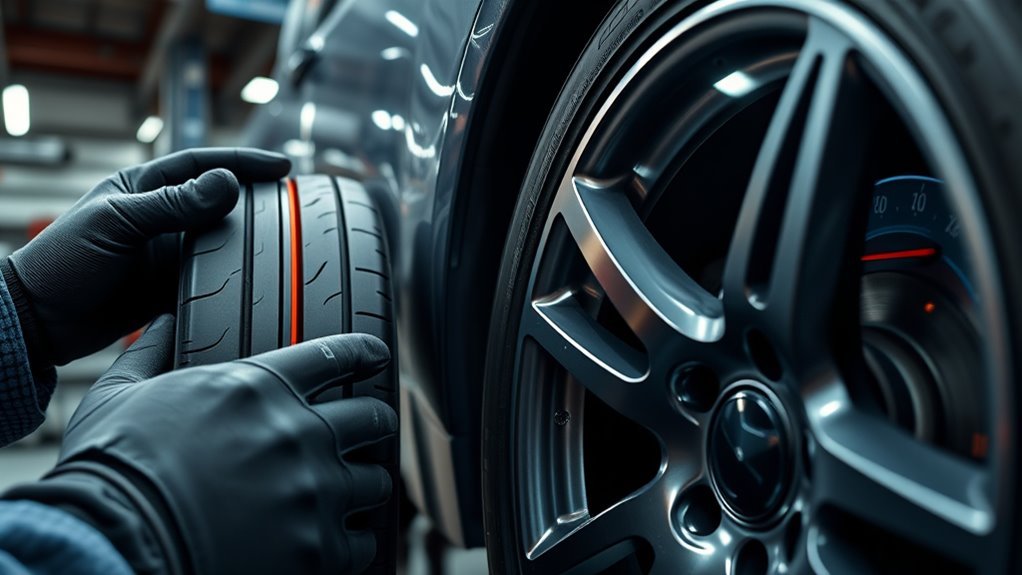
If your vehicle’s manufacturer permits it, you can upgrade to a higher speed-rated tire to improve handling and stability at higher speeds, but only if you don’t exceed the vehicle’s overall design limits and you match or exceed the lowest speed rating among the tires on the axle. You’ll gain clear speed rating benefits from tire performance upgrades: better lateral responsiveness, improved heat tolerance, and steadier behavior near the tire’s intended speed range. Before you act, confirm compatibility in the owner’s manual or with a tire professional; they’ll verify load index, rolling circumference, and suspension constraints. Never mix widely differing speed ratings on the same axle, and be cautious mixing high-speed tires with winter tires that usually carry lower ratings. Upgrading isn’t about chasing top speed; it’s about aligning tire capability with how you drive so you’re free to drive confidently within safe limits. Make changes deliberately, with evidence and professional input, to preserve safety and control.
Quick Maintenance Checks to Keep Speed-Rated Tires Safe
Start with a simple routine you can stick to: check tire pressure weekly, inspect tread depth and sidewalls for cuts, cracks or bulges, and look for uneven wear patterns. You’ll reduce risk by catching issues that undermine a tire’s speed-rating performance. Under-inflation raises heat and stress; worn tread depth below 2/32″ compromises high-speed traction. Rotate tires every 5,000–8,000 miles to even wear and preserve handling tied to higher speed ratings.
- Verify tire pressure with a calibrated gauge before driving.
- Measure tread depth with a gauge or penny test; replace at or below 2/32″.
- Inspect sidewalls for bulges, cuts, or embedded objects.
- Rotate tires at recommended intervals to prevent uneven wear.
- Check wheel balance and alignment after impacts or uneven wear signs.
Actively maintaining tires protects your mobility and autonomy. These checks are simple, evidence-based, and let you keep speed-rated tires performing safely.
Frequently Asked Questions
Why Does Tire Speed Rating Matter?
It matters because you rely on tire speed rating to guarantee tire performance and handling characteristics match vehicle compatibility, improving heat resistance, adapting to driving conditions, and preventing failure—so you protect yourself and embrace safer, liberated mobility.
Conclusion
Think of your tires as the last line of communication between you and the road: check the speed rating on each tire and in your owner’s manual now. Mismatches raise heat, stress, and failure risk; matching or appropriately upgrading ratings keeps handling predictable and safety margins intact. When you maintain proper inflation, alignment, and load limits, your tires perform as engineered—reducing risk and keeping control where it belongs, squarely in your hands.
Related Articles

Run-Flat Tires Explained: Safe Zero-Pressure Driving
Hesitant to change a tire? Discover how run‑flat technology lets you keep driving safely after a puncture—and what limits you must never ignore.
Read More
Signs You Need New Tires: Visual & Performance Clues
Lifelong safety starts with spotting tread wear, bulges, or vibration—learn the simple checks that tell you when tires must be replaced.
Read More
Tire Wear Indicator Bars: Built-In Safety Markers Decoded
On the brink of legal tread limits? Discover how tire wear indicator bars reveal danger and when to replace—read on to protect your ride.
Read More
One Comment