
When to Add Air to Tires: Signs & How Often to Check
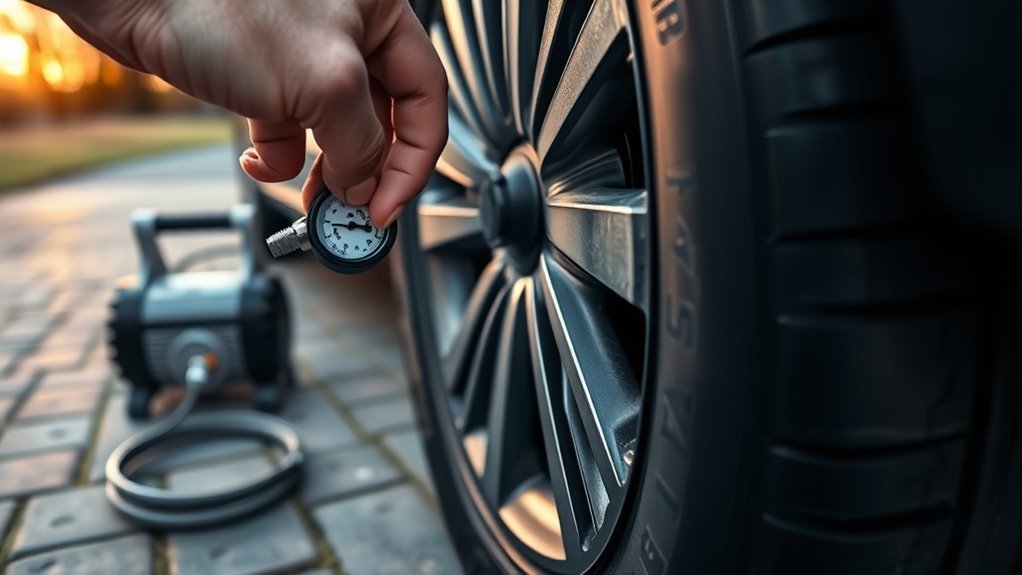
You should add air whenever your tire-pressure light illuminates, you notice bulging sidewalls, flat spots, the vehicle pulls, or road noise increases, and whenever a routine check shows PSI below the manufacturer’s recommendation. Check pressures cold with a reliable gauge at least monthly, more often with temperature swings, heavy loads, or before long trips. Use short bursts to reach target PSI and log readings; keep a good inflator and gauge handy for accurate top-ups if you want practical how-to details.
6 Signs Your Tires Need Air Right Now
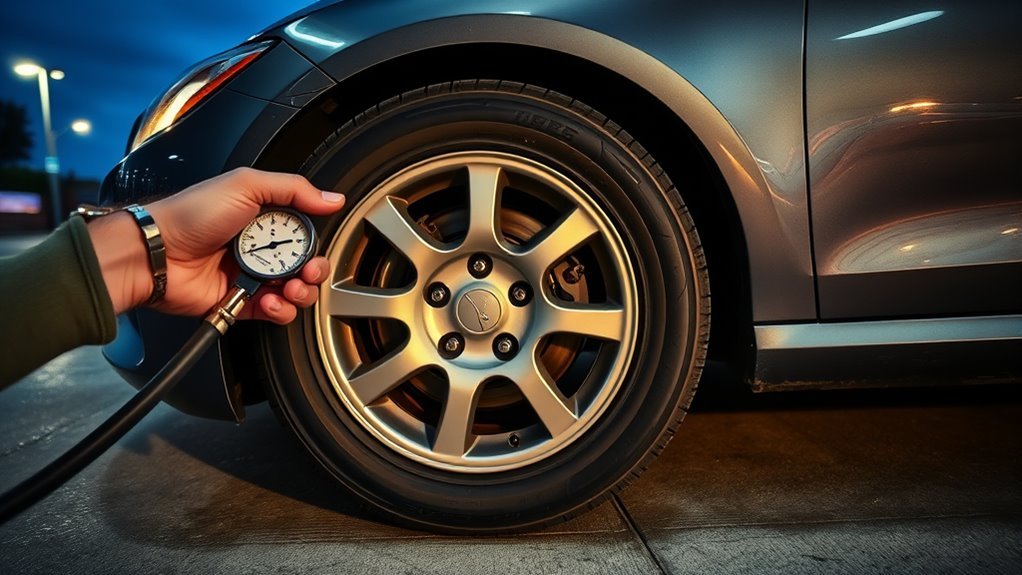
If your tire-pressure warning light comes on, don’t ignore it—at least one tire is underinflated and needs immediate attention. You’ll act fast because tire safety isn’t optional; low pressure compromises traction, braking, and driving performance. Visually inspect tires: bulging sidewalls or flat spots mean air’s gone and you need to add it now. If the vehicle pulls, handles sluggishly, or road noise increases, that degraded feedback signals reduced pressure affecting control. Check pressures routinely—monthly at minimum—so you catch slow leaks before they become hazards. Be mindful in cold weather: expect about one pound loss per 10°F drop, so plan to top off more often when temperatures fall. If a tire’s losing pressure repeatedly, don’t tolerate the leak; repair or replace it to restore predictable handling. You deserve freedom on the road—maintain proper inflation to protect yourself, optimize driving performance, and keep mobility uncompromised.
Check Tire Pressure : Step‑by‑Step
You’ve seen the warning signs—now learn the exact steps to confirm and correct pressure. Check tire pressure when the tires are cold, ideally before you drive or at least three hours after parking. Use a reliable tire maintenance gauge; press it firmly onto the valve stem to prevent air loss during measurement. Read each gauge value and note it immediately.
Compare readings to the recommended PSI listed in your owner’s manual or on the vehicle door-jamb sticker; don’t use the tire sidewall. If pressure is low, add air in short bursts, rechecking until you reach the target. If it’s high, depress the valve briefly to release air and re-measure. Record the date, tire, and pressure in a log to track trends.
Do this at least monthly—tires can lose about one pound every 30 days and more with temperature swings. Consistent checks help you detect leaks, protect performance, and keep you free from avoidable roadside stops.
What Tire Pressure (PSI) Your Vehicle Needs
Because proper PSI varies by vehicle and axle, check your owner’s manual or the driver’s door‑jamb sticker to find the exact front and rear pressures recommended for your car. Those values commonly sit between 30 and 35 PSI but can differ for heavier vehicles or performance tires. You’ll want to measure when tires are cold; driving heats the rubber and yields falsely high readings.
Understand tire pressure importance: correct PSI optimizes handling, extends tire life, and can improve fuel efficiency by up to about 3%. Underinflation increases rolling resistance and wear; overinflation reduces contact patch and grip. Track both front and rear because manufacturers specify different pressures for load and steering balance.
Account for seasonal changes: expect roughly a 1 PSI drop per 10°F decrease. Check more often during temperature swings and before long trips. Follow the sticker/manual values, adjust for load when necessary, and recheck after any pressure change to maintain safe, efficient operation.
Best Gauges & Inflators to Check and Add Air
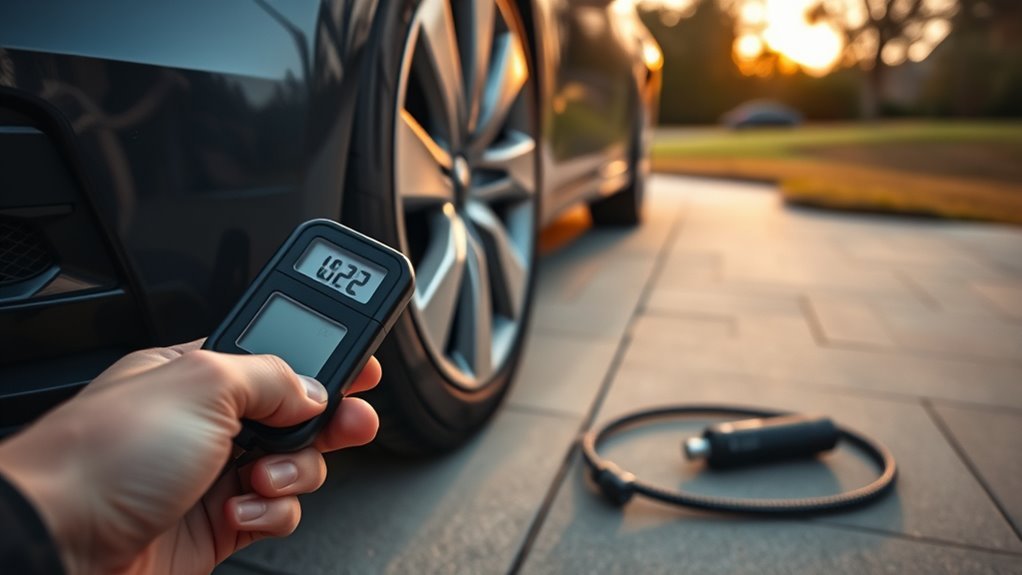
Start with a reliable gauge and inflator combo so you can check and correct pressure accurately on the spot. You want digital gauges for half-pound precision; models like the Accutire deliver repeatable readings that free you from guessing. Keep analog options as backups — Milton Pencil-style tools are cheap and rugged, but they won’t match digital resolution. If you push performance limits, choose racing precision instruments from Joe’s Racing or Longacre to dial in psi with confidence. For everyday maintenance, pick inflator convenience: units such as the AstroAI Digital Tire Inflator combine a pump with an on-board meter so you adjust pressure without switching tools. For trucks, RVs, or heavy loads, specify heavy duty accuracy—commercial gauges and inflators use robust fittings and calibrated internals to handle higher ranges. You’ll maintain mobility and control by pairing the right gauge with an appropriate inflator, keeping measurements traceable and interventions immediate.
How Often to Check Tire Pressure : By Season & Use
Check tire pressure at least once a month and more often when conditions change, since tires slowly lose about 1 psi every 30 days and temperature swings shift pressure roughly 1 psi per 10°F. You’ll use monthly maintenance as a baseline; seasonal adjustments mean checking biweekly during winter or summer changes. Before long trips, check pressures cold to verify ideal load-handling and fuel efficiency. If you regularly carry heavy loads or go off-road, check weekly — extreme use accelerates leakage and wear. Use fueling stops as checkpoints, but measure before driving for accuracy.
| Condition | Check Interval |
|---|---|
| Normal driving | Monthly maintenance |
| Seasonal change | Every 2 weeks |
| Long road trips | Before departure |
| Heavy load/off-road | Weekly |
| After temp swings | As needed |
Be precise, act routinely, and reclaim control of vehicle safety. Regular checks free you from avoidable failures.
Frequently Asked Questions
How Often Is It Normal to Put Air in Your Tires?
You should check and add air about once a month, more often during temperature swings or before long trips. You’ll practice tire maintenance and pressure monitoring to stay safe, empowered, and free from unexpected roadside hassles.
Is My Tire Pressure Actually Low or Is It Just Cold?
Low now, not broken: you check tire pressure cold, compare to recommended PSI, account for winter effects and temperature changes; small air loss is normal with cold, so inflate only if pressure stays below spec.
Conclusion
Think of tire pressure like a blood pressure reading for your car: ignoring small drops invites bigger problems—reduced fuel economy, uneven wear, and safety risks. Check PSI monthly and before long trips, use a reliable gauge, and top off when the cold makes readings fall. If you find repeated low pressure, investigate leaks or valve issues rather than just inflating. Regular, measured checks keep performance ideal and prevent small issues from becoming costly failures.
Related Articles
When to Replace Tubeless Sealant: Timing & Signs
Be warned: tubeless sealant can fail in weeks or months—learn the signs, testing tips, and exact replacement timing to avoid flats.
Read More
The Penny Test for Tread Depth: How to Do It Right
Better learn the penny test correctly—discover when Lincoln’s head reveals dangerous tread wear and what to do next.
Read More
Tire Rotation Schedule: How Often & Why It Matters
Optimizing tire life? Discover why rotating every 5,000–8,000 miles matters for safety and savings—read on to learn exact patterns and tips.
Read More