
What to Do If the TPMS Light Comes On in Your RAV4
When the TPMS light appears in your RAV4, start by checking the tire pressure in all tires, including the spare. Verify each tire is inflated to the recommended 36 PSI cold. Cold weather can trigger the light, so monitor pressure regularly. If the light persists after confirming inflation, it may indicate a sensor malfunction. Ignoring this signal can lead to tire issues. Keep going to discover more about useful tips and maintenance for your TPMS system.
How to Check Tire Pressure and Conditions for TPMS Alerts
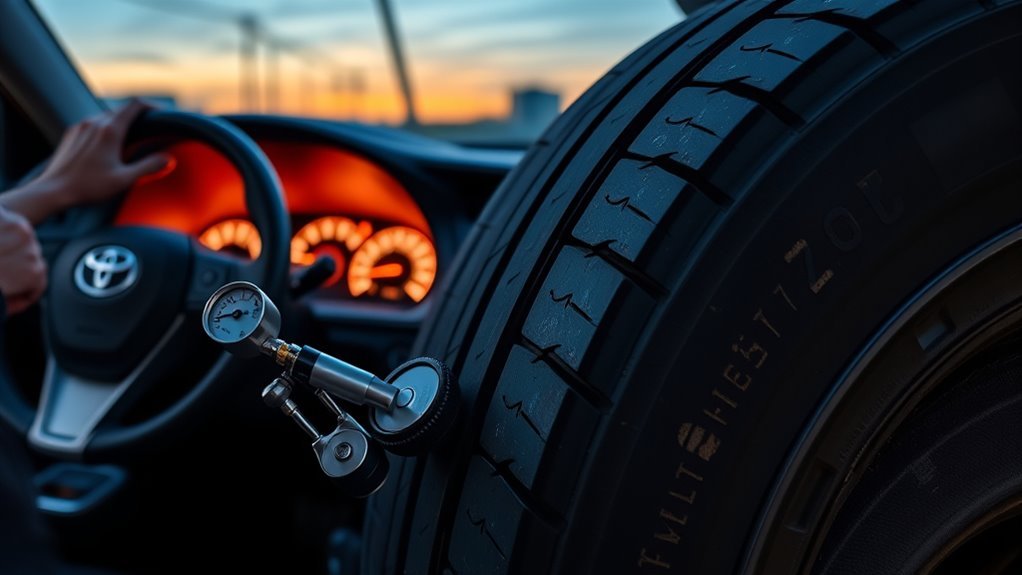
When the TPMS light comes on, it’s essential to check your tire pressure promptly. Start by using a reliable gauge to measure the pressure in all tires, ensuring they’re inflated to the recommended 36 PSI cold for your 2024 RAV4 XLE hybrid. Regularly monitoring tire pressure is vital, especially in colder temperatures, as a decrease of just a few degrees can trigger the TPMS light.
Next, inspect all tire conditions, including the spare. Look for visible damage or uneven tread depth, as these issues can confuse the TPMS and lead to false alerts. Significant differences in tread depth can affect performance and safety. If the TPMS light remains on despite proper tire pressure, consider visiting a tire shop. They can diagnose potential faulty sensors or reset the benchmark pressure, ensuring your system functions correctly and keeps you informed about your tire health.
Common Issues With Your TPMS Light
Your TPMS light might activate intermittently for several reasons, including sensor malfunctions or temperature fluctuations affecting tire pressure readings. When temperatures drop, it can lead to false alerts if the system isn’t calibrated correctly. It’s essential to understand these common issues to address them effectively and guarantee your safety on the road.
Intermittent Light Activation
Although an intermittent TPMS light can be frustrating, it often signals common issues rather than serious problems. Here are some factors to take into account:
- Temperature fluctuations can affect tire pressure readings, triggering the light.
- Verify the TPMS benchmark pressure is reset after tire rotation or service to avoid false alarms.
- Variations in tire tread depth can confuse the TPMS, leading to incorrect alerts.
- Cold weather may cause pressure drops, activating the light even with properly inflated tires.
Sensor Malfunctions Explained
Sensor malfunctions can be a considerable reason behind the activation of your TPMS light. Faulty sensors may leak or fail, issuing false warnings even when your tires are properly inflated. Each sensor type has a battery life of 3-10 years, after which malfunctions are common, leading to persistent alerts. Incorrect installation or programming of new sensors can also impede functionality, often requiring professional reprogramming. Additionally, physical damage or wiring issues could trigger the TPMS light, so thorough inspections are essential. Variations in tire tread depth can confuse readings, causing false alerts if some tires are notably worn. Utilizing diagnostic tools can help pinpoint these issues, ensuring your TPMS operates efficiently and accurately.
Temperature Effects on Readings
Temperature fluctuations can greatly affect your TPMS readings. In colder weather, tire pressure can drop by about 1 PSI for every 10-degree Fahrenheit decrease. This drop might trigger a false TPMS warning, especially if you haven’t reset the pressure calibration after service. Regularly monitoring your tire pressure during seasonal changes is vital to guarantee accurate readings.
- Cold temperatures can lead to under-inflation.
- False warnings can occur even with correct pressures.
- An individual tire pressure display helps with monitoring.
- Ignoring the TPMS light can increase the risk of tire wear and blowouts.
Stay vigilant and check your tire pressures regularly to avoid unnecessary issues and make sure your RAV4 runs smoothly.
Step-by-Step Guide to Resetting Your TPMS
When the TPMS light activates in your RAV4, it’s essential to address the issue promptly to guarantee safe driving. Start by ensuring all tires are inflated to the recommended pressure, typically around 36 PSI for the 2024 model. Next, locate the TPMS reset button, usually found under the steering wheel. Press and hold this button until the light flashes three times, confirming the reset.
After resetting, drive your vehicle at a speed of 19 mph or higher for at least an hour. This allows the system to relearn the tire pressures, especially important after a tire rotation. If the TPMS light remains on, verify that all tires are properly inflated and check for differences in tread depth. Always consult your owner’s manual for specific reset procedures, as there may be variations in the process depending on your model.
Inspecting for Sensor Malfunctions
To guarantee your TPMS functions correctly, start by inspecting each tire, including the spare, for proper inflation levels. Low pressure can trigger the TPMS light even if your main tires are fine. Next, check the tire tread depth; variations can skew TPMS readings and lead to false alerts.
To ensure your TPMS operates effectively, regularly check tire inflation and tread depth, as irregularities can lead to false alerts.
Consider these key steps:
- Use a diagnostic tool for sensor diagnostics to identify faults.
- Visit a tire shop if the TPMS light persists despite correct tire pressure.
- Remember that TPMS sensors have a battery lifespan of 3-10 years; a dead battery can trigger malfunctions.
- If any sensor was replaced, verify it’s been properly reprogrammed to avoid ongoing issues.
How Temperature Affects Your TPMS Alerts
As colder weather sets in, you might notice your TPMS light activating more frequently. This is primarily due to temperature fluctuations that cause tire pressure to drop, typically by about 1 PSI for every 10-degree Fahrenheit decrease. When the ambient temperature falls, the air inside your tires contracts, leading to lower pressure readings that can trigger the TPMS warning light.
To avoid unnecessary alerts, it’s essential to check your tire pressure regularly, especially with seasonal adjustments in temperature. If you’ve recently inflated your tires, confirm that you reset the TPMS benchmark pressure. This step is critical for accurate monitoring, particularly in fluctuating temperatures, where cold air can lead to false alerts if the system’s benchmark isn’t correctly set. Staying proactive about tire pressure will enhance your safety and guarantee a smoother driving experience in colder months.
Key Factors for Spare Tire TPMS
When it comes to your RAV4’s spare tire, regularly checking the pressure is essential, as neglect can lead to unexpected issues. You’ll also want to verify if your spare tire has a TPMS sensor; if it does, low pressure will trigger the warning light just like your regular tires. Ensuring proper pressure not only adheres to manufacturer recommendations but also enhances safety during emergencies.
Spare Tire Pressure Check
Checking the pressure of your spare tire is essential, as low pressure can unexpectedly trigger the TPMS warning light, even if your main tires are properly inflated. Regular spare tire maintenance is vital for your emergency preparedness.
- Verify the spare tire’s pressure regularly to meet recommended PSI.
- Understand that the 2024 RAV4 typically features a compact spare without a TPMS sensor.
- If your spare tire has a TPMS sensor, make sure it’s functioning correctly to avoid unnecessary alerts.
- Neglecting the spare tire can lead to complications during emergencies, emphasizing the importance of routine checks.
Stay proactive about your spare tire’s condition to guarantee it’s ready when you need it most.
Sensor Presence Verification
Determining whether your spare tire has a TPMS sensor is vital for guaranteeing accurate tire pressure monitoring. The 2024 RAV4 typically features a compact spare tire without a TPMS sensor, meaning low pressure won’t trigger the TPMS light. However, if your spare is equipped with a sensor, you’ll need to monitor its pressure alongside the other tires to prevent false alarms. Regularly checking the spare’s pressure is important, as neglect can lead to unexpected issues in emergencies. When considering aftermarket TPMS sensors, verify sensor compatibility with your RAV4; an incompatible sensor won’t function properly. Always consult your owner’s manual for specific guidance on your RAV4’s spare tire sensor presence and maintenance.
When to See a Mechanic for TPMS Issues
If the TPMS light stays illuminated even after confirming all tires are properly inflated, it’s time to consult a mechanic. Ignoring this warning could lead to safety issues. Here are some TPMS troubleshooting tips to help you identify when to seek professional assistance:
- Persistent TPMS light after resetting indicates a potential sensor malfunction.
- Unusual noises or driving behavior may signal unrelated mechanical issues.
- If you suspect inaccurate pressure readings, especially in cold weather, get a mechanic to check for faults.
- Regular maintenance checks don’t resolve the issue? It’s a clear mechanic appointment sign.
Don’t let a malfunctioning TPMS system compromise your driving experience. Addressing these issues promptly with a qualified mechanic guarantees your safety and the longevity of your vehicle.
Tips for Maintaining Your TPMS System

Maintaining your TPMS system is essential for guaranteeing your vehicle’s safety and performance. Regularly check and maintain tire pressures at the recommended levels, as fluctuations can trigger false alerts, especially with temperature changes. After any tire rotation or adjustments, verify the TPMS benchmark pressure is correctly set; factory settings may be too high for daily use. Don’t forget to inspect the spare tire for proper inflation, as low pressure there can also activate the TPMS warning light.
If you encounter persistent issues, consider having the TPMS sensors diagnosed and reprogrammed by authorized service centers, since sensor malfunctions are common. Additionally, stay informed about your vehicle’s TPMS by reviewing the owner’s manual for specific maintenance procedures and troubleshooting steps. Following a regular maintenance schedule will not only keep your TPMS functioning effectively but also enhance your overall driving experience.
Frequently Asked Questions
Why Is My Tire Pressure Light on but My Tires Are Fine on My Toyota RAV4?
Your tire pressure light might be on due to a sensor malfunction, even if your tires are fine. Check all tires, including the spare, and verify the TPMS system’s reset after any pressure adjustments.
How to Get Rid of TPMS Warning Light?
To get rid of the TPMS warning light, perform a TPMS reset after ensuring proper tire maintenance. Check tire pressures, adjust if necessary, and inspect for damage. If issues persist, consult a professional for diagnostics.
Conclusion
In conclusion, if your TPMS light comes on in your RAV4, don’t ignore it. Regularly checking your tire pressure can reduce the risk of tire blowouts, which occur in about 11,000 accidents annually in the U.S. By understanding how to reset your TPMS and recognizing when to seek professional help, you can keep your vehicle safe and efficient. Proper maintenance of your TPMS system guarantees peak performance and enhances your driving experience.

Related Articles

Upsizing Wheels on a Toyota RAV4: Pros, Cons, and Considerations
Boost your Toyota RAV4's performance with larger wheels, but discover the hidden trade-offs that could impact your ride before you decide.
Read More
Can I Change Tire Size on My Toyota RAV4? Rules and Recommendations
Are you considering changing the tire size on your Toyota RAV4? Discover the essential rules and recommendations before making a decision.
Read More
What to Do After a Tire Blowout in a RAV4: Step-by-Step Safety
Just experienced a tire blowout in your RAV4? Discover essential safety steps and tips to ensure you're prepared for any situation.
Read More