
What to Do After a Tire Blowout in a RAV4: Step-by-Step Safety

If you experience a tire blowout in your RAV4, stay calm and grip the wheel firmly. Gradually ease off the accelerator and steer it to a safe area, activating your hazard lights. Once stopped, check the tire for damage, and assess whether you’re comfortable changing it yourself or need assistance. Document the incident, including photos and details, which will aid in insurance claims. There’s more to contemplate to guarantee your safety and vehicle readiness.
Stay Calm and Regain Control of Your RAV4

When a tire blowout happens, it’s essential to stay calm and regain control of your RAV4. Keep a firm grip on the steering wheel to guide your vehicle in a straight line. Instead of slamming on the brakes, gradually ease off the accelerator. This helps prevent a spinout and allows your RAV4 to naturally decelerate. As you slow down, avoid sharp turns, maintaining your composure.
Once you’ve reached a safe speed, signal and steer towards the shoulder or another safe area to pull over. Focus on your surroundings and verify you have a clear plan before exiting the vehicle. Having proper tire maintenance reduces the risk of blowouts, but it’s wise to keep an emergency kit handy. This kit should include essentials like a spare tire, jack, and tools, so you’re prepared for any situation that arises. Stay safe and always be ready.
Turn on Hazard Lights and Alert Other Drivers
Immediately after a tire blowout, turn on your hazard lights to signal to other drivers that you’re in a potentially dangerous situation. This simple action alerts others to your predicament and helps maintain visibility. If you have warning triangles or reflective flares, set them up to enhance safety, especially on busy roads or at night.
While traveling to a secure location, keep a safe distance from oncoming traffic. Use your turn signals clearly when changing lanes or pulling over, ensuring drivers understand your intentions. Once you’ve safely stopped your RAV4, make sure you’re in a secure area before exiting.
At this point, you can assess the damage or contact roadside assistance. If needed, notify your emergency contacts about your situation. By taking these steps, you’ll not only protect yourself but also help others on the road.
Safely Pull Over to the Side of the Road
When you experience a tire blowout, your first step is to find a safe spot to pull over. Use your turn signals to alert other drivers as you steer towards a flat, well-lit area away from traffic. Once stopped, activate your hazard lights to increase visibility and warn others of your situation.
Identify Safe Stopping Area
After experiencing a tire blowout, it’s essential to find a safe place to pull over. Look for well-lit areas away from traffic, like a wide shoulder or parking lot. Activate your hazard lights immediately to alert other drivers and gradually slow down by easing off the accelerator. Here are some tips to identify safe locations:
- Choose spots with ample space to maneuver.
- Confirm visibility to oncoming traffic.
- Avoid steep inclines or declines.
- Keep your emergency kit handy for assistance.
Once you’ve stopped, engage the parking brake to prevent rolling. This approach not only keeps you safe but also helps you manage the situation effectively. Remember, staying calm is key.
Use Turn Signals
Activate your turn signals well before pulling over to guarantee that other drivers are aware of your intentions. By signaling at least 100 feet in advance, you enhance lane change safety and minimize risks. This simple action is key to effective communication on the road.
| Action | Importance |
|---|---|
| Use Turn Signals | Alerts drivers of your intentions |
| Signal Early | Provides adequate notice for safety |
| Check Functionality | Secures clear communication is maintained |
When you pull over, indicate your direction to help other vehicles anticipate your actions. After stopping, keep your turn signals on while you assess your situation, making sure you remain visible to passing traffic. Prioritize turn signal importance for a safer driving experience.
Activate Hazard Lights
Having signaled your intentions, the next step is to activate your hazard lights. This essential action alerts other drivers to your situation, enhancing driver awareness around you. As you gradually reduce speed and prepare to pull over, make certain your lights are flashing to signal distress.
- Show other drivers you’re experiencing difficulties.
- Help prevent further accidents by increasing visibility.
- Maintain control by keeping a firm grip on the wheel.
- Use turn signals to indicate your lane change.
Look for a safe, well-lit area away from traffic. Once stopped, engage the parking brake. Your hazard lights play a significant role in making sure everyone on the road recognizes your predicament and maintains a safe distance.
Inspect Your Tire for Damage
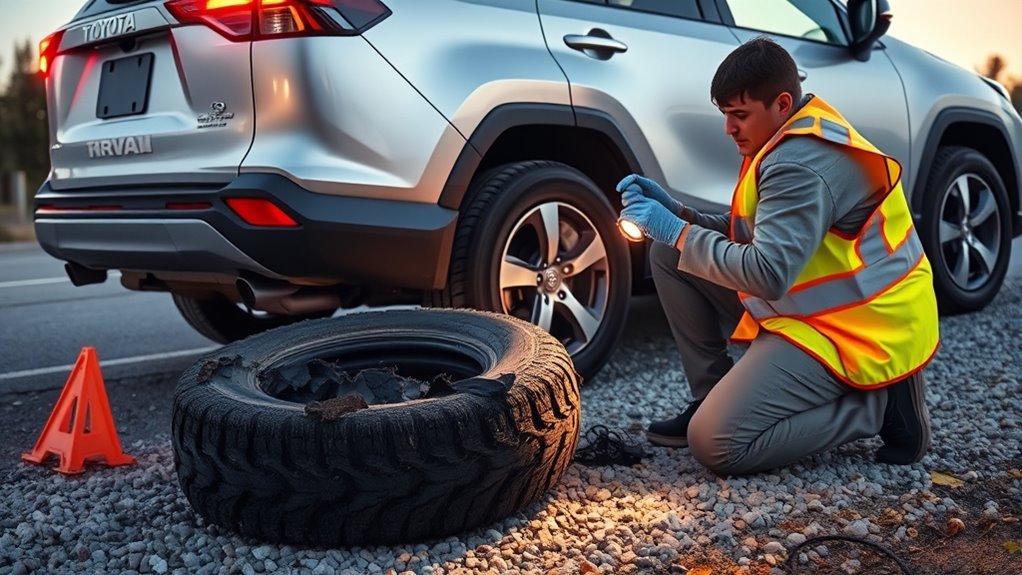
After a tire blowout, start by visually inspecting your tire for any punctures, cracks, or signs of separation. Check the pressure and tread depth to assess the overall condition. This quick evaluation can help you determine if further action is needed before continuing your journey.
Visual Damage Assessment
Once you’ve safely pulled over, it’s essential to visually assess the damaged tire for any visible punctures or tears, especially in areas where road debris might have caused harm. Proper tire maintenance is vital for blowout prevention, so take your time with this inspection.
Look for:
- Punctures or tears on the tread and sidewall
- Bulges or blisters, indicating potential structural failure
- Uneven tread wear patterns, suggesting underlying issues
- Damage to the rim, ensuring it’s not bent or cracked
Ensure you have good lighting to spot any defects clearly. This thorough visual damage assessment can help you decide whether to replace the tire or continue your journey safely.
Pressure and Tread Check
To guarantee your safety and vehicle performance, it’s crucial to conduct a pressure and tread check on your tires after a blowout. Start by using a reliable gauge for pressure monitoring; check the recommended pressure on your driver’s door jamb or in the owner’s manual. Next, inspect your tire tread depth using the penny test: insert a penny—if Lincoln’s head is fully visible, replace the tire. Look for visible damage like bulges or cracks, which may indicate structural weaknesses. Also, examine for uneven wear patterns, signaling alignment issues or overloading. Finally, if you find yourself frequently adding air, it could mean a slow leak or damage, demanding immediate inspection and possible tire replacement. Prioritize tire maintenance for safety.
Should You Change the Tire Yourself?

How confident do you feel about changing a tire yourself? Before diving in, assess your surroundings to verify it’s safe, especially if you’re on a busy road. If you have the right tire changing tools and feel comfortable, proceed; if not, it’s wise to contemplate calling for roadside assistance.
Here are some key points to reflect on:
- Check your RAV4’s owner’s manual for specific tire change instructions.
- Evaluate your skill level and experience; don’t risk injury.
- Remember that spare tires are temporary; drive cautiously afterward.
- If you’re uncomfortable, it’s best to leave it to the pros.
Your personal comfort matters. If you’re unsure, prioritize safety and get help rather than attempting a potentially dangerous task.
When to Call for Help Instead of Changing the Tire Yourself?
When should you call for help instead of trying to change the tire yourself? Here are some scenarios where it’s safer to reach out for roadside assistance:
| Situation | Action |
|---|---|
| On a busy highway | Call for help |
| Adverse weather conditions | Seek professional assistance |
| Additional vehicle damage | Contact roadside service |
If you’re on a high-speed road, the risk of traffic hazards makes it wise to call for help. Additionally, if you feel uncomfortable or lack the tools for a tire change, prioritizing your safety is key. In adverse weather like rain or snow, changing the tire can be dangerous, so opt for professional assistance. Finally, if you can’t find a safe, well-lit area to perform the tire change, don’t hesitate to call for help. Your safety comes first.
How to Document a Tire Blowout for Insurance
Documenting a tire blowout effectively is essential for your insurance claim, especially since accurate records can simplify the process. Start by taking clear photos of the damaged tire, highlighting any punctures or bulges. Capture your vehicle’s position and surroundings, noting relevant debris or conditions that may have contributed to the blowout.
Make sure to include the following details in your accident documentation:
- Time, date, and location of the incident
- Witness contact information and statements, if applicable
- Photos of the damage and surroundings
- Records of medical evaluations or vehicle repairs
These elements can greatly support your case for insurance claims. By being thorough, you empower yourself to navigate the claims process with confidence.
Prioritize Your Safety and Health After a Blowout
After a tire blowout in your RAV4, your first priority should be ensuring your safety and that of others around you. Immediately engage your hazard lights to alert other drivers. Safely steer your vehicle to a well-lit area away from traffic, avoiding abrupt maneuvers to maintain control. Before exiting, check for oncoming traffic to avoid accidents.
Document the scene by taking photos of the damaged tire and your vehicle’s position, which can be essential for insurance claims. If you feel any pain or discomfort, don’t ignore it—seek medical attention promptly, as adrenaline can mask serious injuries.
Your emotional response to this incident is valid; remember that ignoring your health can lead to long-term effects. Prioritizing your safety and well-being not only protects you but also empowers you to take control of the situation.
Follow up With a Professional Mechanic for Inspection
Once you’ve confirmed your safety following a tire blowout in your RAV4, it’s essential to follow up with a professional mechanic for a thorough inspection. Even if you don’t see immediate damage, hidden issues could compromise your vehicle’s safety.
Here’s what to keep in mind during your visit:
- Mechanic Qualifications: Verify your mechanic is certified and experienced with tire and suspension repairs.
- Inspection Frequency: Regular checks can prevent future blowouts and guarantee your tires meet safety standards.
- Tire Condition: A mechanic will assess the remaining tires for wear and tear.
- Alignment and Suspension: They’ll check for any alignment issues that may have arisen from the blowout, affecting handling.
Keeping records of these inspections can be beneficial for warranty claims or insurance purposes. Prioritizing a professional assessment will help maintain your RAV4’s performance and your peace of mind on the road.
Frequently Asked Questions
What Are the 5 Steps in Handling a Blowout?
To handle a blowout, maintain control, gradually slow down, signal for safety, use your emergency kit for a vehicle inspection, and call roadside assistance if needed. Regular tire maintenance helps prevent future issues.
What Two Steps Should a Driver Take to Keep Control of His Car After a Blowout?
When a tire blows, grip the wheel like you’re steering a ship through stormy seas. Ease off the gas, avoid emergency braking, and use steady steering techniques to keep control until you can safely pull over.
Conclusion
After a tire blowout in your RAV4, stay calm, stay safe, and stay prepared. Remember to assess your situation, alert others, and decide whether to change the tire yourself or call for help. Document the incident for your insurance, and prioritize your health above all. Finally, follow up with a mechanic to guarantee your vehicle’s road readiness. By taking these steps, you’ll not only handle the blowout effectively but also keep your peace of mind intact.

Related Articles

Upsizing Wheels on a Toyota RAV4: Pros, Cons, and Considerations
Boost your Toyota RAV4's performance with larger wheels, but discover the hidden trade-offs that could impact your ride before you decide.
Read More
Can I Change Tire Size on My Toyota RAV4? Rules and Recommendations
Are you considering changing the tire size on your Toyota RAV4? Discover the essential rules and recommendations before making a decision.
Read More
What to Do If the TPMS Light Comes On in Your RAV4
Understand the steps to take when the TPMS light illuminates in your RAV4, as overlooking it could lead to serious tire problems.
Read More