What Is Tire Tread? Patterns, Depth & Safety Guide
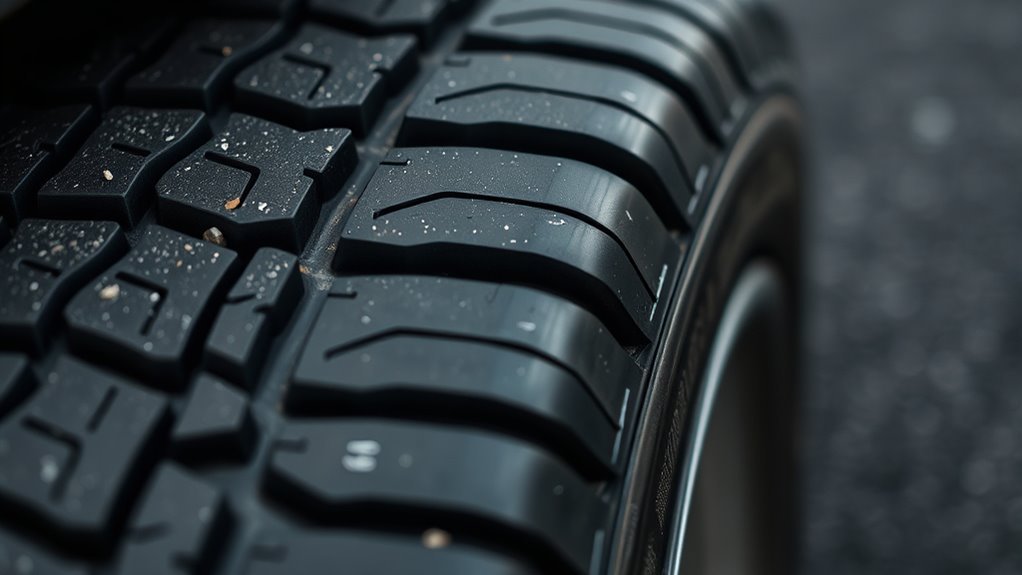
Tire tread is the rubber that contacts the road and controls your grip, braking and hydroplaning risk; patterns (symmetrical, directional, asymmetrical) channel water and tune handling for wet, dry or snowy conditions. New tread is about 10/32–11/32″, legal minimum is 2/32″ (1.6 mm) and experts suggest replacing by 4/32” for wet/snow safety. Measure with a gauge or coin, rotate and align regularly, and follow pressure specs — keep going to learn practical checks and choices.
What Tire Tread Is and Why It Matters
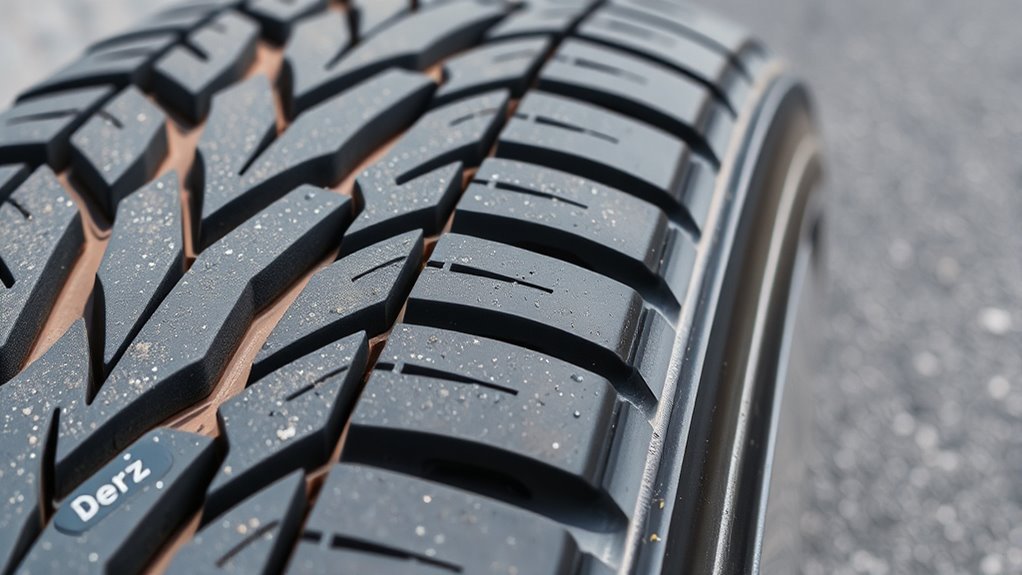
Tire tread is the rubber on the tire that contacts the road, and it directly determines your vehicle’s grip, handling, and stopping performance. You should understand tire tread importance: patterns (symmetrical, asymmetrical, directional) are engineered to balance traction across wet, dry, and snowy conditions. New tires typically have 10/32–11/32″ tread depth; the legal minimum is 2/32″ (1.6 mm). Monitor tread depth because insufficient depth elevates aquaplaning risk and lengthens braking distances. Tread wear effects are measurable: reduced lateral grip, longer stopping distances, and compromised stability at speed. Use tread wear indicators and periodic measurements to decide replacement timing. Regular checks help you maintain regulatory compliance and quantifiable safety margins on varied road surfaces.
Tire Tread Anatomy: Ribs, Grooves, Blocks, Sipes
Think of tread as a system of interacting parts—ribs, grooves, blocks and sipes—that you can read to understand a tire’s behavior. You’ll use ribs for lateral stability and straight-line traction; grooves channel water to lower aquaplaning risk and add flexibility; tread blocks control braking, acceleration and footprint contact; sipes cut into blocks boost grip on wet or icy surfaces. Together they define tread design and influence tread wear patterns, handling and safety metrics. Use the table to compare functional priorities.
| Component | Primary function |
|---|---|
| Ribs | Stability, traction |
| Grooves | Water evacuation, flexibility |
| Blocks | Contact area, braking |
| Sipes | Micro-traction, wet grip |
Read tread patterns to predict performance under specific conditions.
How to Measure Tread Depth (Tools and Quick Checks)
Start by measuring from the top of the tread to the bottom of the deepest groove—new tires are usually 10/32 to 11/32 inches deep—because even small differences in depth change braking and aquaplaning risk. For quick checks, use the 20p coin test: insert the coin into several grooves; if the outer band is visible, the tread likely falls below the 2/32-inch legal minimum. For precise tread depth measurement, use dedicated tire tread gauges—digital or mechanical—to record depth at multiple points around the tire. Measure across at least three-quarters of the tread surface to detect uneven wear. Log values and compare to legal limits (2/32 in / 1.6 mm). Check regularly; small depth changes materially affect traction, stopping distance, and safety.
When to Replace Tires: Tread Depth, Indicators, Timing
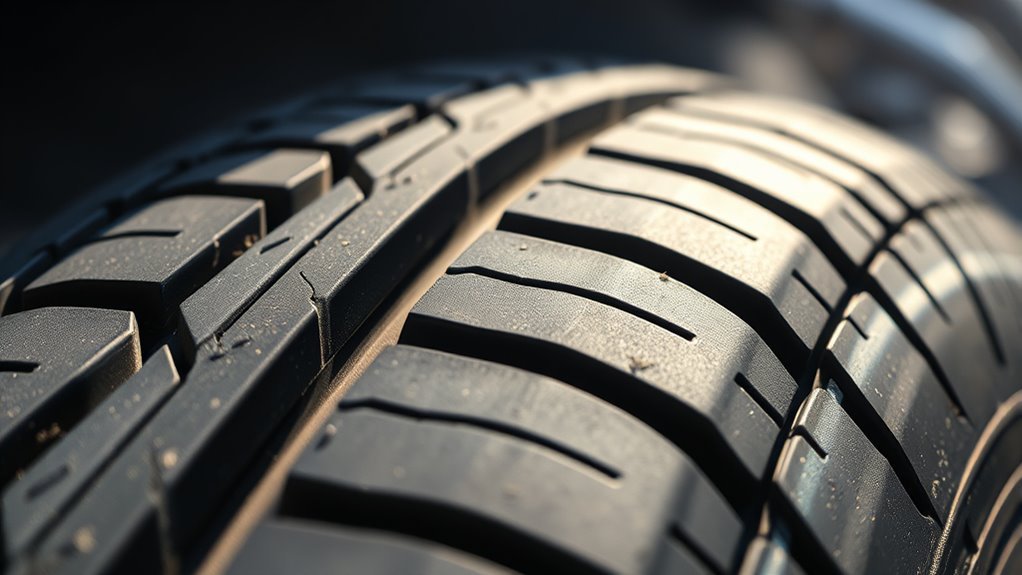
When should you replace your tires? You should act when tread depth hits the legal minimum of 2/32″ (1.6 mm); experts advise replacement at 4/32″ for better grip in wet or snowy conditions. Monitor tire wear and look for clear replacement signs: tread wear indicators flush with the surface, uneven wear patterns, or rapid loss after seasonal exposure. Use a gauge or the 20p test regularly, and check before long trips or adverse weather.
- A worn groove where the built-in indicator is flush with the tread — immediate replacement sign.
- Depth ≤ 2/32″ — legally unsafe; replace now.
- Depth ≤ 4/32″ — recommended replacement for wet/snow safety.
- Noticeable uneven wear or accelerated loss after seasonal driving — inspect and replace.
How Tread Depth Affects Braking and Hydroplaning
You should expect longer stopping distances as tread wears—on wet roads braking can take up to 30% longer with reduced tread. Hydroplaning risk also rises sharply below about 2/32″ because shallow grooves can’t evacuate water, so the tire can lose contact with the road. Aim for at least 4/32″ tread for safer wet braking and lower hydroplaning risk.
Braking Distance Increase
Because shallow grooves can’t channel water effectively, even a small loss of tread depth dramatically increases stopping distances—by roughly 10% for each 1/32″ worn—so your ability to make an emergency stop in wet conditions drops quickly as tires wear. Tread wear directly reduces wet traction and braking efficiency; below 2/32″ tire performance becomes unsafe, increasing accident risk. Prioritize tread maintenance to preserve emergency stopping capability and minimize safety implications.
- A 4/32″ tire vs. a 2/32″ tire: noticeably shorter stopping distance in rain.
- Every 1/32″ lost: ~10% longer braking distance—measureable and cumulative.
- Worn tread: reduced contact patch, impaired water evacuation, degraded braking efficiency.
- Regular checks and timely replacement: proven accident prevention for wet conditions.
Hydroplaning Risk Rise
Having less tread doesn’t just lengthen stopping distances — it sharply raises the chance of hydroplaning by preventing water from being evacuated from the contact patch. You’ll see braking distance on wet conditions increase as tread depth falls; reduced grooves can’t channel water, so contact becomes intermittent and traction drops. Tires at or below 2/32 inches (1.6 mm) are especially prone to hydroplaning because they can’t displace water effectively. Deeper tread maintains flow paths that preserve grip and reduce loss-of-control events. For safety, incorporate routine tire maintenance: measure tread depth, rotate tires, and replace before reaching critical wear. Even small depth reductions produce measurable risk increases, so act proactively to keep wet-weather braking and handling within predictable limits.
Tire Tread Patterns and Performance: Symmetrical, Directional, Asymmetric
You’ll choose between symmetrical, directional, and asymmetric tread designs based on performance priorities: symmetrical gives low rolling resistance and steady wear for everyday driving. Directional treads channel water and slush more effectively, reducing aquaplaning risk and improving wet/snow traction. Asymmetric layouts combine inner wet-grip features with outer cornering ribs to balance straight-line braking and lateral stability.
Symmetrical Tread Benefits
When you’re looking for a quiet, fuel-efficient tire for everyday driving, symmetrical tread patterns offer a uniform design that lowers rolling resistance and boosts directional stability for smoother highway performance. You’ll benefit from consistent tread design that promotes even wear, extends tire life, and delivers measurable driving comfort for standard passenger cars. Data show low rolling resistance improves fuel economy; balanced blocks minimize noise. They’re less effective in wet traction than directional patterns, so don’t choose them for slick conditions or high-performance driving.
- Continuous center ribs for straight-line stability.
- Repeating shoulder blocks for even wear distribution.
- Narrow circumferential grooves for modest water evacuation.
- Uniform patterning that reduces vibration and cabin noise.
Directional Tread Advantages
Because they’re engineered to roll one way, directional tread patterns give you crisper high-speed handling and superior wet-weather safety by forcing water out through deep, V-shaped grooves that cut aquaplaning risk and improve road-holding; data and lab tests show these designs also boost traction in snow and mud versus symmetrical patterns, but they require correct mounting and directional rotation to maintain performance and even wear. You get measurable gains in tread performance: improved lateral stability, faster water evacuation rates, and demonstrable stopping-distance reductions on wet pavement. For winter traction, directional patterns channel slush and snow efficiently, translating to better grip than equivalent symmetrical tires in tests. Note the directional arrow on the sidewall and follow rotation guidelines to preserve handling balance and lifespan.
Asymmetric Handling Balance
Directional patterns excel at straight-line water evacuation, but asymmetric designs take a different approach to balance cornering and wet grip on the same tire. You get asymmetric performance by combining large outer tread blocks for dry traction with inner grooves that channel water. That trade-off yields measurable cornering stability at speed and improved wet handling without sacrificing ride comfort. Manufacturers tune block stiffness and groove depth to optimize noise, grip, and hydroplaning resistance. Check tread depth regularly; keep it above 2/32″ to retain designed performance. Ideal for high-performance vehicles, asymmetric tires deliver predictable responses during sharp turns and often a quieter cabin than directional patterns.
- Outer: large blocks, dry grip
- Inner: deep grooves, water evacuation
- Mid: balanced stiffness
- Monitoring: tread depth > 2/32″
Choosing the Right Tread for Your Driving Needs and Seasons
Choosing the right tread starts with matching patterns and compounds to your typical driving conditions and seasonality, since symmetrical treads suit everyday use, directional treads boost wet and snow/mud handling, and asymmetric designs balance dry/wet traction and cornering stability. You’ll pick tread types based on road surfaces, water evacuation needs and seasonal adaptations: summer compounds for heat and grip, winter tires with deeper blocks and sipes (snowflake-marked) for ice, and all-seasons for moderate climates. Monitor tread depth; replace at 4/32″ for wet safety. Use directional or asymmetric layouts if you prioritize hydroplaning resistance or cornering. Below’s a quick comparison to guide selection.
| Tread focus | Best use | Key metric |
|---|---|---|
| Symmetrical | Daily driving | Longevity |
| Directional | Wet/snow | Water evacuation |
| Asymmetric | Performance | Cornering stability |
Can You Mix Tires on One Vehicle? (Sizes, Patterns, Brands)
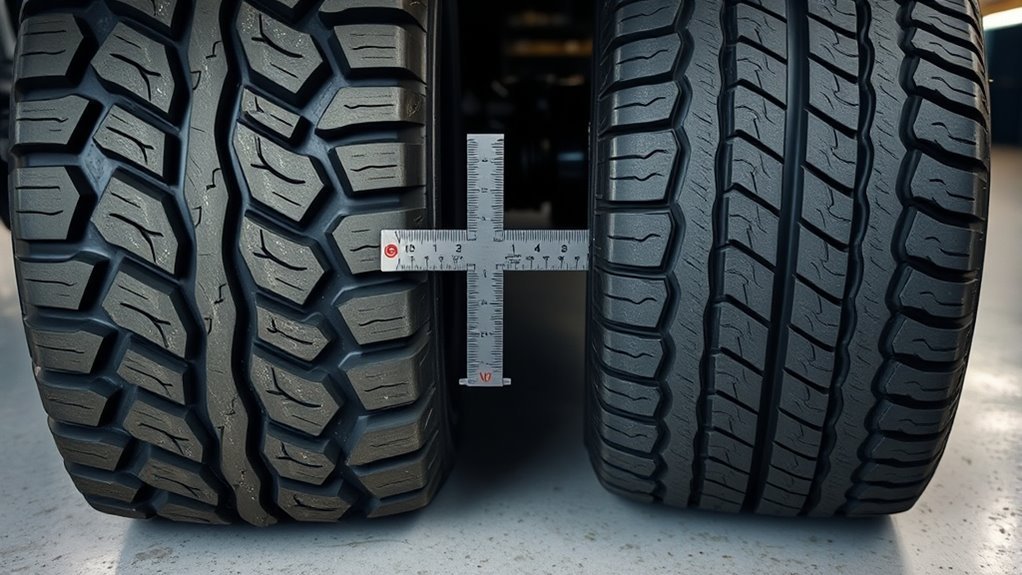
Can you mix tires on one vehicle? You can, but tire compatibility matters: mixing sizes, tread patterns, or brands often causes uneven handling and reduced traction, increasing safety risk. You should use identical make/model across all positions for predictable dynamics and stability.
- Visualize two new tires up front and two worn at rear—expect imbalance.
- Picture directional tires on one axle and asymmetrical on the other—rotation conflicts.
- Imagine different sidewall heights—steering response changes.
- Think brand compounds with varied grip—braking distance shifts.
Data-driven guidance: replace in pairs, put newer tires on the rear, and avoid mixing directional with other patterns. Mixing can produce measurable handling issues; prioritize matched tires for ideal performance and safety.
Maintain Tread: Pressure, Rotation, Alignment, and Monitoring
Mixing tires affects handling, so once you’ve matched sizes and patterns, keep monitoring and maintaining tread to preserve that balance. You should check tire pressure monthly; under-inflation reduces grip and causes uneven wear, over-inflation raises blowout risk. Rotate tires every 5,000–7,500 miles to equalize wear and extend life. Confirm wheel alignment after impacts or yearly to prevent asymmetrical tread loss. Measure tread depth with a gauge or 20p test; replace at 4/32″ for wet-weather safety, never below 2/32″ legal minimum. Inspect for damage or abnormal patterns that signal suspension or inflation issues. These tire maintenance safety tips reduce failure risk and sustain handling predictability.
| Task | Frequency | Target |
|---|---|---|
| Pressure check | Monthly | Manufacturer PSI |
| Rotation | 5k–7.5k mi | Even wear |
| Tread depth | Each check | ≥4/32″ recommended |
Frequently Asked Questions
What Is Considered Safe Tire Tread Depth?
Safe tire tread depth is generally 4/32″ or deeper for ideal wet performance, though 2/32″ is legal minimum. You should check tread wear indicators and consider tire tread materials’ condition to decide timely replacement.
What Is Better, H or V Rating on Tires?
If you’re racing a teacup, H’s fine; if you’re hustling a sports car, V’s better. You’ll get clearer performance differences and sharper handling characteristics, so match rating to vehicle, speed needs, and manufacturer specs.
At What Tread Depth Do I Replace Tires?
Replace tires at or below 2/32″ legally, though you should swap them by 4/32″ for safer wet handling. Monitor tire wear using tread gauges, inspect tread patterns regularly, and prioritize tread maintenance to reduce risks.
What Is the 7 7 Rule for Tires?
Like a heartbeat warning, the 7 7 Rule tells you to replace tires at 7/32″ tread for winter and 4/32″ for summer. You’ll improve tire maintenance, reduce tread wear risks, and boost safety with measured data.
Conclusion
You now know how tread—ribs, grooves, blocks and sipes—controls grip, braking and hydroplaning, and how depth measurements and wear indicators tell you when to replace tires. Keep pressure, rotation, alignment and monitoring routine: a well-maintained tire lasts longer and performs safer. Remember, “an ounce of prevention is worth a pound of cure”—small, regular checks prevent big failures. Choose patterns and match sizes/brands to your driving and seasonal data for peak safety.
Related Articles
How to Read Motorcycle Tire Size: Complete Breakdown
Often misunderstood, this guide decodes motorcycle tire sizes like 180/55ZR17—learn what each number and letter means to ensure safe, perfect fitment.
Read More
How to Read Bicycle Tire Size: Inches, Metric & ISO
Get the essential trick to decoding ETRTO/ISO codes so you’ll always pick rim-compatible tyres—discover what to check next.
Read More
How to Read Tire Size Numbers: Decode the Sidewall
Step-by-step guide to decode tire sidewalls—sizes, load, speed, DOT and winter symbols—so you’ll know what fits and when to replace.
Read More