What Is Tire Sealant? How It Seals Punctures Instantly

You use tire sealant by injecting a liquid blend of polymers and fibers into a tubeless tire; air pressure forces the fluid to the puncture and the particles and fibers compact to form an instant plug. It stops leaks from small cuts (about 1/4″) and works faster if you rotate the wheel so the sealant distributes. Formulations range from temporary to permanent, and you’ll find guidance on compatibility, application steps, lifespan and limits if you keep going.
What Is Tire Sealant?
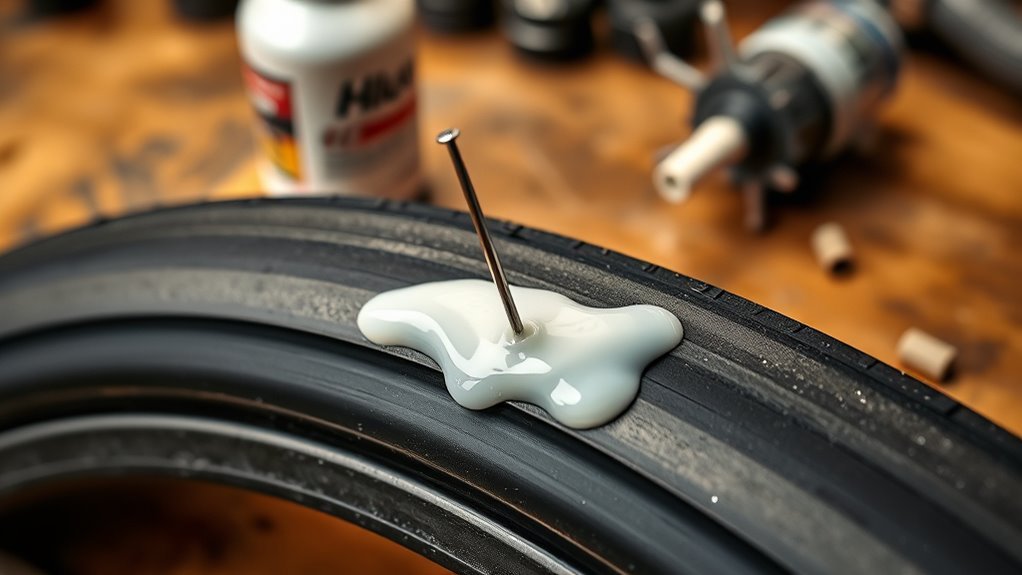
Tire sealant is a liquid compound—typically polymers and fibers—formulated to plug punctures in tubeless tires by flowing into holes and, under air pressure, clustering into a durable plug; you’ll use it to stop air loss from cuts up to about a quarter-inch. You’ll choose between temporary sealants for roadside repairs and permanent formulations applied during tire installation for ongoing protection. The sealant benefits include rapid response to leaks, compatibility with tubeless systems, and water-solubility for easy cleanup without sticky residue. For effective results, follow application techniques: add the manufacturer-recommended volume into the tire, rotate or inflate to distribute the liquid, and maintain tire pressure so centrifugal force and air pressure drive particles into breaches. Use only tubeless-compatible products.
How Tire Sealant Seals a Puncture
When you rotate the wheel, internal air pressure drives the liquid sealant toward any breach so it moves into the hole. Fibers and solid particles in the mix then catch at the edges of the puncture and cluster, forming a compact plug. That plug hardens or stabilizes in place, restoring pressure and stopping air loss for small punctures.
Sealant Movement Into Hole
Imagine the sealant inside your wheel as a mobile repair crew: while the tire spins it coats the inner surface so that, once a puncture opens, cabin pressure and escaping air drive the fluid and suspended fibers toward the breach. You rely on this dynamic to maximize sealant effectiveness and puncture prevention. The flowing liquid carries particles and fibers into the hole, where air-driven motion concentrates material at the exit. For holes up to 1/4 inch the process forms an initial barrier fast, preserving pressure and allowing continued motion to redistribute sealant for potential additional punctures. Many formulas stay fluid to reseal repeated damage and extend tire life.
| Motion | Material | Outcome |
|---|---|---|
| Rotation-driven | Fibers/particles | Directed ingress |
| Pressure gradient | Liquid carrier | Rapid sealing |
| Reflow | Remaining sealant | Multiple repairs |
Fiber And Particle Plugging
Although it looks simple, the sealing action relies on a coordinated mix of liquid carrier, fibers, and particles that you activate the moment air starts escaping. When a puncture opens, internal pressure forces the sealant toward the breach; the escaping air creates a vacuum-like pull that draws the suspension into the hole. Fibers entangle across the aperture, providing structural bridging; fiber effectiveness depends on length, flexibility, and concentration to form an immediate mesh. Sealing particles complement fibers: optimized particle composition—size distribution and surface properties—fills gaps and promotes adhesion between fibers and rubber. Tire rotation maintains shear and centrifugal forces that distribute the mix, allowing repeated engagement for multiple small punctures (up to ~1/4 inch). The combined mechanism yields a durable, rapid plug without manual intervention.
Tire Sealant Types: Temporary, Permanent, Hybrid
When you get a puncture on the road, temporary sealants let you inject a quick fix through the valve stem to seal holes up to about 1/4″ so you can reach a shop. Permanent sealants are applied during installation and bond chemically to the tyre for ongoing multi-leak protection, while hybrid formulas give immediate sealing plus extended coverage. You’ll choose based on whether you need short-term emergency use, long-term protection, or a balance of both.
Temporary Sealant Uses
Temporary sealants let you seal small tubeless punctures on the spot so you can keep driving to a repair shop; they’re injected through the valve stem and use tire pressure to force the compound into holes up to about a quarter-inch, providing a short-term seal typically rated for roughly 100 miles. You’ll use them as emergency tire solutions when you can’t change a tire or lack roadside help. Kits or pressurized cans with compressors let you restore pressure and deploy sealant quickly. The formulation bonds to the rubber edge of the puncture, then dries under centrifugal force as you roll. Consider temporary sealant benefits: speed, simplicity, and portability. Treat the result as temporary—head to a shop for proper inspection and permanent repair.
Permanent Vs. Hybrid
You’ve seen how on-the-spot sealants can get you to a shop; now compare permanent and hybrid options to decide what you want inside the tire long-term. Permanent sealants chemically bond to rubber during installation, offering durable puncture resistance and predictable longevity—often up to two years. Hybrids give immediate sealing like temporary formulas, then maintain protection longer by combining bonding agents with viscous fillers. For a practical performance comparison and selection, consider:
- Permanent: superior long-term bonding, best when applied during tire mounting; less forgiving for mid-life additions.
- Hybrid: balances instant patching and extended service; adaptable to valve-stem injection and shop installation.
- Limits: most sealants handle punctures ≤¼ inch; application techniques affect effectiveness and service interval.
Which Tires and Punctures Are Compatible?
Which tires can take sealant and how big a puncture can it handle? You’ll find tire types that accept sealant are primarily tubeless designs—bicycle, ATV, passenger vehicle, off-road and many commercial truck tires—and most sealants reliably handle puncture sizes up to a quarter-inch. Some products also work in tubed tires, but effectiveness is less consistent. Before use, check compatibility for specific tire types since formulations differ for recreational, industrial or specialty tires. Popular brands like Slime will restore mobility across diverse terrains when specs match. For punctures larger than about 6 mm or sidewall cuts, don’t rely on sealant as the sole fix; plan for professional repair or replacement based on manufacturer guidance and load-rating considerations.
How to Apply Sealant Through the Valve
Start by removing the valve cap and deflating the tire so you can easily insert a sealant injector or funnel; then pour the manufacturer‑recommended amount (typically 4–8 oz for most tires) into the valve stem. Use precise sealant application techniques: insert the injector nozzle fully, avoid spills, and measure dose per tire specification. Immediately reseat the valve cap and reinflate to the manufacturer’s pressure with an air compressor. Rotate the wheel several minutes to distribute sealant and coat the interior.
- Check valve stem maintenance: inspect for cracks, debris, and a proper core fit before injection.
- Monitor pressure weekly and inspect for leaks after initial drive.
- Top up or replace sealant per manufacturer interval (up to two years) to guarantee effectiveness.
Sealant Kits vs. Pressurized Cans: Pros and Cons
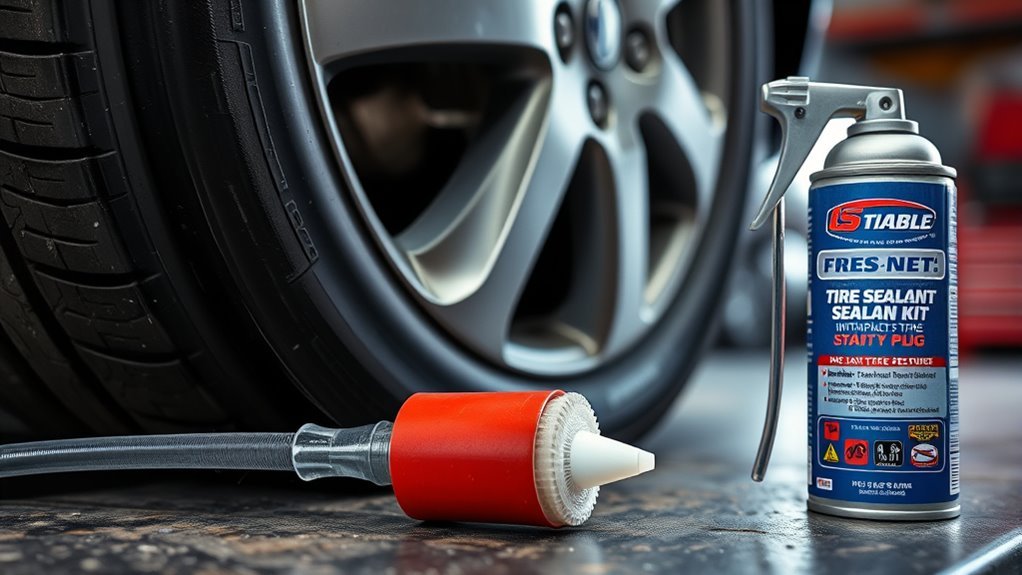
When comparing sealant kits and pressurized cans, consider scope and reliability: kits include a compressor plus sealant so you can both inflate and repair larger punctures, while pressurized cans offer a cheaper, one‑time patch that often won’t seal holes over ~6 mm. You’ll choose based on expected puncture sizes and desired sealant effectiveness. Kits ($24–$80) let you restore recommended pressure, handle bigger tears, tolerate varied storage conditions, and serve as a multi‑use emergency tool. Pressurized cans ($7–$20) are compact and low‑cost but can be unsafe in heat and often fail on larger punctures, reducing reliability. For consistent, repeatable repairs and better sealant effectiveness across a range of puncture sizes, opt for a kit.
Tire Sealant Lifespan: When to Top Up or Replace
After choosing between a kit and a can, you’ll need a plan for maintaining the sealant inside your tires: most sealants remain effective for up to two years and can handle multiple punctures during that period, but performance declines with time, heat exposure, and heavy use. You should schedule inspections and top-ups based on conditions and mileage to preserve sealant longevity and consistent pressure.
Plan regular inspections and top-ups—sealants last up to two years but degrade with heat, heavy use, and age.
- Check every 3–6 months for drying, clumps, or slow leaks; record dates and mileage.
- Top up after prolonged exposure to heat, heavy off-road use, or following multiple repairs.
- Replace when you observe persistent slow leaks, dried residue, or if product age exceeds manufacturer-specified service life.
Use product specs for compatibility; when in doubt, refresh rather than risk compromised protection.
Limits & Troubleshooting (Large Holes, Sidewalls, TPMS, Cleanup)
Although tire sealants handle most small punctures, they have clear limits you need to know: they’re generally effective on holes up to about 6 mm (¼ inch) but won’t reliably fix larger breaches or sidewall damage, can interfere with some TPMS sensors, and are a temporary measure that often requires cleanup and follow-up professional repair. You should treat sealant effectiveness as conditional: larger holes and sidewalls require professional replacement. Before applying, check TPMS compatibility; incompatible formulas can clog sensors or skew readings. Use proper application techniques—inject recommended volume, spin tire to distribute, and monitor pressure. After temporary use, rinse water-soluble residue during inspection. Plan maintenance: reapply only if signs of seepage appear and schedule definitive repair or replacement promptly.
Choosing the Right Tire Sealant (Features, Slime Labels, Buying Checklist)
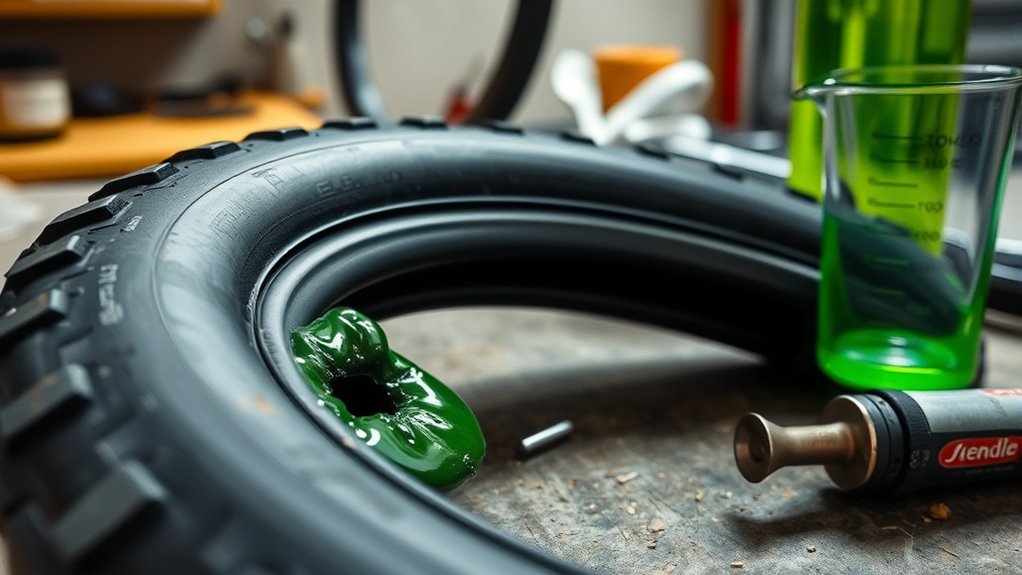
Curious which sealant fits your tires best? You’ll pick between temporary quick-fix formulas and permanent long-term sealants; match choice to driving conditions and desired sealant effectiveness. Check Slime labels: Red for tube tires, Blue for non-highway tubeless, Black for both, Yellow for emergency use to guarantee compatibility.
- Verify max puncture size sealed (up to 1/4″) and fluid longevity (up to two years).
- Confirm compatibility with your tire type, TPMS, and manufacturer usage guide.
- Prefer non-toxic, water-based formulas to reduce environmental impact and ease cleanup.
Buy with a checklist: compatibility, puncture rating, longevity, and label match. Apply per instructions to maintain performance and avoid TPMS interference.
Frequently Asked Questions
Can Sealant Harm Tire Balancing or Wheel Alignment?
Yes, sealant can unbalance wheels and slightly affect wheel alignment if unevenly distributed. You’ll notice reduced tire performance; regular rotation, inspection, and monitoring sealant longevity will help restore balance and prevent handling issues.
Is Sealant Safe for Tubed Bicycle Tires?
Yes—you can use sealant in tubed bicycle tires; it improves sealant effectiveness and offers puncture prevention, though it can complicate repairs, add slight weight, and needs compatible tube material and periodic replacement for reliable performance.
Can Sealant Freeze or Become Unusable in Cold Climates?
Yes — sealant performance can degrade in cold temperatures; it can thicken or freeze, reducing flow and sealing ability. You’ll want cold-rated formulations and anti-freeze additives, and to store or warm tires before use.
How Do I Dispose of Old or Contaminated Sealant Responsibly?
Collect it in sealed containers, label clearly, transport to hazardous-waste or recycling centers; don’t dump or pour down drains. You’ll follow local sealant disposal methods, reduce environmental impact, and document transfer for compliance.
Will Sealant Affect My Vehicle’s Warranty or Roadside Assistance Coverage?
Yes — using sealant can void warranty coverage or affect roadside assistance if it damages tires, wheels, or sensors; you should follow manufacturer guidelines, document proper use, and consult your dealer to avoid coverage disputes.
Conclusion
You now know how tire sealant works and when to use it; apply it through the valve for quick, temporary repairs and carry a kit or pressurized can for emergencies. Sealants aren’t magic—avoid sidewall tears and large gashes, monitor TPMS, and replace sealant per manufacturer intervals. Choose formulas with corrosion inhibitors and compatibility with your wheel type. Keep a bottle in your trunk, like a trusty pocket watch, and top up or replace it before it fails.
Related Articles
How to Read Motorcycle Tire Size: Complete Breakdown
Often misunderstood, this guide decodes motorcycle tire sizes like 180/55ZR17—learn what each number and letter means to ensure safe, perfect fitment.
Read More
How to Read Bicycle Tire Size: Inches, Metric & ISO
Get the essential trick to decoding ETRTO/ISO codes so you’ll always pick rim-compatible tyres—discover what to check next.
Read More
How to Read Tire Size Numbers: Decode the Sidewall
Step-by-step guide to decode tire sidewalls—sizes, load, speed, DOT and winter symbols—so you’ll know what fits and when to replace.
Read More